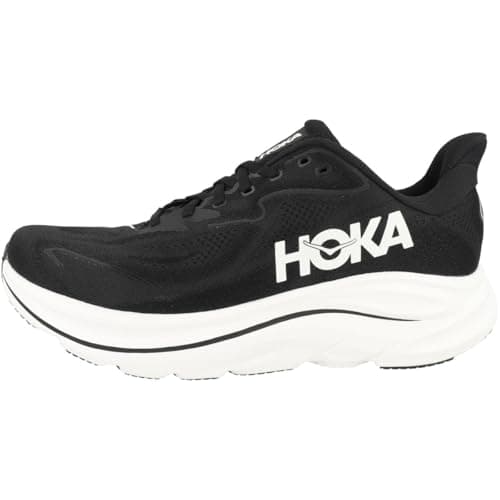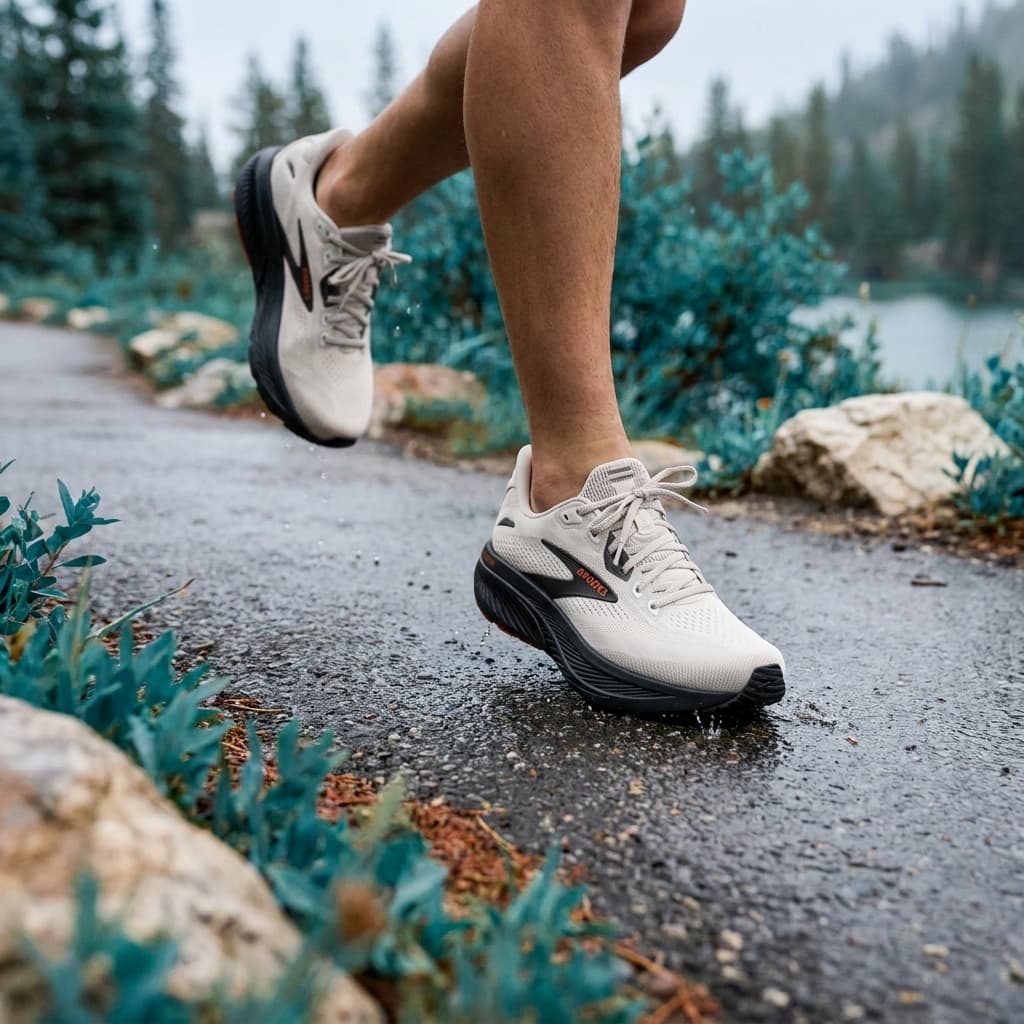
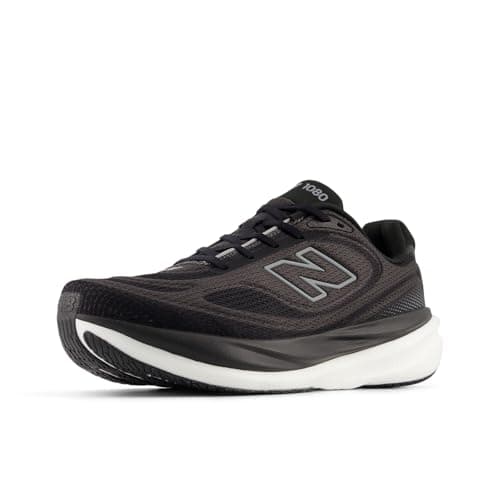
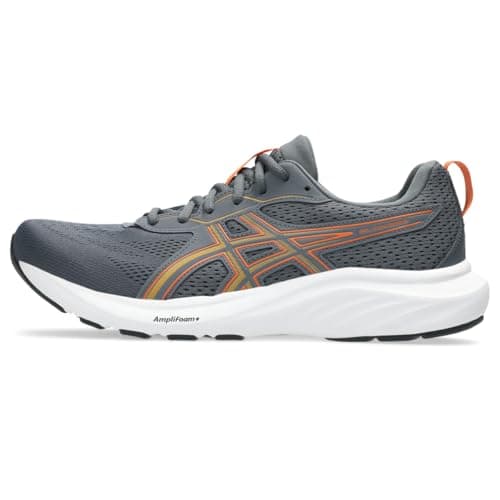
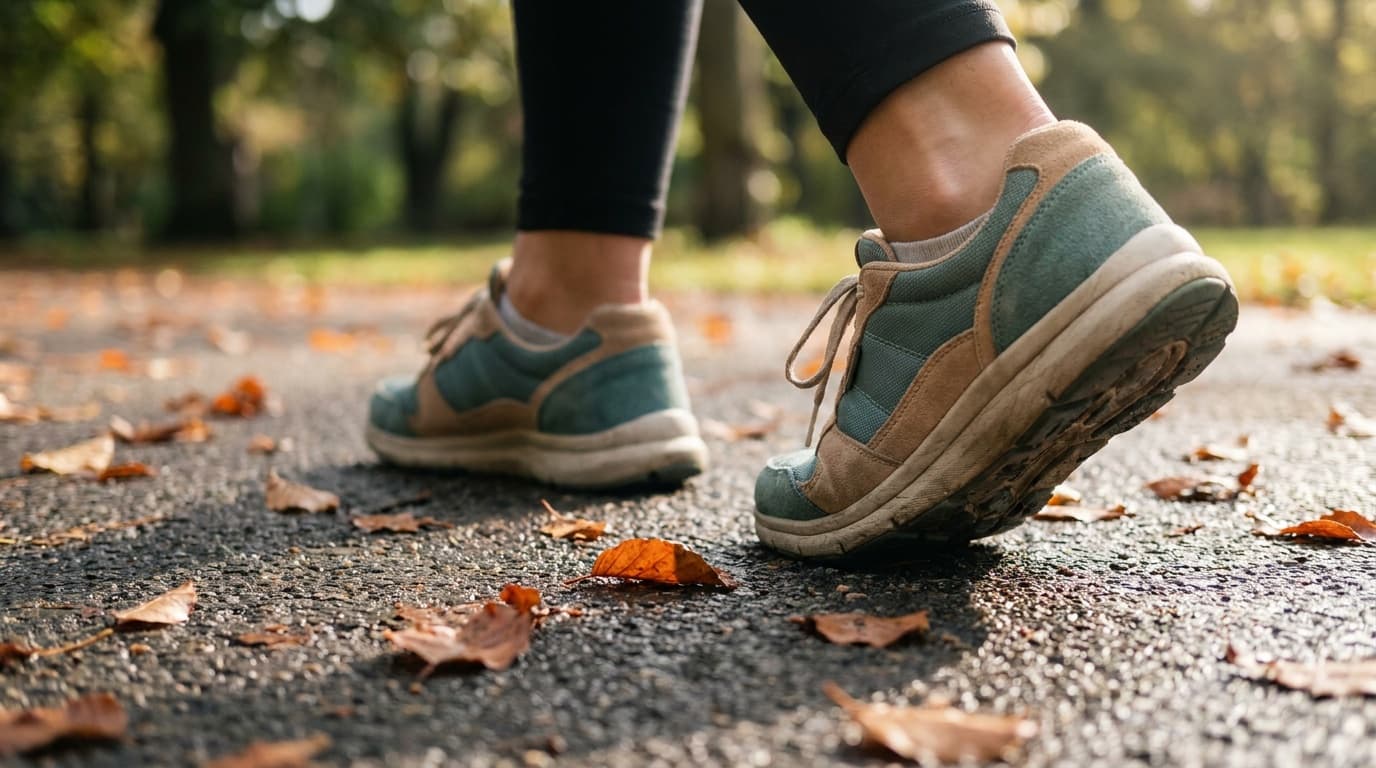
The best walking shoe for most fitness walkers is the Brooks Ghost 18: Brooks lists walking among its intended uses, gives it a 10 mm drop, and sells the men's version in four widths from narrow to 4E (Brooks). Walkers who want the most foam should look at the Hoka Clifton 10 (42 mm heel stack) or New Balance 1080 v15, and the ASICS Gel-Contend 9 covers short daily walks for less. Whichever you pick, plan to replace it every 300 to 500 miles (Harvard Health).
For women's-last builds, the best walking shoes for women covers the same categories on a women's fit.
Need a 2E or 4E? The best walking shoes for wide feet lists every width each of these four comes in, men's and women's, with lab-measured toe-box widths.
Torn between walking shoes and something more rugged? The free outdoor shoe finder sorts you across all five footwear categories in five questions, men's and women's models included.
How we picked
Every shoe here earned its place through the Kit Score: a weighted rating built from verified owner reviews, lab-tested cushioning and durability data, brand-published specs, and expert consensus from running-store communities and podiatry sources. No single metric decides; the score balances cushioning, stability, upper breathability, outsole durability, and value.
Our quick picks
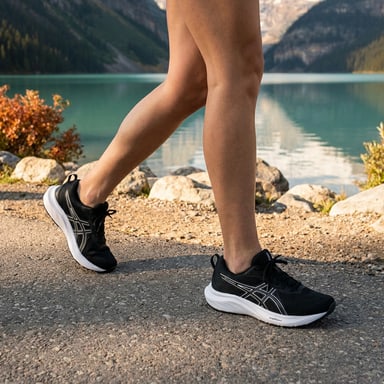
Best overall: Brooks Ghost 18
BEST OVERALL
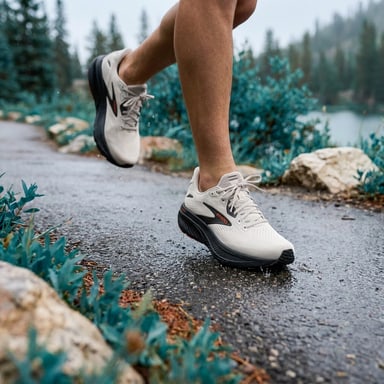
Brooks Ghost 18
Best for: Daily fitness walkers who want a proven, durable, width-inclusive shoe that transitions from neighborhood walks to the gym without fuss.
- Men's version comes in four widths, narrow (1B) through extra wide (4E), so it fits a wide range of foot shapes
- Forefoot cushioning is firmer and lower-stack than the Clifton 10 or 1080v14, so heavier walkers or those with joint sensitivity may want more underfoot volume
Kit Score 8.8/10 · $149.95 Price checked Oct 25, 3:41 PM CDT · how we score gear
Buy on AmazonProduct details
Brooks officially markets the Ghost 18 as a Neutral Running and Walking Shoe, and the tagline holds up: its DNA Loft v3 midsole, 10mm drop, and wide-width lineup (narrow through 4E) make it the most walker-friendly general-purpose shoe in this roundup. The Ghost line has logged 18 generations because it reliably delivers a stable, cushioned ride that works from a 20-minute morning walk to a full day on pavement. The Ghost 18 carries both the APMA Seal of Acceptance and PDAC A5500 Diabetic footwear certification.
- Weight
- 10.2 oz (men) / 9.2 oz (women)
- Heel drop
- 10 mm
- Stack height
- 36 mm heel / 26 mm forefoot
- Midsole
- DNA Loft v3 nitrogen-injected foam
- Widths
- Narrow, Standard, Wide (2E), Extra Wide (4E)
- Replacement
- Based on wear, support, and comfort
More strengths
- 10mm drop and stable neutral platform suit heel-strike walkers who log miles daily without specialty support needs
- RunRepeat's lab abrasion test left only 0.8 mm of outsole wear, a good sign for daily walking mileage
Other tradeoffs
- 10.2 oz men's weight feels heavier on longer outings compared to lighter max-cushion options
The Ghost is one of the longest-running daily trainers on the market, and Brooks now lists walking alongside road running as what the 18th edition is best for. The nitrogen-infused DNA Loft v3 midsole gives a balanced, neutral ride that works on a flat road or a treadmill. The triple jacquard engineered mesh upper is built for airflow, and it carries both the APMA Seal of Acceptance and PDAC A5500 diabetic footwear certification.
Width options are a genuine differentiator here. The men's Ghost 18 comes in narrow (1B), medium, wide (2E), and extra wide (4E), which matters for walkers with bunions or wide forefeet who otherwise have to hunt for a decent fit.
RunRepeat's lab abrasion test left only 0.8 mm of outsole wear, a good sign for daily mileage, though the midsole foam will still set the replacement clock at 300 to 500 miles. Read our full Brooks Ghost 18 review.
Editor's choice: Hoka Clifton 10
EDITOR'S CHOICE
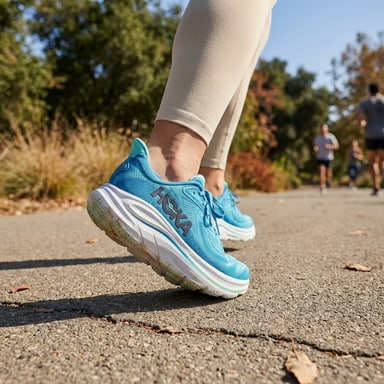
Hoka Clifton 10
Best for: Walkers who prioritize maximum underfoot protection and a smooth rolling stride on pavement, particularly those on their feet all day at work or managing joint sensitivity.
- Tallest stack (42mm heel) in the roundup delivers the most joint-protective ride, especially on concrete and hard tile
- Breathability rates 3/5: feet run warm in hot weather or high-humidity environments
Kit Score 8.4/10 · Check current price · how we score gear
Buy on AmazonProduct details
The Clifton 10 pushes the stack to 42mm at the heel, moves the drop from 5mm to 8mm, and widens the toe box relative to the Clifton 9, making it the tallest-stacked shoe in this roundup. RunRepeat's lab found it firmer than the Clifton 9. The rocker geometry rolls the foot forward smoothly, which owners who spend long days on their feet single out.
- Weight
- 9.8 oz (men) / 8.0 oz (women)
- Heel drop
- 8 mm (brand spec)
- Stack height
- 42 mm heel / 34 mm forefoot
- Midsole
- Compression-molded EVA with metarocker geometry
- Upper
- Jacquard knit
- Widths
- Regular, Wide, Extra Wide
More strengths
- Metarocker geometry creates a smooth heel-to-toe roll that reduces active effort on long flat walks
- Toe box is much roomier than the Clifton 9's in RunRepeat's measurements, giving more room for natural toe splay
Other tradeoffs
- Compression-molded EVA is a basic foam, and RunRepeat found the v10 firmer than the Clifton 9
The Clifton is the choice for walkers who spend hours on their feet and need the shoe to absorb the cumulative load. The 10th edition raises the stack to 42 mm at the heel and 34 mm at the forefoot and moves the drop from 5 mm to 8 mm, while keeping the rocker geometry that promotes a natural heel-to-toe roll. RunRepeat's lab review found it noticeably firmer than the Clifton 9, with a much roomier toe box.
That rocker geometry is the detail that sets the Clifton apart for walkers. The curved sole rolls you from heel to toe instead of making you bend the shoe at push-off, which many owners with sore heels and joints find easier over long days on their feet.
The upper is a jacquard knit, and RunRepeat rated its breathability 3 out of 5, so expect warm feet in summer heat. Fleet Feet lists regular, wide, and extra-wide versions. Read our full Hoka Clifton 10 review.
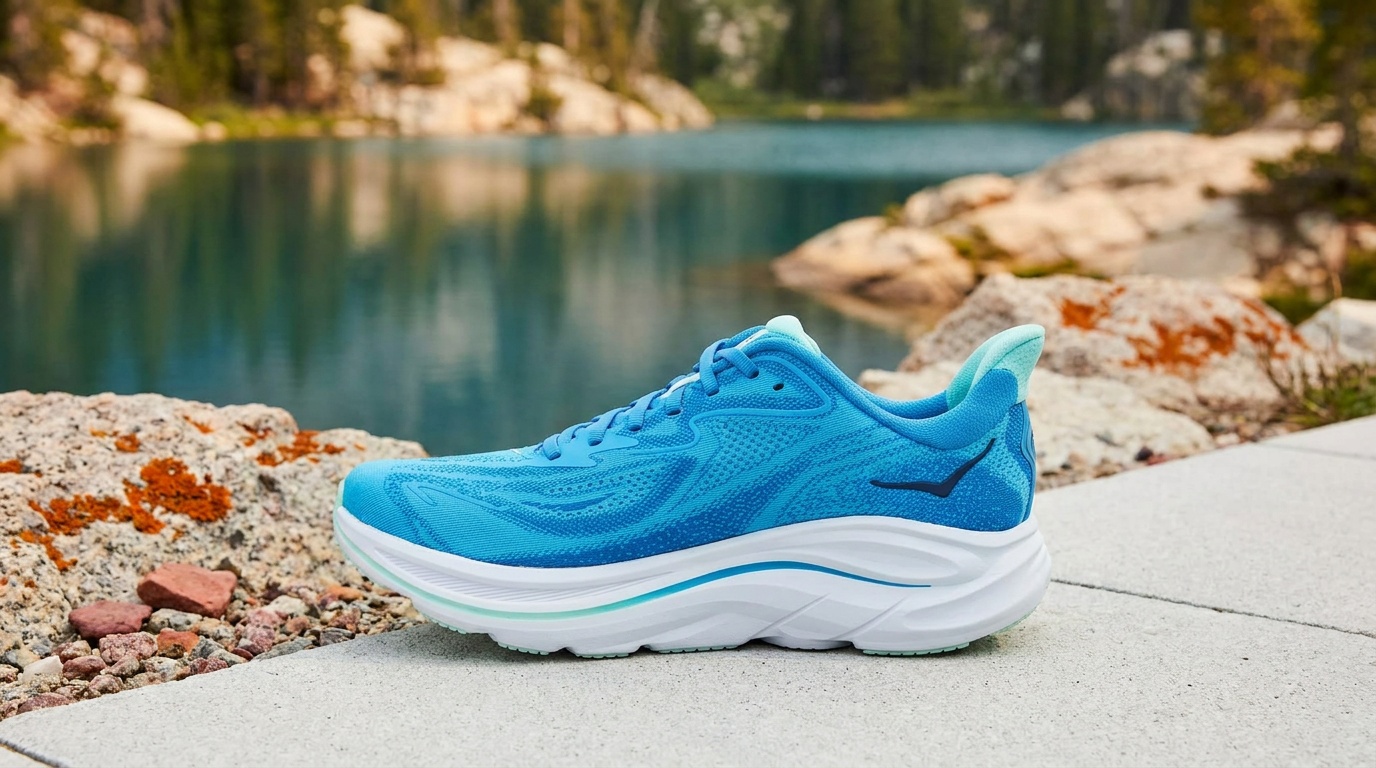
Best premium: New Balance 1080 v15
BEST PREMIUM
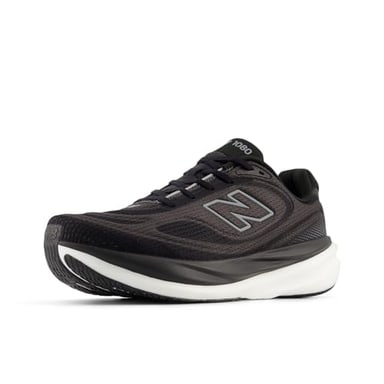
New Balance 1080 v15
Best for: Walkers logging serious daily mileage on pavement who want maximum cushioning and joint protection.
- Softer, more resilient Infinion foam under a 40 mm heel stack
- The plush, high-volume fit can feel less locked in, per Doctors of Running
Kit Score 8.4/10 · $169.95 Price checked Oct 25, 3:41 PM CDT · how we score gear
Buy on AmazonProduct details
The 1080 v15 is New Balance's max-cushion daily shoe rebuilt around Infinion foam, which replaces the Fresh Foam X of earlier versions. It keeps the tall stack and 6 mm drop that suit long pavement walks, weighs about 10% less than the V14 in RunRepeat's lab, and has a roomier, higher-volume upper.
- Weight
- 9.2 oz (men's 9.5) / 7.3 oz (women's 7)
- Heel drop
- 6 mm (brand spec), 6.4 mm lab-measured
- Stack height
- 40 mm heel / 34 mm forefoot (brand spec)
- Midsole
- Infinion, a TPEE-based foam blended with EVA
- Widths
- Narrow, Standard, Wide (2E), X-Wide (4E)
More strengths
- About 10% lighter than the V14 in RunRepeat's measurements
- Four widths, from narrow to extra-wide (4E)
Other tradeoffs
- Limited lateral stability and poor breathability in RunRepeat's lab
The 1080 v15 is built for walkers who treat daily mileage as training and want a deep, protective stack under every step. New Balance rebuilt it around Infinion foam, which replaces the Fresh Foam X of earlier versions, on a 40 mm heel and 34 mm forefoot (Doctors of Running). Doctors of Running found it less soft out of the box than past 1080s but more resilient once broken in, and RunRepeat measured it about 10% lighter than the V14. The 6 mm drop is lower than the Ghost's 10 mm, which suits walkers who prefer a flatter foot strike.
It comes in narrow, standard, wide (2E), and extra-wide (4E) versions (RunRepeat). The upper runs high volume: Doctors of Running had to cinch the laces hard for a secure fit, so walkers with low-volume feet should try it on before committing.
At a $169.95 list price it is the priciest pick here, and it pays off for high-volume walkers. Those doing under three miles a day will probably not notice the difference over the Ghost 18 in day-to-day feel. The previous version is covered in our New Balance 1080 v14 review, and some V14 sizes are still on sale.
The 1080 v15's tall Infinion stack and 6 mm drop make it the pick for walkers who want the most protection under a flatter stride.
Best value: ASICS Gel-Contend 9
BEST VALUE
ASICS Gel-Contend 9
Best for: Budget-conscious walkers doing moderate daily distances (under 5 miles) who want a breathable, no-fuss shoe that fits comfortably from the first wear.
- At $60–$80 it is the lowest-cost route to ASICS rearfoot GEL cushioning and an OrthoLite sockliner
- Forefoot stack is shallow (23mm): cushioning becomes noticeably thin on walks beyond 4–5 miles or for heavier walkers
Kit Score 7.9/10 · $52.00 Price checked Oct 25, 3:41 PM CDT · how we score gear
Buy on AmazonProduct details
At roughly half the price of the field, the Gel-Contend 9 covers the basics that matter most for daily walking: rearfoot GEL cushioning, an OrthoLite sockliner, and a jacquard mesh upper rated 4/5 for breathability by RunRepeat. It suits neutral-gait walkers who want a straightforward shoe for moderate daily distances. The Amplifoam+ midsole is firm rather than plush, which works well for moderate distances.
- Weight
- 9.7 oz (men) / 8.3 oz (women)
- Heel drop
- 8 mm
- Stack height
- 31 mm heel / 23 mm forefoot
- Midsole
- Amplifoam+ with rearfoot GEL technology
- Widths
- Men: Standard, Wide (2E), Extra Wide (4E); women: Standard, Wide
- Sockliner
- Ortholite removable
More strengths
- Breathability rated 4/5 by RunRepeat, higher than the Clifton 10's 3/5
- Men's version comes in standard, wide, and extra-wide (women's in standard and wide)
Other tradeoffs
- Toebox mesh durability rated 1/5 in lab testing; the upper can wear through faster than the outsole
The Gel-Contend 9 exists at the opposite end of the budget from the 1080 and delivers exactly what a casual daily walker needs without the extras. A rearfoot GEL unit handles impact at heel strike, the jacquard mesh upper scored 4 out of 5 for breathability in RunRepeat's lab review, and the midsole is ASICS' Amplifoam+, a basic, firmer-than-average foam that is fine for moderate daily use.
The trade-off is cushioning depth. Below the heel the Contend 9 protects well; with a 23 mm forefoot stack, underfoot softness is serviceable but noticeably firmer than the Ghost or Clifton. Walkers who plan to cover four or more miles daily will want to step up. For two to three miles on mixed surfaces with a full-day recovery, the Contend 9 is an honest, no-drama shoe.
The men's version comes in standard, wide, and extra-wide, the women's in standard and wide. Most RunRepeat voters call it true to size, but the upper's toe area scored just 1 out of 5 for durability, so expect the mesh to wear before the outsole.
How the picks compare
| Product | Kit Score | Price | Best for |
|---|---|---|---|
| Brooks Ghost 18 | 8.8 | $149.95 Price checked Oct 25, 3:41 PM CDT | Best for: Daily fitness walkers who want a proven, durable, width-inclusive shoe that transitions from neighborhood walks to the gym without fuss. Why it stands out: Men's version comes in four widths, narrow (1B) through extra wide (4E), so it fits a wide range of foot shapes Tradeoff: Forefoot cushioning is firmer and lower-stack than the Clifton 10 or 1080v14, so heavier walkers or those with joint sensitivity may want more underfoot volume |
| Hoka Clifton 10 | 8.4 | Check current price | Best for: Walkers who prioritize maximum underfoot protection and a smooth rolling stride on pavement, particularly those on their feet all day at work or managing joint sensitivity. Why it stands out: Tallest stack (42mm heel) in the roundup delivers the most joint-protective ride, especially on concrete and hard tile Tradeoff: Breathability rates 3/5: feet run warm in hot weather or high-humidity environments |
| New Balance 1080 v15 | 8.4 | $169.95 Price checked Oct 25, 3:41 PM CDT | Best for: Walkers logging serious daily mileage on pavement who want maximum cushioning and joint protection. Why it stands out: Softer, more resilient Infinion foam under a 40 mm heel stack Tradeoff: The plush, high-volume fit can feel less locked in, per Doctors of Running |
| ASICS Gel-Contend 9 | 7.9 | $52.00 Price checked Oct 25, 3:41 PM CDT | Best for: Budget-conscious walkers doing moderate daily distances (under 5 miles) who want a breathable, no-fuss shoe that fits comfortably from the first wear. Why it stands out: At $60–$80 it is the lowest-cost route to ASICS rearfoot GEL cushioning and an OrthoLite sockliner Tradeoff: Forefoot stack is shallow (23mm): cushioning becomes noticeably thin on walks beyond 4–5 miles or for heavier walkers |
Brooks Ghost 18
- Best for
- Daily fitness walkers who want a proven, durable, width-inclusive shoe that transitions from neighborhood walks to the gym without fuss.
- Why it stands out
- Men's version comes in four widths, narrow (1B) through extra wide (4E), so it fits a wide range of foot shapes
- Tradeoff
- Forefoot cushioning is firmer and lower-stack than the Clifton 10 or 1080v14, so heavier walkers or those with joint sensitivity may want more underfoot volume
Hoka Clifton 10
- Best for
- Walkers who prioritize maximum underfoot protection and a smooth rolling stride on pavement, particularly those on their feet all day at work or managing joint sensitivity.
- Why it stands out
- Tallest stack (42mm heel) in the roundup delivers the most joint-protective ride, especially on concrete and hard tile
- Tradeoff
- Breathability rates 3/5: feet run warm in hot weather or high-humidity environments
New Balance 1080 v15
- Best for
- Walkers logging serious daily mileage on pavement who want maximum cushioning and joint protection.
- Why it stands out
- Softer, more resilient Infinion foam under a 40 mm heel stack
- Tradeoff
- The plush, high-volume fit can feel less locked in, per Doctors of Running
ASICS Gel-Contend 9
- Best for
- Budget-conscious walkers doing moderate daily distances (under 5 miles) who want a breathable, no-fuss shoe that fits comfortably from the first wear.
- Why it stands out
- At $60–$80 it is the lowest-cost route to ASICS rearfoot GEL cushioning and an OrthoLite sockliner
- Tradeoff
- Forefoot stack is shallow (23mm): cushioning becomes noticeably thin on walks beyond 4–5 miles or for heavier walkers
How to choose the right walking shoe
Five steps to the right fit
Measure your foot in the afternoon
Feet expand during the day, so shop in the early evening when they are at their largest. Athletic shoes often need to be a half size larger than your everyday shoes.
Match cushioning to your daily mileage
Under 3 miles a day, a standard daily trainer like the Ghost 18 is more than enough. Over 5 miles on pavement, prioritize a deeper foam stack (Clifton 10 or 1080 v15) to protect knees and hips from repetitive impact.
Check width before you check color
Fit problems in walking shoes almost always come from width, not length. If you know you have a wide forefoot or high instep, filter to wide-width options first, then pick from what fits.
Consider your surface
Firm pavement rewards a stiffer, rockered outsole (Hoka geometry). Softer trails or gym floors are more forgiving and wider midsoles work well. Mixed surfaces favor neutral, versatile soles like the Ghost.
Factor in your existing foot issues
Sore heels often feel better in a rockered sole (Clifton 10) or with extra arch support; see a podiatrist if pain persists. Bunions need a wide toebox. Overpronation needs a stability shoe (none of these four are stability shoes; check Brooks Adrenaline GTS if that applies to you).
Build a walking routine you will keep
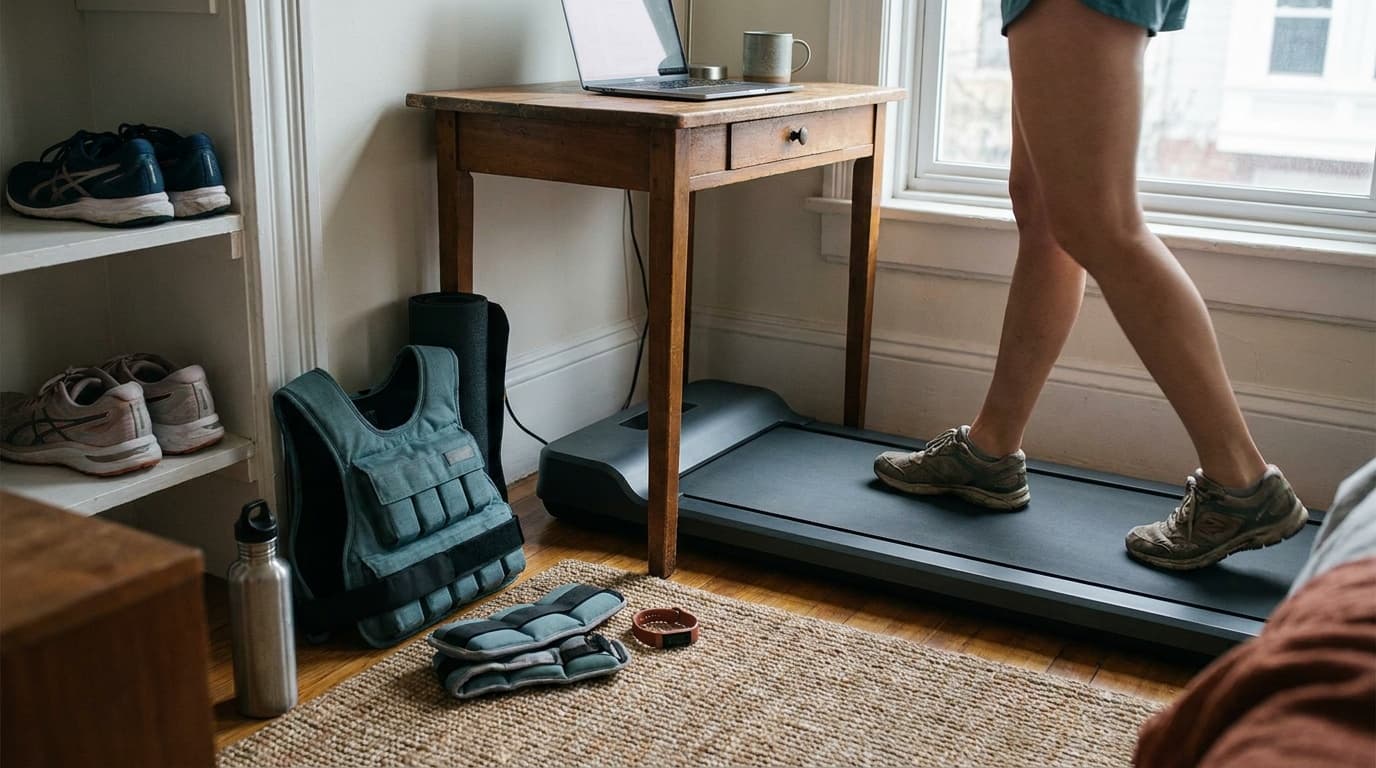
New walkers should start with the beginner walking plan before adding equipment. When weather or work keeps you inside, compare the best walking pads. Once an unloaded hour feels routine, the weighted-vest walking guide explains how to add resistance gradually, and the best weighted vests for walking narrows the actual gear choices.
Where these numbers come from
| Claim | Source | Checked |
|---|---|---|
| Brooks Ghost 18: best for road running, daily runs, and walking; 10 mm drop; 10.2 oz men's; men's widths narrow (1B), medium, wide (2E), extra wide (4E); APMA Seal of Acceptance; 4.4 out of 5 across 373 reviews | Brooks, Ghost 18 | 2026-09-26 |
| Brooks Ghost 18: 36 mm heel / 26 mm forefoot (brand), 9.2 oz women's, 0.8 mm outsole wear in lab abrasion test | RunRepeat, Brooks Ghost 18 | 2026-09-26 |
| Brooks Ghost 18: nitrogen-infused DNA Loft v3, triple jacquard engineered mesh, PDAC A5500 diabetic certification | Brooks Ghost 18 listing on Amazon, ASIN B0FP7HDTC3 | 2026-09-26 |
| Hoka Clifton 10: 42 mm heel / 34 mm forefoot, 8 mm drop, 9.8 oz men's / 8.0 oz women's, drop up from 5 mm on the Clifton 9, regular, wide, and extra-wide versions | Fleet Feet, men's Hoka Clifton 10 | 2026-09-26 |
| Hoka Clifton 10: compression-molded EVA, breathability 3 of 5, firmer than the Clifton 9, wider toe box than the Clifton 9, 1.0 mm outsole wear | RunRepeat, Hoka Clifton 10 | 2026-09-26 |
| New Balance 1080 v15: Infinion midsole replacing Fresh Foam X, 40 mm heel / 34 mm forefoot, 6 mm drop, 9.2 oz men's / 7.3 oz women's, $169.95 list, high-volume upper that was hard to lock down | Doctors of Running, New Balance 1080 v15 review | 2026-09-26 |
| New Balance 1080 v15: 6.4 mm lab-measured drop, 9.0 oz, about 10% lighter than the V14, narrow, normal, wide (2E) and extra-wide (4E) widths, recommended for neutral runners only | RunRepeat, New Balance 1080 v15 | 2026-09-26 |
| ASICS Gel-Contend 9: 31 mm heel / 23 mm forefoot, 8 mm drop, 9.7 oz men's / 8.3 oz women's, Amplifoam+ midsole, breathability 4 of 5, toebox durability 1 of 5, men's standard/wide/extra-wide and women's standard/wide | RunRepeat, ASICS Gel Contend 9 | 2026-09-26 |
| ASICS Gel-Contend 9: rearfoot GEL, jacquard mesh upper, OrthoLite sockliner | ASICS Gel-Contend 9 listing on Amazon, ASIN B0F6NSC6XC | 2026-09-26 |
| Replace shoes every 300 to 500 miles; feet expand during the day, so shop in the early evening; athletic shoes often need a half size larger; running shoes can be used for walking | Harvard Health, the right shoe for walking and running | 2026-09-26 |
| The EVA midsole wears out first and stops rebounding, becoming much less shock absorbing | AAPSM, when to replace your shoes | 2026-09-26 |
| Women's feet are not scaled-down men's feet; shape differs at the arch, lateral foot, first toe, and ball of the foot | Wunderlich and Cavanagh, Med Sci Sports Exerc 2001 (Europe PMC record) | 2026-09-26 |
We have not worn these shoes ourselves. Specs are the makers' figures unless marked as RunRepeat lab measurements; comfort notes summarize owner reviews.
Frequently asked questions
Are running shoes good for walking?
Many are, with one caveat: running shoes designed for high-tempo speed work (racing flats, carbon-plated shoes) are built for a running gait and can feel harsh or unstable at walking pace. The shoes on this list are daily trainers, which are engineered for sustained, lower-impact use and work well for both walking and running. If a shoe is comfortable for long runs, it will generally be comfortable for long walks.
Do I need different shoes for men and women?
Often, yes. A foot-shape study in Medicine and Science in Sports and Exercise found that women's feet are not scaled-down versions of men's, with shape differences at the arch, the outer edge, the big toe, and the ball of the foot. That is why brands build separate men's and women's versions rather than simply resizing one shoe. Wearing the other version is not just a sizing issue; it can cause heel slippage or forefoot pressure. All four picks on this list come in separate men's and women's versions.
How important is breathability for daily walks?
Very, especially in warmer months or for walkers who run warm. A non-breathable upper traps heat and moisture, which accelerates blister formation and increases odor. All four shoes here use mesh or knit uppers, though they are not equal: RunRepeat rated the ASICS 4 out of 5 for breathability and the Hoka 3 out of 5. If you walk in high heat or humidity regularly, this is worth prioritizing alongside cushioning.
What makes a good walking shoe?
Five things, in rough order of importance: a fit that matches your foot width (most fit complaints trace to width, not length), cushioning matched to your daily mileage, a forefoot that flexes where your foot bends at push-off, an outsole durable enough for 300–500 miles, and a breathable upper. Brand and looks come last. A shoe that nails the first three will feel better at mile four than a more expensive shoe that misses on fit, which is why this guide leads with width options and stack heights rather than colorways.
What is the best walking shoe overall?
For most fitness walkers, the Brooks Ghost 18 is the strongest single answer: balanced neutral cushioning, four width options, separate men's and women's versions, and a durable outsole at a mid-tier price. It is the pick with the fewest ways to go wrong. The honest caveat is that "best" shifts with your feet and mileage: high-volume pavement walkers are better served by the Hoka Clifton 10 or New Balance 1080 v15, and casual two-mile-a-day walkers can save real money with the ASICS Gel-Contend 9 without giving up much.
What are the best trainers for walking?
If you shop in "trainers" rather than "walking shoes," look at neutral daily running trainers: they are the same category the four picks here come from. The Brooks Ghost 18 and Hoka Clifton 10 are the standout walking trainers for most people, and both handle light jogging too. Skip racing-oriented trainers with carbon plates or aggressive rockers built for speed; they feel harsh and unstable at walking pace. The full breakdown of what separates the categories is in walking shoes vs running shoes.
For more gear built around active everyday life, browse the fitness hub or read about how we research and rate every pick on this site.
Keep going

Our recommendations draw on manufacturer documentation, retailer listings, owner feedback, and comparisons with alternatives.
As an Amazon Associate I earn from qualifying purchases. We may earn a commission from links here, at no extra cost to you. How we research →