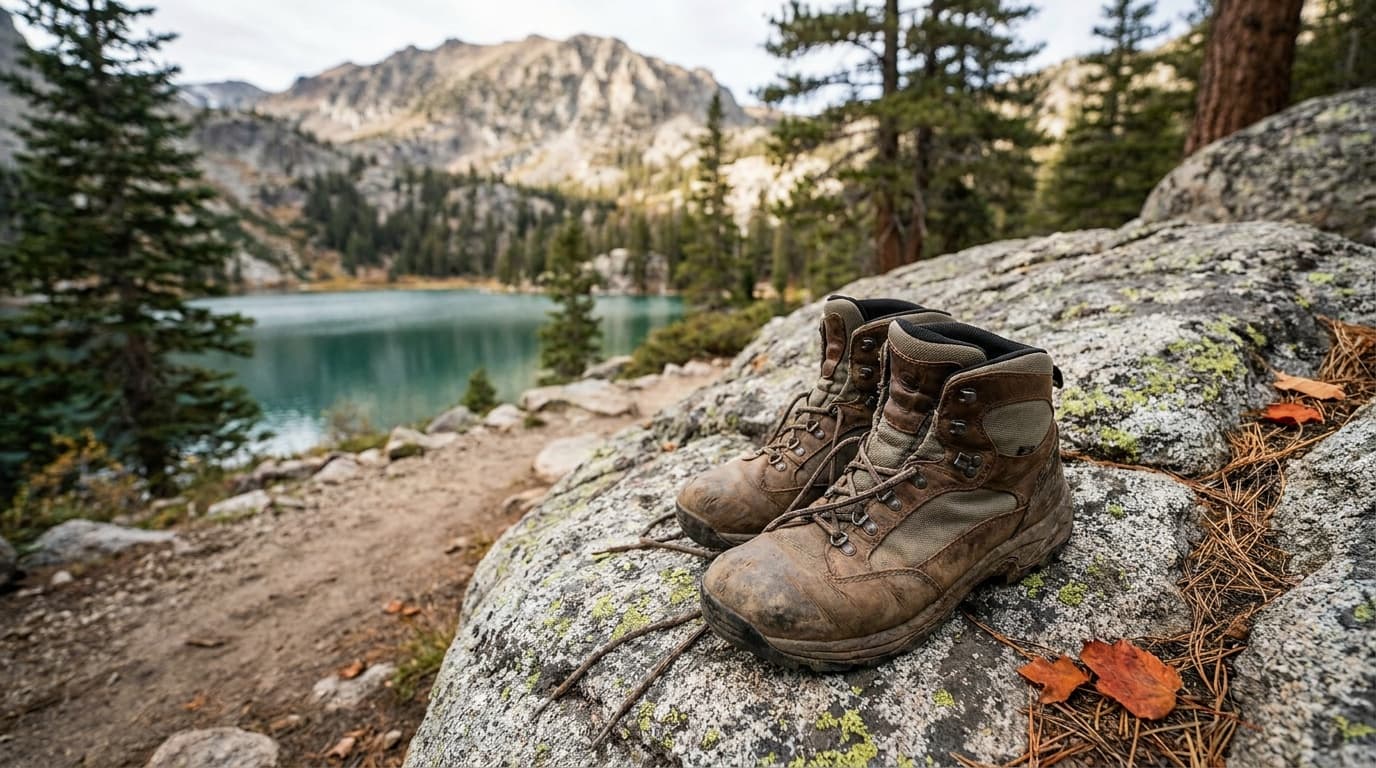
Not sure you need a boot at all? The free outdoor shoe finder weighs your terrain, load, and priorities across boots, trail runners, and more, in men's and women's models.
A great hiking boot doesn't need to be complicated. It needs to keep your feet dry, hold your ankle on uneven ground, and still feel wearable at mile ten. The four linked picks below cover day hikes through light overnight trips. Shopping a women's last? See the best hiking boots for women, which ranks the women's builds on their own fit merits.
How we picked
Our ratings aggregate manufacturer specs, verified-owner reviews across major retailers, and outdoor-publication coverage into a single Kit Score. We weight fit, waterproofing, and outsole traction most heavily, because the best boot is the one that keeps you moving on the terrain you actually hike.
Our quick picks
Best overall: Salomon Quest 4 GTX
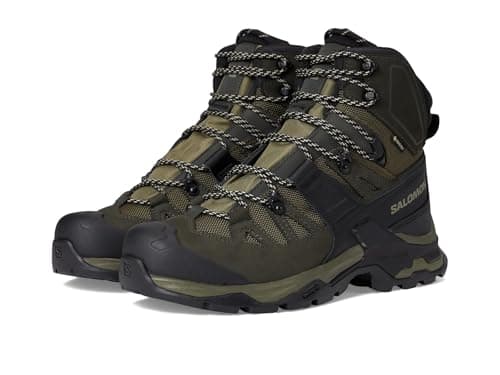
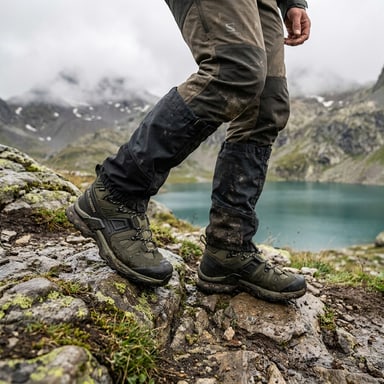
The Quest 4 is the pick for anyone carrying a loaded pack on rocky or rooted terrain. Salomon's SensiFit lacing cradles the foot evenly across the instep, and the Contagrip outsole grips both wet rock and loose trail surfaces reliably. Gore-Tex Extended Comfort construction keeps rain out without trapping heat as aggressively as older waterproof linings. The trade-off: at 18 oz per boot and a firmer midsole, it rewards hikers who already move well on trail. Women's version available as the Salomon Quest 4 GTX Women's.
BEST OVERALL
Salomon Men's Quest 4 Gore-Tex Hiking Boot
Best for: Backpackers and strong day hikers who carry heavier loads on technical terrain and want a boot that stays stable and dry across multiple days.
- 4D Advanced Chassis delivers torsional control that reduces ankle fatigue under a loaded pack
- Heavier than most day-hike-focused boots at roughly 2 lbs 14 oz per pair
Kit Score 8.4/10 · Check current price · how we score gear
Buy at Great Outdoor ProvisionProduct details
The Quest 4 Gore-Tex is Salomon's dedicated backpacking boot: a full-grain leather and mesh upper with Gore-Tex waterproofing, an EnergyCell EVA midsole, and Salomon's 4D Advanced Chassis for torsional stability under load. Weighing in at about 2 lbs 14 oz per pair, it is built for multi-day trips and technical terrain rather than speed.
- Weight (men's, per pair)
- Approx. 2 lbs 14 oz
- Waterproofing
- Gore-Tex Performance Comfort
- Outsole
- Contagrip TA rubber
- Midsole
- EnergyCell EVA + 4D Advanced Chassis
- Collar height
- Mid-cut, approx. 5.5 inch flood height
- Women's version
- Available (Quest Echo GTX)
More strengths
- Contagrip TA outsole is slow to wear and grips reliably on hard and loose surfaces
- Gore-Tex Performance Comfort membrane keeps feet dry in sustained rain and stream crossings
Other tradeoffs
- Leather upper requires a break-in period of 10-20 miles before reaching peak comfort
The purchase link now goes to Great Outdoor Provision's Quest 4 GTX page because our prior Amazon selection was unavailable when checked on October 5, 2026. Choose your size on the retailer page; the observed men's size 10 offer does not establish stock in every size or color.
Best value: Merrell Moab 3 Mid Waterproof
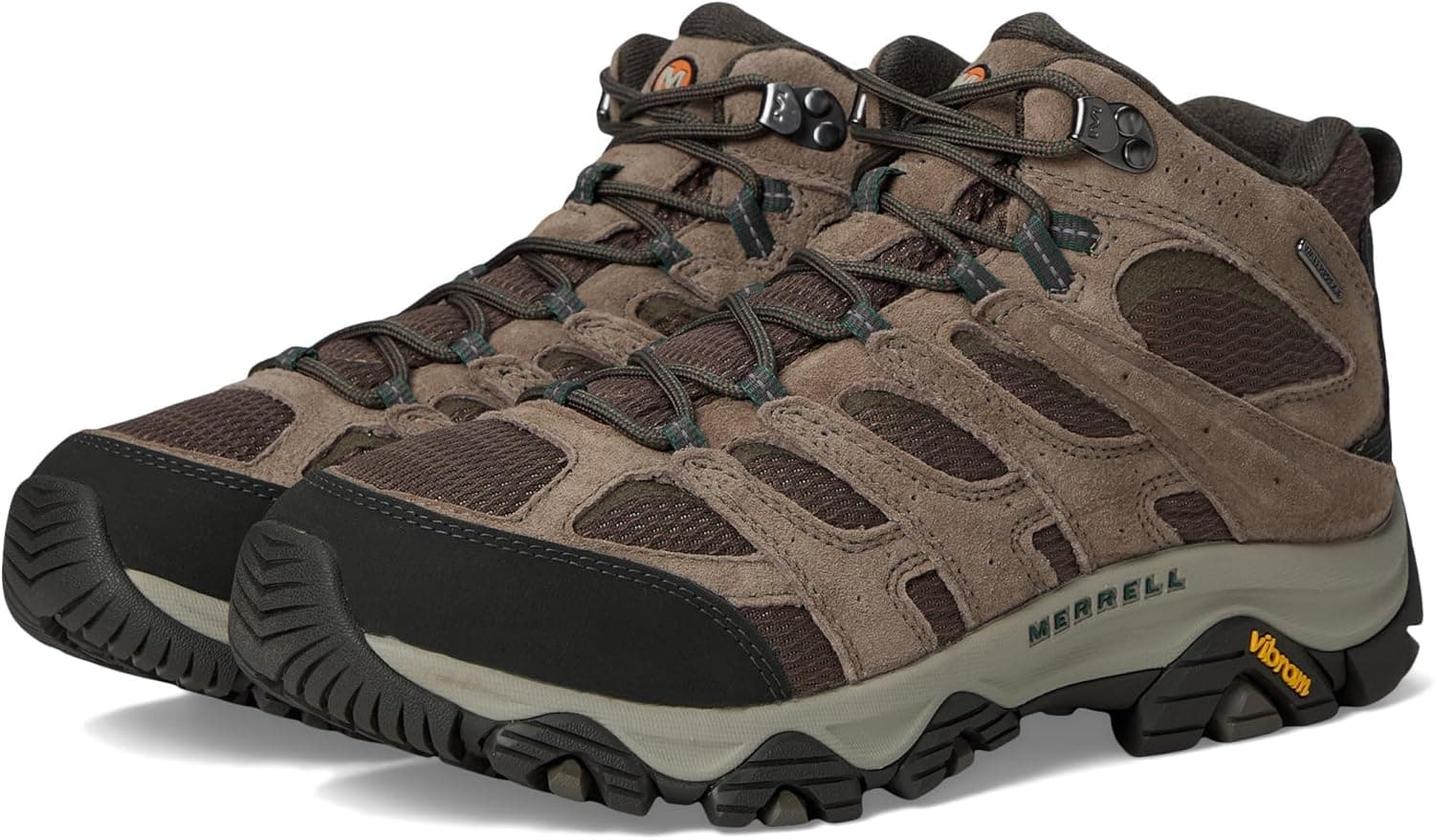
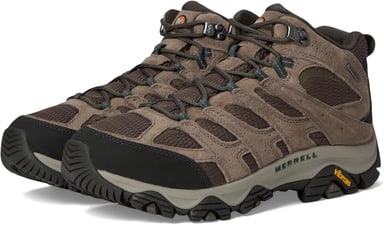
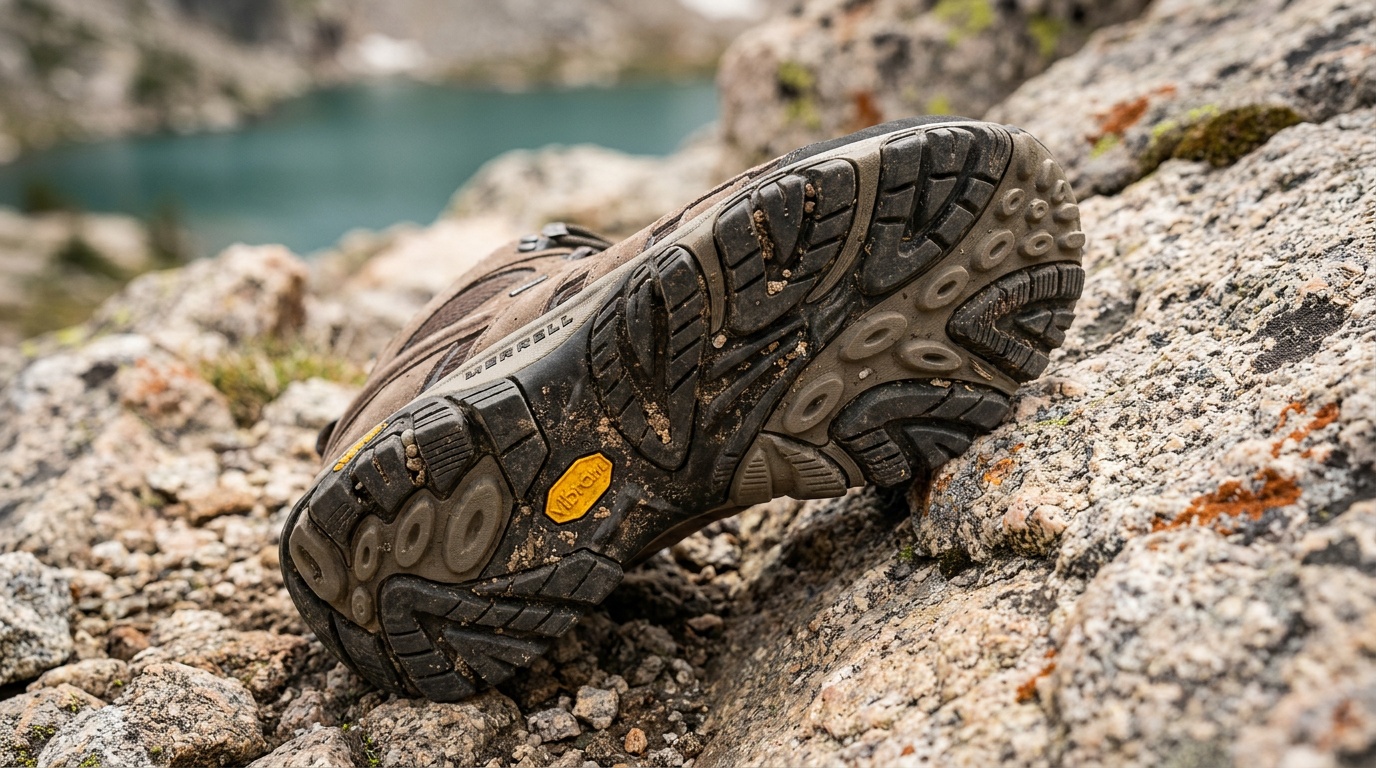
The Moab has been a trailhead staple for years because it gets the basics right at a fair price. The Moab 3 updates the midsole (Kinetic Fit Base insole, denser EVA) and moves to a Vibram TC5+ outsole with better wet-surface grip than its predecessor. Merrell's proprietary waterproof membrane isn't Gore-Tex, but owner reviews consistently rate it effective for day hikes and light rain. Fit runs true to size with a medium-width last. The women's Merrell Moab 3 Mid Waterproof shares the same construction in a narrower last. Read our full Merrell Moab 3 review.
BEST VALUE
Merrell Men's Moab 3 Mid Waterproof Hiking Boot
Best for: Hikers who want a dependable, comfortable mid boot for regular day hikes and easy overnight trips without paying a Gore-Tex premium.
- Near-zero break-in period: wide toe box and cushy collar are comfortable from mile one
- Proprietary waterproofing is less breathable than Gore-Tex, so feet can warm up on long summer days
Kit Score 8.0/10 · $115.32 Price checked Oct 25, 3:41 PM CDT · how we score gear
Buy on AmazonProduct details
The Moab 3 Mid Waterproof is Merrell's workhorse day-hike boot: pigskin leather and mesh upper, M.Select Dry waterproofing, and a Vibram TC5+ outsole with 5mm lugs. Owners consistently praise the out-of-the-box comfort and wide toe box with near-zero break-in required.
- Weight (men's, per shoe)
- 1 lb 6 oz approx.
- Waterproofing
- M.Select Dry membrane
- Outsole
- Vibram TC5+, 5mm lugs
- Heel-to-toe drop
- 11.5mm
- Midsole
- Lightweight EVA + Merrell Air Cushion heel
- Women's version
- Available (B0988BDSG7)
More strengths
- Vibram TC5+ outsole provides reliable grip across most trail surfaces
- Broad size range and proven durability across the long-running Moab line
Other tradeoffs
- Traction weakens on wet or mossy rock compared to softer-compound outsoles
Editor's choice: KEEN Targhee III Mid Waterproof
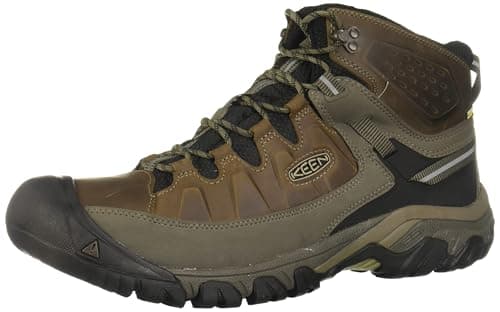
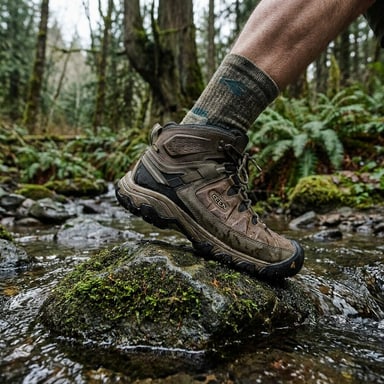
KEEN's wide toe box is the reason this boot lands for hikers who find most mid boots pinching by afternoon. The Targhee III runs noticeably roomier across the forefoot than the Moab or Quest, and KEEN's Keen.Dry waterproof membrane has earned a strong track record in owner reviews for day hike conditions. The outsole is a KEEN All-Terrain rubber compound with a multidirectional lug pattern that handles forest trails and maintained paths well. Priced below the Moab when it's on sale (which is often), it punches well above its tag. Women's version: KEEN Targhee III Mid Waterproof Women's, same wide toe box in a narrower heel.
EDITOR'S CHOICE
KEEN Men's Targhee III Mid Waterproof Hiking Boot
Best for: Hikers with average to wide feet who want a comfortable, waterproof mid boot for day hikes at a below-average price, and don't need the current-generation Targhee IV improvements.
- Generous KEEN toe box fits wide and high-volume feet comfortably from the first wear
- Keen.Dry breathes less than Gore-Tex, which can lead to warmer feet on long warm-weather hikes
Kit Score 8.2/10 · $175.42 Price checked Oct 25, 3:41 PM CDT · how we score gear
Buy on AmazonProduct details
KEEN's Targhee III Mid pairs a roomy toe box (KEEN's signature fit) with Keen.Dry waterproofing and an all-terrain rubber outsole. It stands out for wide-foot comfort and multi-season durability. Note: the Targhee IV is the current-generation model; the III is now available at a reduced price as legacy inventory, making it a sharp value pick for budget-focused buyers.
- Weight (men's, per shoe)
- Approx. 1 lb 1.5 oz
- Waterproofing
- Keen.Dry waterproof/breathable membrane
- Outsole
- KEEN All-Terrain rubber, 4mm multidirectional lugs
- Upper
- Durable leather with mesh paneling
- Toe protection
- Large rubber bumper cap
- Women's version
- Available (separate ASIN)
More strengths
- Keen.Dry membrane keeps feet dry in creek crossings and wet grass
- Durable leather and rubber toe cap withstand sustained use on rocky trails
Other tradeoffs
- Previous-generation model: the Targhee IV is KEEN's current offering and adds improved breathability and traction
- Not designed for technical terrain or heavy pack loads above 35 lbs
Paused pick: HOKA Kaha 3 GTX
The Kaha 3 is HOKA's cushioned, waterproof mid boot, but our prior Amazon selection was unavailable on October 5, 2026. We found an exact men's Black/Black size 12 D listing at another retailer; its consent overlay prevented a usable purchase-control check, and no explicit stock statement was observed. We have removed the purchase button until a replacement is verified. This is a link-selection limitation, not a claim that every size or retailer is sold out.
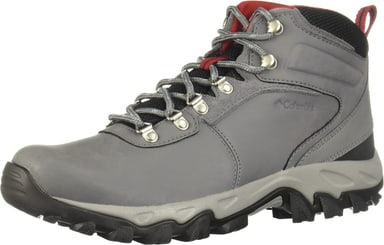
Best budget: Columbia Newton Ridge Plus II Waterproof
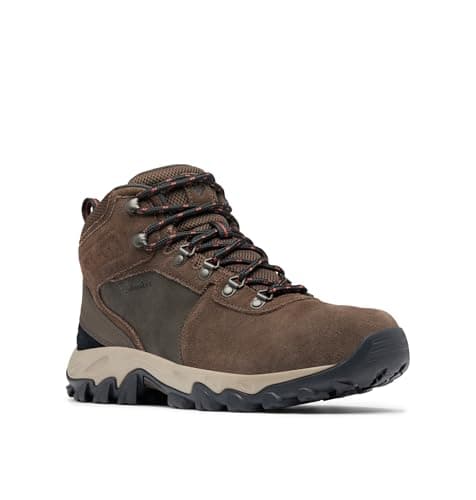
Under $110, most waterproof boots ask for a compromise you feel by mile three. The Newton Ridge is the one that keeps turning up in owner reviews as genuinely serviceable rather than merely cheap: a real waterproof membrane, a leather and mesh upper, and enough midsole under the heel for day hikes on maintained trail.
It is heavier than the boots above it and its outsole gives up traction on wet rock compared to Vibram or Contagrip, so it is not the boot for scrambling or loaded overnights. As a first pair, or for someone hiking a handful of weekends a year, it is the honest answer at this price. Women's version: Columbia Newton Ridge Plus Waterproof Women's.
BEST BUDGET
Columbia Newton Ridge Plus II WP
Best for: First boots, occasional hikers, and gift buyers on a budget.
- The best-selling budget waterproof boot on Amazon
- Less support than the Moab or Quest under load
Kit Score 8.2/10 · $110.00 Price checked Oct 25, 3:41 PM CDT · how we score gear
Buy on AmazonProduct details
First boots, occasional hikers, and gift buyers on a budget. The best-selling budget waterproof boot on Amazon.
- Height
- Mid
- Waterproof
- Seam-sealed leather
- Outsole
- Omni-Grip
- Best use
- Budget waterproof boot
More strengths
- Full-grain leather looks and wears above its price
- Light for a leather boot
Other tradeoffs
- Availability rotates across listings: check current stock
How they compare
| Product | Kit Score | Price | Best for |
|---|---|---|---|
| Salomon Men's Quest 4 Gore-Tex Hiking Boot | 8.4 | Check current price | Best for: Backpackers and strong day hikers who carry heavier loads on technical terrain and want a boot that stays stable and dry across multiple days. Why it stands out: 4D Advanced Chassis delivers torsional control that reduces ankle fatigue under a loaded pack Tradeoff: Heavier than most day-hike-focused boots at roughly 2 lbs 14 oz per pair |
| Merrell Men's Moab 3 Mid Waterproof Hiking Boot | 8.0 | $115.32 Price checked Oct 25, 3:41 PM CDT | Best for: Hikers who want a dependable, comfortable mid boot for regular day hikes and easy overnight trips without paying a Gore-Tex premium. Why it stands out: Near-zero break-in period: wide toe box and cushy collar are comfortable from mile one Tradeoff: Proprietary waterproofing is less breathable than Gore-Tex, so feet can warm up on long summer days |
| KEEN Men's Targhee III Mid Waterproof Hiking Boot | 8.2 | $175.42 Price checked Oct 25, 3:41 PM CDT | Best for: Hikers with average to wide feet who want a comfortable, waterproof mid boot for day hikes at a below-average price, and don't need the current-generation Targhee IV improvements. Why it stands out: Generous KEEN toe box fits wide and high-volume feet comfortably from the first wear Tradeoff: Keen.Dry breathes less than Gore-Tex, which can lead to warmer feet on long warm-weather hikes |
Salomon Men's Quest 4 Gore-Tex Hiking Boot
- Best for
- Backpackers and strong day hikers who carry heavier loads on technical terrain and want a boot that stays stable and dry across multiple days.
- Why it stands out
- 4D Advanced Chassis delivers torsional control that reduces ankle fatigue under a loaded pack
- Tradeoff
- Heavier than most day-hike-focused boots at roughly 2 lbs 14 oz per pair
Merrell Men's Moab 3 Mid Waterproof Hiking Boot
- Best for
- Hikers who want a dependable, comfortable mid boot for regular day hikes and easy overnight trips without paying a Gore-Tex premium.
- Why it stands out
- Near-zero break-in period: wide toe box and cushy collar are comfortable from mile one
- Tradeoff
- Proprietary waterproofing is less breathable than Gore-Tex, so feet can warm up on long summer days
KEEN Men's Targhee III Mid Waterproof Hiking Boot
- Best for
- Hikers with average to wide feet who want a comfortable, waterproof mid boot for day hikes at a below-average price, and don't need the current-generation Targhee IV improvements.
- Why it stands out
- Generous KEEN toe box fits wide and high-volume feet comfortably from the first wear
- Tradeoff
- Keen.Dry breathes less than Gore-Tex, which can lead to warmer feet on long warm-weather hikes
How to choose the right hiking boot
Matching the boot to your hike
Decide your use case
Day hikes on maintained trails need less ankle support and lighter weight than multi-day trips with a loaded pack. A softer boot (Moab 3, Targhee III) is comfortable for day use; the Quest 4 or Kaha 3 earns its weight on overnights.
Assess your foot width
KEEN builds wide; Salomon and Merrell build medium. If you've historically gone a half size up to get width, start with the Targhee III and try others in-store before committing.
Check waterproofing needs
If you hike in wet climates or cross streams regularly, prioritize Gore-Tex (Quest 4, Kaha 3) or a well-reviewed proprietary membrane (Moab 3, Targhee III) over a non-waterproof version. In dry climates, a non-waterproof version of the same boot will breathe better and cost less.
Factor in break-in time
If you have a trip in two weeks, pick a boot with a synthetic-dominant upper (all but the Newton Ridge here qualify). Pure leather boots can need 30+ miles before they stop biting the heel.
Budget for socks
A $15 merino hiking sock (Darn Tough, Smartwool) paired with a mid-tier boot outperforms an expensive boot with a cheap cotton sock. Budget for both when you calculate cost.
The right hiking boot is the one that still fits well at mile eight, not the one that felt great in the parking lot.
FAQ
What is the difference between a hiking shoe and a hiking boot?
Hiking shoes are low-cut, lighter, and better for well-maintained trails where ankle support is less critical. Hiking boots (mid or high) add ankle coverage and a stiffer sole, which matters on uneven terrain, with a loaded pack, or when your ankles need extra support. For day hikes on clear trails, a hiking shoe works fine. For rough terrain or any overnight use, a mid boot is the safer choice.
Are waterproof hiking boots worth it?
For most hikers, yes. Waterproof boots cost more and breathe less, but they stay comfortable through stream crossings, wet grass, and light rain that would leave a non-waterproof boot soaked by midday. The exception is dry climates or summer desert hiking, where the reduced breathability of a waterproof lining creates more discomfort than it prevents.
Do I need to break in new hiking boots before a long hike?
Yes, for anything over 5 miles or on uneven terrain. Wear new boots on short neighborhood walks and easy trails for at least a week before a full day out. The synthetic-dominant boots here (Moab 3, Targhee III, Kaha 3, Quest 4) break in faster than older leather-heavy designs, but every foot and boot is different. Hot spots on your first break-in walk signal fit issues worth addressing before they become blisters on trail.
Ready to gear up for the trail? Browse more hiking gear and guides, or read about how we research and rate every product on this site.
Keep going
Related guides
 Complete hike loadoutDay hike kitBuild the complete kit
Our recommendations draw on manufacturer documentation, retailer listings, owner feedback, and comparisons with alternatives.
As an Amazon Associate I earn from qualifying purchases. We may earn a commission from links here, at no extra cost to you. How we research →