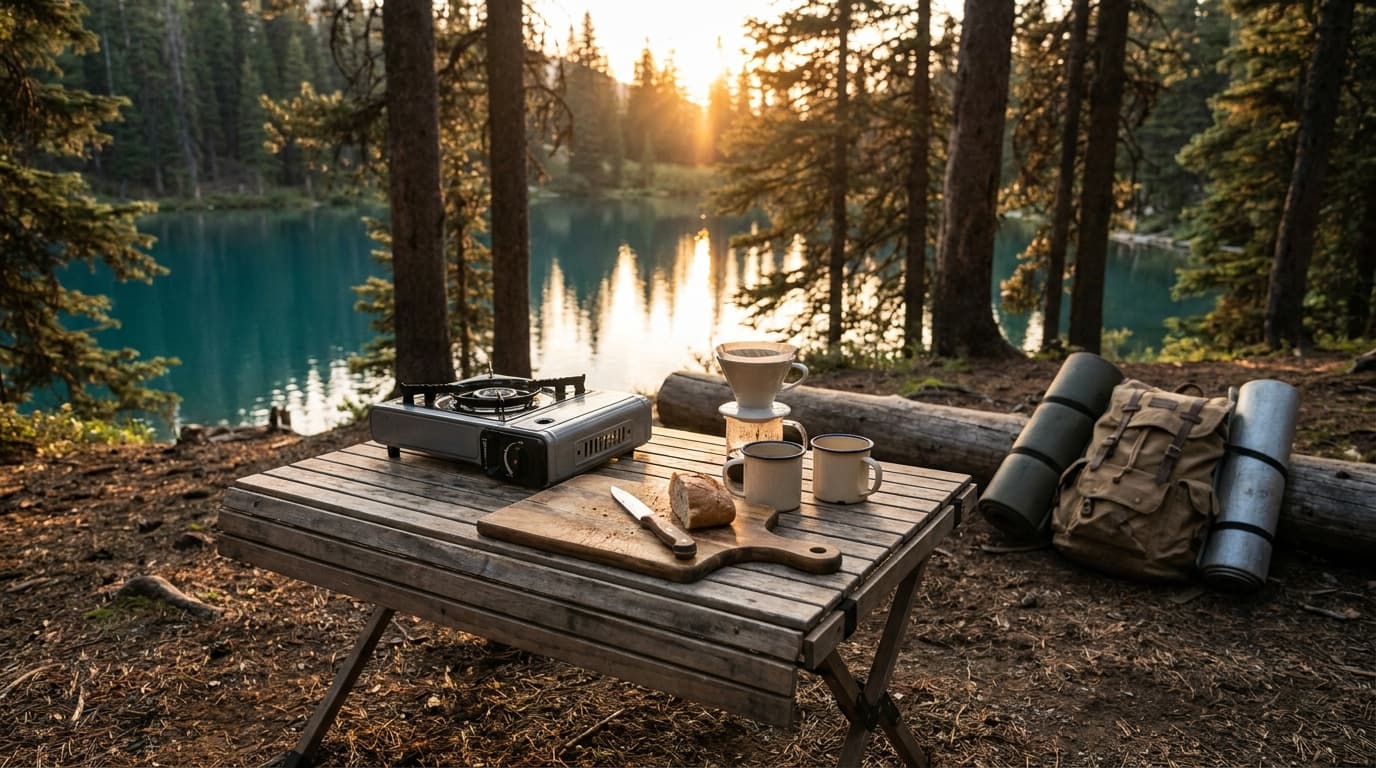
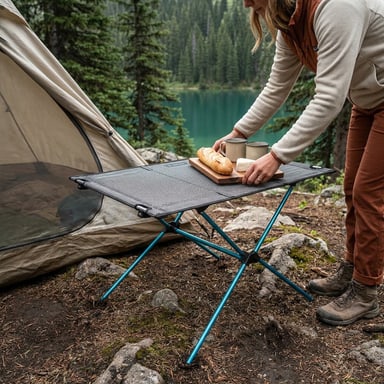
A bad camp table is a wobbly negotiation every meal. A good one disappears into setup and frees your brain for the actual reason you drove two hours into the woods.
Our quick picks
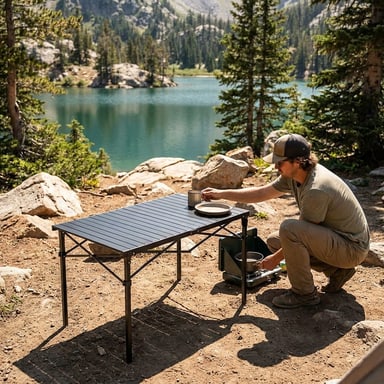
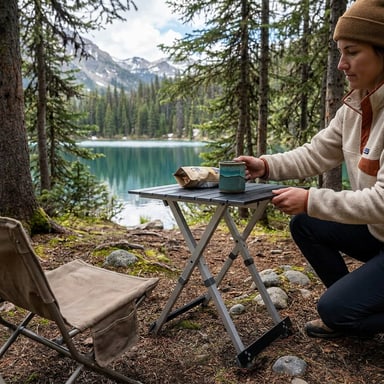
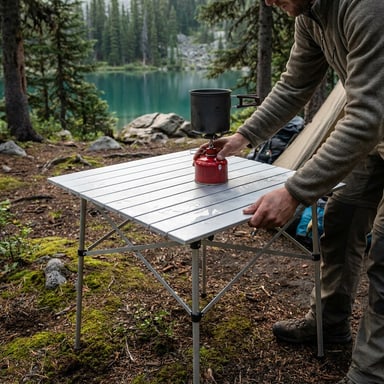
How we picked
Every pick below is scored against the Kit Score: a weighted rubric that weighs setup time, packed dimensions and weight, weight capacity, surface area, stability on uneven ground, and long-term owner-verified durability. No single spec wins; the score balances the whole package against your actual use case.
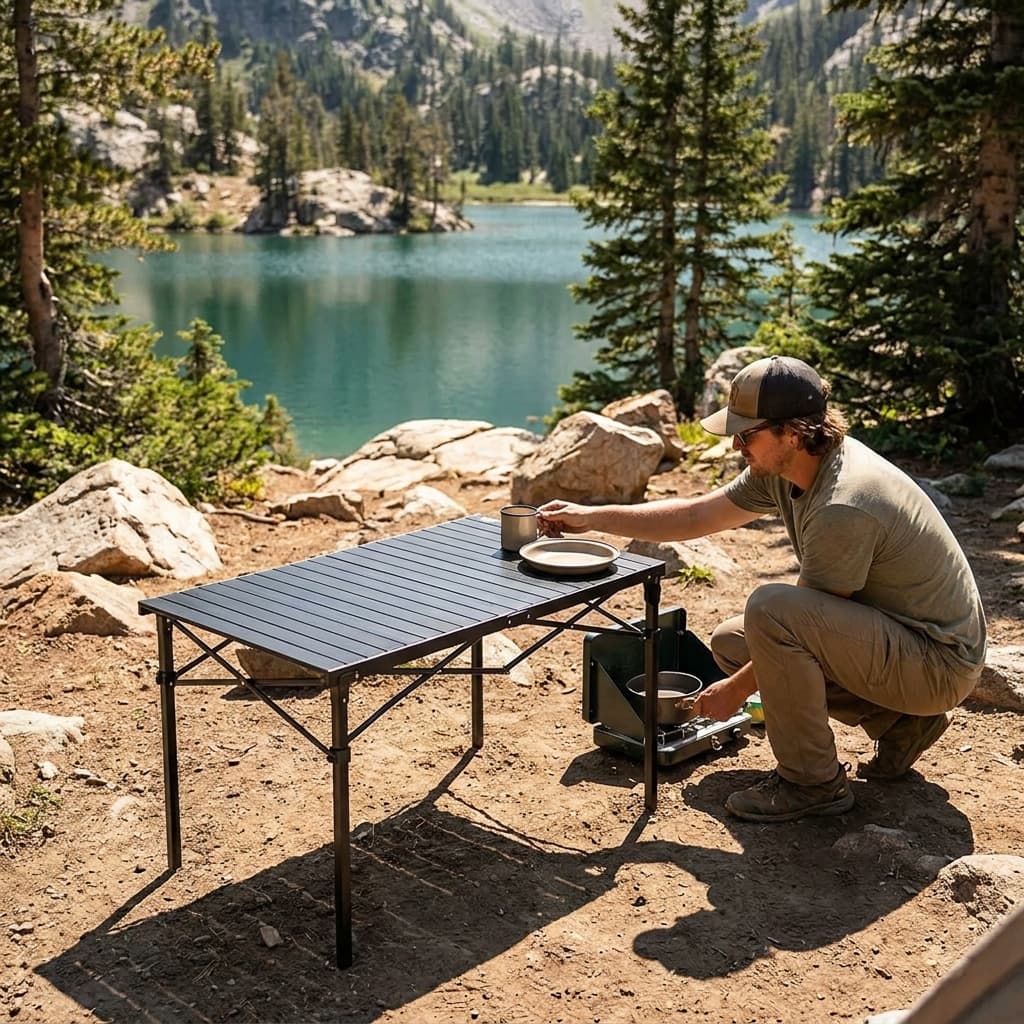
Best overall: Mountain Summit Gear Heavy-Duty Roll-Top Table (Medium)
BEST OVERALL
Mountain Summit Gear Heavy-Duty Roll-Top Table (Medium)
Best for: Car campers who want a full-size kitchen prep and dining surface that sets up fast and lasts through years of hard use.
- Large aluminum slat surface handles hot cookware and resists rain without any fuss
- Fixed 28-inch height means shorter campers or low camp chairs may find the ergonomics awkward
Kit Score 8.5/10 · Check current price · how we score gear
Buy on AmazonProduct details
A 37 x 28-inch aluminum roll-top table with a steel frame that sets up in under a minute and handles the full workload of a car camping kitchen. The large, heat-resistant slat surface earns it consistent top picks from gear reviewers who prioritize surface area and setup speed over portability.
- Weight
- 14 lbs
- Setup dimensions
- 37 x 28 x 28 in.
- Packed dimensions
- 31 x 9 x 6 in.
- Weight capacity
- 70 lbs
- Height
- 28 in. (fixed)
- Tabletop material
- Aluminum slats on steel frame
More strengths
- Steel frame stays planted on gravel, sand, and uneven ground once locked in
- Rolls into a cylindrical carry bag and sets up in under a minute with no loose parts to lose
Other tradeoffs
- At 14 lbs it is a car-camping table only, not a candidate for bike touring or carried sites
The MSG Heavy-Duty Roll-Top Medium earns the top slot because it covers the widest range of camp kitchen demands without a notable weak point. The aluminum roll-top surface expands from its carry bag in under 30 seconds and folds back just as fast. At 88 lbs of rated weight capacity, it handles a two-burner stove plus a loaded prep board simultaneously, which is the actual test that matters at a busy campsite.
The medium footprint (roughly 32 by 24 inches open) is the sweet spot: large enough for real meal prep, compact enough to fit in a mid-size vehicle cargo area alongside coolers and gear bags. Legs adjust between two height positions, useful for pairing with camp chairs of different seat heights or going low for tailgate-style setups.
Owner reviews across multiple retail platforms consistently flag the leg locking mechanism and the roll-top hinge as long-term durable. No soft mesh shelves to tear, no fabric surface to absorb grease. Replacement parts are available, which matters for a table you plan to own for a decade.
Best for: Car campers who want a full-size kitchen prep and dining surface that sets up fast and lasts through years of hard use.
Price: $120 – $140
Editor's choice: GCI Outdoor Compact Camp Table 20
EDITOR'S CHOICE
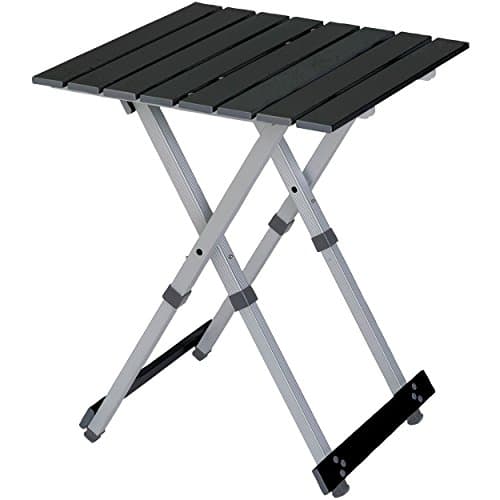
GCI Outdoor Compact Camp Table 20
Best for: Solo campers and couples who want a packable, heat-safe surface for cooking or a drink station without hauling a full-size table.
- At 4 lbs and under 2 inches packed, it fits alongside gear in any vehicle without rearranging
- 20 x 18-inch surface is a side table, not a dining table; it seats one comfortably, not a group
Kit Score 8.7/10 · $40.00 Price checked Oct 25, 3:41 PM CDT · how we score gear
Buy on AmazonProduct details
A 4-pound folding side table with a heat-resistant aluminum top, Squeeze Telescoping legs, and a 60-pound weight capacity that surprises owners at every price tier. It folds to a slim 18 x 2 x 17.9-inch profile and deploys in seconds, making it the most packable full-function table in this roundup.
- Weight
- 4 lbs
- Setup dimensions
- 20 x 18 x 24 in.
- Packed dimensions
- 18 x 2 x 17.9 in.
- Weight capacity
- 60 lbs
- Height
- 24 in. (fixed)
- Tabletop material
- Aluminum
More strengths
- 60-pound capacity reliably supports a stove, cookware, and meal spread despite its compact build
- Squeeze Telescoping legs collapse in one motion for faster breakdown than any fold-flat competitor at this price
Other tradeoffs
- No carry bag included in the box
The GCI Compact Camp Table 20 is the pick when space and weight are constraints but you still need a dedicated surface. The folded package fits in a narrow gap in a pack or a car door pocket. At 4 lbs packed, it adds almost nothing to a load.
The polypropylene surface is heat-safe, which matters: this is the table people actually put a backpacking stove on, and a surface that warps or scorches under a canister stove is useless. The auto-open leg design means setup is a one-handed motion.
At roughly 20 by 14 inches, this is not a dining table. It is a side table, a stove platform, a drink station, or a solo prep surface. Verified owners use it as a permanent fixture in car-camping kits as the "second table" that handles the stove while the main table stays clear for food.
At $40 – $55, the price-to-usefulness ratio is among the highest in the category.
Best for: Solo campers and couples who want a packable, heat-safe surface for cooking or a drink station without hauling a full-size table.
Price: $40 – $55
Best budget: Coleman Outdoor Folding Table
BEST BUDGET
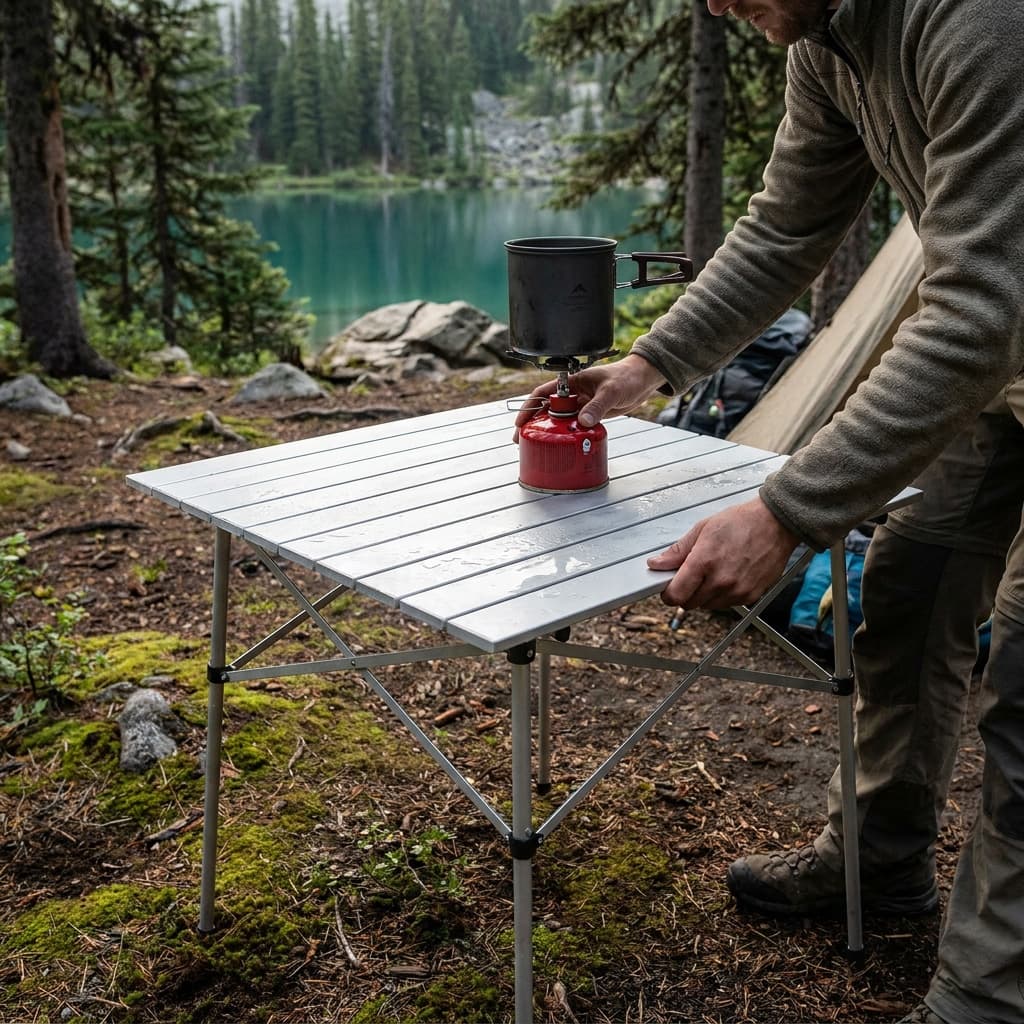
Coleman Outdoor Folding Table
Best for: Budget-focused car campers who want a proven roll-top design with a generous weight capacity and fast setup, without spending over $85.
- 100-pound capacity and heat-resistant aluminum surface cover most car camping cooking tasks
- Plastic pole connectors can crack under repeated heavy lateral loading
Kit Score 8.0/10 · $73.99 Price checked Oct 25, 3:41 PM CDT · how we score gear
Buy on AmazonProduct details
A 9-pound aluminum roll-top table with a 27.6 x 27.6-inch surface and 100-pound weight capacity that sets up in one motion: the frame snaps together in sections and the aluminum slat top rolls out flat, ready to use. Coleman has kept this design largely unchanged because it works, and the heat-resistant slat surface handles a camp stove without any special prep. A carry bag is included.
- Weight
- 9 lbs
- Setup dimensions
- 27.6 x 27.6 x 27.6 in.
- Weight capacity
- 100 lbs
- Height
- 27.6 in. (fixed)
- Packed format
- Flat-fold with carry bag included
- Tabletop material
- Heat-resistant aluminum slats
More strengths
- Frame snaps together in sections for setup in under a minute with no loose hardware
- 9-pound weight with included carry bag tucks easily into a truck bed or car trunk
Other tradeoffs
- Fixed height and no individual leg adjustments make uneven terrain a nuisance
Coleman's entry delivers the roll-top format at a price point well below the Mountain Summit Gear. The aluminum slat surface and steel legs produce a stable, weatherable table that owners report using season after season without structural failure.
Weight capacity comes in at 100 lbs on the Coleman, which is higher than the MSG Medium. The tradeoff is packed weight and bulk: this table is heavier and larger folded than the MSG, so it is less suited to tight packing situations. For campers who drive to a site and unload, that difference rarely matters.
The two-height adjustment and carry handle are standard roll-top features that Coleman has executed reliably for years. If you want the format proven by a brand with ubiquitous parts availability and a predictable warranty process, this is the no-risk choice.
Best for: Budget-focused car campers who want a proven roll-top design with a generous weight capacity and fast setup, without spending over $85.
Price: $65 – $85
Best premium: Helinox Table One Hard Top Large
BEST PREMIUM
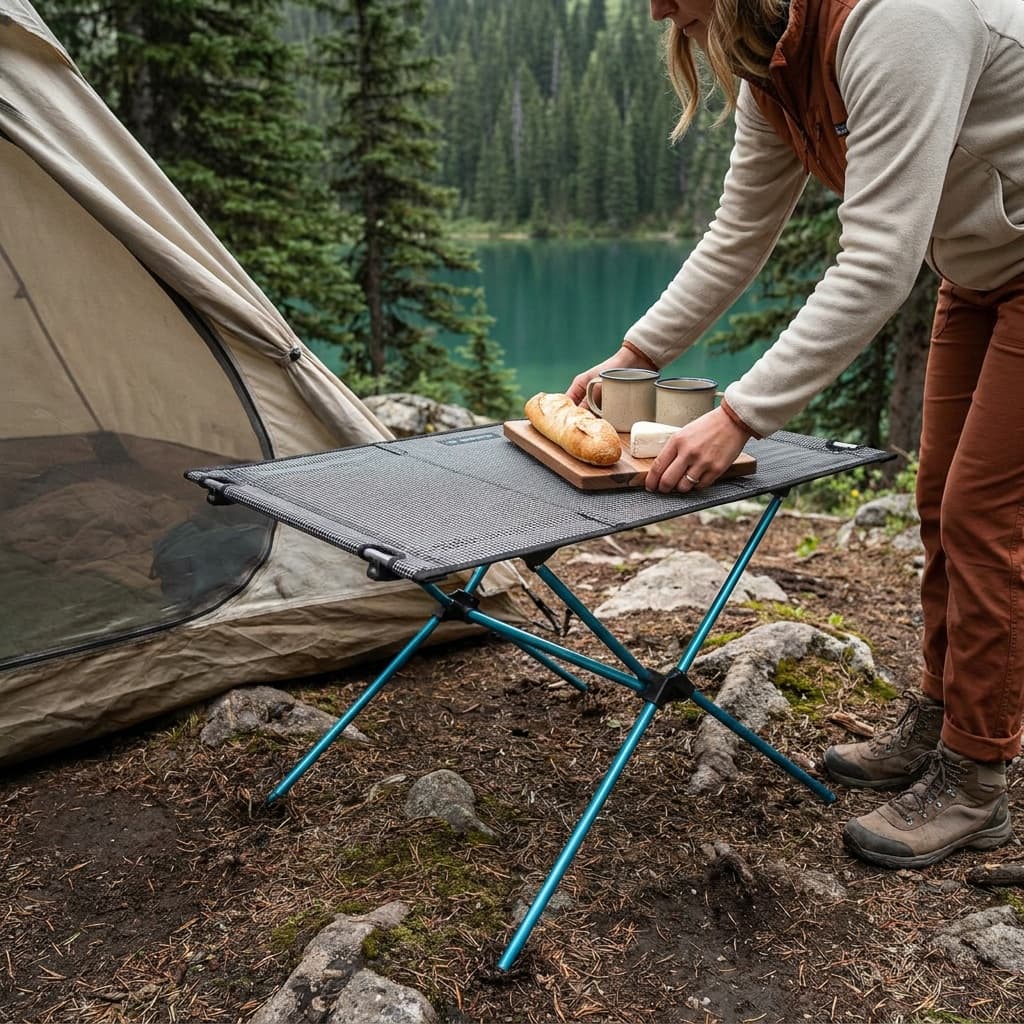
Helinox Table One Hard Top Large
Best for: Ultralight-focused campers, backpackers who car-camp between trips, or anyone who refuses to trade packability for a real table surface.
- 3.4 lbs and a packed size no larger than a yoga block make it viable for any camp setup including remote sites
- At $160 to $185 it costs more than the other three options in this roundup combined
Kit Score 8.4/10 · $169.95 Price checked Oct 25, 3:41 PM CDT · how we score gear
Buy on AmazonProduct details
A 3.4-pound collapsible table with a 29.5 x 22.5-inch rigid polyester surface and DAC aluminum alloy shock-corded pole frame that packs to 23.5 x 6.5 x 4.5 inches. The 110-pound weight capacity is an industry-leading figure for a table this light, and the five-year warranty backs the build quality.
- Weight
- 3 lbs 6.5 oz
- Setup dimensions
- 29.5 x 22.5 x 19.5 in.
- Packed dimensions
- 23.5 x 6.5 x 4.5 in.
- Weight capacity
- 110 lbs
- Height
- 19.5 in. (fixed)
- Frame material
- DAC aluminum alloy, shock-corded poles
More strengths
- 110-pound capacity rivals tables three times its weight, verified by reviewer stress tests
- Rigid hard-top surface is stable for drinks, plates, and light cooking equipment, far more useful than mesh-top versions
Other tradeoffs
- 19.5-inch table height is optimized for low chairs and ground-level camp setups, not standing kitchen work
The Helinox Table One Hard Top Large is the anomaly in this category: 2.4 lbs packed, fits inside most backpacking packs, assembles from a pole-and-clip system into a rigid table with a hard-top surface. The large variant gives you roughly 23.6 by 15.8 inches of usable space.
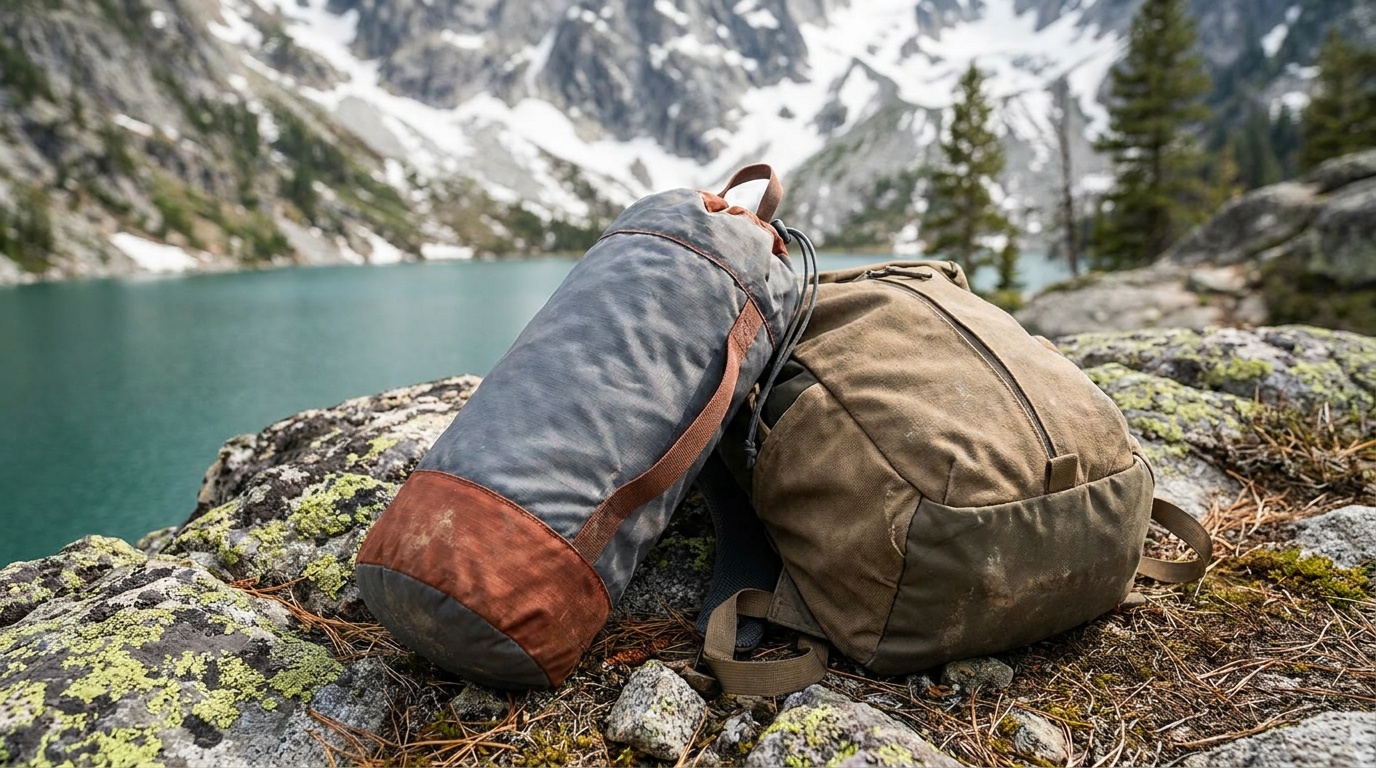
The hard top is the critical upgrade over the mesh-top version: it is a real prep and cook surface, not just a platform. Owners who also backpack report that the Helinox stays in their car-camping kit because it is genuinely better in wind than fabric tables and because the packed size never requires any compromises in the vehicle.
The price reflects the materials and engineering. At $160 – $185, this is not a casual buy. But it is the correct answer for a specific type of camper: ultralight-focused, uses the same gear across trip formats, and values compact pack-out over a larger surface.
Best for: Ultralight-focused campers, backpackers who car-camp between trips, or anyone who refuses to trade packability for a real table surface.
Price: $160 – $185
How they compare
| Product | Kit Score | Price | Best for |
|---|---|---|---|
| Mountain Summit Gear Heavy-Duty Roll-Top Table (Medium) | 8.5 | Check current price | Best for: Car campers who want a full-size kitchen prep and dining surface that sets up fast and lasts through years of hard use. Why it stands out: Large aluminum slat surface handles hot cookware and resists rain without any fuss Tradeoff: Fixed 28-inch height means shorter campers or low camp chairs may find the ergonomics awkward |
| GCI Outdoor Compact Camp Table 20 | 8.7 | $40.00 Price checked Oct 25, 3:41 PM CDT | Best for: Solo campers and couples who want a packable, heat-safe surface for cooking or a drink station without hauling a full-size table. Why it stands out: At 4 lbs and under 2 inches packed, it fits alongside gear in any vehicle without rearranging Tradeoff: 20 x 18-inch surface is a side table, not a dining table; it seats one comfortably, not a group |
| Coleman Outdoor Folding Table | 8.0 | $73.99 Price checked Oct 25, 3:41 PM CDT | Best for: Budget-focused car campers who want a proven roll-top design with a generous weight capacity and fast setup, without spending over $85. Why it stands out: 100-pound capacity and heat-resistant aluminum surface cover most car camping cooking tasks Tradeoff: Plastic pole connectors can crack under repeated heavy lateral loading |
| Helinox Table One Hard Top Large | 8.4 | $169.95 Price checked Oct 25, 3:41 PM CDT | Best for: Ultralight-focused campers, backpackers who car-camp between trips, or anyone who refuses to trade packability for a real table surface. Why it stands out: 3.4 lbs and a packed size no larger than a yoga block make it viable for any camp setup including remote sites Tradeoff: At $160 to $185 it costs more than the other three options in this roundup combined |
Mountain Summit Gear Heavy-Duty Roll-Top Table (Medium)
- Best for
- Car campers who want a full-size kitchen prep and dining surface that sets up fast and lasts through years of hard use.
- Why it stands out
- Large aluminum slat surface handles hot cookware and resists rain without any fuss
- Tradeoff
- Fixed 28-inch height means shorter campers or low camp chairs may find the ergonomics awkward
GCI Outdoor Compact Camp Table 20
- Best for
- Solo campers and couples who want a packable, heat-safe surface for cooking or a drink station without hauling a full-size table.
- Why it stands out
- At 4 lbs and under 2 inches packed, it fits alongside gear in any vehicle without rearranging
- Tradeoff
- 20 x 18-inch surface is a side table, not a dining table; it seats one comfortably, not a group
Coleman Outdoor Folding Table
- Best for
- Budget-focused car campers who want a proven roll-top design with a generous weight capacity and fast setup, without spending over $85.
- Why it stands out
- 100-pound capacity and heat-resistant aluminum surface cover most car camping cooking tasks
- Tradeoff
- Plastic pole connectors can crack under repeated heavy lateral loading
Helinox Table One Hard Top Large
- Best for
- Ultralight-focused campers, backpackers who car-camp between trips, or anyone who refuses to trade packability for a real table surface.
- Why it stands out
- 3.4 lbs and a packed size no larger than a yoga block make it viable for any camp setup including remote sites
- Tradeoff
- At $160 to $185 it costs more than the other three options in this roundup combined
How to choose a camping table
How to match a table to your setup
Define your primary use
A dedicated cook station needs a heat-safe or metal surface and at least 30 inches of width. A drink side-table or solo setup can be much smaller. Matching table function to trip function is the first cut.
Check packed dimensions against your vehicle
Roll-top tables fold flat but stay wide; they need horizontal cargo space. Helinox-style tables pack into a tube or small bag and fit vertically. Measure your cargo area before buying.
Match weight capacity to actual load
A two-burner propane stove loaded with a cast-iron pan can hit 20 lbs on its own. A 50-lb-rated table is fine for snacks; for real cooking, aim for 80 lbs or higher.
Factor in trip frequency
A table used once a year can be budget. A table that goes out 15 weekends a season is worth spending up on, because repeated breakdown and setup exposes cheaper hinge and lock mechanisms faster.
The single most useful camp-table spec is not weight capacity or surface area: it is how fast the table goes from bag to ready, because that determines whether you actually use it on a tired Friday night arrival.
Roll-top vs folding: which format is right for you?
Roll-top tables use aluminum slats that roll from a cylindrical carry configuration into a flat surface. They are fast to deploy, easy to clean, and the surface handles moisture and spills without damage. The tradeoff is packed width: they stay as wide as the table is long, even folded.
Folding hard-top tables (like the GCI Compact) fold in half and collapse smaller in two dimensions. They are often lighter but may require more setup steps. Surface material varies: plastic is heat-safe and common; fiberboard or MDF is heavier and absorbs moisture over time.
Pole-assembly ultralight tables (Helinox) pack the smallest and lightest but have the highest per-unit cost and a multi-step assembly. Not faster than roll-top, but dramatically smaller packed.
If you car-camp only, roll-top is almost always the better daily-driver format. If you hike in or share a vehicle with four people's gear, packability climbs in priority and the folding or ultralight formats earn their cost.
Frequently asked questions
What weight capacity do I need for a camp stove and cooking gear?
A two-burner propane stove (like a Coleman Classic) weighs roughly 9 lbs empty. Add a full propane canister (1.5 lbs), a 10-inch cast-iron skillet (5 lbs), and a pot of water (4 lbs) and you are near 20 lbs on the stove alone. Add a cutting board, utensils, and prep items and a realistic cooking load is 30 to 40 lbs. Any table rated at 50 lbs covers that with margin; the MSG Medium at 88 lbs and Coleman at 100 lbs give substantial headroom for heavy cast-iron users.
Are roll-top camp tables actually faster to set up than folding tables?
For most roll-top designs, yes. The deploy motion is a single unfurl from the carry bag directly to a flat surface; legs snap or slide out from a stored position. Most users report full setup in under 60 seconds. Folding tables with separate leg attachment steps can take longer, though designs like the GCI Compact use an auto-open leg system that closes the gap. The Helinox pole-assembly system is the slowest of these four, typically around two to four minutes for a first-time setup, less once the assembly pattern is memorized.
Can I use any of these tables for backpacking?
Only the Helinox Table One Hard Top Large is realistically pack-able for backpacking. At 2.4 lbs and a cylindrical packed profile, it fits inside most 40L to 65L backpacking packs. The other three options here are car-camping tables: even the GCI Compact at 4 lbs and its folded footprint is bulky relative to what a backpacking kit can absorb. For base camping or bike-packing where weight matters but you have panniers or a trailer, the GCI is a reasonable middle option.
Every trip has a different table problem. Return to the camp gear hub for more gear breakdowns, or read more about how we research and rate every pick on this site.
Keep going
Complete loadoutCamp kitchen kitA durable base-camp cooking setup built around heat, cookware, coffee, cold storage, workspace, and water.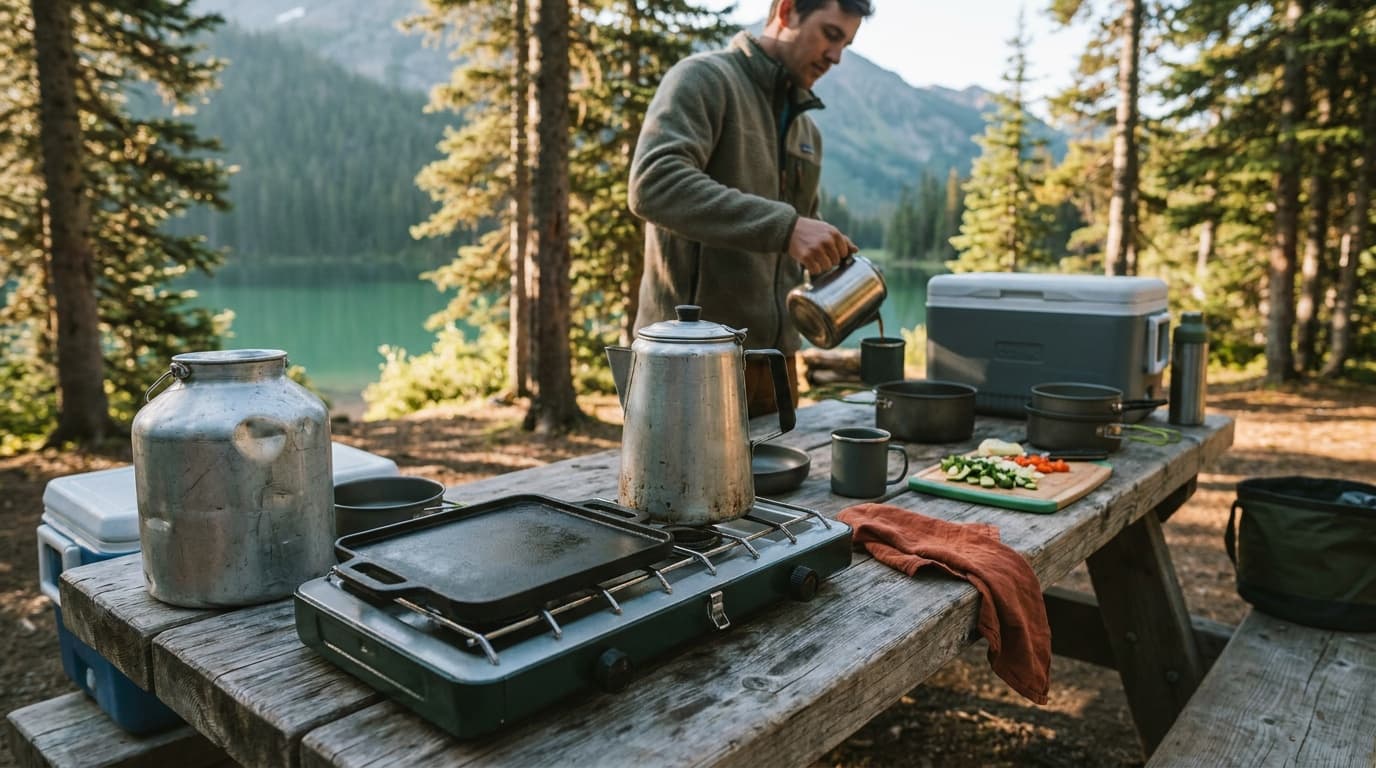
Our recommendations draw on manufacturer documentation, retailer listings, owner feedback, and comparisons with alternatives.
As an Amazon Associate I earn from qualifying purchases. We may earn a commission from links here, at no extra cost to you. How we research →