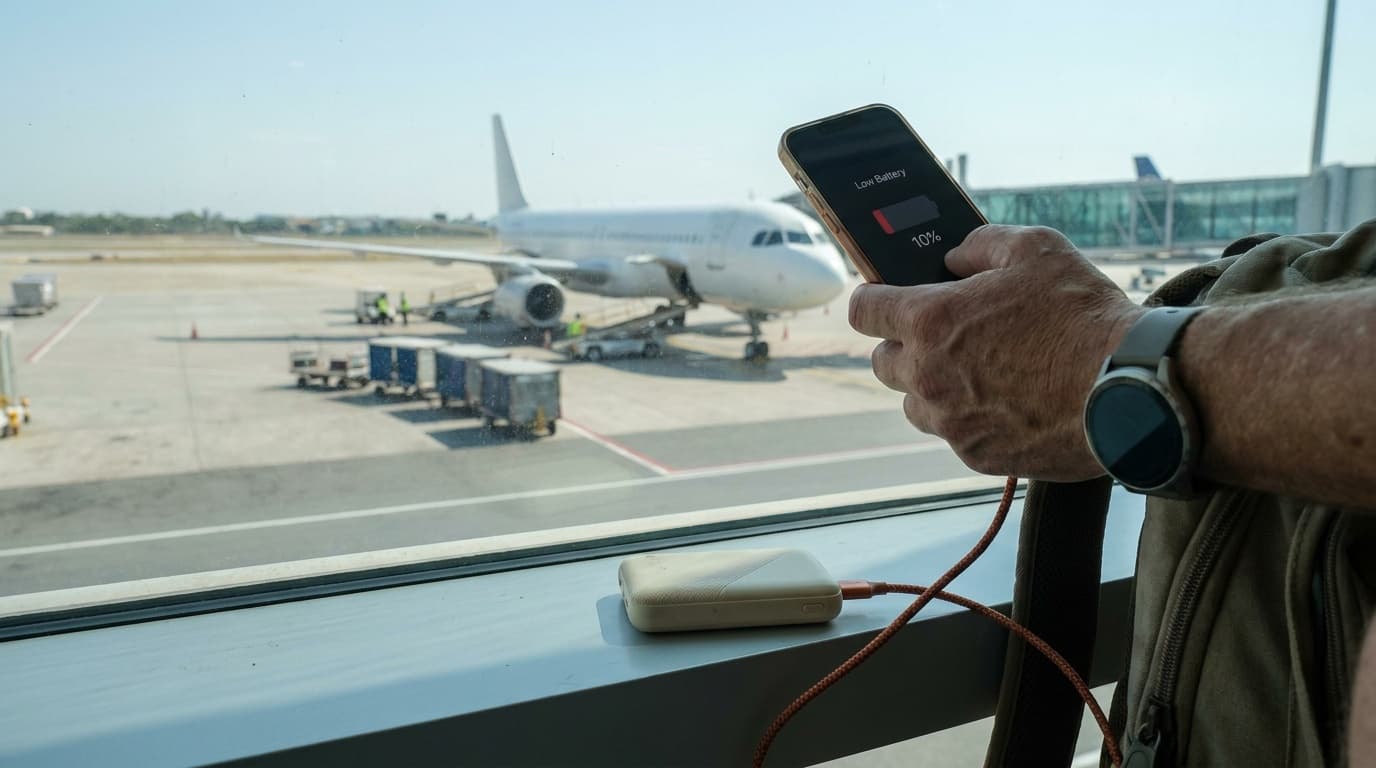
A dead phone at the gate is avoidable, but capacity is no longer the only flight rule. Airlines now differ on how many banks you may carry, where you must store them, and whether you may use them onboard. Check your exact itinerary with our power-bank flight checker, then choose the lightest bank that can power the devices you actually carry. Our power bank size calculator works out how many watt-hours those devices need for your trip.
Our quick picks
The decision in one table
| Product | Kit Score | Price | Best for |
|---|---|---|---|
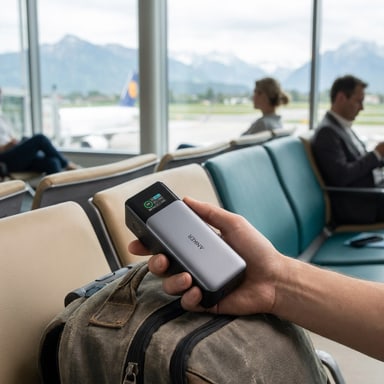
| Anker 737 PowerCore 24K | 8.8 | $109.99 Price checked Oct 25, 3:41 PM CDT | Best for: Travelers who carry a USB-C laptop and want high output, a live power display, and substantial capacity below the common 100Wh threshold. Why it stands out: Smart digital display shows exact battery percentage, input/output wattage in real time Tradeoff: At 1.39 lb it is noticeably heavier than phone-only banks, not a featherlight day-trip option |
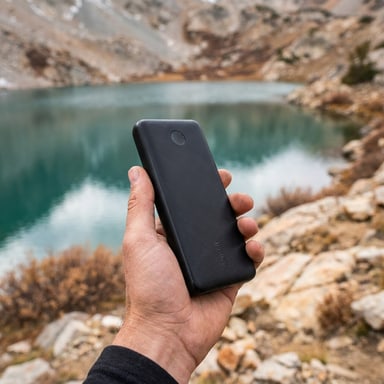
| Anker 10K Power Bank (PowerIQ, USB-C) | 8.5 | $25.99 Price checked Oct 25, 3:41 PM CDT | Best for: Budget-conscious travelers who need a slim, lightweight phone-charging backup for day trips and short flights without the bulk of a high-capacity bank. Why it stands out: Exceptionally slim at 0.61 inches thick, fits a shirt pocket or flat in a travel organizer Tradeoff: 15W output is standard speed, no fast-charging for phones that support 20W+ PD |
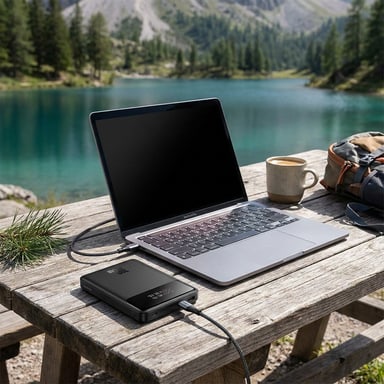
| Baseus Blade 100W 20000mAh | 8.5 | $53.96 Price checked Oct 25, 3:41 PM CDT | Best for: Value-focused travelers who want laptop-grade 100W charging and generous 20,000mAh capacity without paying premium-brand prices. Why it stands out: 100W USB-C PD output charges most laptops at a meaningful rate, rare at this price Tradeoff: Newer product with fewer reviews than Anker or Belkin alternatives; long-term durability less proven |
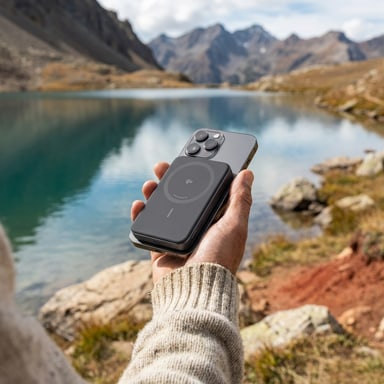
| Anker MagGo Power Bank 10K | 8.3 | $79.99 Price checked Oct 25, 3:41 PM CDT | Best for: iPhone travelers who want the convenience of cord-free magnetic charging during flights and at the hotel without unpacking a cable. Why it stands out: Qi2-certified 15W wireless charging is the fastest MagSafe-compatible charging available from a power bank Tradeoff: Only useful for iPhone 12 and later, Android MagSafe benefit is zero and wireless speed drops to 7.5W |
Anker 737 PowerCore 24K
- Best for
- Travelers who carry a USB-C laptop and want high output, a live power display, and substantial capacity below the common 100Wh threshold.
- Why it stands out
- Smart digital display shows exact battery percentage, input/output wattage in real time
- Tradeoff
- At 1.39 lb it is noticeably heavier than phone-only banks, not a featherlight day-trip option
Anker 10K Power Bank (PowerIQ, USB-C)
- Best for
- Budget-conscious travelers who need a slim, lightweight phone-charging backup for day trips and short flights without the bulk of a high-capacity bank.
- Why it stands out
- Exceptionally slim at 0.61 inches thick, fits a shirt pocket or flat in a travel organizer
- Tradeoff
- 15W output is standard speed, no fast-charging for phones that support 20W+ PD
Baseus Blade 100W 20000mAh
- Best for
- Value-focused travelers who want laptop-grade 100W charging and generous 20,000mAh capacity without paying premium-brand prices.
- Why it stands out
- 100W USB-C PD output charges most laptops at a meaningful rate, rare at this price
- Tradeoff
- Newer product with fewer reviews than Anker or Belkin alternatives; long-term durability less proven
Anker MagGo Power Bank 10K
- Best for
- iPhone travelers who want the convenience of cord-free magnetic charging during flights and at the hotel without unpacking a cable.
- Why it stands out
- Qi2-certified 15W wireless charging is the fastest MagSafe-compatible charging available from a power bank
- Tradeoff
- Only useful for iPhone 12 and later, Android MagSafe benefit is zero and wireless speed drops to 7.5W
The choice is mostly about device wattage versus carried weight. A phone-only traveler gains little from carrying a 1.39-pound laptop bank. A laptop traveler gains little from a pocket bank that tops out at 15W. Magnetic wireless charging is the most convenient option here, but it also wastes more energy as heat than a cable.
The numbers that actually matter
Capacity is sold in milliamp-hours, but airlines and real comparisons use watt-hours. Learn these four and you can shop in 30 seconds.
Best overall: Anker 737 (PowerCore 24K)
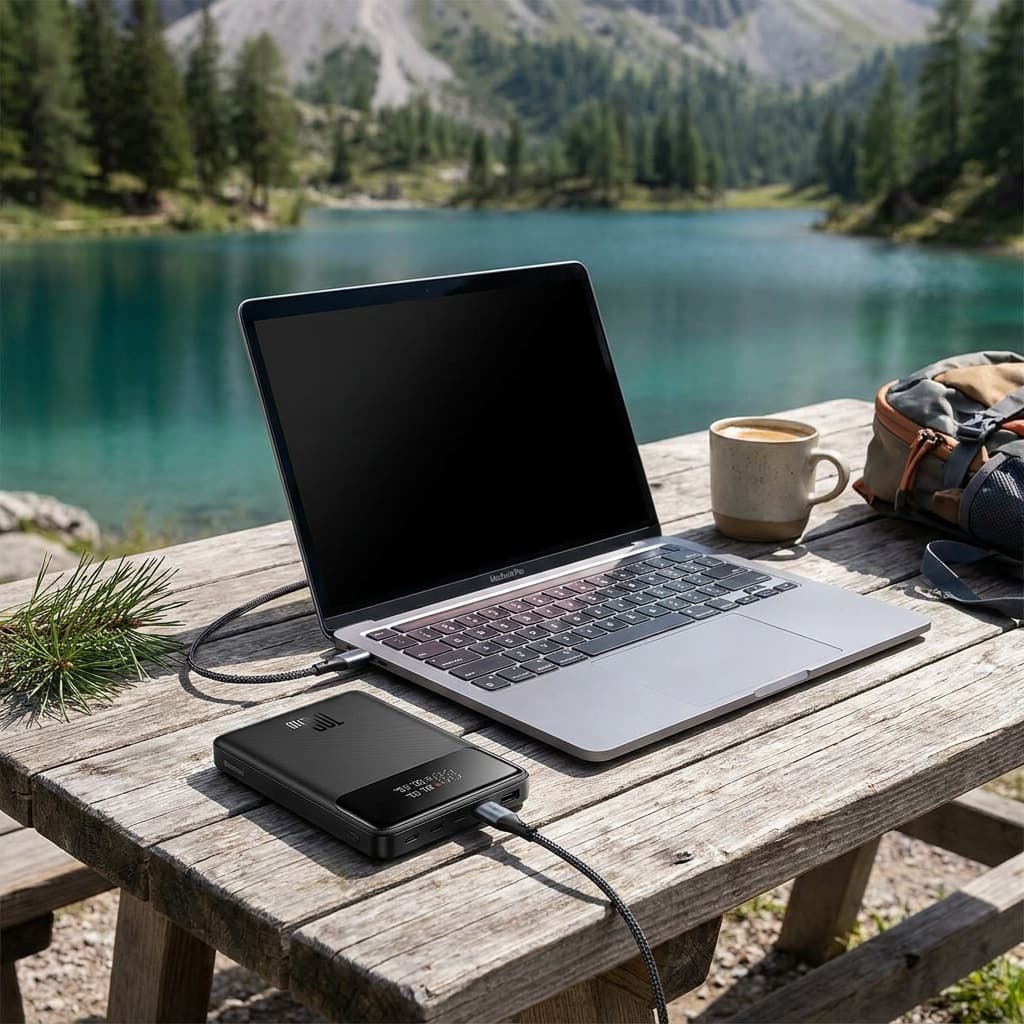
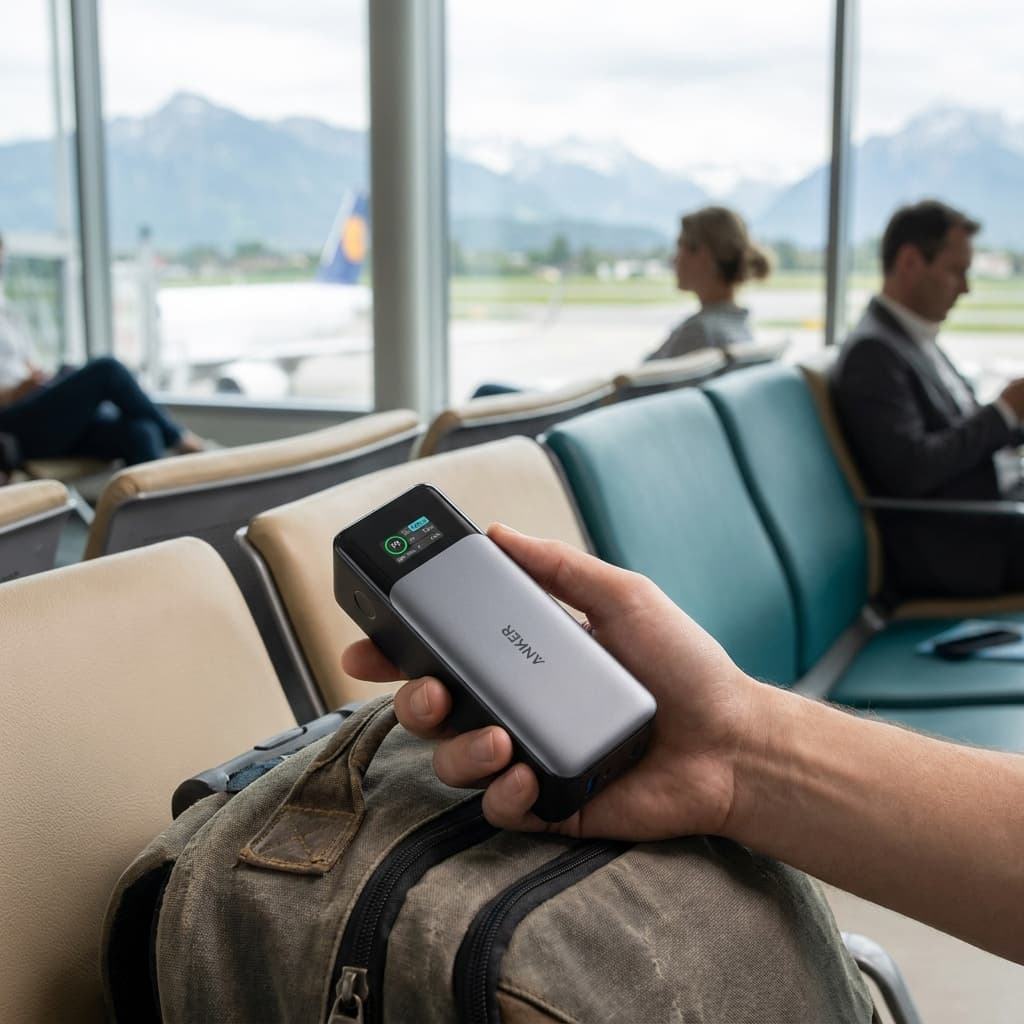
The 737 is our best overall pick for travelers carrying a USB-C laptop. Its printed 86.4Wh rating leaves meaningful capacity headroom, while the 140W bidirectional USB-C ceiling can serve demanding laptops and recharge the bank quickly with a capable charger. At 1.39 pounds, it is excessive for a phone-only weekend. Read our full Anker 737 PowerCore 24K review and the manufacturer's specifications.
BEST OVERALL
Anker 737 PowerCore 24K
Best for: Travelers who carry a USB-C laptop and want high output, a live power display, and substantial capacity below the common 100Wh threshold.
- Smart digital display shows exact battery percentage, input/output wattage in real time
- At 1.39 lb it is noticeably heavier than phone-only banks, not a featherlight day-trip option
Kit Score 8.8/10 · $109.99 Price checked Oct 25, 3:41 PM CDT · how we score gear
Buy on AmazonProduct details
The Anker 737 combines a printed 86.4Wh rating, up to 140W USB-C PD 3.1 output, three ports, and a real-time smart display. Its capacity sits below the common 100Wh threshold, while airline count, storage, and onboard-use rules still apply.
- Capacity
- 24,000mAh (86.4Wh)
- Max Output
- 140W (USB-C PD 3.1)
- Ports
- 2× USB-C, 1× USB-A
- Weight
- 1.39 lb (630g)
- Dimensions
- 6.13 × 2.15 × 1.95 in
- Airline Status
- 86.4Wh; below the common 100Wh limit
More strengths
- 140W PD 3.1 output is fast enough for most laptops at full speed
- Its printed 86.4Wh rating leaves 13.6Wh of headroom below the common 100Wh threshold
- Two USB-C ports and one USB-A port can serve three devices within the 140W total-output ceiling
Other tradeoffs
- No built-in cable, and the boxed cable varies by seller (Amazon listing: 140W USB-C to C; Anker support page: short USB-A to C)
Best budget: Anker 10K power bank
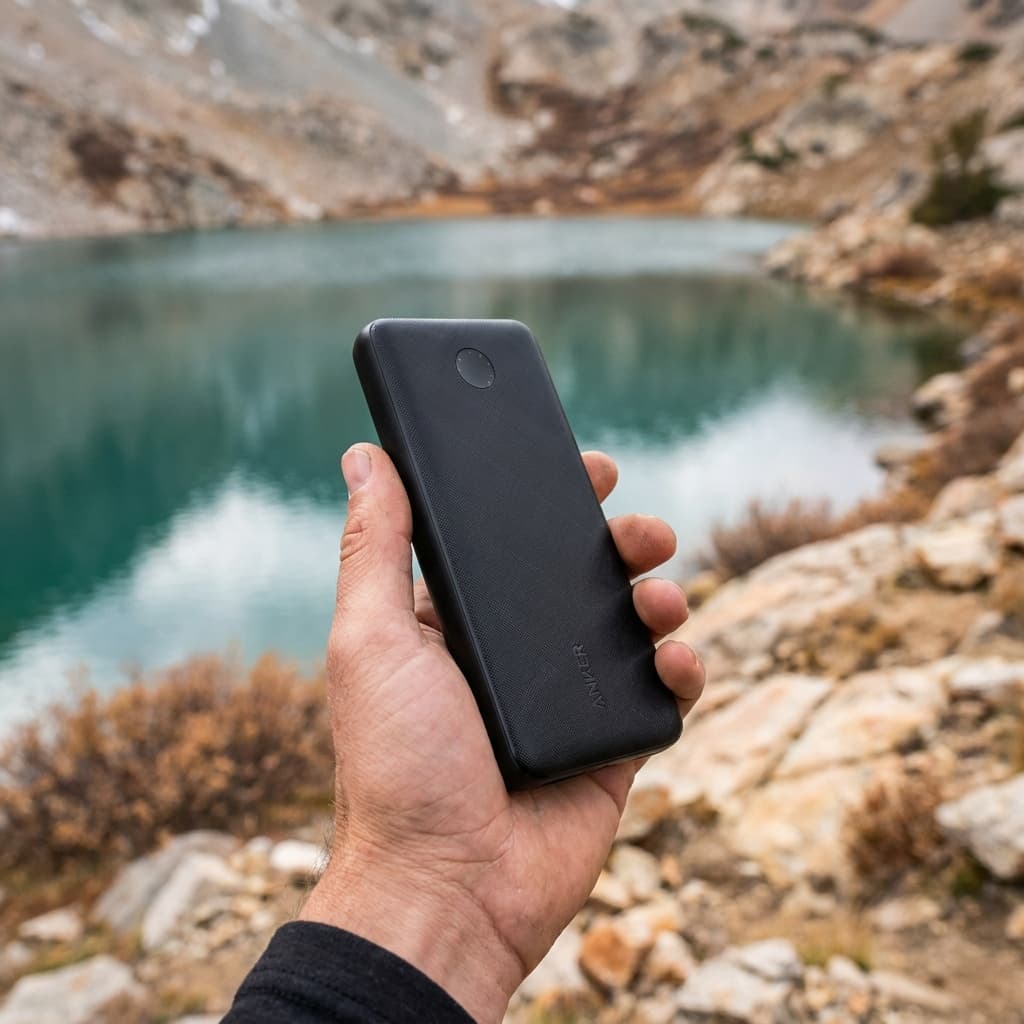
If you only need to keep a phone alive, the Anker 10K is the rational buy. It is rated at 37Wh, weighs far less than the laptop banks, and provides 15W output. That output is slower than current 20W-plus phone charging, but the smaller bank is easier to keep accessible under an airline seat. See the manufacturer's 10,000mAh and 15W specifications. If the bank is also coming on the trail, our best ultralight power banks guide covers 10,000mAh banks of about 5 to 6 oz, up to roughly 100 g lighter, with water ratings for hiking and trail running.
BEST BUDGET
Anker 10K Power Bank (PowerIQ, USB-C)
Best for: Budget-conscious travelers who need a slim, lightweight phone-charging backup for day trips and short flights without the bulk of a high-capacity bank.
- Exceptionally slim at 0.61 inches thick, fits a shirt pocket or flat in a travel organizer
- 15W output is standard speed, no fast-charging for phones that support 20W+ PD
Kit Score 8.5/10 · $25.99 Price checked Oct 25, 3:41 PM CDT · how we score gear
Buy on AmazonProduct details
Anker's 10,000mAh PowerIQ bank is one of the slimmest carry-on power banks at under two-thirds of an inch thick, delivering roughly 1.3 to 1.6 charges of a typical phone, the no-fuss travel backup that disappears into a bag and just works.
- Capacity
- 10,000mAh (37Wh)
- Max Output
- 15W (5V/3A)
- Ports
- 1× USB-C, 1× USB-A
- Weight
- 8.6 oz (Amazon listing)
- Dimensions
- 5.99 × 2.81 × 0.61 in
- Airline Status
- 37Wh; below the common 100Wh limit
More strengths
- Under $26 makes it a low-risk addition to any travel kit
- Overcharge and overload protection included
Other tradeoffs
- Cannot charge laptops or tablets meaningfully
- One port active at a time limits multi-device use
Milliamp-hours mean nothing without voltage. Watt-hours are how airlines measure your bank, and how you should compare them.
Best value laptop charger: Baseus Blade 100W
The Blade combines a 74Wh rating with 100W USB-C output in a flat body that fits beside a laptop. It is the value pick when a 15W phone bank is not enough but the Anker 737's additional output, display, and established track record do not justify its added cost for you.
BEST VALUE
Baseus Blade 100W 20000mAh
Best for: Value-focused travelers who want laptop-grade 100W charging and generous 20,000mAh capacity without paying premium-brand prices.
- 100W USB-C PD output charges most laptops at a meaningful rate, rare at this price
- Newer product with fewer reviews than Anker or Belkin alternatives; long-term durability less proven
Kit Score 8.5/10 · $53.96 Price checked Oct 25, 3:41 PM CDT · how we score gear
Buy on AmazonProduct details
The Baseus Blade delivers 100W USB-C PD and 20,000mAh of capacity in an unusually flat profile for around $54, offering laptop-charging performance at a price that undercuts the competition by a wide margin while staying comfortably within airline carry-on rules.
- Capacity
- 20,000mAh (74Wh)
- Max Output
- 100W (USB-C PD)
- Ports
- 2× USB-C, 2× USB-A
- Weight
- 0.98 lb (444g)
- Dimensions
- 5.27 × 5.27 × 0.78 in
- Airline Status
- 74Wh; under the common 100Wh limit
More strengths
- Flat blade design at 0.78 inches slides neatly into a laptop sleeve or flat compartment
- Four total ports means charging phone, laptop, earbuds, and a second device simultaneously
- At 74Wh it has 26Wh of headroom under the common 100Wh airline carry-on ceiling
Other tradeoffs
- No digital display, only LED indicator lights for battery level
- Square form factor is less conventional than the typical rectangular bank
Best magnetic: Anker MagGo 10K
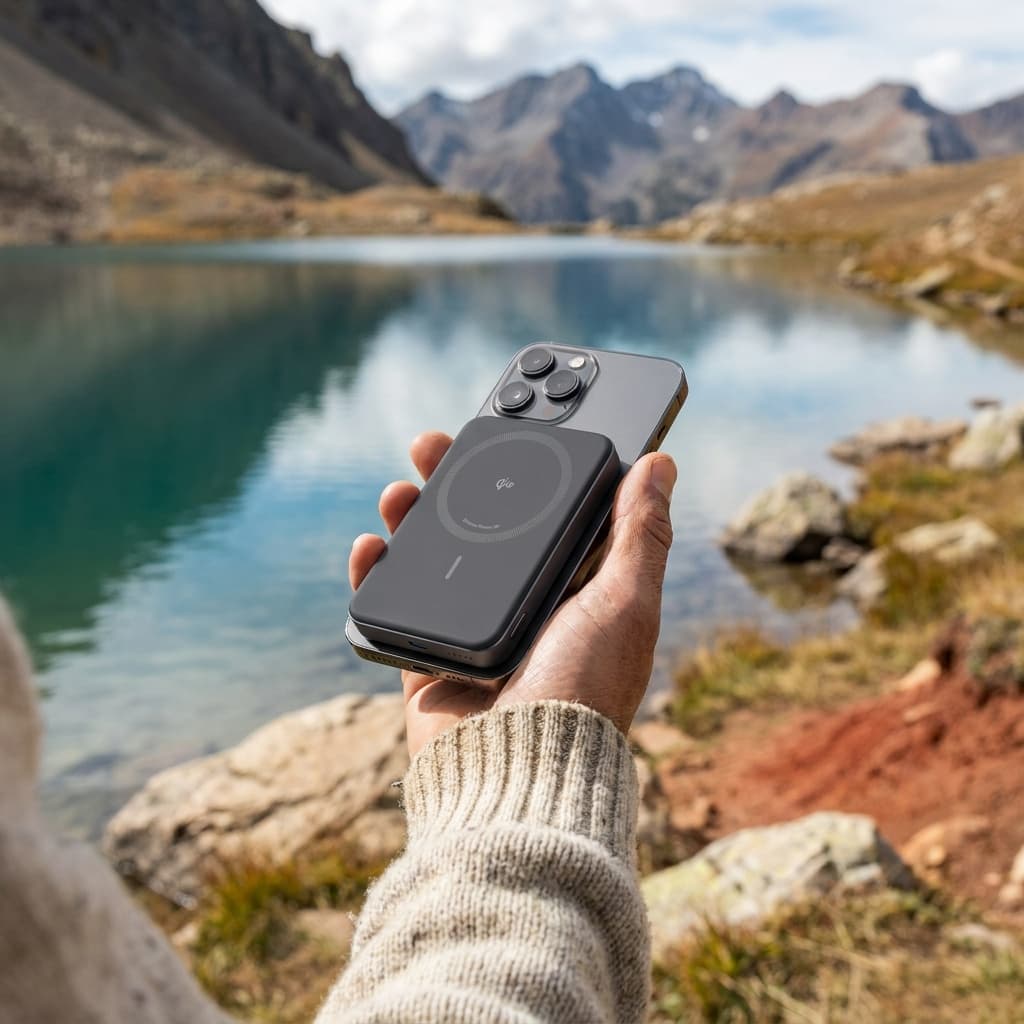
For compatible iPhones, the MagGo snaps to the phone and provides Qi2-certified 15W wireless charging. The integrated stand and display are genuinely useful at a gate or hotel, but wireless heat losses mean it delivers less usable energy than a wired 37Wh bank. Some carriers prohibit onboard power-bank use entirely, so the convenience does not apply on every flight. See Anker's capacity and Qi2 specifications.
EDITOR'S CHOICE
Anker MagGo Power Bank 10K
Best for: iPhone travelers who want the convenience of cord-free magnetic charging during flights and at the hotel without unpacking a cable.
- Qi2-certified 15W wireless charging is the fastest MagSafe-compatible charging available from a power bank
- Only useful for iPhone 12 and later, Android MagSafe benefit is zero and wireless speed drops to 7.5W
Kit Score 8.3/10 · $79.99 Price checked Oct 25, 3:41 PM CDT · how we score gear
Buy on AmazonProduct details
The Anker MagGo 10K snaps magnetically to any iPhone 12 or later and charges at up to 15W wirelessly, the closest thing to a MagSafe charger that fits in a carry-on, complete with a kickstand for hands-free viewing mid-flight.
- Capacity
- 10,000mAh (37Wh)
- Wireless Output
- 15W Qi2 (MagSafe-compatible)
- Wired Port
- 1× USB-C in/out
- Weight
- 0.55 lb (249g)
- Dimensions
- 4.22 × 2.71 × 0.78 in
- Airline Status
- 37Wh; below the common 100Wh limit
More strengths
- Magnetic snap and integrated kickstand let you prop the phone upright in a seat pocket while it charges wirelessly
- Smart LCD display shows remaining percentage and estimated time to empty or full
- Over 8,100 Amazon reviews at 4.4 stars reflects strong owner satisfaction among iPhone users
Other tradeoffs
- 10,000mAh provides roughly 1.5 iPhone charges, not enough for heavy all-day travel
- At $90 the price is high relative to its raw capacity compared to wired alternatives
Testing now: Nitecore NB10000 Gen4
We have the Nitecore NB10000 Gen4 in hand and are testing it before deciding whether it belongs in the ranked picks above. Its published 143g weight, 39Wh rating, dual USB-C output, 22.5W ceiling, and IPX7 construction make it the most interesting ultralight candidate in this category, but those specifications do not answer delivered capacity, heat, charging stability, or long-term durability. Read our Nitecore NB10000 Gen4 first look for the design, tradeoffs, and early verdict.
How to choose the right one
Five checks before you buy
Check the watt-hours, not just mAh
Convert with Wh = mAh times volts divided by 1000, then confirm you are under the 100Wh cap.
Know the operating carrier's rule
Power banks are carry-on only. Capacity up to 100Wh is the common baseline, but quantity, storage, and onboard-use rules vary.
Match the wattage to your devices
Phones fast-charge at 20 to 45W; a laptop wants 30W or more, so size the output to what you carry.
Count the ports
Two USB-C ports let you charge a laptop and phone at once; passthrough means the bank can charge while it powers your gear.
Balance capacity and weight
A 10,000 mAh bank pockets easily; a 20,000 mAh bank roughly doubles the weight but still clears the airline limit.
Which type fits your trip
Match the bank to how you travel
Slim 10,000 mAh
Best for day trips and light packers who need two or three phone top-ups in a pocket-sized bank.
High-capacity 20,000 to 27,000 mAh
Best for multi-day trips or charging a laptop; still airline-legal with room to spare.
Magnetic / MagSafe
Best for iPhone users who want snap-on convenience at their seat; pair it with a USB-C port for faster fills.
What our ranking does not claim
We have not independently measured cell capacity, sustained output, thermal throttling, or charge-cycle degradation for these four banks. Manufacturer capacity is rated at the internal cell voltage, so a 74Wh label does not mean 74Wh reaches your laptop after voltage conversion and cable losses. Our ranking is strongest for published specifications, flight-rule fit, packability, value, and documented owner patterns; it is not a substitute for laboratory efficiency testing.
That distinction matters because many roundups present advertised capacity as delivered capacity. We do not. If independent bench data conflicts with a manufacturer claim, the measured result should take priority and this ranking should change.
Flight-rule sources
Rules were rechecked July 15, 2026. Start with the FAA PackSafe battery guidance for U.S. travel and the IATA 2026 implementation guidance for the international change. Then use our airline-by-airline rules dataset, which links every row to its first-party source.
FAQ
Can I bring a power bank on a plane?
Usually, but it must stay in the cabin. Up to 100Wh is the common capacity baseline, while airlines can impose stricter quantity, storage, and onboard-use rules. Banks above 100Wh may require approval or may be prohibited by the carrier.
How many phone charges is 10,000 mAh?
Fewer than the label suggests: about 1.3 to 1.6 full charges of a current phone with a 4,000 to 5,000 mAh battery, once you account for conversion losses in the bank and in the phone. Our power bank size calculator shows the assumptions and works it out for your phone.
Do I need USB-C Power Delivery?
If you only charge a phone, 20W or more is plenty. If you want to charge a laptop, look for at least 30W, and ideally 65W or higher.
Can I use a power bank during the flight?
Check the airline. ICAO now prohibits recharging the bank from aircraft power, and IATA recommends against using it to charge another device. Some carriers allow visible use outside critical flight phases; Emirates prohibits onboard use entirely.
Headed out the door? See more travel gear, or read how we research and rate.
Keep going
Complete loadoutCarry-on travel kitA one-week suitcase system with the bag, organization, laundry, toiletries, security, scale, and power.Free tool: Power Bank Size CalculatorRelated guides
Our recommendations draw on manufacturer documentation, retailer listings, owner feedback, and comparisons with alternatives.
As an Amazon Associate I earn from qualifying purchases. We may earn a commission from links here, at no extra cost to you. How we research →