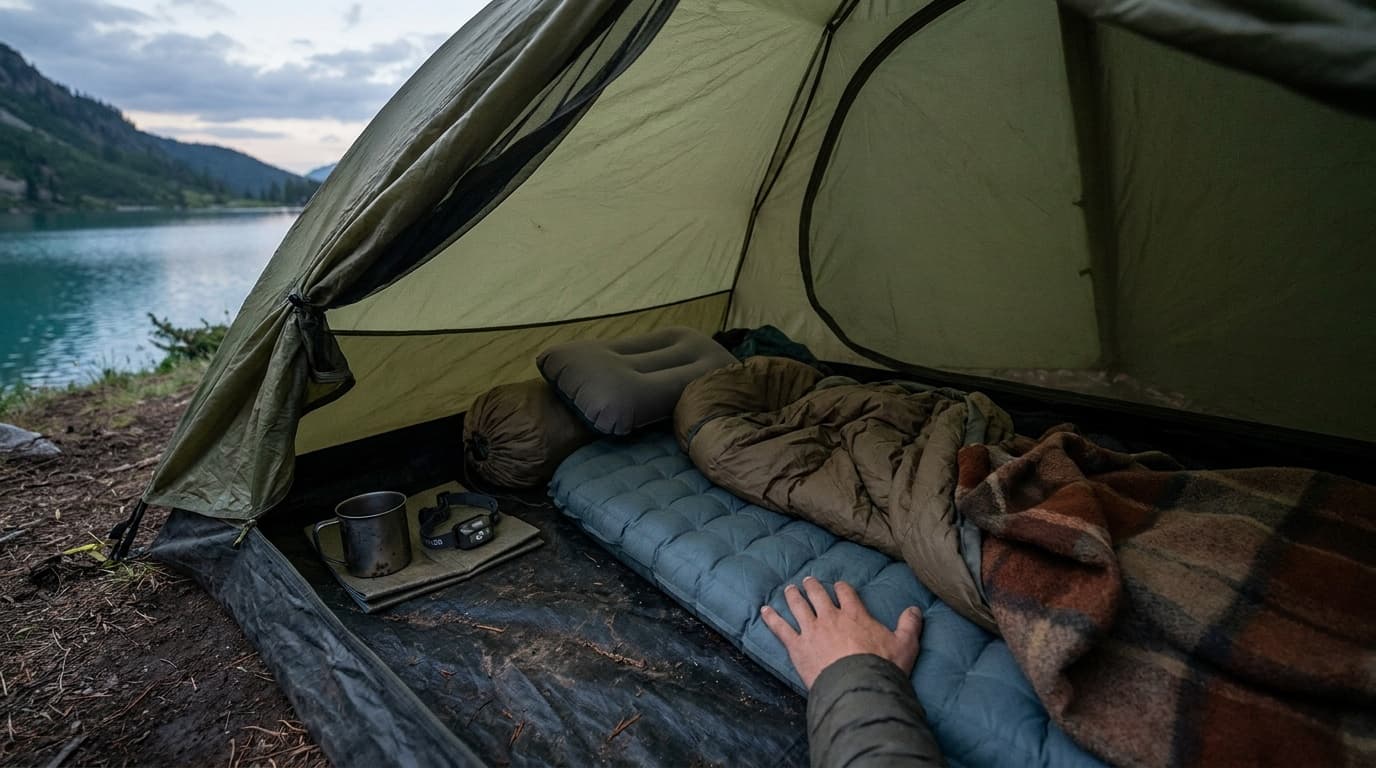
A bad night on cold ground wrecks the whole trip. The right sleeping pad is the difference between waking up ready to move and waking up stiff and cold, no matter how good your sleeping bag is.
Our quick picks
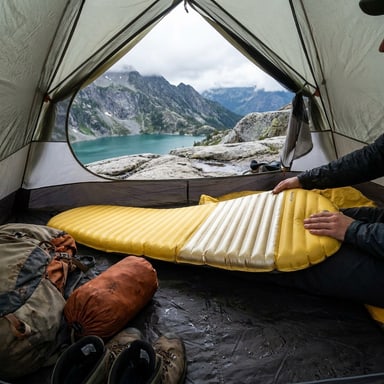
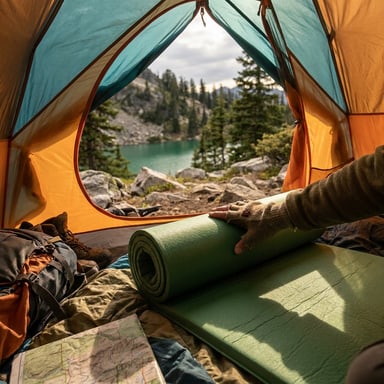
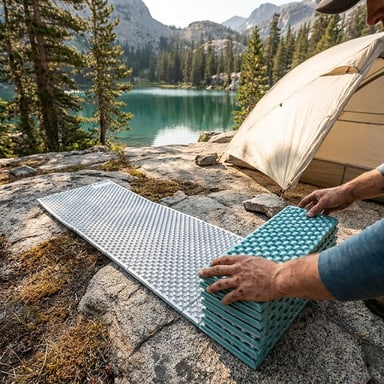
How we picked
Every pad here was evaluated against the Kit Score: verified R-value ratings, packed dimensions, real-owner weight figures, and consensus across thousands of buyer reviews and independent field reports. We weight warmth-to-weight and pack size heavily for backpackers, and overall durability for car campers who log serious nights per year.
The picks
Best overall
BEST OVERALL
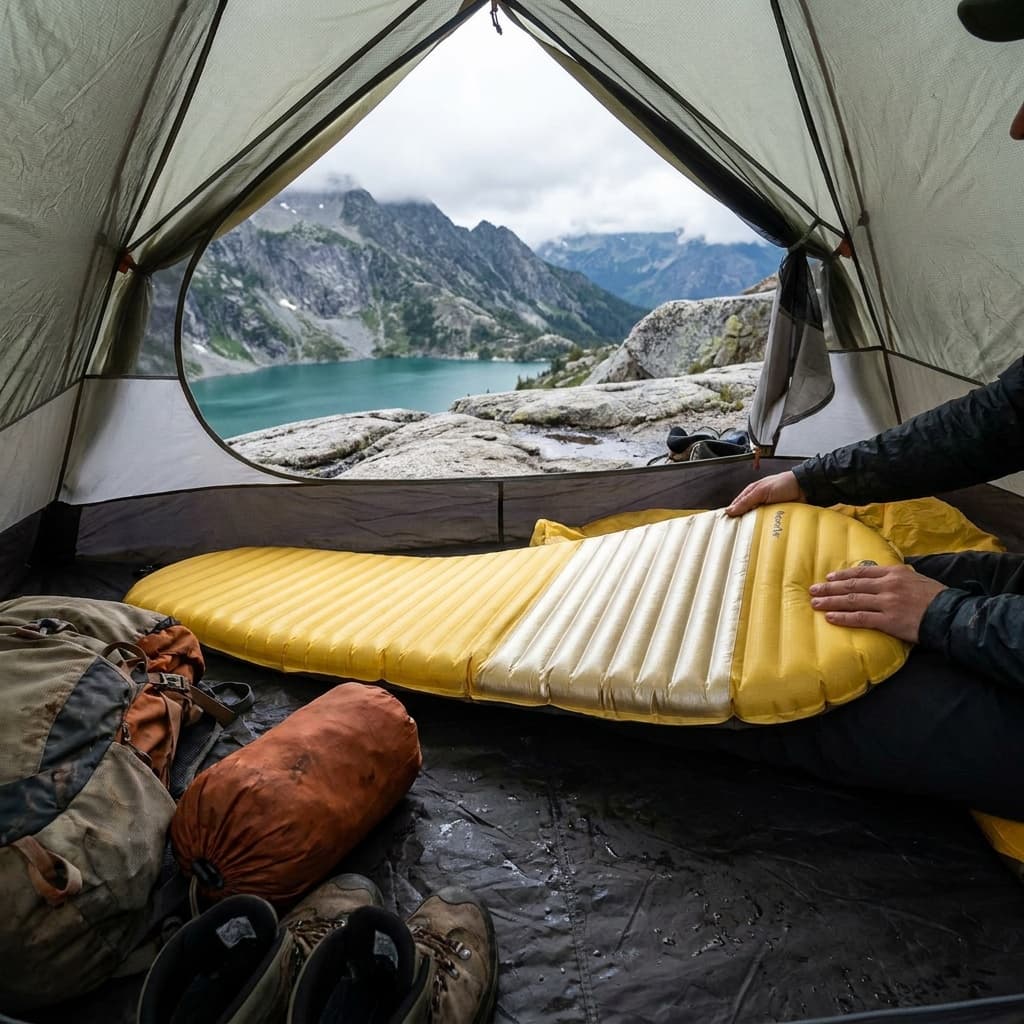
Therm-a-Rest NeoAir XLite NXT Ultralight Sleeping Pad
Best for: Weight-conscious backpackers and thru-hikers who need four-season-adjacent warmth in the smallest, lightest package possible.
- Best-in-class warmth-to-weight ratio: 4.5 R-value at just 13 oz
- Still slightly louder than the NEMO Tensor on movement, per independent reviewers
Kit Score 8.8/10 · $182.51 Price checked Oct 25, 6:06 AM CDT · how we score gear
Buy on AmazonProduct details
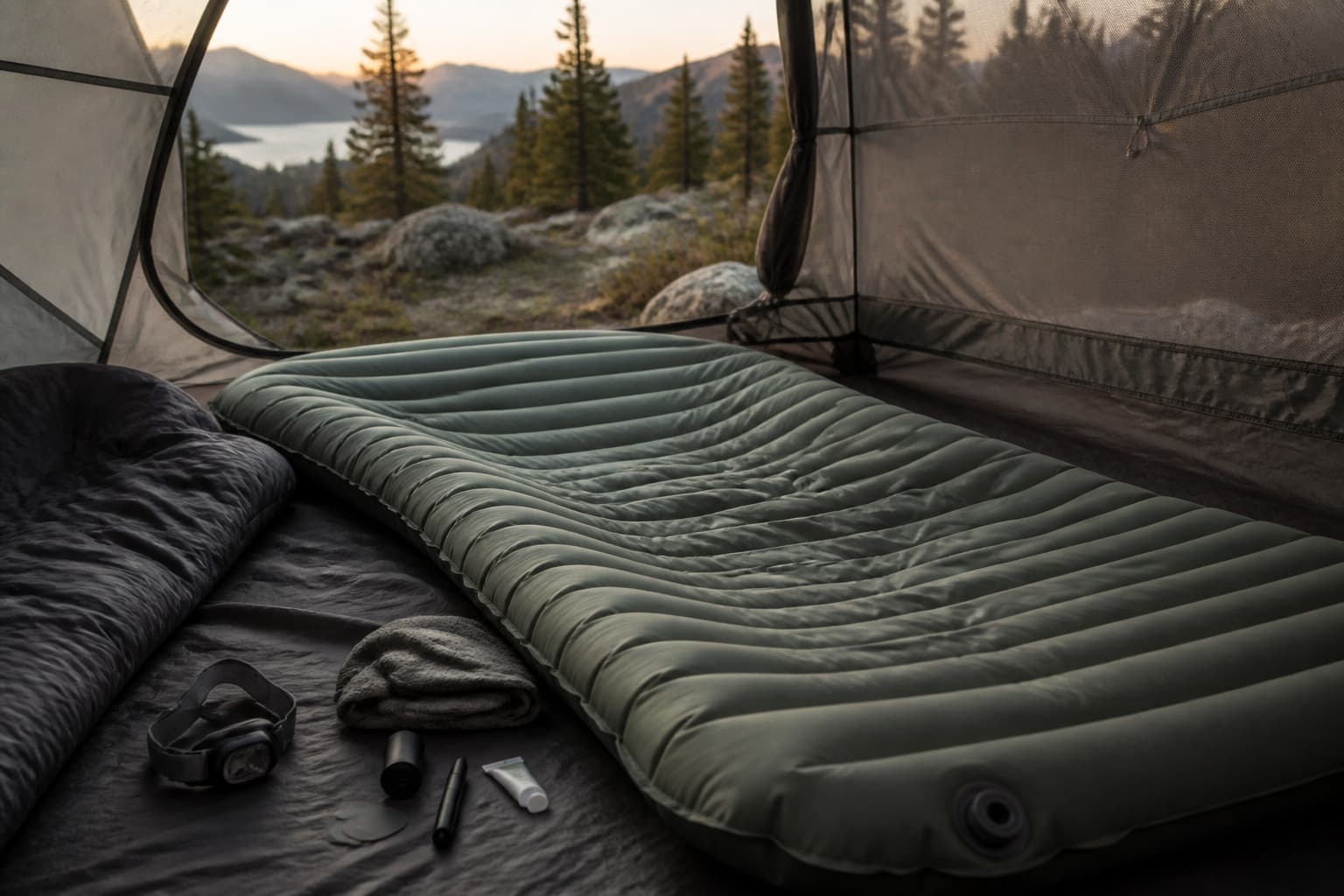
At 13 oz with a 4.5 R-value, the NeoAir XLite NXT has one of the tightest warmth-to-weight ratios available and packs to roughly the size of a 1-liter water bottle. The NXT generation cut noise by 83% versus its predecessor through revised Triangular Core Matrix construction, addressing the one complaint that had followed the XLite line for years.
- Type
- Air pad (inflatable)
- R-Value
- 4.5
- Weight
- 13 oz (370 g), Regular
- Packed Size
- 9 x 4.1 in
- Thickness (inflated)
- 3 in
- Dimensions (inflated)
- 72 x 20 in, Regular
More strengths
- Packs to 1-liter bottle size, the smallest footprint among insulated 3-inch air pads
- 83% quieter than the previous XLite generation according to Therm-a-Rest testing
Other tradeoffs
- WingLock valve takes more technique to deflate fully and roll tightly compared to dump-style valves
The Therm-a-Rest NeoAir XLite NXT is the benchmark for ultralight warmth. The regular size weighs 12.5 oz and packs to 4 x 9 inches, matching or beating most competitors in both columns. Its R-value of 4.5 (same as the Tensor All-Season) is verified by ASTM F3340 testing, the current industry standard.
The NXT generation added a new valve system (WingLock) that inflates in roughly 10 breaths instead of the 30-plus the old valve required. That sounds trivial until you are setting up camp at elevation in the cold. The trapezoidal baffles create a quieter sleep surface than the original XLite, though not quite as hushed as the NEMO.
One honest note: the price-to-fragility ratio is a recurring theme in owner reviews. At this weight, the TPU laminate is thin. It is a backpacking pad, not a car camping pad. Carry the included patch kit, avoid rough granite tent sites, and it holds up for multi-year use without issues.
Best for: Weight-conscious backpackers and thru-hikers who need four-season-adjacent warmth in the smallest, lightest package possible.
Best value
BEST VALUE
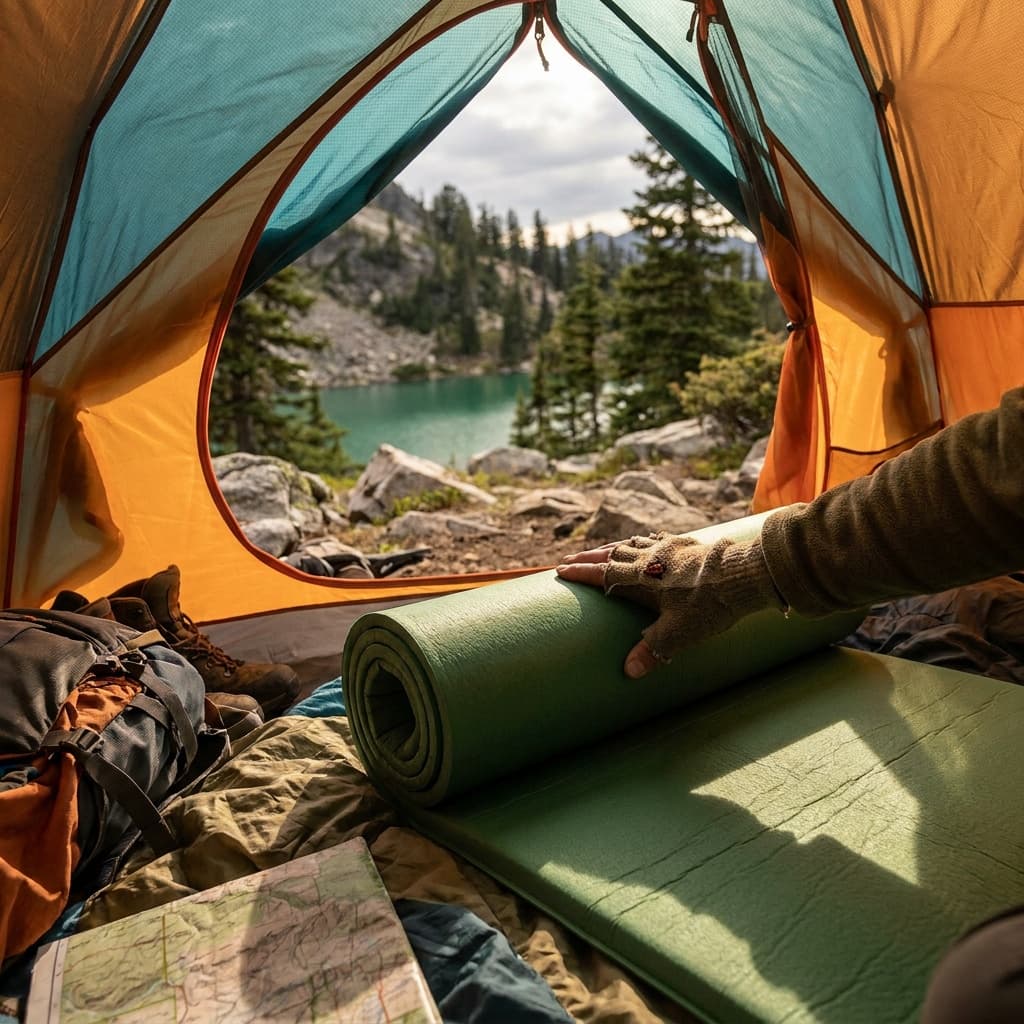
Therm-a-Rest Trail Pro Self-Inflating Sleeping Pad
Best for: Car campers and comfort-focused backpackers who want solid three-season warmth and a stable, firm sleep surface without learning to manage an air pad valve system.
- Self-inflates on unroll with no pump required: open the valve, lay it out, done
- At 1 lb 13 oz, it is nearly double the weight of the NeoAir XLite NXT for the same warmth rating
Kit Score 8.5/10 · $174.58 Price checked Oct 25, 6:06 AM CDT · how we score gear
Buy on AmazonProduct details
The Trail Pro uses StrataCore construction, pairing insulating compressible foam with air pockets to deliver mattress-like stability and a 4.4 R-value without requiring a pump sack or lung power. It is substantially heavier than air-only pads at the same price, but owners who prioritize a stable, no-fuss sleep surface rate it among the most comfortable self-inflating options in this price range.
- Type
- Self-inflating (foam + air)
- R-Value
- 4.4
- Weight
- 1 lb 13 oz (822 g), Regular
- Packed Size
- 11 x 8.8 in
- Thickness (inflated)
- 3 in
- Dimensions (inflated)
- 72 x 20 in, Regular
More strengths
- 4.4 R-value covers three seasons; foam core eliminates the instability of pure air pads
- Foam construction tolerates repeated packing cycles better than most air pads over multi-year use
Other tradeoffs
- Packed size (11 x 8.8 in) is bulkier than air pads, limiting its appeal for ultralight trips
The Therm-a-Rest Trail Pro is a self-inflating pad, which means a foam core handles the insulation and the inflation. You open the valve, wait a few minutes, top it off with two or three breaths, and you are done. No pump required, no ten-breath inflation ritual, no crinkling in the night.
The trade-off is weight: around 28 oz for the regular, which is roughly double the ultralight air pads above. For car campers and short-haul backpackers who are not weighing every gram, that is not a meaningful penalty. The foam core also means it will not catastrophically deflate mid-trip if it picks up a small puncture.
R-value 3.0 hits the three-season threshold cleanly. It will not keep pace with the air pads in early spring or late fall when overnight lows push below freezing, but for shoulder-season camping above about 20F it is comfortable for most sleepers. The 2.5-inch thickness gives a noticeably cush sleep surface that air pads at this price point do not match.
At $125–$165 it is the sweet spot for gear that gets thrown in a truck bed regularly.
Best for: Car campers and comfort-focused backpackers who want solid three-season warmth and a stable, firm sleep surface without learning to manage an air pad valve system.
Best budget
BEST BUDGET
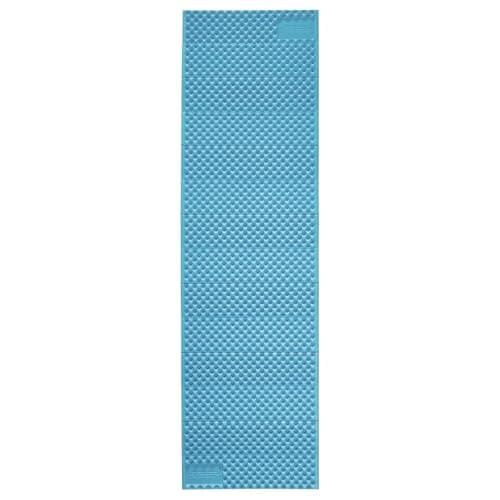
Therm-a-Rest Z Lite Sol Foam Sleeping Pad
Best for: Warm-weather campers and backpackers who want a bulletproof, no-inflation pad for summer trips, or anyone building a layered cold-weather system by combining it with a second insulating pad.
- Zero inflation and zero failure modes: unfold and lie down, no valves or puncture risk
- R-value of 2.0 is adequate only for warm-weather camping above roughly 40 degrees Fahrenheit without a layered setup
Kit Score 8.6/10 · $59.95 Price checked Oct 25, 6:06 AM CDT · how we score gear
Buy on AmazonProduct details
The Z Lite Sol is a closed-cell foam pad with a ThermaCapture reflective surface that adds roughly 20% warmth over the standard Z Lite, accordion-folds for fast setup, and is effectively indestructible. The trade-off is a 2.0 R-value that limits it to warm-weather camping on its own and less cushion than any inflatable option.
- Type
- Closed-cell foam
- R-Value
- 2.0
- Weight
- 14 oz (397 g), Regular
- Packed Size
- 20 x 5.5 x 5 in (accordion-folded)
- Thickness
- 0.75 in
- Dimensions
- 72 x 20 in, Regular
More strengths
- ThermaCapture reflective coating boosts warmth by about 20% over standard foam at no weight penalty
- Doubles as a sit pad, snow platform, or pack frame; many backpackers keep it as a warm-season standalone or a cold-season base layer under an air pad
Other tradeoffs
- Accordion bulk (20 x 5.5 x 5 in folded) straps to the outside of a pack; does not compress into a stuff sack
The Therm-a-Rest Z Lite Sol is a closed-cell foam accordion pad and it has exactly zero moving parts to fail. No valve, no seam, no baffle, nothing to inflate. You unfold it, you sleep on it, you fold it up. That is the entire operation.
R-value 2.0 is a warm-weather rating. Below about 40F the Z Lite Sol needs either a warmer sleeping bag or a second insulating layer beneath it. Many three-season backpackers carry it as the base layer of a two-pad system (Z Lite Sol under an air pad) to add R-value cheaply and eliminate the catastrophic-deflation risk from their sleep system.
The reflective metalized film on the top surface (the "Sol" in the name) bounces radiant heat back toward you and adds a meaningful fraction of that R-value in practice. At 14 oz and $45–$65 it is the lightest pad here in terms of stakes and the most durable: you genuinely cannot puncture it.
Best for: Warm-weather campers and backpackers who want a bulletproof, no-inflation pad for summer trips, or anyone building a layered cold-weather system by combining it with a second insulating pad.
| Product | Kit Score | Price | Best for |
|---|---|---|---|
| Therm-a-Rest NeoAir XLite NXT Ultralight Sleeping Pad | 8.8 | $182.51 Price checked Oct 25, 6:06 AM CDT | Best for: Weight-conscious backpackers and thru-hikers who need four-season-adjacent warmth in the smallest, lightest package possible. Why it stands out: Best-in-class warmth-to-weight ratio: 4.5 R-value at just 13 oz Tradeoff: Still slightly louder than the NEMO Tensor on movement, per independent reviewers |
| Therm-a-Rest Trail Pro Self-Inflating Sleeping Pad | 8.5 | $174.58 Price checked Oct 25, 6:06 AM CDT | Best for: Car campers and comfort-focused backpackers who want solid three-season warmth and a stable, firm sleep surface without learning to manage an air pad valve system. Why it stands out: Self-inflates on unroll with no pump required: open the valve, lay it out, done Tradeoff: At 1 lb 13 oz, it is nearly double the weight of the NeoAir XLite NXT for the same warmth rating |
| Therm-a-Rest Z Lite Sol Foam Sleeping Pad | 8.6 | $59.95 Price checked Oct 25, 6:06 AM CDT | Best for: Warm-weather campers and backpackers who want a bulletproof, no-inflation pad for summer trips, or anyone building a layered cold-weather system by combining it with a second insulating pad. Why it stands out: Zero inflation and zero failure modes: unfold and lie down, no valves or puncture risk Tradeoff: R-value of 2.0 is adequate only for warm-weather camping above roughly 40 degrees Fahrenheit without a layered setup |
Therm-a-Rest NeoAir XLite NXT Ultralight Sleeping Pad
- Best for
- Weight-conscious backpackers and thru-hikers who need four-season-adjacent warmth in the smallest, lightest package possible.
- Why it stands out
- Best-in-class warmth-to-weight ratio: 4.5 R-value at just 13 oz
- Tradeoff
- Still slightly louder than the NEMO Tensor on movement, per independent reviewers
Therm-a-Rest Trail Pro Self-Inflating Sleeping Pad
- Best for
- Car campers and comfort-focused backpackers who want solid three-season warmth and a stable, firm sleep surface without learning to manage an air pad valve system.
- Why it stands out
- Self-inflates on unroll with no pump required: open the valve, lay it out, done
- Tradeoff
- At 1 lb 13 oz, it is nearly double the weight of the NeoAir XLite NXT for the same warmth rating
Therm-a-Rest Z Lite Sol Foam Sleeping Pad
- Best for
- Warm-weather campers and backpackers who want a bulletproof, no-inflation pad for summer trips, or anyone building a layered cold-weather system by combining it with a second insulating pad.
- Why it stands out
- Zero inflation and zero failure modes: unfold and lie down, no valves or puncture risk
- Tradeoff
- R-value of 2.0 is adequate only for warm-weather camping above roughly 40 degrees Fahrenheit without a layered setup
How to choose the right sleeping pad
The two numbers that matter most before anything else are R-value and packed weight. Everything else is a comfort preference.
How to pick your sleeping pad
Match R-value to your coldest trip
R-1 to R-2 for summer above 40F, R-3 to R-4 for three-season shoulder weather, R-5+ for winter or high altitude. The standard is ASTM F3340, introduced in 2019; pads rated before that may not be directly comparable.
Decide your pack style first
Backpackers should budget no more than 20 oz for a sleeping pad. Car campers can ignore weight entirely and optimize for thickness and durability. If you are somewhere in between, 20–28 oz is the reasonable middle.
Pick your inflation type
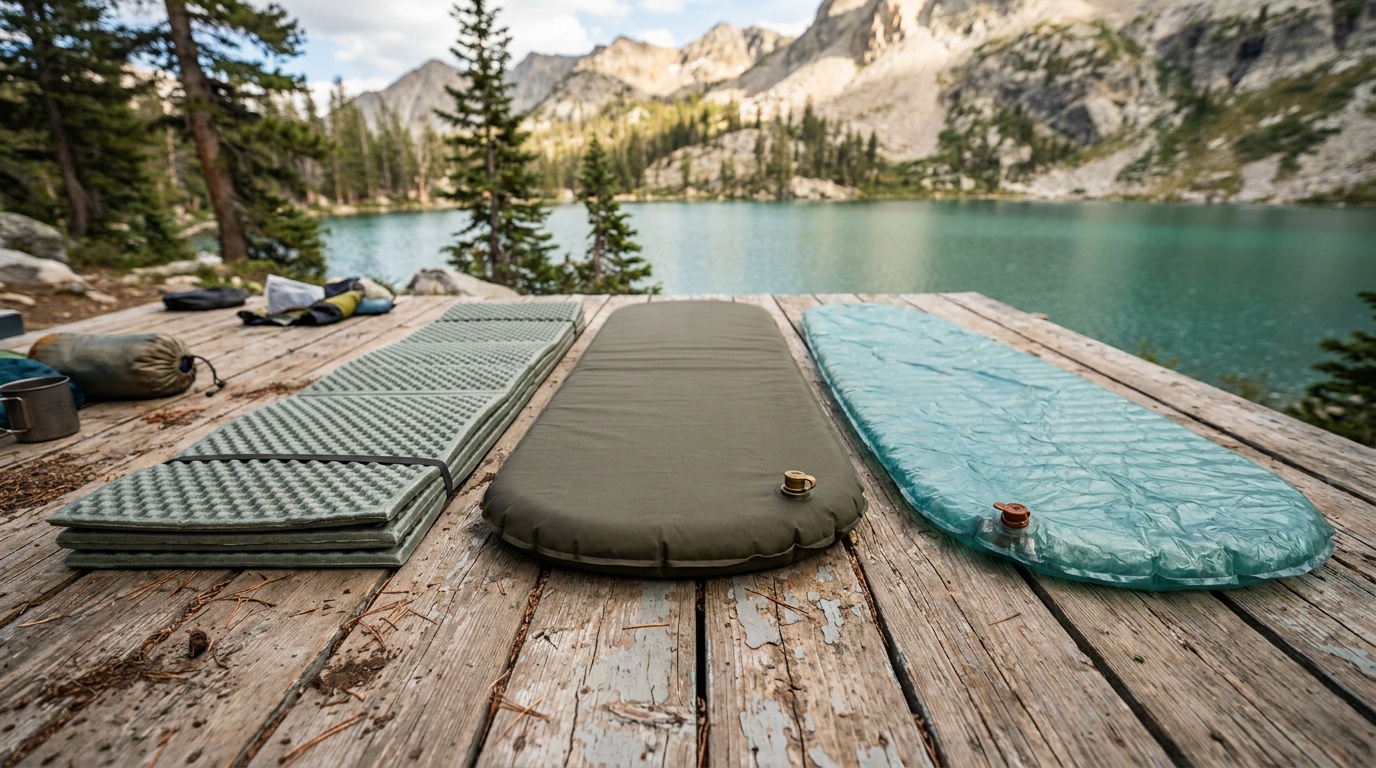
Air pads give the best warmth-to-weight ratio. Self-inflating pads are simpler to set up and more puncture-resistant. Foam pads are indestructible and never need inflation. Most backpackers land on air; most car campers prefer self-inflating.
Check the packed dimensions against your pack
A regular-size air pad at 4 x 9 inches slots inside a pack bag. A self-inflating pad at 11 x 25 inches needs to ride outside or be the trunk's job. Know which situation you are in before you order.
Factor in sleeping position
Side sleepers lose hip and shoulder insulation where they compress the pad hardest. If you are a side sleeper in cold weather, add 0.5 to your target R-value when choosing.
Your sleeping bag rating assumes you have an adequate pad under you. Without it, you can lose as much as 50 percent of your sleeping bag's insulation to conduction through the ground.
Frequently asked questions
What R-value do I need for three-season camping?
R-3 is the commonly cited minimum for three-season use, covering spring through fall in most North American conditions. Nights that regularly drop below freezing (shoulder season at altitude, early spring in the mountains) call for R-4 or higher. If you run cold or share a tent where you cannot rely on body heat from a partner for ambient warmth, aim for R-4 across the board for three seasons.
Is a self-inflating pad warmer than an air pad at the same R-value?
Not in controlled testing. Since 2019, the ASTM F3340 standard measures all pad types on the same bench, so an R-3 self-inflating pad and an R-3 air pad should perform equivalently in lab conditions. The practical difference is that self-inflating pads use foam, which retains some insulation even if the pad partially deflates. An air pad that loses pressure overnight loses most of its effective R-value. That makes self-inflating pads more consistent in real conditions, even when the rated numbers match.
Can I use a backpacking sleeping pad for car camping?
Yes, but it is usually overkill in the wrong direction. A $220 ultralight air pad brings nothing to a car camping setup that a $130 self-inflating pad does not also bring, and it is more fragile in the rougher handling of car camping. If you already own a backpacking pad, it works fine in a car camping context. If you are buying specifically for car camping, a self-inflating pad at 2.5-inch thickness is noticeably more comfortable and considerably more durable for the same or lower cost.
A good sleeping pad is the one piece of gear most campers underinvest in. If you have questions about building a complete sleep system or want to compare more options by season or sleep style, browse the rest of the camp gear guides or read more about how we research and rate gear.
Keep going
Complete loadoutCamp sleep systemFive coordinated pieces that solve shelter, insulation, cushioning, head support, and light for nights outside.Free tool: Sleeping-Bag WarmthRelated guides
Our recommendations draw on manufacturer documentation, retailer listings, owner feedback, and comparisons with alternatives.
As an Amazon Associate I earn from qualifying purchases. We may earn a commission from links here, at no extra cost to you. How we research →