
Choosing between an air mattress and a sleeping pad comes down to one question: where are you sleeping, and how cold is the ground?
What each product actually does
An air mattress is an inflatable cushion designed for comfort and height. Most measure 18–22 inches tall, use a built-in pump, and weigh 4–10 lbs. They pack down to roughly the size of a small suitcase. The goal is to replicate a bed.
A sleeping pad is an insulation and cushion layer rated by R-value, a measure of thermal resistance. Higher R-value means more resistance to cold conducted from the ground. Pads range from ultralight closed-cell foam (like the Therm-a-Rest Z Lite Sol at 410 g) to plush self-inflating car-camp pads. They pack into a stuff sack or roll tight enough to lash to a backpack.
The cold-ground heat loss problem
This is the most misunderstood part of the comparison. You lose far more body heat downward to the cold ground than upward into cool air, because conduction through a surface is more efficient than convection into air. An air mattress filled with a single air chamber offers almost no insulation. The air inside circulates, cycling cold from the ground to your body all night.
R-value quantifies the fix. The Outdoor Industry Association now mandates standardized R-value testing (ASTM F3340) for sleeping pads, so numbers are comparable across brands.
On a 40°F night, an uninsulated air mattress can leave you colder than sleeping on bare closed-cell foam.
As a rough guide:
R-value by season and conditions
R 1–2
Summer only, air temps above 50°F, warm sleeper
R 2–4
Three-season camping, spring through fall
R 4–6
Cold weather and early winter, sub-freezing nights
R 6+
Winter mountaineering or extended below-zero use
Some high-end air mattresses (Exped, Nemo) now integrate fiber fill or foam cores to push R-value to 3.5–4.0. These are a real option for car campers who want comfort and warmth, though they cost significantly more.
Car camping vs backcountry: the decisive split
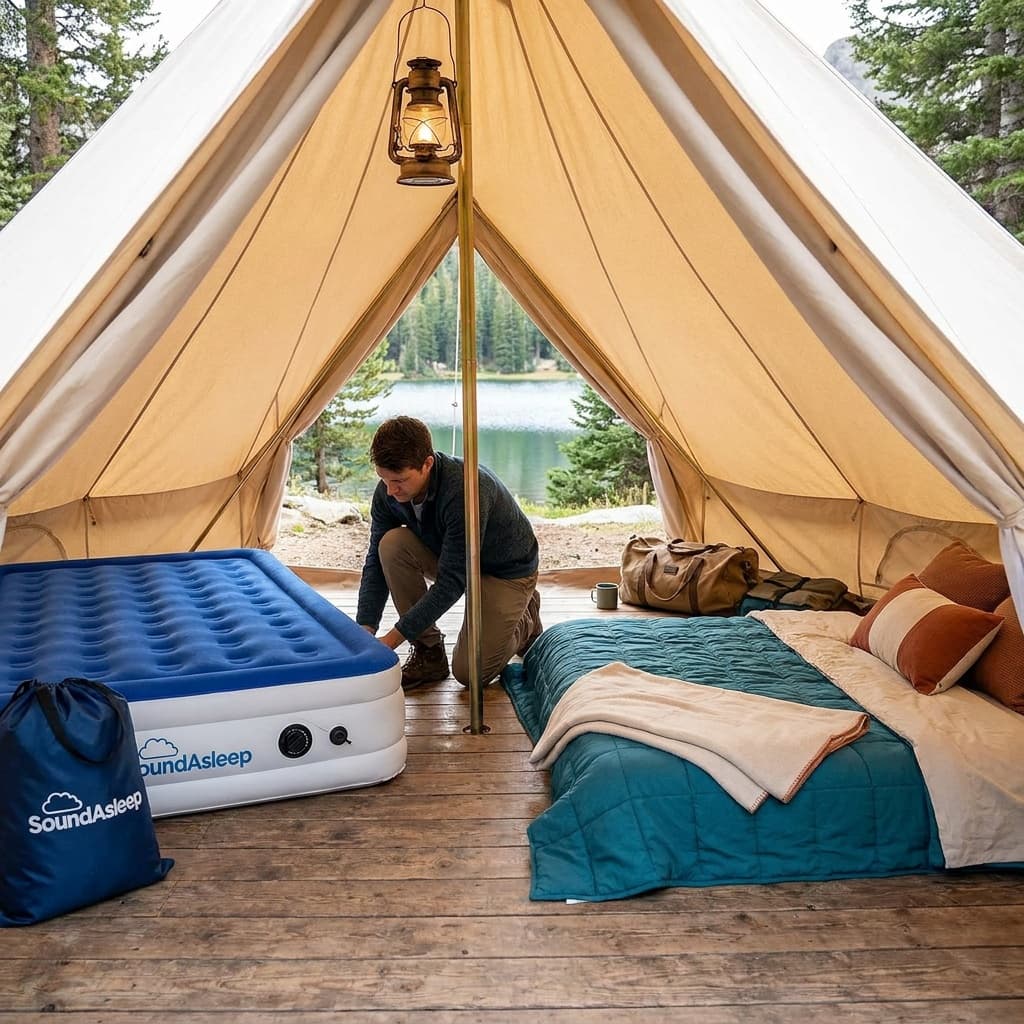
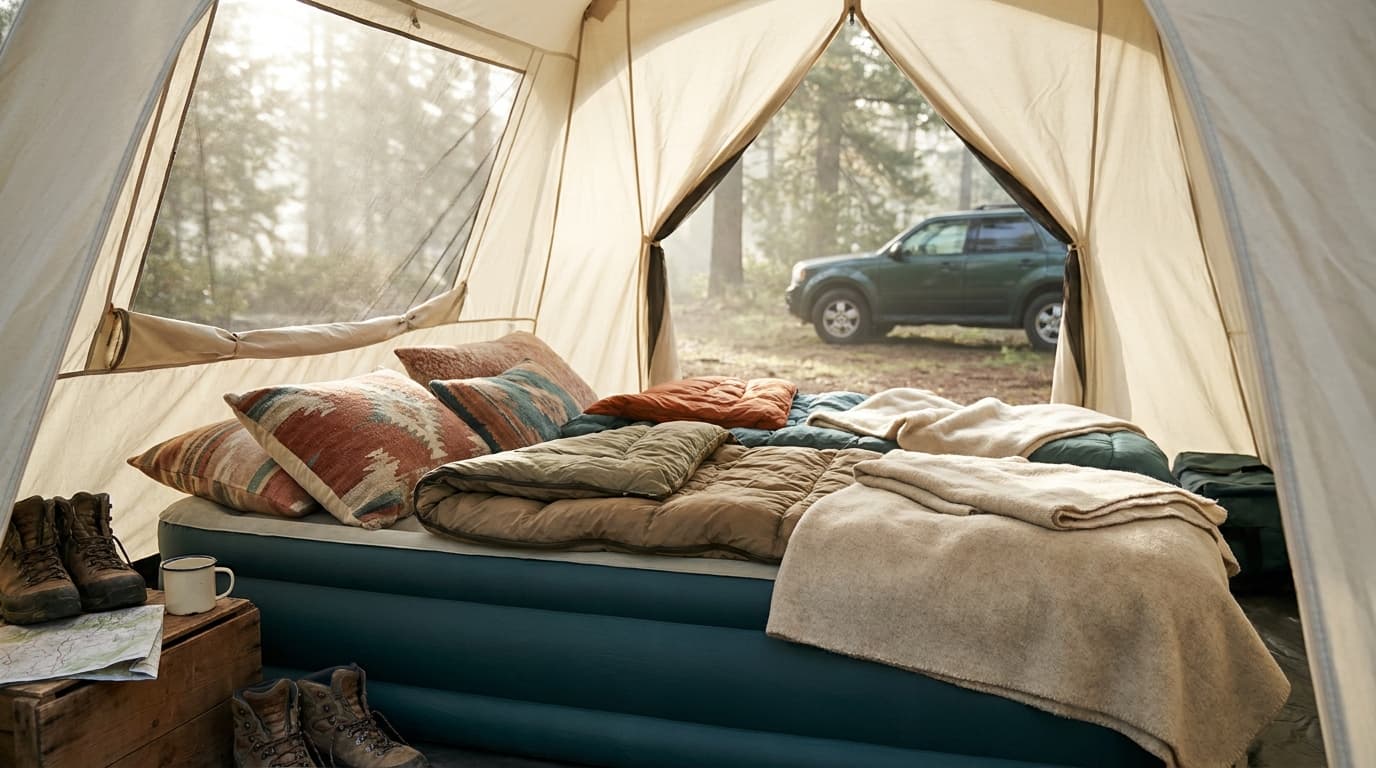
For car camping, the weight and pack size of an air mattress are irrelevant. You carry it from the car to the site. A queen-size air mattress like the SoundAsleep Dream Series in a roomy tent is a legitimate luxury upgrade that many campers sleep better on than their beds at home. The main risks are punctures, pump battery life, and the cold-ground problem on shoulder-season trips.
For backpacking, the choice is clear: sleeping pads. The lightest air mattresses weigh over 2 lbs and take up significant volume. A foam pad like the Therm-a-Rest Z Lite weighs 410 g, straps to the outside of a pack, and doubles as a sit pad. An ultralight inflatable pad like the Therm-a-Rest NeoAir XLite NXT weighs around 350 g and packs to 11 x 4 inches. Neither can puncture mid-trip and strand you without insulation the way an air mattress can.
Durability and failure modes
Air mattresses fail via puncture or valve failure. Seam punctures in the field are difficult to seal reliably in the dark. Valve leaks are harder to diagnose. Budget air mattresses (under $50) often fail within two or three seasons of regular use.
Sleeping pads are more resilient. Closed-cell foam pads essentially never fail. Inflatable pads can puncture, but field repair with the included patch kit takes under ten minutes, and the pad still provides R-value even partially deflated.
For anyone planning regular camping over several years, a quality sleeping pad ($60–$200) outlasts a budget air mattress and is repairable. A quality queen air mattress ($100–$300) lasts well if stored dry and away from UV.
Who should pick which
The answer is rarely either/or. Many families own both and deploy them by trip type.
Choose an air mattress if: you car camp exclusively, prioritize comfort and familiar bed height, camp in summer or use a foam underlay in shoulder seasons, or share a tent with a partner who needs good sleep support.
Choose a sleeping pad if: you backpack even occasionally, camp in temperatures below 50°F, need a reliable pack-in sleep system, or want one piece of gear that works for car camping and the backcountry.
For couples or families doing car camping in all seasons, the practical answer is an insulated air mattress (R 3.5+) or a queen self-inflating pad (R 4+). Neither forces you to compromise.
Frequently asked questions
Can I use an air mattress in cold weather?
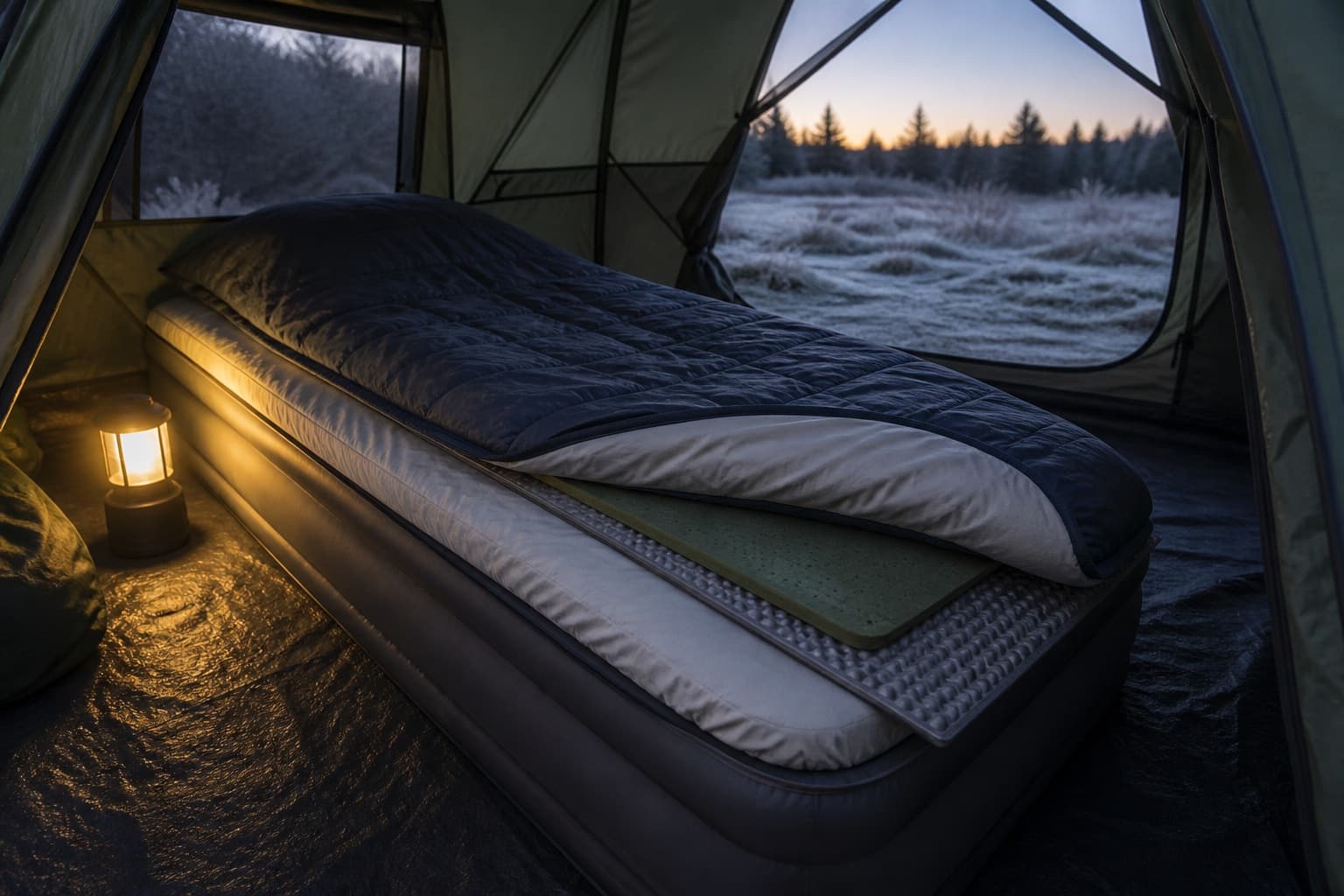
Yes, with a caveat: standard single-chamber air mattresses provide R-values below 1.0, which means significant heat loss on cold ground. For temps below 50°F, either choose an insulated air mattress rated R 3.0 or higher, or slide a closed-cell foam pad underneath your air mattress as a thermal break. This combination is effective and inexpensive.
What R-value sleeping pad do I need for three-season backpacking?
For most three-season conditions (spring through fall, night temps above 25°F), an R-value of 2.0–4.0 covers the range. If you camp in the shoulder seasons with temps dropping into the 20s°F, aim for R 4.0 or higher. Budget a higher R-value than you think you need: you can always sleep on top of the pad when warm, but you cannot add insulation you did not bring.
Are self-inflating sleeping pads better than air pads?
Neither is universally better. Self-inflating pads (open-cell foam with a valve) are more puncture-resistant and hold R-value even when partially deflated. Air pads pack smaller and weigh less at equivalent comfort ratings, but require a pump or lung inflation and fail completely if punctured without repair. For casual car camping, self-inflating pads are more forgiving. For weight-conscious backpacking, ultralight air pads win on pack weight and size.
For specific picks, see our guide to the best camping air mattresses. Browse all camp guides or read how we research and rate gear.
Recommended gear
Our current top picks from the Best camping air mattresses for car camping (2026) guide, if you are ready to buy.
SOUNDASLEEP PRODUCTS
SoundAsleep Dream Series Luxury Air Mattress (Queen)
Best Overall
Kit Score 7.8/10
$149.95 Price checked Oct 23, 6:22 AM CDT
Best for: Car campers who want a coil-supported, bed-like feel and the convenience of an integrated pump, at a mid-range price.
- 40 internal air coils distribute weight evenly and prevent the hammock sag common on cheaper mattresses
- Some owners report air leaks or seam failures within the first year of regular use
- Inflated dimensions
- 80 x 60 x 19 in (queen)
- Height
- 19 in (double-high)
- Pump
- Built-in 1-click AC pump
- Materials
- Multilayer eco-friendly PVC, flocked top
- Chambers
- Dual-chamber, SureGrip bottom
- Included
- Carry bag
About this pick
The Dream Series uses 40 internal ComfortCoil air coils and a 1-click built-in pump to deliver consistent, level support and inflate in under 4 minutes. Its multilayer puncture-resistant PVC and SureGrip bottom make it a dependable pick for tent-floor car camping.
Strengths
- 40 internal air coils distribute weight evenly and prevent the hammock sag common on cheaper mattresses
- Built-in 1-click pump inflates fully in under 4 minutes with no separate hardware needed
- Textured SureGrip bottom helps keep it from sliding on a tent floor, and a carry bag is included
Weaknesses
- Some owners report air leaks or seam failures within the first year of regular use
- Pump requires an AC outlet, so a power source or car inverter is needed at the campsite
Kit Score breakdown
Best for: Campers who want a well-supported, easy-entry double-high with fast inflation and have reliable AC access at their site.
- Fastest inflation in this roundup: King Koil quotes 90 seconds for the queen, and the Amazon listing says 2 minutes
- Some owners report internal coil separation on units after months of frequent use
- Inflated dimensions
- 80 x 60 x 20 in (queen)
- Height
- 20 in (double-high)
- Pump
- Built-in 120V/210W high-speed pump (90 sec to 2 min quoted)
- Weight capacity
- 600 lbs
- Materials
- Waterproof PVC, fully flocked top and sides
- Warranty
- 1 year
About this pick
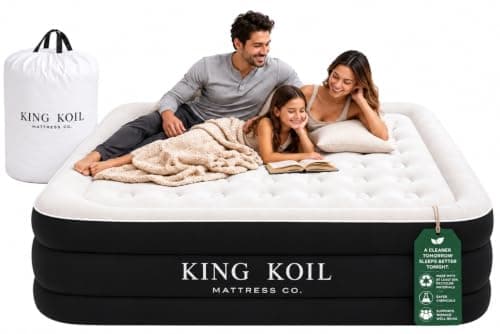
King Koil's coil-beam queen inflates in 90 seconds to 2 minutes (King Koil's own figures) via its high-speed built-in 120V pump and sits at a chair-friendly 20 inches. A raised built-in pillow, fully flocked top and sides, and a 600 lb rating make it a well-regarded pick for campers and guests alike.
Strengths
- Fastest inflation in this roundup: King Koil quotes 90 seconds for the queen, and the Amazon listing says 2 minutes
- Air-filled coil-beam construction spreads weight across the surface; separate inflation and deflation valves speed teardown
- Raised pillow zone integrated into the mattress surface keeps head and neck supported without a separate pillow
Weaknesses
- Some owners report internal coil separation on units after months of frequent use
- Pump is AC-only; a car inverter or camp power station is needed for remote sites
Kit Score breakdown
INTEX
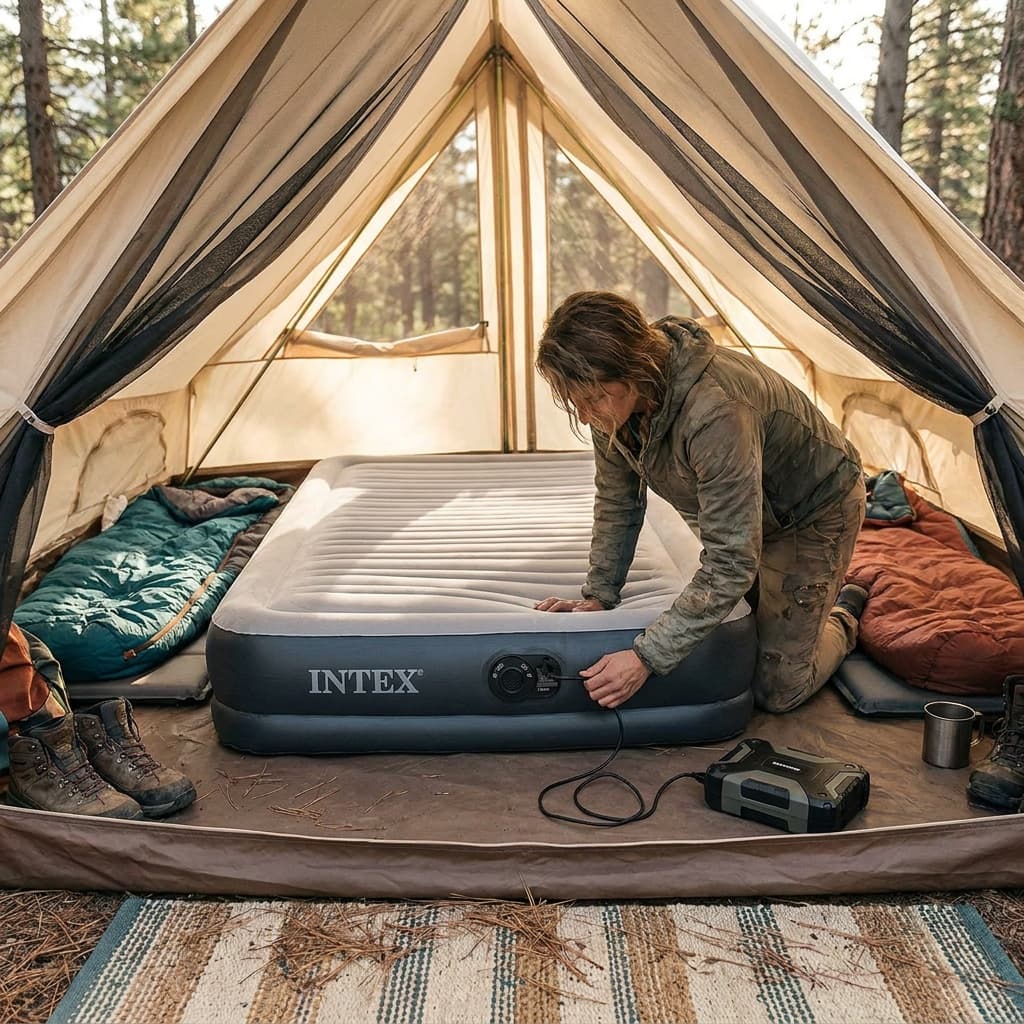
Intex Dura-Beam Comfort Plush Elevated Airbed (Queen, 22 in)
Best Budget
Kit Score 7.4/10
$70.20 Price checked Oct 23, 6:22 AM CDT
Best for: Budget-focused car campers who want a tall, easy-entry queen mattress with Fiber-Tech durability and a built-in pump under $80.
- At 22 inches, it delivers the easiest bed entry and exit of any mattress in this roundup, useful for older campers or anyone with knee or hip stiffness
- Some owners report gradual air loss over several nights, so plan to top it off on longer trips
- Inflated dimensions
- 80 x 60 x 22 in (queen)
- Height
- 22 in (tallest in this roundup)
- Pump
- Built-in electric pump (approx. 4.5 min inflate)
- Materials
- Fiber-Tech polyester-reinforced PVC, waterproof flocked top
- Weight capacity
- 600 lbs
- Weight
- 21 lbs
About this pick
At 22 inches, the Dura-Beam Comfort Plush is the tallest option in this roundup and uses Fiber-Tech construction (thousands of high-strength polyester fibers replacing traditional beams), which Intex credits for its durability. A built-in electric pump handles inflation in about 4.5 minutes, and it is rated for 600 lb.
Strengths
- At 22 inches, it delivers the easiest bed entry and exit of any mattress in this roundup, useful for older campers or anyone with knee or hip stiffness
- Fiber-Tech construction uses thousands of high-strength polyester fibers inside in place of traditional vinyl beams
- Under $80 street price makes it accessible for occasional campers who want a real double-high without a major investment
Weaknesses
- Some owners report gradual air loss over several nights, so plan to top it off on longer trips
- At about 4.5 minutes it is the slowest to inflate here, and the pump needs an AC outlet
Kit Score breakdown
See all picks in Best camping air mattresses for car camping (2026)
Keep going
Free toolSleeping-Bag WarmthWill you be warm enough? Bag rating plus pad and clothing.Related guides

 Complete camp loadoutCamp sleep systemBuild the complete kit
Researched, not hands-on tested
Updated Jun 4, 2026Our recommendations draw on manufacturer documentation, retailer listings, owner feedback, and comparisons with alternatives.
As an Amazon Associate I earn from qualifying purchases. We may earn a commission from links here, at no extra cost to you. How we research →