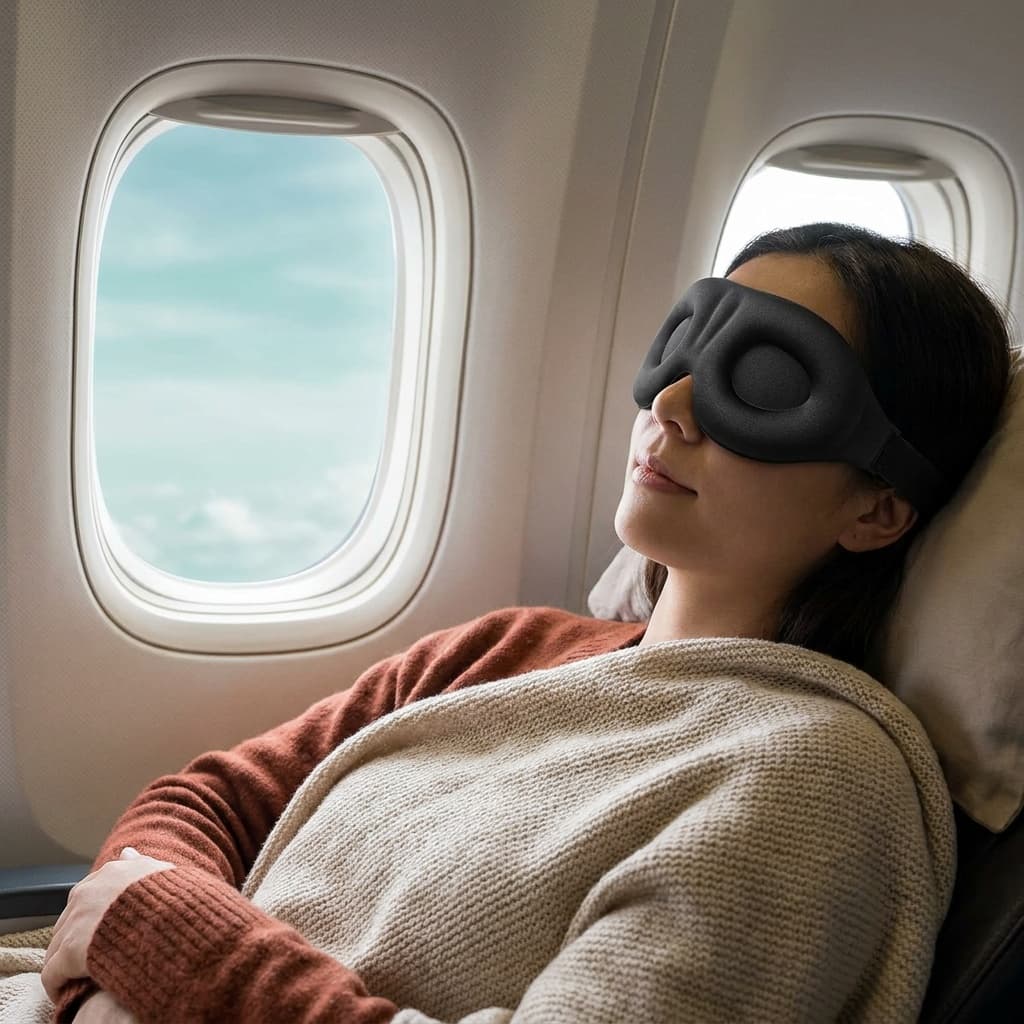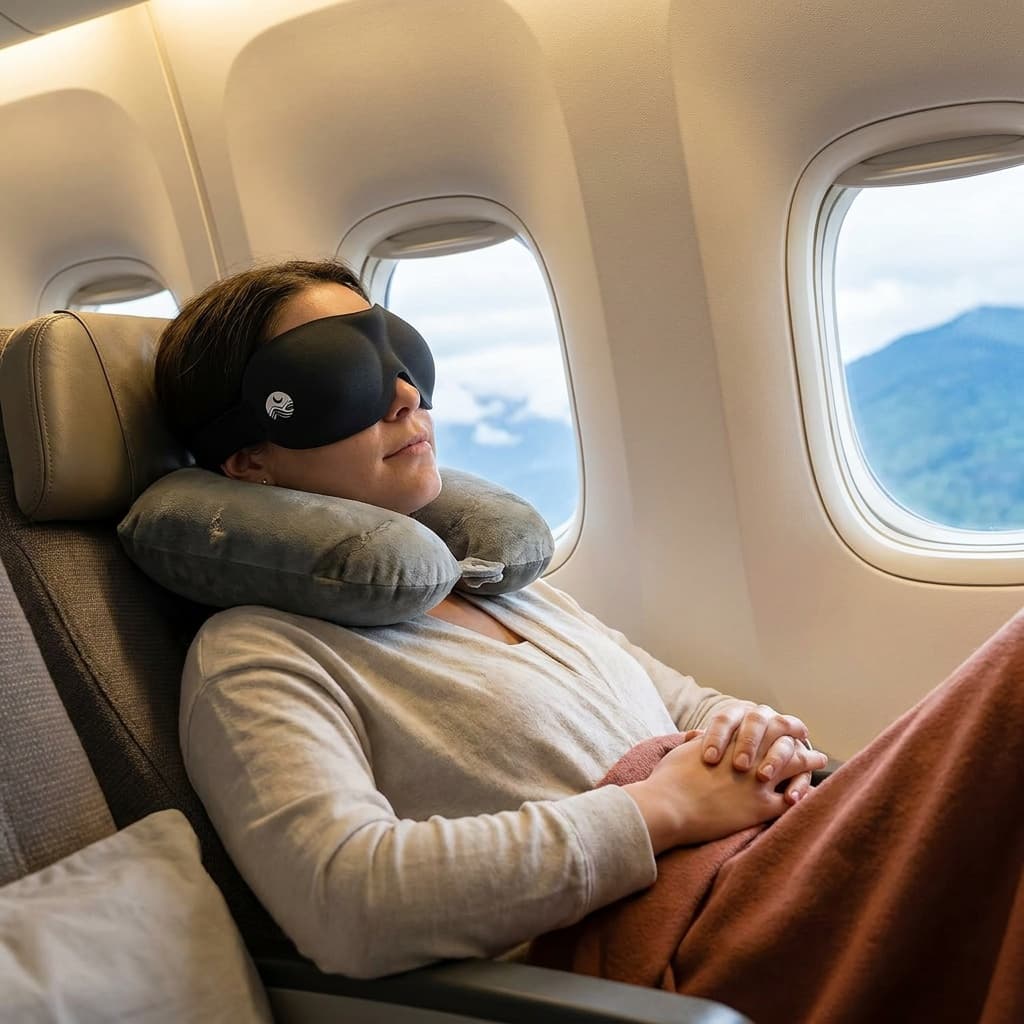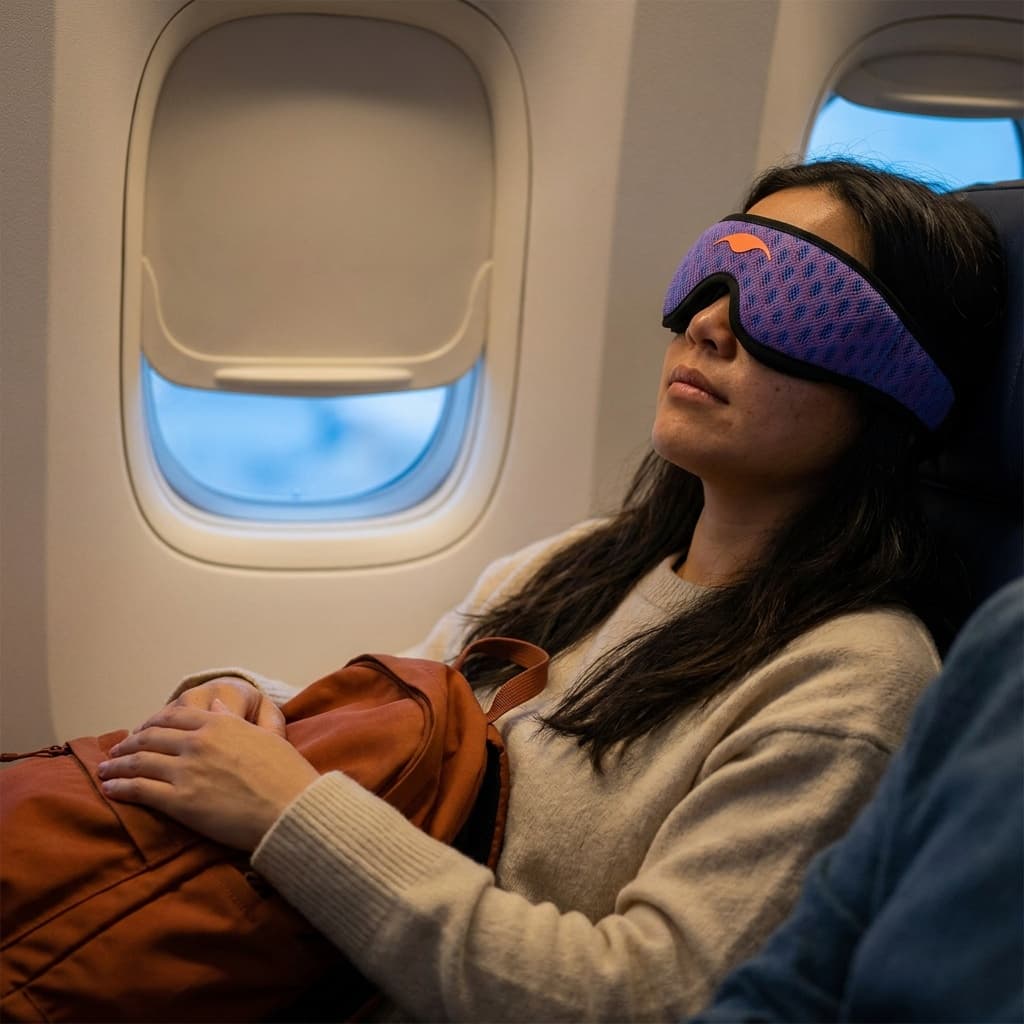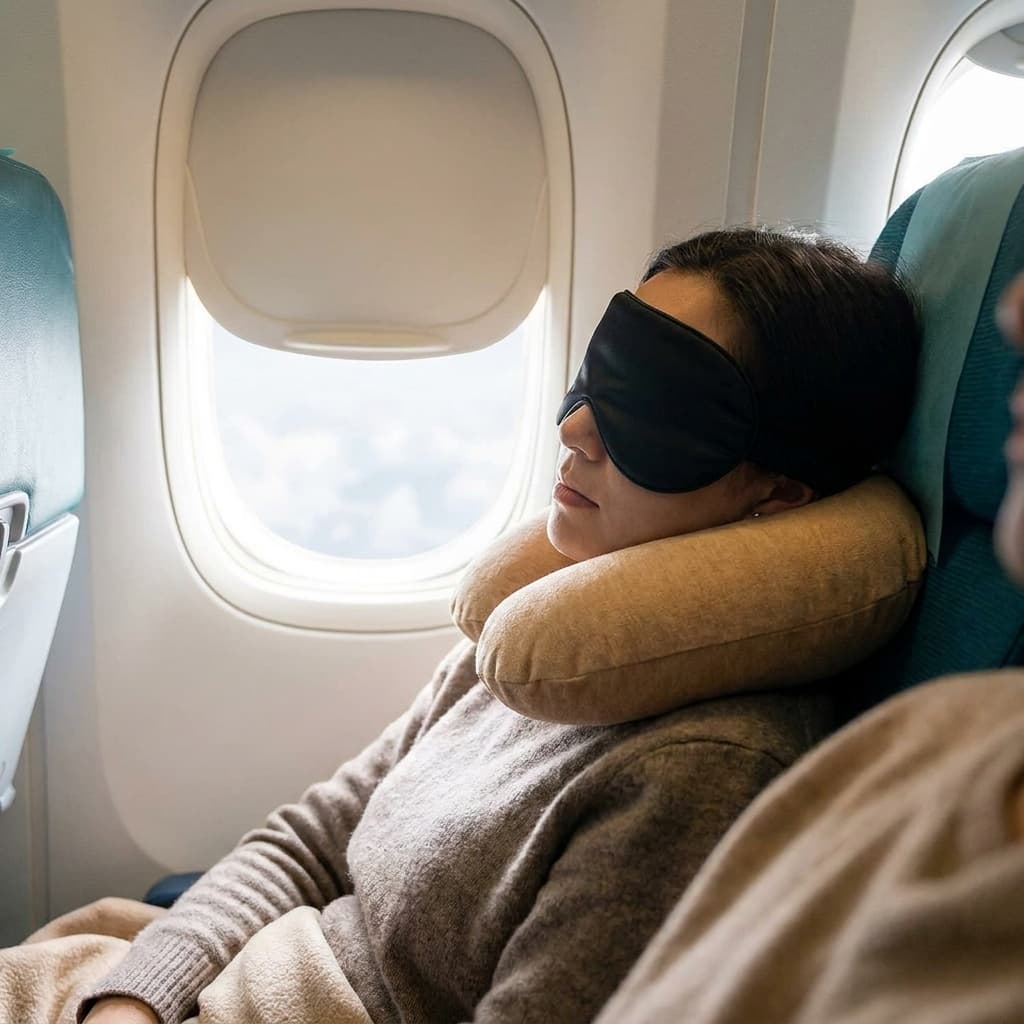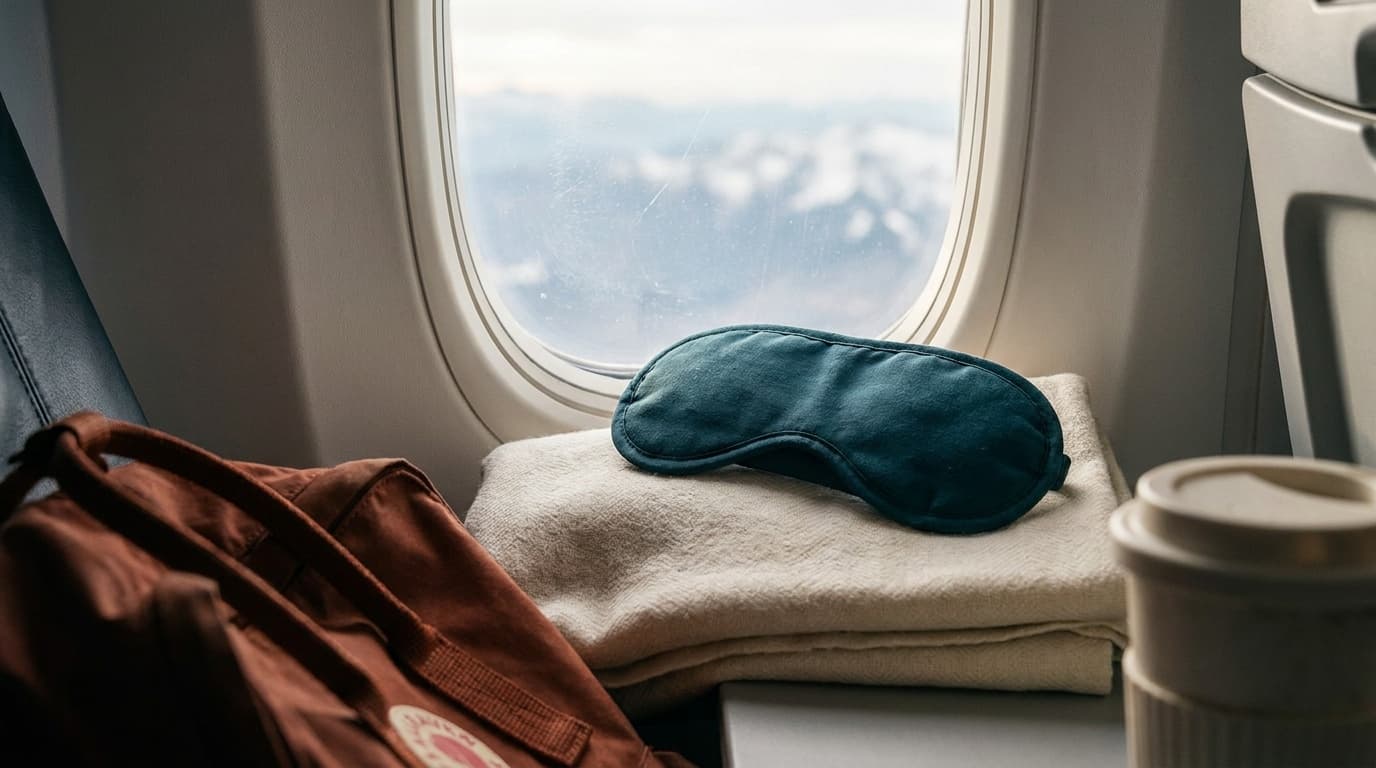
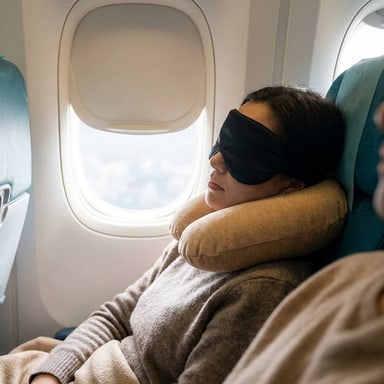
The right sleep mask turns a red-eye into actual rest. The wrong one leaks light at the bridge of your nose, digs into your eyelids, or ends up stuffed under the seat after 20 minutes of fidgeting.
Our quick picks
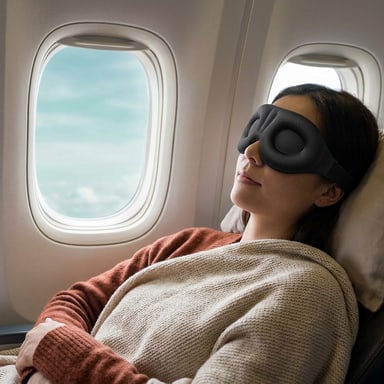
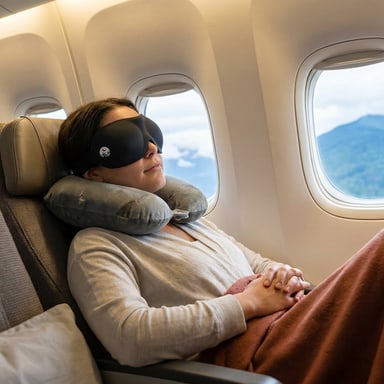
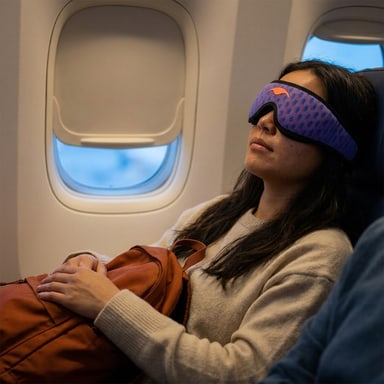
How we picked
Every mask below was evaluated using the Kit Score: a weighted breakdown of light-blocking performance, strap adjustability, breathability, packability, and owner-verified fit across face shapes and sleeping positions. We aggregated verified buyer reviews, product specifications, and independent assessments to surface the four masks worth carrying. We have not slept in these masks ourselves; specs below are the makers' and are sourced at the end of the page.
The picks
Best overall
BEST OVERALL
MZOO Luxury Sleep Eye Mask
Best for: Travelers who prioritize complete blackout and zero eye pressure above all else, at a price that does not sting if the mask gets left in a hotel room.
- Deep molded cups create zero eye pressure and prevent fabric contact with lashes
- Bulkier than flat silk masks, takes up slightly more carry-on space
Kit Score 8.8/10 · $15.99 Price checked Oct 25, 3:41 PM CDT · how we score gear
Buy on AmazonProduct details
A 3D contoured foam mask with deep eye cups that keep fabric off lashes and eyelids, delivering genuine blackout performance well under $20. The no-velcro adjustable strap and curved temple design make it a consistent recommendation from sleep reviewers and nearly 100,000 verified buyers who need real darkness on planes and in bright hotel rooms.
- Design type
- 3D contoured molded foam cups
- Strap
- Adjustable elastic, 19"–28", no velcro
- Light blocking
- 100% blackout claimed; patented nose bridge
- Side-sleeper fit
- Curved sides reduce temple pressure
- Pack size
- Compact; includes travel pouch
- Materials
- Memory foam + breathable polyester cover
More strengths
- Patented nose bridge blocks light leakage even when face-down on an airplane seat
- No-velcro strap adjusts 19"–28" and does not snag hair
Other tradeoffs
- A small number of reviewers with wider noses report minor light leakage at the bridge
The MZOO uses contoured memory foam with 13 mm deep eye cups to keep the mask surface clear of your eyelids: no fabric rubbing, no pressure, and a padded nose section (22 mm deep, per MZOO) that closes the gap cheaper flat masks leave open. At $16 to $20, it is priced to travel without anxiety. If it gets left on a plane, you replace it without a second thought.
The adjustable strap runs from 19 to 28 inches and has no velcro to snag hair. The foam is perforated with air holes, which owners often credit for staying comfortable through a long flight. For side sleepers, MZOO thins and curves the sides (about 15 degrees) so there is less bulge pressing into your temple against a pillow.
One honest caveat: the foam cups add bulk. It packs small enough for a carry-on pocket but will not compress to silk-thin.
Editor's choice
EDITOR'S CHOICE
Nidra Contoured Sleep Mask
Best for: Frequent flyers who want a proven, editor-recommended contoured mask that packs flat without sacrificing full blackout.
- Long-running Wirecutter recognition, per the brand, reflects consistent performance across many face shapes
- Hand wash and air dry only; heat can damage the memory foam
Kit Score 7.8/10 · $29.99 Price checked Oct 25, 3:41 PM CDT · how we score gear
Buy on AmazonProduct details
Nidra's patented deep 3D memory foam cups curve away from the eyes and lashes, and the brand reports a multi-year run as NYT Wirecutter's top sleep mask pick. At about 1 oz with a velcro strap that fits 14 to 26 inch heads and a Small size for narrower faces, it is an easy default for frequent flyers who want a proven contoured mask.
- Design type
- Deep 3D contoured memory foam cups
- Strap
- Adjustable velcro strap, fits 14–26 in heads
- Light blocking
- 100% blackout claimed by the maker
- Weight
- About 1 oz (28 g)
- Pack size
- Compact pouch included
- Sizes
- Standard and Small available
More strengths
- About 1 oz, so it adds almost nothing to a carry-on
- Available in Standard and Small sizes to improve fit on narrower faces
Other tradeoffs
- Lower Amazon star count (4.2) compared to MZOO reflects fit variability across face shapes
The Nidra has been a regular recommendation among travel editors for years (the brand reports a multi-year run as Wirecutter's top sleep mask pick), and the underlying product justifies it. Deep 3D memory foam cups curve away from your eyes and lashes, and the whole mask weighs about an ounce.
At $25 to $32 it costs more than the MZOO, and most travelers who buy both settle on whichever contour geometry better matches their face. Nidra sells a Small size (about 7.9 inches long versus 8.9 for Standard), which is the easier fit for narrower faces. The velcro strap adjusts to fit heads from 14 to 26 inches around.
Both masks are sold as full blackout when properly seated. The one care difference: Nidra says hand wash and air dry only, because heat can damage the memory foam.
Best premium
BEST PREMIUM
Manta Pro Sleep Mask
Best for: Hot sleepers or people with non-standard face shapes who have found fixed-cup masks leak light and need a fully adjustable, ventilated premium option.
- Independently adjustable eye cups eliminate the fit compromise that affects fixed-cup masks on non-average face shapes
- At $85, several reviewers and independent testers note the blackout performance does not justify the premium over $17–$30 alternatives
Kit Score 8.1/10 · $85.00 Price checked Oct 25, 3:41 PM CDT · how we score gear
Buy on AmazonProduct details
Manta's Pro mask uses C-shaped eye cups that slide anywhere along the strap to fit different face shapes, with perforated moisture-wicking fabric designed for hot sleepers and side sleepers who find standard contoured masks too warm. The premium price is the main objection in owner reviews, with several independent comparisons noting that the blackout performance is matched by masks costing far less.
- Design type
- Adjustable detachable C-shaped eye cups
- Strap
- Angled strap sits above the ears; anti-slip silicone grip; 73 cm circumference
- Light blocking
- 100% blackout; cups position independently
- Fabric
- Perforated Tactel, moisture-wicking
- Care
- Machine washable, cold, in a mesh bag; air dry flat
- Includes
- Carry pouch
More strengths
- Perforated Tactel fabric and ventilation channels run cooler than solid foam alternatives
- C-shaped cups taper flat at the temples, making side sleeping genuinely comfortable without pressure
Other tradeoffs
- Velcro cup attachment can shift during active side sleeping, allowing occasional light leakage until readjusted
The Manta Pro is the one you buy when every other mask has leaked light at a frustrating spot and you are done compromising. The C-shaped eye cups slide anywhere along the strap, so you set the spacing to your own face, and the mask uses ventilation holes and perforated Tactel fabric to let air move around the eyes, which matters more than most buyers expect once they have worn a sealed mask on a humid overnight train.
At $80 to $95 it is a commitment. The payoff is a mask that fits faces that standard fixed-cup masks never quite accommodate: deep-set eyes, high cheekbones, post-surgical sensitivity. It is also built around side sleepers. The slim, angled strap sits above the ears rather than on them, a silicone grip keeps it from riding up, and the cups taper at the edges so you are not pressing a thick edge into the side of your face against a pillow.
The Manta Pro's adjustable cups solve the one problem every other mask assumes away: that every face is the same shape.
Hot sleepers specifically: the ventilated design is the main thing that separates it from sealed foam masks, and cooler wear is the most common reason owners give for upgrading from a lower-cost contoured option. It is also the only pick here that Manta says can go in the washing machine (cold, in a mesh bag).
Best budget
BEST BUDGET
Alaska Bear Mulberry Silk Sleep Mask
Best for: Budget-conscious back sleepers and travelers who want a cool, skin-friendly, ultra-packable mask and are not chasing full blackout on their side.
- Grade 5A mulberry silk is noticeably cooler and softer than synthetic foam alternatives, relevant on warm overnight flights
- Flat construction offers no eye clearance, so fabric contacts lashes directly and is not ideal for lash extensions
Kit Score 7.9/10 · $15.99 Price checked Oct 25, 3:41 PM CDT · how we score gear
Buy on AmazonProduct details
A flat mulberry silk mask with a strong 4.7-star owner record on Amazon, priced around $15. The silk surface is genuinely cooler and softer against skin than synthetic alternatives, making it the top pick for travelers who care about breathability and skin comfort over engineered eye-cup architecture.
- Design type
- Flat, no cups
- Material
- Grade 5A 100% organic mulberry silk
- Strap
- Single adjustable elastic, 15.8"–27.6"
- Light blocking
- Good; soft fill; some bridge leakage on side sleepers
- Care
- Hand wash in cool water, air dry flat (gentlest for silk)
- Weight
- Featherlight; packs flat to near-nothing
More strengths
- Packs flat to nearly nothing, fits in a shirt pocket
- No cups, frames, or velcro to break, and the buckle sits at the back of the head
Other tradeoffs
- Side sleepers pressing their face into a pillow may get some light leakage at the nose bridge
The Alaska Bear does one thing better than any other mask on this list: it packs to almost nothing. With no cups or frame, it folds flat and disappears into a toiletry bag or jacket pocket. The Grade 5A mulberry silk is gentle on skin, which matters for travelers with sensitive skin around the eyes.
The trade-off is light-blocking. Silk is not a rigid blackout material, and the flat profile means the mask rests against your eyelids rather than clearing them. For back sleepers in a darkened cabin it works well. For side sleepers or anyone in a bright environment, light will creep in at the sides and nose bridge.
At $12 to $16 it is the obvious answer for travelers who already have a window seat, a sleep aid, or a good eye-shade expectation. It is also the only mask here that doubles as a skincare accessory.
How to choose the right travel sleep mask
| Product | Kit Score | Price | Best for |
|---|---|---|---|
| MZOO Luxury Sleep Eye Mask | 8.8 | $15.99 Price checked Oct 25, 3:41 PM CDT | Best for: Travelers who prioritize complete blackout and zero eye pressure above all else, at a price that does not sting if the mask gets left in a hotel room. Why it stands out: Deep molded cups create zero eye pressure and prevent fabric contact with lashes Tradeoff: Bulkier than flat silk masks, takes up slightly more carry-on space |
| Nidra Contoured Sleep Mask | 7.8 | $29.99 Price checked Oct 25, 3:41 PM CDT | Best for: Frequent flyers who want a proven, editor-recommended contoured mask that packs flat without sacrificing full blackout. Why it stands out: Long-running Wirecutter recognition, per the brand, reflects consistent performance across many face shapes Tradeoff: Hand wash and air dry only; heat can damage the memory foam |
| Manta Pro Sleep Mask | 8.1 | $85.00 Price checked Oct 25, 3:41 PM CDT | Best for: Hot sleepers or people with non-standard face shapes who have found fixed-cup masks leak light and need a fully adjustable, ventilated premium option. Why it stands out: Independently adjustable eye cups eliminate the fit compromise that affects fixed-cup masks on non-average face shapes Tradeoff: At $85, several reviewers and independent testers note the blackout performance does not justify the premium over $17–$30 alternatives |
| Alaska Bear Mulberry Silk Sleep Mask | 7.9 | $15.99 Price checked Oct 25, 3:41 PM CDT | Best for: Budget-conscious back sleepers and travelers who want a cool, skin-friendly, ultra-packable mask and are not chasing full blackout on their side. Why it stands out: Grade 5A mulberry silk is noticeably cooler and softer than synthetic foam alternatives, relevant on warm overnight flights Tradeoff: Flat construction offers no eye clearance, so fabric contacts lashes directly and is not ideal for lash extensions |
MZOO Luxury Sleep Eye Mask
- Best for
- Travelers who prioritize complete blackout and zero eye pressure above all else, at a price that does not sting if the mask gets left in a hotel room.
- Why it stands out
- Deep molded cups create zero eye pressure and prevent fabric contact with lashes
- Tradeoff
- Bulkier than flat silk masks, takes up slightly more carry-on space
Nidra Contoured Sleep Mask
- Best for
- Frequent flyers who want a proven, editor-recommended contoured mask that packs flat without sacrificing full blackout.
- Why it stands out
- Long-running Wirecutter recognition, per the brand, reflects consistent performance across many face shapes
- Tradeoff
- Hand wash and air dry only; heat can damage the memory foam
Manta Pro Sleep Mask
- Best for
- Hot sleepers or people with non-standard face shapes who have found fixed-cup masks leak light and need a fully adjustable, ventilated premium option.
- Why it stands out
- Independently adjustable eye cups eliminate the fit compromise that affects fixed-cup masks on non-average face shapes
- Tradeoff
- At $85, several reviewers and independent testers note the blackout performance does not justify the premium over $17–$30 alternatives
Alaska Bear Mulberry Silk Sleep Mask
- Best for
- Budget-conscious back sleepers and travelers who want a cool, skin-friendly, ultra-packable mask and are not chasing full blackout on their side.
- Why it stands out
- Grade 5A mulberry silk is noticeably cooler and softer than synthetic foam alternatives, relevant on warm overnight flights
- Tradeoff
- Flat construction offers no eye clearance, so fabric contacts lashes directly and is not ideal for lash extensions
Contoured vs flat
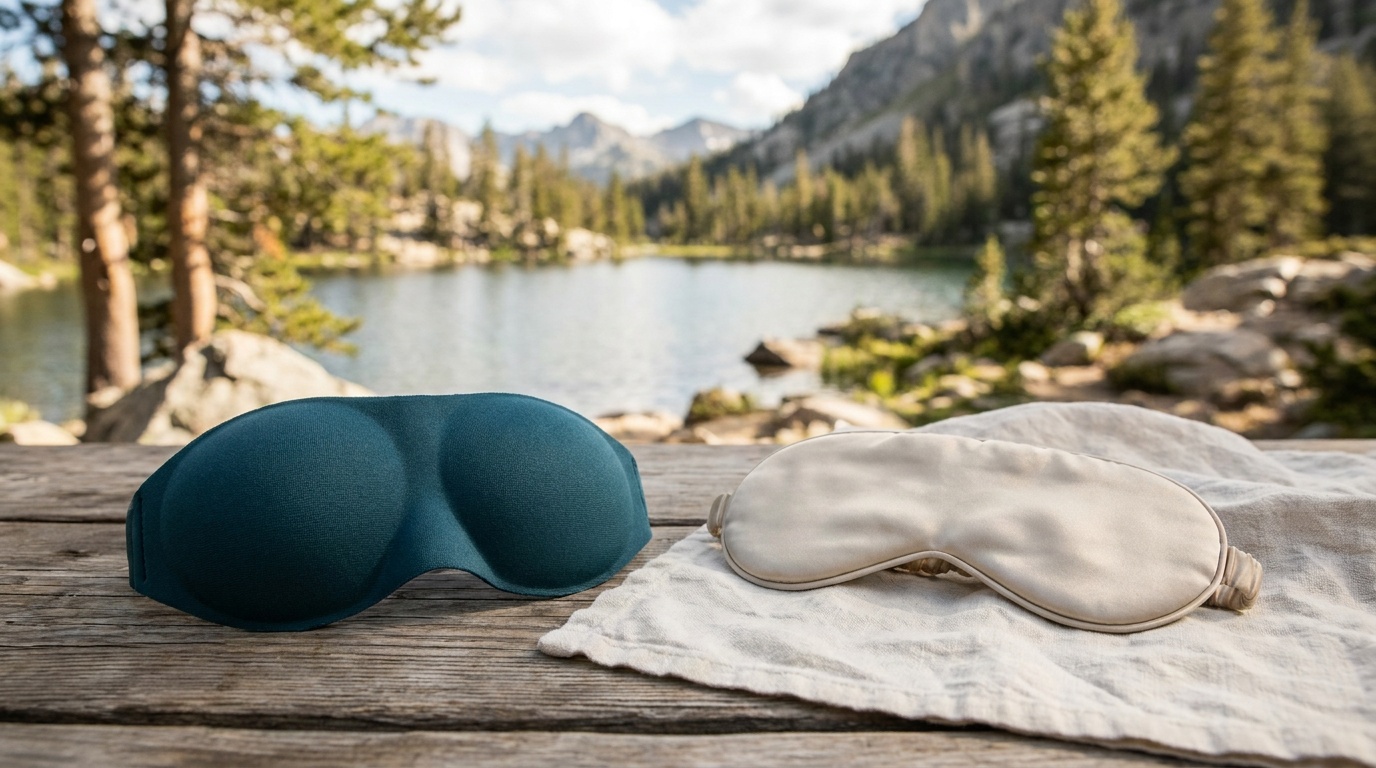
Contoured masks use a molded shell or adjustable cups to hold the mask surface away from your eyelids. This prevents the dry-eye discomfort and lash-rubbing that flat masks cause on longer flights. Flat masks, including the Alaska Bear, are thinner and softer but require a darker environment to match contoured masks on blackout performance.
If your main use case is a short domestic flight in a window seat, a flat silk mask is fine. If you are sleeping on overnight trains, budget transatlantic, or middle seats, a contoured mask is the practical choice.
Side-sleeper fit
Side sleepers compress whichever side of the mask faces the pillow. Fixed-cup contoured masks (MZOO, Nidra) hold their shape better than flat masks under that pressure, but the cups can still create a point of contact at the pillow edge. The Manta Pro's tapered cups and above-the-ear strap handle this most reliably. The Alaska Bear collapses flat and lets light in but does not create a pressure point.
Strap comfort on long-haul
Elastic straps narrow enough to dig into the skull or wide enough to push against ears become a real problem after four hours. The Manta Pro's angled strap, which sits above the ears with a silicone grip, is the most considered design here for extended wear. The MZOO and Nidra use simpler adjustable straps (the MZOO's has no velcro; the Nidra's does). If you know you sleep with your head at odd angles, prioritise strap design over everything else.
Breathability and temperature
Silk breathes better than synthetic foam or plush. The Alaska Bear wins on material breathability. Among contoured masks, the Manta Pro's built-in ventilation is the differentiating factor for hot sleepers. The MZOO and Nidra use enclosed foam cups that trap some warmth, which is tolerable in air-conditioned cabins and uncomfortable in warmer overnight environments.
Packability and weight
Alaska Bear: flat silk, packs smallest. Nidra: about 1 oz. MZOO: similar size with thicker foam. Manta Pro: the largest and heaviest of the four due to the adjustable cup hardware, but still carry-on friendly. For ultralight or minimalist travel, the silk mask wins. For everyone else, the weight difference between the contoured options is not meaningful in a carry-on context.
How to get a proper fit at home before you fly
Test in daylight
Put the mask on in a bright room, not a dark bedroom. Gaps show up immediately.
Check the nose bridge first
Press the mask lightly to your face and look down. If you see the floor, light will enter mid-flight.
Adjust the strap before you commit
The strap should sit below the crown of your skull, not across it, to avoid pressure on the pillow.
Simulate your sleep position
If you sleep on your side, lie on a pillow with the mask on. The cup that hits the pillow tells you everything about long-haul comfort.
Where these numbers come from
| Claim | Source | Checked |
|---|---|---|
| MZOO: 13 mm deep eye cups, 22 mm nose padding, 15-degree curved thin sides, air-hole memory foam, 19 to 28 in strap with no velcro, 100% blackout claim | MZOO listing on Amazon, ASIN B07KC5DWCC | 2026-09-25 |
| Nidra: deep 3D memory foam cups, velcro strap for 14 to 26 in heads, about 1 oz (28 g), Standard and Small sizes, hand wash and air dry only | Nidra, Deep Rest Eye Mask | 2026-09-25 |
| Nidra reports a multi-year run as Wirecutter's top sleep mask pick | Nidra, best sleep mask guide (brand claim) | 2026-09-25 |
| Manta Pro: C-shaped cups adjustable anywhere along the strap, angled strap above the ears with silicone grip, 73 cm strap, ventilation holes, Tactel interior, machine wash cold in mesh bag | Manta Sleep, Manta PRO Sleep Mask | 2026-09-25 |
| Alaska Bear: Grade 5A mulberry silk, strap adjusts 15.8 to 27.6 in, buckle sits at the back of the head, rests against the eyelids | Alaska Bear listing on Amazon, ASIN B07L91H64N | 2026-09-25 |
Blackout figures are the makers' claims. Fit and comfort notes summarize owner reviews, not our own wear testing.
Frequently asked questions
Do contoured sleep masks actually block more light than flat ones?
In most conditions, yes. Contoured shells create a physical gap between the mask surface and your eyelid, which eliminates the direct-contact light leakage that flat masks allow along the lash line and at the nose bridge. The advantage is largest for side sleepers and in bright environments. Back sleepers in a dark cabin may not notice a meaningful difference.
Are sleep masks allowed through airport security?
Yes. Sleep masks are not restricted items and do not need to be removed for screening. They can stay in your carry-on or personal item bag throughout the security process.
How do I clean a travel sleep mask?
Silk masks (Alaska Bear): hand wash in cool water with a gentle detergent, air dry flat. Nidra says hand wash and air dry only, since heat can damage its memory foam. Manta says the Pro is machine washable in cold water inside a mesh laundry bag, then air dried flat. For any foam mask, keep it out of the dryer.
A good sleep mask is one of the smallest upgrades with the largest return on any long trip. The four options above cover the full range from ultralight silk to adjustable premium, and any of them will outperform not wearing one at all.
Browse more travel gear guides in the travel hub, or see how we research and rate the products we recommend.
Keep going
Complete loadoutLong-flight comfort kitFive packable pieces for neck support, darkness, quieter cabins, leg comfort, and more consistent sleep away from home.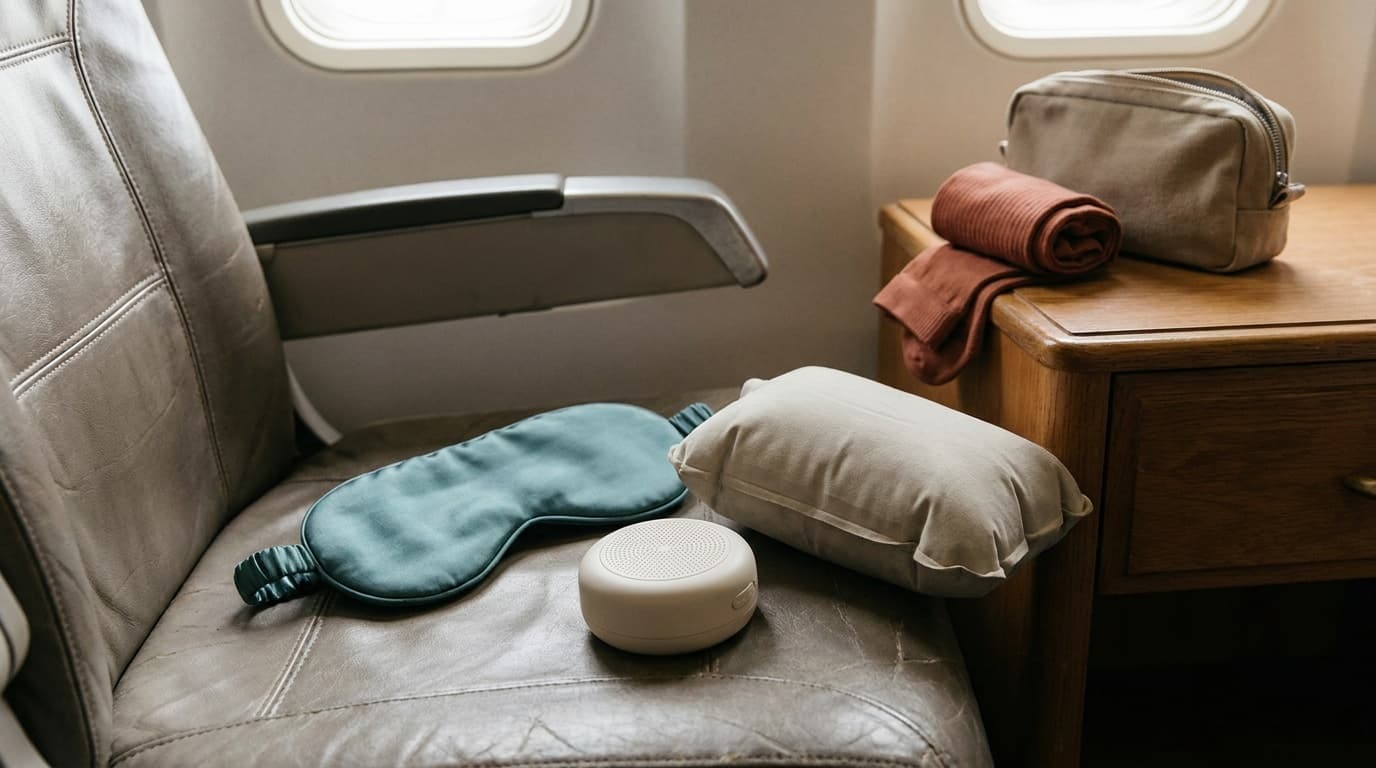

Our recommendations draw on manufacturer documentation, retailer listings, owner feedback, and comparisons with alternatives.
As an Amazon Associate I earn from qualifying purchases. We may earn a commission from links here, at no extra cost to you. How we research →