A UPF 50+ shirt is the single most effective piece of sun protection you can carry hiking: no reapplication, no missed patches, no degradation from sweat. The hard part is finding one that actually breathes well enough to wear in the heat it's designed for.
Our quick picks

How we picked
Every shirt here was evaluated against our Kit Score: verified UPF rating, fabric construction and breathability data, fit and coverage (hood quality, thumbholes, sleeve length), moisture-wicking behavior, and price-to-protection ratio. We aggregated manufacturer specs, independent fabric tests, and verified-owner reviews from thousands of hikes across desert and alpine terrain.
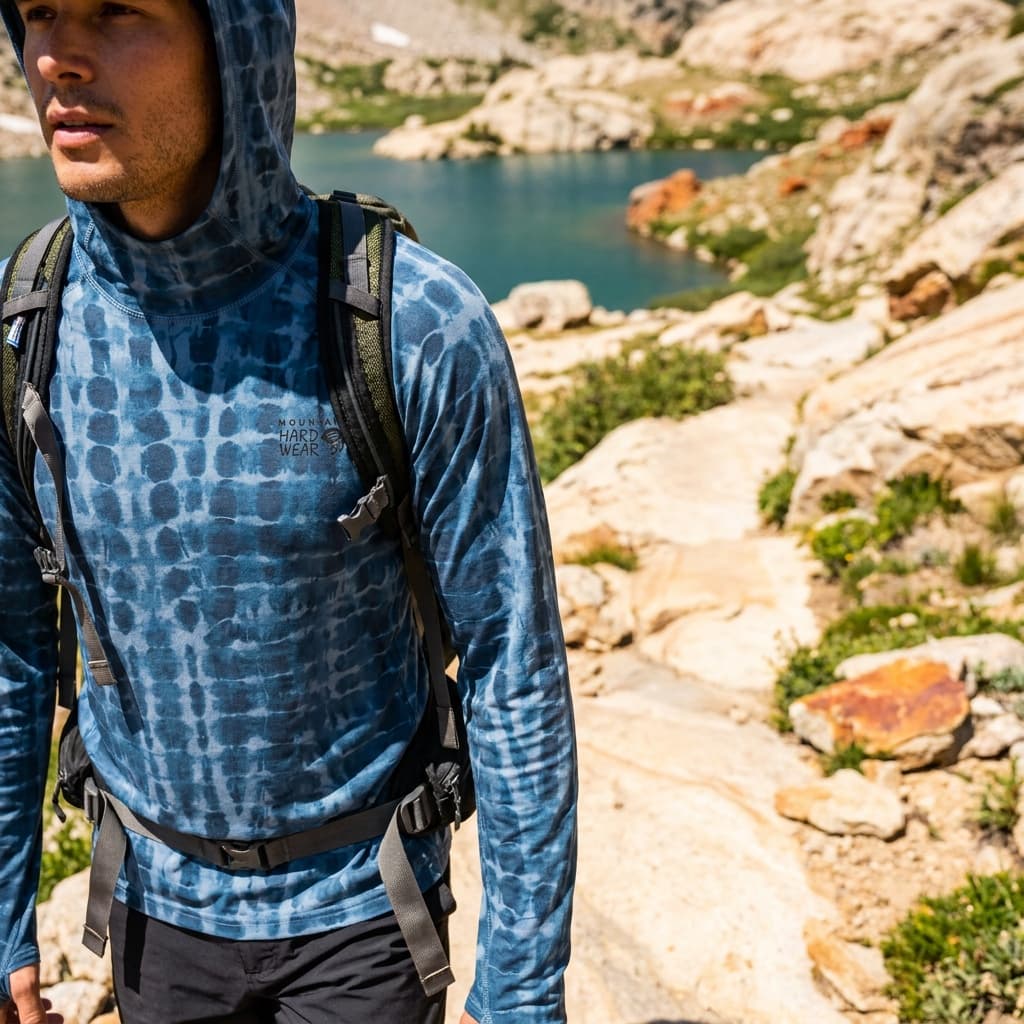
Best overall: Mountain Hardwear Crater Lake Hoody
BEST OVERALL
Men's Crater Lake Hoody
Best for: Hikers who want the lightest possible UPF 50 hooded layer for desert canyons or exposed alpine traverses where breathability and full arm coverage are non-negotiable.
- Softest and lightest knit weight in its class, confirmed across multiple independent gear labs
- Hood can slip off in wind unless worn over a cap; flat-brim users may find the fit less snug than expected
Kit Score 8.3/10 · $67.17 Price checked Oct 24, 3:33 PM CDT · how we score gear
Buy on AmazonProduct details
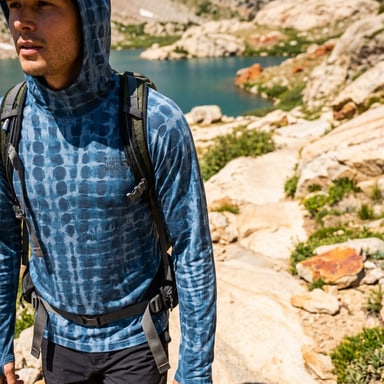
A hooded sun shirt built from a silky 88% polyester/12% elastane solar knit that earns consistent top rankings across major outdoor gear review sites. At roughly 6 oz it is light enough to forget you are wearing it, while the thumbholes and full-coverage hood close off the remaining exposure points desert and alpine hikers care about most.
- UPF Rating
- UPF 50
- Fabric
- 88% polyester, 12% elastane (Solar Knit Jersey)
- Hood
- Full-coverage 3-piece hood with thumbholes
- Fit
- Regular, dropped-shoulder construction
- Retail Price
- $79 MSRP
More strengths
- Thumbholes plus a snug hood close off wrist and neck exposure that crew-neck options miss
- 4.6/5 rating across 181 Amazon reviews; widely praised for comfort on multi-day desert and high-route trips
Other tradeoffs
- A handful of owners report seam threads loosening after repeated wash cycles, suggesting care labels matter here
The Crater Lake Hoody earns its spot at the top by doing the most important things without adding weight or complexity. The fabric is a 100% polyester stretch mesh that Mountain Hardwear rates at UPF 50+, and the construction is engineered for airflow: the open-knit weave allows convective heat loss even when there's only a light breeze. At roughly 3 oz, it's the lightest hooded option in this group.
The hood is the detail that separates this shirt from cheaper UPF tops. It has a brim-style peak that shades the face without requiring a separate hat, a snug enough fit to stay put in wind, and a zipper that goes high enough to cover the neck completely. Thumbholes keep sleeve coverage locked over the backs of your hands on exposed scrambles. The fit runs athletic without being compressive, so it layers comfortably under a light shell.
Where it gives something up: the polyester mesh doesn't feel as smooth against skin as nylon blends, and it picks up odor faster than fabrics with antimicrobial treatment. On a day hike that's a non-issue; on a multi-day trip, pack a second one or look at the OR ActiveIce below.
Best for: Hikers who want the lightest possible UPF 50 hooded layer for desert canyons or exposed alpine traverses where breathability and full arm coverage are non-negotiable.
Price: $57–$79
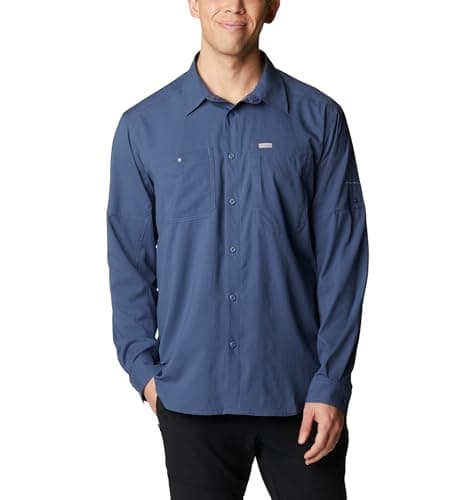
Best value: Columbia Silver Ridge Utility II Long Sleeve
BEST VALUE
Men's Silver Ridge Utility II Long Sleeve Shirt
Best for: Hikers who prefer a breathable, vented button-down over a pullover hoodie, and want a shirt that doubles as casual off-trail wear without looking like technical sportswear.
- Button-down format with back vents delivers noticeably better airflow than pullover hoodies, particularly valuable in canyon hiking where shade is intermittent
- No hood: neck and ears remain exposed without a separate sun hat or buff, which matters on exposed ridgelines
Kit Score 8.2/10 · $54.53 Price checked Oct 24, 3:33 PM CDT · how we score gear
Buy on AmazonProduct details
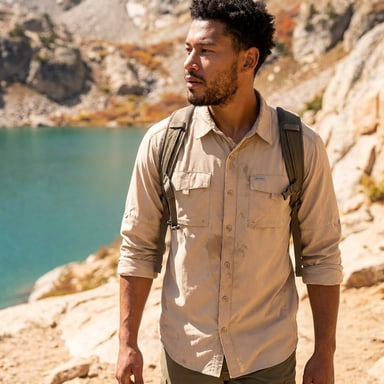
A vented button-down sun shirt in 100% recycled polyester with Columbia's Omni-Shade UPF protection and Omni-Wick moisture management. Roll-up sleeves with snap tabs and dual chest pockets make it the most versatile format here: it works as a proper hiking shirt on trail and passes as casual wear at the trailhead or in town. The Utility II is the current-generation successor to the original Utility Lite.
- UPF Rating
- UPF 50+ (Omni-Shade)
- Fabric
- 100% recycled polyester with antimicrobial treatment
- Ventilation
- Mesh-lined, vented back/side, roll-up sleeve tabs
- Pockets
- Two chest pockets with snap closures
- Fit
- Regular fit, classic shirttail hem
- Retail Price
- $65 MSRP
More strengths
- Recycled polyester with Omni-Wick rated well for breathability across multiple OutdoorGearLab test cycles on the Utility shirt line
- Trail-to-town versatility and wide size range including big and tall options make it accessible to more hikers
Other tradeoffs
- Sleeve roll tabs can be awkward to work single-handed while wearing gloves or with sweaty hands
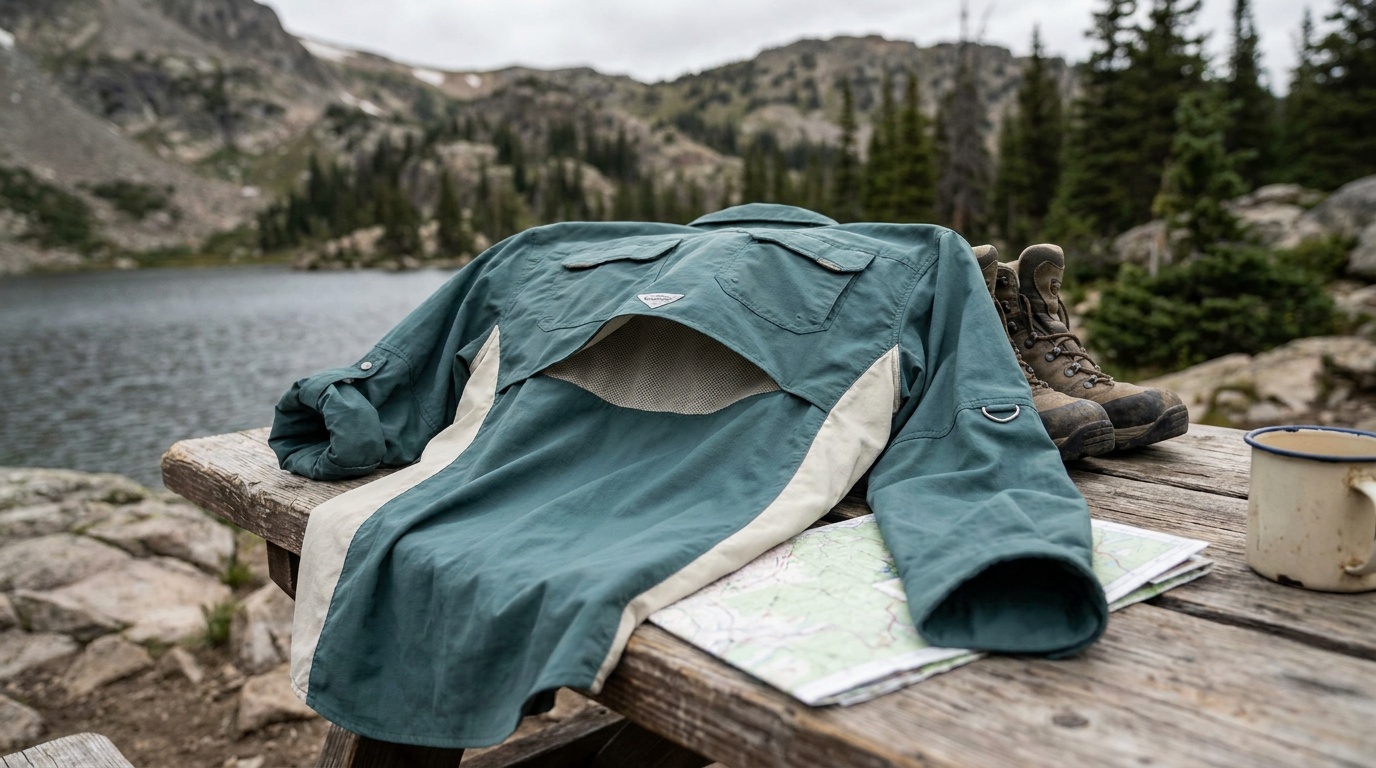
Not every hiker wants a pullover hoodie. The Silver Ridge Utility II is a button-down with a collar, chest pockets, and roll-tab sleeves, and it earns its value pick because it's the only shirt in this group that transitions naturally from a dusty trail to a cafe or campsite without broadcasting "technical gear." Columbia's Omni-Wick fabric is a nylon blend (lighter and smoother than polyester mesh) with a UPF 50 rating, and the vented cape on the back provides meaningful airflow relief on climbs.
The roll-tab sleeves let you convert to a short-sleeve quickly when you drop into shade or temperature drops in the afternoon. The collar adds neck coverage you don't get from a crew neck. The chest pockets are functional for small items; back vents unzip independently. It's a touch heavier than the mesh hoodies above, but the weight difference is under 2 oz and most hikers won't notice it on their back.
The tradeoff is coverage: a button-down collar doesn't protect the back of the neck and head the way a hood does. If you're doing exposed ridge routes, you're pairing this with a hat. For trail hiking in mixed sun and shade, it's a comfortable everyday carry that earns its keep far beyond the trailhead.
Best for: Hikers who prefer a breathable, vented button-down over a pullover hoodie, and want a shirt that doubles as casual off-trail wear without looking like technical sportswear.
Price: $55–$75
Best budget: Columbia PFG Terminal Tackle Hoodie
BEST BUDGET
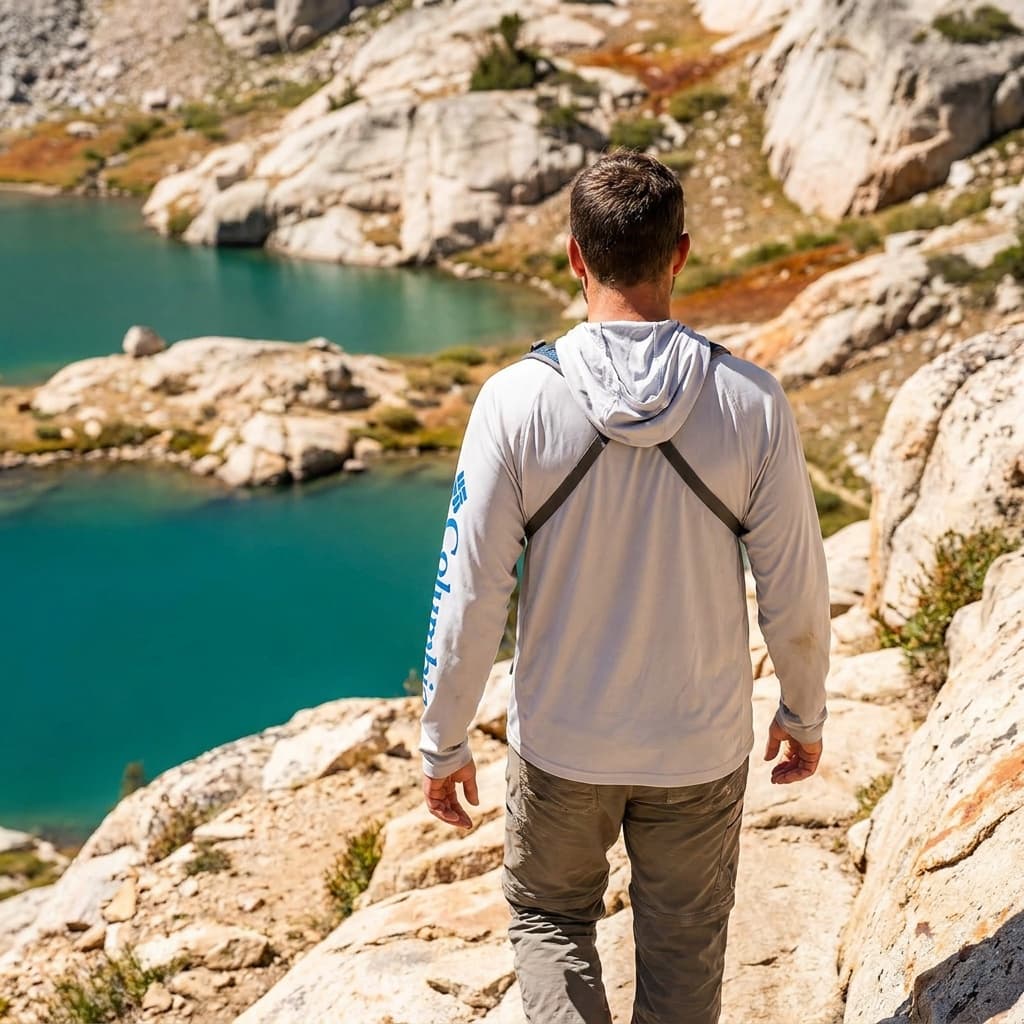
Men's PFG Terminal Tackle Hoodie
Best for: Hikers on a tight gear budget, casual day-walkers, or anyone who wants an inexpensive backup UPF layer to keep in the pack for unexpected high-sun days.
- Certified UPF 50 full-coverage protection, including a generous hood that stays put at lower exertion levels, at a price that makes owning a dedicated sun shirt an easy call
- Thicker interlock polyester limits breathability under sustained aerobic effort; OutdoorGearLab scores it lower on ventilation than knit-based competitors
Kit Score 7.9/10 · $45.00 Price checked Oct 24, 3:33 PM CDT · how we score gear
Buy on AmazonProduct details
Columbia's fishing-oriented sun hoodie delivers certified UPF 50 Omni-Shade protection and Omni-Wick moisture management at one of the lowest price points in the category. It is designed for lower-intensity sun exposure where staying covered matters more than breathability under load.
- UPF Rating
- UPF 50 (Omni-Shade)
- Fabric
- 100% polyester
- Hood
- Full-coverage hooded neck
- Moisture Mgmt
- Omni-Wick quick-dry
- Fit
- Relaxed; size down one for a standard fit
- Retail Price
- $45 current price
More strengths
- 4.7/5 rating across 6,165 Amazon reviews; Amazon's Overall Pick in the category, with wide color and size selection including frequent discounts into the $35 range
Other tradeoffs
- Hood lacks a drawcord and blows off easily in wind; sizing runs one full size large
The Terminal Tackle Hoodie is a fishing shirt that happens to be an excellent hiking sun layer. Columbia's PFG (Performance Fishing Gear) line is designed for anglers spending all-day exposure on open water, which means UPF 50+ protection is taken seriously. The polyester fabric wicks moisture and dries quickly; the hood is integrated and packable. At $35 on frequent sale, it's the most accessible UPF hoodie on this list.
The fit is roomier than the athletic cuts above, which works in its favor for breathability in extreme heat. The hood is functional but simpler than the Crater Lake or ActiveIce designs: no brim structure, minimal cinching. It's more of a fabric shield than an engineered hood. Thumbholes are not included. The odor resistance is average for untreated polyester.
For the price, none of those compromises matter much. This shirt delivers the core promise: verified UPF 50 protection, full arm and neck coverage, moisture management, at a price that makes it viable as a backup layer or a first UPF shirt for hikers testing the category.
Best for: Hikers on a tight gear budget, casual day-walkers, or anyone who wants an inexpensive backup UPF layer to keep in the pack for unexpected high-sun days.
Price: $35–$55
How to choose a sun protection shirt
Four questions to find your shirt
Hooded or collared
A hood is the better technical choice for exposed routes, covering the neck and face perimeter a hat misses. A collared button-down is better for mixed hiking and town use, but you must pair it with a hat for full coverage.
Polyester or nylon
Polyester mesh (Crater Lake, Terminal Tackle) is lighter and often more breathable in still air. Nylon blends (Silver Ridge) are smoother against skin and more durable against abrasion from a pack hipbelt. Both rate UPF 50+ reliably.
Active cooling or passive
Standard UPF fabrics block UV and wick moisture. Active-cooling fabrics (OR ActiveIce) accelerate evaporation and lower perceived temperature. The difference is real only when you're sweating continuously in direct sun for extended periods.
Thumbholes or not
Thumbholes lock sleeve coverage over the back of your hands during scrambles and prevent the sleeve from riding up under a pack. Worth prioritizing if you're doing rocky terrain or any exposed scrambling.
UPF 50+ fabric blocks over 98% of UV radiation regardless of how much you sweat, but a rating measured on flat fabric can drop at seams, cuffs, and hoods if construction is poor: check that the manufacturer rates the full garment, not just the base material.
| Product | Kit Score | Price | Best for |
|---|---|---|---|
| Men's Crater Lake Hoody | 8.3 | $67.17 Price checked Oct 24, 3:33 PM CDT | Best for: Hikers who want the lightest possible UPF 50 hooded layer for desert canyons or exposed alpine traverses where breathability and full arm coverage are non-negotiable. Why it stands out: Softest and lightest knit weight in its class, confirmed across multiple independent gear labs Tradeoff: Hood can slip off in wind unless worn over a cap; flat-brim users may find the fit less snug than expected |
| Men's Silver Ridge Utility II Long Sleeve Shirt | 8.2 | $54.53 Price checked Oct 24, 3:33 PM CDT | Best for: Hikers who prefer a breathable, vented button-down over a pullover hoodie, and want a shirt that doubles as casual off-trail wear without looking like technical sportswear. Why it stands out: Button-down format with back vents delivers noticeably better airflow than pullover hoodies, particularly valuable in canyon hiking where shade is intermittent Tradeoff: No hood: neck and ears remain exposed without a separate sun hat or buff, which matters on exposed ridgelines |
| Men's PFG Terminal Tackle Hoodie | 7.9 | $45.00 Price checked Oct 24, 3:33 PM CDT | Best for: Hikers on a tight gear budget, casual day-walkers, or anyone who wants an inexpensive backup UPF layer to keep in the pack for unexpected high-sun days. Why it stands out: Certified UPF 50 full-coverage protection, including a generous hood that stays put at lower exertion levels, at a price that makes owning a dedicated sun shirt an easy call Tradeoff: Thicker interlock polyester limits breathability under sustained aerobic effort; OutdoorGearLab scores it lower on ventilation than knit-based competitors |
Men's Crater Lake Hoody
- Best for
- Hikers who want the lightest possible UPF 50 hooded layer for desert canyons or exposed alpine traverses where breathability and full arm coverage are non-negotiable.
- Why it stands out
- Softest and lightest knit weight in its class, confirmed across multiple independent gear labs
- Tradeoff
- Hood can slip off in wind unless worn over a cap; flat-brim users may find the fit less snug than expected
Men's Silver Ridge Utility II Long Sleeve Shirt
- Best for
- Hikers who prefer a breathable, vented button-down over a pullover hoodie, and want a shirt that doubles as casual off-trail wear without looking like technical sportswear.
- Why it stands out
- Button-down format with back vents delivers noticeably better airflow than pullover hoodies, particularly valuable in canyon hiking where shade is intermittent
- Tradeoff
- No hood: neck and ears remain exposed without a separate sun hat or buff, which matters on exposed ridgelines
Men's PFG Terminal Tackle Hoodie
- Best for
- Hikers on a tight gear budget, casual day-walkers, or anyone who wants an inexpensive backup UPF layer to keep in the pack for unexpected high-sun days.
- Why it stands out
- Certified UPF 50 full-coverage protection, including a generous hood that stays put at lower exertion levels, at a price that makes owning a dedicated sun shirt an easy call
- Tradeoff
- Thicker interlock polyester limits breathability under sustained aerobic effort; OutdoorGearLab scores it lower on ventilation than knit-based competitors
Frequently asked questions
Does a UPF shirt replace sunscreen for hiking?
For covered skin, yes. UPF 50+ fabric blocks over 98% of UV-B and UV-A radiation, which is more consistent protection than sunscreen because it doesn't rub off or thin out with sweat. You still need sunscreen on your face, neck below the collar, and the backs of your hands if you're not using thumbholes or gloves. A hooded shirt eliminates most of the neck application zone.
How do I know if a shirt's UPF rating is legitimate?
Look for shirts tested to ASTM D6603 or the Australian/New Zealand AS/NZS 4399 standard, both of which test fabric samples under standardized UV exposure. Reputable brands (Mountain Hardwear, Outdoor Research, Columbia) publish test methodology. Be skeptical of shirts that claim "UPF 50+" without citing a testing standard, particularly cheap imports. The rating should also apply to the full garment, including seams and the hood if present.
Is UPF 30 good enough for hiking, or do I need UPF 50?
UPF 30 blocks roughly 97% of UV radiation; UPF 50 blocks 98%+. The practical difference is small on a single outing, but over cumulative days of desert hiking or high-altitude exposure, the gap matters. UPF 50+ is the correct target for any shirt intended for extended outdoor use, and most technical hiking shirts now hit that threshold without a price premium. There's no reason to accept less.
Sun exposure is the hiking risk that accumulates invisibly across hundreds of trail days. A UPF 50+ shirt is one of the lightest and lowest-friction ways to manage it, and the options above cover every budget and use case. Pair it with the right lower-body coverage using our convertible vs regular hiking pants guide. Browse the full hike gear guide for more kit recommendations, and see how we research and rate every product on Kit Authority.
Keep going
Related guides
 Complete hike loadoutDay hike kitBuild the complete kit
Our recommendations draw on manufacturer documentation, retailer listings, owner feedback, and comparisons with alternatives.
As an Amazon Associate I earn from qualifying purchases. We may earn a commission from links here, at no extra cost to you. How we research →