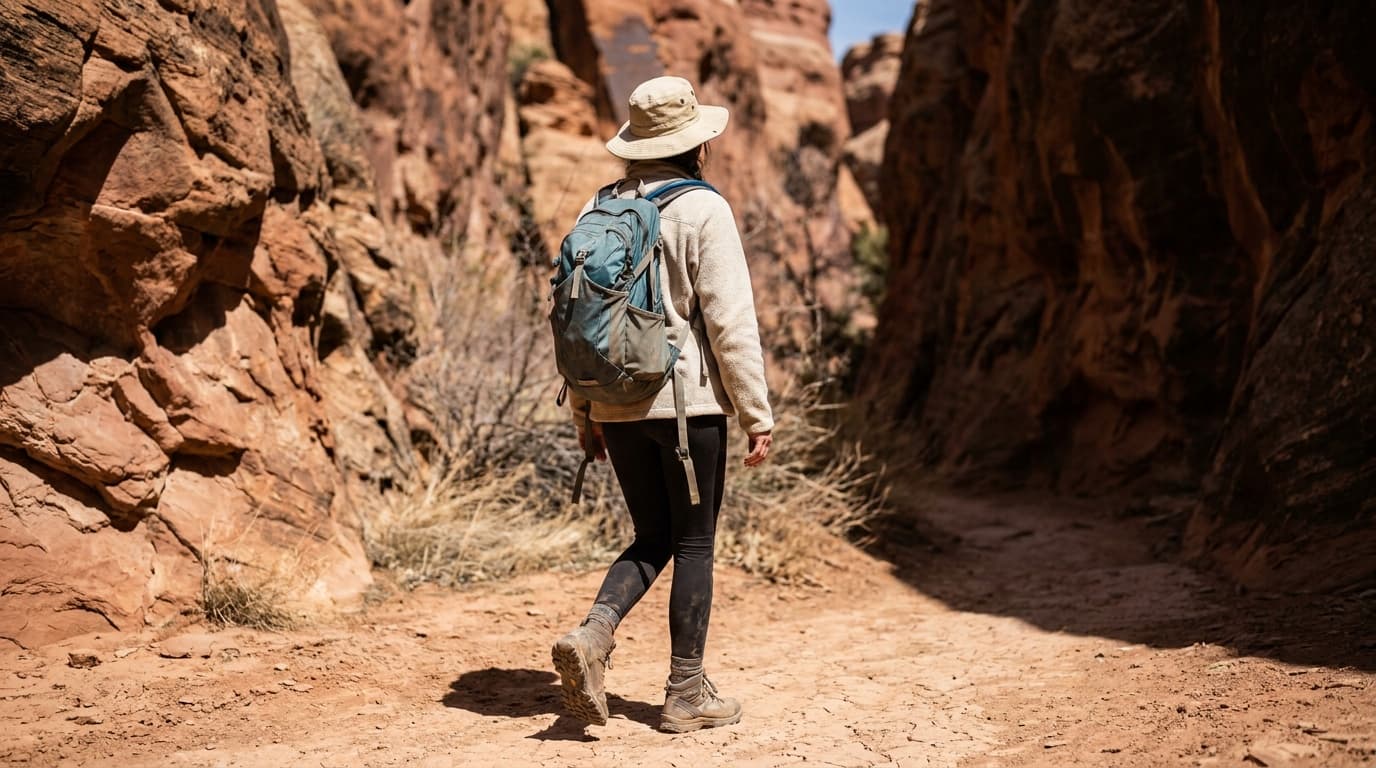
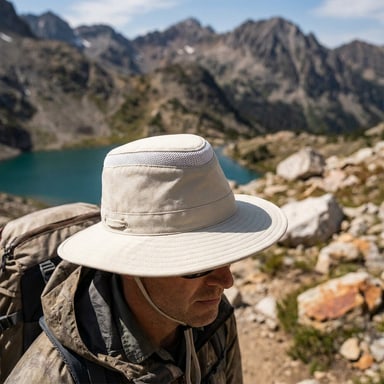
The best sun hat for most hikers is the Sunday Afternoons Ultra Adventure: UPF 50+ fabric (mesh included), a 3.5-inch brim, and a 6-inch neck cape for 2.6 oz (Sunday Afternoons). That clears the Skin Cancer Foundation's bar of a brim at least three inches wide, and UPF 50 fabric blocks 98 percent of the sun's UV (Skin Cancer Foundation). The right style makes it gear you actually wear rather than stuff at the bottom of the pack.
Our quick picks
How we picked
Every pick is scored on our Kit Score: UPF rating, coverage style and adjustability, ventilation and breathability, packability, chin-strap security, moisture-wicking sweatband construction, and verified-owner satisfaction across desert, canyon, and high-altitude conditions. No pick earns a spot on label claims alone. We aggregate manufacturer specifications, dermatologist-cited UV testing standards, and hundreds of verified-owner reviews to find hats that perform in real sun, not just in product photos.
The picks
Best overall
BEST OVERALL
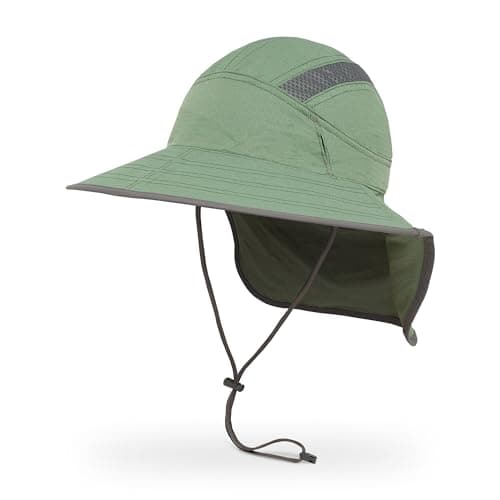
Sunday Afternoons Ultra Adventure Hat
Best for: Backpackers and desert hikers who want maximum coverage in a sub-3-oz package they will forget is in their kit.
- Reverse Split Brim folds flat for compact packing at just 2.6 oz
- Aesthetic is purely utilitarian, not a trail-to-town crossover
Kit Score 8.5/10 · $60.00 Price checked Oct 23, 4:16 PM CDT · how we score gear
Buy on AmazonProduct details
A featherlight wide-brim hat with a foldable Reverse Split Brim and a 6-inch neck cape, rated UPF 50+ including the mesh, purpose-built for long days in alpine or desert sun. Side mesh panels let heat out, and a recycled wicking sweatband keeps it comfortable through steep climbs.
- UPF Rating
- UPF 50+
- Brim Width
- 3.5 in.
- Neck Cape
- 6 in.
- Weight
- 2.6 oz (73.7 g)
- Material
- 88% nylon, 12% polyester
- Chin Strap
- Yes, adjustable for a secure fit
More strengths
- Neck cape extends to 6 in., covering ears and the back of the neck on exposed ridges
- Sunglass Lock feature keeps eyewear tethered; PFAS-free DWR finish sheds light rain
Other tradeoffs
- Hand-wash only; care is more involved than machine-washable alternatives
The Sunday Afternoons Ultra Adventure Hat is the benchmark for desert and backpacking sun hats because it solves the coverage-vs-weight trade-off better than almost anything else on the market. A 3.5-inch Reverse Split Brim shades the face, and a 6-inch neck cape covers the ears and the back of the neck. The shell is 88% nylon and 12% polyester, rated UPF 50+ including the mesh, and the split brim folds for compact packing.
At 2.6 oz, you genuinely stop noticing it's there. An internal sizing system and adjustable chin strap keep it put in wind, and a Sunglass Lock holds your shades. A wicking sweatband made from recycled bluesign material lines the headband, and side mesh panels let heat escape in dry desert air where a solid shell would trap warmth.
A PFAS-free water-repellent finish sheds light rain. The trade-offs: it is hand wash only, and the look is pure utility. Owner reviews from long desert hikes consistently describe it as gear they stop noticing and start depending on.
At $60 it sits above the budget tier but well below the premium craftsmanship hats. For anyone planning real desert or high-altitude mileage, it's the straightforward recommendation.
Best value
BEST VALUE
Outdoor Research Sun Runner Cap
Best for: Hikers who want a cap they can wear to the trailhead and then zip on full neck protection for exposed high-altitude or canyon terrain.
- Removable cape means one hat covers both casual and high-exposure conditions without bulk
- UPF 40+ (not 50+) and a narrower 2.75 in. brim leaves cheeks more exposed than wider-brim options
Kit Score 8.2/10 · $43.95 Price checked Oct 23, 4:16 PM CDT · how we score gear
Buy on AmazonProduct details
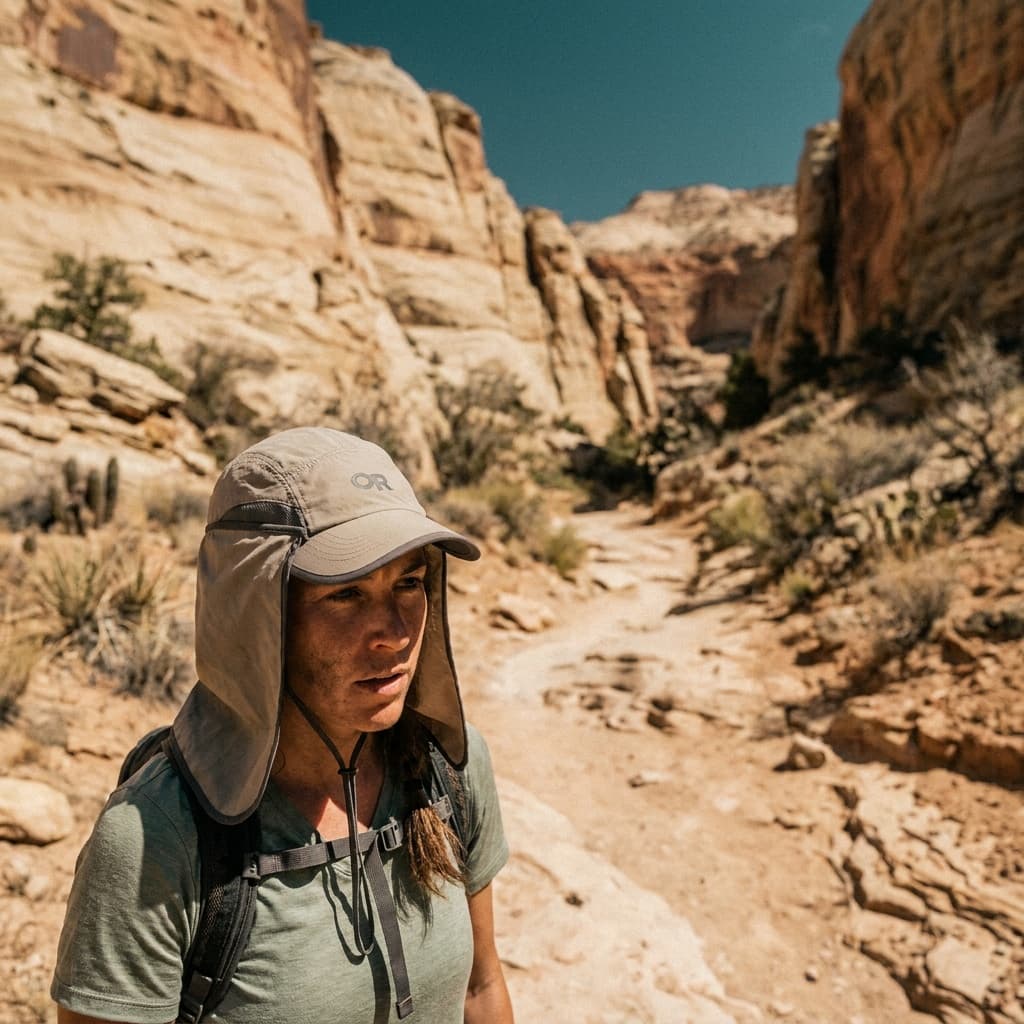
A trail-proven ball-cap design with a snap-off neck cape that converts it from everyday cap to full desert-mode coverage in seconds. Breathable mesh side panels and a wicking TransAction headband keep airflow moving on sustained climbs.
- UPF Rating
- UPF 40+
- Brim Width
- 2.75 in.
- Neck Cape
- 10.75 in., fully removable
- Weight
- 3.0 oz (85 g)
- Material
- 60% recycled nylon, 40% nylon
- Chin Strap
- Yes, removable
More strengths
- Dark fabric under the brim and external mesh side panels help with glare and airflow
- Light at 3.0 oz, with a removable chin cord for windy ridges
Other tradeoffs
- Cape cinched tight restricts airflow and creates a heat trap on windless days above 90 degrees F
The Outdoor Research Sun Runner Cap is a different design philosophy from the wide-brim picks here, and it's the right hat for a specific hiker: someone who starts on shaded approach terrain, parks, and drives, then hits exposed high-altitude or canyon miles where neck coverage becomes non-negotiable.
The base is a standard low-profile cap with a structured brim. The cape, a 10.75-inch flap, snaps on around the back and sides of the hat when you need it and comes off when you don't. The switch takes seconds, and you skip managing a separate neck gaiter.
The shell is bluesign-approved 60% recycled nylon rated UPF 40+, with a 2.75-inch brim, dark fabric under the brim, and mesh side panels for airflow. That is one step below the other three hats: the Skin Cancer Foundation calls UPF 30 to 49 very good protection and UPF 50+ excellent. The wicking TransAction headband matters on high-exertion desert miles, and a removable chin cord secures the cap in gusty ridge-line conditions. At 3.0 oz, it is still light.
At $44–$46 this is the most versatile piece in the group. It fits a wider range of trail conditions than a fixed wide-brim and handles casual use between trips without looking like specialized gear. The value case is straightforward: two coverage modes for the price of one hat.
Best budget
BEST BUDGET
Columbia Bora Bora II Booney
Best for: Casual day hikers and new-to-gear buyers who want a reliable UPF 50 bucket hat without committing to a specialty price.
- Ventilation is genuinely above average for the price: crown mesh panels and Omni-Wick sweatband work together effectively
- Brim is floppy and stretches with repeated wet/dry cycles, losing structure over a season
Kit Score 6.6/10 · $31.99 Price checked Oct 23, 4:16 PM CDT · how we score gear
Buy on AmazonProduct details
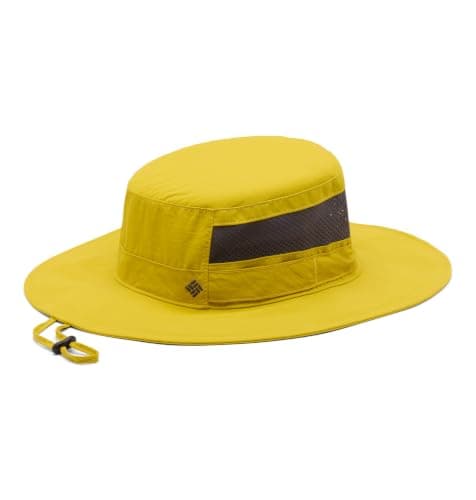
A lightweight, well-ventilated bucket hat with Columbia's Omni-Shade UPF 50 fabric and a wicking sweatband for hot-day comfort. It delivers the core sun protection basics at a price point that makes it easy to keep one in the car or loan to a hiking partner.
- UPF Rating
- UPF 50 (Omni-Shade)
- Brim Width
- 3 in. full circumference
- Size
- One size, toggle adjustment at back
- Material
- 100% textured nylon poplin with mesh vent panel
- Ventilation
- Crown mesh vent panel + Omni-Wick sweatband
- Chin Strap
- Yes
More strengths
- 3 in. full-circumference brim blocks overhead sun on desert and exposed ridge hikes without catching wind awkwardly
Other tradeoffs
- One size only, and Columbia says the UPF 50 rating does not apply to the mesh vent panel, leaving a gap for direct overhead sun through the crown
The Columbia Bora Bora II Booney makes one argument clearly: UPF 50 protection at $25–$35, in a packable bucket-hat silhouette that works for day hiking, travel, and water-adjacent activities. That argument holds.
The shell is textured nylon poplin rated UPF 50 through Columbia's Omni-Shade, which relies on tight fabric construction and modified fibers; Columbia notes the rating does not cover the mesh vent panel. The 3-inch brim runs all the way around, half an inch shorter than the Sunday Afternoons pick, which trades some face and neck coverage for a more casual profile that doesn't feel like "serious gear hat" off-trail. An adjustable chin strap and a toggle at the back keep it on in wind, and an Omni-Wick sweatband lines the interior.
The soft, one-size construction folds flat, which makes it easy to drop in a bag or cargo pocket without committing to wearing it. The bucket-hat silhouette provides good ear and side coverage all the way around. Columbia's own shoppers rate it 4.7 out of 5 across 1,260 reviews.
The honest caveat: on a long desert day with sun at low angles, the narrower brim means you'll feel exposure at the face sides and neck that a wider brim or a cape-style hat would block. For a full-day exposed route, consider pairing it with one of the best neck gaiters for the sides of your face and neck. For a casual day hike or a new hiker building a first kit, this hat checks the essential boxes at a price that makes skipping sun protection inexcusable.
Editor's choice
EDITOR'S CHOICE
Tilley LTM6 Airflo
Best for: Hikers who want a hat they buy once and replace never, prioritizing fit precision, washability, and craftsmanship over maximum neck coverage.
- Precise head sizing (sold in hat sizes, not S/M/L) means a stable fit without constant drawcord fiddling
- Narrow side brim (2.5 in.) leaves cheeks and neck less covered than full-surround alternatives at this price
Kit Score 7.8/10 · $98.00 Price checked Oct 23, 4:16 PM CDT · how we score gear
Buy on AmazonProduct details
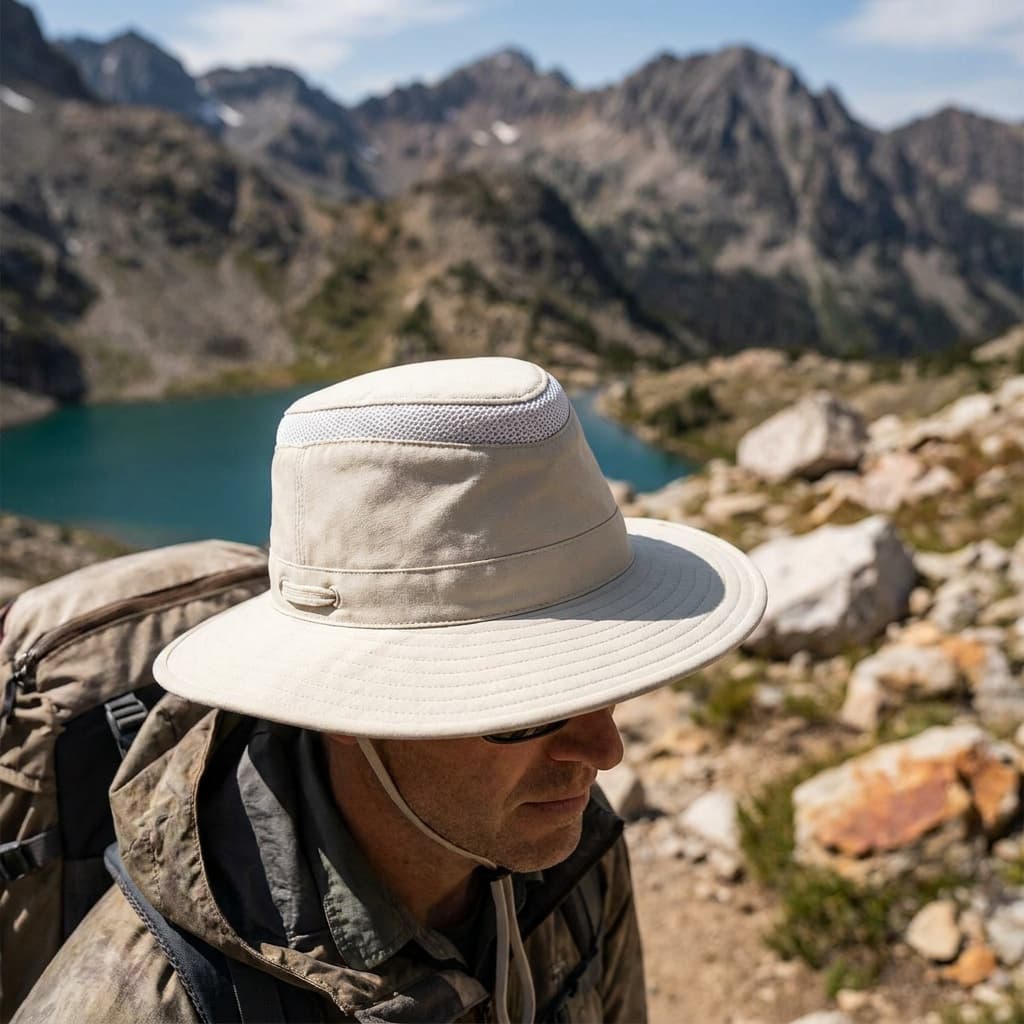
A precision-sized, machine-washable wide-brim hat built from recycled nylon with a mesh ventilation band around the crown. It floats, packs flat, and carries a lifetime guarantee from Tilley, making it a long-term investment for serious hikers.
- UPF Rating
- UPF 50+
- Brim Width
- 3.5 in. front/back, 2.5 in. sides
- Weight
- 4 oz (113 g)
- Material
- 100% recycled nylon; mesh 100% polyester
- Ventilation
- 3/4 in. mesh band around crown
- Chin Strap
- Yes, stowable wind cord
More strengths
- Machine washable and guaranteed for life against normal wear and tear, imperfect workmanship, and faulty material
- Buoyant construction floats if it blows off on a river crossing or exposed ridge
Other tradeoffs
- Brim will contact taller backpack frames, a real limitation for multi-day carries with high-volume packs
The Tilley LTM6 Airflo is a different kind of buy from the other three picks. It's not the lightest or the most technical. It's the hat you buy once and stop thinking about for a decade.
The LTM6 is made from 100% recycled nylon rated UPF 50+, with a 3/4-inch polyester mesh band around the crown. That mesh band is what earns the "Airflo" name: it lets heat escape in sustained high-altitude sun, where a non-breathable hat creates its own heat problem. The oval brim is 3.5 inches front and back and 2.5 inches at the sides, so it shades the face well but leaves more of the cheeks and neck exposed than the Sunday Afternoons.
What distinguishes the Tilley is fit precision. It is sold in 1/8-inch hat sizes from 6 7/8 to 8+, and Tilley publishes a sizing chart with sweatband circumferences, so you get a genuinely fitted hat rather than an S/M/L approximation (Tilley says it fits snug and suggests sizing up for the traditional fit). A foam insert in the crown pocket makes it float, a tuck-away wind cord keeps it on, and it is guaranteed for life against normal wear and tear, imperfect workmanship, and faulty material.
The sweatband is moisture-wicking Hydrofil. The hat is machine washable on a delicate cycle once you remove the wind cord and foam. At 4 oz it is the heaviest hat here, and at $95–$105 it's the most expensive pick by a margin, and it earns that premium through construction and longevity rather than technical features. If you replace a $30 hat every two years, the Tilley's math starts looking better around year four.
Head-to-head comparison
| Product | Kit Score | Price | Best for |
|---|---|---|---|
| Sunday Afternoons Ultra Adventure Hat | 8.5 | $60.00 Price checked Oct 23, 4:16 PM CDT | Best for: Backpackers and desert hikers who want maximum coverage in a sub-3-oz package they will forget is in their kit. Why it stands out: Reverse Split Brim folds flat for compact packing at just 2.6 oz Tradeoff: Aesthetic is purely utilitarian, not a trail-to-town crossover |
| Outdoor Research Sun Runner Cap | 8.2 | $43.95 Price checked Oct 23, 4:16 PM CDT | Best for: Hikers who want a cap they can wear to the trailhead and then zip on full neck protection for exposed high-altitude or canyon terrain. Why it stands out: Removable cape means one hat covers both casual and high-exposure conditions without bulk Tradeoff: UPF 40+ (not 50+) and a narrower 2.75 in. brim leaves cheeks more exposed than wider-brim options |
| Columbia Bora Bora II Booney | 6.6 | $31.99 Price checked Oct 23, 4:16 PM CDT | Best for: Casual day hikers and new-to-gear buyers who want a reliable UPF 50 bucket hat without committing to a specialty price. Why it stands out: Ventilation is genuinely above average for the price: crown mesh panels and Omni-Wick sweatband work together effectively Tradeoff: Brim is floppy and stretches with repeated wet/dry cycles, losing structure over a season |
| Tilley LTM6 Airflo | 7.8 | $98.00 Price checked Oct 23, 4:16 PM CDT | Best for: Hikers who want a hat they buy once and replace never, prioritizing fit precision, washability, and craftsmanship over maximum neck coverage. Why it stands out: Precise head sizing (sold in hat sizes, not S/M/L) means a stable fit without constant drawcord fiddling Tradeoff: Narrow side brim (2.5 in.) leaves cheeks and neck less covered than full-surround alternatives at this price |
Sunday Afternoons Ultra Adventure Hat
- Best for
- Backpackers and desert hikers who want maximum coverage in a sub-3-oz package they will forget is in their kit.
- Why it stands out
- Reverse Split Brim folds flat for compact packing at just 2.6 oz
- Tradeoff
- Aesthetic is purely utilitarian, not a trail-to-town crossover
Outdoor Research Sun Runner Cap
- Best for
- Hikers who want a cap they can wear to the trailhead and then zip on full neck protection for exposed high-altitude or canyon terrain.
- Why it stands out
- Removable cape means one hat covers both casual and high-exposure conditions without bulk
- Tradeoff
- UPF 40+ (not 50+) and a narrower 2.75 in. brim leaves cheeks more exposed than wider-brim options
Columbia Bora Bora II Booney
- Best for
- Casual day hikers and new-to-gear buyers who want a reliable UPF 50 bucket hat without committing to a specialty price.
- Why it stands out
- Ventilation is genuinely above average for the price: crown mesh panels and Omni-Wick sweatband work together effectively
- Tradeoff
- Brim is floppy and stretches with repeated wet/dry cycles, losing structure over a season
Tilley LTM6 Airflo
- Best for
- Hikers who want a hat they buy once and replace never, prioritizing fit precision, washability, and craftsmanship over maximum neck coverage.
- Why it stands out
- Precise head sizing (sold in hat sizes, not S/M/L) means a stable fit without constant drawcord fiddling
- Tradeoff
- Narrow side brim (2.5 in.) leaves cheeks and neck less covered than full-surround alternatives at this price
How to choose the right hiking sun hat
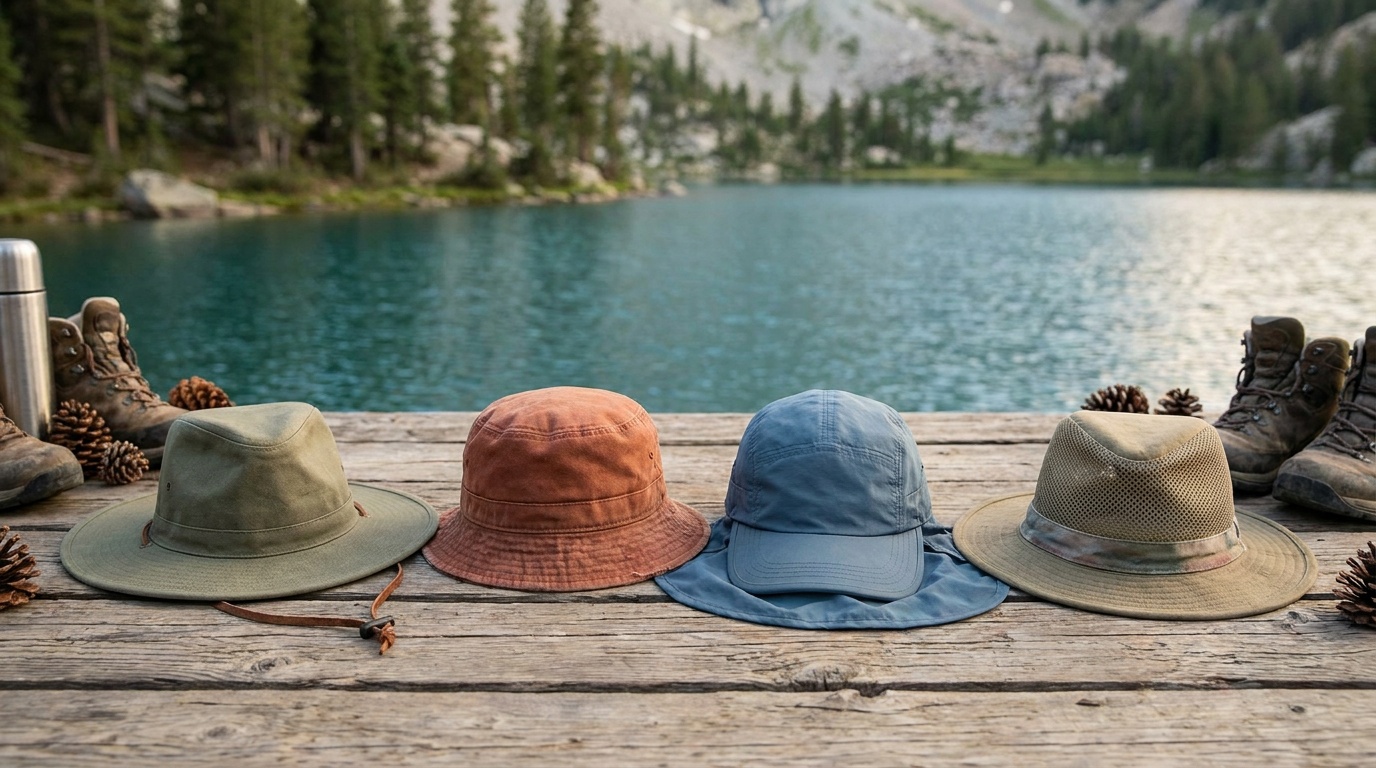
Match the hat to your conditions
Start with UPF, not style
UPF 50 fabric blocks 98 percent of UV radiation. The Skin Cancer Foundation rates UPF 30 to 49 as very good and UPF 50+ as excellent; three picks here are UPF 50 or higher and the OR cap is UPF 40+. In the US, UPF labels follow ASTM D6603, which uses the AATCC 183 test on new, dry, unstretched fabric. Confirm the actual UPF number, not a "sun-protective" marketing claim, and note whether mesh panels are included in the rating.
Match brim width to sun angle
Wide-brim hats (3 inches or more, the Skin Cancer Foundation's minimum) protect the face, ears, and upper neck from overhead and low-angle sun. Bucket hats with shorter brims are better than a cap but leave the neck exposed at low sun angles. Cap-style hats with a cape are the most adjustable option for changing terrain. If your route is mostly above treeline or in an open canyon, err toward more coverage.
Check neck protection for your terrain
Desert canyon hiking and high-altitude alpine routes both call for neck coverage because UV reflected off the ground adds to direct overhead exposure. The Sunday Afternoons has a fixed 6-inch neck cape, and the Tilley's brim shades the back of the neck. The OR Sun Runner adds coverage with its snap-on cape. Budget for a neck gaiter if you choose the Columbia and plan high-exposure routes.
Verify the chin strap before you buy
Wind at ridge lines and canyon rims will take an unsecured hat. Every pick here includes a chin strap or cord, but they differ: the Tilley's wind cord tucks away into the crown, the OR's chin cord is removable, and the Sunday Afternoons and Columbia use adjustable straps. Test the adjustment before your first long trip.
A hat that stays on in a ridge-line gust is worth more than one that sits slightly better in a store.
Where these numbers come from
| Claim | Source | Checked |
|---|---|---|
| Sunday Afternoons Ultra Adventure: UPF 50+ including mesh, 3.5 in brim, 6 in neck cape, 2.6 oz, 88% nylon / 12% polyester shell, recycled bluesign sweatband, Sunglass Lock, PFAS-free DWR, hand wash only, S/M and L/XL | Sunday Afternoons, Ultra Adventure Hat | 2026-09-26 |
| Outdoor Research Sun Runner Cap: UPF 40, 2.75 in brim, 10.75 in removable cape, 3.0 oz, 60% recycled / 40% nylon, TransAction headband, removable chin cord, sizes S to XL | Outdoor Research, Sun Runner Cap | 2026-09-26 |
| Sun Runner cape snaps on and off; dark fabric under brim; external mesh panels | Outdoor Research listing on Amazon, ASIN B0BSRFMZSX | 2026-09-26 |
| Columbia Bora Bora II Booney: Omni-Shade UPF 50 (not on the mesh), 3 in brim, textured nylon poplin, Omni-Wick sweatband, adjustable chin strap and back toggle, one size, hand wash, 4.7 out of 5 across 1,260 reviews | Columbia, Bora Bora II Booney | 2026-09-26 |
| Tilley LTM6 Airflo: UPF 50+, 100% recycled nylon with polyester mesh, 4 oz, brim 3.5 in front and back and 2.5 in sides, Hydrofil sweatband, buoyant, tuck-away wind cord, sized 6 7/8 to 8+, machine wash delicate, guaranteed for life against wear and tear, workmanship, and faulty material | Tilley, LTM6 Airflo Sun Hat | 2026-09-26 |
| UPF 50 blocks 98 percent of UV; UPF 30 to 49 is very good and 50+ excellent; UPF 50 required for the Seal of Recommendation; best sun hats have a brim of at least three inches | Skin Cancer Foundation, sun-protective clothing | 2026-09-26 |
| US UPF labels are classified under ASTM D6603 as UPF 15, 30, 50, or 50+, using AATCC TM 183 on new, unstretched, dry fabric | Hohenstein, American standard AATCC TM 183 | 2026-09-26 |
| UV rises about 10 percent per 1,000 m of altitude; snow can reflect as much as 80 percent of UV | WHO, ultraviolet radiation Q&A | 2026-09-26 |
We have not worn these hats on trail ourselves. UPF ratings, sizes, and weights are the makers' figures; fit and wind notes summarize owner reviews.
Frequently asked questions
What UPF rating do I actually need for hiking?
Aim for UPF 50 or UPF 50+ for sun hats used in direct, prolonged hiking conditions. UPF 50 fabric blocks 98 percent of UV radiation, and it is the minimum the Skin Cancer Foundation requires for its Seal of Recommendation; the foundation rates UPF 30 to 49 as very good. Three hats in this roundup are UPF 50 or higher, and the OR Sun Runner is UPF 40+, so the comparison across picks is mostly on coverage, fit, and construction. Brim width matters as much as the fabric: look for at least three inches.
Is a wide-brim hat or a cap-with-neck-cape better for desert hiking?
Both are significantly better than a standard cap, and the best choice depends on your use pattern. A wide-brim hat like the Sunday Afternoons Ultra Adventure provides passive all-around coverage without any adjustment, which matters on long days when you're not thinking about hat management. A cap-with-neck-cape like the OR Sun Runner is better for hikers who move between shaded and exposed terrain because the cape stows when you don't need it, reducing bulk and improving ventilation on cooler sections. For a dedicated desert route, the wide-brim is usually the simpler call. For a mixed-terrain trip, the convertible cape design is more versatile.
How do I keep a hiking sun hat on in wind?
Use the chin strap every time the terrain opens up, not just when the wind picks up. The chin strap is most useful when you're moving fast and can't feel early gusts. A cord-lock style strap adjusts quickly on the move; set it snug enough to keep the hat level without restricting head movement. Beyond the strap, a structured brim holds shape better in wind than a floppy brim because it presents a consistent profile rather than catching air on the edge. Some Columbia owners report the softer bucket brim flopping in wind, so lean on its chin strap and back toggle more than you would on the Tilley or Sunday Afternoons.
Sun protection is the easiest thing to under-pack for and one of the few gear choices that compounds with every mile. Any of these four hats will cover the fundamentals; the right one depends on your terrain, your tolerance for bulk, and how much coverage you want when the shade runs out.
Browse more gear picks in the hiking hub, or read more about how we research and rate every product on this site.
Keep going
Complete loadoutDay hike kitSeven slots for a full trail day, from the pack and water system to light and weather protection.
Our recommendations draw on manufacturer documentation, retailer listings, owner feedback, and comparisons with alternatives.
As an Amazon Associate I earn from qualifying purchases. We may earn a commission from links here, at no extra cost to you. How we research →