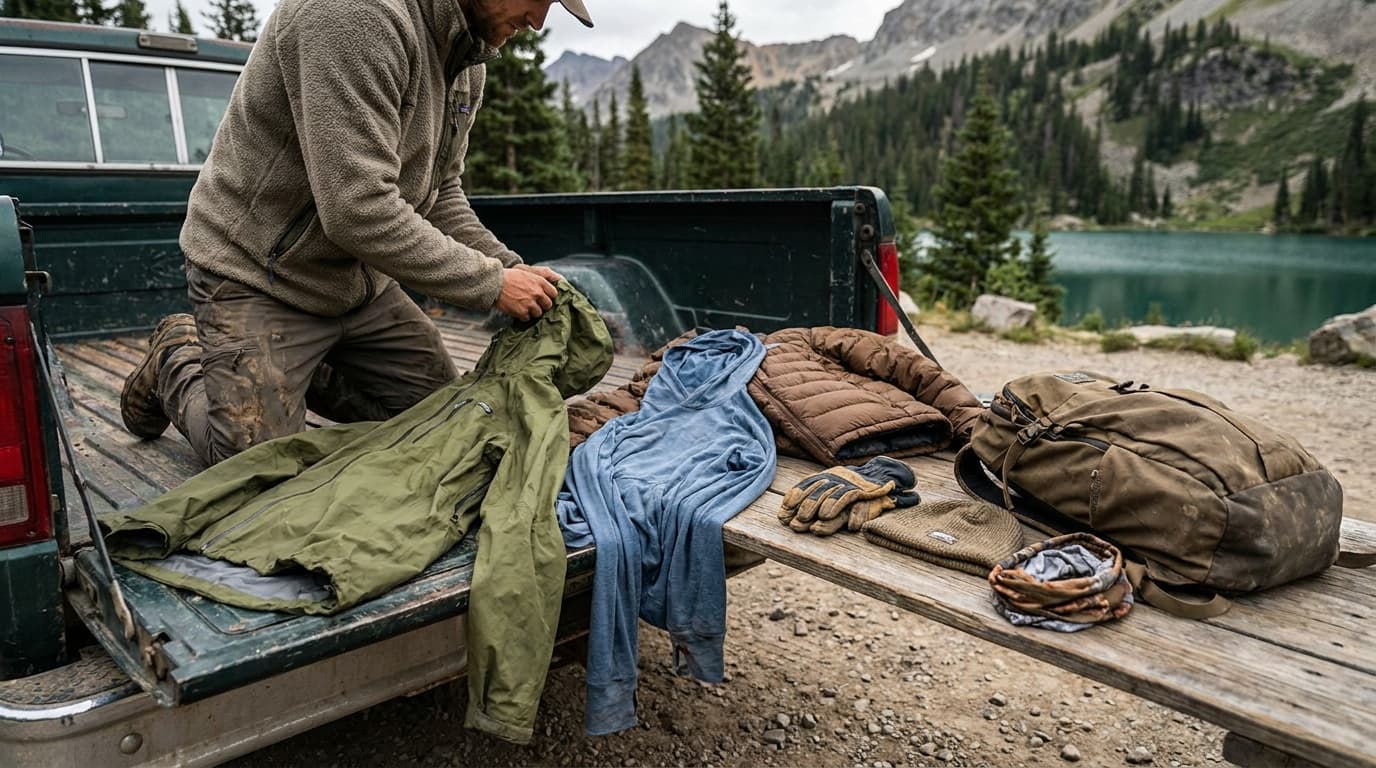
The right sun hat is one of the most cost-effective pieces of gear you can carry: it blocks UV, prevents heat exhaustion, and keeps sweat out of your eyes for the price of a tank of gas.
UPF ratings: what the number actually means
UPF (Ultraviolet Protection Factor) measures how much UV radiation a fabric blocks. A UPF 50 fabric blocks 98% of UV rays; UPF 30 blocks about 97%. That gap sounds small until you're on a high-elevation snowfield where UV intensity is 40–50% higher per 1,000 metres of elevation gain.
Fabric construction matters as much as the label. Tightly woven nylon and polyester hold their UPF rating when wet; loosely woven cotton and straw drop significantly once damp with sweat. If your hat gets soaked on a river crossing or a rain shower, a straw hat may offer surprisingly little protection until it dries.
Brim width and coverage: the numbers that matter
Brim width is the single most important variable in sun protection. Dermatologists recommend at least 3 inches (7.5 cm) of brim to adequately shade the face, ears, and the back of the neck. A standard baseball cap brim runs about 2.75 inches and leaves the ears and neck fully exposed.
For the nose and cheeks specifically, a front brim of 3.5–4 inches makes a measurable difference. The ears and back of the neck are the most common sites for sun-related skin damage in outdoor athletes, so a hat with a shorter or asymmetric brim is a real trade-off, not just an aesthetic one.
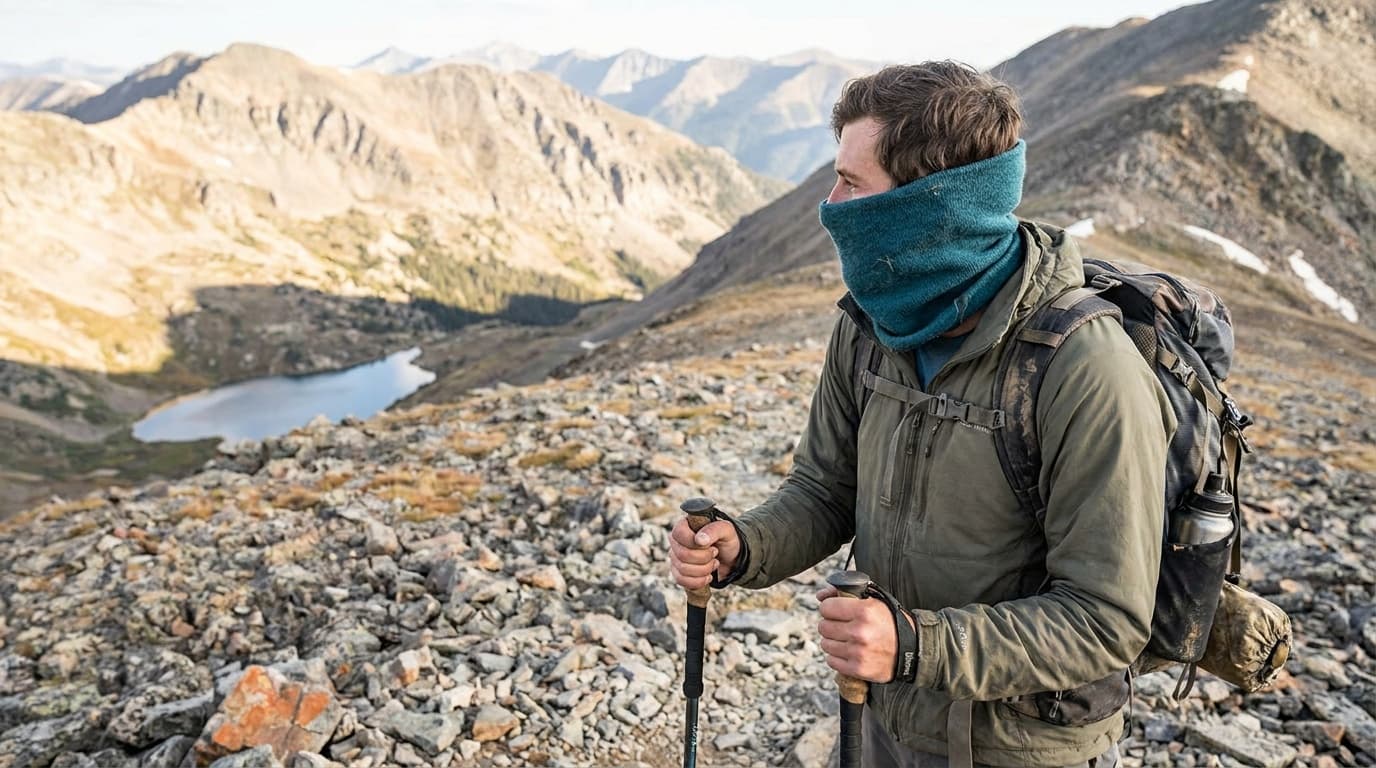
Ears and the back of the neck account for a disproportionate share of UV-related skin damage in hikers, yet most caps leave both fully exposed.
Style comparison: wide brim vs bucket vs cap with cape
Choosing the right style
Wide-brim hat
Best for open desert, alpine meadows, and anywhere with no tree cover; 3–5 inch brim covers face, neck, and ears fully; the trade-off is wind resistance and bulk.
Bucket hat
Softer 2.5–3 inch downward-angled brim covers all sides evenly; packable, lower wind profile than a stiff brim, and works well in humid or mixed-cover terrain.
Cap with cape (legionnaire)
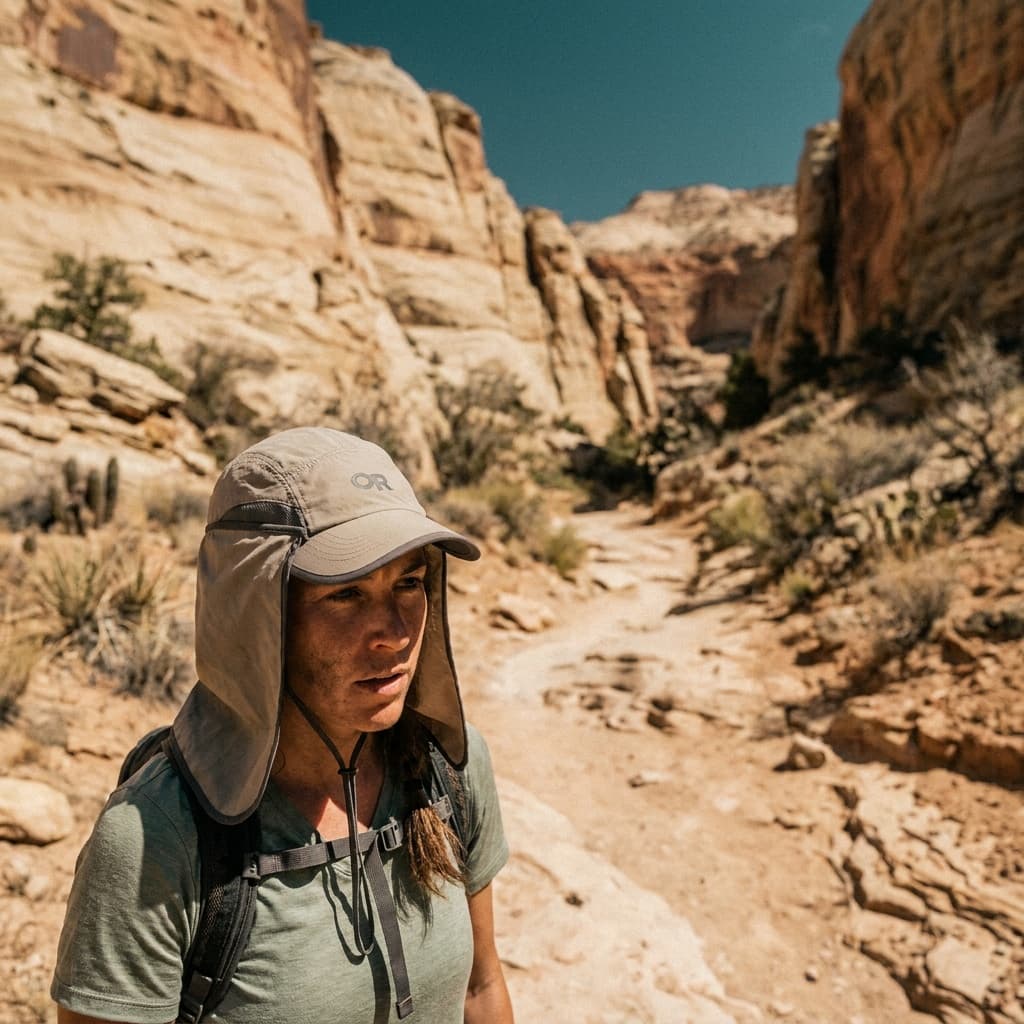
A standard-profile front brim plus a fabric flap covering the ears and neck, like the [Outdoor Research Sun Runner Cap](/api/go?product=outdoor-research-sun-runner-cap&retailer=amazon&article=how-to-choose-a-sun-hat-for-hiking); the lowest wind resistance of the three; ideal for technical routes, via ferratas, or scrambles where a full-perimeter brim is impractical.
Baseball cap
Familiar and breathable, but genuinely inadequate on its own for sun protection; use only in heavily shaded forest or pair with SPF-rated neck gaiter and sunscreen.
Packability: bucket hats and legionnaire-style caps stuff into a jacket pocket. Stiff wide-brim hats do not, though many packable wide brims use flexible wire to reshape after folding. If you're moving in and out of a pack, test how a hat stores before buying.
Ventilation and moisture management
Heat builds under any hat. Look for mesh crown panels, like the one on the Tilley LTM6 Airflo, or laser-cut perforations in the crown, which allow convective airflow to carry heat away. A fully solid crown in nylon can raise head temperature noticeably on a climb, pushing people to remove the hat exactly when sun protection matters most.
Moisture-wicking sweatbands (typically a thin polyester or merino strip at the inner brim) prevent salt buildup and reduce brow drip. On long days, this matters more than most gear reviews acknowledge. Check that the sweatband is removable or at least washable.
Matching hat to terrain
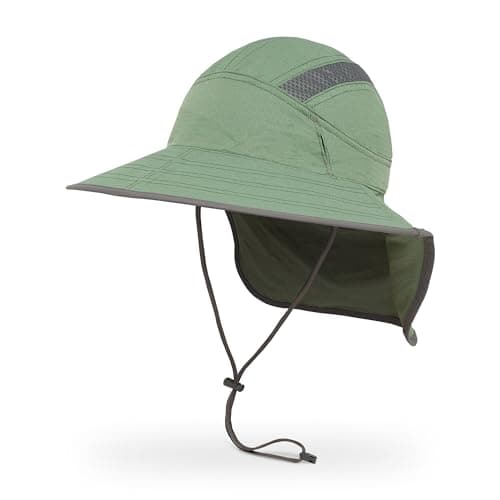
Desert: Maximum coverage is the priority. A 4-inch stiff or packable wide brim in UPF 50+ nylon or polyester, like the Sunday Afternoons Ultra Adventure Hat. Light color (white, tan, light grey) reflects radiant heat rather than absorbing it. Chin strap useful as winds are common.
Forest and mixed cover: A bucket hat or a medium wide-brim (3 inches) is sufficient. Weight and packability matter more here since you'll be stowing the hat when under canopy.
Alpine and above-treeline: Wide brim or legionnaire. Chin strap is essential: gusts above 8,000–10,000 feet can exceed 40 mph on exposed ridges. Darker fabric is acceptable since radiant heat is less the concern than UV at altitude and snow glare. Consider a hat compatible with wearing a helmet over it if scrambling.
River and water: A bucket hat with a hydrophilic liner that maintains UPF when wet, plus a chin cord. Straw is a poor choice here.
Frequently asked questions
Does a higher UPF number make a meaningful difference above 50?
Not in practice. UPF 50 blocks 98% of UV radiation; UPF 100 blocks 99%. That 1% difference is negligible for everyday hiking. Focus on brim width and coverage instead, which have a far larger effect on actual skin exposure.
Can I wear a sun hat over a helmet?
Some can, some cannot. Legionnaire-style caps and floppy bucket hats often fit under a climbing or cycling helmet. Stiff wide-brim hats generally do not. If helmet compatibility matters to your planned use, check the manufacturer's fit notes or try before buying.
How often should I replace a sun hat?
UPF-rated synthetic hats retain their rating for many seasons as long as the fabric is not damaged or heavily faded. Straw and loosely woven natural-fiber hats degrade faster and lose UPF protection as fibers loosen. Replace any hat that shows significant fabric thinning, large fade patches, or physical damage to the crown or brim.
For specific picks vetted against these criteria, see our guide to the best sun hats for hiking. Browse all hike guides or read how we research and rate gear.
Recommended gear
Our current top picks from the Best sun hats for hiking (2026) guide, if you are ready to buy.
SUNDAY AFTERNOONS
Sunday Afternoons Ultra Adventure Hat
Best Overall
Kit Score 8.5/10
$60.00 Price checked Oct 23, 4:16 PM CDT
Best for: Backpackers and desert hikers who want maximum coverage in a sub-3-oz package they will forget is in their kit.
- Reverse Split Brim folds flat for compact packing at just 2.6 oz
- Aesthetic is purely utilitarian, not a trail-to-town crossover
- UPF Rating
- UPF 50+
- Brim Width
- 3.5 in.
- Neck Cape
- 6 in.
- Weight
- 2.6 oz (73.7 g)
- Material
- 88% nylon, 12% polyester
- Chin Strap
- Yes, adjustable for a secure fit
About this pick
A featherlight wide-brim hat with a foldable Reverse Split Brim and a 6-inch neck cape, rated UPF 50+ including the mesh, purpose-built for long days in alpine or desert sun. Side mesh panels let heat out, and a recycled wicking sweatband keeps it comfortable through steep climbs.
Strengths
- Reverse Split Brim folds flat for compact packing at just 2.6 oz
- Neck cape extends to 6 in., covering ears and the back of the neck on exposed ridges
- Sunglass Lock feature keeps eyewear tethered; PFAS-free DWR finish sheds light rain
Weaknesses
- Aesthetic is purely utilitarian, not a trail-to-town crossover
- Hand-wash only; care is more involved than machine-washable alternatives
Kit Score breakdown

OUTDOOR RESEARCH
Outdoor Research Sun Runner Cap
Best Value
Kit Score 8.2/10
$43.95 Price checked Oct 23, 4:16 PM CDT
Best for: Hikers who want a cap they can wear to the trailhead and then zip on full neck protection for exposed high-altitude or canyon terrain.
- Removable cape means one hat covers both casual and high-exposure conditions without bulk
- UPF 40+ (not 50+) and a narrower 2.75 in. brim leaves cheeks more exposed than wider-brim options
- UPF Rating
- UPF 40+
- Brim Width
- 2.75 in.
- Neck Cape
- 10.75 in., fully removable
- Weight
- 3.0 oz (85 g)
- Material
- 60% recycled nylon, 40% nylon
- Chin Strap
- Yes, removable
About this pick
A trail-proven ball-cap design with a snap-off neck cape that converts it from everyday cap to full desert-mode coverage in seconds. Breathable mesh side panels and a wicking TransAction headband keep airflow moving on sustained climbs.
Strengths
- Removable cape means one hat covers both casual and high-exposure conditions without bulk
- Dark fabric under the brim and external mesh side panels help with glare and airflow
- Light at 3.0 oz, with a removable chin cord for windy ridges
Weaknesses
- UPF 40+ (not 50+) and a narrower 2.75 in. brim leaves cheeks more exposed than wider-brim options
- Cape cinched tight restricts airflow and creates a heat trap on windless days above 90 degrees F
Kit Score breakdown
COLUMBIA
Columbia Bora Bora II Booney
Best Budget
Kit Score 6.6/10
$31.99 Price checked Oct 23, 4:16 PM CDT
Best for: Casual day hikers and new-to-gear buyers who want a reliable UPF 50 bucket hat without committing to a specialty price.
- Ventilation is genuinely above average for the price: crown mesh panels and Omni-Wick sweatband work together effectively
- Brim is floppy and stretches with repeated wet/dry cycles, losing structure over a season
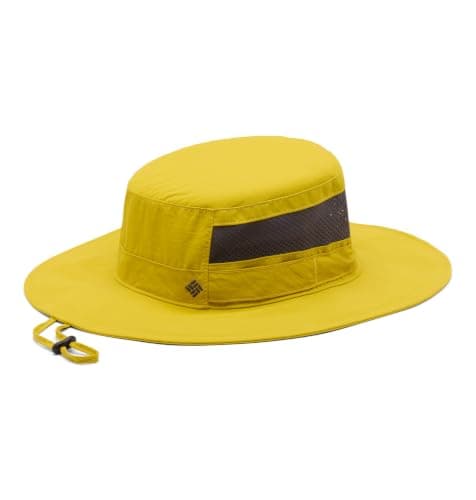
- UPF Rating
- UPF 50 (Omni-Shade)
- Brim Width
- 3 in. full circumference
- Size
- One size, toggle adjustment at back
- Material
- 100% textured nylon poplin with mesh vent panel
- Ventilation
- Crown mesh vent panel + Omni-Wick sweatband
- Chin Strap
- Yes
About this pick
A lightweight, well-ventilated bucket hat with Columbia's Omni-Shade UPF 50 fabric and a wicking sweatband for hot-day comfort. It delivers the core sun protection basics at a price point that makes it easy to keep one in the car or loan to a hiking partner.
Strengths
- Ventilation is genuinely above average for the price: crown mesh panels and Omni-Wick sweatband work together effectively
- 3 in. full-circumference brim blocks overhead sun on desert and exposed ridge hikes without catching wind awkwardly
Weaknesses
- Brim is floppy and stretches with repeated wet/dry cycles, losing structure over a season
- One size only, and Columbia says the UPF 50 rating does not apply to the mesh vent panel, leaving a gap for direct overhead sun through the crown
Kit Score breakdown
Keep going
Complete loadoutDay hike kitSeven slots for a full trail day, from the pack and water system to light and weather protection.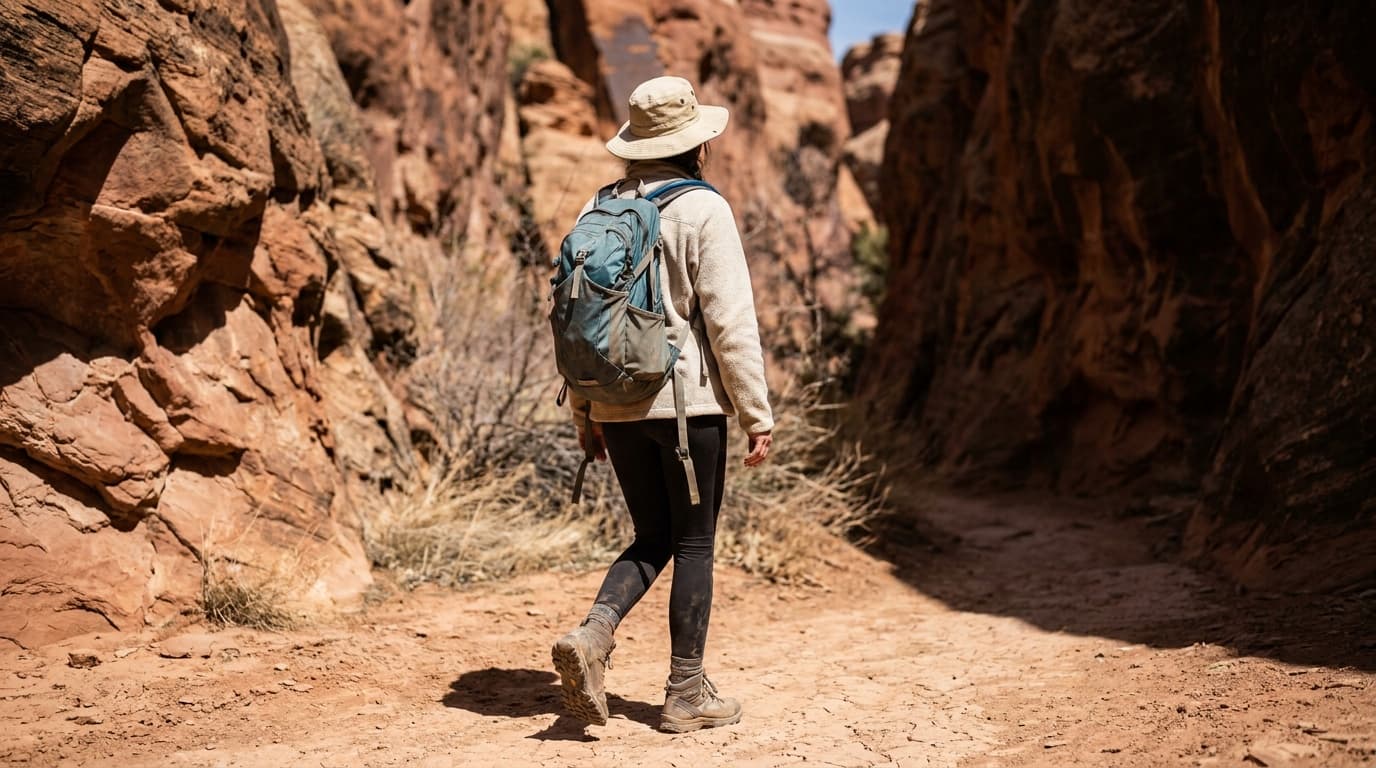
Researched, not hands-on tested
Updated Jun 4, 2026Our recommendations draw on manufacturer documentation, retailer listings, owner feedback, and comparisons with alternatives.
As an Amazon Associate I earn from qualifying purchases. We may earn a commission from links here, at no extra cost to you. How we research →