A dry bag's only job is to keep water out. But the gap between a splash-proof sack and a genuinely submersible dry bag is wide, and the wrong choice surfaces at the worst moment: a flipped kayak, a creek crossing gone sideways, a rain squall soaking through a pack pocket. These four picks cover every end of that spectrum.
Our quick picks
How we picked
Every bag here was scored against our Kit Score: waterproof rating (IPX or independent certification), material weight and abrasion resistance, closure security, usable volume, and verified long-term owner satisfaction. Scores draw from manufacturer specs, independent testing data from sources including Outdoor Gear Lab and Paddling Magazine, and aggregated verified-owner reviews. We do not invent first-hand results.
Editor's choice: Sea to Summit Lightweight Dry Bag 35L
EDITOR'S CHOICE
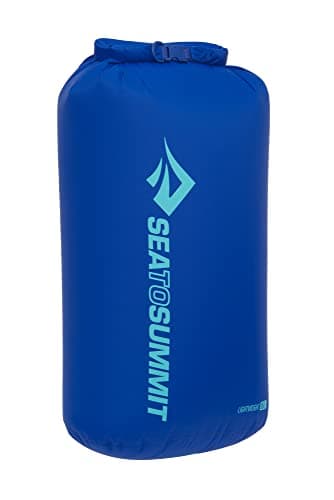
Sea to Summit Lightweight Dry Bag 35L
Best for: Backpackers, packrafters, and paddlers who prioritize weight savings and want a versatile dry bag that doubles as a stuff sack or travel organizer.
- Ultralight at 5.8 oz for 35L, making it practical for backpacking, packrafting, and travel where grams add up
- 70D nylon is significantly less abrasion-resistant than 1000D vinyl or TPU-coated fabrics; avoid dragging across rough surfaces
Kit Score 8.0/10 · $35.32 Price checked Oct 25, 6:06 AM CDT · how we score gear
Buy on AmazonProduct details
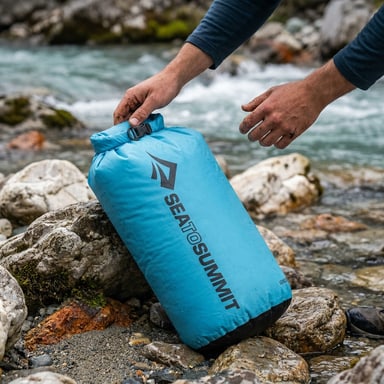
Sea to Summit's Lightweight Dry Bag uses recycled 70D nylon with a PU coating and tape-sealed seams to deliver reliable IPX7-equivalent waterproofing at roughly one-third the weight of PVC alternatives. The white interior makes it easy to locate gear at dusk or inside a dark cockpit, and seven size options let you build a matched system.
- Volume
- 35L
- Material
- Recycled 70D nylon, PU-coated
- Closure
- Roll-top, tape-sealed seams
- Weight
- 5.8 oz
- Interior
- White lining for visibility
- DWR finish
- PFC-free, bluesign approved
More strengths
- White interior lining improves visibility and helps locate items quickly in low light
- bluesign-approved recycled fabric and PFC-free DWR are a lower-impact choice than conventional PVC
Other tradeoffs
- Not rated for prolonged submersion; best treated as splash-proof and rain-proof rather than truly submersible
Sea to Summit's Lightweight Dry Bag is the default recommendation for backpackers, packrafters, and paddle-sport paddlers who want reliable splash protection without paying a weight or bulk penalty. The 70D nylon construction weighs 69 grams for the 35L version: lighter than most water bottles you will carry alongside it, and packable to a fist-sized bundle when empty.
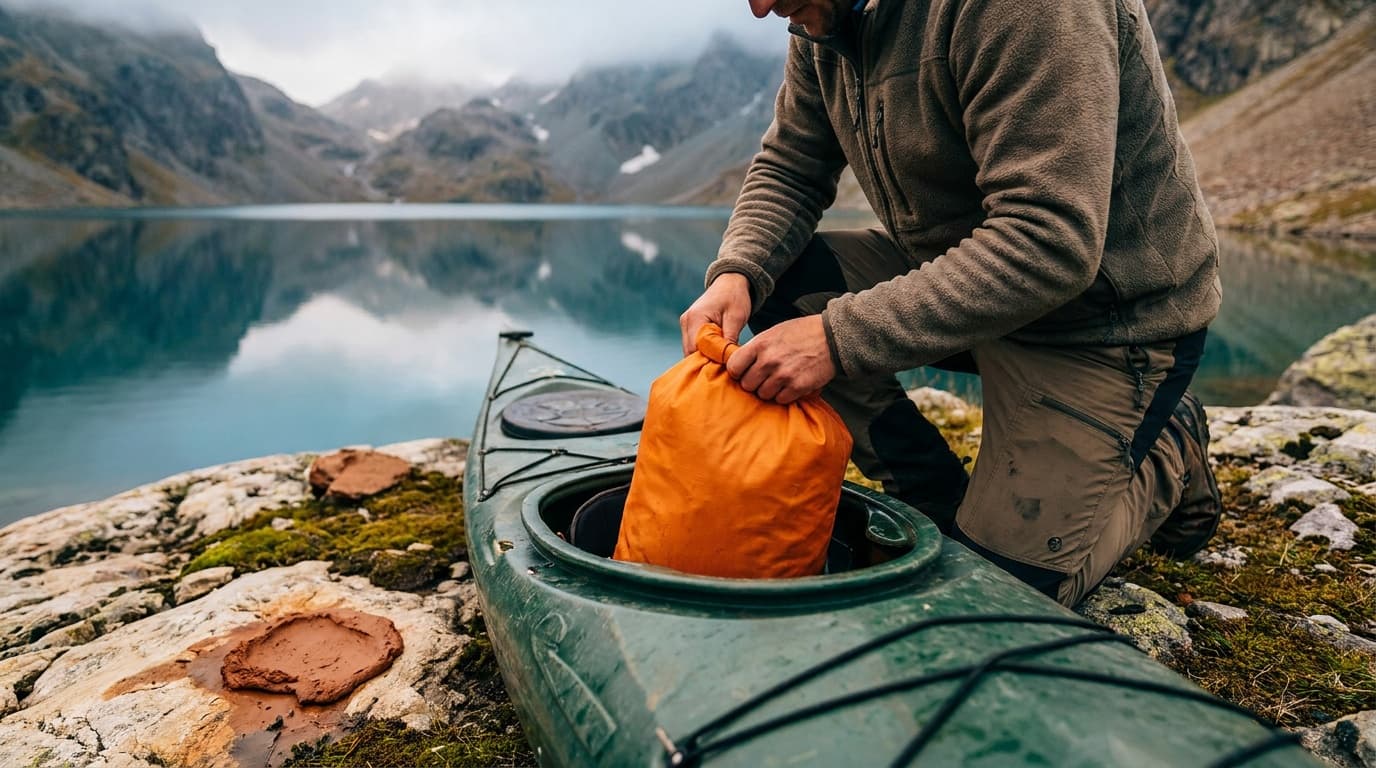
The roll-top closure is a double-roll, buckle-secure system. Three full rolls before buckling is the technique that actually seals it; two rolls and a casual buckle is how people end up with wet sleeping bags. Follow the method and this bag handles full rain and shallow immersion reliably. It is not rated for submersion, but it is not marketed for submersion either.
Where the STS Lightweight earns its Editor's Choice is versatility. The 35L size swallows a sleeping bag, down jacket, and three days of base layers with room left over. Sized down, the 8L and 13L versions work as electronics pouches or food bags. The bright colorways make it easy to find inside a loaded pack or dark cargo hatch. Welded seams add a margin beyond the stitched-and-taped construction you find at lower price points.
Best for: backpackers, packrafters, and paddlers who prioritize weight savings and want a versatile dry bag that doubles as a stuff sack or travel organizer.
Best budget: Earth Pak Waterproof Dry Bag 20L
BEST BUDGET
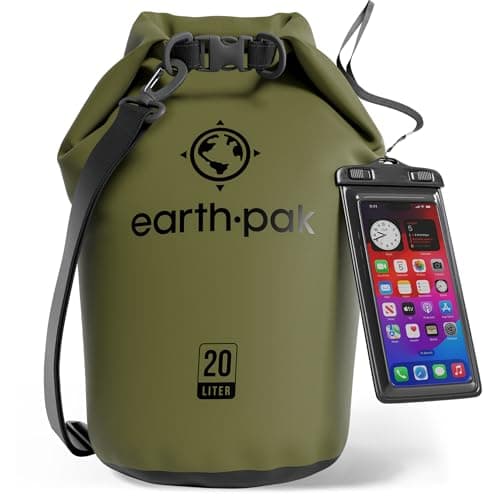
Earth Pak Waterproof Dry Bag 20L
Best for: Casual paddlers, beach days, and festival-goers who need reliable splash protection without spending more than $25.
- Available in multiple colors and sizes from 5L to 55L, with a transparent option so you can see contents without opening
- IPX6 rating means it handles heavy splashes but is not rated for prolonged submersion
Kit Score 7.4/10 · $23.75 Price checked Oct 25, 6:06 AM CDT · how we score gear
Buy on AmazonProduct details
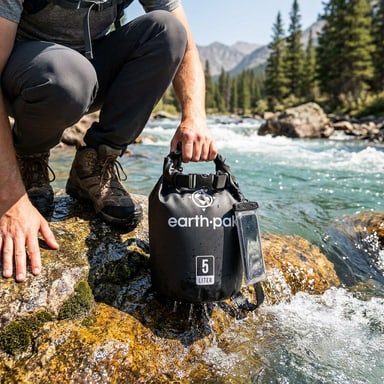
The Earth Pak Original is a no-frills 500D PVC roll-top sack that keeps gear splash-proof and float-ready at a price well under $25. It ships with a bonus IPX8 phone pouch, making it a practical first dry bag for kayak day trips, beach outings, and festival weekends.
- Volume
- 20L
- Material
- 500D PVC
- Closure
- Roll-top
- Waterproof rating
- IPX6
- Carry
- Single shoulder/crossbody strap
- Warranty
- 5 years
More strengths
- Includes IPX8 phone pouch that fits phones up to 6.5 inches
- Over 32,000 owner reviews with a strong value reputation and a 5-year warranty
Other tradeoffs
- Shoulder strap becomes uncomfortable under heavier loads or on long carries
The Earth Pak 20L is the honest choice for casual use. At $18–$22 it undercuts every other bag on this list significantly, and for beach days, festival-carrying, and flatwater paddling in light rain, it does what it says: keeps your phone, keys, and a dry shirt dry.
The construction is 500D PVC, which is the same material designation as the SealLine Baja, but the execution at this price point reflects the difference in manufacturing quality. The seams on the Earth Pak are adequate for splash protection and light immersion; they are not rated or tested for whitewater abuse or extended submersion. The roll-top and buckle closure is the same in principle as more expensive bags.
At 1L, 5L, 10L, 20L, and 40L, the size range covers every packing scenario, and the low per-bag price makes buying two or three for color-coded organization a reasonable choice. The included waterproof phone pouch is a legitimate bonus for kayakers who want their phone accessible without committing it to the main bag.
Best for: casual paddlers, beach days, and festival-goers who need reliable splash protection without spending more than $25.
Best premium: YETI Panga 28 Airtight Waterproof Backpack
BEST PREMIUM
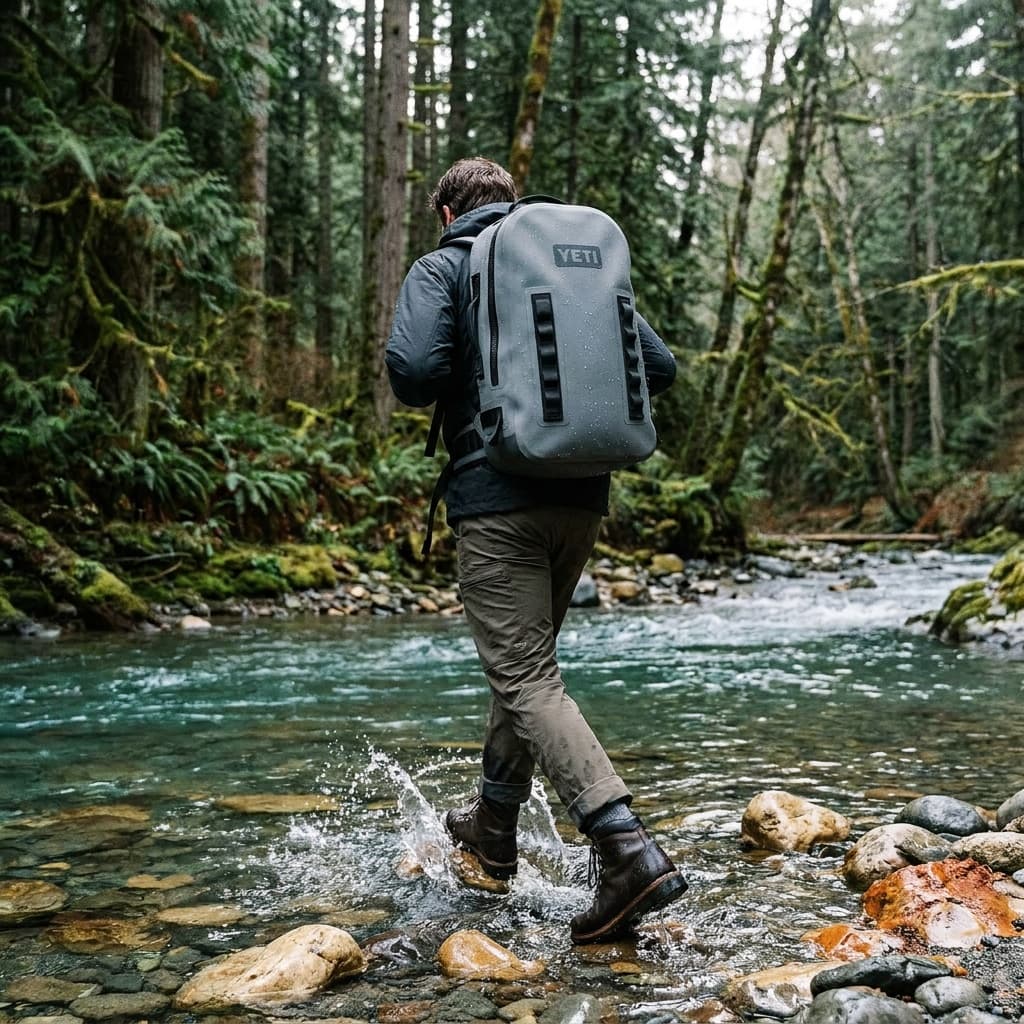
YETI Panga 28 Airtight Waterproof Backpack
Best for: Photographers, fly fishers, and sea kayakers who carry expensive electronics in wet environments and need verified submersion protection rather than splash resistance.
- Fully airtight and submersible construction: RF-welded seams and HydroLok zipper confirmed watertight at 1 m depth for 30 minutes
- At 3.9 lbs and $300+, it is heavy and expensive compared to roll-top dry bags; overkill for casual splashing
Kit Score 9.0/10 · $325.00 Price checked Oct 25, 6:06 AM CDT · how we score gear
Buy on AmazonProduct details
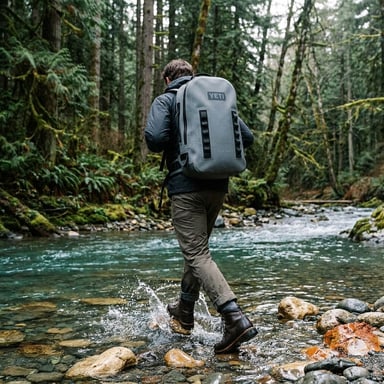
The YETI Panga 28 is an airtight, submersible backpack built from TPU-laminated high-density nylon with RF-welded seams and YETI's HydroLok zipper. It is rated to one meter for 30 minutes and scored 96/100 at OutdoorGearLab, where reviewers confirmed zero water infiltration across all conditions. It is the go-to choice when electronics, cameras, or critical gear cannot get wet under any circumstances.
- Volume
- 28L
- Material
- High-density nylon, TPU laminated (ThickSkin Shell)
- Closure
- HydroLok waterproof zipper
- Weight
- 3.9 lbs (62.4 oz)
- Dimensions
- 19.7 x 12.5 x 7 in
- Submersion rating
- 30 min at 1 m depth
More strengths
- Ergonomic DryHaul shoulder straps with removable chest strap and waist belt provide genuine comfort for a waterproof pack
- 96/100 from OutdoorGearLab and a 4.7-star average on REI across hundreds of reviews, making it one of the most trusted waterproof packs available
Other tradeoffs
- Rigid shape and minimal internal organization limit packing flexibility; harness can feel bulky on smaller-framed users
The YETI Panga 28 is a different category of product from the bags above it. Where roll-top dry bags rely on a seal created by the closure technique, the Panga uses a HydroShield zipper system (the same zipper design used in dive equipment) to create an airtight, IP67-rated enclosure. IP67 means tested submersion to 1 meter for 30 minutes. That is a verification standard, not a marketing claim.
The 28L main compartment sits inside a welded TPU-coated shell with a padded laptop sleeve, two interior zip pockets, and a removable waist belt. The shoulder straps are molded rather than sewn, which removes a traditional failure point for backpacks in wet environments. Everything that can fail in water has been eliminated or re-engineered.
At $295–$325 it is the most expensive bag here by a significant margin, and the weight reflects the build: 510 grams without contents. This is not a bag for the weight-conscious hiker. It is the bag for the photographer doing a multi-day sea kayaking trip, the fly fisher wading class IV water with a mirrorless camera, or the expedition paddler who has already lost gear to a bag that was "fine in practice."
The Panga comes with YETI's five-year warranty and is built to a standard where that warranty is unlikely to be needed. Buy it once; carry it for a decade.
Best for: photographers, fly fishers, and sea kayakers who carry expensive electronics in wet environments and need verified submersion protection rather than splash resistance.
How they compare
| Product | Kit Score | Price | Best for |
|---|---|---|---|
| Sea to Summit Lightweight Dry Bag 35L | 8.0 | $35.32 Price checked Oct 25, 6:06 AM CDT | Best for: Backpackers, packrafters, and paddlers who prioritize weight savings and want a versatile dry bag that doubles as a stuff sack or travel organizer. Why it stands out: Ultralight at 5.8 oz for 35L, making it practical for backpacking, packrafting, and travel where grams add up Tradeoff: 70D nylon is significantly less abrasion-resistant than 1000D vinyl or TPU-coated fabrics; avoid dragging across rough surfaces |
| Earth Pak Waterproof Dry Bag 20L | 7.4 | $23.75 Price checked Oct 25, 6:06 AM CDT | Best for: Casual paddlers, beach days, and festival-goers who need reliable splash protection without spending more than $25. Why it stands out: Available in multiple colors and sizes from 5L to 55L, with a transparent option so you can see contents without opening Tradeoff: IPX6 rating means it handles heavy splashes but is not rated for prolonged submersion |
| YETI Panga 28 Airtight Waterproof Backpack | 9.0 | $325.00 Price checked Oct 25, 6:06 AM CDT | Best for: Photographers, fly fishers, and sea kayakers who carry expensive electronics in wet environments and need verified submersion protection rather than splash resistance. Why it stands out: Fully airtight and submersible construction: RF-welded seams and HydroLok zipper confirmed watertight at 1 m depth for 30 minutes Tradeoff: At 3.9 lbs and $300+, it is heavy and expensive compared to roll-top dry bags; overkill for casual splashing |
Sea to Summit Lightweight Dry Bag 35L
- Best for
- Backpackers, packrafters, and paddlers who prioritize weight savings and want a versatile dry bag that doubles as a stuff sack or travel organizer.
- Why it stands out
- Ultralight at 5.8 oz for 35L, making it practical for backpacking, packrafting, and travel where grams add up
- Tradeoff
- 70D nylon is significantly less abrasion-resistant than 1000D vinyl or TPU-coated fabrics; avoid dragging across rough surfaces
Earth Pak Waterproof Dry Bag 20L
- Best for
- Casual paddlers, beach days, and festival-goers who need reliable splash protection without spending more than $25.
- Why it stands out
- Available in multiple colors and sizes from 5L to 55L, with a transparent option so you can see contents without opening
- Tradeoff
- IPX6 rating means it handles heavy splashes but is not rated for prolonged submersion
YETI Panga 28 Airtight Waterproof Backpack
- Best for
- Photographers, fly fishers, and sea kayakers who carry expensive electronics in wet environments and need verified submersion protection rather than splash resistance.
- Why it stands out
- Fully airtight and submersible construction: RF-welded seams and HydroLok zipper confirmed watertight at 1 m depth for 30 minutes
- Tradeoff
- At 3.9 lbs and $300+, it is heavy and expensive compared to roll-top dry bags; overkill for casual splashing
How to choose the right dry bag
Match your bag to your actual conditions
Define your worst-case scenario
A sun shower on a trail calls for splash protection. A kayak roll or a raft flip calls for submersion resistance. Write down the actual conditions you are buying for before you look at price.
Match material to abuse level
Lightweight nylon (STS, Zpacks) is right for hiking and casual paddling. Heavy PVC (SealLine, Earth Pak) handles whitewater and rocky cargo holds. Airtight TPU-shell construction (YETI Panga) is for verified submersion of expensive contents.
Size for the contents plus one
A bag packed to capacity is harder to roll and seal properly. A 20L bag for a 15L load seals better and protects better than a 20L bag stuffed to the seam. Buy slightly larger than you think you need.
Check the closure type
Roll-top bags depend on user technique; three full rolls minimum before buckling. Zipper-seal bags (YETI Panga) do not depend on technique, which matters if others are packing the bag or if conditions are chaotic.
Consider attachment points
A D-ring at the base or top handle lets you lash a dry bag to a kayak deck, raft frame, or pack exterior. If you plan to strap the bag down rather than put it inside something, make sure the attachment points are reinforced.
Frequently asked questions
What is the difference between splash-proof and submersible?
Splash-proof means the bag will keep water out in rain and light spray. Submersible means it is rated to remain watertight when fully underwater for a defined depth and duration. Most roll-top dry bags are splash-proof to splash-resistant; a properly rolled closure adds limited submersion resistance, but no roll-top bag is tested or rated the way an airtight zipper bag is. If you are kayaking in conditions where a capsize is realistic, treat a roll-top bag as splash-proof and plan accordingly: do not put in it anything you cannot afford to get wet.
How many liters do I need for a backpacking dry bag?
For a sleeping bag and down jacket: 20–30L. For clothing on a multi-day trip: 35–40L. For electronics and documents: 5–10L is usually sufficient and easier to fit inside a pack pocket. Many backpackers carry one large dry bag (20–35L) for sleep kit and one small bag (5–10L) for electronics rather than one oversized bag for everything. This keeps the heaviest, most water-sensitive items isolated and makes repacking at camp faster.
Can I use a dry bag as a stuff sack?
Yes, and this is one of the most practical things about lightweight nylon dry bags. The Sea to Summit Lightweight series is specifically designed to double as a stuff sack: the roll-top compresses the contents as you roll it, and the result is a more packable bundle than a traditional cinch-sack stuff sack. PVC bags compress less efficiently because the material is stiffer, so the SealLine Baja is less useful as a daily stuff sack but still works for storage compression in a cargo hatch.
The right dry bag is the one you stop thinking about because your gear stays dry every time. Any of these four covers a specific use well. The picks in the middle of the list handle most people most of the time. If the bag is headed for the water, our lakefront day-trip packing list shows where it fits in the full lake day kit.
Browse more hike gear, or learn more about how we research and rate every product on this site.
Keep going
Related guides
 Complete hike loadoutDay hike kitBuild the complete kit
Our recommendations draw on manufacturer documentation, retailer listings, owner feedback, and comparisons with alternatives.
As an Amazon Associate I earn from qualifying purchases. We may earn a commission from links here, at no extra cost to you. How we research →