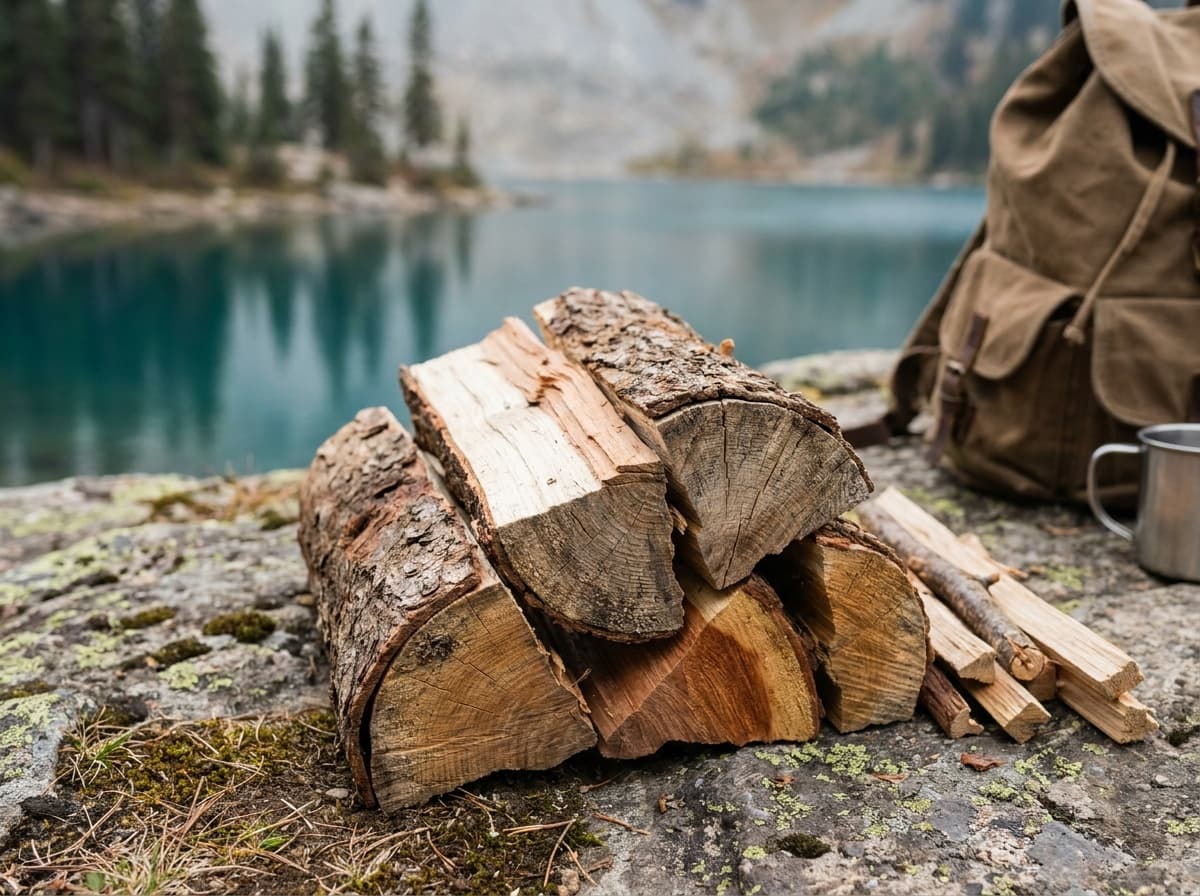
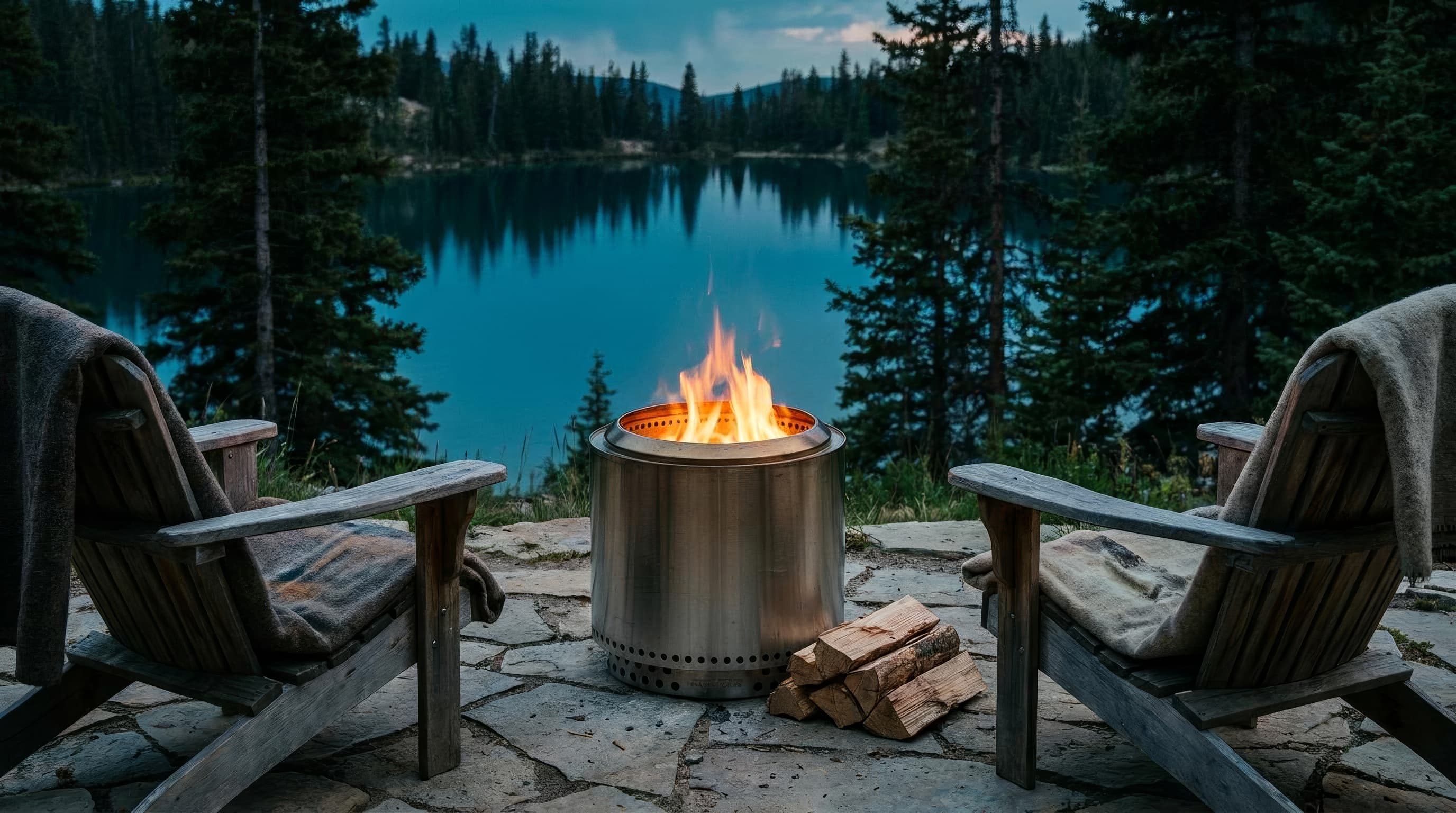
Hero image: AI-generated category illustration, not a tested product or an installation diagram.
Fuel matters more in a smokeless fire pit than in an open fire, because the whole design depends on reaching and holding a high temperature. Wet wood never gets there, and a smokeless pit burning damp logs is just an expensive smoky fire.
The short answer
Dry, seasoned hardwood at under 20% moisture content. Kiln-dried if you are buying, because it is reliably dry and you are not guessing.
Seasoned, kiln-dried, and green
Green wood is freshly cut and can be 50% water or more. It hisses, smokes heavily, and produces very little heat because most of the energy goes into boiling off the moisture. It should not go in a fire pit.
Seasoned wood has been split and air-dried, usually six to twelve months for hardwood. Well-seasoned wood is grey at the ends, cracked in a radial pattern, and light for its size. It clacks rather than thuds when two pieces knock together.
Kiln-dried wood has been heat-dried to a guaranteed moisture level, typically under 20%. It costs more per log and it removes the guesswork entirely. For a smokeless pit, this is the easiest way to actually see the design work.
A moisture meter costs very little and settles the question in seconds. If you burn regularly, buy one.
Hardwood or softwood
Hardwoods like oak, ash, beech, hickory and maple are denser, burn longer, and produce more heat per log. Ash is often considered the best all-rounder because it burns well even at slightly higher moisture. Oak burns longest but needs the most seasoning time.
Softwoods like pine and spruce light easily and burn fast and hot, which makes them useful for getting a fire started. They also spit more and deposit more resin. Use them for kindling and the first ten minutes, then switch to hardwood.
Never burn these
- Treated, painted, or stained wood. Releases genuinely toxic fumes. This includes old decking, pallets of unknown origin, and offcuts from building work.
- Plywood, MDF, and chipboard. The adhesives release formaldehyde and other compounds when burned.
- Driftwood. Sea salt in the wood produces chlorine compounds when burned.
- Anything with plastic on it, including laminated or coated boards.
- Large amounts of paper or cardboard. It produces floating embers that travel, which is a genuine fire risk in dry conditions.
Getting a smokeless pit up to temperature
The secondary burn does not engage until the pit is hot. Start with a decent amount of dry kindling and softwood rather than a token handful, get real flame established, and then add hardwood. Rushing straight to large logs is the most common reason people conclude their smokeless pit does not work.
For picks across the range, see our best smokeless fire pits guide, or how to choose a smokeless fire pit if you have not bought one yet.
Recommended gear
Our current top picks from the Best smokeless fire pits: 3 picks by group size and setup guide, if you are ready to buy.
SOLO STOVE
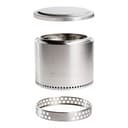
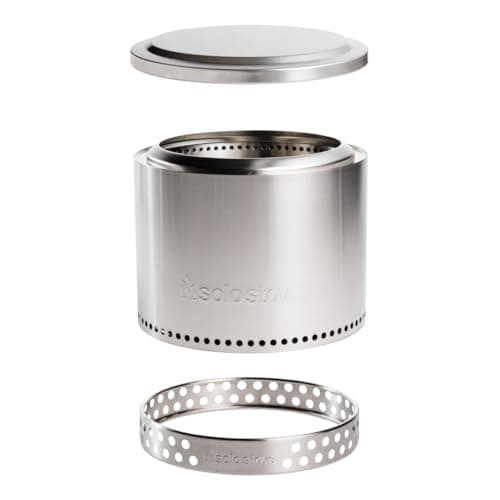
Solo Stove Bonfire 2.0
Editor's Choice
Kit Score 8.9/10
$322.99 Price checked Oct 26, 7:39 AM CDT
Best for: Anyone who wants a fire in a garden or at a drive-in campsite without smelling like a bonfire afterwards.
- Secondary burn genuinely works, so nobody has to keep moving their chair
- Expensive next to a plain steel fire ring that burns the same wood
- Diameter
- 19.5 in
- Weight
- About 21 lb (21.2 lb measured by OutdoorGearLab)
- Material
- 304 stainless steel
- Fuel
- Wood
- Ash removal
- Removable ash pan
- Suits
- 4 to 6 people
About this pick
The default smokeless fire pit, and the one most people should buy. A double-wall airflow design burns the smoke off before it reaches your face, which is the entire point: you can sit downwind and keep your jumper.
Strengths
- Secondary burn genuinely works, so nobody has to keep moving their chair
- The 2.0 revision added a removable ash pan, which turns cleanup from a chore into a thirty-second job
- About 21 lb, so one person can carry it from the garden to a car boot
Weaknesses
- Expensive next to a plain steel fire ring that burns the same wood
- Stainless steel discolours to a bronze patina after a few burns, which some owners dislike
Kit Score breakdown
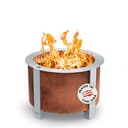
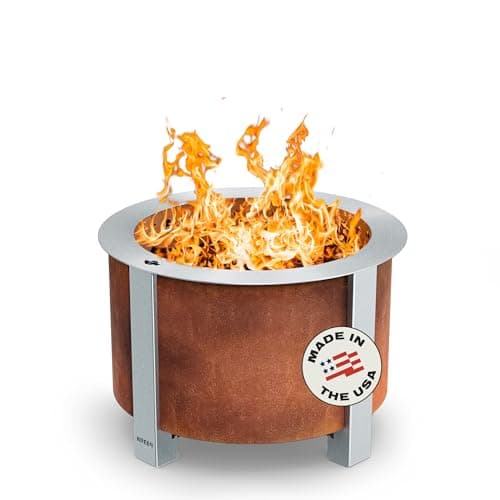
Best for: A permanent garden fire pit you also want to cook on.
- Corten steel is built to sit outside through winter, where stainless pits are usually put away
- The patina is rust by design, which looks wrong to anyone expecting a clean finish
- Diameter
- 22.1 in
- Material
- Corten weathering steel
- Finish
- Develops a protective rust patina
- Cooking
- Sear Plate accessory available
- Placement
- Designed to live outdoors year round
About this pick
The one to buy if the fire pit is a permanent garden fixture rather than something stored in a shed. Corten steel weathers to a stable rust patina instead of corroding, and the accessory range turns it into an outdoor cooker.
Strengths
- Corten steel is built to sit outside through winter, where stainless pits are usually put away
- The Sear Plate accessory makes it a genuine cooking surface, not just a fire
- Heaviest build here, and it feels it
Weaknesses
- The patina is rust by design, which looks wrong to anyone expecting a clean finish
- Heavy and not meant to travel
- Most expensive pick, and the cooking accessories add to that
Kit Score breakdown
OUTVUE
OutVue 27 inch Smokeless Fire Pit
Best Budget
Kit Score 8.0/10
$153.49 Price checked Oct 26, 7:39 AM CDT
Best for: A first fire pit, or a big fire on a budget.
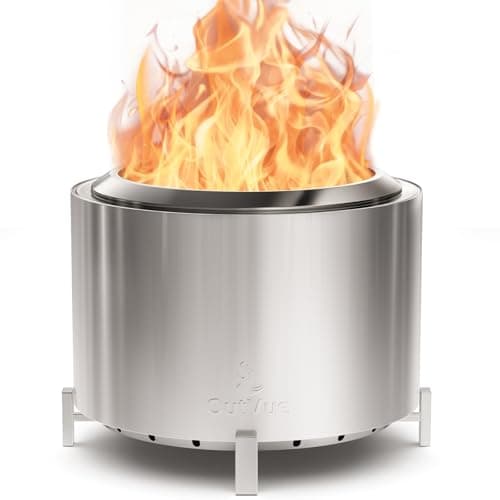
- Largest bowl here at 27 inches, for well under half the price of a comparable premium pit
- Smokier during warm-up than the Solo Stove pits, which reach clean burn faster
- Diameter
- 27 in
- Material
- Stainless steel
- Design
- Vertical hole secondary burn
- Fuel
- Wood
- Weight
- About 47.5 lb (listing)
- Included
- Waterproof cover and poker
About this pick
Half the price of the name brands for a bigger fire. The secondary burn is less refined than Solo Stove's, so expect some smoke while it comes up to temperature, but once it is hot it does the job.
Strengths
- Largest bowl here at 27 inches, for well under half the price of a comparable premium pit
- Same double-wall principle, so it does reduce smoke once up to temperature
- The sensible way to find out whether you actually use a fire pit before buying a premium one
Weaknesses
- Smokier during warm-up than the Solo Stove pits, which reach clean burn faster
- Long-term durability evidence is limited next to the established brands, and at about 47 lb it is not a travel pit
Kit Score breakdown
See all picks in Best smokeless fire pits: 3 picks by group size and setup
Keep going
Researched, not hands-on tested
Updated Jul 27, 2026Our recommendations draw on manufacturer documentation, retailer listings, owner feedback, and comparisons with alternatives.
As an Amazon Associate I earn from qualifying purchases. We may earn a commission from links here, at no extra cost to you. How we research →