We may earn a commission from links on this page, at no extra cost to you.
The Hoka Speedgoat 6 was the shoe we pointed most long-distance trail runners toward, and it is still worth a look if you log big mountain days and want cushion under your feet at mile 20. This review covers exactly what you get, the spec details people get wrong, and where it wins or loses against the alternatives. The Speedgoat 7 is now HOKA's current model and our top pick in the best trail running shoes guide.
MAX CUSHION
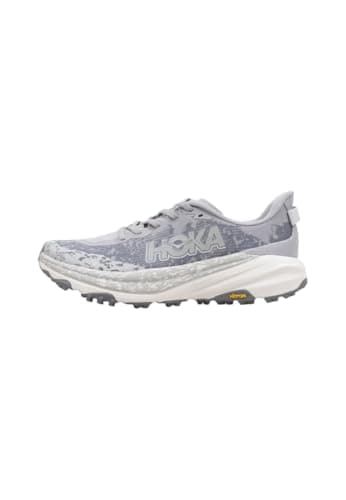
Hoka Speedgoat 6
Kit Score 7.8/10 · Check current price
Buy on AmazonBest for: Runners logging big mountain days on mixed terrain who want max cushion and reliable grip without sacrificing too much agility.
- Vibram Megagrip outsole with multidirectional lugs handles varied terrain from dry rock to loose soil
- High-volume cushioning absorbs impact on long vert days without excessive weight
- Requires roughly 100 miles of break-in before the midsole softens to its most comfortable feel
Who it is for
This shoe fits one runner especially well: someone covering big vert and long miles on mixed mountain terrain who does not want their legs cooked by impact in the final hour. The high-volume midsole absorbs pounding on long descents, and the Vibram Megagrip outsole holds traction across dry rock, scree, and loose soil, so a single shoe covers a rocky climb and a loose downhill on the same route. The updated lug orientation and slightly firmer midsole over the Speedgoat 5 also make it more durable than past versions.
It is less ideal if you want maximum ground feel or run mostly tight, technical singletrack where a lower, nimbler shoe reads the trail better. The tall stack that protects your legs on long days trades away some of that connected feel on quick technical moves. If your trails are long but blister-prone, read how to prevent blisters while hiking before you dial in fit and sock choice, because a cushioned shoe still needs a locked heel to stay rub-free.
Full specifications
| Spec | Detail |
|---|---|
| Kit Score | 7.8 / 10 (researched, not lab-tested) |
| Category | Trail running shoe (max cushion) |
| Drop | 5 mm |
| Stack height | 40 mm heel / 35 mm forefoot (men) |
| Lug depth | 4 to 5 mm (Vibram Megagrip) |
| Rock plate | None; protection via foam density and a wide platform |
| Weight | 9.8 oz / 278 g (men, size 9) |
| Outsole | Vibram Megagrip with multidirectional lugs |
| Upper | Dense mesh with TPU overlays |
| Also available | Women's version |
| Price | $140–$160 (researched at $155 retail) |
The spec people get wrong: there is no rock plate. The Speedgoat 6 protects your feet through foam density and a wide platform rather than a plastic shank, so on very sharp rock you feel slightly more than you would in a plated shoe. Plan accordingly if your routes are heavy on jagged scree.
Pros and cons
What it does well:
- Vibram Megagrip outsole with multidirectional lugs handles varied terrain, from dry rock to loose soil, with confident traction.
- High-volume cushioning absorbs impact on long vert days without piling on excess weight, so legs stay fresher late in a run.
- Durable upper with TPU overlays resists trail debris and abrasion noticeably better than previous Speedgoat versions.
- At 9.8 oz it stays lighter than most shoes offering this much stack, which is why it scores well on fit for purpose.
Where it falls short:
- The midsole needs roughly 100 miles of break-in before it softens to its most comfortable feel, so the first few runs feel stiffer than reviews suggest.
- Breathability is poor in warm conditions because the dense mesh that adds durability also traps heat.
- At $155 retail the value score lands at 7, the lowest of its breakdown; it is a premium price unless you catch a discount.
How it compares
Against the Saucony Peregrine 15, the trade is cushion versus ground feel. The Peregrine 15 sits lower and firmer, so it reads technical trail better and gives a more connected, responsive ride that quicker runners prefer. The Speedgoat gives up some of that feedback but wins on impact protection over long distances, which is exactly why we frame it as the cushioned long-haul pick rather than the technical-trail pick.
Against the Salomon Speedcross 6, the trade is terrain specialization. The Speedcross runs deep, aggressive lugs built for soft, muddy, churned-up ground, and it bites into that terrain better than anything in this group. On hardpack, rock, and mixed surfaces, though, those tall lugs feel less stable and wear faster, while the Speedgoat's Megagrip is the more versatile all-surface outsole. If your trails are a mix of everything, the Speedgoat is the safer single choice; if you live in the mud, the Speedcross earns its place.
Researched owner sentiment backs the positioning: the Speedgoat 6 holds a 78/100 audience score on RunRepeat, praised for grip and durability and dinged for breathability and the stiff break-in. Some owners also flag durability concerns past 300 miles, which is worth watching if you put up high weekly mileage. For the full field, including budget and aggressive-terrain alternatives scored the same way, see our best trail running shoes guide.
Frequently asked questions
Does the Hoka Speedgoat 6 have a rock plate?
No. The Speedgoat 6 has no rock plate. Underfoot protection comes from the dense foam midsole and a wide, high-stack platform rather than a plastic shank. For most mixed terrain that is plenty, but on very sharp, jagged rock you may feel slightly more than you would in a plated shoe.
How long is the break-in on the Hoka Speedgoat 6?
Plan for roughly 100 miles. The midsole runs firmer out of the box and softens to its most comfortable feel after about that distance, so the first handful of runs will feel stiffer than long-term reviews describe. Build into it gradually rather than racing a long day in a brand-new pair.
Is the Hoka Speedgoat 6 worth it?
For long-distance and big-vert trail runners, yes. It earns a 7.8 Kit Score because it combines a max-cushion platform, a versatile Vibram Megagrip outsole, and a durable upper at a reasonable weight. The main reasons to look elsewhere are if you want more ground feel for technical trail (the Peregrine 15) or the most aggressive grip for soft mud (the Speedcross 6). At $155 it is premium, so catching a discount improves the value.
Hoka Speedgoat 6 vs Saucony Peregrine 15: which is better?
It depends on what you want underfoot. The Peregrine 15 is lower and firmer with more ground feel, which makes it the better technical-trail and responsive-ride choice. The Speedgoat 6 has far more cushion and a taller stack, which makes it the better long-haul shoe for protecting your legs over big miles and descents. Choose the Speedgoat for distance and the Peregrine for trail feel.
Is the Hoka Speedgoat 6 good in the heat?
It is the weakest part of the shoe. The dense mesh upper that adds durability also limits airflow, so feet run warm in hot conditions. If you mostly run in heat, choose a thinner sock and expect more sweat buildup than a lighter, more open trail shoe would give you.
For the full field, including firmer technical options and aggressive soft-terrain alternatives scored the same way, see our best trail running shoes guide.
Keep going
Related buying guideBest trail running shoes: top picks for grip, cushion, and protectionRelated guides


 Complete hike loadoutDay hike kitBuild the complete kit
Researched, not hands-on tested
Updated Sep 26, 2026Our recommendations draw on manufacturer documentation, retailer listings, owner feedback, and comparisons with alternatives.
As an Amazon Associate I earn from qualifying purchases. We may earn a commission from links here, at no extra cost to you. How we research →
In this review
Related buying guide
Best trail running shoes: top picks for grip, cushion, and protection