Storing water at a car campsite sounds like the simplest gear problem you will face. In practice, a leaky spigot, a container that tips in the truck bed, or a jug that takes up your whole gear bin can quietly ruin a trip. Here are the four containers worth buying, ranked by what actually matters at camp.
Our quick picks
How we picked
Every pick is scored with the Kit Score: a weighted rubric that aggregates verified owner reviews, published product specs, and category expert sources. We do not fabricate first-hand test claims. Picks earn their badge by outscoring the category on the criteria that matter most for that use case.
The picks
Best overall: CAMPMAX 5 Gallon Water Container with Spigot
BEST OVERALL
CAMPMAX 5 Gallon Water Container with Spigot
Best for: Car campers who want a spigot that works well out of the box and do not want to fuss with aftermarket parts.
- Integrated spigot with silicone seals delivers consistent, drip-free flow without the thread-leak issues common to cheaper taps
- Priced noticeably higher than the Aqua-Tainer for roughly the same capacity
Kit Score 8.1/10 · $30.99 Price checked Oct 23, 4:16 PM CDT · how we score gear
Buy on AmazonProduct details
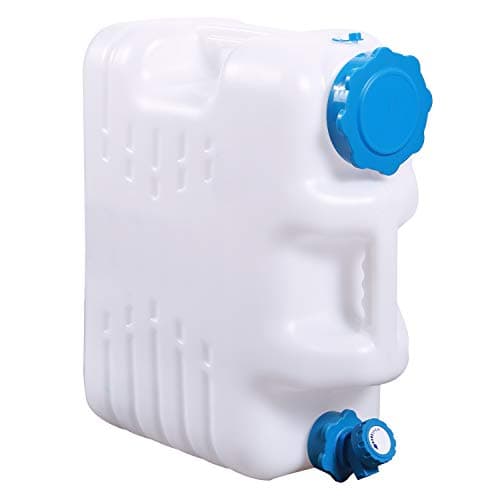
A 5-gallon rigid HDPE container that can stand upright or lie on its side for spigot use at camp. The silicone-sealed spigot is the standout feature: it provides controlled flow with no reported drips under normal use, and the translucent body lets you read the water level at a glance.
- Capacity
- 5 gal / 18.5 L
- Dimensions (filled)
- 15.7 x 6.7 x 12.6 in
- Weight (empty)
- 2.75 lb
- Material
- Food-grade HDPE, BPA and PVC free
- Spigot
- Integrated twist spigot with silicone seal
- Opening
- 4-inch wide mouth for filling and cleaning
More strengths
- Dual-position design works both upright and on its side, giving flexibility for table or ground use at basecamp
- Wide 4-inch mouth accepts ice and makes interior scrubbing practical with the included brush
Other tradeoffs
- Some owners report the plastic nozzle tip feels less robust than the body of the container
The CAMPMAX earns the top spot because the spigot works correctly out of the box without the owner having to swap it for an aftermarket valve. That sounds like a low bar, but it disqualifies a surprising number of competitors in this price range. The container is BPA-free food-grade HDPE, holds 5 gallons (around 42 lb full), and has a wide-mouth fill opening that fits a standard camp spigot wrench. The stackable rectangular profile stores flat in a truck bed or gear bin.
Price range: $25–$40.
Best for: Car campers who want a spigot that works well out of the box and do not want to fuss with aftermarket parts.
Best premium: Scepter 5 Gallon Military Style Portable Water Container
BEST PREMIUM
Scepter 5 Gallon Military Style Portable Water Container
Best for: Off-road campers, overlanders, and anyone whose gear takes serious abuse who want a container that will outlast everything else in the kit.
- Stiff, heavy-duty HDPE build that owners say shrugs off rough handling that buckles cheaper jugs
- No integrated spigot: a hands-free dispensing setup requires an aftermarket spout accessory adding roughly $13-25 to the total cost
Kit Score 8.9/10 · $54.99 Price checked Oct 23, 4:16 PM CDT · how we score gear
Buy on AmazonProduct details
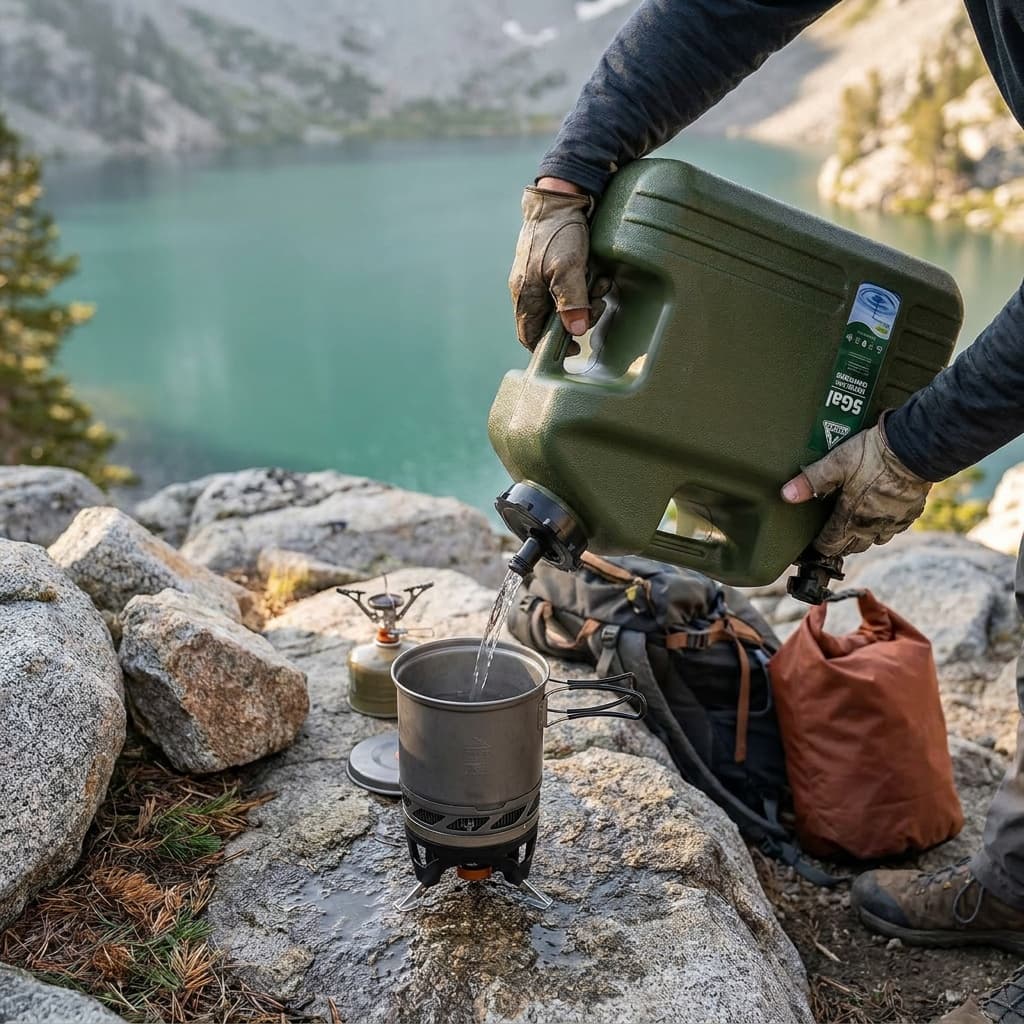
A direct descendant of the NATO military water can design, the Scepter is built to a genuinely different standard from consumer camping jugs. Owners report years of rough use without meaningful deformation or leaks. The one trade-off for camping: it ships without an integrated spigot, so dispensing at the faucet requires either the aftermarket Scepter spout or pouring by hand.
- Capacity
- 5 gal / 20 L
- Dimensions
- 13.7 x 6.8 x 18.8 in
- Weight (full)
- About 42 lb of water plus the can
- Material
- BPA-free high-density polyethylene, military-style design
- Spigot
- Wide pour spout and vent cap included; integrated spigot sold separately (~$13-25)
- Profile
- Jerry-can style, vertical, vehicle-stowable
More strengths
- Jerry-can profile stacks efficiently in vehicle cargo areas and against other Scepter cans, with no wasted space
- Rubber gasket lid seals reliably on its side, making it genuinely vehicle-safe without leaking into gear
Other tradeoffs
- Strong initial plastic smell requiring several water-and-baking-soda flushes before first use
The Scepter is the container specification originally developed for Canadian Forces field use and later made available to civilian markets. The material is a thick-walled, UV-stabilized, food-grade polyethylene with a torque-locking lid rather than a threaded press-cap. It does not include a built-in spigot: you pair it with a Scepter spigot (sold separately, around $8–$12) that threads into the standard NATO-spec bung. That is not a flaw in the product; it is a design choice that lets the lid seal remain uncompromised. The container survives drops, heavy stacking, UV exposure, and extreme temperature swings that would crack cheaper HDPE. Owner reviews across overlanding and military surplus communities consistently describe 10-plus years of use.
Price range: $45–$65.
Best for: Off-road campers, overlanders, and anyone whose gear takes serious abuse who want a container that will outlast everything else in the kit.
Best budget: Coghlan's Collapsible Water Container 5 Gallon
BEST BUDGET
Coghlan's Collapsible Water Container 5 Gallon
Best for: Occasional car campers who have limited storage space and want a lightweight backup container or a low-commitment first purchase.
- Collapses to 3.25 inches deep when empty, saving more than 80 percent of the space a rigid container occupies at rest
- Fold-line corners develop stress cracks with repeated use: several owners report leaks appearing within one to two camping seasons
Kit Score 6.9/10 · $17.02 Price checked Oct 23, 4:16 PM CDT · how we score gear
Buy on AmazonProduct details
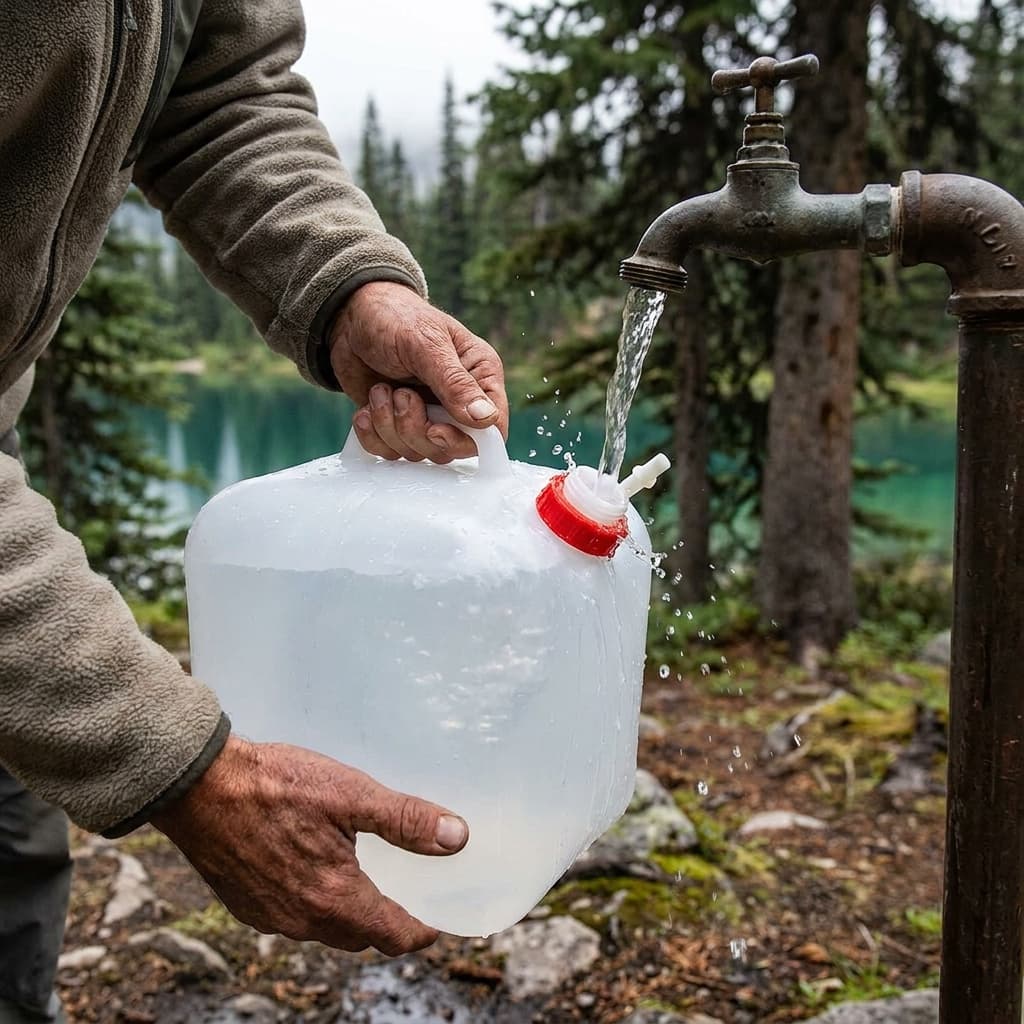
The most space-efficient option in this roundup: folds to under 11 inches when empty, so it disappears into a car boot or backpack pocket. The included spigot works reliably when new, and the clear body makes water-level monitoring easy. The trade-off is durability: the lightweight polyethylene develops stress marks at fold lines after repeated use, and a subset of owners report slow leaks appearing within one to two seasons.
- Capacity
- 5 gal / 18.9 L
- Packed dimensions
- 3.25 x 9.25 x 10.75 in (folded flat)
- Material
- Heavy-duty food-approved BPA-free polyethylene
- Spigot
- On/off spigot included, wide enough for ice cubes
- Cold-weather use
- Remains flexible at low temperatures
- Reviews on Amazon
- 4.2 out of 5 stars, 1,100+ ratings
More strengths
- Spigot opening is wide enough for ice cubes, a practical advantage for summer camp cooking
- Lowest entry price in this roundup while still delivering a functional 5-gallon capacity with a built-in tap
Other tradeoffs
- Lightweight polyethylene body is not suitable for rough handling or stowage under heavy gear
The Coghlan's collapses to roughly the thickness of a folded tarp when empty, which is the entire point. It is BPA-free food-grade LDPE (low-density polyethylene, the standard for collapsible food containers), has a screw-cap opening, and includes a simple thumb-valve spigot. Owners report the spigot as adequate for car camping use but not designed for high-frequency use over multiple seasons. The tradeoffs are clear: it costs less, stores flat, and works reliably for 1-2 seasons of occasional car camping. It is not a daily-use container for a base camp running water to a group of six.
Price range: $15–$25.
Best for: Occasional car campers who have limited storage space and want a lightweight backup container or a low-commitment first purchase.
How to choose a camping water container
| Product | Kit Score | Price | Best for |
|---|---|---|---|
| CAMPMAX 5 Gallon Water Container with Spigot | 8.1 | $30.99 Price checked Oct 23, 4:16 PM CDT | Best for: Car campers who want a spigot that works well out of the box and do not want to fuss with aftermarket parts. Why it stands out: Integrated spigot with silicone seals delivers consistent, drip-free flow without the thread-leak issues common to cheaper taps Tradeoff: Priced noticeably higher than the Aqua-Tainer for roughly the same capacity |
| Scepter 5 Gallon Military Style Portable Water Container | 8.9 | $54.99 Price checked Oct 23, 4:16 PM CDT | Best for: Off-road campers, overlanders, and anyone whose gear takes serious abuse who want a container that will outlast everything else in the kit. Why it stands out: Stiff, heavy-duty HDPE build that owners say shrugs off rough handling that buckles cheaper jugs Tradeoff: No integrated spigot: a hands-free dispensing setup requires an aftermarket spout accessory adding roughly $13-25 to the total cost |
| Coghlan's Collapsible Water Container 5 Gallon | 6.9 | $17.02 Price checked Oct 23, 4:16 PM CDT | Best for: Occasional car campers who have limited storage space and want a lightweight backup container or a low-commitment first purchase. Why it stands out: Collapses to 3.25 inches deep when empty, saving more than 80 percent of the space a rigid container occupies at rest Tradeoff: Fold-line corners develop stress cracks with repeated use: several owners report leaks appearing within one to two camping seasons |
CAMPMAX 5 Gallon Water Container with Spigot
- Best for
- Car campers who want a spigot that works well out of the box and do not want to fuss with aftermarket parts.
- Why it stands out
- Integrated spigot with silicone seals delivers consistent, drip-free flow without the thread-leak issues common to cheaper taps
- Tradeoff
- Priced noticeably higher than the Aqua-Tainer for roughly the same capacity
Scepter 5 Gallon Military Style Portable Water Container
- Best for
- Off-road campers, overlanders, and anyone whose gear takes serious abuse who want a container that will outlast everything else in the kit.
- Why it stands out
- Stiff, heavy-duty HDPE build that owners say shrugs off rough handling that buckles cheaper jugs
- Tradeoff
- No integrated spigot: a hands-free dispensing setup requires an aftermarket spout accessory adding roughly $13-25 to the total cost
Coghlan's Collapsible Water Container 5 Gallon
- Best for
- Occasional car campers who have limited storage space and want a lightweight backup container or a low-commitment first purchase.
- Why it stands out
- Collapses to 3.25 inches deep when empty, saving more than 80 percent of the space a rigid container occupies at rest
- Tradeoff
- Fold-line corners develop stress cracks with repeated use: several owners report leaks appearing within one to two camping seasons
Rigid vs collapsible
Rigid containers (CAMPMAX, Aqua-Tainer, Scepter) hold their shape when partially full, which means the spigot stays in the same position and the container stays upright. Collapsible containers (Coghlan's) can buckle when less than half full, which causes the spigot to tilt and drip. For a primary water source at camp, use a rigid container. Collapsible containers work well as secondary storage, emergency backup, or for ultralight setups where packed volume matters more than convenience.
Capacity math
A useful planning number: two people on a two-night trip need roughly 4–6 gallons for cooking, drinking, and basic washing. A 5-gallon container covers that with a small buffer. A 7-gallon container gives families or groups more runway before a refill trip. Do not buy the largest container you can find: a full 7-gallon container weighs about 58 lb, which is awkward to lift and pour from a table.
Spigot quality
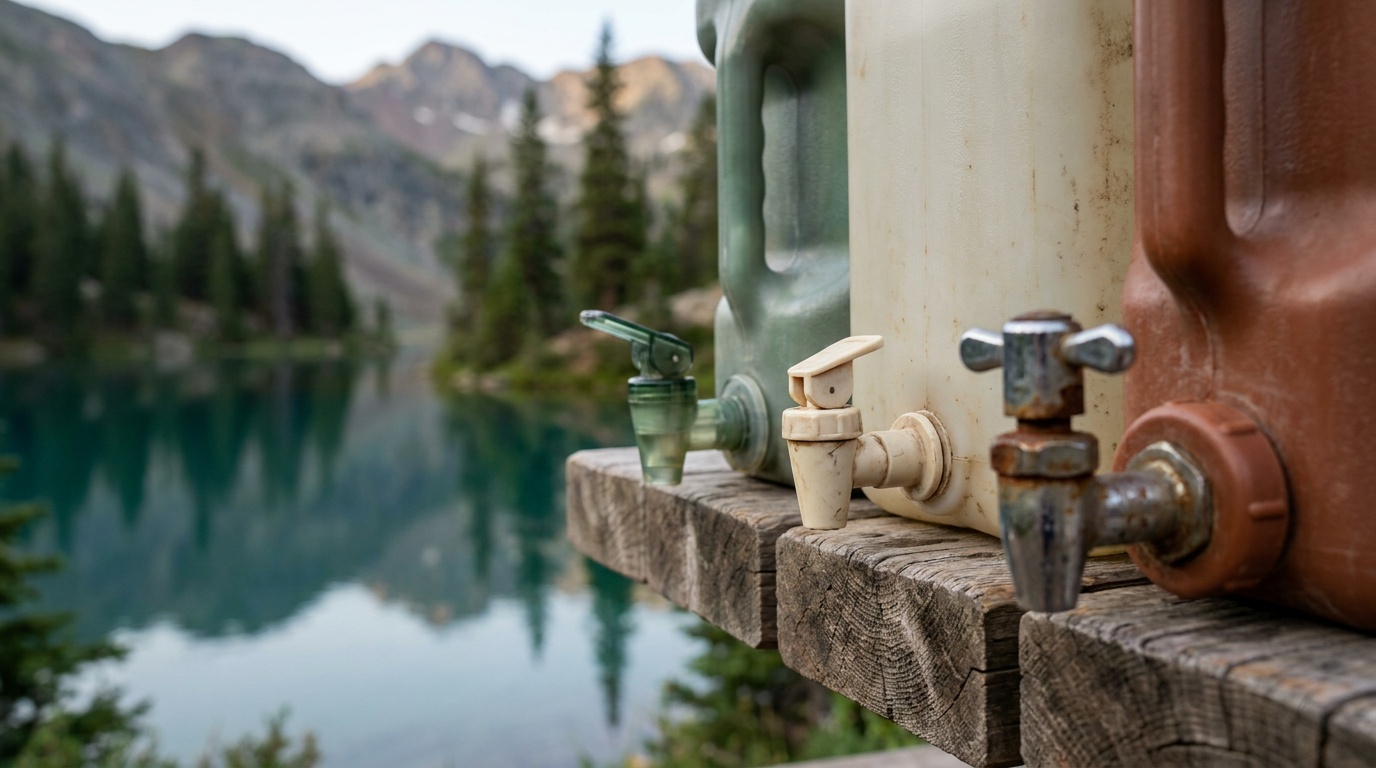
The spigot is the most failure-prone part of any water container. Things to look for: a valve that closes under its own spring tension (not just friction), a barrel nut or collar that can be tightened if it drips, and a drain position that does not require tipping the container to reach the last half-gallon. The Scepter's approach of separating the spigot from the container entirely avoids built-in spigot failure modes at the cost of one extra part to track.
Material and food safety
Every container in this list is BPA-free and uses food-grade polyethylene, either HDPE (harder, more rigid, better for permanent containers) or LDPE (softer, used in collapsible containers). Both are safe for drinking water. What varies is UV resistance and wall thickness. If a container will sit in direct sun for extended periods, thicker HDPE (Scepter) holds up better than standard-grade HDPE (Aqua-Tainer) over multiple seasons.
Stackability and storage
Rectangular containers stack; round containers do not. The CAMPMAX and Scepter are both rectangular and stack stably. The Aqua-Tainer is rectangular with a recessed handle cavity that allows stacking but with less stability than a flat-sided container. The Coghlan's stores flat when empty.
Setting up a camp water station
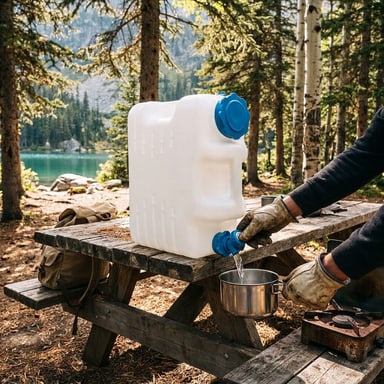
Place the container on a stable surface
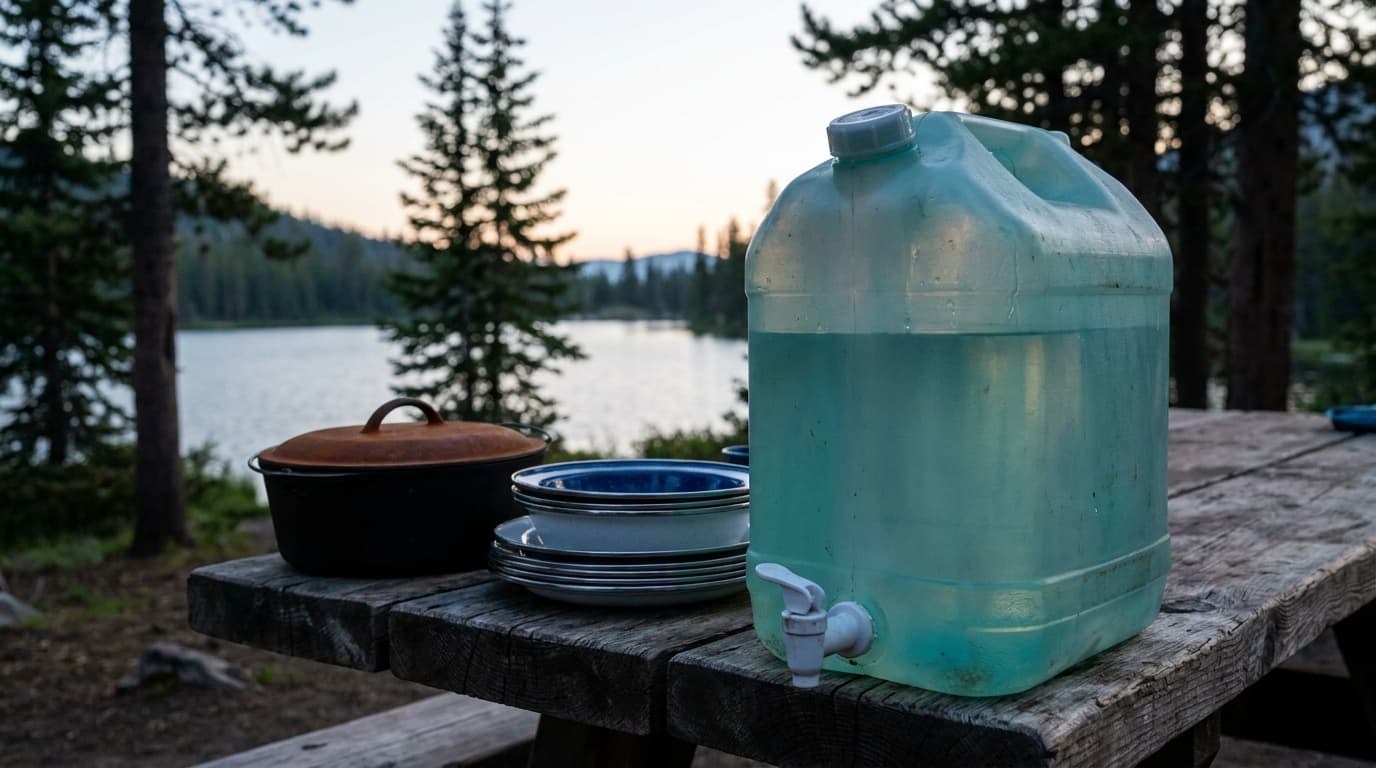
A small folding table or a flat rock works. The spigot needs to be accessible without tipping the container. Avoid setting it directly on soft ground where it can tilt.
Open the vent cap before using the spigot
Most containers have a small vent on the cap or body. Opening it before operating the spigot prevents the vacuum lock that causes slow, uneven flow.
Check the spigot collar before filling
Hand-tighten the barrel nut or spigot collar before the container is full and heavy. Adjusting it after is possible but harder.
Store in shade when possible
Direct sun degrades polyethylene faster than anything else in normal car camping use. A tarp over the water station adds years of life to a $25 container.
Rinse with a dilute bleach solution between trips
One tablespoon of unscented household bleach per gallon of water, swish and drain, then rinse with clean water. This prevents biofilm buildup in the spigot channel.
The spigot is the part that fails first: prioritize the one that lets you adjust it without tools.
Frequently asked questions
Can I store water in a camping container long-term between trips?
Short answer: no more than a few weeks without treatment. Polyethylene containers are not rated for long-term water storage in the same way that dedicated emergency water barrels are. For seasonal car camping use, empty and dry the container between trips. If you need to store water for more than a week, add a small amount of unscented household bleach (about 8 drops per gallon of water) and label the fill date.
What is the difference between BPA-free and food-grade?
BPA-free means the plastic does not contain bisphenol A, a chemical used in some polycarbonate plastics. Food-grade means the entire formulation (including any dyes or additives) is approved for contact with food and water. A container can be BPA-free without being food-grade if it uses other non-approved additives. Every container in this list is both. The safest containers use natural (undyed) or white plastic; dark-colored containers are sometimes food-grade and sometimes not, so check the product spec sheet.
Do I need a separate spigot or does it come with the container?
The CAMPMAX, Aqua-Tainer, and Coghlan's all include a built-in or included spigot. The Scepter does not: the military-spec lid is a sealed bung cap, and you need to purchase a Scepter-brand spigot separately (available for around $8–$12). This is by design. The separate spigot threads into a standardized NATO bung fitting and can be replaced if it wears out, without replacing the container.
These four containers cover the range from occasional use to serious base camp and overlanding. For more gear picks in the camp category, browse the camp hub. To understand how every pick on this site is scored, read how we research and rate.
Keep going
Complete loadoutCar-camping starter kitThe first-trip essentials across shelter, sleep, cooking, lighting, seating, and water, with the extras left out.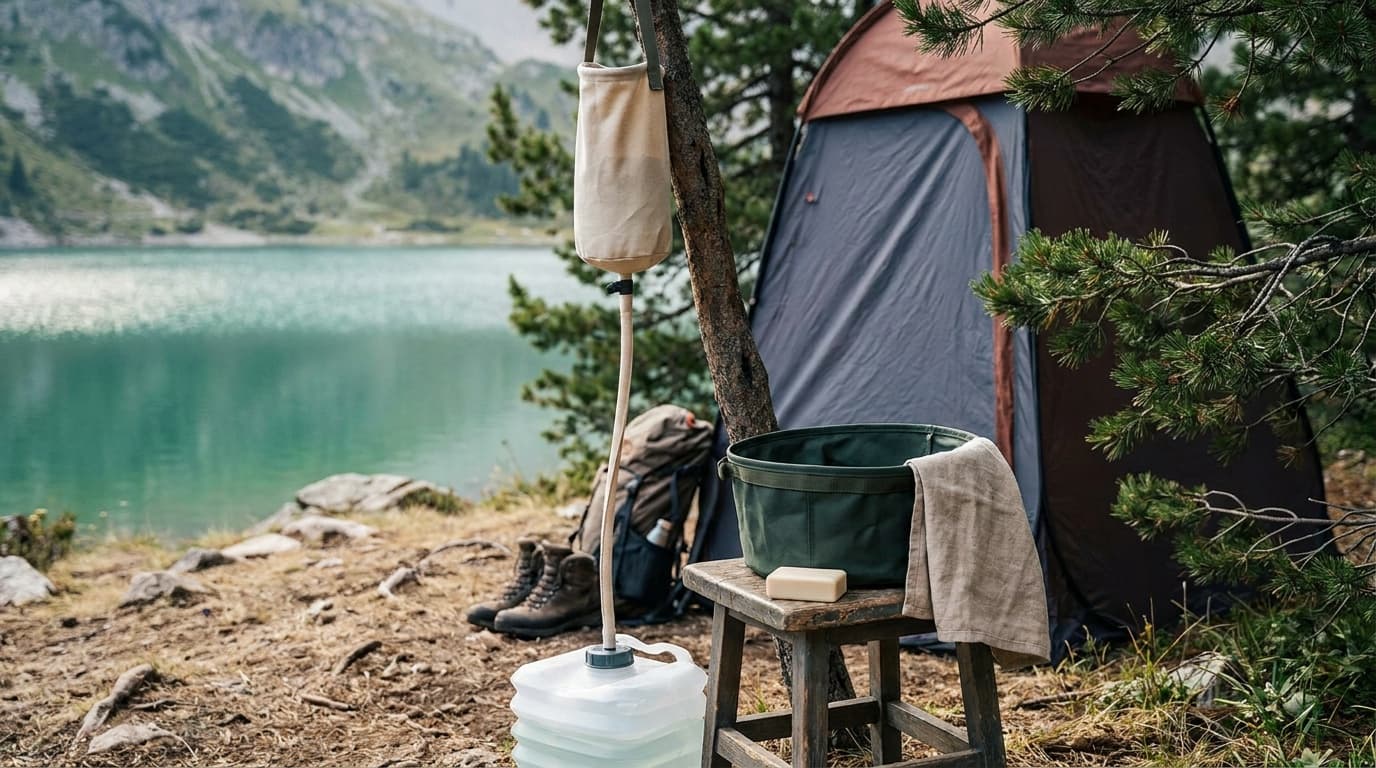
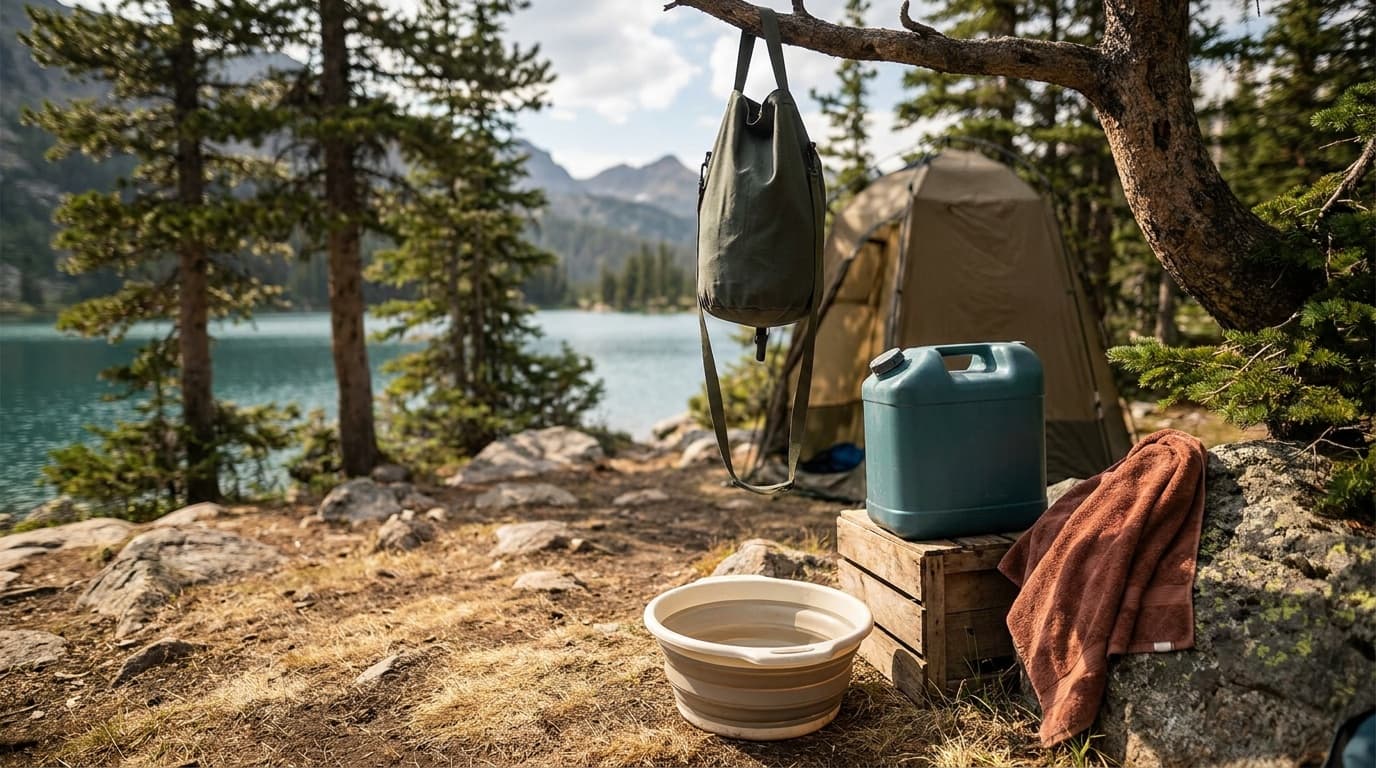
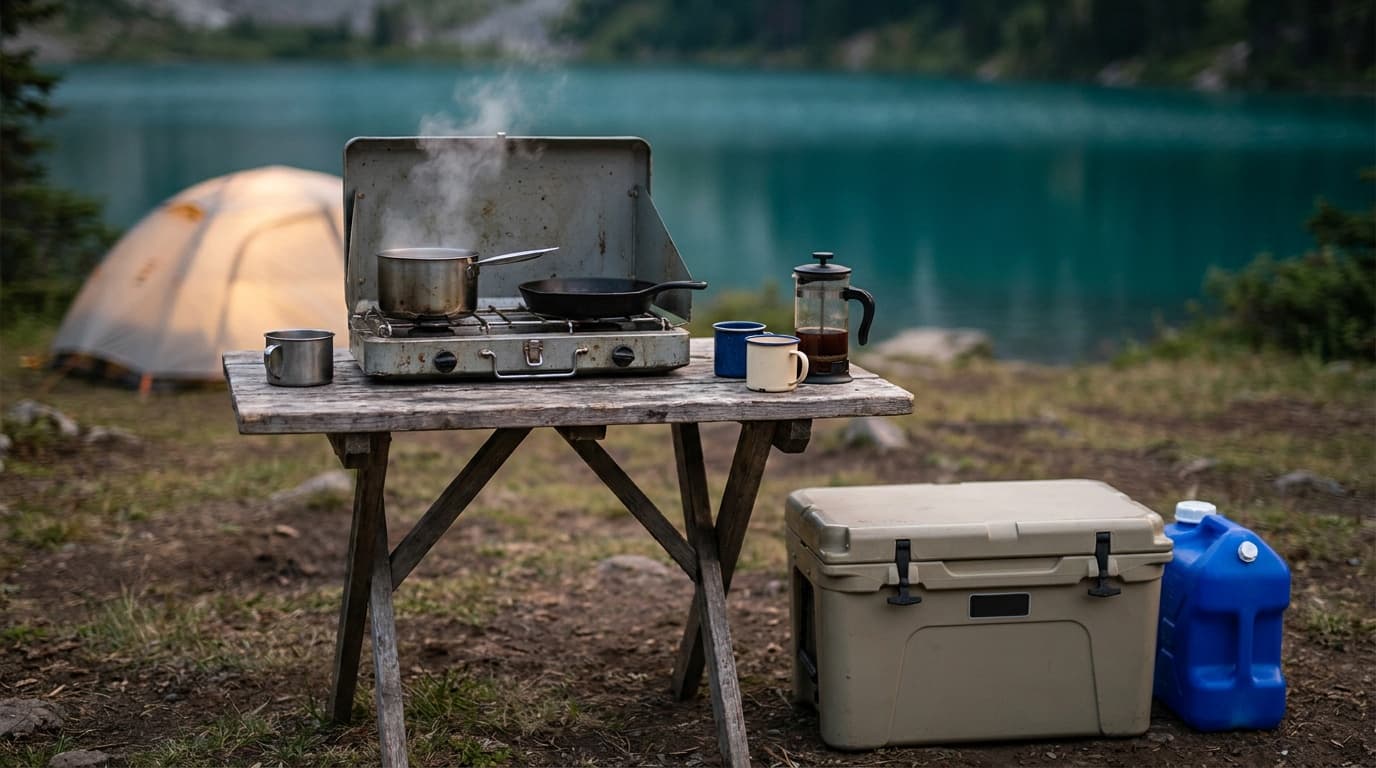
Our recommendations draw on manufacturer documentation, retailer listings, owner feedback, and comparisons with alternatives.
As an Amazon Associate I earn from qualifying purchases. We may earn a commission from links here, at no extra cost to you. How we research →