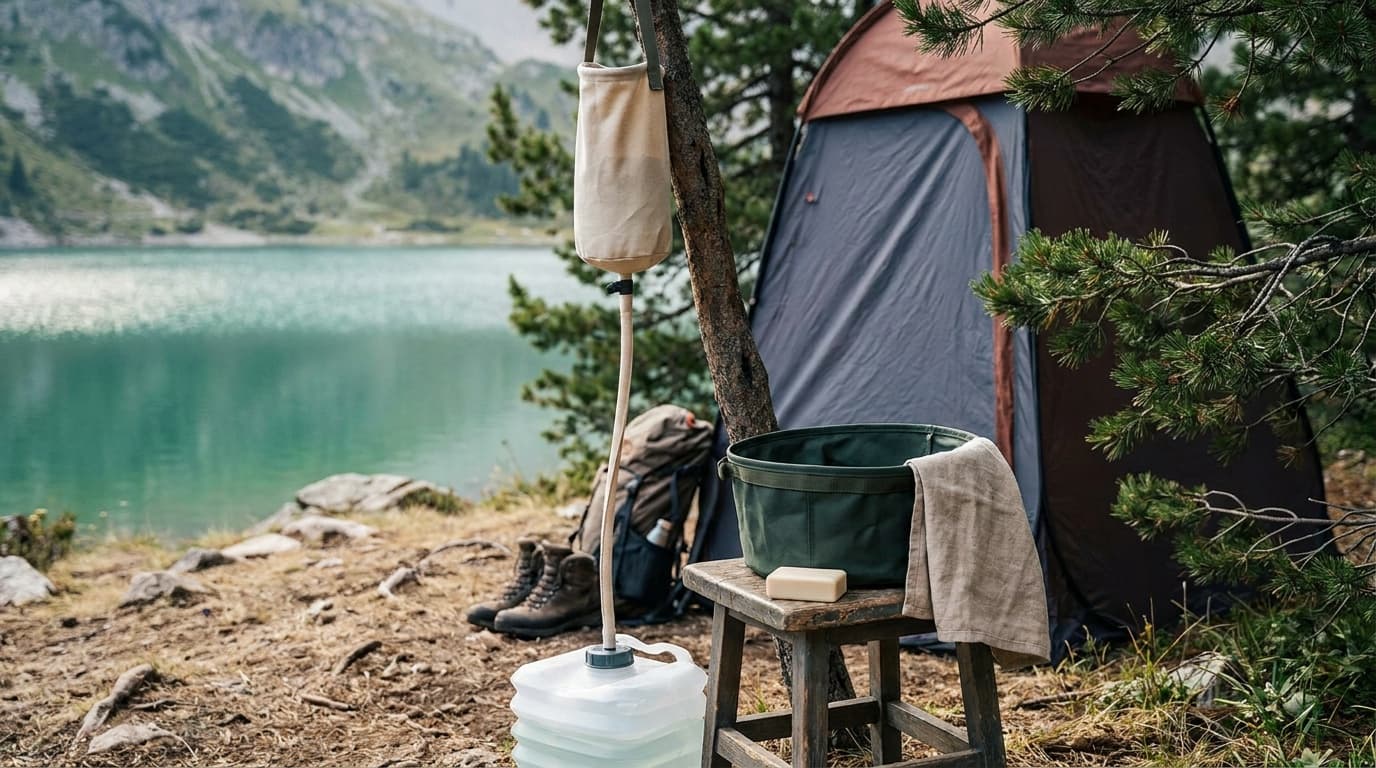
Plan on about 1 gallon (3.8 L) of water per person per day for car camping in mild weather, the same baseline Ready.gov uses for emergency supplies, then add for heat, hiking, cooking, and a safety margin. On hot desert hikes, parks such as Saguaro National Park advise drinking about 1 quart per hour of hiking, and Ready.gov notes that water needs can double in very hot temperatures. Here is how to turn that into a number you can actually pack.
Turn the estimate into carrying capacity
- Two adults at a mild-weather car camp for a weekend: the Reliance 7-gallon Aqua-Tainer gives the group one large supply container. Confirm that you can lift and pour it safely when full.
- A rugged vehicle cache or hot, exposed campsite: the Scepter 5-gallon container is easier to divide into multiple redundant containers than one very large tank.
- Backpacking between natural sources: do not buy a large camp jug as the solution. Verify current source reports, carry enough capacity to reach the next confirmed source with margin, and bring an appropriate treatment method plus a backup.
- The calculated load is too heavy to carry safely: change the route, add a verified refill, shorten the trip, or move the camp. A container cannot fix an impossible water plan.
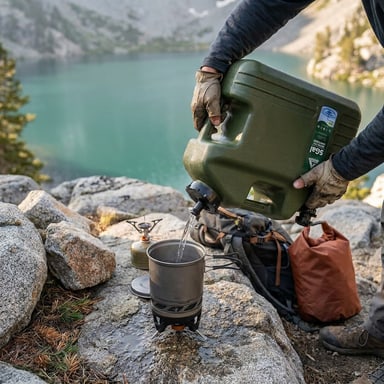
The 1 gallon baseline: what it does and does not mean
The one-gallon figure comes from Ready.gov emergency-supply guidance, which tells households to store at least one gallon per person per day for drinking and sanitation, and adds that children, nursing mothers, and sick people may need more. It is useful for sizing a mild-weather car-camping supply, where the water can cover more than drinking. It is not a universal physiological requirement and should not be presented as a backcountry minimum for every person or climate.
Treat the table as a transparent packing estimate, not a medical dose. For backcountry travel, begin with current guidance from the land manager for the exact route and season, then include cooking, hygiene, source reliability, and the water required to exit if a source is dry.
Adjusting for conditions: the real math
Several factors push water needs well above the baseline. Stack them honestly.
Heat and sun exposure: Use current guidance for the park and route rather than a generic multiplier. For example, Saguaro National Park advises one quart per hour of hiking on hot, dry summer days, and Ready.gov notes that in very hot temperatures water needs can double. That is conditions-specific safety guidance, not a universal target for every camper.
Elevation and exertion: Both can change fluid needs, but one fixed add-on does not fit every person. Check route guidance, pace, acclimatization, and access to a safe turnaround rather than adding an unsupported number to the total.
Kids: Do not simply shrink the adult number. Plan for frequent access, active supervision, and the conditions of the specific trip. Ask a pediatric clinician for individualized guidance when heat, illness, age, or a remote route raises the stakes.
Dogs: Carry the dog's water separately so it cannot silently consume the human emergency margin. Needs vary with size, coat, health, exertion, and temperature; use veterinarian and route guidance rather than one campsite-wide ratio.
The useful number is not a universal gallon rule. It is the amount your specific group needs to reach the next verified source and still exit safely if that source is unavailable.
Dish washing and camp cooking: the often-forgotten load
Cooking from scratch uses more water than people expect. A pot of boiling pasta takes 1–2 liters of water plus the water absorbed by the food. Washing a pot properly (including a rinse to remove soap residue before Leave No Trace gray water disposal) adds another 0.5–1 liter. Freeze-dried and dehydrated meals are popular for a reason: most pouches need roughly 1 to 2 cups (0.25 to 0.5 L) of boiling water, per the package, and the pouch is your bowl.
If you are doing real camp cooking, add 0.5–1 gallon per group per day on top of your personal water budget. If you are going freeze-dried, that addition drops to about 0.25 gallons.
Hauling vs. refilling: how to structure your plan
A liter of water weighs 1 kg (2.2 lb), and a US gallon weighs about 8.3 lb. A 2-day supply for two adults in mild conditions is 4 gallons, about 33 lb. That weight matters a lot on a backpacking trip and very little at a car camp, where a 7-gallon rigid jug like the Reliance Aqua-Tainer covers two adults for most of a weekend.
Water planning workflow
Check the trip report
Verify that your source (creek, lake, spring, spigot) is currently flowing. Seasonal sources dry up; confirm within 1–2 weeks of your trip.
Identify treatment method
A squeeze or gravity filter removes parasites and, at 0.3 micron or smaller, bacteria, but not viruses, per the CDC. Carry chlorine dioxide tablets or a way to boil as a backup in case your filter breaks or freezes.
Calculate carry capacity
Haul enough to reach your first reliable source with a half-day buffer. Never assume the source is there until you can see it.
Build a dry-camp contingency
If the source is gone, you need enough to get back to the trailhead or to the next confirmed source. Size that margin to the actual distance and heat, not a round number.
Cache at camp
At a car camp, keep a 7-gallon collapsible cube at site. It weighs almost nothing empty and removes all decision-making once you're set up.
Desert camping: the numbers get serious
The desert operates by route-specific rules. Some National Park Service units advise roughly one quart or liter per hour of hiking on hot, dry summer days. On a six-hour hike, that guidance alone implies roughly six quarts or liters before cooking, hygiene, or an emergency reserve. Other parks and seasons publish different guidance, so check the current page for the exact unit you are visiting.
In desert environments, water sources on the map are often seasonal or unreliable. The standard advice from experienced desert hikers is to cache water (leave rugged jugs like the Scepter 5 Gallon Military Style Portable Water Container at your car or at legal cache points), know the location of every pothole and spring on your route, and carry more than you think you need. Running out in a remote desert canyon in summer is a genuine emergency. The margin you dismiss as excess is the margin that keeps a rescue from happening.
Where these numbers come from
| Claim | Source | Checked |
|---|---|---|
| Store at least 1 gallon per person per day for drinking and sanitation; children, nursing mothers, and sick people may need more; needs can double in very hot temperatures | Ready.gov, Water | 2026-09-25 |
| Drink 1 quart of water per hour of hiking on hot, dry summer days | NPS, Saguaro National Park hiking safety | 2026-09-25 |
| Boil 1 minute (3 minutes above 6,500 ft); filters at 1 micron remove parasites, at 0.3 micron also bacteria, not viruses; iodine and chlorine may not work against parasites; clean-looking water can carry germs | CDC, water treatment when hiking, camping, or traveling | 2026-09-25 |
| Scepter container: 5 gal (20 L), BPA-free HDPE, 13.7 x 6.8 x 18.8 in | Scepter listing on Amazon, ASIN B00ZLYUOP6 | 2026-09-25 |
Cooking and hygiene splits are our packing estimates, not a medical prescription.
Frequently asked questions
Can I drink water directly from a clear mountain stream?
Clarity is not a safety indicator. The CDC warns that water carrying bacteria, viruses, and parasites such as Giardia and Cryptosporidium sometimes looks clean. Treat backcountry water before drinking, regardless of how remote the source seems. Boiling is the most reliable method: a rolling boil for 1 minute, or 3 minutes above 6,500 feet. Iodine and chlorine do not work well against parasites, so filter first if you rely on chemicals.
How do I store water safely at a car campsite?
Use food-grade containers rated for water storage. Keep them out of direct sunlight to slow bacterial growth, and do not store water in containers that previously held anything other than water or food-grade liquids. Collapsible containers from reputable outdoor brands (not generic hardware store jugs) are designed for this and pack flat when empty.
How much water do I need for a one-night car camping trip in mild weather?
For two adults with moderate cooking: budget 2–3 gallons total. That covers drinking through the afternoon and evening, dinner, morning coffee and breakfast, and basic washing. A 2.5-gallon starting point gives a comfortable buffer without lugging an absurd amount of water.
For specific picks, see our guide to the best camping water containers. Browse all camp guides or read how we research and rate gear.
Recommended gear
Our current top picks from the Best camping water containers for car camping in 2026 guide, if you are ready to buy.
CAMPMAX
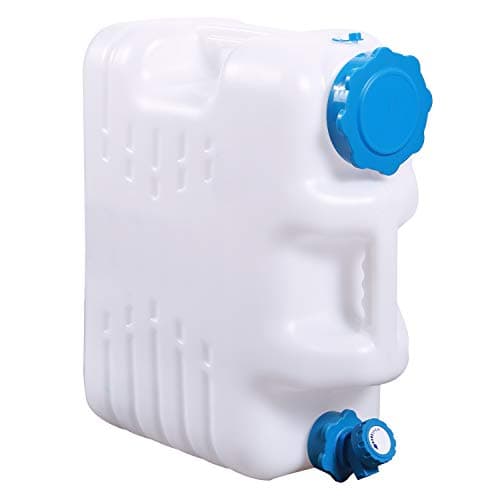
CAMPMAX 5 Gallon Water Container with Spigot
Best Overall
Kit Score 8.1/10
$30.99 Price checked Oct 23, 4:16 PM CDT
Best for: Car campers who want a spigot that works well out of the box and do not want to fuss with aftermarket parts.
- Integrated spigot with silicone seals delivers consistent, drip-free flow without the thread-leak issues common to cheaper taps
- Priced noticeably higher than the Aqua-Tainer for roughly the same capacity
- Capacity
- 5 gal / 18.5 L
- Dimensions (filled)
- 15.7 x 6.7 x 12.6 in
- Weight (empty)
- 2.75 lb
- Material
- Food-grade HDPE, BPA and PVC free
- Spigot
- Integrated twist spigot with silicone seal
- Opening
- 4-inch wide mouth for filling and cleaning
About this pick
A 5-gallon rigid HDPE container that can stand upright or lie on its side for spigot use at camp. The silicone-sealed spigot is the standout feature: it provides controlled flow with no reported drips under normal use, and the translucent body lets you read the water level at a glance.
Strengths
- Integrated spigot with silicone seals delivers consistent, drip-free flow without the thread-leak issues common to cheaper taps
- Dual-position design works both upright and on its side, giving flexibility for table or ground use at basecamp
- Wide 4-inch mouth accepts ice and makes interior scrubbing practical with the included brush
Weaknesses
- Priced noticeably higher than the Aqua-Tainer for roughly the same capacity
- Some owners report the plastic nozzle tip feels less robust than the body of the container
Kit Score breakdown
SCEPTER
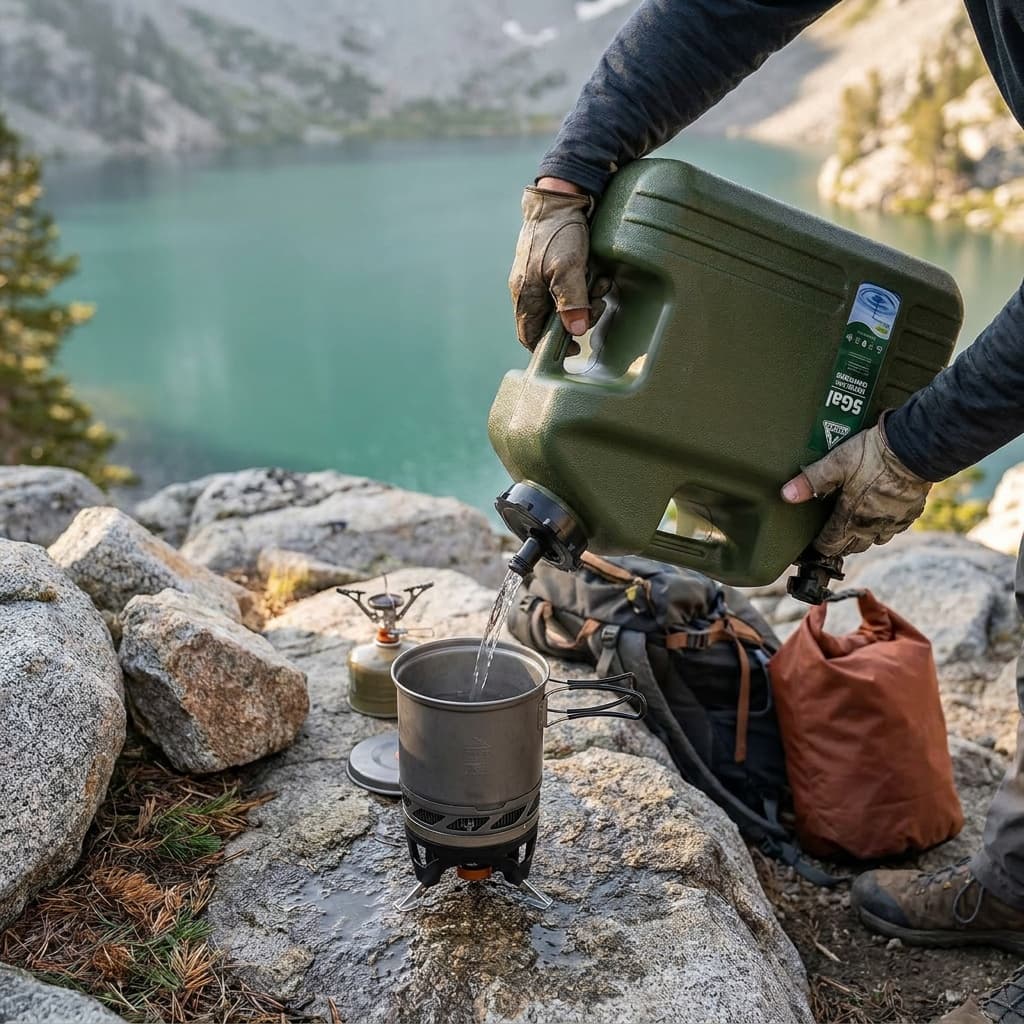
Scepter 5 Gallon Military Style Portable Water Container
Best Premium
Kit Score 8.9/10
$54.99 Price checked Oct 23, 4:16 PM CDT
Best for: Off-road campers, overlanders, and anyone whose gear takes serious abuse who want a container that will outlast everything else in the kit.
- Stiff, heavy-duty HDPE build that owners say shrugs off rough handling that buckles cheaper jugs
- No integrated spigot: a hands-free dispensing setup requires an aftermarket spout accessory adding roughly $13-25 to the total cost
- Capacity
- 5 gal / 20 L
- Dimensions
- 13.7 x 6.8 x 18.8 in
- Weight (full)
- About 42 lb of water plus the can
- Material
- BPA-free high-density polyethylene, military-style design
- Spigot
- Wide pour spout and vent cap included; integrated spigot sold separately (~$13-25)
- Profile
- Jerry-can style, vertical, vehicle-stowable
About this pick
A direct descendant of the NATO military water can design, the Scepter is built to a genuinely different standard from consumer camping jugs. Owners report years of rough use without meaningful deformation or leaks. The one trade-off for camping: it ships without an integrated spigot, so dispensing at the faucet requires either the aftermarket Scepter spout or pouring by hand.
Strengths
- Stiff, heavy-duty HDPE build that owners say shrugs off rough handling that buckles cheaper jugs
- Jerry-can profile stacks efficiently in vehicle cargo areas and against other Scepter cans, with no wasted space
- Rubber gasket lid seals reliably on its side, making it genuinely vehicle-safe without leaking into gear
Weaknesses
- No integrated spigot: a hands-free dispensing setup requires an aftermarket spout accessory adding roughly $13-25 to the total cost
- Strong initial plastic smell requiring several water-and-baking-soda flushes before first use
Kit Score breakdown
COGHLAN'S
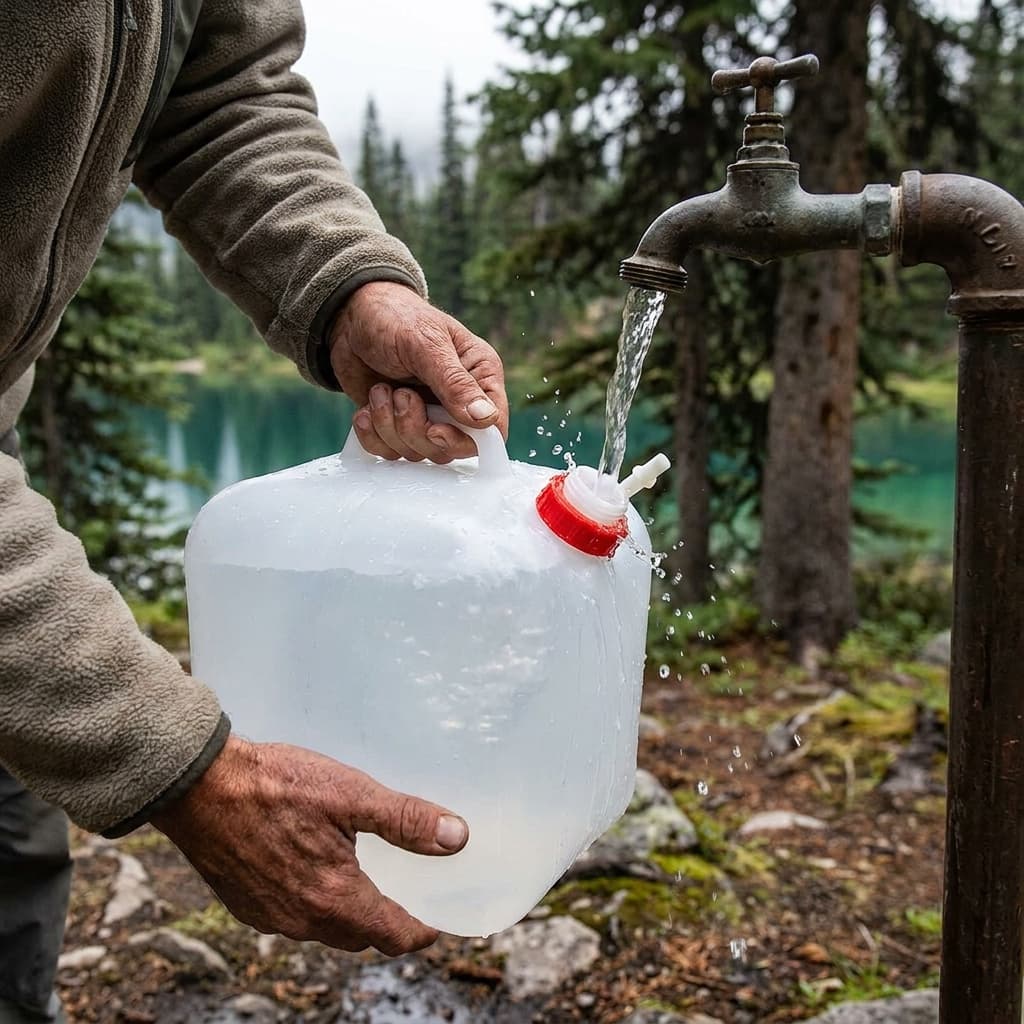
Coghlan's Collapsible Water Container 5 Gallon
Best Budget
Kit Score 6.9/10
$17.02 Price checked Oct 23, 4:16 PM CDT
Best for: Occasional car campers who have limited storage space and want a lightweight backup container or a low-commitment first purchase.
- Collapses to 3.25 inches deep when empty, saving more than 80 percent of the space a rigid container occupies at rest
- Fold-line corners develop stress cracks with repeated use: several owners report leaks appearing within one to two camping seasons
- Capacity
- 5 gal / 18.9 L
- Packed dimensions
- 3.25 x 9.25 x 10.75 in (folded flat)
- Material
- Heavy-duty food-approved BPA-free polyethylene
- Spigot
- On/off spigot included, wide enough for ice cubes
- Cold-weather use
- Remains flexible at low temperatures
- Reviews on Amazon
- 4.2 out of 5 stars, 1,100+ ratings
About this pick
The most space-efficient option in this roundup: folds to under 11 inches when empty, so it disappears into a car boot or backpack pocket. The included spigot works reliably when new, and the clear body makes water-level monitoring easy. The trade-off is durability: the lightweight polyethylene develops stress marks at fold lines after repeated use, and a subset of owners report slow leaks appearing within one to two seasons.
Strengths
- Collapses to 3.25 inches deep when empty, saving more than 80 percent of the space a rigid container occupies at rest
- Spigot opening is wide enough for ice cubes, a practical advantage for summer camp cooking
- Lowest entry price in this roundup while still delivering a functional 5-gallon capacity with a built-in tap
Weaknesses
- Fold-line corners develop stress cracks with repeated use: several owners report leaks appearing within one to two camping seasons
- Lightweight polyethylene body is not suitable for rough handling or stowage under heavy gear
Kit Score breakdown
See all picks in Best camping water containers for car camping in 2026
Keep going
Complete loadoutCar-camping starter kitThe first-trip essentials across shelter, sleep, cooking, lighting, seating, and water, with the extras left out.
Researched, not hands-on tested
Updated Sep 25, 2026Our recommendations draw on manufacturer documentation, retailer listings, owner feedback, and comparisons with alternatives.
As an Amazon Associate I earn from qualifying purchases. We may earn a commission from links here, at no extra cost to you. How we research →