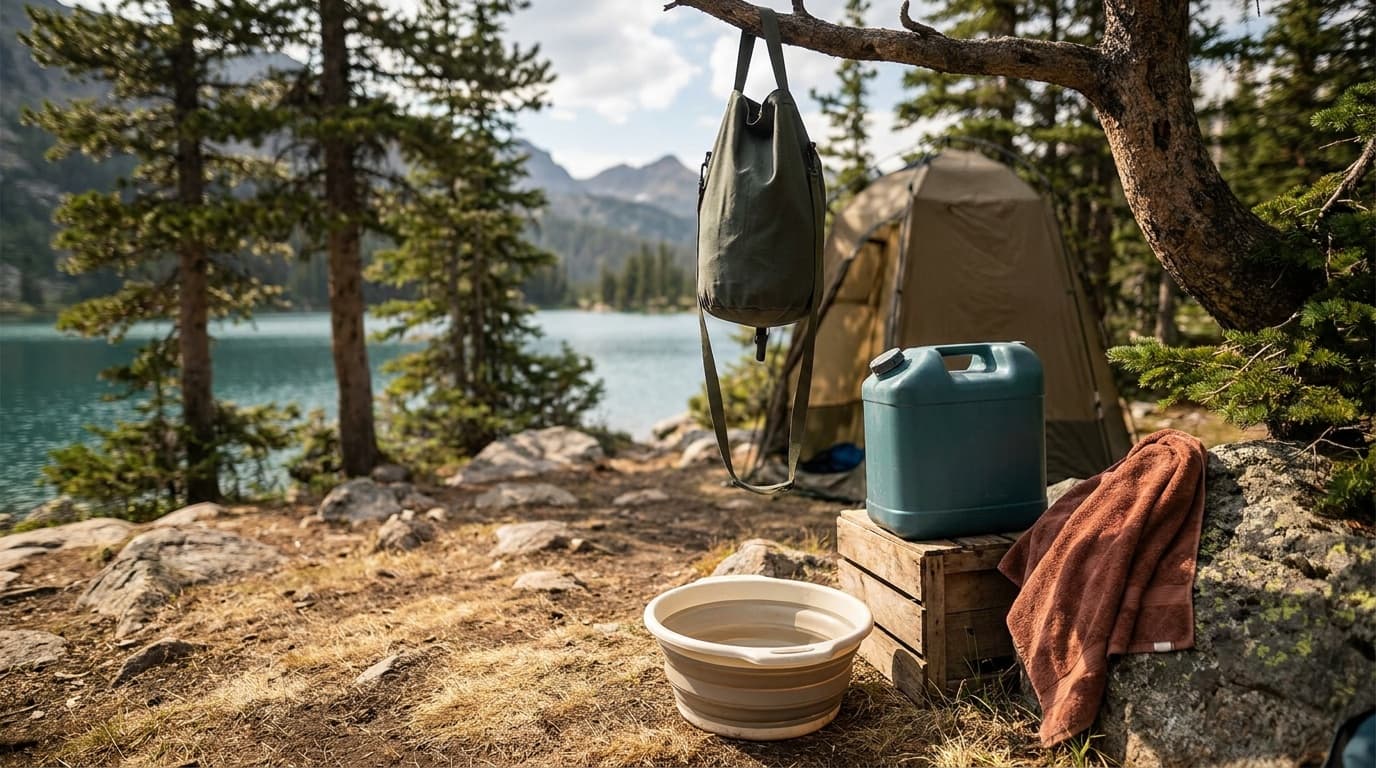
Water is the one supply you cannot improvise in the backcountry or at a drive-in site, so storing it correctly is as important as bringing enough of it.
Choosing the right container
Not every jug that holds liquid is safe for drinking water. Food-grade plastic (look for HDPE, marked with the recycle symbol and a "2") and stainless steel are the two most common safe materials. BPA-free labeling is a positive sign, but the food-grade designation is what actually matters for water safety.
Avoid containers that previously held non-food items, anything with a strong residual odor, and thin single-use water or soda bottles for storage beyond a day or two. Those thin plastics degrade faster, leach more readily under heat, and are harder to sanitize thoroughly.
Collapsible bladders and soft-sided jugs work well for backpacking where weight matters. Hard-sided jugs (2–7 gallons) like the Reliance Aqua-Tainer are the workhorse for car camping: they stack, seal reliably, and hold a spigot.
Sanitizing containers before you fill them
A clean-looking jug is not a sanitized jug. Bacteria and algae spores survive in trace residues from previous fills, especially in warm weather. Sanitize your containers at the start of each season or any time a container has been sitting unused for more than a few weeks.
How to sanitize a water container
Rinse
Empty the container and rinse with clean water to remove loose sediment or old residue.
Make a bleach solution
Mix 1/8 teaspoon of plain, unscented household bleach (5–8% sodium hypochlorite) per gallon of water.
Coat the interior
Pour the solution in, cap tightly, and shake so it contacts every interior surface including the cap threads.
Soak
Let the solution sit for 30 seconds, then drain completely.
Air dry
Leave the container open in a clean, shaded spot until fully dry before filling.
Temperature, shade, and algae prevention
Heat is the enemy of stored water quality. Warmth accelerates bacterial growth and, in clear containers exposed to sunlight, promotes algae. Algae will not make you sick in small quantities, but it produces an earthy taste and signals that conditions are right for other biological growth.
Store all water containers in shade whenever possible, whether that is under a tree canopy, inside a vehicle, or beneath a tarp. Opaque containers like the Scepter 5 Gallon Military Style Portable Water Container are significantly better than clear ones because light drives algae growth; if your container is translucent, shade it.
For extended trips in hot climates, treat stored water with a small amount of bleach: 2 drops of plain unscented bleach per quart extends potable life and prevents biological growth without producing a noticeable taste. This is the same practice used for emergency water storage at home.
Shade and an opaque container solve about 80 percent of water freshness problems before they start.
How long stored water stays good
The answer depends heavily on the source and storage conditions, but some reliable benchmarks apply.
Municipal tap water stored in a sealed, sanitized food-grade container in a cool, dark location stays good for up to 6 months. After that, the residual chlorine dissipates and microbial risk climbs. Rotate and replace on a 6-month cycle if you pre-fill at home.
At camp, water drawn from a treated municipal source and stored in clean conditions stays fine for the duration of most trips (2–5 days) without additional treatment. Water drawn from natural sources (streams, lakes, springs) must be filtered or treated before storage, and even then it is best consumed within 24–48 hours since natural water contains organic matter that degrades faster.
If water develops any off-smell, cloudiness, or visible film, discard it and sanitize the container before refilling. Your senses are a legitimate early warning system.
Separating drinking water from washing water
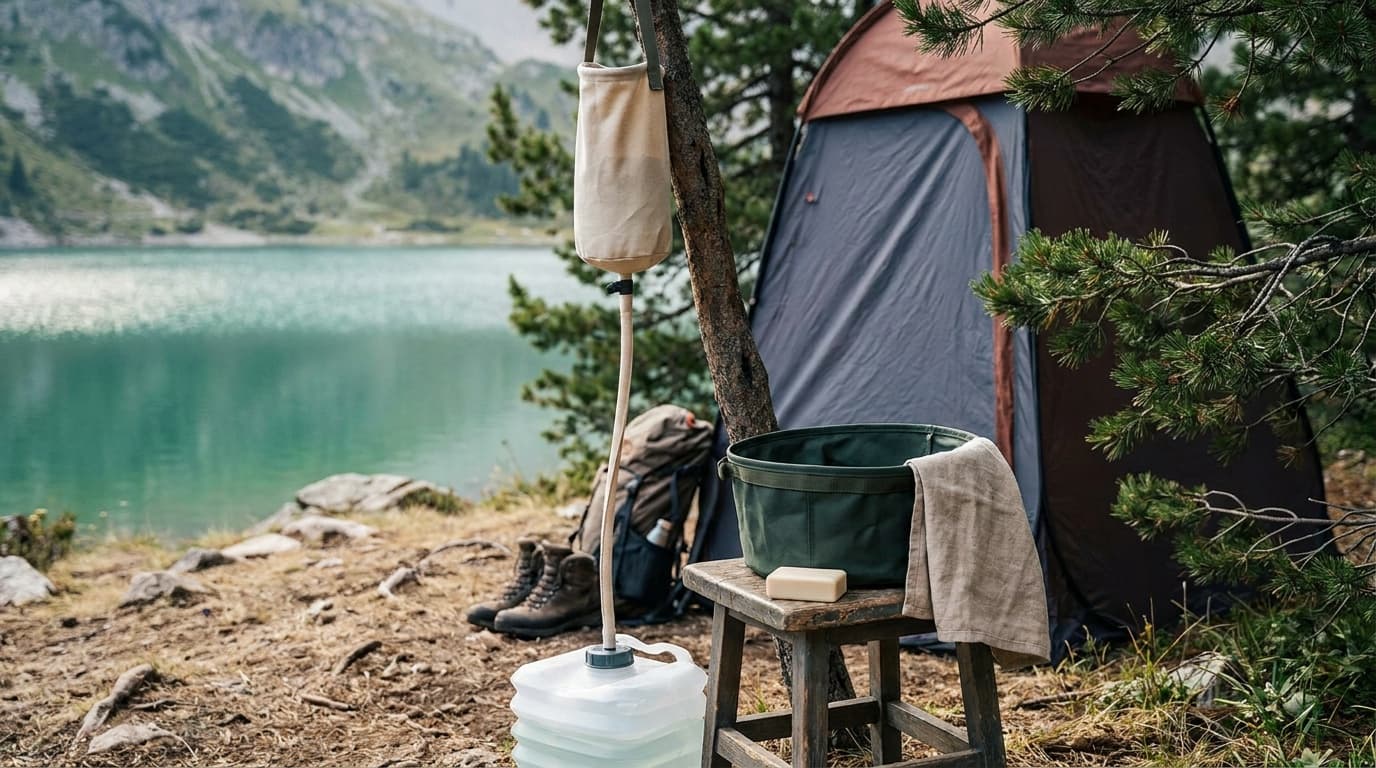
One of the most common mistakes at camp is using the same container, same spigot, or same hands for potable water and general camp washing. Cross-contamination from dish soap residue, food particles, or unwashed hands is the leading cause of GI illness at campsites, not the water source itself.
The practical solution is simple: designate containers with permanent marker or colored tape. Blue for drinking and cooking water, gray or green for washing water. Fill drinking containers first, before hands get dirty. Never dip a cooking spoon or cup directly into a storage jug; use a separate serving ladle or the spigot only.
For Leave No Trace compliance, washing water (gray water) should be disposed of at least 200 feet from water sources, trails, and camp. Strain food particles before disposal and scatter the water over a wide area.
Frequently asked questions
Can I reuse single-use plastic water bottles for camp storage?
For a single trip of 1–2 days, yes with caution, but not as a regular practice. Single-use PET bottles (marked with a "1") are not designed for repeated fills or sanitizing; they develop micro-scratches that harbor bacteria, and they are not rated for hot temperatures. For anything longer than a day trip, a food-grade HDPE or stainless container is worth the small added cost.
Does stored water go bad if it tastes flat?
Flat taste is caused by dissolved oxygen leaving the water, not by contamination. It is harmless. If the water is stored in a clean container, from a safe source, and within the timeframes above, it is still safe to drink. A brief stir or pour between containers reintroduces oxygen and improves taste immediately.
How much water should I store per person per day?
The standard planning figure is 2 gallons (about 7.5 liters) per person per day when accounting for drinking, cooking, and basic hygiene. In hot weather or at elevation where you are sweating heavily, budget closer to 3 gallons. Drinking water alone is typically 0.5–1 liter per hour of moderate activity; the rest covers cooking and hand washing.
For specific picks, see our guide to the best camping water containers. Browse all camp guides or read how we research and rate gear.
Recommended gear
Our current top picks from the Best camping water containers for car camping in 2026 guide, if you are ready to buy.
CAMPMAX
CAMPMAX 5 Gallon Water Container with Spigot
Best Overall
Kit Score 8.1/10
$30.99 Price checked Oct 23, 4:16 PM CDT
Best for: Car campers who want a spigot that works well out of the box and do not want to fuss with aftermarket parts.
- Integrated spigot with silicone seals delivers consistent, drip-free flow without the thread-leak issues common to cheaper taps
- Priced noticeably higher than the Aqua-Tainer for roughly the same capacity
- Capacity
- 5 gal / 18.5 L
- Dimensions (filled)
- 15.7 x 6.7 x 12.6 in
- Weight (empty)
- 2.75 lb
- Material
- Food-grade HDPE, BPA and PVC free
- Spigot
- Integrated twist spigot with silicone seal
- Opening
- 4-inch wide mouth for filling and cleaning
About this pick
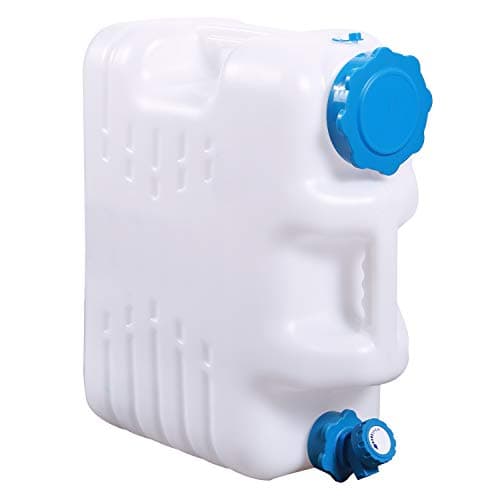
A 5-gallon rigid HDPE container that can stand upright or lie on its side for spigot use at camp. The silicone-sealed spigot is the standout feature: it provides controlled flow with no reported drips under normal use, and the translucent body lets you read the water level at a glance.
Strengths
- Integrated spigot with silicone seals delivers consistent, drip-free flow without the thread-leak issues common to cheaper taps
- Dual-position design works both upright and on its side, giving flexibility for table or ground use at basecamp
- Wide 4-inch mouth accepts ice and makes interior scrubbing practical with the included brush
Weaknesses
- Priced noticeably higher than the Aqua-Tainer for roughly the same capacity
- Some owners report the plastic nozzle tip feels less robust than the body of the container
Kit Score breakdown
SCEPTER
Scepter 5 Gallon Military Style Portable Water Container
Best Premium
Kit Score 8.9/10
$54.99 Price checked Oct 23, 4:16 PM CDT
Best for: Off-road campers, overlanders, and anyone whose gear takes serious abuse who want a container that will outlast everything else in the kit.
- Stiff, heavy-duty HDPE build that owners say shrugs off rough handling that buckles cheaper jugs
- No integrated spigot: a hands-free dispensing setup requires an aftermarket spout accessory adding roughly $13-25 to the total cost
- Capacity
- 5 gal / 20 L
- Dimensions
- 13.7 x 6.8 x 18.8 in
- Weight (full)
- About 42 lb of water plus the can
- Material
- BPA-free high-density polyethylene, military-style design
- Spigot
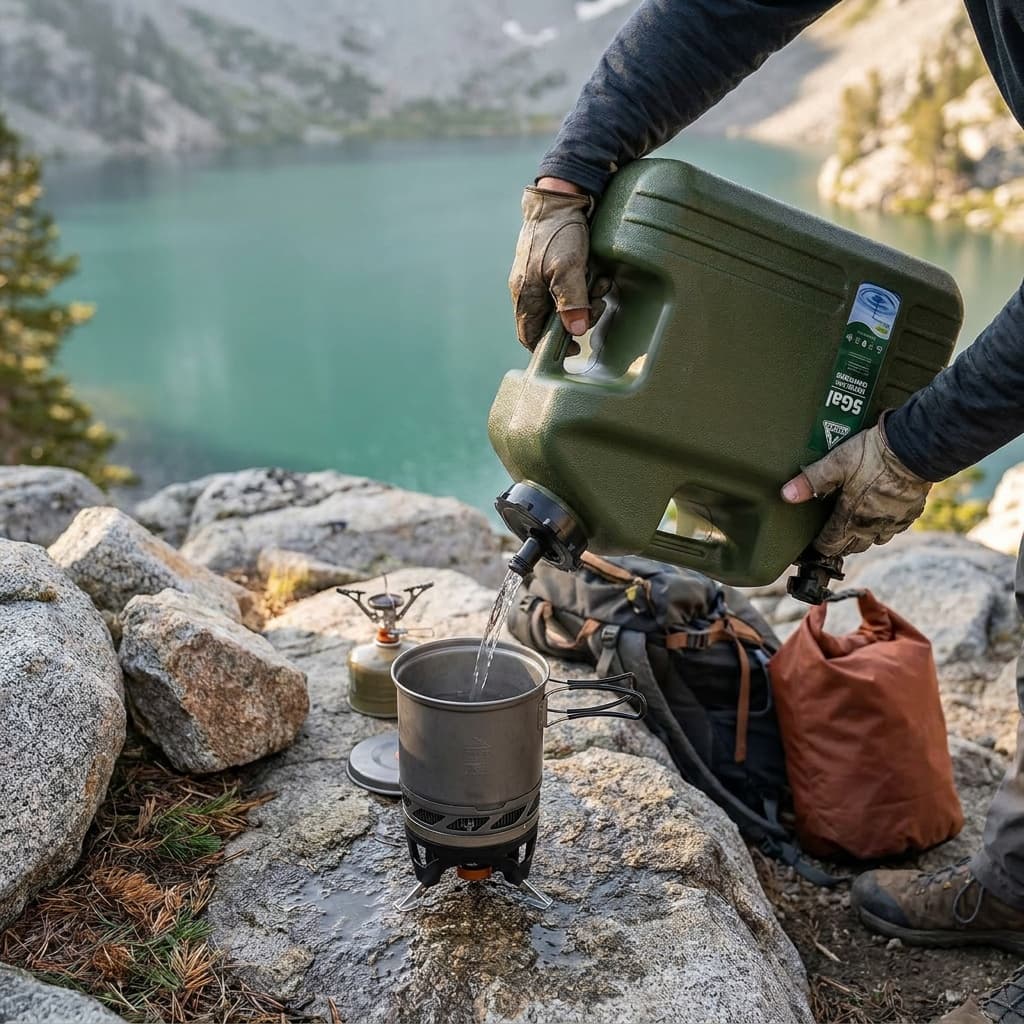
- Wide pour spout and vent cap included; integrated spigot sold separately (~$13-25)
- Profile
- Jerry-can style, vertical, vehicle-stowable
About this pick
A direct descendant of the NATO military water can design, the Scepter is built to a genuinely different standard from consumer camping jugs. Owners report years of rough use without meaningful deformation or leaks. The one trade-off for camping: it ships without an integrated spigot, so dispensing at the faucet requires either the aftermarket Scepter spout or pouring by hand.
Strengths
- Stiff, heavy-duty HDPE build that owners say shrugs off rough handling that buckles cheaper jugs
- Jerry-can profile stacks efficiently in vehicle cargo areas and against other Scepter cans, with no wasted space
- Rubber gasket lid seals reliably on its side, making it genuinely vehicle-safe without leaking into gear
Weaknesses
- No integrated spigot: a hands-free dispensing setup requires an aftermarket spout accessory adding roughly $13-25 to the total cost
- Strong initial plastic smell requiring several water-and-baking-soda flushes before first use
Kit Score breakdown
COGHLAN'S
Coghlan's Collapsible Water Container 5 Gallon
Best Budget
Kit Score 6.9/10
$17.02 Price checked Oct 23, 4:16 PM CDT
Best for: Occasional car campers who have limited storage space and want a lightweight backup container or a low-commitment first purchase.
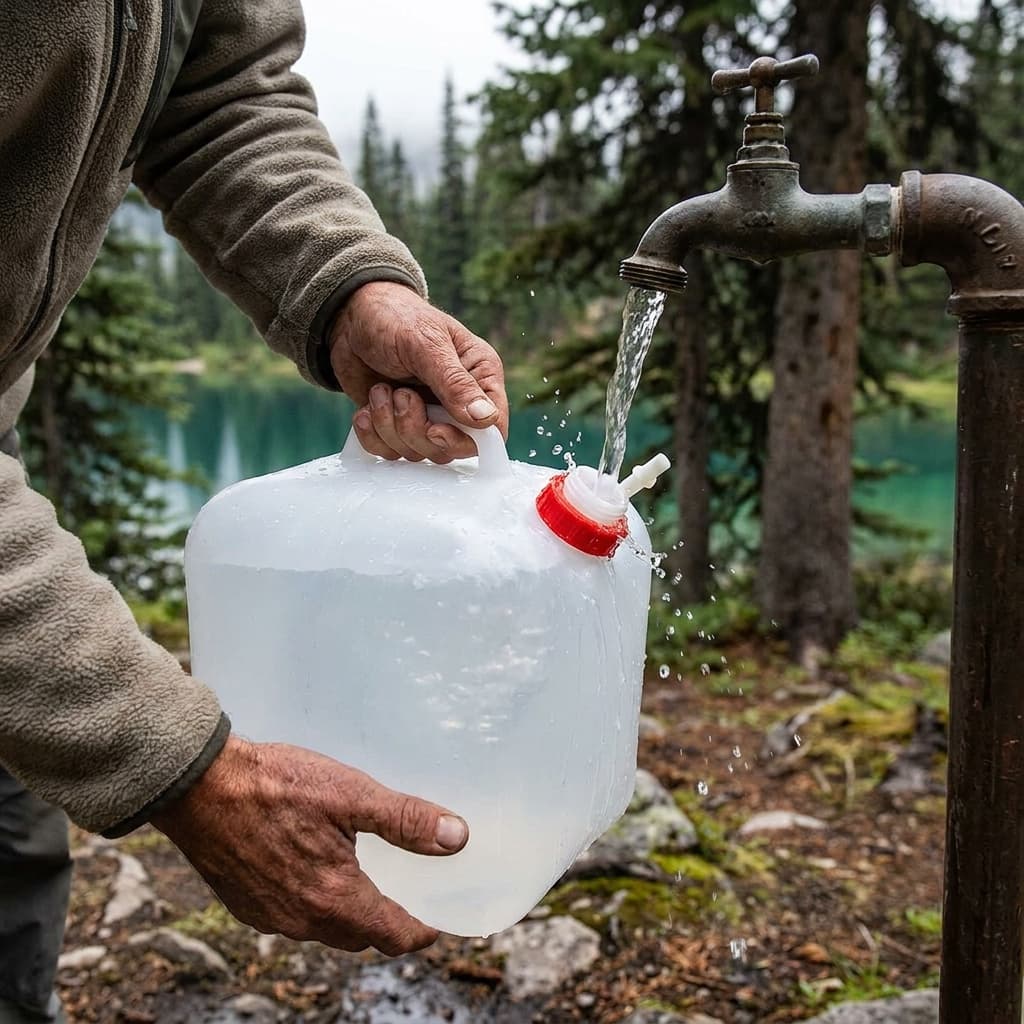
- Collapses to 3.25 inches deep when empty, saving more than 80 percent of the space a rigid container occupies at rest
- Fold-line corners develop stress cracks with repeated use: several owners report leaks appearing within one to two camping seasons
- Capacity
- 5 gal / 18.9 L
- Packed dimensions
- 3.25 x 9.25 x 10.75 in (folded flat)
- Material
- Heavy-duty food-approved BPA-free polyethylene
- Spigot
- On/off spigot included, wide enough for ice cubes
- Cold-weather use
- Remains flexible at low temperatures
- Reviews on Amazon
- 4.2 out of 5 stars, 1,100+ ratings
About this pick
The most space-efficient option in this roundup: folds to under 11 inches when empty, so it disappears into a car boot or backpack pocket. The included spigot works reliably when new, and the clear body makes water-level monitoring easy. The trade-off is durability: the lightweight polyethylene develops stress marks at fold lines after repeated use, and a subset of owners report slow leaks appearing within one to two seasons.
Strengths
- Collapses to 3.25 inches deep when empty, saving more than 80 percent of the space a rigid container occupies at rest
- Spigot opening is wide enough for ice cubes, a practical advantage for summer camp cooking
- Lowest entry price in this roundup while still delivering a functional 5-gallon capacity with a built-in tap
Weaknesses
- Fold-line corners develop stress cracks with repeated use: several owners report leaks appearing within one to two camping seasons
- Lightweight polyethylene body is not suitable for rough handling or stowage under heavy gear
Kit Score breakdown
See all picks in Best camping water containers for car camping in 2026
Keep going
Complete loadoutCar-camping starter kitThe first-trip essentials across shelter, sleep, cooking, lighting, seating, and water, with the extras left out.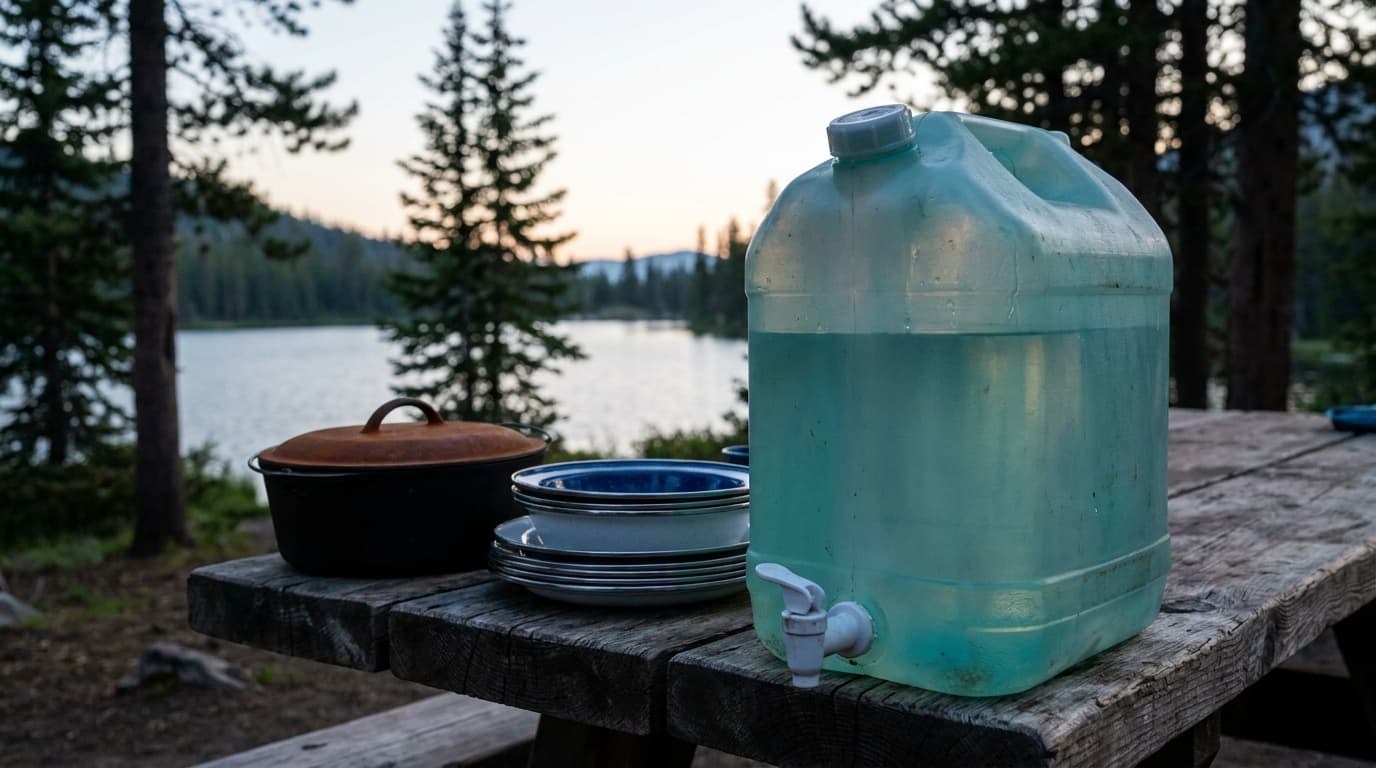
Researched, not hands-on tested
Updated Jun 4, 2026Our recommendations draw on manufacturer documentation, retailer listings, owner feedback, and comparisons with alternatives.
As an Amazon Associate I earn from qualifying purchases. We may earn a commission from links here, at no extra cost to you. How we research →