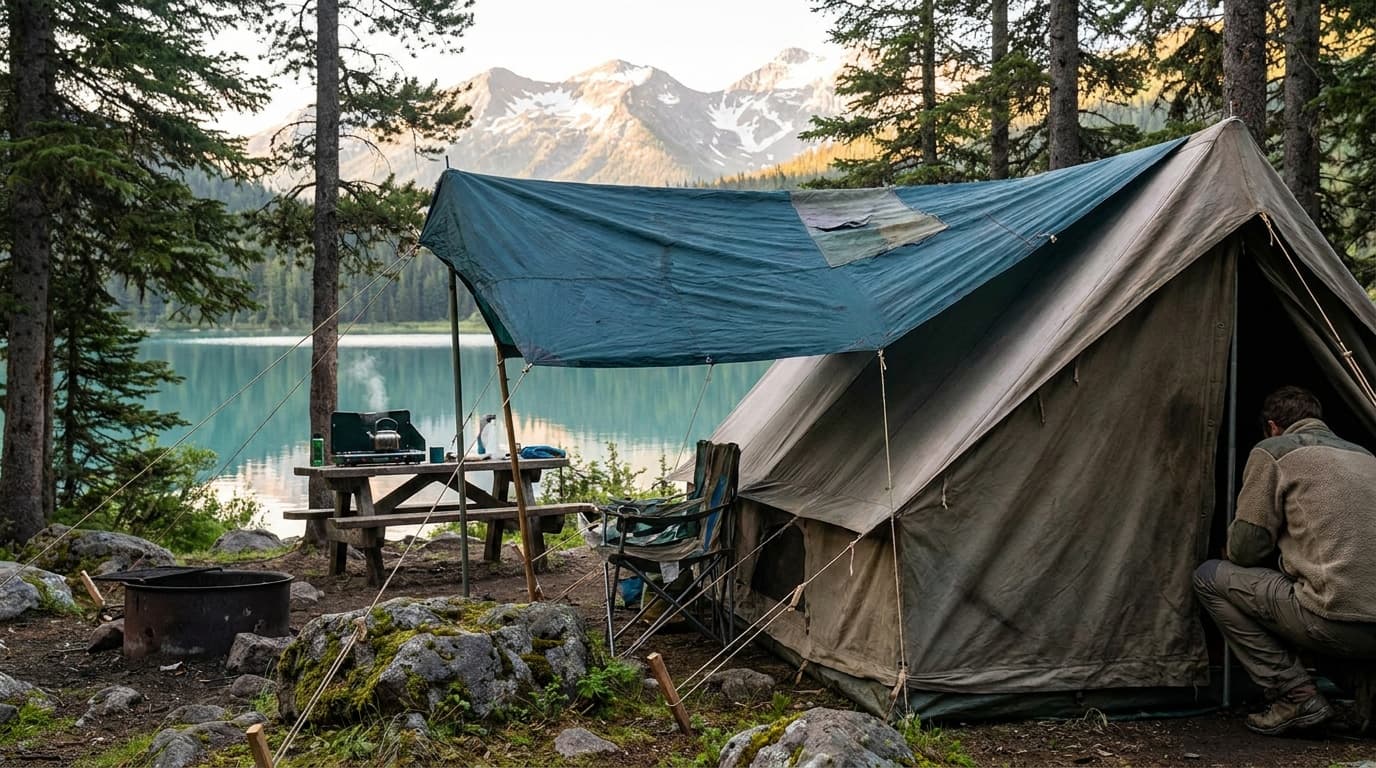
Tent listings compress the decision into a capacity number and a setup claim. Neither tells you whether four people can live inside, whether wet shoes have covered storage, or whether one tired adult can pitch the shelter before dark. Use six decisions instead: occupancy, floor shape, standing height, weather layout, frame, and setup.
Start with the people and sleeping system
Manufacturer capacity tells you how many sleeping positions fit on the floor. It does not promise walking room, bag storage, or privacy. A 4-person tent may hold four standard pads side by side while still feeling cramped once personal gear enters.
List the actual sleeping items before choosing a capacity:
- Number and width of sleeping pads or air beds
- Whether a queen air bed must pass through the door
- Bags that need to stay inside
- Children or pets who change position at night
- Space needed to sit, change, or wait out rain
Then compare those dimensions with the tent floor. A 4-person model is usually comfortable for two adults with gear and workable for a small family packing carefully. A family of four that wants indoor gear space should usually start with 6-person floor plans.
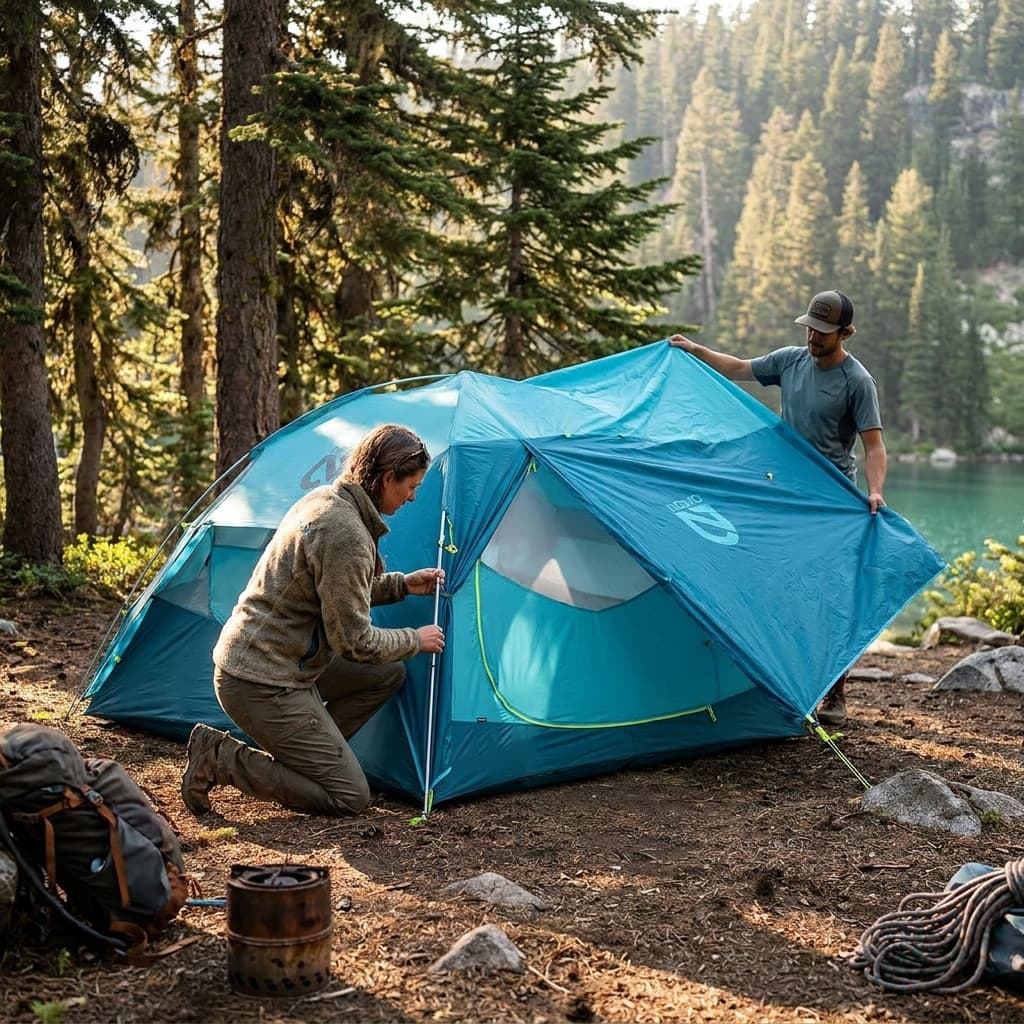
NEMO publishes a useful model-specific example: its 100 x 90 in Aurora Highrise 4P floor can hold four wide pads or several narrower combinations. That confirms sleeping fit, not four-person living comfort. Read the NEMO Aurora Highrise specifications before assuming a rated capacity matches your pads.
Read the whole floor plan
Square footage can hide awkward geometry. A rectangular floor is easier to fill with pads than a tapered one. A door positioned at the end may force one person to climb over another. A low corner can make a wide air bed touch the wall, increasing the chance that bedding contacts condensation.
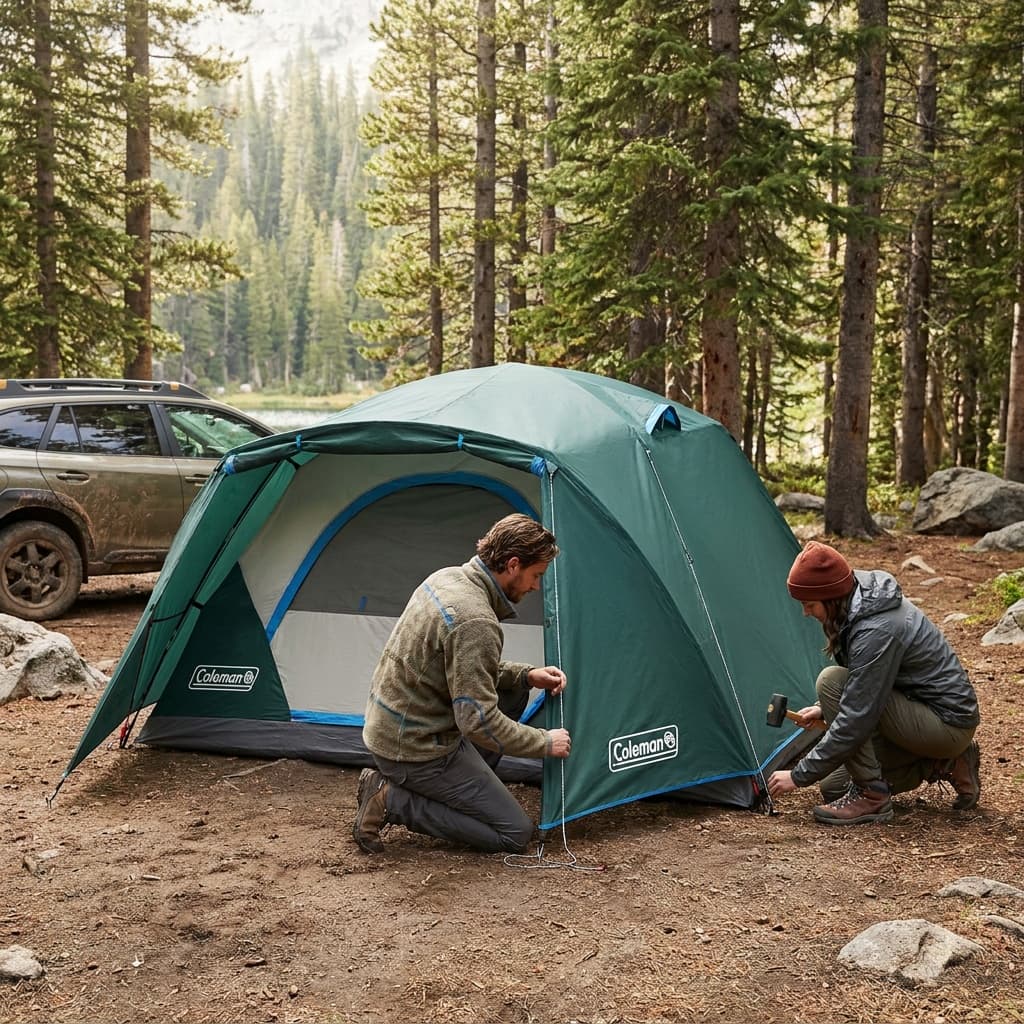
Vestibules are part of the usable plan even though they are outside the sleeping floor. The Coleman Skydome 4, for example, has a 56 sq ft floor and an 8 x 3.5 ft vestibule. The vestibule does not add sleeping space, but it removes wet shoes and small bags from the floor.
For two or more adults, two doors are a real convenience upgrade. The NEMO Aurora Highrise 4P pairs two doors with two 19.5 sq ft vestibules, so each side gets an exit and covered storage.
Peak height only works with steep walls
Peak height is measured at the tallest point. A 72-inch dome can still force most occupants to crouch because the roof drops quickly away from the center. Cabin geometry and spreader poles hold the walls steeper, preserving shoulder and standing room across more of the floor.
Use interior diagrams and side profiles with the listed height:
- Under 60 inches: seated or kneeling shelter for most adults
- 60 to 71 inches: easier dressing, but limited standing
- 72 inches and above: potential standing room for many adults
- Steep or near-vertical walls: more useful volume at any peak height
The 75-inch Aurora Highrise is the standing-room option in our current beginner group. The Coleman Sundome and Instant Cabin both peak at 59 inches, so their cabin or dome labels do not change the need to crouch.
A peak-height number describes one point. Wall shape tells you how much of the tent you can actually use.
Match the fly to the forecast
A full rainfly covers most or all of the inner tent and usually extends toward the ground. It creates more separation between rain and the sleeping canopy and can form a vestibule. The Coleman Skydome with Full-Fly Vestibule uses this layout.
A partial fly covers the roof and upper mesh while leaving more tent body exposed. It is lighter, less expensive, and often well ventilated in fair weather. The Coleman Sundome uses this approach, which is why it is a budget campground pick rather than our wet-weather default.
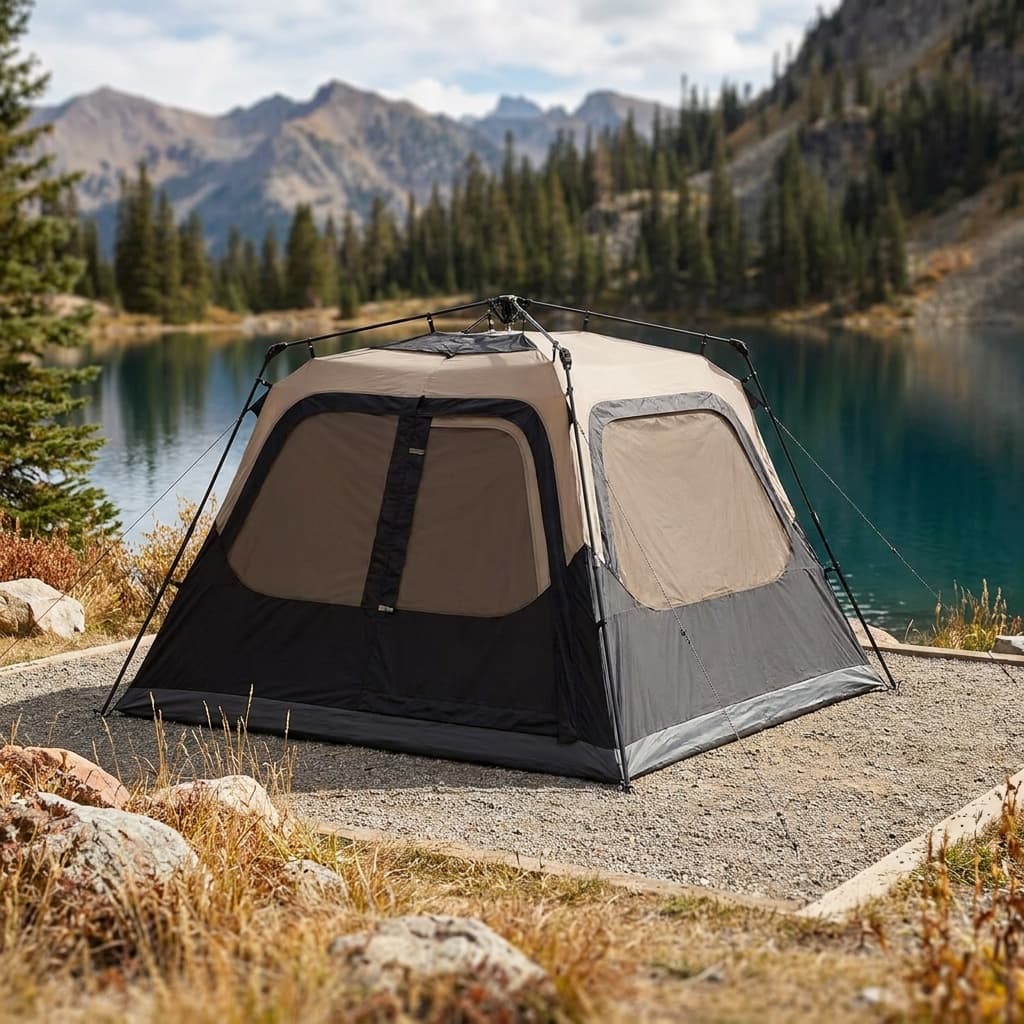
An integrated top is built into the tent and needs no separate fly assembly. The Coleman Instant Cabin 4 uses an integrated vented rainfly/top. It saves setup steps but has no vestibule and less fly separation than the Skydome.
Hydrostatic-head numbers help compare fabrics when a manufacturer publishes them, but they do not predict the complete shelter alone. Seam construction, floor shape, fly tension, ventilation, site drainage, and wind direction all affect the result. The Aurora Highrise lists a 1,200 mm fly and 1,500 mm floor, then supports those fabrics with full coverage, taped seams, and a raised floor.
Check the floor and seams
A bathtub floor raises the waterproof floor material several inches above the ground before it joins the breathable wall. This keeps the vulnerable seam away from shallow runoff and splash. Welded, taped, or otherwise sealed seams close the needle holes created during construction.
Look for:
- A floor perimeter raised above ground level
- Taped, welded, or factory-sealed seams
- A fly that can be tensioned away from the inner canopy
- Door geometry that does not dump water onto the floor
- Ground vents or protected windows that can stay open in rain
A footprint protects the tent floor from abrasion, but it must remain smaller than the floor outline. Material projecting beyond the tent can collect rain and direct it underneath.
Choose the frame for your priorities
Fiberglass poles keep purchase price low. They are common on entry-level Coleman models and work for occasional campground use. Compared with aluminum, they are heavier for their strength and can splinter when damaged.
Aluminum poles cost more, flex predictably, and are easier to splint in the field. They are one reason the NEMO Aurora Highrise costs substantially more than the beginner Coleman models.
Pre-attached poles reduce sorting and orientation mistakes. The Skydome keeps part of its pole system attached for a sub-five-minute manufacturer setup claim. The Instant Cabin goes further with a telescoping attached frame and a 60-second claim.
Attached frames trade speed for packed bulk and repair complexity. The Instant Cabin weighs 19.1 lb and packs almost 40 inches long. A separate aluminum frame takes more assembly but lets an individual segment be inspected, splinted, or replaced more easily.
Test the setup claim against your trip
Manufacturer setup times usually describe an experienced pitch in good conditions. They may not include staking, guylines, a separate fly, or the first attempt. Treat them as relative signals:
- About one minute: useful for road trips and repeated overnight stops
- Under five minutes: fast enough for most car-camping arrivals
- Ten to fifteen minutes: reasonable when the tent stays up for several nights
The setup that matters includes orienting the door, staking the corners, tensioning the fly, and using guylines. A freestanding tent can stand without stakes, but it still needs anchoring when wind is possible.
Do not ignore packed dimensions
Weight matters less beside a vehicle than on a backpacking trip, but it is not irrelevant. A 19 lb instant tent is harder for one person to move than a 10 lb dome. Packed length can matter even more: a nearly 40-inch attached frame may not fit the same trunk gap as a 24-inch pole bag.
Check the packed item against:
- Trunk or cargo-box length
- Space left after coolers and sleeping systems
- Distance from parking to the tent pad
- The strength and mobility of the person handling setup
- Storage space at home between trips
Pay for low weight only when you need to carry the shelter. For drive-up camping, prioritize a package the actual user can lift and store.
Choose in six steps
Turn the trip into a tent
Map the sleepers
Write down the number and width of pads or air beds, then add the indoor gear that cannot stay in a vestibule.
Choose the capacity margin
Start one or two rated places above the normal group when comfort matters, then verify the floor dimensions.
Set the weather requirement
Favor a full fly and vestibule for regular rain; a partial fly can serve occasional fair-weather trips.
Check usable height
Pair the peak number with wall shape and interior photos. Do not buy standing height from one number alone.
Choose setup versus repairability
Attached frames are faster and bulkier; separate aluminum poles take longer but are easier to service.
Measure the packed home
Confirm the tent fits the vehicle, storage shelf, and person who will carry it.
Frequently asked questions
Should I size up when buying a camping tent?
Usually. One extra rated place gives modest gear room; two extra places produce a more comfortable car-camping setup. Verify actual floor dimensions because capacity labels do not describe every pad width or floor shape.
Is a full rainfly necessary for car camping?
Not for every fair-weather trip, but it adds useful rain margin and often creates a vestibule. A partial fly can be adequate for occasional campground use in a stable forecast. Choose a full fly when regular rain, wet gear storage, or exposed campsites are part of the plan.
Are instant tents better for beginners?
They are faster to pitch because the frame stays attached, which can be valuable for solo setup or repeated road-trip stops. They are also heavier, longer when packed, and more complicated to repair. A pre-attached dome such as the Skydome is a useful middle ground.
Are aluminum tent poles worth the extra cost?
They are worth considering for frequent use because they provide a better strength-to-weight balance and are easier to splint than fiberglass. Fiberglass remains reasonable for an inexpensive tent used occasionally at established campgrounds.
Use these criteria against four current models in best camping tents for beginners, or compare the two fast Coleman options in Skydome vs Instant Cabin.
Recommended gear
Our current top picks from the Best camping tents for beginners in 2026: 6 easy-pitch picks guide, if you are ready to buy.
COLEMAN
Coleman Skydome 4-Person Camping Tent with Full Fly Vestibule
Best Value
Kit Score 7.5/10
$189.99 Price checked Oct 23, 4:16 PM CDT
Best for: Beginner couples or small families who want a reliable, fast-pitching shelter with solid rain coverage without spending more than $200.
- Pre-attached poles make solo setup straightforward
- 55-inch peak height means most adults cannot stand up inside
- Capacity
- 4 person
- Floor
- 8 x 7 ft (56 sq ft)
- Peak height
- 55.2 in (4 ft 7 in)
- Weight
- 13.7 lbs
- Wind rating
- Frame tested to 35 mph
- Setup
- Pre-attached poles, under 5 minutes
About this pick
The Skydome's pre-attached poles fold out and lock into corner sleeves without guesswork, making it one of the most foolproof setups at any price. Nearly vertical walls add 20% more headroom than a traditional Coleman dome, and the full-coverage rainfly version includes an 8 x 3.5 ft vestibule for gear storage.
Strengths
- Pre-attached poles make solo setup straightforward
- Full-coverage rainfly with integrated 8 x 3.5 ft vestibule for gear storage
- Nearly vertical walls maximize usable interior space for the footprint
Weaknesses
- 55-inch peak height means most adults cannot stand up inside
- Plastic fly clips and thin fabrics raise durability concerns with frequent use
Kit Score breakdown
COLEMAN
Coleman 4-Person Instant Cabin Tent
Fastest Setup
Kit Score 7.4/10
$179.99 Price checked Oct 23, 4:16 PM CDT
Best for: Road trippers, solo parents, and mobility-limited campers who value a one-minute pitch more than compact storage or full-fly storm protection.
- Pre-attached frame removes pole sorting and can be pitched by one person in about a minute
- At 19.1 lb and almost 40 inches packed, it is a trunk-only shelter
- Capacity
- 4 person (best for 2 adults plus gear)
- Floor
- 8 x 7 ft (56 sq ft)
- Peak height
- 59 in (4 ft 11 in)
- Packed weight
- 19.1 lb
- Setup
- Pre-attached frame, about 60 seconds
- Packed length
- 39.95 in
About this pick
A four-person cabin tent with a pre-attached telescoping frame that unfolds in about a minute. It trades packed weight and full-fly storm coverage for the simplest setup in the beginner field.
Strengths
- Pre-attached frame removes pole sorting and can be pitched by one person in about a minute
- Eight-by-seven-foot floor fits one queen air bed with a narrow gear margin
- Five windows and the vented top create better fair-weather airflow than a basic low dome
Weaknesses
- At 19.1 lb and almost 40 inches packed, it is a trunk-only shelter
- No vestibule, and the integrated top coverage offers less storm margin than a full rainfly
- A pre-attached frame is faster to use but harder to repair than separate poles
Kit Score breakdown
NEMO EQUIPMENT
NEMO Aurora Highrise 4-Person Camping Tent
Best Premium
Kit Score 8.6/10
$399.95 Price checked Oct 23, 4:16 PM CDT
Best for: Beginners who want to invest once in a tent that will perform in rain, last several years, and never require a YouTube tutorial to pitch solo.
- Aluminum poles and a full-coverage fly deliver genuine weather protection
- At $400, it is the largest upfront investment of the group
- Capacity
- 4 person
- Floor
- 100 x 90 in (62.5 sq ft)
- Peak height
- 75 in (6 ft 3 in)
- Weight
- 15 lbs 14 oz
- Poles
- Aluminum
- Rainfly
- Full-coverage, 1,200 mm polyester
About this pick
The Aurora Highrise is NEMO's take on the family car-camping tent: aluminum poles, a full-coverage fly, 75 inches (6 ft 3 in) of standing room, and a setup intuitive enough for first-timers without instructions. Aggregate owner sentiment on Reddit is 88% positive across 37 reviews, with setup speed and weather protection as the two most praised traits.
Strengths
- Aluminum poles and a full-coverage fly deliver genuine weather protection
- Straightforward pole layout and an oversized duffel for easy packing
- 4-sided mesh windows with inside-operable controls keep condensation in check
Weaknesses
- At $400, it is the largest upfront investment of the group
- Back door is a half-door only, which limits rear entry compared to the front
Kit Score breakdown
See all picks in Best camping tents for beginners in 2026: 6 easy-pitch picks
Keep going
Complete loadoutCamp sleep systemFive coordinated pieces that solve shelter, insulation, cushioning, head support, and light for nights outside.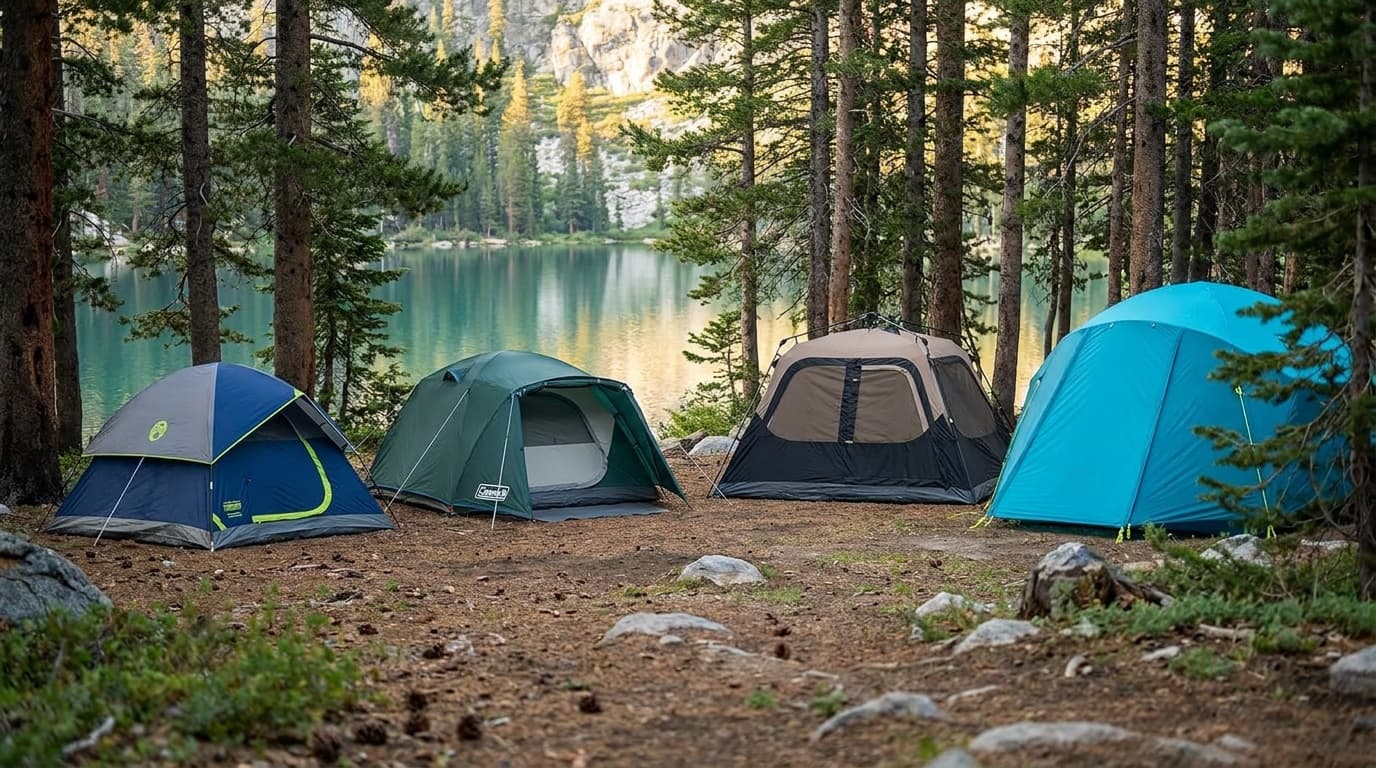
Researched, not hands-on tested
Updated Jul 29, 2026Our recommendations draw on manufacturer documentation, retailer listings, owner feedback, and comparisons with alternatives.
As an Amazon Associate I earn from qualifying purchases. We may earn a commission from links here, at no extra cost to you. How we research →