Match the hammock to the missing part of your system
- First hammock and you want everything needed to hang it: choose the Wise Owl Double. Its included straps matter more than shaving a few ounces.
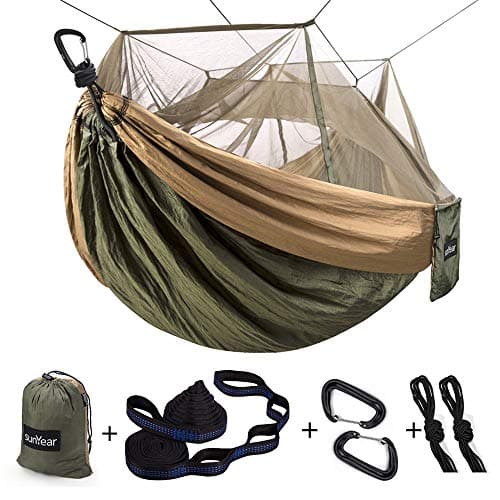
- Bug season and you want a low-cost complete starting kit: choose the Sunyear with net. It includes the net and straps, but it is built for casual use rather than expedition mileage.
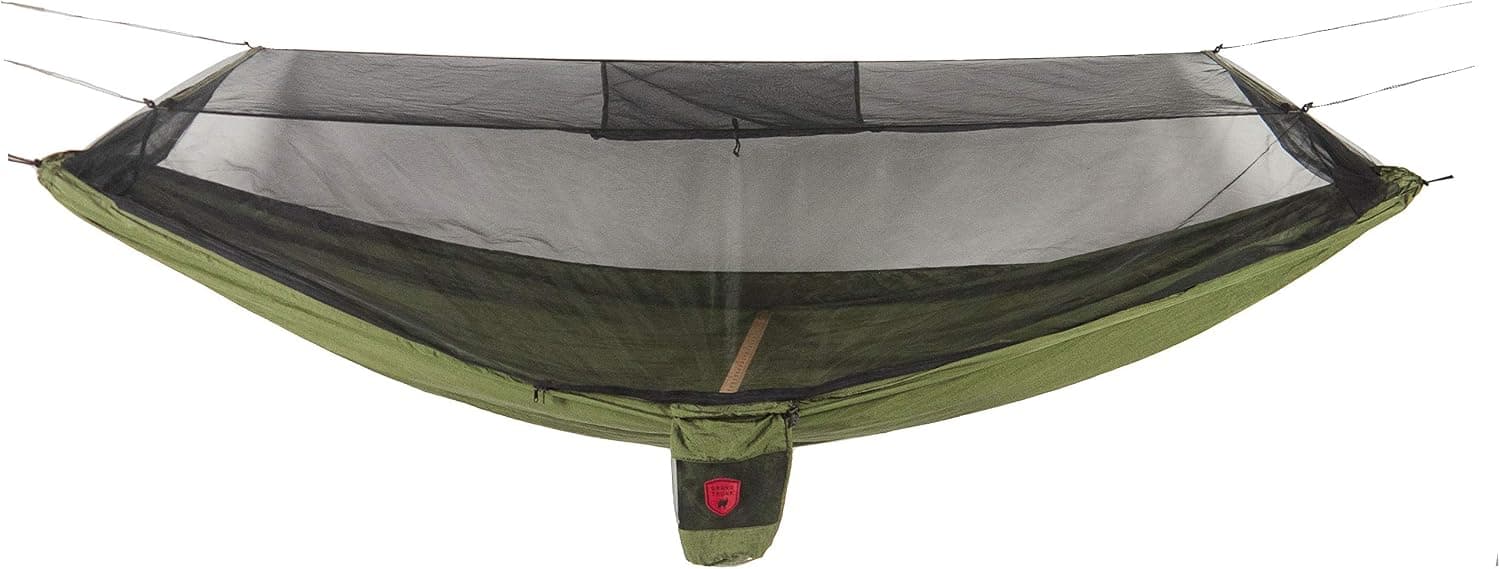
- Bug season and durability matters more than packed weight: choose the Grand Trunk Skeeter Beeter XT, then budget separately for tree straps and rain protection.
- Backpacking and every ounce is being counted: choose the Kammok Roo Single UL, remembering that suspension is a separate purchase.
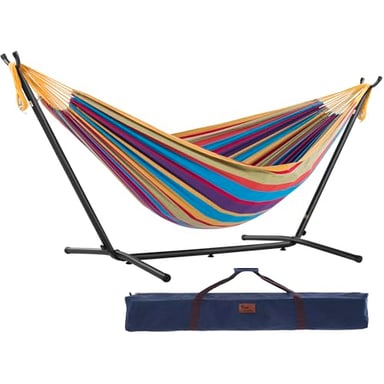
- No reliable trees: choose the Vivere hammock with stand. It solves the site constraint, but it is car-camping equipment.
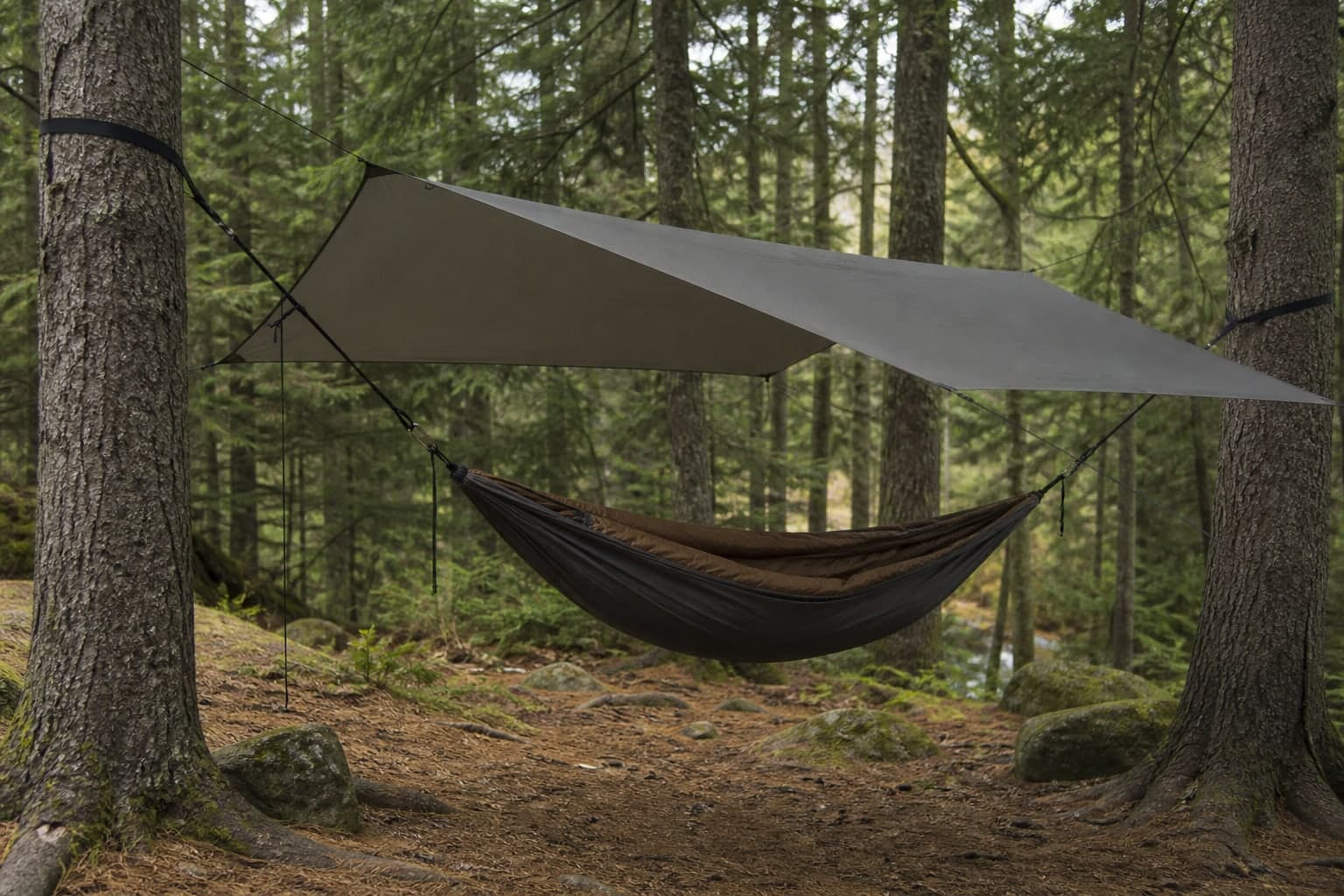
For overnight use, do not treat the hammock body as the whole purchase. Add the actual cost of suspension, rain protection, bug protection, and under-insulation before comparing it with a tent. Our guide to how to hang a camping hammock shows how much suspension each tree gap needs.
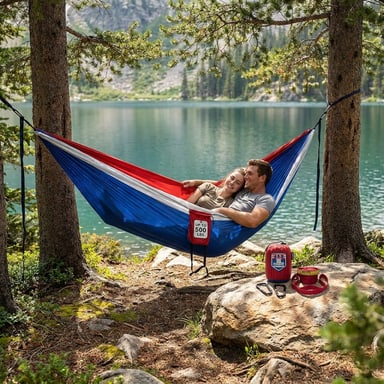
The ENO DoubleNest is the best camping hammock for most people, while the Kammok Roo Double cuts weight and the Grand Trunk Skeeter Beeter XT adds built-in bug protection. We compared seven options for backpacking, car camping, small budgets, and campsites without usable trees.
Our quick picks
How we picked
Every hammock here was evaluated against our Kit Score: packed weight, weight capacity, ripstop nylon denier, included hardware (straps and carabiners), setup speed, single vs. double sizing, and overall value. Scores draw from verified owner reviews, manufacturer specs, and independent assessments from sources including OutdoorGearLab, REI expert reviews, and Hammock Forums. We research and aggregate; we do not claim first-hand testing results.
The numbers worth knowing before you shop
Best overall: ENO DoubleNest Hammock
BEST OVERALL
ENO DoubleNest Hammock
Best for: Backpackers and weekend campers who want a proven, durable double hammock that packs small and covers most conditions without fuss.
- Exceptionally compact and light at 19 oz for a double, making it a realistic backpacking add-on
- Suspension straps not included, adding $20 to $30 to the real-world cost
Kit Score 8.4/10 · Check current price · how we score gear
Buy on AmazonProduct details
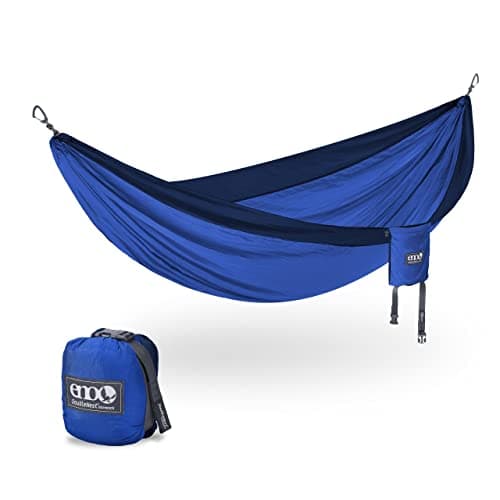
The ENO DoubleNest is the go-to double hammock for a reason: it packs to the size of a grapefruit at 19 oz, gives one sleeper enough width for a diagonal lay, and supports two adults for lounging up to its 400 lb limit. The tradeoff is that Atlas tree straps are a separate purchase.
- Style
- Double (1 to 2 person)
- Weight
- 19 oz (hammock only)
- Dimensions
- 9'6" x 6'4"
- Material
- FreeWave 70D nylon taffeta, bluesign-approved
- Weight Capacity
- 400 lb
- Included
- Aluminum wiregate carabiners, attached stuff sack. Straps sold separately.
More strengths
- Triple-stitched seams and 7 mm attachment cords inspire confidence, with owners reporting 9-plus years of use
- Massive color and print selection and a genuine environmental program (2 trees planted per purchase)
Other tradeoffs
- 70D taffeta is functional but noticeably less soft than premium ripstop options like the Kammok Roo
The DoubleNest is the hammock most people picture when they hear the word, and its spec sheet explains why it keeps getting recommended. ENO rates it for 400 lb, a common benchmark for a double hammock. The FreeWave 70D nylon is durable enough for regular use without being so heavy that you feel it in a backpack. It weighs 19 oz and packs to about 6 by 4 by 5 inches.
The DoubleNest includes aluminum carabiners but not tree straps. ENO's Atlas straps are the obvious pairing, though any compatible, load-rated suspension with tree-friendly webbing can work. That missing suspension matters when comparing total checkout prices with complete bundles.
At 9 feet 6 inches long and 6 feet 4 inches wide, it gives one sleeper room to lie diagonally (the comfortable position, not straight along the centerline) and fits two adults for lounging. ENO lists a hanging distance of about 9 feet 2 inches between anchor points, which is a useful number to check against the trees at your usual sites.
Best for: park users and weekend campers who want a familiar, durable double hammock with a broad accessory ecosystem.
Read the full ENO DoubleNest review, or compare it directly with the Kammok Roo Double.
Best premium: Kammok Roo Double Hammock
BEST PREMIUM
Kammok Roo Double Hammock
Best for: Campers who prioritize comfort and fabric quality over price and are willing to pair the hammock with Kammok's Python straps for a complete system.
- Softest-feeling fabric in this field: 40D recycled diamond ripstop nylon with DWR treatment dries fast and feels smooth next to skin
- Tree straps sold separately, pushing the complete setup cost noticeably above the $95 hammock price
Kit Score 8.1/10 · $94.95 Price checked Oct 23, 4:16 PM CDT · how we score gear
Buy on AmazonProduct details
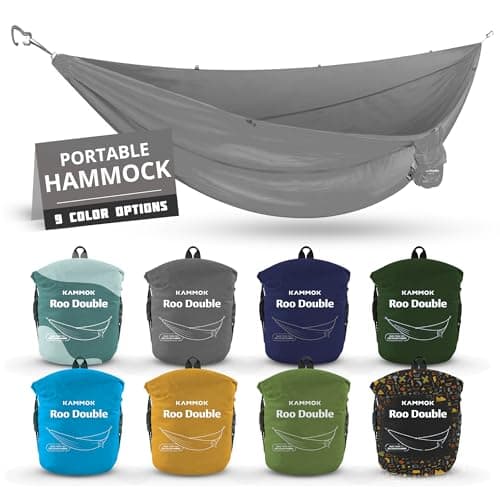
The Kammok Roo Double uses GravitasX 40D recycled ripstop nylon that reviewers consistently describe as noticeably softer and more breathable than standard taffeta hammocks, with a 500 lb climbing-rated system and a lifetime warranty behind it. It packs smaller than a Nalgene bottle.
- Style
- Double (1 to 2 person)
- Weight
- 17 oz hammock only
- Dimensions
- 10' x 5'9"
- Material
- GravitasX 40D diamond ripstop nylon, 100% recycled, bluesign-approved, DWR treated
- Weight Capacity
- 500 lb
- Included
- Kanga Claw climbing-grade carabiners, Dyneema Racer Slings, roll-top stuff sack. Tree straps sold separately.
More strengths
- 500 lb capacity with climbing-grade Kanga Claw carabiners provides a genuine two-person safety margin
- Lifetime adventure-grade warranty and 100% recycled, bluesign-approved construction
Other tradeoffs
- Softer fabric draws some durability concerns from heavy repeated-use reviewers compared to harder-wearing taffeta options
The Kammok Roo Double earns the premium slot for fabric efficiency and capacity. Kammok uses recycled 40D GravitasX ripstop, and the 500 lb listed capacity is 100 lb above the ENO DoubleNest.
Packed weight is 17.1 oz, almost 2 oz lighter than the DoubleNest. The Roo Double is 10 feet long, 6 inches longer than ENO, which gives taller campers more room for a diagonal lie.
The hammock ships with Kanga Claw carabiners and Dyneema slings but without tree straps. Kammok's own Python 10 straps are sold separately; they use variable-width webbing that widens at the tree end and are rated to 500 lb. Budget the full system price (hammock plus straps) when comparing against bundles.
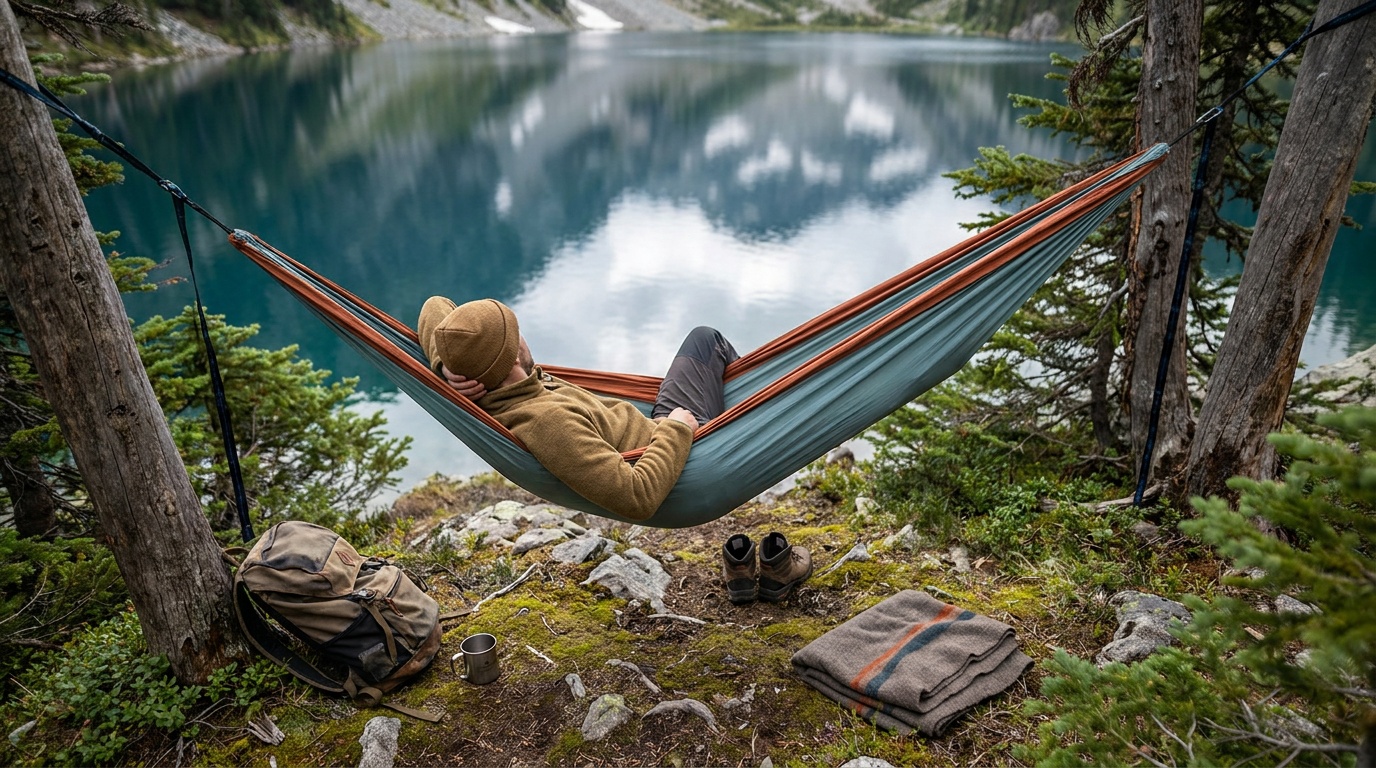
The diagonal lie is the secret to hammock comfort: lie at a 30-degree angle to the ridgeline and your body goes flat instead of bowing like a banana.
Best for: campers who prioritize comfort and fabric quality over price and are willing to pair the hammock with Kammok's Python straps for a complete system.
Read the full Kammok Roo Double review for the complete-system cost.
Best budget: Wise Owl Outfitters Camping Hammock (Double)
BEST BUDGET
Wise Owl Outfitters Camping Hammock (Double)
Best for: Car campers, backyard users, and first-time hammock buyers who want a complete, zero-fuss setup at the lowest possible outlay.
- Complete ready-to-hang kit at a fraction of the cost of name-brand rivals, including tree straps and carabiners
- 210T parachute nylon is heavier and less packable than 40D or 70D outdoor fabrics; at 26 oz it is not an ultralight choice
Kit Score 7.6/10 · $33.41 Price checked Oct 23, 4:16 PM CDT · how we score gear
Buy on AmazonProduct details
The Wise Owl DoubleOwl ships complete: 9 ft straps, O-shaped carabiners, and storage bag are all in the box, with a 500 lb limit backed by triple-stitched 210T nylon. At 24 oz it is not an ultralight system, but it removes the add-on cost and compatibility work from a first hammock purchase.
- Style
- Double (1 to 2 person)
- Weight
- 24 oz
- Dimensions
- 10' x 6'6"
- Material
- 210T parachute-grade breathable nylon, triple interlock stitching
- Weight Capacity
- 500 lb
- Included
- Two tree straps with adjustable loops, two O-ring carabiners, attached stuff sack
More strengths
- 10' x 6.5' body is generously wide for a budget option, comfortable for solo lounging or two people on a casual hang
- 500 lb capacity and triple interlock stitching provide a meaningful safety margin for the price point
Other tradeoffs
- Included straps and D-shaped carabiners are functional but less refined than premium suspension systems
The Wise Owl Outfitters Double earns its budget spot for one clear reason: it ships complete. The package includes the hammock, carabiners, and tree straps at the lowest price in this guide. You pull it out of the box and hang it. For a first-time buyer who does not want to research strap compatibility or add-on costs, that completeness is the whole argument.
The parachute nylon body measures 10 by 6.5 feet, weighs 24 oz, and carries a listed 500 lb capacity. Those dimensions provide generous space, but the package is substantially heavier than ENO or Kammok.
The included suspension uses two 9-foot straps with adjustable loops and two O-shaped carabiners. Inspect the webbing before every use, follow local hammock rules, and keep straps flat against healthy bark.
Best for: car campers, backyard users, and first-time hammock buyers who want a complete, zero-fuss setup at the lowest possible outlay.
Read the Wise Owl DoubleOwl review for the weight and overnight-system trade-offs.
Editor's choice: Grand Trunk Skeeter Beeter XT Hammock
EDITOR'S CHOICE
Grand Trunk Skeeter Beeter XT Hammock
Best for: Campers heading into bug-heavy environments who want an all-in-one hammock and insect shelter without buying or rigging a separate bug net.
- Integrated No-See-Um mesh provides complete insect protection, verified by owners in high-mosquito environments, without a separate bug-net purchase
- At 34 oz with the bug net system, it is the heaviest option in this roundup and not a backpacking-first choice
Kit Score 8.0/10 · Check current price · how we score gear
Buy on AmazonProduct details
The Skeeter Beeter XT solves the single biggest friction point in hammock camping: bug exposure. The integrated No-See-Um mesh cocoons you completely with a two-way zipper entry, and owners consistently report zero bug penetration across bug-heavy trips. It is the only hammock in this roundup that ships with full insect protection built in.
- Style
- Single (rated for one, fits one comfortably)
- Weight
- 34 oz (hammock plus integrated bug net system)
- Dimensions
- 10'6" x 5'
- Material
- Parachute nylon with No-See-Um mesh bug netting
- Weight Capacity
- 400 lb
- Included
- Integrated No-See-Um bug net (double-sided zipper), nautical-grade carabiners, aluminum spreader bars, suspension cord, stuff sack. Tree straps sold separately.
More strengths
- Parachute nylon at 10'6" offers a longer-than-average body for diagonal lay comfort
- Nautical-grade carabiners and double-sided zipper add real usability without a significant cost premium
Other tradeoffs
- Tree straps not included; the Knotless Cordlock suspension system uses rope that requires some familiarity to tension correctly
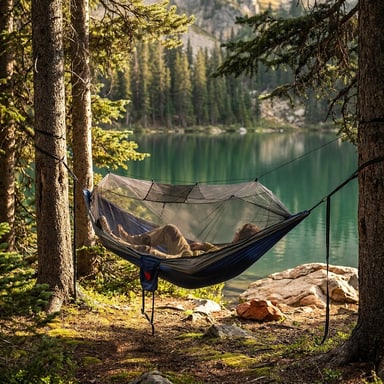
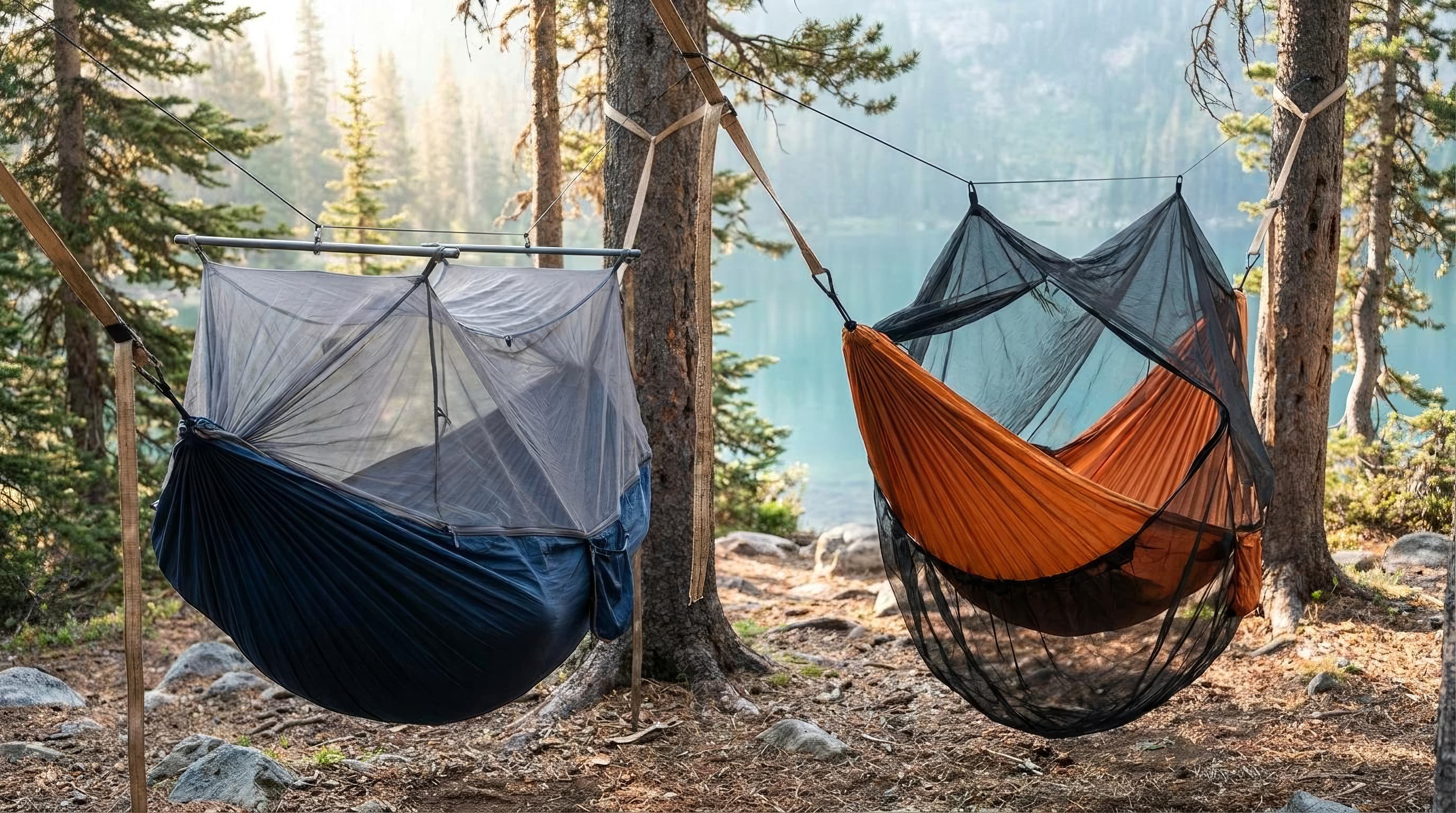
The Skeeter Beeter XT solves the problem every hammock camper in the Southeast, Pacific Northwest, or any lake-country environment eventually faces: bugs. The hammock ships with an integrated black no-see-um mesh bug net with a double-sided zipper that encloses the sleeping area without a separate purchase, separate stuff sack, or separate rigging job. On bug-free nights you can flip the net underneath and use it as a regular single hammock.
The 10 ft 6 in by 5 ft body carries a 400 lb listed capacity. The integrated design eliminates the separate job of centering a net around an already-hung hammock.
The trade-off versus the ENO DoubleNest is packed weight and bulk. At 34 oz, the netted system is nearly twice the weight of the open doubles. It includes two carabiners, two aluminum spreader bars, suspension cord, and a stuff sack, but tree straps are not included, so add any load-rated, tree-friendly straps.
Best for: campers heading into bug-heavy environments who want an all-in-one hammock and insect shelter without buying or rigging a separate bug net.
Read the Skeeter Beeter XT review, or compare an integrated bug net with a separate net.
Best budget with a net: Sunyear Camping Hammock
BEST BUDGET WITH NET
Sunyear Camping Hammock with Net
Best for: First hammocks, summer campsites with bugs, and anyone testing whether hammock camping sticks.
- Integrated bug net at a price where most rivals sell the net separately
- Fabric and stitching are built to the price; treat it as a casual and starter hammock rather than expedition kit
Kit Score 8.4/10 · $49.99 Price checked Oct 23, 4:16 PM CDT · how we score gear
Buy on AmazonProduct details
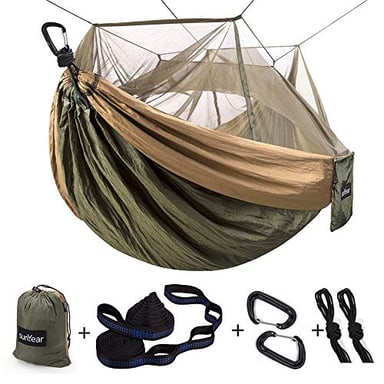
The budget answer to the question every first-time hammock camper asks at dusk: what about the mosquitoes. An integrated reversible net, included 10 ft straps, and a price that makes it a low-risk first hammock.
- Bug net
- Integrated, reversible
- Straps
- Two 10 ft tree straps (16 loops each) included
- Sizes
- Single and double
- Fabric
- 210T ripstop nylon
- Capacity
- 500 lb
More strengths
- Straps in the box, so it works the day it arrives
- Enormous review base for the price tier, with consistent durability reports for casual use
Other tradeoffs
- The full kit is heavier than the premium hammocks, so it suits car camping more than long carries
The Sunyear answers the two questions that send most first hammocks back: what about the bugs, and why are the straps sold separately. An integrated, reversible net and two 10 ft straps with 16 loops each mean it works, complete, on the evening it arrives. The double measures 78 by 118 inches in 210T ripstop nylon with a listed 500 lb capacity.
The build is honest for the price rather than remarkable. Fabric and stitching suit casual weekends, not hard expedition use, and the full kit weighs more than the premium hammocks here. As a first hammock, or a spare for guests, it is the easiest yes in this guide.
Best for: First hammocks, buggy summer campsites, and finding out whether hammock camping sticks.
Best ultralight: Kammok Roo Single UL
BEST ULTRALIGHT
Kammok Roo Single UL
Best for: Ultralight backpackers who want camp comfort without a weight argument.
- Genuinely ultralight, so it earns a place in packs where every item is negotiated
- Straps are a separate purchase, which pushes the real price toward $120
Kit Score 8.5/10 · $94.95 Price checked Oct 23, 4:16 PM CDT · how we score gear
Buy on AmazonProduct details
The gram-counter's pick from the same family as our Roo Double. Recycled ripstop, water resistant, and light enough to be the sit-anywhere luxury an ultralight kit can actually justify.
- Weight class
- Ultralight single
- Fabric
- Levitas 20D ripstop nylon, DWR finish
- Weight
- 5.9 oz
- Capacity
- 300 lb
- Format
- Single, gathered end
- Straps
- Sold separately
More strengths
- Kammok build quality and lifetime-grade materials in the lightest format they make
- Recycled ripstop with water resistance, unusual at this weight
Other tradeoffs
- A single is a seat and a nap, not a shared bed; size up to the Roo Double for two
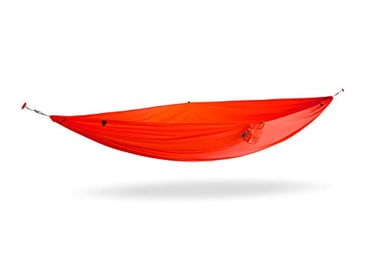
The gram-counter's version of our premium pick. Same Kammok build quality as the Roo Double, cut to a 100 by 50 inch single in Levitas 20D ripstop with a DWR finish. It weighs 5.9 oz packed, carries a 300 lb capacity, and hangs from ultralight toggles instead of carabiners. For an ultralight kit, it turns any two trees into the best seat within miles.
Two things to price in: straps are a separate purchase, which pushes the real cost toward $120, and a single is a seat and a nap rather than a shared bed. For two people, the Roo Double above remains the pick.
Best for: Ultralight backpackers who want camp comfort without the weight debate.
Best without trees: Vivere Double with Stand
BEST WITH STAND
Vivere Double Hammock with Stand
Best for: Backyards, patios, and campsites without two well-spaced trees.
- Stand included, so tree spacing stops being the reason it never gets used
- The stand makes it car-camping and backyard kit; nobody is packing this into the backcountry
Kit Score 8.1/10 · $136.99 Price checked Oct 23, 4:16 PM CDT · how we score gear
Buy on AmazonProduct details
The no-trees answer. A steel stand in the box means the hammock goes wherever there is flat ground, and the cotton double bed is the comfort pick for backyard afternoons rather than backcountry nights.
- Stand
- Space-saving steel, included
- Capacity
- 450 lb
- Fabric
- Cotton, double width
- Setting
- Backyard, patio, campsite with open ground
More strengths
- Cotton double bed is genuinely comfortable for lounging, more so than parachute nylon
- 450 lb capacity handles two adults
Other tradeoffs
- Cotton holds moisture, so it lives indoors or under cover between uses
Every other hammock in this guide assumes two well-spaced trees. The Vivere ships with a steel stand, which moves the hammock to wherever there is flat ground: a patio, a treeless campsite, the middle of a lawn. The 63 by 94 inch cotton bed is the most comfortable pure lounging surface here, and the 9-foot steel stand is rated to 450 lb, enough for two adults.
It is backyard and car-camping kit, plainly. The stand does not backpack anywhere, and cotton holds moisture, so it lives under cover between uses. But if the honest reason your last hammock went unused was tree spacing, this is the fix.
Best for: Backyards, patios, and campsites without cooperative trees.
How they compare
| Product | Kit Score | Price | Best for |
|---|---|---|---|
| ENO DoubleNest Hammock | 8.4 | Check current price | Best for: Backpackers and weekend campers who want a proven, durable double hammock that packs small and covers most conditions without fuss. Why it stands out: Exceptionally compact and light at 19 oz for a double, making it a realistic backpacking add-on Tradeoff: Suspension straps not included, adding $20 to $30 to the real-world cost |
| Kammok Roo Double Hammock | 8.1 | $94.95 Price checked Oct 23, 4:16 PM CDT | Best for: Campers who prioritize comfort and fabric quality over price and are willing to pair the hammock with Kammok's Python straps for a complete system. Why it stands out: Softest-feeling fabric in this field: 40D recycled diamond ripstop nylon with DWR treatment dries fast and feels smooth next to skin Tradeoff: Tree straps sold separately, pushing the complete setup cost noticeably above the $95 hammock price |
| Wise Owl Outfitters Camping Hammock (Double) | 7.6 | $33.41 Price checked Oct 23, 4:16 PM CDT | Best for: Car campers, backyard users, and first-time hammock buyers who want a complete, zero-fuss setup at the lowest possible outlay. Why it stands out: Complete ready-to-hang kit at a fraction of the cost of name-brand rivals, including tree straps and carabiners Tradeoff: 210T parachute nylon is heavier and less packable than 40D or 70D outdoor fabrics; at 26 oz it is not an ultralight choice |
| Grand Trunk Skeeter Beeter XT Hammock | 8.0 | Check current price | Best for: Campers heading into bug-heavy environments who want an all-in-one hammock and insect shelter without buying or rigging a separate bug net. Why it stands out: Integrated No-See-Um mesh provides complete insect protection, verified by owners in high-mosquito environments, without a separate bug-net purchase Tradeoff: At 34 oz with the bug net system, it is the heaviest option in this roundup and not a backpacking-first choice |
| Sunyear Camping Hammock with Net | 8.4 | $49.99 Price checked Oct 23, 4:16 PM CDT | Best for: First hammocks, summer campsites with bugs, and anyone testing whether hammock camping sticks. Why it stands out: Integrated bug net at a price where most rivals sell the net separately Tradeoff: Fabric and stitching are built to the price; treat it as a casual and starter hammock rather than expedition kit |
| Kammok Roo Single UL | 8.5 | $94.95 Price checked Oct 23, 4:16 PM CDT | Best for: Ultralight backpackers who want camp comfort without a weight argument. Why it stands out: Genuinely ultralight, so it earns a place in packs where every item is negotiated Tradeoff: Straps are a separate purchase, which pushes the real price toward $120 |
| Vivere Double Hammock with Stand | 8.1 | $136.99 Price checked Oct 23, 4:16 PM CDT | Best for: Backyards, patios, and campsites without two well-spaced trees. Why it stands out: Stand included, so tree spacing stops being the reason it never gets used Tradeoff: The stand makes it car-camping and backyard kit; nobody is packing this into the backcountry |
ENO DoubleNest Hammock
- Best for
- Backpackers and weekend campers who want a proven, durable double hammock that packs small and covers most conditions without fuss.
- Why it stands out
- Exceptionally compact and light at 19 oz for a double, making it a realistic backpacking add-on
- Tradeoff
- Suspension straps not included, adding $20 to $30 to the real-world cost
Kammok Roo Double Hammock
- Best for
- Campers who prioritize comfort and fabric quality over price and are willing to pair the hammock with Kammok's Python straps for a complete system.
- Why it stands out
- Softest-feeling fabric in this field: 40D recycled diamond ripstop nylon with DWR treatment dries fast and feels smooth next to skin
- Tradeoff
- Tree straps sold separately, pushing the complete setup cost noticeably above the $95 hammock price
Wise Owl Outfitters Camping Hammock (Double)
- Best for
- Car campers, backyard users, and first-time hammock buyers who want a complete, zero-fuss setup at the lowest possible outlay.
- Why it stands out
- Complete ready-to-hang kit at a fraction of the cost of name-brand rivals, including tree straps and carabiners
- Tradeoff
- 210T parachute nylon is heavier and less packable than 40D or 70D outdoor fabrics; at 26 oz it is not an ultralight choice
Grand Trunk Skeeter Beeter XT Hammock
- Best for
- Campers heading into bug-heavy environments who want an all-in-one hammock and insect shelter without buying or rigging a separate bug net.
- Why it stands out
- Integrated No-See-Um mesh provides complete insect protection, verified by owners in high-mosquito environments, without a separate bug-net purchase
- Tradeoff
- At 34 oz with the bug net system, it is the heaviest option in this roundup and not a backpacking-first choice
Sunyear Camping Hammock with Net
- Best for
- First hammocks, summer campsites with bugs, and anyone testing whether hammock camping sticks.
- Why it stands out
- Integrated bug net at a price where most rivals sell the net separately
- Tradeoff
- Fabric and stitching are built to the price; treat it as a casual and starter hammock rather than expedition kit
Kammok Roo Single UL
- Best for
- Ultralight backpackers who want camp comfort without a weight argument.
- Why it stands out
- Genuinely ultralight, so it earns a place in packs where every item is negotiated
- Tradeoff
- Straps are a separate purchase, which pushes the real price toward $120
Vivere Double Hammock with Stand
- Best for
- Backyards, patios, and campsites without two well-spaced trees.
- Why it stands out
- Stand included, so tree spacing stops being the reason it never gets used
- Tradeoff
- The stand makes it car-camping and backyard kit; nobody is packing this into the backcountry
Types of camping hammocks
Camping hammocks fall into four working categories, and knowing which one you are shopping for prevents most buying mistakes.
Gathered-end (open) hammocks. The fabric bunches into a single attachment point at each end. This is the dominant style: light, simple, and comfortable when you lie diagonally. Every tree-hung pick above is a gathered-end design; the Vivere is a stand-mounted lounging hammock. Within the category, the single vs double split is about fabric width, not occupancy: a double gives one sleeper the width to lie flat at an angle.
Gathered-end with integrated bug net. The same architecture with sewn-in no-see-um mesh over a ridgeline zipper. The Grand Trunk Skeeter Beeter XT is this type. The Sunyear is another. It adds weight over an open hammock but replaces a separate net and the fiddly job of rigging one.
Bridge hammocks. Spreader bars at head and foot hold the fabric open into a flat, cot-like rectangle. They deliver a flat, cot-like lie that suits committed side sleepers, but the bars add weight and pack length, and the narrow sleep surface is less forgiving to shift around in. They are mostly made by small specialist brands; none of the picks above are bridge designs.
Expedition and camping systems. A gathered-end or bridge hammock bundled with a bug net, rain tarp, and suspension as one kit. Convenient for a first complete sleep system, but you pay for components you may later want to choose individually.
For sleeping overnight rather than lounging, whichever type you pick needs under-insulation once nights turn cool; see the cold-weather FAQ below.
How to choose the right camping hammock
The spec sheet matters less than matching the hammock to how and where you actually camp.
Five questions to narrow your pick
Single or double?
A single like the Roo Single UL (50 inches wide, 5.9 oz) is the backpacker choice when every ounce counts. A double (the picks here run 69 to 78 inches wide and 17 to 24 oz) is more comfortable for lounging, fits two in a pinch, and works for most car campers and weekend backpackers who are not obsessing over base weight.
What is your combined weight?
The picks here are rated from 300 lb (Roo Single UL) to 500 lb. If you and a partner plan to share regularly, check the listed capacity against your actual combined weight with gear. For solo use, any of these handles the load easily.
Do you need a bug net?
If you camp in mosquito or no-see-um country from May through September, a bug net is not optional; it is what stands between sleep and misery. Either buy a hammock with an integrated net (the Skeeter Beeter XT or Sunyear) or budget for a standalone net sized to your hammock's length.
Are straps included?
ENO includes carabiners but not tree straps. The Kammok Roo Double includes Kanga Claw carabiners but not tree straps. Wise Owl and Sunyear include straps and carabiners. Grand Trunk tree straps are sold separately. Add suspension cost where needed.
Backpacking or car camping?
For backpacking, prioritize packed weight and stuff-sack volume. The ENO DoubleNest is the benchmark at around 19 oz. For car camping, comfort and completeness matter more than grams, which is where the Wise Owl bundle and the Skeeter Beeter XT make the most sense.
Where these numbers come from
| Claim | Source | Checked |
|---|---|---|
| ENO DoubleNest: 400 lb, FreeWave 70D nylon, 9'6" x 6'4", packed 6 x 4 x 5 in, hanging distance 9'2", 19 oz | ENO, DoubleNest Hammock | 2026-09-25 |
| Kammok Roo Double: 120 x 69.3 in, 17.1 oz, 500 lb, GravitasX 40D recycled ripstop, includes Dyneema slings and Kanga Claw carabiners, straps sold separately | Kammok, Roo Double | 2026-09-25 |
| Kammok Roo Single UL: 100 x 50 in, 5.9 oz, 300 lb, Levitas 20D ripstop with DWR, ultralight toggles, straps not included | Kammok, Roo Single UL | 2026-09-25 |
| Kammok Python 10 straps: rated to 500 lb, variable-width webbing that widens at the tree end | Kammok, Python 10 | 2026-09-25 |
| Wise Owl Outfitters Double: 10 x 6.5 ft, 500 lb, parachute nylon, 24 oz, two 9-ft straps and two O-shaped carabiners included | Wise Owl listing on Amazon, ASIN B0GRJF562H | 2026-09-25 |
| Grand Trunk Skeeter Beeter XT: 10'6" x 5', 34 oz, 400 lb, no-see-um net that flips underneath, includes carabiners, spreader bars, and suspension cord, straps not included | Grand Trunk, Skeeter Beeter XT | 2026-09-25 |
| Sunyear: 210T ripstop nylon, 500 lb, reversible net, double 78 x 118 in, two 10-ft straps with 16 loops each | Sunyear listing on Amazon, ASIN B076RTNDYV | 2026-09-25 |
| Vivere: 63 x 94 in cotton bed, 9-ft steel stand, 450 lb capacity | Vivere listing on Amazon, ASIN B004YJCP7O | 2026-09-25 |
| Straps 1 inch or wider, living trees at least 6 in diameter, camp 200 ft from water, hang less than 5 ft off the ground, check local hammock rules | Leave No Trace, hammock camping guide (PDF) | 2026-09-25 |
FAQ
What tree strap width do Leave No Trace guidelines recommend?
Leave No Trace recommends straps at least 1 inch wide to distribute load across more bark. Check the exact land-manager rule because some locations require wider straps or prohibit hammocks entirely. Wise Owl and Sunyear include suspension; ENO, Kammok, and Grand Trunk require a separate tree-strap purchase.
Can you sleep in a camping hammock if it is cold?
Yes, but a hammock requires under-insulation that a ground sleeper does not. Cold air circulates under the hammock and strips heat from your back, which a sleeping bag alone cannot stop because the insulation compresses under your weight. The fix is an underquilt (a hanging insulated layer that wraps below the hammock) or a closed-cell foam pad slid inside. For three-season camping above freezing, a 3/4-length foam pad is the cheap solution. For below-freezing use, a rated underquilt is necessary.
Is a hammock better than a tent for camping?
It depends on terrain, season, and your sleep style. Hammocks win on packed weight, setup speed on sloped or rocky ground, and airflow on hot nights. Tents win on cold-weather insulation, gear storage, privacy, and campsites without trees. The full breakdown, including cost comparisons and the under-insulation problem, is in our guide to hammock vs tent camping.
What is the difference between a single and double camping hammock?
A single is narrower and lighter: the Kammok Roo Single UL is 50 inches wide and weighs 5.9 oz, built for one person with less room to angle across the fabric. A double is wider (69 to 78 inches among the picks here) and gives one person room to lie at a diagonal to the centerline, which flattens the lay and eliminates the banana-shaped curve that makes narrow hammocks uncomfortable for long stretches. Five of the seven picks are doubles. Most camping hammock buyers who are not strictly counting grams should default to a double.
Ready to kit out the rest of your campsite? Explore more gear in the camp hub, or read how we research and rate.
Keep going
Complete loadoutCamp sleep systemFive coordinated pieces that solve shelter, insulation, cushioning, head support, and light for nights outside.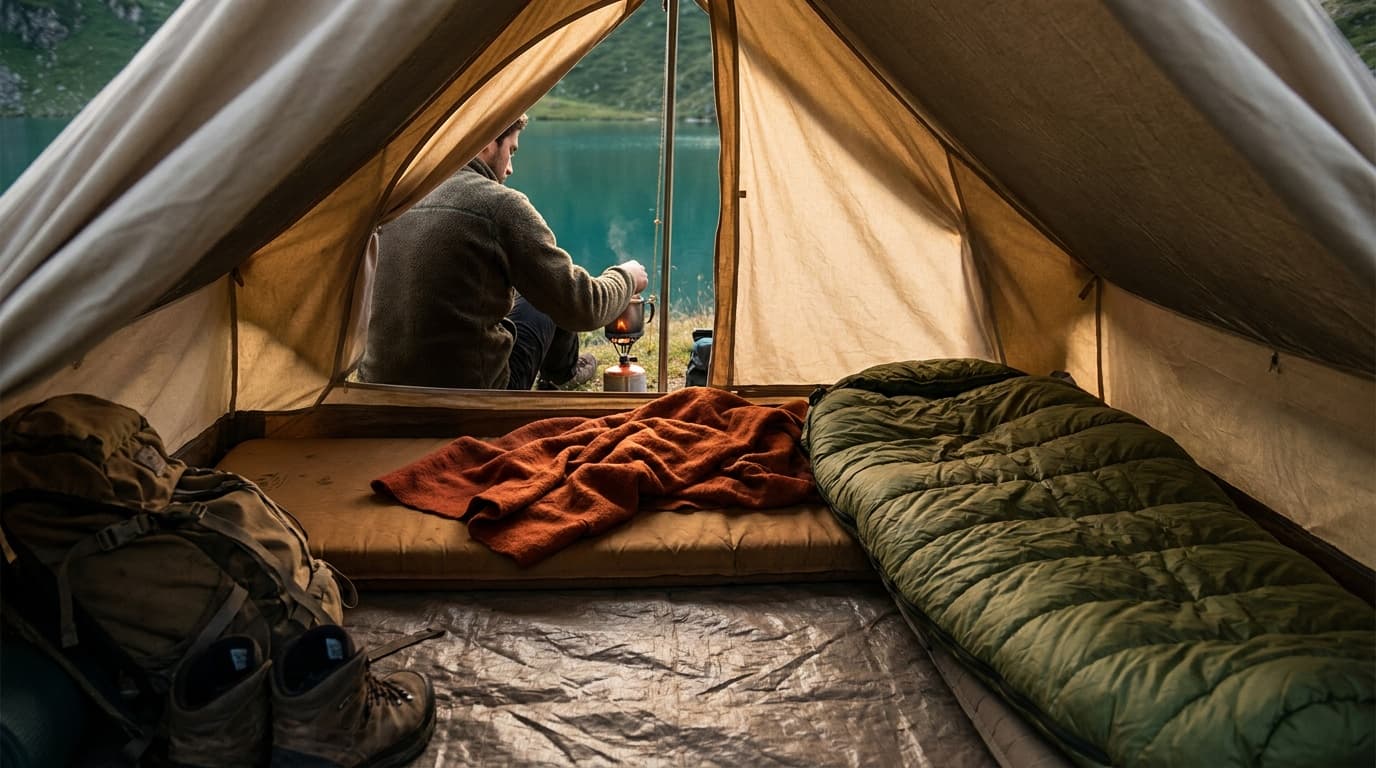
Our recommendations draw on manufacturer documentation, retailer listings, owner feedback, and comparisons with alternatives.
As an Amazon Associate I earn from qualifying purchases. We may earn a commission from links here, at no extra cost to you. How we research →