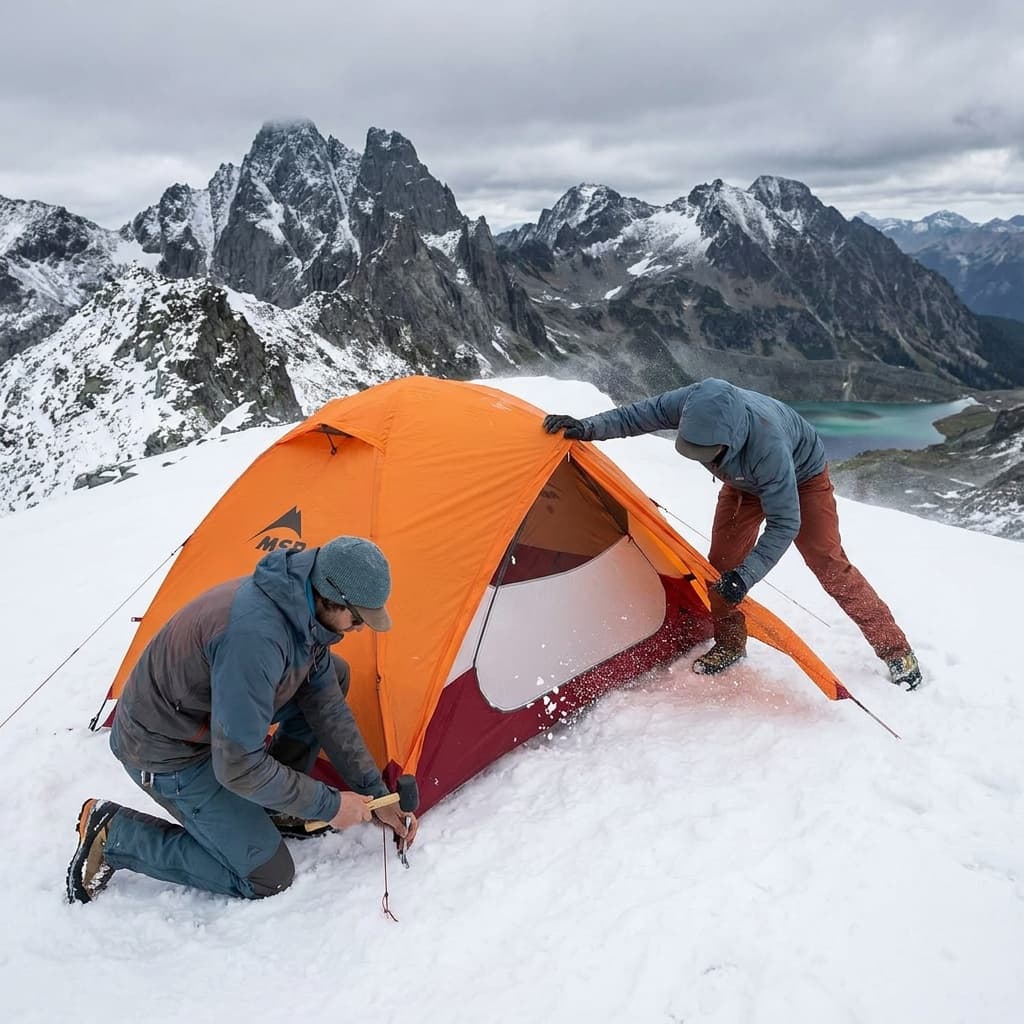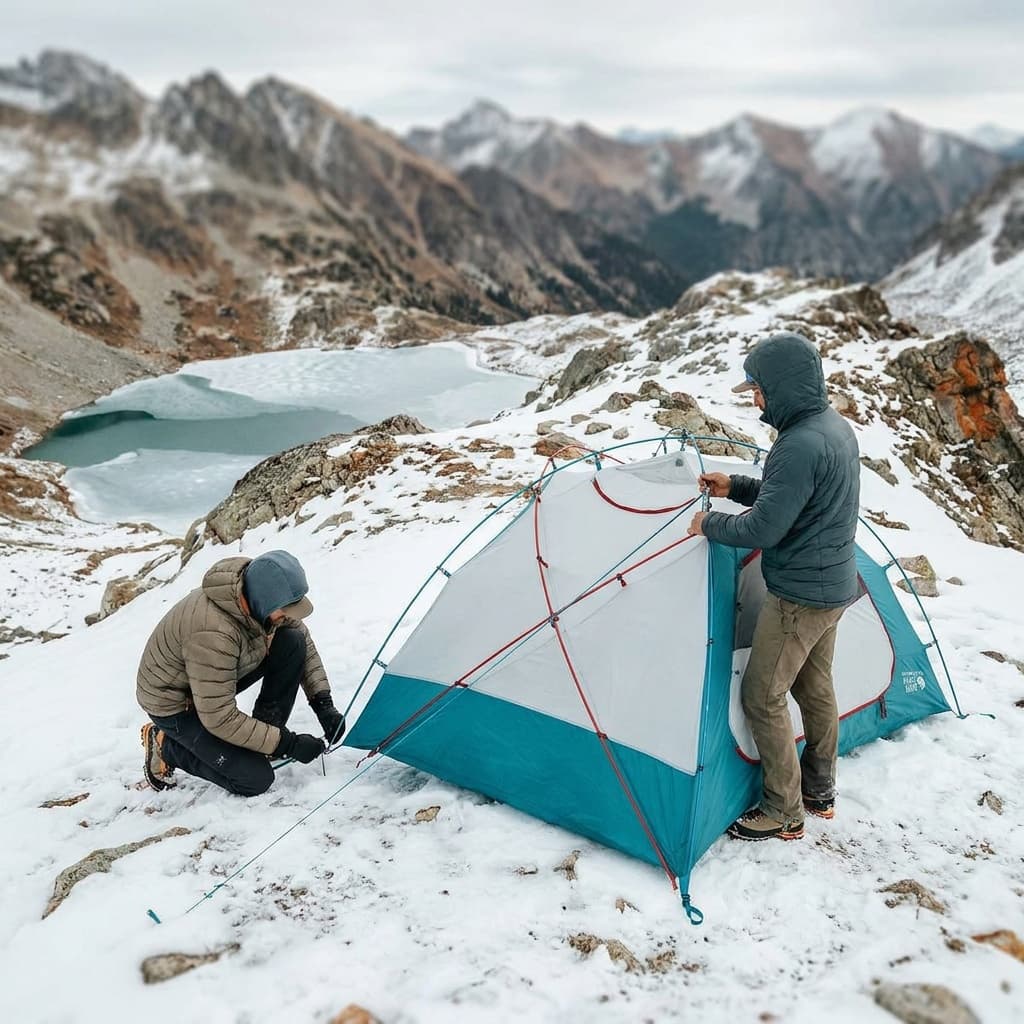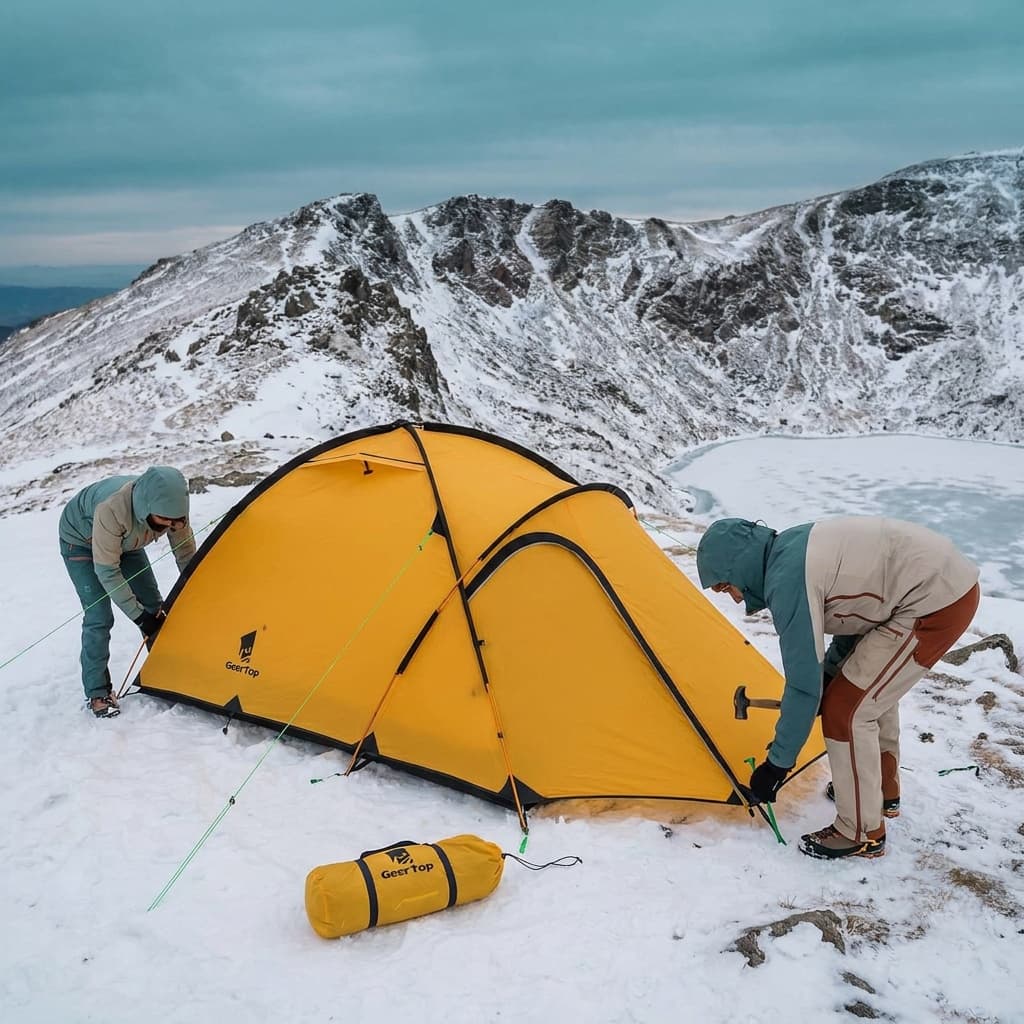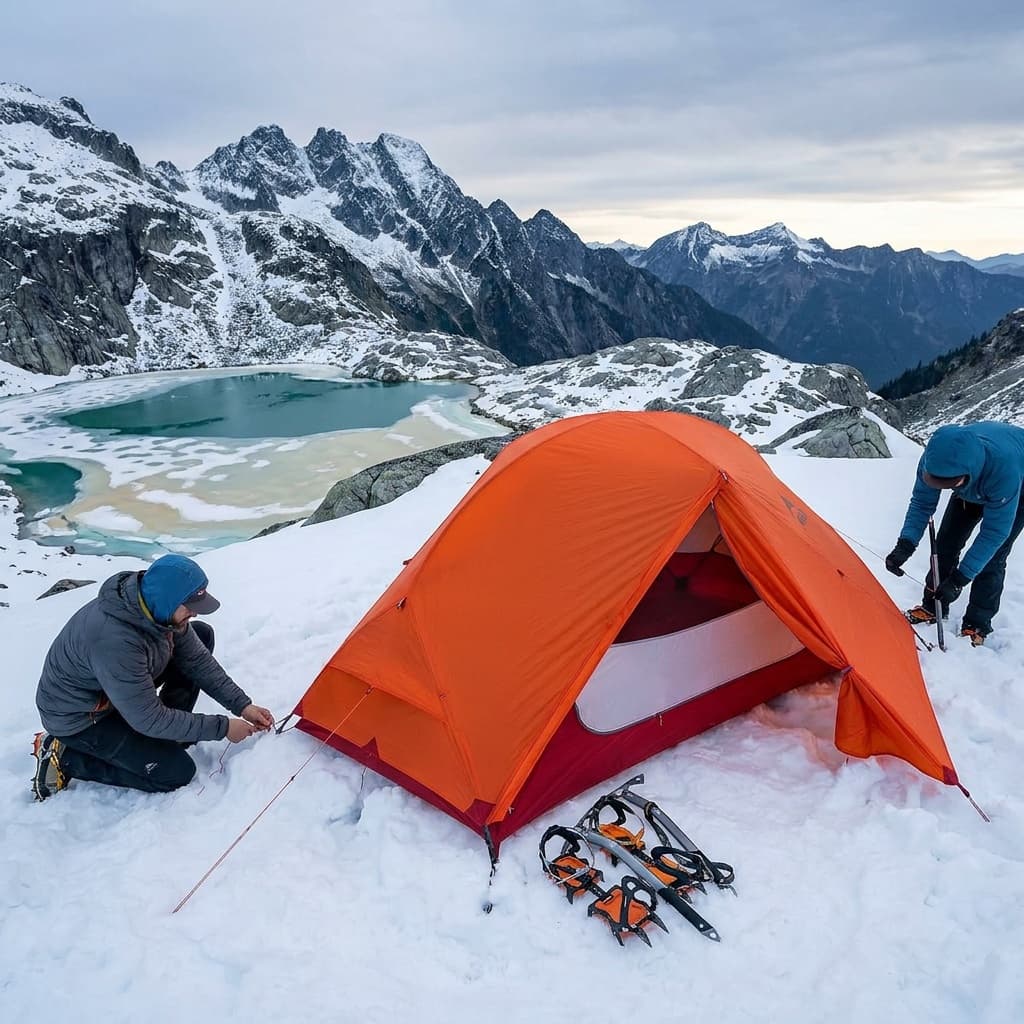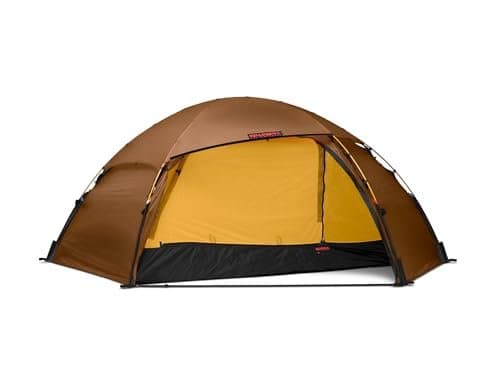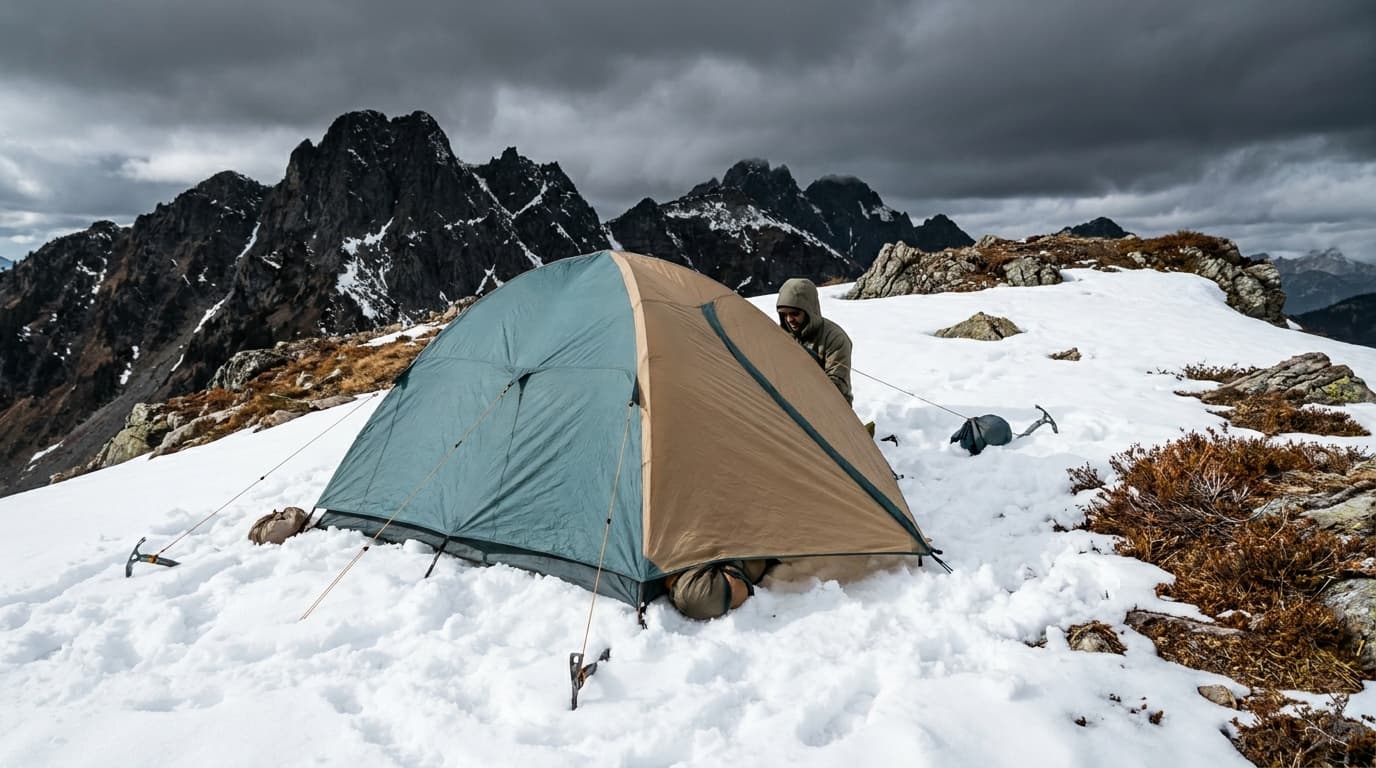
The MSR Remote 2 is the best 4-season tent for most two-person winter trips: a double-wall, three-pole expedition dome with a 44-inch peak and 22 sq ft of vestibule at 7 lb 4 oz minimum, which Outdoor Gear Lab gives a Top Pick for a spacious basecamp. For a full expedition, the Mountain Hardwear Trango 2 is the strongest and roomiest, and the MSR Access 2 is the lightest at 3 lb 10 oz.
Our quick picks
How we picked
This is a researched roundup, not a field test. We started from the 2026 4-season tent rankings at Outdoor Gear Lab, Switchback Travel, and CleverHiker, checked every weight, floor, height, pole, and fabric figure against the maker's own spec page, and confirmed each tent is in stock at a reputable seller. Every pick is scored with the Kit Score: fit for the job, owner and tester sentiment, build quality, and value.
We favored double-wall, freestanding tents with real snow and wind structure. Floorless pyramids and single-wall alpine bivies are excellent for specialists but harder to live with for most winter campers, so they are not here.
Best overall: MSR Remote 2
BEST OVERALL
MSR Remote 2 Two-Person Mountaineering Tent
Best for: Two climbers or winter campers who want expedition-grade storm protection with real headroom and storage for long tent days.
- 44-inch peak height is the tallest of the two-person expedition tents here, so waiting out a storm is livable
- At 7 lb 13 oz packaged it is a basecamp and short-approach tent, not a fast-and-light one
Kit Score 8.5/10 · Check current price · how we score gear
Buy at MSRProduct details
The Remote 2 is MSR's two-person expedition tent: a double-wall, freestanding dome on three Easton Syclone poles, with a 44-inch peak and 22 sq ft of vestibule. It gives two climbers more headroom than most rivals at this weight.
- Capacity
- 2-person, double wall, freestanding
- Minimum weight
- 7 lb 4 oz (7 lb 13 oz packaged)
- Floor area
- 33 sq ft
- Peak height
- 44 in
- Poles
- 3 Easton Syclone
- Fly / floor
- 68D polyester 1,500 mm / 40D nylon 10,000 mm
- Doors / vestibules
- 2 / 22 sq ft total
More strengths
- Two doors and 22 sq ft of vestibule hold boots, packs and a cooking area out of the sleeping space
- Lighter and cheaper than the Trango 2 with a similar three-pole storm structure
Other tradeoffs
- Stock is thin: on Amazon it is sold by a third-party retailer, so MSR's own store is the cleaner buy
The Remote 2 is the 4-season tent most two-person teams should start with. MSR builds it as a double-wall, freestanding dome on three Easton Syclone poles, with a 33 sq ft floor, a 44-inch peak, two doors, and 22 sq ft of vestibule. That headroom is the difference on a tent day: two people can sit up, cook in the vestibule, and dry gear without lying on top of each other.
The materials are expedition grade. MSR lists a 68D ripstop polyester fly coated to 1,500 mm and a 40D nylon floor rated to 10,000 mm. Outdoor Gear Lab gives it a Top Pick as the best for a spacious basecamp. Compared with the Trango 2, it is more than a pound lighter at the minimum weight, six inches taller inside, and lists for less, at the cost of a smaller floor.
The catch is weight and stock. At 7 lb 13 oz packaged it is a basecamp tent, not a fast one, and on Amazon it is currently sold by a third-party retailer, so the link here goes to MSR's own store.
Minimum weight: 7 lb 4 oz | Floor: 33 sq ft | Peak: 44 in | Poles: 3 Easton Syclone | Fly: 68D polyester, 1,500 mm
Best for expeditions: Mountain Hardwear Trango 2
BEST FOR EXPEDITIONS
Mountain Hardwear Trango 2 Tent
Best for: Expedition teams and basecamp climbers who want the roomiest, strongest two-person shelter and will carry the weight.
- 40 sq ft floor is the largest of the two-person tents here, with room for two people and expedition gear
- 9 lb 7 oz packed is a real burden on a long approach
Kit Score 8.4/10 · Check current price · how we score gear
Buy at BackcountryProduct details
The Trango 2 is Mountain Hardwear's expedition basecamp tent, sold since 1995: five DAC poles, a 40 sq ft floor and heavy 70D fabrics on both the fly and the floor.
- Capacity
- 2-person, double wall, freestanding
- Minimum weight
- 8 lb 7.3 oz (9 lb 7 oz packed)
- Floor area
- 40 sq ft
- Peak height
- 38 in
- Poles
- 5 DAC Featherlite NSL
- Fly / floor
- 70D nylon 2,000 mm / 70D nylon 10,000 mm
- Doors / vestibules
- 2 / 12 sq ft
More strengths
- Five-pole frame and 70D fabrics top to bottom give the most structural margin in this group
- Two independent testers rank it their best overall 4-season tent
Other tradeoffs
- 38-inch peak height is the lowest of the two-person expedition picks
The Trango 2 is the tent to choose when the trip is long and the weather will be bad. Switchback Travel and CleverHiker both name it their best overall 4-season tent, and Outdoor Gear Lab gives it a Top Pick for expeditions. Mountain Hardwear has sold the Trango since 1995.
It is the most overbuilt tent here: five DAC Featherlite NSL poles, a 70D nylon ripstop fly rated to 2,000 mm, and a 70D nylon taffeta bathtub floor rated to 10,000 mm. The 40 sq ft floor is the largest of the two-person picks, which matters when two climbers and their expedition gear are stuck inside for days.
You pay in weight and money. The minimum weight is 8 lb 7.3 oz and the packed weight 9 lb 7 oz, and at 38 inches it has the lowest peak of the two-person expedition picks. For a basecamp you fly or sled into, that trade is easy. For a long carry, the Remote 2 makes more sense.
Minimum weight: 8 lb 7.3 oz | Floor: 40 sq ft | Peak: 38 in | Poles: 5 DAC Featherlite NSL | Fly: 70D nylon, 2,000 mm
Best value: The North Face Mountain 25
BEST VALUE
The North Face Mountain 25 Tent
Best for: Climbers and winter campers who want expedition-proven protection without paying top-tier prices.
- Outdoor Gear Lab Best Buy: expedition-grade weather protection for less than the Remote 2 or Trango 2
- At 9 lb 13 oz total it is the heaviest pick for its floor area
Kit Score 8.3/10 · Check current price · how we score gear
Buy at BackcountryProduct details
The Mountain 25 is The North Face's long-running two-person mountaineering tent: two doors, a poled front vestibule, DAC poles, and snow stakes in the box, at a lower list price than the other expedition domes here.
- Capacity
- 2-person, double wall, freestanding
- Trail weight
- 8 lb 13 oz (9 lb 13 oz total)
- Floor area
- 29.3 sq ft
- Peak height
- 41 in (104 cm)
- Poles
- DAC aluminum
- Fly / floor
- 40D nylon 1,500 mm / 70D nylon 5,000 mm
- Included
- Snow stakes and reflective guylines
More strengths
- Ships with snow stakes and reflective guylines, so it is ready for a snow pitch out of the bag
- Two doors and a poled dual-entry front vestibule for storage and cooking
Other tradeoffs
- The North Face does not publish its vestibule area or peak height on the US product page
The Mountain 25 is the expedition dome to buy when the budget has a ceiling. Outdoor Gear Lab gives it a Best Buy award and says its weather resistance competes with the far pricier Hilleberg Jannu, and CleverHiker names it the best basecamp-style 4-season tent. It lists for less than both the Remote 2 and the Trango 2.
The North Face lists a 29.3 sq ft floor, a 104 cm (41 in) peak, two doors with a poled dual-entry front vestibule, DAC poles, a 40D nylon fly at 1,500 mm, and a 70D nylon floor at 5,000 mm. It ships with snow stakes and reflective guylines, so you can pitch it on snow straight out of the bag.
The trade-off is weight for space. Its trail weight of 8 lb 13 oz and total weight of 9 lb 13 oz buy a smaller floor than the Remote 2, and The North Face does not publish its vestibule area.
Trail weight: 8 lb 13 oz | Floor: 29.3 sq ft | Peak: 41 in | Poles: DAC | Fly: 40D nylon, 1,500 mm
Lightest: MSR Access 2
LIGHTEST
MSR Access 2 Tent
Best for: Backcountry skiers, splitboarders and winter backpackers who need four-season protection they can carry all day.
- Lightest pick here at 3 lb 10 oz minimum, light enough to carry on multi-day ski tours
- Condensation is the most common owner complaint; use the vents
Kit Score 7.6/10 · $799.95 Price checked Oct 23, 6:22 AM CDT · how we score gear
Buy on AmazonProduct details
The Access 2 is MSR's lightweight four-season tent for backcountry skiers and snowshoers. At 3 lb 10 oz minimum it is the lightest double-wall, freestanding tent in this guide.
- Capacity
- 2-person, double wall, freestanding
- Minimum weight
- 3 lb 10 oz (4 lb 1 oz packaged)
- Floor area
- 29 sq ft (84 x 50 in)
- Peak height
- 42 in
- Poles
- Easton Syclone
- Fly / floor
- 20D nylon 1,200 mm / 30D nylon 3,000 mm
- Doors / vestibules
- 2 / 17.5 sq ft total
More strengths
- Two doors and 17.5 sq ft of vestibule keep skis, boots and wet layers out of the sleeping area
- Sold and shipped by Amazon.com, with MSR's own store as a backup
Other tradeoffs
- Lighter fabrics and a single pole hub suit treeline and moderate alpine use, not multi-week expeditions in exposed terrain
At 3 lb 10 oz minimum and 4 lb 1 oz packaged, the Access 2 is the lightest double-wall, freestanding two-person tent here, about half the weight of the expedition domes. CleverHiker calls it the best year-round 4-season tent, and Switchback Travel calls it a great lightweight treeline tent.
MSR built it for ski touring and snowshoeing, where you move camp every day. It uses an Easton Syclone pole hub, a 20D ripstop nylon fly at 1,200 mm, and a 30D nylon floor at 3,000 mm, with two doors and 17.5 sq ft of vestibule. The 42-inch peak is generous for the weight.
Lighter fabrics and a simpler frame mean less margin above treeline. It is the right tent for winter backpacking and touring, not for a multi-week expedition on an exposed ridge. Condensation is the most common owner complaint, so open the vents.
Minimum weight: 3 lb 10 oz | Floor: 29 sq ft | Peak: 42 in | Poles: Easton Syclone | Fly: 20D nylon, 1,200 mm
Best for snow camping: Hilleberg Allak 2
BEST FOR SNOW CAMPING
Hilleberg Allak 2
Best for: Winter backpackers and ski tourers who camp on snow and want a freestanding tent that pitches dry in a storm.
- Inner and fly pitch together, so snow and rain never land on the inner during setup
- Priced near the top of the category
Kit Score 8.1/10 · $1,385.00 Price checked Oct 23, 6:22 AM CDT · how we score gear
Buy on AmazonProduct details
The Allak 2 is Hilleberg's fully freestanding two-person dome. The inner and outer tents are linked, so they pitch together in one step and the sleeping area stays dry when you set up in falling snow.
- Capacity
- 2-person, double wall, fully freestanding
- Minimum weight
- 6 lb 3 oz (7 lb 4 oz total)
- Floor area
- 30.1 sq ft
- Peak height
- 41.3 in
- Poles
- 3 x 9 mm aluminum
- Fly fabric
- Kerlon 1200
- Doors / vestibules
- 2 / 2 x 8.6 sq ft
More strengths
- Fully freestanding, which helps on packed snow platforms and rock where stakes are hard to set
- Two entrances and two vestibules for a two-person winter camp
Other tradeoffs
- Hilleberg rates it Red Label (lighter all-season), a step below its Black Label expedition tents for extreme exposure
Camping on snow puts two demands on a tent: it has to carry a snow load, and it has to go up in falling snow without the inner getting wet. The Allak 2 handles both. Hilleberg links the inner and outer tents so they pitch together in one step, and says the dome's multiple pole crossings give outstanding snow-load handling.
It is fully freestanding, which helps on a stamped-out snow platform or rock where stakes will not hold, and it has two entrances with two 8.6 sq ft vestibules. Hilleberg lists a minimum weight of 6 lb 3 oz, a total of 7 lb 4 oz, a 30.1 sq ft floor, a 41.3-inch interior height, three 9 mm poles, and its Kerlon 1200 outer fabric. Switchback Travel includes it in its favorite 4-season tents.
Hilleberg rates the Allak Red Label, its lighter all-season line, a step below its Black Label tents built for the most extreme exposure. It is also one of the most expensive tents here.
Minimum weight: 6 lb 3 oz | Floor: 30.1 sq ft | Height: 41.3 in | Poles: 3 x 9 mm | Fly: Kerlon 1200
Most versatile: NEMO Kunai 2P
MOST VERSATILE
NEMO Kunai 2P
Best for: Backpackers who want one tent for shoulder season and below-treeline winter trips.
- 3 lb 14 oz minimum, light enough to carry as a year-round backpacking tent
- One door and one 8 sq ft vestibule for two people
Kit Score 8.0/10 · $599.95 Price checked Oct 23, 6:22 AM CDT · how we score gear
Buy on AmazonProduct details
The Kunai is NEMO's 3-to-4-season backpacking tent: under four pounds minimum, with a low, tapered profile that sheds wind and snow, built for trips that run from shoulder season into winter below treeline.
- Capacity
- 2-person, double wall, freestanding
- Minimum weight
- 3 lb 14 oz (4 lb 5 oz packaged)
- Floor area
- 26 sq ft (82 x 50/41 in)
- Peak height
- 44 in
- Poles
- DAC Featherlite NSL, pre-bent
- Fly / floor
- Sil/PeU nylon 1,200 mm / 30D nylon 3,000 mm
- Doors / vestibules
- 1 / 8 sq ft
More strengths
- 44-inch peak height matches the Remote 2 in a much lighter tent
- Sold by NEMO's own Amazon store
Other tradeoffs
- Tapered 26 sq ft floor is tight for two adults with winter gear
The Kunai is for backpackers who want one tent for shoulder season and winter below treeline. CleverHiker names the Kunai 2 its best long-term value 4-season tent, and Switchback Travel picks the Kunai 3P as its best tent for treeline trips.
NEMO lists 3 lb 14 oz minimum, 4 lb 5 oz packaged, a tapered 26 sq ft floor, and a 44-inch peak, with pre-bent DAC Featherlite NSL poles, a sil/PeU nylon fly at 1,200 mm, and a 30D floor at 3,000 mm. That is close to the Access 2's weight with the Remote 2's headroom.
The compromise is space for two: one door and one 8 sq ft vestibule. It is a great tent for a couple who packs light, or a roomy one for a solo winter camper.
Minimum weight: 3 lb 14 oz | Floor: 26 sq ft | Peak: 44 in | Poles: DAC Featherlite NSL | Fly: Sil/PeU nylon, 1,200 mm
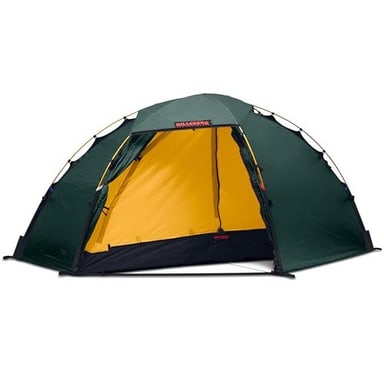
Best solo: Hilleberg Soulo
BEST SOLO
Hilleberg Soulo
Best for: Solo winter campers, ski tourers and mountaineers who want a freestanding tent built for snow.
- Freestanding three-pole dome built for snow and wind, in a 4 lb 7 oz minimum package
- Priced like a two-person expedition tent
Kit Score 8.1/10 · $995.00 Price checked Oct 23, 6:22 AM CDT · how we score gear
Buy on AmazonProduct details
The Soulo is Hilleberg's one-person, fully freestanding four-season dome. Like the Allak, its inner and outer tents pitch together, so a solo camper can set up in snow without soaking the sleeping area.
- Capacity
- 1-person, double wall, fully freestanding
- Minimum weight
- 4 lb 7 oz (5 lb 5 oz total)
- Floor area
- 20.5 sq ft
- Peak height
- 37.4 in
- Poles
- 3 x 9 mm aluminum
- Fly fabric
- Kerlon 1200
- Doors / vestibules
- 1 / 6.5 sq ft
More strengths
- Inner and fly pitch together in one step
- Sold by Hilleberg's own Amazon store
Other tradeoffs
- One door and a 6.5 sq ft vestibule leave limited room for winter gear
Most 4-season tents are built for two. The Soulo is a fully freestanding one-person dome that Hilleberg builds for demanding mountain conditions, with the same linked inner and outer as the Allak, so a solo camper can pitch in a snowstorm without soaking the sleeping area.
Hilleberg lists a 4 lb 7 oz minimum weight, 5 lb 5 oz total, a 20.5 sq ft floor, a 37.4-inch interior height, a 6.5 sq ft vestibule, three 9 mm poles, and Kerlon 1200 outer fabric. Owners on Trailspace rate it 5 out of 5; the common complaints are price and weight.
It costs about as much as a two-person expedition tent, and the single vestibule is small for winter gear. For solo ski tours and mountain trips, nothing else here is as purpose-built.
Minimum weight: 4 lb 7 oz | Floor: 20.5 sq ft | Height: 37.4 in | Poles: 3 x 9 mm | Fly: Kerlon 1200
Compare the picks
| Spec | MSR Remote 2 | MH Trango 2 | TNF Mountain 25 | MSR Access 2 | Hilleberg Allak 2 | NEMO Kunai 2P | Hilleberg Soulo |
|---|---|---|---|---|---|---|---|
| Kit Score | 8.5/10 | 8.4/10 | 8.3/10 | 7.6/10 | 8.1/10 | 8.0/10 | 8.1/10 |
| Price | Check current price | Check current price | Check current price | $799.95 Price checked Oct 23, 6:22 AM CDT | $1,385.00 Price checked Oct 23, 6:22 AM CDT | $599.95 Price checked Oct 23, 6:22 AM CDT | $995.00 Price checked Oct 23, 6:22 AM CDT |
| Best for | Two climbers or winter campers who want expedition-grade storm protection with real headroom and storage for long tent days. | Expedition teams and basecamp climbers who want the roomiest, strongest two-person shelter and will carry the weight. | Climbers and winter campers who want expedition-proven protection without paying top-tier prices. | Backcountry skiers, splitboarders and winter backpackers who need four-season protection they can carry all day. | Winter backpackers and ski tourers who camp on snow and want a freestanding tent that pitches dry in a storm. | Backpackers who want one tent for shoulder season and below-treeline winter trips. | Solo winter campers, ski tourers and mountaineers who want a freestanding tent built for snow. |
| Why it stands out | 44-inch peak height is the tallest of the two-person expedition tents here, so waiting out a storm is livable | 40 sq ft floor is the largest of the two-person tents here, with room for two people and expedition gear | Outdoor Gear Lab Best Buy: expedition-grade weather protection for less than the Remote 2 or Trango 2 | Lightest pick here at 3 lb 10 oz minimum, light enough to carry on multi-day ski tours | Inner and fly pitch together, so snow and rain never land on the inner during setup | 3 lb 14 oz minimum, light enough to carry as a year-round backpacking tent | Freestanding three-pole dome built for snow and wind, in a 4 lb 7 oz minimum package |
| Tradeoff | At 7 lb 13 oz packaged it is a basecamp and short-approach tent, not a fast-and-light one | 9 lb 7 oz packed is a real burden on a long approach | At 9 lb 13 oz total it is the heaviest pick for its floor area | Condensation is the most common owner complaint; use the vents | Priced near the top of the category | One door and one 8 sq ft vestibule for two people | Priced like a two-person expedition tent |
| Capacity | 2 | 2 | 2 | 2 | 2 | 2 | 1 |
| Minimum weight | 7 lb 4 oz | 8 lb 7.3 oz | 8 lb 13 oz (trail) | 3 lb 10 oz | 6 lb 3 oz | 3 lb 14 oz | 4 lb 7 oz |
| Packed weight | 7 lb 13 oz | 9 lb 7 oz | 9 lb 13 oz | 4 lb 1 oz | 7 lb 4 oz | 4 lb 5 oz | 5 lb 5 oz |
| Floor area | 33 sq ft | 40 sq ft | 29.3 sq ft | 29 sq ft | 30.1 sq ft | 26 sq ft | 20.5 sq ft |
| Peak height | 44 in | 38 in | 41 in | 42 in | 41.3 in | 44 in | 37.4 in |
| Poles | 3 Easton Syclone | 5 DAC Featherlite NSL | DAC | Easton Syclone | 3 x 9 mm | DAC Featherlite NSL | 3 x 9 mm |
| Fly fabric | 68D polyester, 1,500 mm | 70D nylon, 2,000 mm | 40D nylon, 1,500 mm | 20D nylon, 1,200 mm | Kerlon 1200 | Sil/PeU nylon, 1,200 mm | Kerlon 1200 |
| Floor fabric | 40D nylon, 10,000 mm | 70D nylon, 10,000 mm | 70D nylon, 5,000 mm | 30D nylon, 3,000 mm | Not published | 30D, 3,000 mm | Not published |
| Doors / vestibules | 2 / 22 sq ft | 2 / 12 sq ft | 2, poled front vestibule | 2 / 17.5 sq ft | 2 / 17.2 sq ft | 1 / 8 sq ft | 1 / 6.5 sq ft |
How to choose a 4-season tent
The numbers that matter
Match the tent to the terrain
Treeline tents like the Access 2 and Kunai 2P weigh about 4 pounds and suit winter backpacking and ski touring. Expedition domes like the Remote 2, Trango 2, and Mountain 25 weigh 7 to 10 pounds and are built for exposed ridges and basecamps.
Count the poles and crossings
More poles and more crossing points spread snow and wind load. The Trango 2 uses five poles; the Allak 2 and Soulo use three 9 mm poles in a dome with multiple crossings; the Access 2 relies on a single pole hub.
Compare minimum and packed weight
Minimum weight is the tent, fly, and poles only. Packed weight adds stakes, guylines, and sacks. The gap is usually half a pound to a pound, as with the Remote 2 (7 lb 4 oz vs 7 lb 13 oz).
Check fabric and coating
Expedition flies run 40D to 70D; treeline flies run about 20D. Floor coatings range from 3,000 mm on the light tents to 10,000 mm on the Remote 2 and Trango 2, which matters when you kneel on wet snow for weeks.
Plan for headroom and storage
Winter means long tent days. A peak of 41 inches or more lets two adults sit up, and roughly 15 sq ft or more of vestibule holds boots, packs, and a cooking area.
Think about setup in snow
A tent whose inner and fly pitch together, like the Hilleberg Allak 2 and Soulo, keeps the sleeping area dry when you set up in falling snow.
Frequently asked questions
What is the best 4-season tent in 2026?
The MSR Remote 2 is the best for most two-person winter trips: a three-pole, double-wall dome with a 44-inch peak and 22 sq ft of vestibule at 7 lb 4 oz minimum. For a full expedition, the Mountain Hardwear Trango 2, which Switchback Travel and CleverHiker both rank first, is stronger and roomier but heavier.
What is the lightest 4-season tent?
Of the double-wall, freestanding two-person tents here, the MSR Access 2 is the lightest at 3 lb 10 oz minimum and 4 lb 1 oz packaged, per MSR. The NEMO Kunai 2P is close behind at 3 lb 14 oz. Single-wall alpine tents and floorless pyramids weigh less but ask more of the user.
What is the difference between a 4-season and a 3-season tent?
A 4-season tent is built to carry snow and resist wind: more poles or pole crossings, heavier fabrics, more solid panels and less mesh, and a fly that reaches closer to the ground. That makes it heavier and warmer, and less airy in summer. A 3-season tent is lighter and breathes better but is not designed for snow loads.
Can I use a 4-season tent in summer?
Yes, but expect a warmer, stuffier tent. Treeline models like the MSR Access 2 and NEMO Kunai 2P are the most comfortable year-round. The heavy expedition domes are overkill for summer backpacking.
How do I stop condensation in a 4-season tent?
Open the vents, even in a storm, and keep a door partly unzipped when you can. Breath freezes on the inner walls overnight, so knock frost off before it melts, and keep wet gear in the vestibule. Our guide to why your tent is wet inside covers the causes in detail.
Where these numbers come from
| Claim | Source | Checked |
|---|---|---|
| MSR Remote 2: 7 lb 4 oz minimum, 7 lb 13 oz packaged, 33 sq ft, 44 in peak, 22 sq ft vestibule, 2 doors, 3 Easton Syclone poles, 68D ripstop polyester fly 1,500 mm, 40D nylon floor 10,000 mm, 20 x 7 in packed | MSR Remote 2 | 2026-10-03 |
| MSR Access 2: 3 lb 10 oz minimum, 4 lb 1 oz packaged, 29 sq ft (84 x 50 in), 42 in peak, 17.5 sq ft vestibule, 2 doors, Easton Syclone pole, 20D nylon fly 1,200 mm, 30D nylon floor 3,000 mm | MSR Access 2 | 2026-10-03 |
| Mountain Hardwear Trango 2: 8 lb 7.3 oz minimum, 9 lb 7 oz packed, 40 sq ft, 38 in peak, 12 sq ft vestibule, 2 doors, 5 DAC Featherlite NSL poles, 70D nylon fly 2,000 mm, 70D nylon floor 10,000 mm, introduced 1995 | Mountain Hardwear Trango 2 | 2026-10-03 |
| The North Face Mountain 25: 9 lb 13 oz total, 8 lb 13 oz trail, 29.3 sq ft, DAC poles, 2 doors and a poled front vestibule, 40D nylon fly 1,500 mm, 70D nylon floor 5,000 mm, snow stakes and reflective guylines included | The North Face Mountain 25 (US) | 2026-10-03 |
| The North Face Mountain 25: 104 cm peak height | The North Face Mountain 25 (UK) | 2026-10-03 |
| Hilleberg Allak 2: 6 lb 3 oz minimum, 7 lb 4 oz total, 30.1 sq ft, 41.3 in height, 2 x 8.6 sq ft vestibules, 3 x 9 mm poles, Kerlon 1200, Red Label, linked inner and outer for simultaneous pitching, pole crossings for snow load | Hilleberg Allak | 2026-10-03 |
| Hilleberg Soulo: 4 lb 7 oz minimum, 5 lb 5 oz total, 20.5 sq ft, 37.4 in height, 6.5 sq ft vestibule, 3 x 9 mm poles, Kerlon 1200, freestanding | Hilleberg Soulo | 2026-10-03 |
| NEMO Kunai 2P: 3 lb 14 oz minimum, 4 lb 5 oz packaged, 26 sq ft (82 x 50/41 in), 44 in peak, 8 sq ft vestibule, 1 door, DAC Featherlite NSL poles, sil/PeU nylon fly 1,200 mm, 30D floor 3,000 mm | NEMO Kunai | 2026-10-03 |
| Awards: Outdoor Gear Lab (Mountain 25 Best Buy; Remote 2 Top Pick for a spacious basecamp; Trango 2 Top Pick for expeditions); Switchback Travel (Trango 2 best overall; Kunai 3P best for treeline; Access 2 great lightweight treeline tent; Allak 2 in its picks); CleverHiker (Trango 2 best overall; Mountain 25 best basecamp-style; Kunai 2 best long-term value; Access 2 best year-round) | Outdoor Gear Lab, Switchback Travel, CleverHiker | 2026-10-03 |
| Soulo owner rating 5 of 5; price and weight the common complaints | Trailspace, Hilleberg Soulo | 2026-10-03 |
| Seller and stock: Access 2 sold by Amazon.com; Allak 2 and Soulo by Hilleberg's Amazon store; Kunai 2P by NEMO's Amazon store; Remote 2 in stock at MSR; Trango 2 and Mountain 25 in stock at Backcountry | Amazon listings B0CS4HFRPY, B00IDRJMAQ, B00IU0UFBQ, B0DK7PRSD7; MSR and Backcountry product pages | 2026-10-03 |
We did not pitch these tents ourselves. Weights, dimensions, and fabrics are the makers' published specs; awards and rankings belong to the testers named above. Where a maker does not publish a number, the table says so.
A good 4-season tent turns a storm into a long, warm tent day instead of a retreat. For lighter three-season shelters, see the best ultralight tents, browse more winter gear in the camp hub, or read how we research and rate every pick.
Keep going
Complete loadoutCamp sleep systemFive coordinated pieces that solve shelter, insulation, cushioning, head support, and light for nights outside.Related guides
Our recommendations draw on manufacturer documentation, retailer listings, owner feedback, and comparisons with alternatives.
As an Amazon Associate I earn from qualifying purchases. We may earn a commission from links here, at no extra cost to you. How we research →