When to go
Conditions, crowds, and what each season asks you to pack.
Spring
35-50F
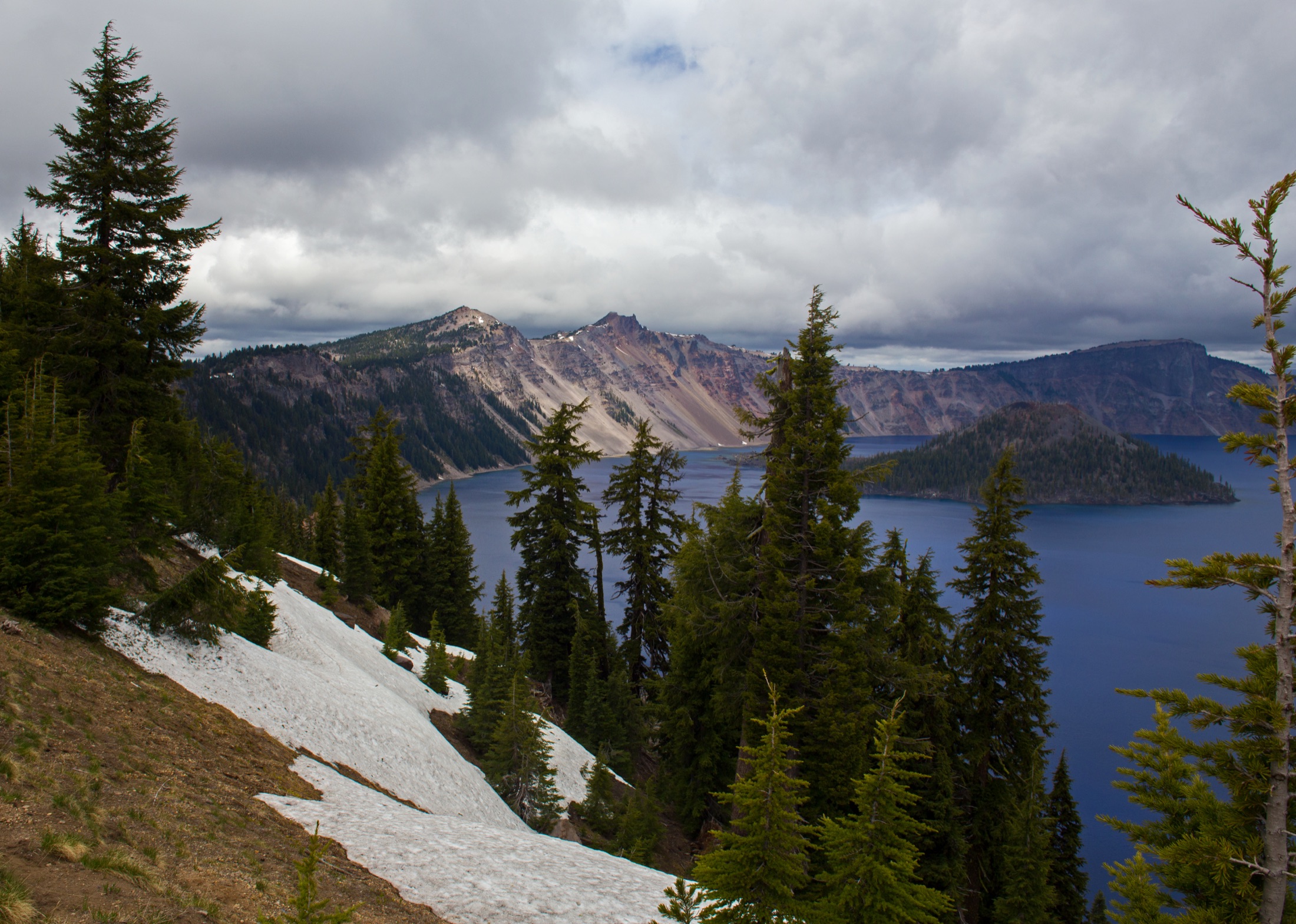
Highs 35-50F with deep lingering snow. Rim Drive stays mostly closed and snow can fall into June.
Pack Winter layers, traction for snow-packed trails, and patience for closed roads.
Summer
65-80F
Highs 65-80F, sunny and dry, with cool nights that can dip near freezing at 7,000 feet.
Pack Sun protection, a warm layer for the rim, and plenty of water.
Fall
45-65F
Highs 45-65F early, dropping fast. First snows often arrive by October and roads begin closing.
Pack Insulated layers and a flexible plan in case Rim Drive closes early.
Winter
25-35F
Highs 25-35F with heavy snow. The park averages over 40 feet of snowfall and most roads close.
Pack Snowshoes or skis, full winter clothing, and tire chains for the drive in.
Crowds by month, from NPS visit counts
Busiest: July. An average July brings about 163,000 recreation visits to Crater Lake, roughly 5,250 a day. Peak crowds run July to August.
Quietest: January. About 4,670 visits, 3% of the busiest month. Crowds stay low November to May.
- Low
- Moderate
- High
- Peak
Bar height is each month's average visits compared with the busiest month. Low is under 25% of that peak, Moderate 25 to 49%, High 50 to 74%, Peak 75% and up.
See the monthly numbers
| Month | Avg visits | Share of year | Crowds |
|---|---|---|---|
| January | 4,667 | <1% | Low |
| February | 5,502 | <1% | Low |
| March | 8,991 | 2% | Low |
| April | 14,608 | 3% | Low |
| May | 30,886 | 5% | Low |
| June | 64,735 | 11% | Moderate |
| July | 162,630 | 28% | Peak |
| August | 136,739 | 24% | Peak |
| September | 87,231 | 15% | High |
| October | 43,849 | 8% | Moderate |
| November | 11,307 | 2% | Low |
| December | 7,026 | 1% | Low |
Source: NPS Visitor Use Statistics, monthly recreation visits, averaged over 2023–2025. October and November 2025 are left out of the averages because of the federal government shutdown. Visits count entries, not unique people. NPS monthly report for Crater Lake · Crowd calendar for all 63 parks
Crater Lake weather by month
Average daily highs and lows, plus monthly precipitation, from NOAA's 1991-2020 climate normals for park headquarters below the rim. Shaded months are the park's best season. Tap a month to build a pack list for it.
| Month | Jan | Feb | Mar | Apr | May | Jun | Jul | Aug | Sep | Oct | Nov | Dec |
|---|---|---|---|---|---|---|---|---|---|---|---|---|
| High (F) | 33 | 34 | 36 | 40 | 49 | 57 | 69 | 69 | 63 | 51 | 38 | 33 |
| Low (F) | 20 | 19 | 20 | 23 | 29 | 34 | 41 | 42 | 37 | 30 | 23 | 19 |
| Precip (in) | 10.1 | 7.5 | 7.8 | 6.2 | 3.7 | 2.3 | 0.8 | 0.8 | 1.9 | 4.8 | 9.6 | 11.3 |
| Snow (in) | 86.5 | 68.9 | 71.9 | 48.7 | 14.5 | 3.7 | 0.0 | 0.0 | 1.8 | 17.2 | 59.3 | 90.6 |
Station CRATER LAKE NPS HQ (USC00351946), 6,485 ft, under a mile from Steel Visitor Center. Rim Village sits higher and holds snow later into summer.
Source: NOAA NCEI U.S. Climate Normals, 1991-2020 monthly averages. Averages describe a typical year, not a forecast; check current conditions and alerts before you go. Precipitation includes the water in melted snow.
Top things to do
Rim Drive
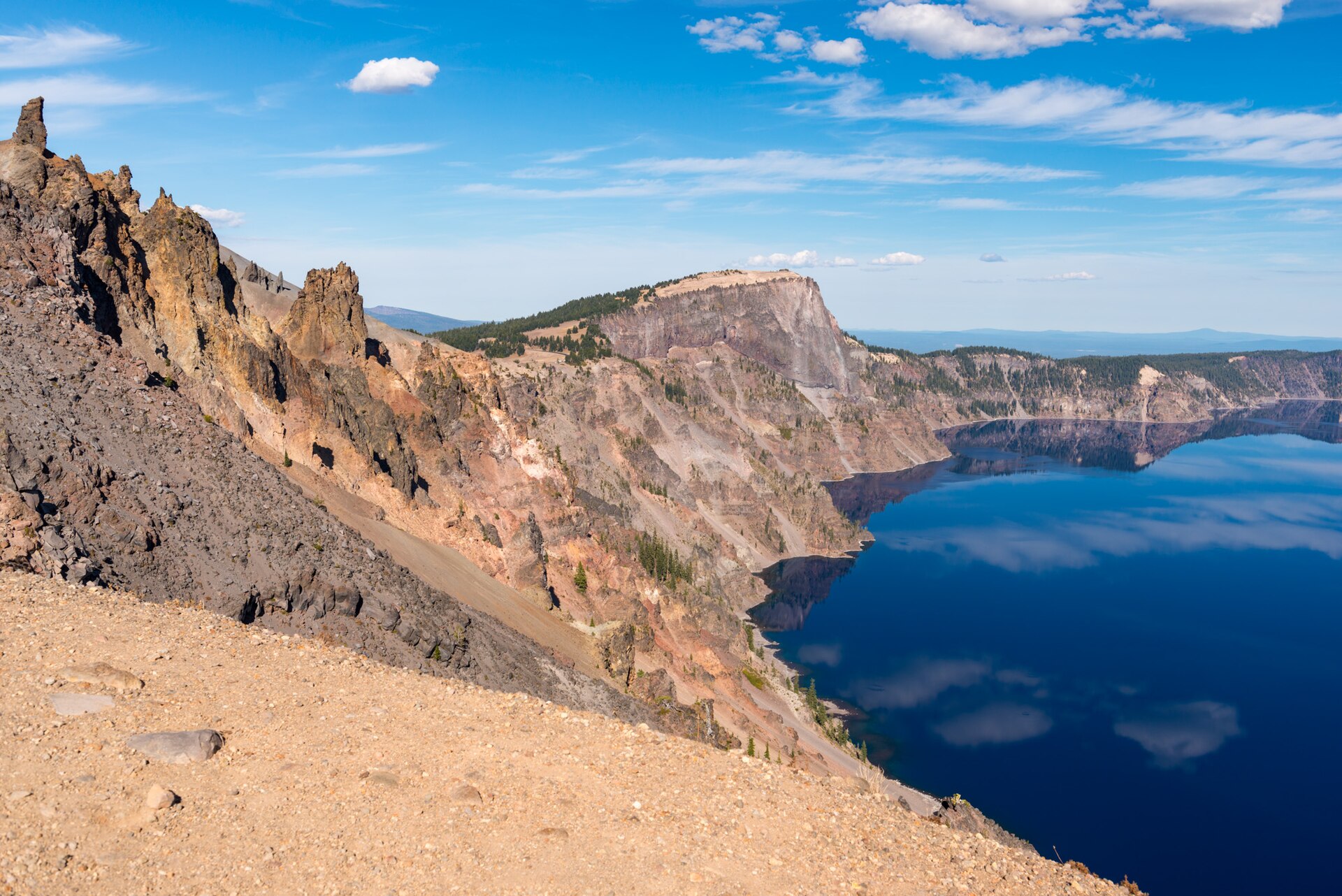
A 33-mile loop circling the caldera with more than 30 overlooks, fully open only in summer.
Watchman Peak Trail
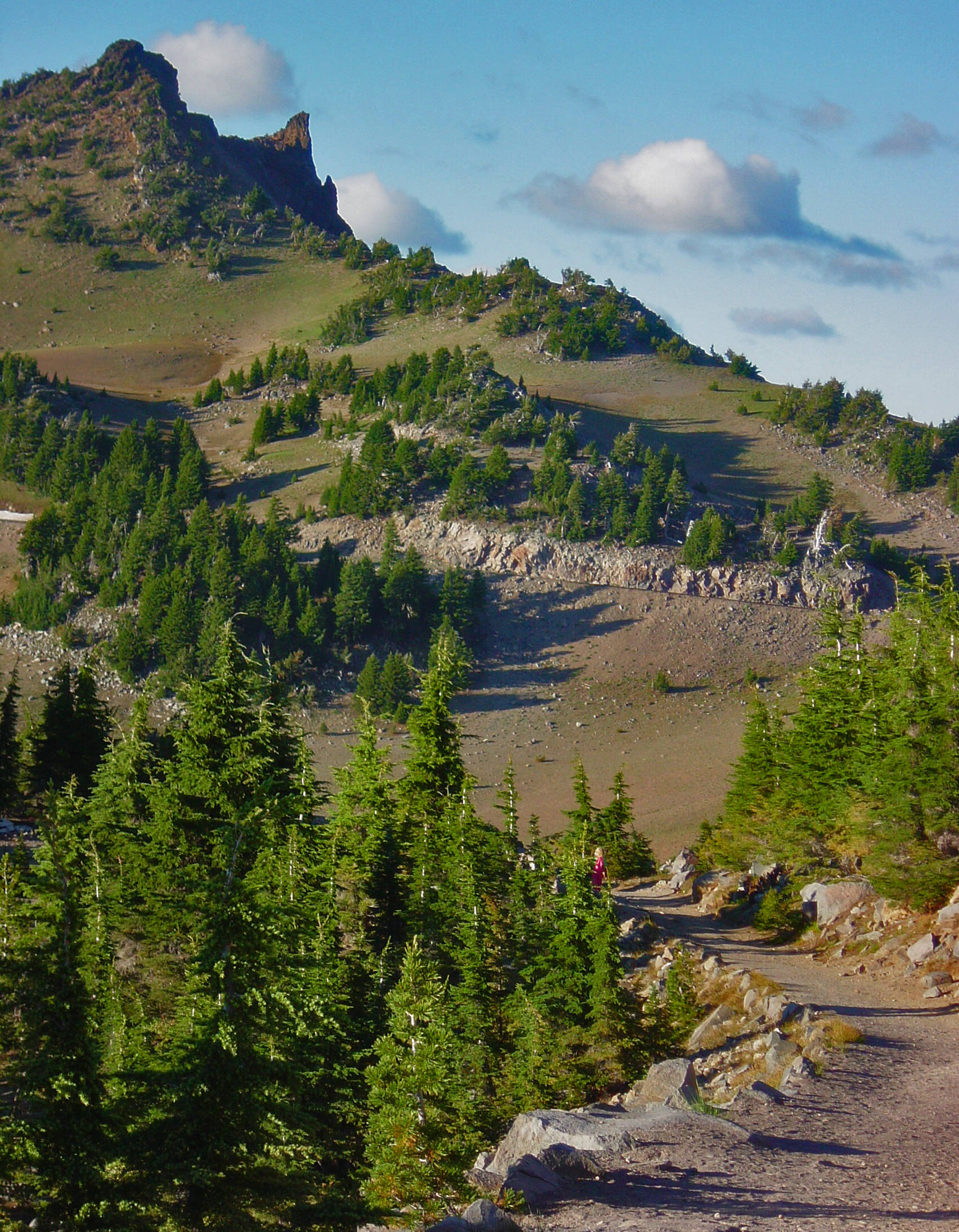
A short, steep 1.6-mile round trip to a fire lookout with the classic view down to Wizard Island.
Cleetwood Cove Trail
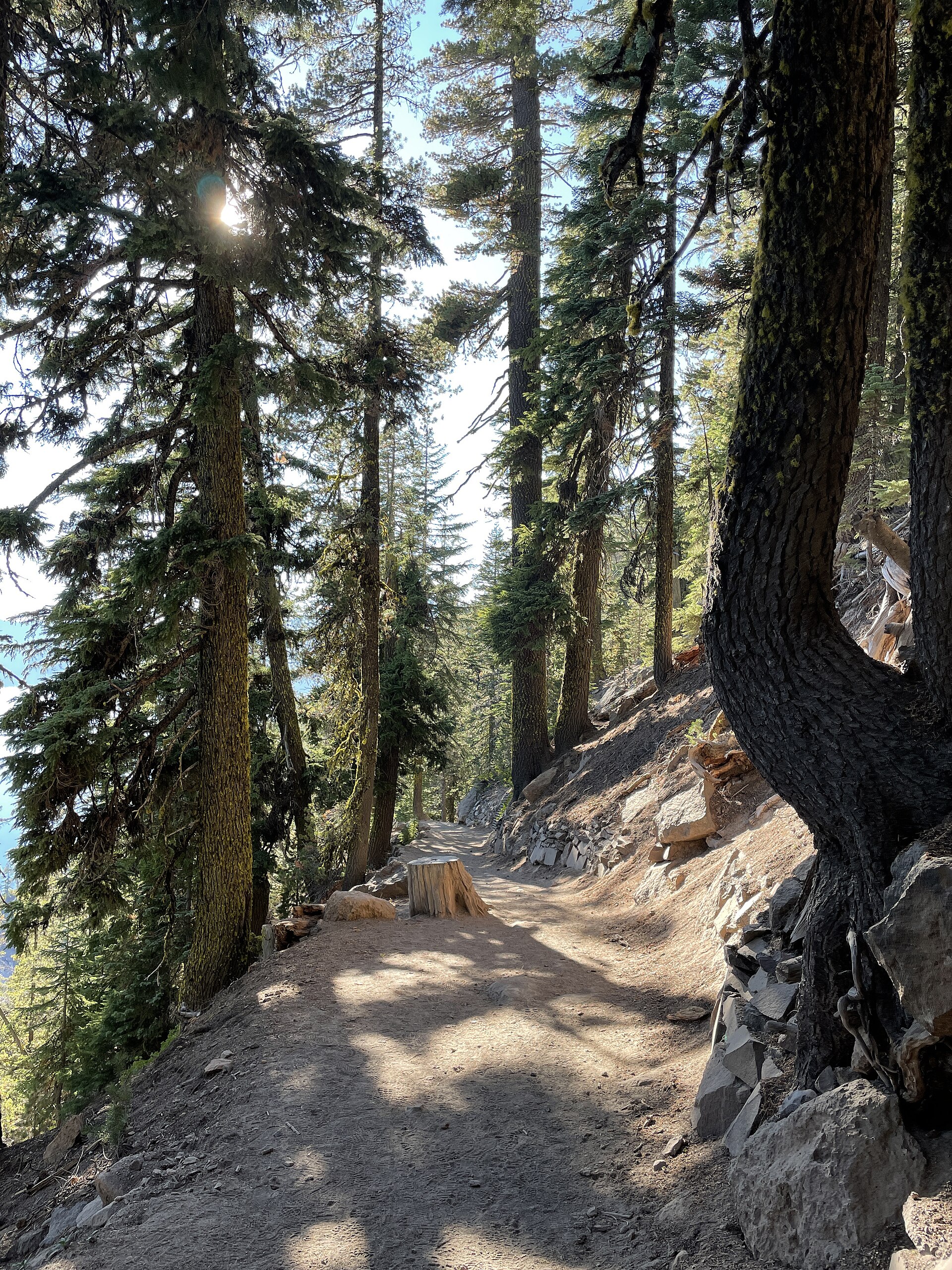
The only legal route down to the water, a steep 2.2-mile round trip and the launch point for boat tours.
Garfield Peak Trail
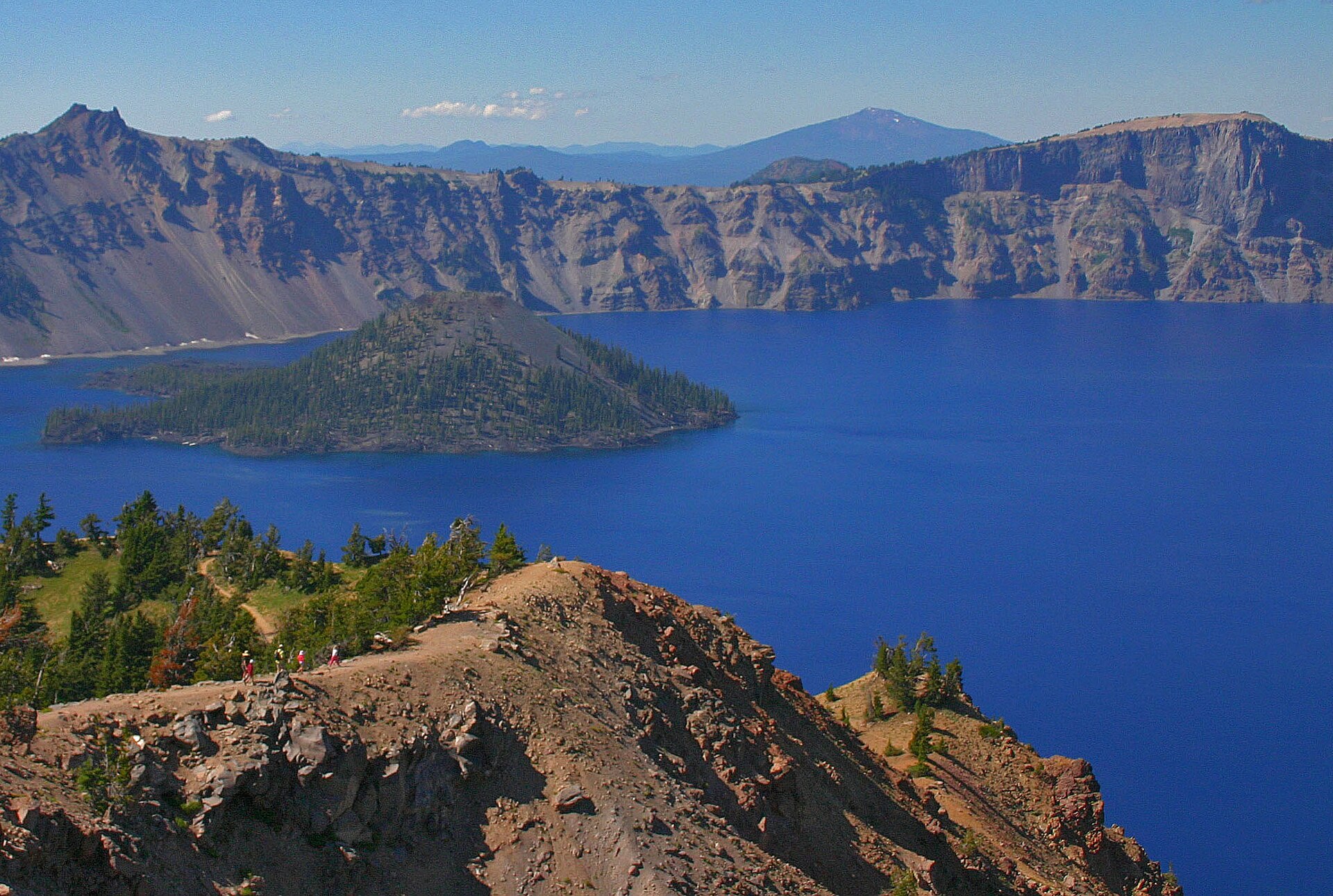
A 3.4-mile round trip from Crater Lake Lodge with sweeping rim-top views of the whole lake.
Wizard Island
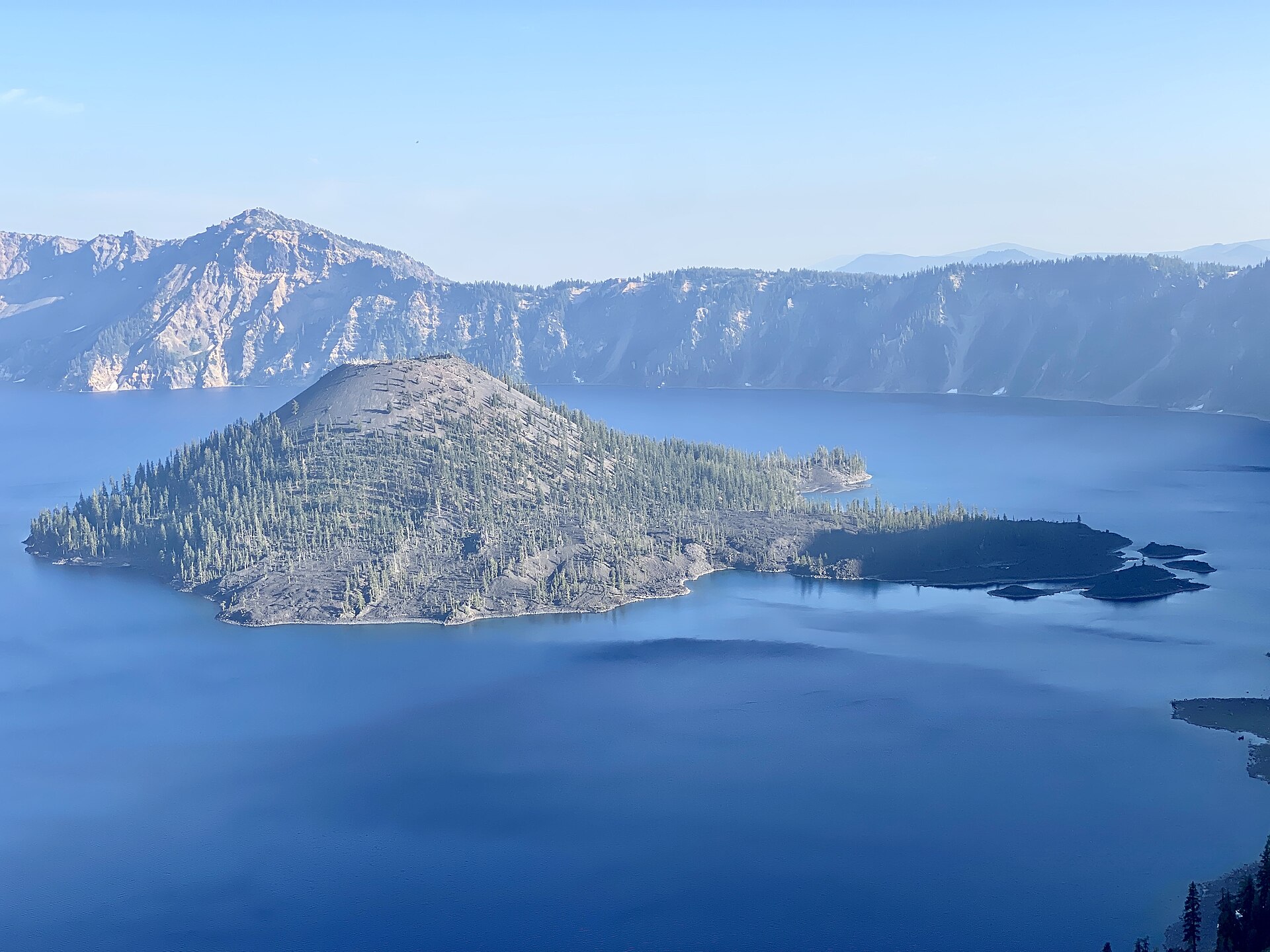
A cinder cone rising from the lake, reachable by summer boat tour for hiking and swimming.
Anchor the day around Rim Drive
Put the access rule first: shuttle, parking, timed-entry, or reservation windows should decide the order of the day. For one day in Crater Lake, make Rim Drive the non-negotiable, add Watchman Peak Trail only if the first stop runs clean, and keep Cleetwood Cove Trail as the flexible finish.
- 1Start with Rim Drive: A 33-mile loop circling the caldera with more than 30 overlooks, fully open only in summer.
- 2Add Watchman Peak Trail: A short, steep 1.6-mile round trip to a fire lookout with the classic view down to Wizard Island.
- 3Use Cleetwood Cove Trail as the optional finish, not as a reason to rush the whole day.
Where to stay
Stay strategy
Make the access plan before the lodging plan.
Stay strategy
Stay inside the park only when rim time is the point.
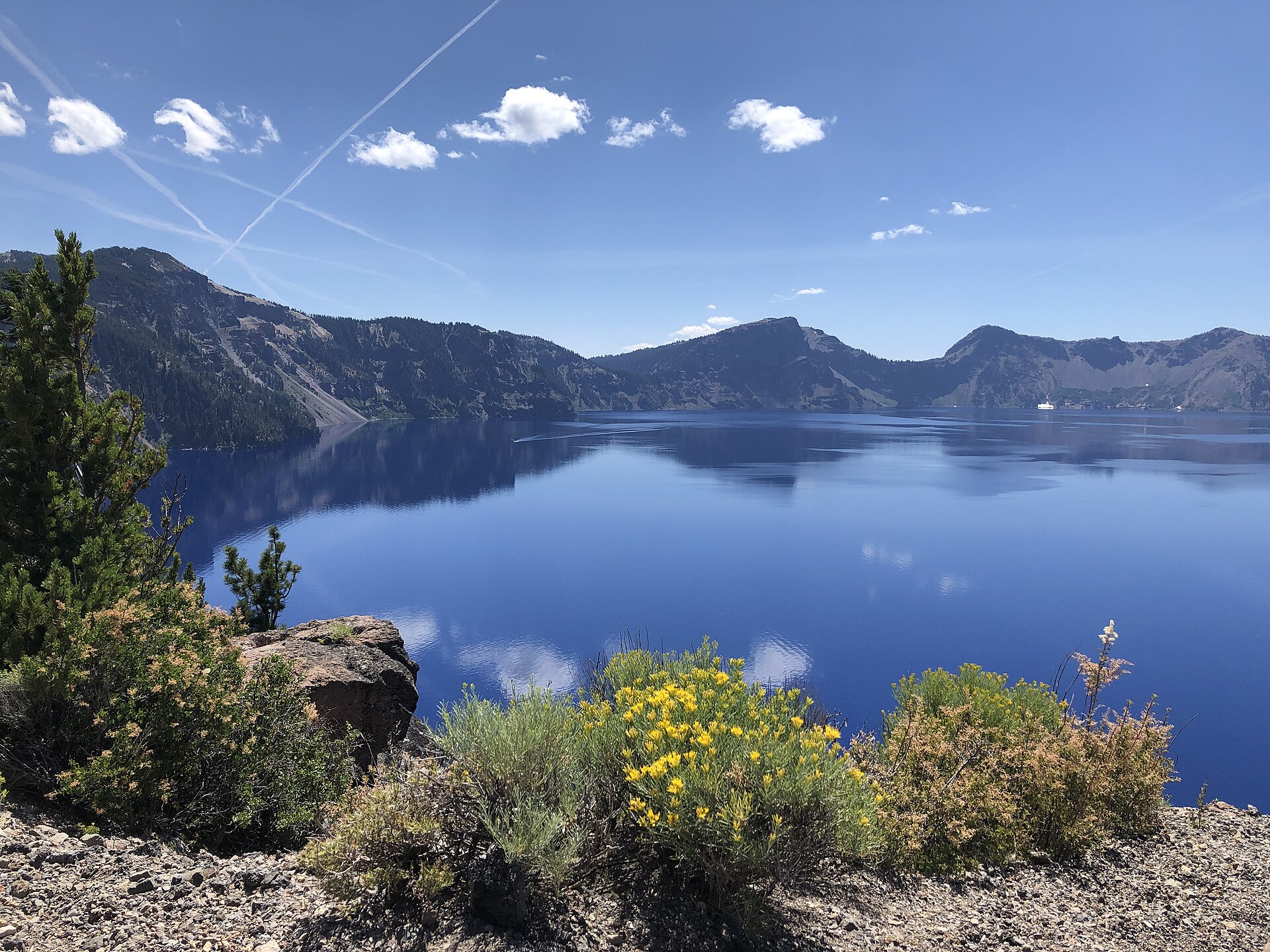
Crater Lake rewards being close to the rim, but only in the short summer window when roads, lodging, campgrounds, and boat access line up. If you are arriving outside that window, make the south or west approach your base and watch road status closely.
- Prime window
- Mid-July through September for Rim Drive and most trails
- Year-round access
- South and west entrances are the dependable approaches
- Snow reality
- North Entrance and most of Rim Drive close for much of the year
- Water access
- Cleetwood Cove is the only legal route to the lake
Compare base options
Read these as access plans first. The right base is the one that makes the transfer reliable, then the room or campsite can follow.
Paid links: we may earn a commission if you book, at no extra cost to you.
- Best for
- First light, sunset, and the lowest-friction classic lake visit
- Tradeoff
- Seasonal rooms sell early and cost more because the location is the experience.
Planning detail
Choose the lodge when you want to watch weather and light shift over the caldera without commuting. It is the premium answer for one-night summer trips.
- Best for
- Campers and cabin travelers who want in-park access without paying rim rates
- Tradeoff
- You still drive up to the rim, and opening dates depend on snow.
Planning detail
Mazama Campground and the cabins work best for a summer park-focused stay. They keep you inside the boundary near the south entrance corridor.
Outside base
Prospect, Klamath Falls, or Roseburg
Conditions- Best for
- Shoulder-season trips, standard hotels, and road trips through southern Oregon
- Tradeoff
- You add a meaningful drive before every rim visit.
Planning detail
Prospect is the closer small southwest base, Klamath Falls has more services to the south, and Roseburg works when you are approaching from I-5 and the west.
Boat timing
If Wizard Island or swimming matters, confirm Cleetwood Cove and boat tour status before booking.
Cold nights
Pack a warm layer even for August, because the rim sits near 7,000 feet.
Camping reservations
Camping reservations
Mazama is Crater Lake's only campground, and July through September is reservation-only.
Mazama Campground, 214 sites in old-growth forest near the Annie Spring entrance, is the park's only frontcountry campground now that Lost Creek remains closed. The concessioner ExplorUS runs it, but every booking goes through Recreation.gov, and July through late September sites are reservation-only.
Reviewed June 11, 2026
Booking window
From the snow-dependent opening (typically June) through June 30, sites are first come, first served; from July 1 through the late-September close, every site books on Recreation.gov.
- Lost Creek Campground, the park's small second campground, is closed; do not build a trip around it.
- Opening and closing dates move with snowpack (the park averages 41 feet of snow a year), and not all loops open at once.
- Tent campers may reserve an RV site at that site's rate if tent sites sell out, but RVs cannot take tent sites.
- Book and modify on Recreation.gov; for questions or cancellations the concessioner line is ExplorUS at (866) 292-6720.
Where to book or verify
Official page with season dates, fees, and the first-come versus reservation split.
All July through September sites book here; tent sites from $38, full hookups $59.
The concessioner that operates the campground, village store, and showers.
Covers Crater Lake Lodge, the Mazama Village cabins, Mazama and Lost Creek campgrounds, and backcountry camping permits.
Check for federal campground, backcountry, tour, and permit inventory tied to this park.
Use this for wilderness permits, timed systems, tours, and other park-specific reservations.
Campgrounds to know
Mazama Campground
Details- Booking
- First come, first served from opening through June 30; reservation-only on Recreation.gov July through the late-September close.
- Season
- Summer only, typically June to late September; dates depend on snow.
- Sites
- 214 sites: tent, RV up to 50 feet, 18 electric and full-hookup sites, plus a $5 per person hiker-biker camp.
- The only place to camp in the park: 7 miles from Rim Village, with a camper store, coin showers, gas, a free dump station, and nightly summer ranger programs.
Lost Creek Campground
Details- Booking
- Not bookable; the campground is closed.
- Season
- Closed; check the NPS page for any reopening.
- Sites
- Small tent campground on the Pinnacles Road when operating.
- Crater Lake's former second campground has not operated in recent seasons; treat Mazama as the only option.
Getting there and practical info
Make the transfer plan before the trail plan.
Weather windows, boat schedules, flight buffers, and backup days shape what is realistic.
Getting there
Get to Crater Lake by solving the transfer first.
- Nearest airport
- Rogue Valley International-Medford Airport (MFR), about 80 miles and 1.5 to 2 hours by car
- Access rhythm
- Car required
- Region
- Oregon
Arrival note
Crater Lake sits in southern Oregon's Cascade Range.
Fly in
The most common approach is to fly into Rogue Valley International-Medford Airport (MFR) and drive about 80 miles northeast (1.5 to 2 hours) via Highway 62.
Car strategy
From Portland it is roughly a 4.5 to 5 hour drive south on I-5 then east.
Book ahead
- Rental cars at Rogue Valley International-Medford Airport (MFR)Paid link, Economybookings
- Guided tours in Crater LakePaid link, Viator
Paid links: we may earn a commission if you book, at no extra cost to you.
Pair this with lodging: the best base is the one that protects the departure window, pickup point, or weather buffer.
Plan your trip
Build one complete pack brief from Crater Lake's season, activity, and trip length. Fine-tune an individual calculation only if you need it.
Fine-tune water, pack size, warmth, or stove fuel
Build around access
Plan the transfer before the trail list.
Plan your trip
3 quick tools, already seeded for Crater Lake. Tune the route, pack weight, weather margin, and overnight setup after the access plan is real.
What to pack
Start with the gear decisions Crater Lake changes: water, footing, weather, and overnight needs. The checklist is there once your route and dates are set.
Kit Authority
Crater Lake packing list
0 of 14 packed. Check items as you pack, then take this list to the store, trailhead, or campsite.
Pack planning
Decide what Crater Lake asks of your kit before you start checking boxes.
Use this as a constraint check while you are still shaping the trip. The active checklist becomes useful once your route, dates, and sleep plan are set.
- First constraintHydration and exposureWater, hat, sunscreen, sunglasses, Navigationmap, downloaded GPS, or a GPS watch, 3 more
- Route realityFooting and tractionHiking boots, Hiking socks, Trekking poles
- Load choicePack and carry systemDaypack
- Season checkLayers for conditionsMoisture-wicking base layers, Insulated jacket, Traction devices for ice
Checklist mode
14 items, grouped for the trip you are actually taking.
- Dates and season are set.
- Primary route, campground, or lodge is chosen.
- Water, footwear, and overnight needs are sized.
One researched pick
The first gear decision for Crater Lake
Offline maps, photos, and long drives make a high-capacity power bank a practical trip backup.
We may earn a commission from links on this page, at no extra cost to you. Product prices and availability are accurate as of the date/time indicated and are subject to change. Any price and availability information displayed on Amazon at the time of purchase will apply to the purchase of this product.
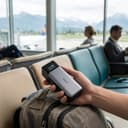
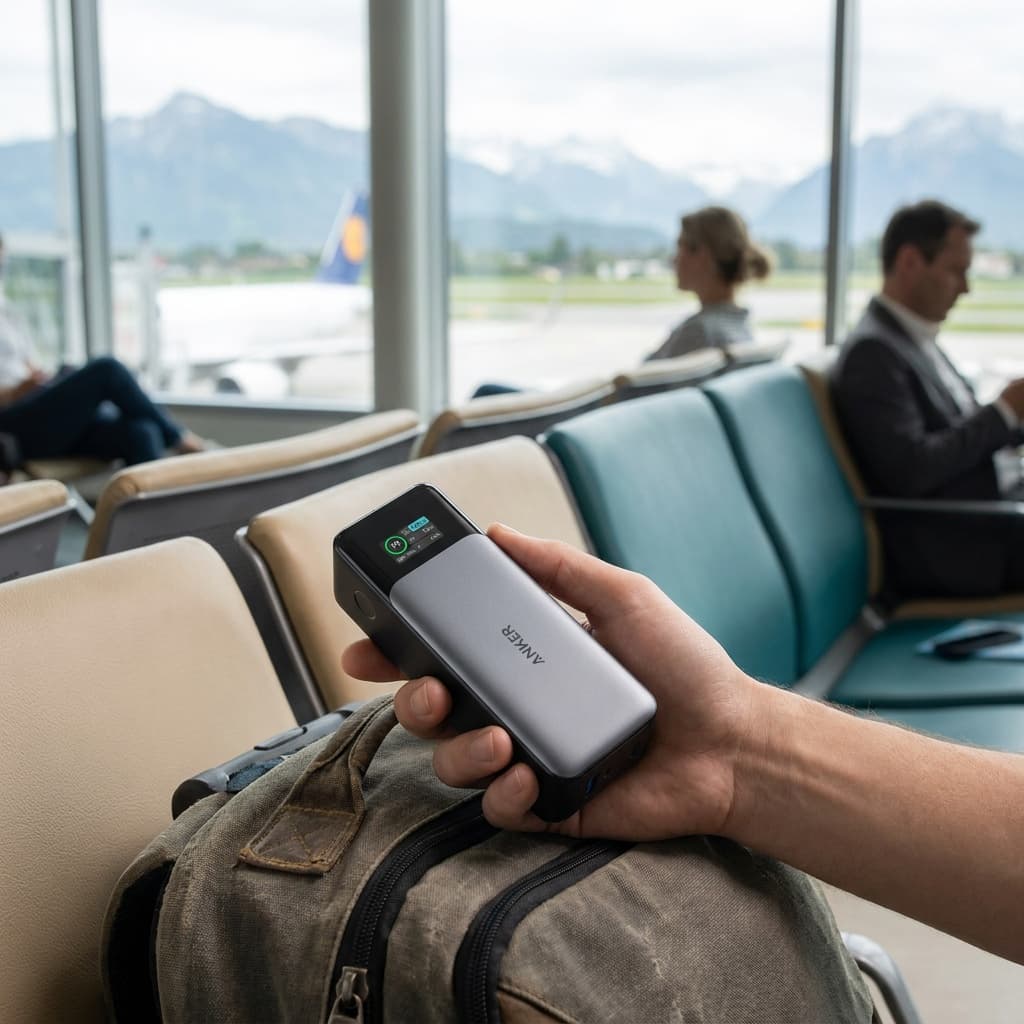
THE POWER PICK
Anker 737 PowerCore 24K
Best Overall
Kit Score 8.8/10
$109.99 Price checked Oct 23, 6:22 AM CDT
Best for: Travelers who carry a USB-C laptop and want high output, a live power display, and substantial capacity below the common 100Wh threshold.
- Smart digital display shows exact battery percentage, input/output wattage in real time
- At 1.39 lb it is noticeably heavier than phone-only banks, not a featherlight day-trip option
- Capacity
- 24,000mAh (86.4Wh)
- Max Output
- 140W (USB-C PD 3.1)
- Ports
- 2× USB-C, 1× USB-A
- Weight
- 1.39 lb (630g)
- Dimensions
- 6.13 × 2.15 × 1.95 in
- Airline Status
- 86.4Wh; below the common 100Wh limit
About this pick
The Anker 737 combines a printed 86.4Wh rating, up to 140W USB-C PD 3.1 output, three ports, and a real-time smart display. Its capacity sits below the common 100Wh threshold, while airline count, storage, and onboard-use rules still apply.
Strengths
- Smart digital display shows exact battery percentage, input/output wattage in real time
- 140W PD 3.1 output is fast enough for most laptops at full speed
- Its printed 86.4Wh rating leaves 13.6Wh of headroom below the common 100Wh threshold
- Two USB-C ports and one USB-A port can serve three devices within the 140W total-output ceiling
Weaknesses
- At 1.39 lb it is noticeably heavier than phone-only banks, not a featherlight day-trip option
- No built-in cable, and the boxed cable varies by seller (Amazon listing: 140W USB-C to C; Anker support page: short USB-A to C)
Kit Score breakdown
Gear for Crater Lake
The buying guides that match what Crater Lake asks of your kit. Each one has our current top picks across budget and use case.
Can you photograph here? Permit and drone rules
Crater Lake needs no permit for small-group still photography, but models, props, closed areas, or crews over eight trigger a permit with a $50 application fee.
- Permit
- Usually fine for personal shoots; commercial or large productions can need a permit
- Drones
- Effectively banned: launching, landing, or operating a drone within park boundaries is prohibited
- Land
- Yes for personal and editorial photography throughout the park
From our photography sister site, Aperture Authority. Verified 2026-07-01.
Frequently asked questions
Do I need a reservation to enter Crater Lake National Park?
No. Unlike some popular parks, Crater Lake does not use a timed-entry or vehicle reservation system. You simply pay the entrance fee at a station or buy a pass online ahead of time. Note the park stopped accepting cash in 2023, so bring a card or use digital payment.
When is the best time to visit Crater Lake?
Mid-July through September is the sweet spot, when Rim Drive and most trails are finally clear of snow and the lake is at its bluest. Snow can linger into June and start again by October, so earlier or later visits often mean closed roads. July and August are also the busiest, so go early in the day for parking and quiet.
Can you swim in Crater Lake?
Yes, but only in one spot. The Cleetwood Cove Trail is the only legal route down to the water, a steep 2.2-mile round trip with a 700-foot elevation change. The lake is cold even in summer, but swimming and dipping in are allowed at the bottom of that trail. The trail is open in summer only.
How much snow does Crater Lake get?
A lot. The park averages over 40 feet of snowfall a year, which is why most roads and facilities close from late fall into summer. Winter visitors can snowshoe and cross-country ski near the rim, but you will need full winter gear and tire chains to reach the park.
Keep planning
Compare with another park
Nearby parks
 Lassen VolcanicA compact volcanic wonderland where boiling mud pots, a recovering blast zone, and a summit hike crowd into one quiet park.
 Redwood National and State ParksHome to the tallest trees on Earth, where coast redwoods top 350 feet over fern canyons and a wild Pacific shore.
 Great BasinA free, gloriously empty Nevada park of 4,000-year-old bristlecones, a 13,000-foot peak, and some of the darkest skies in America.