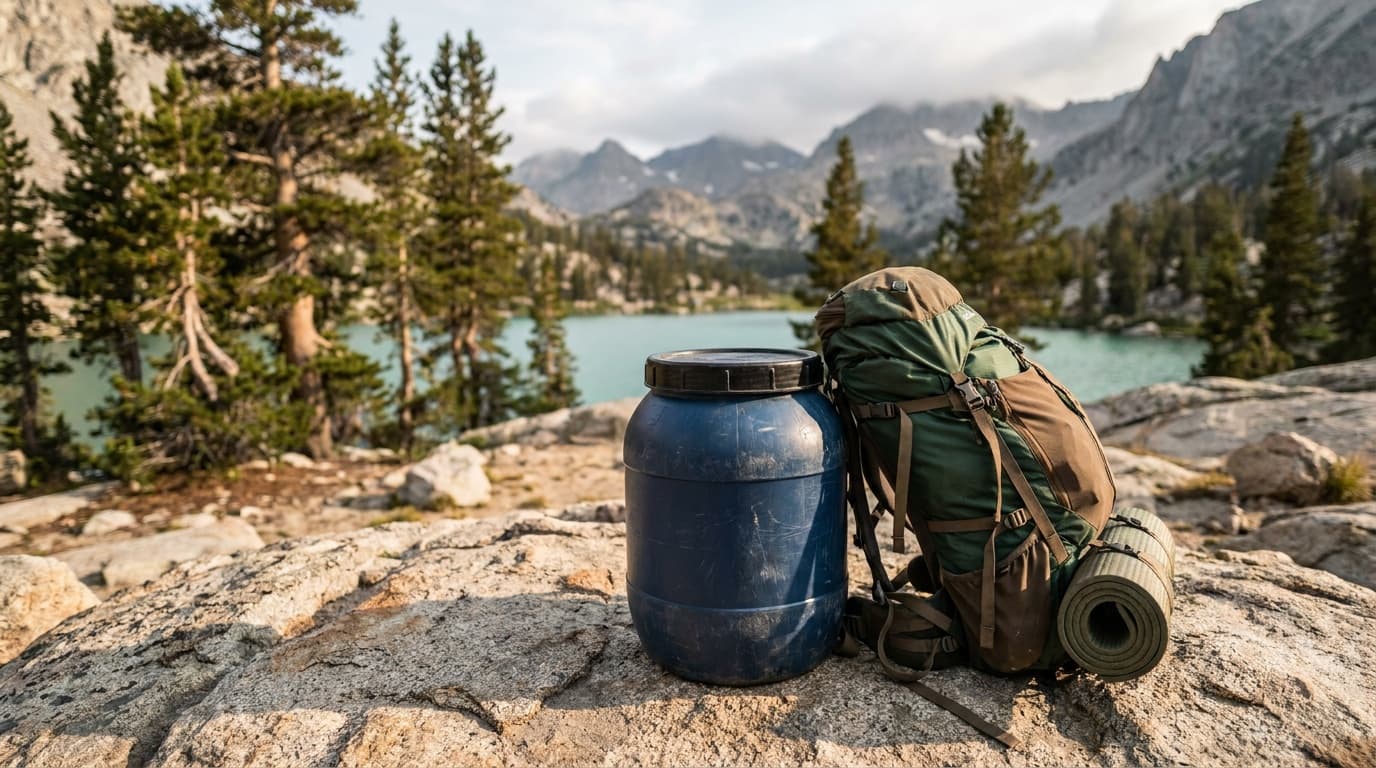
Bear canisters are required gear in dozens of wilderness areas, and the right one keeps your food safe, your pack balanced, and your permit valid. We researched IGBC-certified canisters across verified owner reviews, ranger-station requirement lists, and published specifications to find the four worth buying.
Our quick picks
How we picked
Every canister below earned a score via our Kit Score: IGBC certification, usable volume (liters per day of food at standard ration density), weight-to-capacity ratio, opening mechanism reliability, and fit in real packs. Price was normalized against capacity so a budget canister earns fair credit.
The picks
Best overall
BEST OVERALL
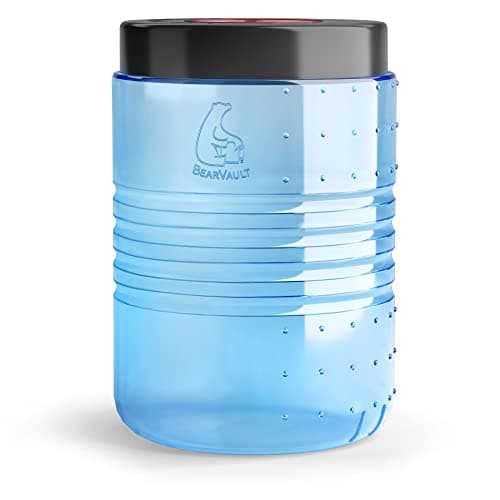
BearVault BV500 Journey
Best for: Solo backpackers and pairs planning 4–7 day trips who want the widest park acceptance and fastest access without carrying a tool.
- Tool-free lid is the fastest to open and close of any hard-sided canister
- Push-tab twist mechanism stiffens noticeably in below-freezing temps
Kit Score 8.5/10 · $99.95 Price checked Oct 23, 6:22 AM CDT · how we score gear
Buy on AmazonProduct details
The BearVault BV500 is the most-seen canister on trail for good reason: it holds 11.5 liters, passes every major park approval list, and opens without carrying a coin. Transparent polycarbonate walls let you find what you packed without dumping the whole thing.
- Weight
- 2 lb 9 oz (1.16 kg)
- Volume
- 11.5 L / 700 cu in
- Dimensions
- 8.7 in diameter x 12.7 in tall
- IGBC Approved
- Yes (cert #5339, also SIBBG)
- Opening mechanism
- Tool-free push-tab twist lid
- Food capacity
- 5–7 days solo
More strengths
- Transparent body means you can spot your dinner from outside the canister
- Flat lid doubles as a stable camp stool or prep surface
Other tradeoffs
- Transparent design is not accepted in a small number of jurisdictions that require opaque canisters
The BV500 Journey's case for "best overall" starts with the lid. A coin or a flathead screwdriver opens it, but the real-world story is that most hikers pop it with the edge of a trekking pole tip or a fingernail with practice. No dedicated tool to lose. The canister is clear polycarbonate, so you can inventory your food without opening it, which sounds minor until you're doing it in the dark at 5 a.m.
At 11.5 liters and roughly 700 grams (varies slightly by production run), it fits 4-7 days of food for one person or a long-weekend supply for two, depending on ration density. The diameter (8.7 in) is wide enough to pack a full day's worth of snacks flat rather than standing upright, which helps with bear canister tetris. It's listed on the IGBC approved-container list and accepted in every park that recognizes IGBC certification, including Yosemite, the Bob Marshall Wilderness, and Rocky Mountain National Park.
The tradeoff is that 11.5 liters of cylinder is genuinely difficult to fit in packs not designed around a canister. Test the fit before your trip: BearVault's own sizing guide recommends 50-65 liter packs, and tall narrow packs (think alpinist designs) work better than wide flat bags. The BV500 sits on its side in most mid-volume packs and acts as a load-bearing structure rather than dead weight.
Best for: Solo backpackers and pairs planning 4-7 day trips who want the widest park acceptance and fastest access without carrying a tool.
Price: $90-$105
Best value
BEST VALUE
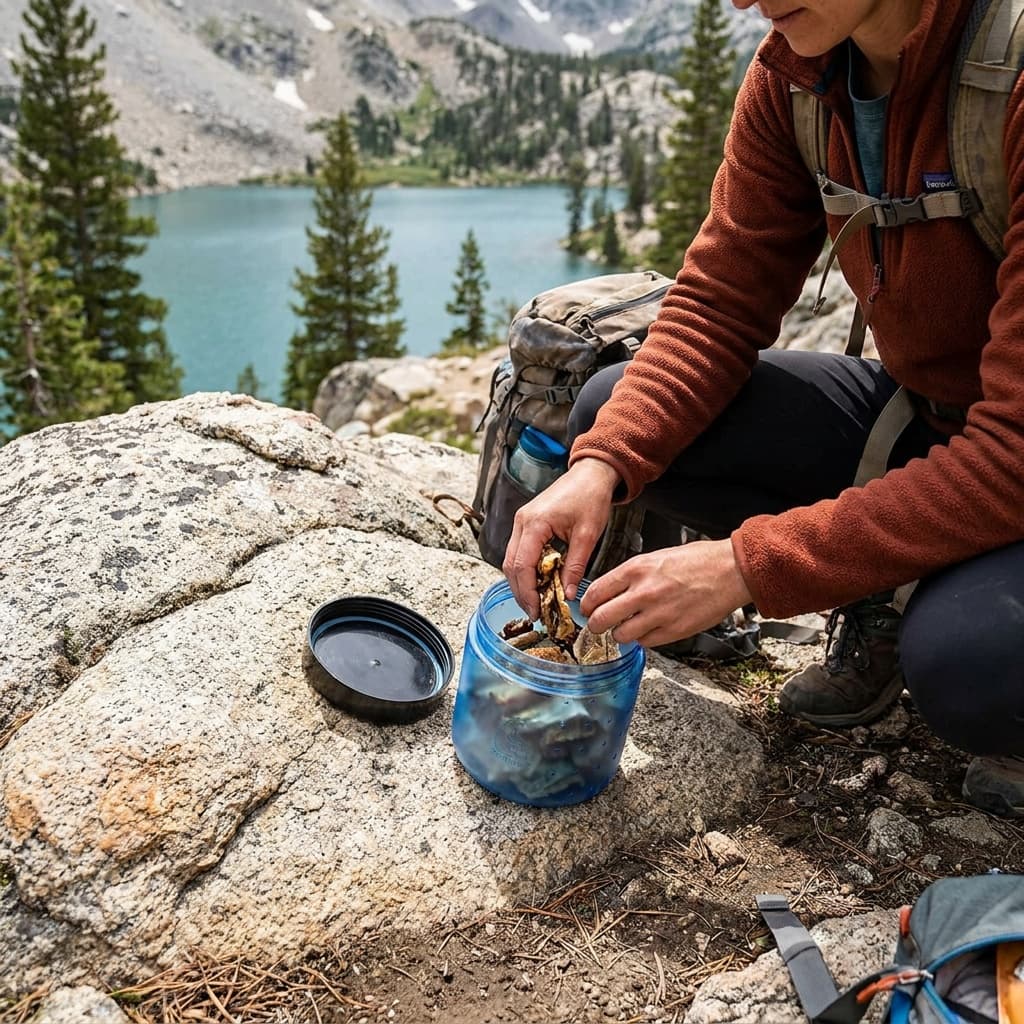
BearVault BV450 Jaunt
Best for: Solo hikers on 2–4 day trips who want the full BearVault experience in a lighter, more packable form without giving up IGBC certification.
- Fits vertically in nearly all packs, including 30–40 L daypacks used on weekend trips
- 7.2 L capacity cuts off at around 4 days for most hikers, so longer trips require the BV500 or food rationing
Kit Score 8.5/10 · $89.95 Price checked Oct 23, 6:22 AM CDT · how we score gear
Buy on AmazonProduct details
The BV450 is the BV500 trimmed down for shorter trips and smaller packs: 8 ounces lighter and squat enough to fit upright in almost any backpack. Same transparent polycarbonate, same tool-free lid, same IGBC certification at a lower price.
- Weight
- 2 lb 1 oz (940 g)
- Volume
- 7.2 L / 440 cu in
- Dimensions
- 8.7 in diameter x 8.3 in tall
- IGBC Approved
- Yes (cert #5340, also SIBBG)
- Opening mechanism
- Tool-free push-tab twist lid
- Food capacity
- 3–4 days solo
More strengths
- Same tool-free push-tab mechanism as the BV500, no coin or screwdriver needed
- Noticeably lighter than most IGBC-certified hard-sided options at 2 lb 1 oz
Other tradeoffs
- Same cold-weather lid stiffness issue as the BV500
The BV450 Jaunt is the BV500's smaller sibling: same tool-free lid, same clear body, same IGBC certification. It trims about 7 grams of weight and reduces the cylinder diameter slightly, which actually improves fit in narrower packs. At 7.2 liters, it fits 2-4 days of food for one person comfortably, or a weekend for a very disciplined packer.
Where it earns the value badge is the price relative to what you give up. You're paying roughly $15-$20 less than the BV500 for a canister that covers the majority of solo backpacking trips. The opening mechanism is identical. The material is identical. If your trips are mostly 1-3 nights, you don't need the extra 4.3 liters and you don't need to pay for them.
The one honest caveat: the BV450 is tight for a 4-day trip. Calorie-dense foods (nuts, hard cheese, bars with minimal packaging) make the math work, but if you pack bulky dehydrated meals in their original pouches, day 4 starts to feel tight. Know your ration style before committing.
Best for: Solo hikers on 2-4 day trips who want the full BearVault experience in a lighter, more packable form without giving up IGBC certification.
Price: $75-$95
Best budget
BEST BUDGET
Garcia Backpackers' Cache
Best for: Budget-conscious backpackers who want a no-nonsense, IGBC-certified canister with a decades-long proven record and plan to use it for 3–5 day trips.
- Longest-standing IGBC certification record in the category, accepted in every US park requiring a hard-sided canister
- Requires carrying a coin or screwdriver to open the lid, which is a minor but recurring trail annoyance
Kit Score 8.7/10 · $89.95 Price checked Oct 23, 6:22 AM CDT · how we score gear
Buy on AmazonProduct details
The Garcia has been on the IGBC approved list longer than any other canister and earns its place as the default budget pick: proven ABS construction, dual IGBC and SIBBG certification, and decades of reliable performance reported by owners who have used the same canister for 20-plus years.
- Weight
- 2 lb 12 oz (1.24 kg)
- Volume
- 10 L / 614 cu in
- Dimensions
- 8.8 in diameter x 12 in tall
- IGBC Approved
- Yes (also SIBBG)
- Opening mechanism
- Coin or flathead screwdriver twist-lock
- Food capacity
- 3–5 days solo
More strengths
- Moulded ABS construction is dense and stiff enough that owners report no failures even after 15–20 years of regular use
- Rounded oblong shape packs tightly against your back and doubles as a solid camp seat
Other tradeoffs
- Narrower opening than the BearVault makes initial loading awkward for bulkier food items
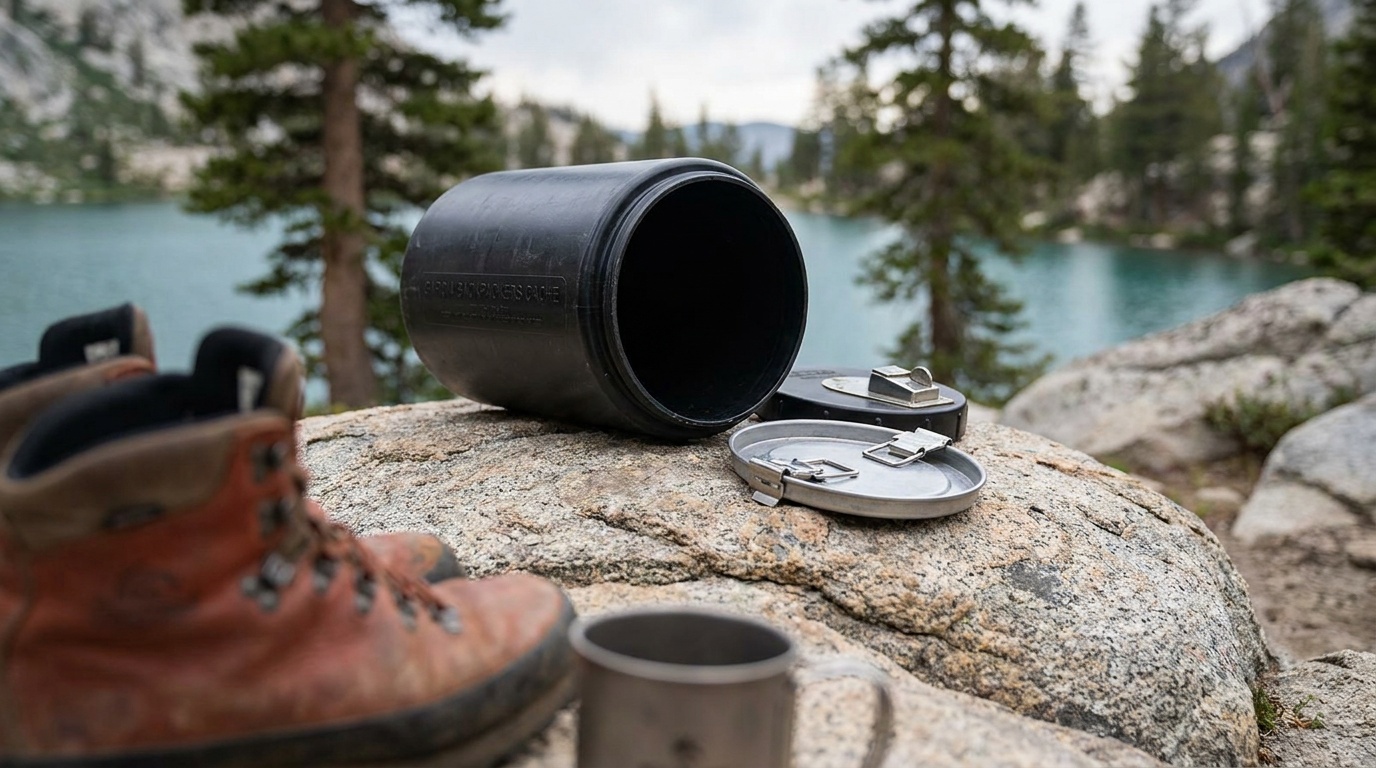
The Garcia Backpackers' Cache has been an IGBC-listed canister since 1998. That tenure matters: when a ranger asks which canister you're carrying and you say "Garcia," there is no follow-up question. The design is simple, opaque black polycarbonate with a two-latch system that requires a coin to open. That mechanism is the most common point of frustration in owner reviews, not because it fails, but because the coin-dependency is real: don't rely on prying it open by hand.
At 11.5 liters (same rated volume as the BV500), the Garcia is a larger canister with a taller, narrower profile. It's heavier at roughly 920 grams, which is about 220 grams more than the BV500. That weight difference over a week-long trip is real, and it's the primary reason the Garcia ends up in the "budget" slot rather than competing with the BV500 for the top spot.
Where it wins on value: the Garcia frequently sells for $70-$80, which is $15-$25 less than the BV500 for the same rated capacity. If you're a casual backpacker doing one or two trips a year and weight optimization is secondary to cost, this is a defensible call.
Best for: Budget-conscious backpackers who want a no-nonsense, IGBC-certified canister with a decades-long proven record and plan to use it for 3-5 day trips.
Price: $70-$90
Editor's choice
EDITOR'S CHOICE
Counter Assault Bear Keg
Best for: Group trips where weight is shared, week-long solo expeditions in active grizzly or high-density black bear areas, or any trip where security and maximum capacity matter more than pack weight.
- 716 cu in is the largest capacity among mainstream IGBC-certified hard-sided canisters, enough for a full week solo
- At 3 lb 10 oz it is the heaviest option in the category and realistically requires a 60 L or larger pack to fit upright
Kit Score 8.6/10 · Check current price · how we score gear
Buy on AmazonProduct details
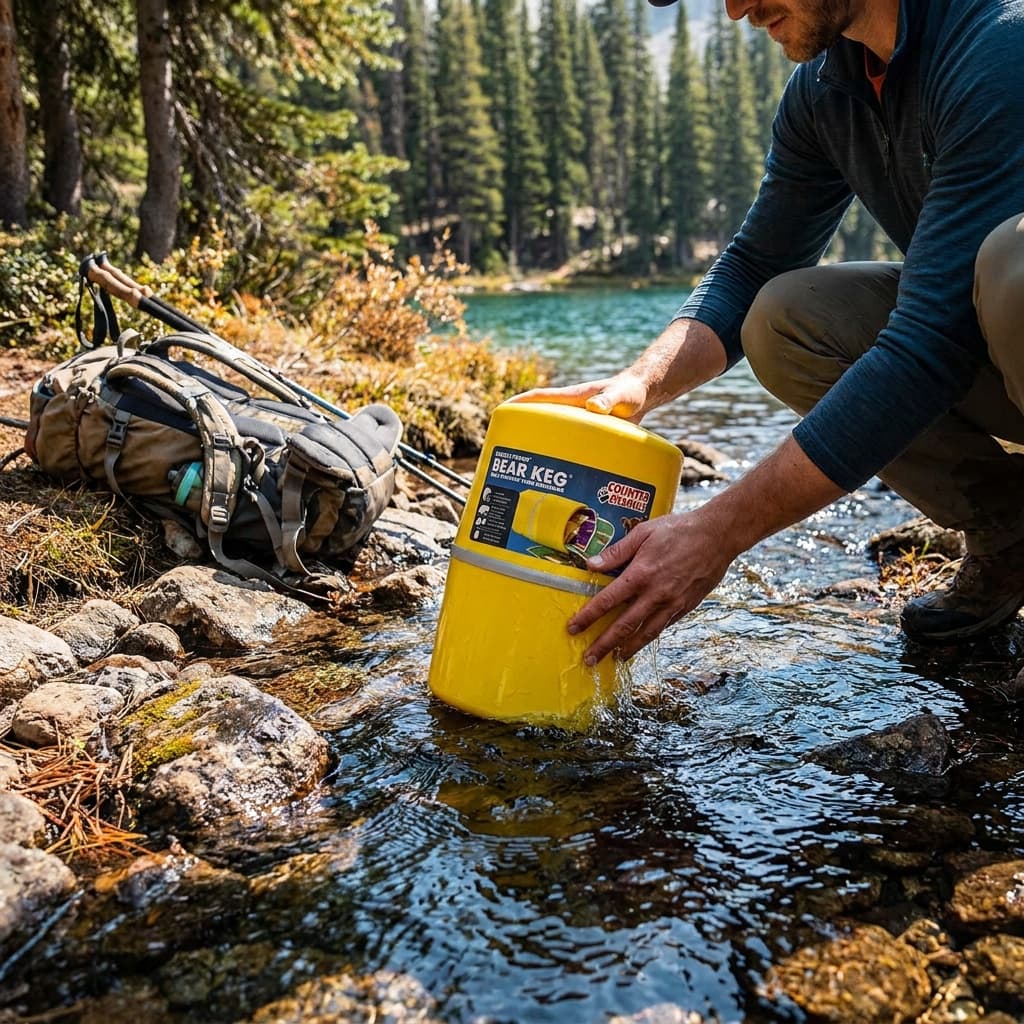
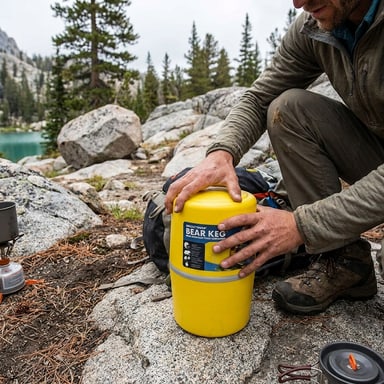
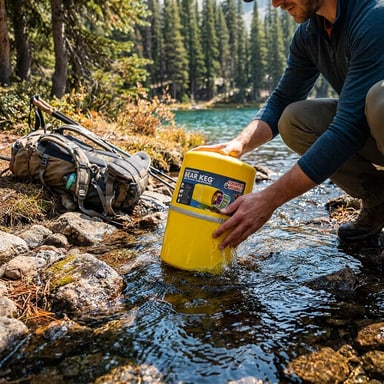
The Counter Assault Bear Keg is the highest-volume IGBC-certified canister at a sub-premium price: 716 cubic inches in a thick-walled ABS shell secured by three stainless steel latches. The bright yellow exterior is a practical feature on trail, making it easy to spot if a bear rolls it into the brush.
- Weight
- 3 lb 10 oz (1.65 kg)
- Volume
- 11.7 L / 716 cu in
- Dimensions
- 9 in diameter x 13.75 in tall
- IGBC Approved
- Yes (also SIBBG)
- Opening mechanism
- Three stainless steel coin-turn latches
- Food capacity
- 5–7 days solo, 3+ days for two
More strengths
- Three-latch stainless steel system gives genuine confidence in high-activity bear zones during hyperphagia season
- Bright yellow shell is easy to locate if displaced, and the large opening simplifies loading bulky or oddly shaped food
Other tradeoffs
- Coin-turn latch mechanism requires carrying a tool; the domed lid is less comfortable as a camp seat than flat-lid competitors
The Counter Assault Bear Keg is the heavy-duty outlier in this group. At 2.9 pounds it is the heaviest canister we recommend, and it earns the weight with the highest rated capacity of the four (11.8 liters) and a wall thickness that is notably more substantial than the BearVault canisters. Owner reports from active grizzly habitat, including the Greater Yellowstone Ecosystem, consistently cite confidence in the rigidity under sustained bear pressure.
The lid uses a tool-free quarter-turn system that is genuinely fast once you're practiced with it. IGBC-certified. Accepted in all the same parks as the others. The price premium over the Garcia ($95-$115) reflects the construction quality and the brand's history in bear-deterrent gear.
The weight case: if you're splitting food with a partner and each carrying a keg, the 2.9-pound individual weight is the relevant number, not "2 kegs for two people." On a group trip where one person carries the canister and others carry other shared weight, the extra 450 grams over a BV500 is less meaningful per-trip than it appears on spec sheets.
Best for: Group trips where weight is shared, week-long solo expeditions in active grizzly or high-density black bear areas, or any trip where security and maximum capacity matter more than pack weight.
Price: $95-$115
Comparison
| Product | Kit Score | Price | Best for |
|---|---|---|---|
| BearVault BV500 Journey | 8.5 | $99.95 Price checked Oct 23, 6:22 AM CDT | Best for: Solo backpackers and pairs planning 4–7 day trips who want the widest park acceptance and fastest access without carrying a tool. Why it stands out: Tool-free lid is the fastest to open and close of any hard-sided canister Tradeoff: Push-tab twist mechanism stiffens noticeably in below-freezing temps |
| BearVault BV450 Jaunt | 8.5 | $89.95 Price checked Oct 23, 6:22 AM CDT | Best for: Solo hikers on 2–4 day trips who want the full BearVault experience in a lighter, more packable form without giving up IGBC certification. Why it stands out: Fits vertically in nearly all packs, including 30–40 L daypacks used on weekend trips Tradeoff: 7.2 L capacity cuts off at around 4 days for most hikers, so longer trips require the BV500 or food rationing |
| Garcia Backpackers' Cache | 8.7 | $89.95 Price checked Oct 23, 6:22 AM CDT | Best for: Budget-conscious backpackers who want a no-nonsense, IGBC-certified canister with a decades-long proven record and plan to use it for 3–5 day trips. Why it stands out: Longest-standing IGBC certification record in the category, accepted in every US park requiring a hard-sided canister Tradeoff: Requires carrying a coin or screwdriver to open the lid, which is a minor but recurring trail annoyance |
| Counter Assault Bear Keg | 8.6 | Check current price | Best for: Group trips where weight is shared, week-long solo expeditions in active grizzly or high-density black bear areas, or any trip where security and maximum capacity matter more than pack weight. Why it stands out: 716 cu in is the largest capacity among mainstream IGBC-certified hard-sided canisters, enough for a full week solo Tradeoff: At 3 lb 10 oz it is the heaviest option in the category and realistically requires a 60 L or larger pack to fit upright |
BearVault BV500 Journey
- Best for
- Solo backpackers and pairs planning 4–7 day trips who want the widest park acceptance and fastest access without carrying a tool.
- Why it stands out
- Tool-free lid is the fastest to open and close of any hard-sided canister
- Tradeoff
- Push-tab twist mechanism stiffens noticeably in below-freezing temps
BearVault BV450 Jaunt
- Best for
- Solo hikers on 2–4 day trips who want the full BearVault experience in a lighter, more packable form without giving up IGBC certification.
- Why it stands out
- Fits vertically in nearly all packs, including 30–40 L daypacks used on weekend trips
- Tradeoff
- 7.2 L capacity cuts off at around 4 days for most hikers, so longer trips require the BV500 or food rationing
Garcia Backpackers' Cache
- Best for
- Budget-conscious backpackers who want a no-nonsense, IGBC-certified canister with a decades-long proven record and plan to use it for 3–5 day trips.
- Why it stands out
- Longest-standing IGBC certification record in the category, accepted in every US park requiring a hard-sided canister
- Tradeoff
- Requires carrying a coin or screwdriver to open the lid, which is a minor but recurring trail annoyance
Counter Assault Bear Keg
- Best for
- Group trips where weight is shared, week-long solo expeditions in active grizzly or high-density black bear areas, or any trip where security and maximum capacity matter more than pack weight.
- Why it stands out
- 716 cu in is the largest capacity among mainstream IGBC-certified hard-sided canisters, enough for a full week solo
- Tradeoff
- At 3 lb 10 oz it is the heaviest option in the category and realistically requires a 60 L or larger pack to fit upright
How to choose the right canister
Match the canister to your trip
Check the requirement first
Look up your specific wilderness area on the IGBC website or the managing agency's permit page. Some areas (Yosemite's Yosemite Valley, Denali) have specific approved-container lists that go beyond the IGBC list. Confirm your canister is on it before you book.
Calculate volume by day
The standard planning figure is 1.5-2.0 liters of packed food per person per day. A 3-day solo trip needs 4.5-6.0 liters; add a buffer day. If you pack dehydrated meals in original pouches, budget closer to 2.0 L/day. Compressed, calorie-dense foods can get you to 1.5 L/day.
Test fit in your pack at home
Fill the canister with food, then try loading it in your actual pack. Canisters are most stable horizontally near the back panel. If it doesn't fit flat, it fits standing upright, which raises your center of gravity. Know this before trailhead day.
Weight matters on long trips
For a 2-day trip, a 200-gram weight difference between canisters is meaningless. For a 10-day trip, you will feel every gram at mile 15. If you're doing extended trips regularly, the BearVault canisters' lighter construction is worth the price premium over the Garcia.
The canister you actually bring is better than the lighter one you leave at home because it didn't fit your pack.
Frequently asked questions
Do I need a bear canister if I know how to hang a bear bag?
In any area that requires a hard-sided IGBC-approved canister, a bear bag does not satisfy the requirement, regardless of technique. Rangers do check, and violations can result in fines. Outside of required areas, bear hanging is still a valid technique in black bear habitat with consistent success, but it fails in areas with food-conditioned bears that have learned to defeat hangs. A canister removes that variable.
Can a bear actually break into one of these canisters?
IGBC-certified canisters are tested against captive bears under controlled conditions, and no bear has broken into a certified canister during the testing protocol. In the field, food-conditioned bears have been documented batting, biting, and carrying canisters, but the certified models in this list have no confirmed field breaches in published wildlife-management reports. The risk is not the bear opening the canister: it's the bear carrying it off a cliff. Camp 200 feet from your canister and place it away from drop-offs.
Can I use a bear canister to store anything other than food?
Yes, and rangers encourage it. Anything with a scent that attracts bears belongs in the canister: toothpaste, sunscreen, lip balm, trash, wrappers, even clothing worn while cooking on multi-week trips. The practical limit is volume. Most hikers keep non-food scented items in a stuff sack in the canister on top of their food so they can access them quickly at camp.
A bear canister is one of the few pieces of gear where the right call matters for wildlife, not just your trip. Every incident with a food-conditioned bear makes the next group's permit area less safe. Carry the canister, use it every night, and camp well away from it.
Browse more gear research in our hiking hub, or read about how we research and rate every product we cover.
Keep going
Related guides
 Complete hike loadoutDay hike kitBuild the complete kit
Our recommendations draw on manufacturer documentation, retailer listings, owner feedback, and comparisons with alternatives.
As an Amazon Associate I earn from qualifying purchases. We may earn a commission from links here, at no extra cost to you. How we research →