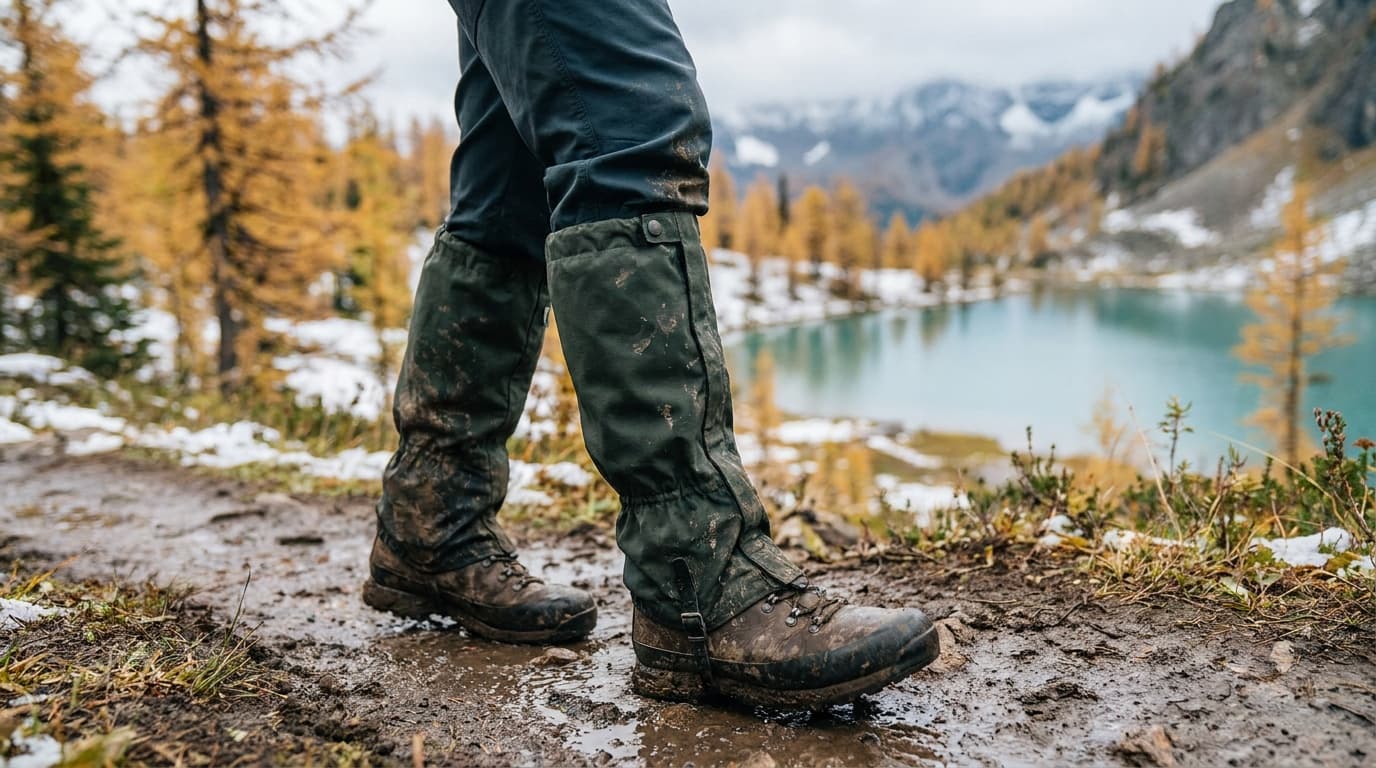
Gaiters are a simple piece of kit that most hikers buy once and forget until the day they really need them. Get the fit wrong and you spend the whole descent emptying gravel from your boot; get the waterproofing wrong and a creek crossing ruins the rest of the day.
Gaiters keep snow, mud, and debris out of footwear; they do not add grip under the sole. If ice or packed snow is the problem, use the ice cleats, chain spikes, snowshoes, and crampons guide first.
Our quick picks
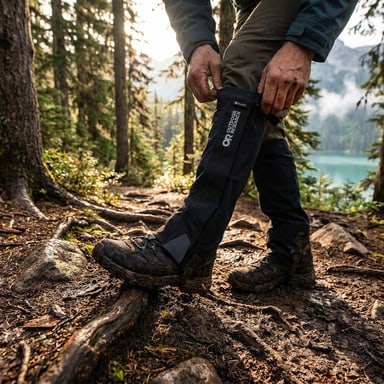
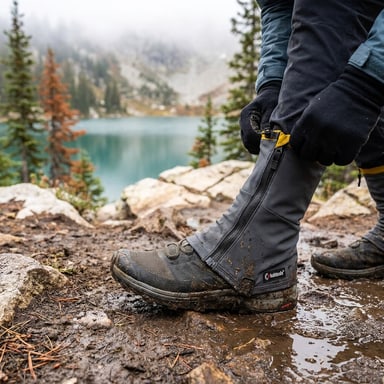
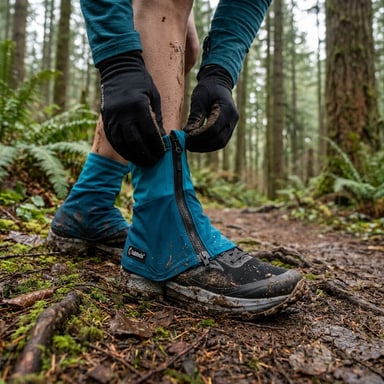
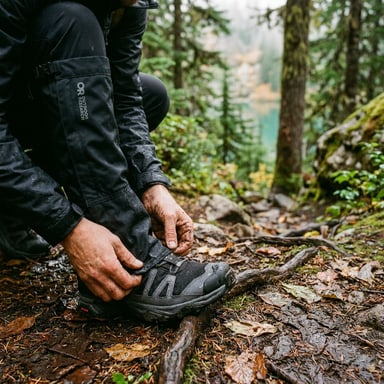
How we picked
Every pick here was evaluated against the Kit Score: a weighted breakdown of protection, durability, fit, weight, and value. We aggregate manufacturer specs and verified long-term owner reviews. We do not rely on first-look impressions.
Our top picks
Best overall
BEST OVERALL
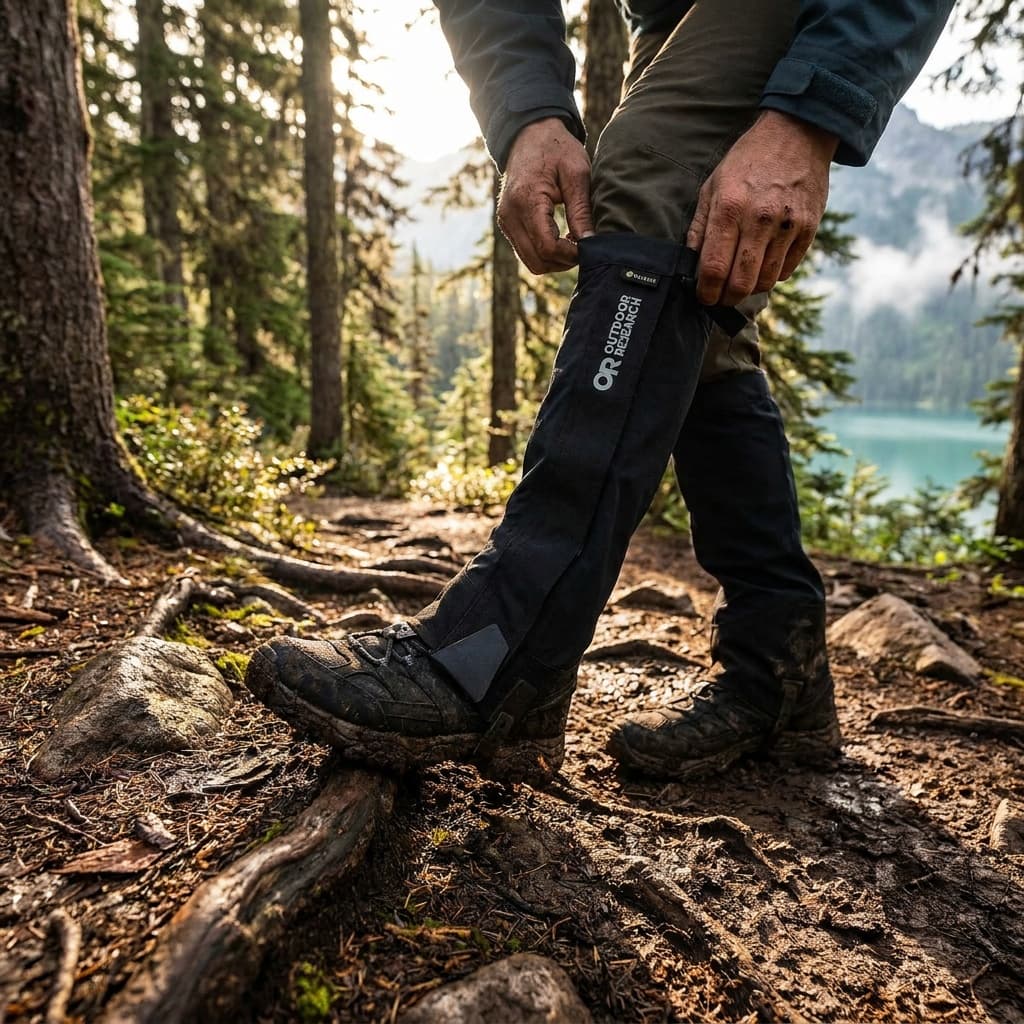
Outdoor Research Men's Crocodile GORE-TEX Gaiters
Best for: Three-season and winter hikers who need proven waterproofing for wet Scottish-style days, Pacific Northwest trails, or shoulder-season snow crossings.
- GORE-TEX 3L construction keeps feet dry through stream crossings, deep mud, and sustained rain that defeats DWR-only gaiters
- At 11.1 oz per pair, noticeable weight penalty versus lighter DWR gaiters on warm-weather trail days
Kit Score 8.4/10 · $109.95 Price checked Oct 23, 4:16 PM CDT · how we score gear
Buy on AmazonProduct details
The Crocodile is Outdoor Research's flagship full-length gaiter, updated for 2025 with a revised design and fit and a GORE-TEX 3L upper that pairs genuine waterproofing with meaningful breathability. The Cordura lower panel handles crampon strap contact and brush abrasion without flinching.
- Height
- Full, top hem above the calf (camlock)
- Weight
- 11.11 oz / 315 g per pair
- Waterproofing
- GORE-TEX 3L (70D nylon plain weave)
- Upper material
- 70D bluesign GORE-TEX 3L nylon
- Lower material
- Abrasion-resistant 1000D Cordura nylon
- Closure
- Double-stitched hook-and-loop, top-hem camlock, replaceable TPU instep strap
More strengths
- Cordura lower lasts years of hard use; owners report 5+ seasons without delamination or strap failure on updated models
- Slim updated fit works over trail runners and light mountaineering boots, not just traditional stiff boots
Other tradeoffs
- GORE-TEX breathability lags lighter membranes during high-output hiking in mild conditions, and legs can feel warm
The OR Crocodile is a long-running benchmark for full-height hiking gaiters from a brand that has built gaiters since 1981, and the 2025 update keeps earning that position. A GORE-TEX 3L upper means genuine waterproofing rather than the DWR-only protection most gaiters offer. The foot panel is 1000D Cordura for scuff resistance; a replaceable TPU instep strap and a boot lace hook round out a design that has clearly been refined through real use.
At 11.1 oz for the pair, you pay a real weight premium versus ultralight options, but you get a gaiter that handles wet Pacific Northwest trails, shoulder-season snow crossings, and multi-day mud without requiring you to carry a backup pair. There is no zipper: a double-stitched hook-and-loop front closure and a camlock at the top hem make it quick to put on and adjust over boots. One buying note: Outdoor Research says the Crocodile contains PFAS and cannot ship to California, New York, or Colorado.
Best for: three-season and winter hikers who want proven waterproofing and are willing to pay for it.
Best value
BEST VALUE
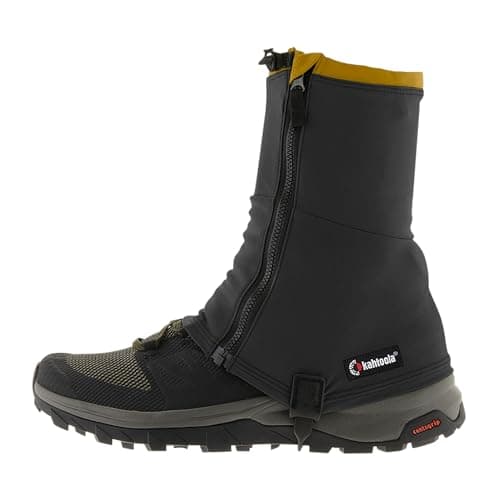
Kahtoola RENAgaiter Mid
Best for: Three-season hikers and backpackers who want reliable debris and light moisture protection in one mid-weight package, and who hike primarily in non-torrential conditions.
- Stretch nylon fits over trail runners and leather boots without adjustment, and the asymmetric zipper removes pressure from the top of the foot
- DWR alone cannot handle prolonged rain or wet grass: owner testing found sock tops wet after sustained downpours
Kit Score 8.2/10 · $64.95 Price checked Oct 23, 4:16 PM CDT · how we score gear
Buy on AmazonProduct details
The RENAgaiter Mid occupies the versatile middle ground in Kahtoola's line: tough enough for off-trail scrambling and light snow, light enough that you'll actually throw it in your pack. The four-way stretch nylon conforms to any boot or trail runner, and the Aegis reinforced strap connection points address the abrasion failure mode that plagued earlier gaiters.
- Height
- Mid (9 in / 22.9 cm)
- Weight
- 3.7 oz / 104g (S/M); 4.1 oz / 117g (L/XL)
- Waterproofing
- PFAS-free DWR coating (water resistant, not waterproof)
- Material
- 90% stretch-woven recycled nylon, 10% polyurethane
- Instep strap
- DuraLink TPU strap with 1,000-mile warranty
- Closure
- Asymmetrical YKK VISLON zipper with Aegis rock guards
More strengths
- DuraLink instep strap rated to 1,000 miles and fully replaceable for a few dollars, eliminating the single most common gaiter failure point
- Breathes noticeably better than full waterproof gaiters, making it the sensible choice for three-season use where full GORE-TEX is overkill
Other tradeoffs
- Stretch nylon is susceptible to puncture holes on sharp talus after 300 to 400 trail miles
The RENAgaiter Mid sits at a smart intersection: it is lighter than a full-height gaiter and more protective than a trail-running sock gaiter. The stretch-woven recycled nylon shell has a PFAS-free DWR that sheds light rain, while the 9-inch mid-height profile catches the debris that matters most on rocky singletrack.
A side zipper, lace hook, and replaceable DuraLink TPU instep strap (backed by a 1,000-mile warranty) attach it cleanly to most trail shoes and boots, and an Aegis rock guard protects the lower edge. Owner feedback consistently flags the fit as forgiving across a wide range of boot volumes. This is the pick for backpackers who hike in New England, the Sierra, or similar terrain where you encounter more dusty scree than sustained rainfall.
Best for: three-season hikers and backpackers who want reliable debris and light moisture protection without paying for full waterproofing.
Best budget
BEST BUDGET
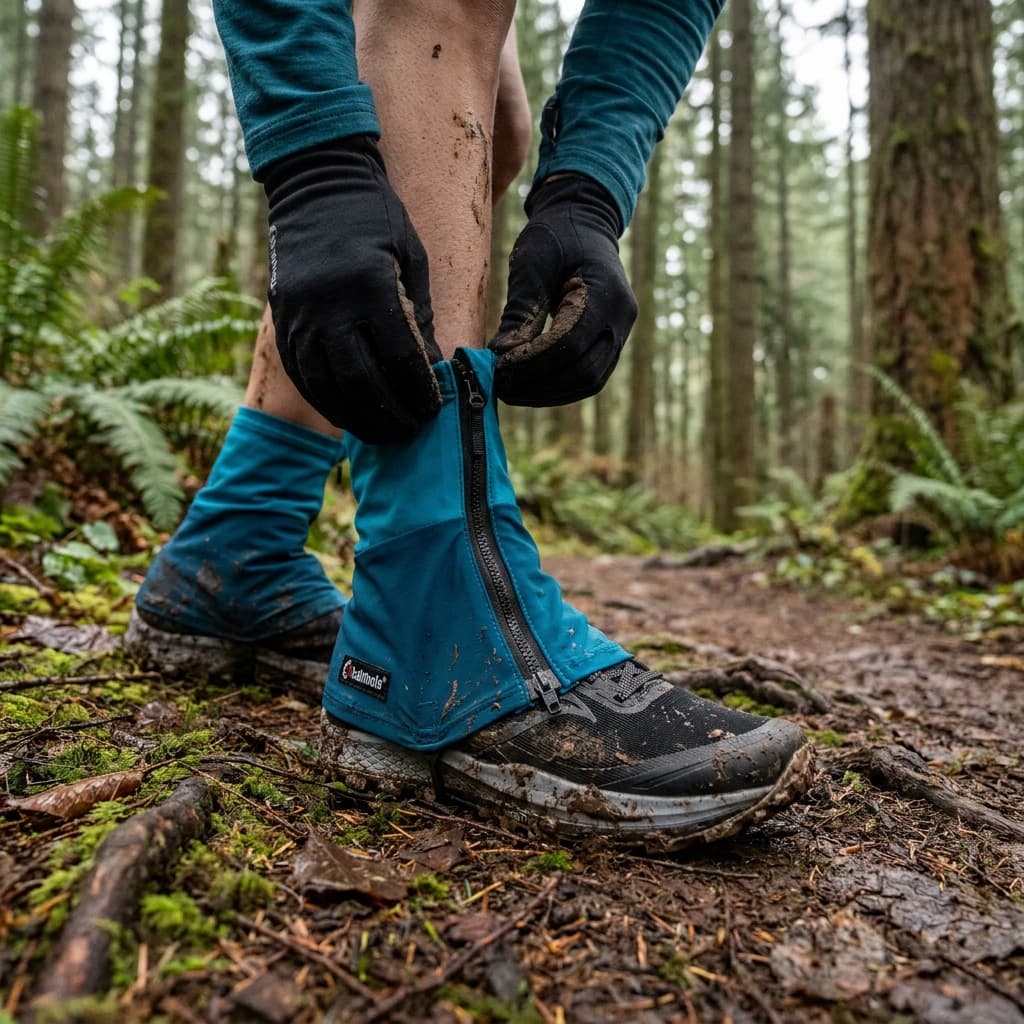
Kahtoola INSTAgaiter Mid
Best for: Trail runners, thru-hikers, and ultralight backpackers who prioritize keeping weight under 3 oz and need dust, sand, and debris exclusion on dry-to-moderate trails.
- Sub-3 oz weight is low enough that most trail runners carry these as standard kit on dusty or sandy trails
- Lighter nylon construction shows wear faster than the RENAgaiter on rough rocky terrain; early strap-attachment failures reported by some owners
Kit Score 8.0/10 · $54.95 Price checked Oct 23, 4:16 PM CDT · how we score gear
Buy on AmazonProduct details
The INSTAgaiter Mid is among the lightest zippered mid gaiters on the market at under 3 oz per pair, making it the default choice for trail runners and ultralight backpackers who want debris protection without adding noticeable weight. It shares Kahtoola's DuraLink instep strap system with the pricier RENAgaiter, so the high-wear component is still field-replaceable.
- Height
- Mid (7.5 in / 19 cm)
- Weight
- 2.4 oz / 68g (S/M); 2.7 oz / 76g (L/XL)
- Waterproofing
- DWR coating (water resistant, not waterproof)
- Material
- 86% stretch-woven recycled nylon, 14% polyurethane
- Instep strap
- DuraLink TPU strap with 1,000-mile warranty
- Closure
- Asymmetrical YKK VISLON side zipper
More strengths
- Shares the same DuraLink replaceable instep strap as the higher-end RENAgaiter, meaning the failure point is serviceable for a few dollars
- Side zipper and stretch fabric go on and off over trail runners or light hiking shoes in seconds without removing footwear
Other tradeoffs
- Snow can work its way up from the boot opening under the gaiter hem in deep soft conditions, limiting utility for winter snowshoeing
The INSTAgaiter Mid is a trail runner's gaiter built for low pack weight. At under 3 oz for the pair, it is an easy addition to a lightweight kit. The 7.5-inch stretch-woven recycled nylon shell handles dust, sand, and light debris; the low-profile instep strap plays nicely with trail running shoes and light hikers that have minimal welts for a hook.
What it gives up is obvious: no meaningful waterproofing, and the lighter fabric will show wear faster than Cordura-faced options on abrasive terrain. Use it for what it is, which is a debris barrier on dry to moderately wet trails, and it will outperform everything heavier in that context.
The INSTAgaiter proves that gaiters do not need to be heavy to be worth carrying every day.
Best for: trail runners, thru-hikers, and ultralight backpackers who need dust and debris exclusion and want to keep the pair under 3 oz.
Editor's choice
EDITOR'S CHOICE
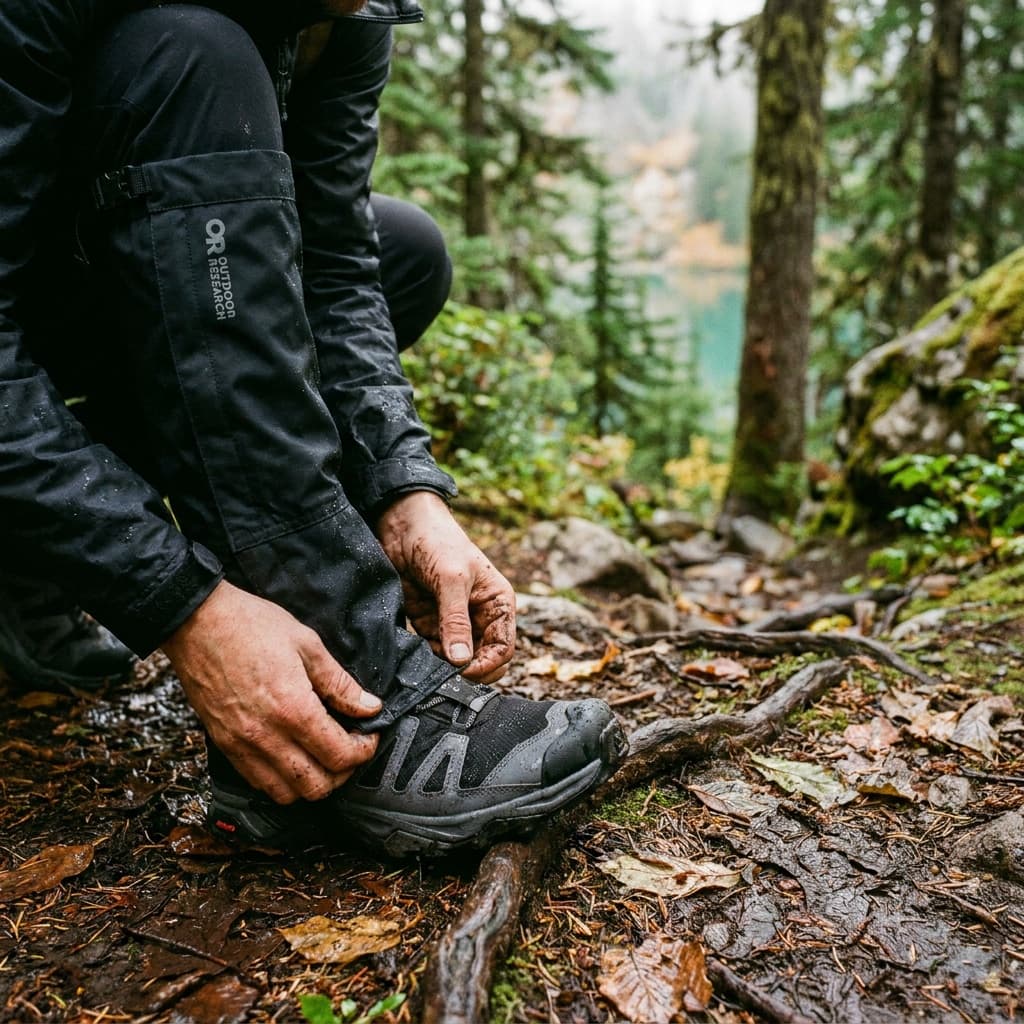
Outdoor Research Rocky Mountain High Gaiters II
Best for: Hikers who want full-length protection for four-season use on a mid-range budget, especially those who encounter mud, scree, or light snow but don't need GORE-TEX-level waterproofing.
- Full 19-inch coverage keeps snow, scree, and mud out of boots on everything from day hikes to winter approaches, at less than half the price of GORE-TEX full gaiters
- PU coating provides water resistance, not waterproofing: sustained rain or full submersion will eventually wet through, unlike GORE-TEX alternatives
Kit Score 8.5/10 · $64.95 Price checked Oct 23, 4:16 PM CDT · how we score gear
Buy on AmazonProduct details
The Rocky Mountain High II is Outdoor Research's updated budget full-length gaiter, revised with an offset shin closure that runs up the outside of the leg for a more comfortable fit, and Hypalon-reinforced instep hardware that addresses strap durability complaints from the original model. At $65 it delivers full-height debris and light snow coverage that most hikers will never outgrow.
- Height
- Full (19 in / 48 cm)
- Weight
- 7.76 oz per pair
- Waterproofing
- PU-coated 420D nylon packcloth (water resistant)
- Material
- 100% nylon 420D packcloth with PU coating
- Instep strap
- Hypalon reinforced strap with metal lace hooks
- Closure
- Wide hook-and-loop front closure; offset shin placement on MK II
More strengths
- Updated offset closure and Hypalon strap reinforce the two weakest points of the previous generation; 4.7 stars from early owners at L.L.Bean
- 420D packcloth holds up to brush, crampon straps, and muddy terrain across multiple seasons without requiring premium-membrane care
Other tradeoffs
- Full-height design adds bulk and warmth, making these a poor match for low-cut trail runners or warm-weather day hikes
The Rocky Mountain High II fills the gap between the INSTAgaiter's minimal coverage and the Crocodile's full GORE-TEX investment. Full-height construction (knee to boot) in PU-coated 420D nylon packcloth gives solid coverage for mud, scree, and light snow. It is not rated to GORE-TEX waterproofing standards, but it handles the kind of mixed conditions that most hikers encounter in shoulder season.
The Gen II version uses a Hypalon instep strap, reinforced boot lace hooks, and a hook-and-loop front closure, and Outdoor Research lists it at 7.76 oz. Verified owner reviews note it runs slightly large; check the current size chart if you are between measurements. It offers the extra height that scramblers and off-trail hikers want without relying on a waterproof membrane.
Best for: hikers who want full-length coverage for four-season use on a mid-range budget, especially on routes with sustained mud, scree, or light snow.
How to choose the right gaiter
Picking the right height and protection level
Assess your typical terrain
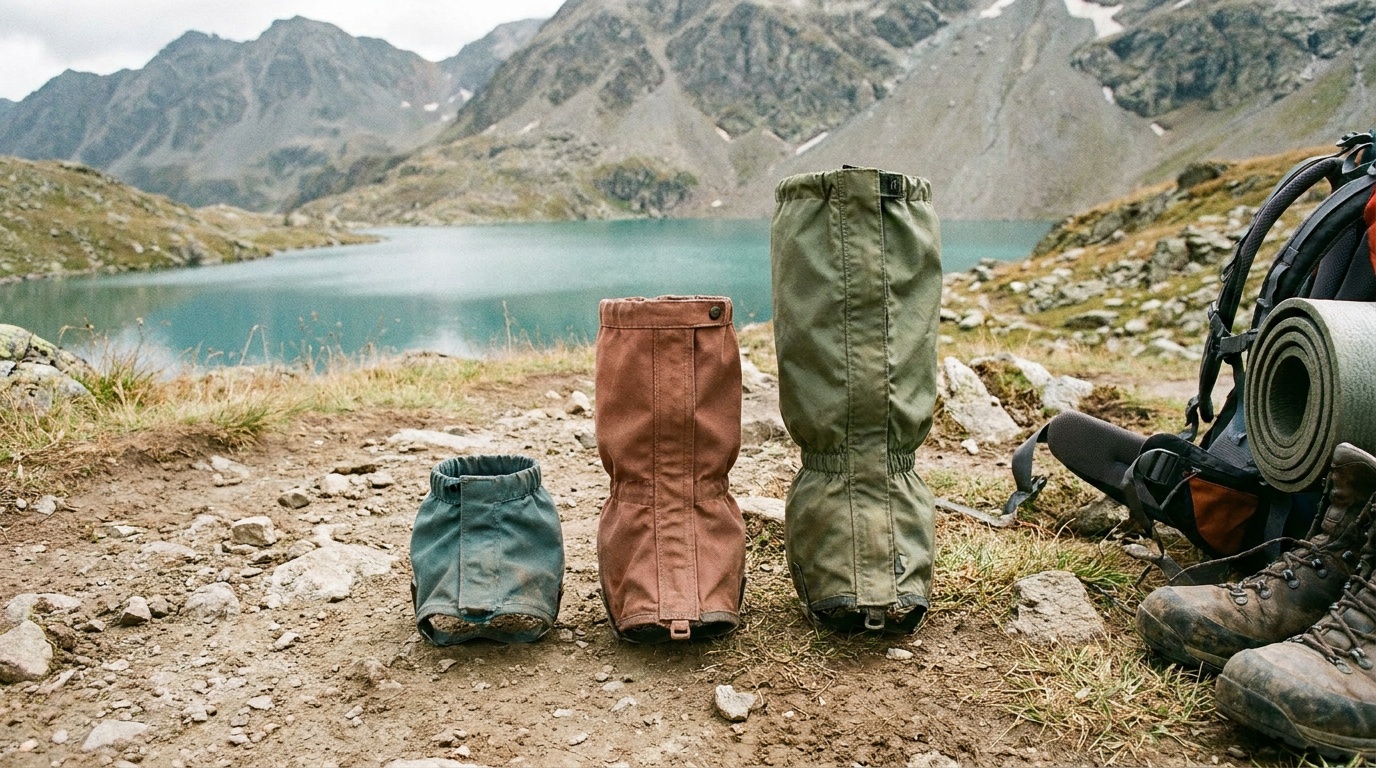
Low gaiters (sock height) work for groomed trails and soft surfaces. Mid-height covers the ankle and lower shin, blocking most debris and light mud. Full-height protects the entire lower leg and is the right choice for deep snow, sustained mud, and off-trail travel.
Match waterproofing to your conditions
DWR-only is fine for dry and dusty trails. If you regularly hike in rain, ford streams, or cross snow fields, choose a GORE-TEX or equivalent laminate shell. DWR degrades; a laminate membrane does not rely on surface chemistry.
Check boot attachment compatibility
Most gaiters use a combination of instep strap, lace hook, and top closure. Minimalist trail runners may not have the welts that a traditional hook needs. Confirm compatibility before buying, especially with low-profile footwear.
Consider weight against trip length
A full-height GORE-TEX gaiter like the Crocodile weighs around 11 oz per pair. On a day hike that is trivial. On a 500-mile thru-hike it matters. Ultralight debris gaiters under 3 oz are the correct default for long-distance hikers unless you know you will face sustained wet or snowy conditions.
Verify durability at the instep
The instep strap is the single most common failure point. Look for a replaceable strap design (OR Crocodile) or a robust webbing construction. Gaiters with thin elastic straps wear through quickly on abrasive rock.
| Product | Kit Score | Price | Best for |
|---|---|---|---|
| Outdoor Research Men's Crocodile GORE-TEX Gaiters | 8.4 | $109.95 Price checked Oct 23, 4:16 PM CDT | Best for: Three-season and winter hikers who need proven waterproofing for wet Scottish-style days, Pacific Northwest trails, or shoulder-season snow crossings. Why it stands out: GORE-TEX 3L construction keeps feet dry through stream crossings, deep mud, and sustained rain that defeats DWR-only gaiters Tradeoff: At 11.1 oz per pair, noticeable weight penalty versus lighter DWR gaiters on warm-weather trail days |
| Kahtoola RENAgaiter Mid | 8.2 | $64.95 Price checked Oct 23, 4:16 PM CDT | Best for: Three-season hikers and backpackers who want reliable debris and light moisture protection in one mid-weight package, and who hike primarily in non-torrential conditions. Why it stands out: Stretch nylon fits over trail runners and leather boots without adjustment, and the asymmetric zipper removes pressure from the top of the foot Tradeoff: DWR alone cannot handle prolonged rain or wet grass: owner testing found sock tops wet after sustained downpours |
| Kahtoola INSTAgaiter Mid | 8.0 | $54.95 Price checked Oct 23, 4:16 PM CDT | Best for: Trail runners, thru-hikers, and ultralight backpackers who prioritize keeping weight under 3 oz and need dust, sand, and debris exclusion on dry-to-moderate trails. Why it stands out: Sub-3 oz weight is low enough that most trail runners carry these as standard kit on dusty or sandy trails Tradeoff: Lighter nylon construction shows wear faster than the RENAgaiter on rough rocky terrain; early strap-attachment failures reported by some owners |
| Outdoor Research Rocky Mountain High Gaiters II | 8.5 | $64.95 Price checked Oct 23, 4:16 PM CDT | Best for: Hikers who want full-length protection for four-season use on a mid-range budget, especially those who encounter mud, scree, or light snow but don't need GORE-TEX-level waterproofing. Why it stands out: Full 19-inch coverage keeps snow, scree, and mud out of boots on everything from day hikes to winter approaches, at less than half the price of GORE-TEX full gaiters Tradeoff: PU coating provides water resistance, not waterproofing: sustained rain or full submersion will eventually wet through, unlike GORE-TEX alternatives |
Outdoor Research Men's Crocodile GORE-TEX Gaiters
- Best for
- Three-season and winter hikers who need proven waterproofing for wet Scottish-style days, Pacific Northwest trails, or shoulder-season snow crossings.
- Why it stands out
- GORE-TEX 3L construction keeps feet dry through stream crossings, deep mud, and sustained rain that defeats DWR-only gaiters
- Tradeoff
- At 11.1 oz per pair, noticeable weight penalty versus lighter DWR gaiters on warm-weather trail days
Kahtoola RENAgaiter Mid
- Best for
- Three-season hikers and backpackers who want reliable debris and light moisture protection in one mid-weight package, and who hike primarily in non-torrential conditions.
- Why it stands out
- Stretch nylon fits over trail runners and leather boots without adjustment, and the asymmetric zipper removes pressure from the top of the foot
- Tradeoff
- DWR alone cannot handle prolonged rain or wet grass: owner testing found sock tops wet after sustained downpours
Kahtoola INSTAgaiter Mid
- Best for
- Trail runners, thru-hikers, and ultralight backpackers who prioritize keeping weight under 3 oz and need dust, sand, and debris exclusion on dry-to-moderate trails.
- Why it stands out
- Sub-3 oz weight is low enough that most trail runners carry these as standard kit on dusty or sandy trails
- Tradeoff
- Lighter nylon construction shows wear faster than the RENAgaiter on rough rocky terrain; early strap-attachment failures reported by some owners
Outdoor Research Rocky Mountain High Gaiters II
- Best for
- Hikers who want full-length protection for four-season use on a mid-range budget, especially those who encounter mud, scree, or light snow but don't need GORE-TEX-level waterproofing.
- Why it stands out
- Full 19-inch coverage keeps snow, scree, and mud out of boots on everything from day hikes to winter approaches, at less than half the price of GORE-TEX full gaiters
- Tradeoff
- PU coating provides water resistance, not waterproofing: sustained rain or full submersion will eventually wet through, unlike GORE-TEX alternatives
Low vs mid vs high gaiters: a quick guide
Low gaiters (sock gaiters, trail gaiters) sit at ankle height. They are the right tool for sandy desert trails, groomed singletrack, and any route where your only concern is debris entering the collar of a low-cut shoe. Weight is typically 1–2 oz per pair.
Mid-height gaiters stand roughly 7 to 9 inches tall, covering the ankle and lower shin. This is the most versatile category, handling the majority of three-season hiking conditions: rocky trail debris, light mud, creek spray, and moderate snow. Both Kahtoola picks here are mid-height.
Full-height gaiters run from the top of the boot to just below the knee. Required for deep snow travel, mountaineering approaches, and sustained off-trail terrain with heavy mud or brush. The OR Crocodile and Rocky Mountain High II both fall here.
Waterproof vs breathable: what actually matters
The debate is real but often overstated. A GORE-TEX gaiter will keep water out longer and more reliably than a DWR-coated nylon gaiter. The tradeoff is weight and breathability, and the purchase only makes sense when sustained wet conditions are common enough to justify the membrane.
For most three-season hikers in non-alpine conditions, a well-applied DWR coating is adequate for the brief wet encounters that dominate trail use. If your hiking calendar regularly includes multi-day trips in the Pacific Northwest, Scotland, or similar wet climates, the Crocodile's GORE-TEX shell pays for itself on day two.
Where these numbers come from
| Claim | Source | Checked |
|---|---|---|
| OR Crocodile (2025 update): GORE-TEX 3L 70D nylon upper, 1000D Cordura foot panel, hook-and-loop closure, top-hem camlock, replaceable TPU instep strap, 11.11 oz / 315 g; contains PFAS, cannot ship to CA, NY, or CO | Outdoor Research, Men's Crocodile Gaiter | Sep 2026 |
| OR Rocky Mountain High II: 420D PU-coated nylon packcloth, Hypalon instep strap, reinforced lace hooks, hook-and-loop closure, 7.76 oz / 220 g | Outdoor Research, Men's Rocky Mountain High Gaiter II | Sep 2026 |
| Outdoor Research has built gaiters since 1981 | Outdoor Research, gaiters | Sep 2026 |
| Kahtoola RENAgaiter Mid: 9 in tall, 3.1 to 4.1 oz per pair by size, stretch-woven recycled nylon with PFAS-free DWR, side zipper, DuraLink TPU strap, Aegis rock guard | Kahtoola, RENAgaiter | Sep 2026 |
| Kahtoola INSTAgaiter Mid: 7.5 in tall, 2.1 to 2.7 oz per pair by size, lace hook, DuraLink strap with 1,000-mile warranty | Kahtoola, INSTAgaiter | Sep 2026 |
| Tumble dry about 20 minutes on warm, gentle to reactivate DWR | GORE-TEX, outerwear care | Sep 2026 |
We have not worn these gaiters on trail. Weights and materials are the makers' published specs; fit and durability notes summarize owner feedback.
Frequently asked questions
Do I need gaiters for day hiking?
On most well-maintained trails in dry conditions, no. Gaiters become worth carrying when you expect loose debris (desert sand, scree), wet vegetation, mud, or snow. Even a lightweight debris gaiter adds meaningful comfort on dusty summer trails if you hike in low-cut shoes.
Can I use hiking gaiters with trail running shoes?
Yes, but check the attachment system. Trail running shoes often lack the prominent welt or lace hook slot that traditional gaiters expect. The Kahtoola INSTAgaiter Mid attaches with a lace hook and a low-profile DuraLink instep strap, and Kahtoola says it fits your shoe or boot. Full-height gaiters with rigid instep straps may not fit cleanly on minimalist footwear.
How long do hiking gaiters last?
With moderate use, a well-constructed gaiter should last several seasons before the DWR is permanently degraded or the instep strap fails. GORE-TEX membrane gaiters tend to last longer than DWR-only options because the membrane itself does not rely on surface coating. The instep strap is typically the first component to fail; replaceable-strap designs like the OR Crocodile extend the useful life significantly.
Gaiters are one of those pieces of kit that the trail has a way of making you regret not packing. The four picks above cover every realistic use case from ultralight thru-hiking to winter mountaineering. Browse the rest of our hike kit guides, or read more about how we research and rate gear.
Keep going
Related guides
 Complete hike loadoutDay hike kitBuild the complete kit
Our recommendations draw on manufacturer documentation, retailer listings, owner feedback, and comparisons with alternatives.
As an Amazon Associate I earn from qualifying purchases. We may earn a commission from links here, at no extra cost to you. How we research →