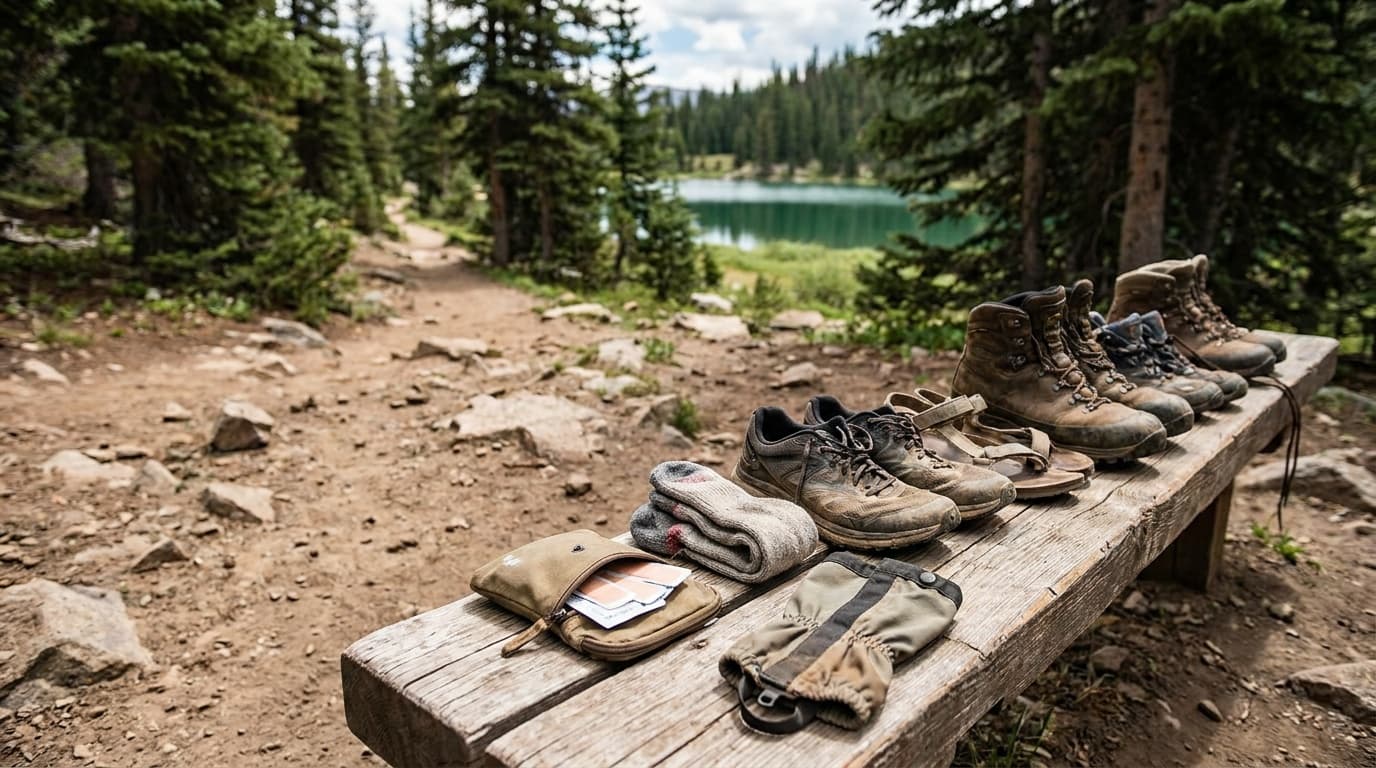
Gaiters are one of those pieces of kit that look optional until the one hike where they would have saved your socks, your shins, or your whole afternoon. The honest answer is that you do not always need them, so the real skill is knowing which conditions actually earn the extra layer.
What gaiters actually do
A gaiter is a sleeve that wraps your lower leg and the top of your boot, sealing the gap where the boot opening meets your sock and pant cuff. That gap is the single most common entry point for the stuff that ruins a hike: grit, snow, water, seeds, and the occasional pebble that turns into a blister factory two miles in.
They come in three rough heights. Ankle or trail-running gaiters stop just above the shoe and exist to block grit and small debris. Mid-calf models add splash and light-snow protection. Full-height gaiters reach just below the knee and are built for deep snow, heavy brush, and serious mud. More height means more coverage and more heat, so you are always trading breathability for protection.
The right gaiter is the lightest one that still seals out whatever your trail is throwing at your ankles.
When gaiters earn their place
These are the conditions where most hikers are genuinely glad they brought them.
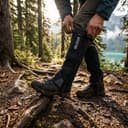
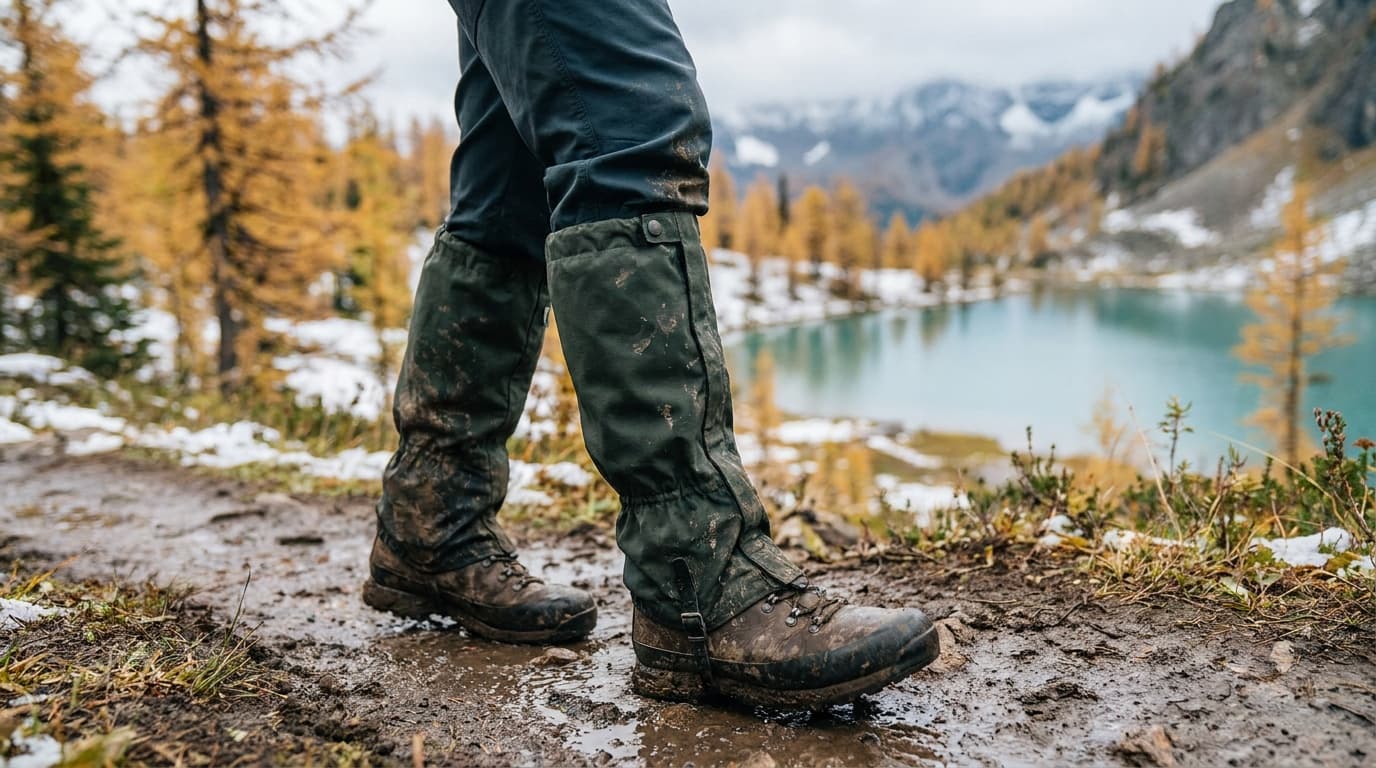
Snow. This is the classic case. Postholing into soft snow packs it straight into your boot cuff, where it melts and soaks your socks. Full-height gaiters with a sturdy instep strap, like the Outdoor Research Crocodile GORE-TEX Gaiters, are close to mandatory for spring snow travel and any winter hiking off a packed trail.
Scree and loose rock. On talus and scree, small stones constantly work their way over the boot collar. Even low gaiters cut the number of stop-and-empty breaks dramatically.
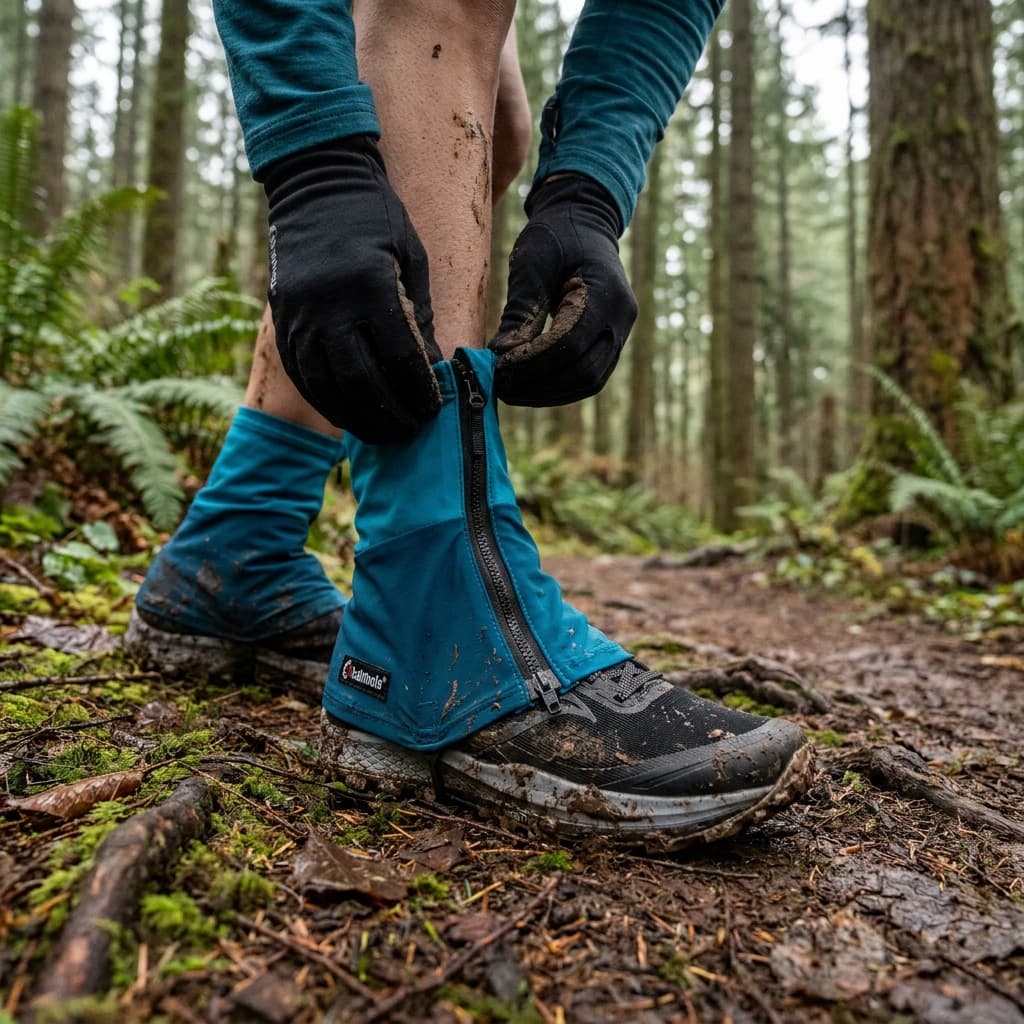
Mud and bog. Sucking mud splashes up the ankle and over the cuff. Mid or full-height gaiters keep the mess out and make the cleanup afterward a wipe-down instead of a soak.
Wet brush and overgrown trail. Pushing through dew-soaked grass, ferns, or scrub soaks your lower legs fast. Gaiters keep that moisture off your socks and out of your boots.
Desert sand. Fine sand pours into low-cut shoes on every dune and sandy wash. This is exactly what lightweight trail-running gaiters were designed for.
When gaiters are overkill
Gaiters are not free. They add weight, trap heat, and take time to put on and take off, so on the wrong trail they are pure tax.
Skip them on dry, groomed, well-graded trails where nothing is getting into your boots in the first place. Smooth dirt and gravel paths, boardwalks, and most popular day-hike routes in dry conditions do not throw enough debris to justify the extra layer.
Be especially cautious in hot weather. Full-height gaiters wrap your calves in an extra layer right where you want airflow, and on a warm summer climb that trapped heat is uncomfortable enough to matter. If the only threat is a little trail dust, a pair of taller socks or simply tucking your pants does most of the job.
How to choose the right height
Work from the threat backward. The condition decides the height, not the other way around.
Match the gaiter to the trail
Dry trail, light grit
Trail-running or low ankle gaiters. Under 2 oz, breathable, just enough to block pebbles and sand.
Desert and sandy washes
Low trail-running gaiters in a breathable fabric. Coverage matters more than waterproofing here.
Wet brush and light mud
Mid-calf gaiters like the [Kahtoola RENAgaiter Mid](/api/go?product=kahtoola-renagaiter-mid&retailer=amazon&article=do-you-need-gaiters-for-hiking). Enough height to keep splash and dew off your socks without cooking your legs.
Deep mud and bog
Full-height gaiters with a secure instep strap so they do not ride up or pull off in suction.
Snow and serious off-trail
Full-height, more rugged fabric, with a reliable instep strap and a snug top closure to keep snow out.
Two features matter across every height. The instep strap (the cord or strap under your boot) keeps the gaiter from riding up, so check that it is replaceable on snow and scree models where it takes the most abrasion. And the top closure should snug down against your calf, because a loose top lets in exactly what you bought the gaiter to keep out.
Setting expectations on water
This is where gaiters get oversold. A gaiter sheds splash, rain running down your leg, and shallow puddle spray, and a water-resistant or waterproof-breathable model does that well. What it does not do is make your boots watertight. Step into a calf-deep creek and water comes in over the boot collar or straight through the boot itself, gaiter or not. Treat gaiters as debris-and-splash insurance, not as a substitute for waterproof footwear or smart creek-crossing technique.
Frequently asked questions
Are trail-running gaiters worth it for regular hiking?
Yes, if your main problem is small debris. Trail-running gaiters weigh next to nothing (often under 2 oz a pair), attach to low-cut shoes, and are excellent at keeping grit, sand, and small pebbles out. They do not offer snow or deep-mud protection, so they are a grit solution, not an all-conditions one.
Do I need waterproof gaiters?
Only if you are regularly in wet brush, snow, or rain. A waterproof-breathable gaiter sheds splash and keeps your socks drier in those conditions. For dry-trail dust and sand, a breathable non-waterproof gaiter is more comfortable and does the job, since the goal there is blocking debris, not water.
Can gaiters replace waterproof boots?
No. Gaiters seal the gap at the top of your boot and shed splash, but they do not make the boot itself waterproof. In a real water crossing, water comes in over the collar or through the boot. Think of gaiters as protection against debris and splash, working alongside your footwear rather than replacing it.
For specific model picks across snow, scree, and trail-running use, see our guide to the best hiking gaiters. Browse all hike guides or read how we research and rate gear.
Recommended gear
Our current top picks from the Best hiking gaiters: our top picks for 2026 guide, if you are ready to buy.
OUTDOOR RESEARCH
Outdoor Research Men's Crocodile GORE-TEX Gaiters
Best Overall
Kit Score 8.4/10
$109.95 Price checked Oct 23, 4:16 PM CDT
Best for: Three-season and winter hikers who need proven waterproofing for wet Scottish-style days, Pacific Northwest trails, or shoulder-season snow crossings.
- GORE-TEX 3L construction keeps feet dry through stream crossings, deep mud, and sustained rain that defeats DWR-only gaiters
- At 11.1 oz per pair, noticeable weight penalty versus lighter DWR gaiters on warm-weather trail days
- Height
- Full, top hem above the calf (camlock)
- Weight
- 11.11 oz / 315 g per pair
- Waterproofing
- GORE-TEX 3L (70D nylon plain weave)
- Upper material
- 70D bluesign GORE-TEX 3L nylon
- Lower material
- Abrasion-resistant 1000D Cordura nylon
- Closure
- Double-stitched hook-and-loop, top-hem camlock, replaceable TPU instep strap
About this pick
The Crocodile is Outdoor Research's flagship full-length gaiter, updated for 2025 with a revised design and fit and a GORE-TEX 3L upper that pairs genuine waterproofing with meaningful breathability. The Cordura lower panel handles crampon strap contact and brush abrasion without flinching.
Strengths
- GORE-TEX 3L construction keeps feet dry through stream crossings, deep mud, and sustained rain that defeats DWR-only gaiters
- Cordura lower lasts years of hard use; owners report 5+ seasons without delamination or strap failure on updated models
- Slim updated fit works over trail runners and light mountaineering boots, not just traditional stiff boots
Weaknesses
- At 11.1 oz per pair, noticeable weight penalty versus lighter DWR gaiters on warm-weather trail days
- GORE-TEX breathability lags lighter membranes during high-output hiking in mild conditions, and legs can feel warm
Kit Score breakdown
Best for: Three-season hikers and backpackers who want reliable debris and light moisture protection in one mid-weight package, and who hike primarily in non-torrential conditions.
- Stretch nylon fits over trail runners and leather boots without adjustment, and the asymmetric zipper removes pressure from the top of the foot
- DWR alone cannot handle prolonged rain or wet grass: owner testing found sock tops wet after sustained downpours
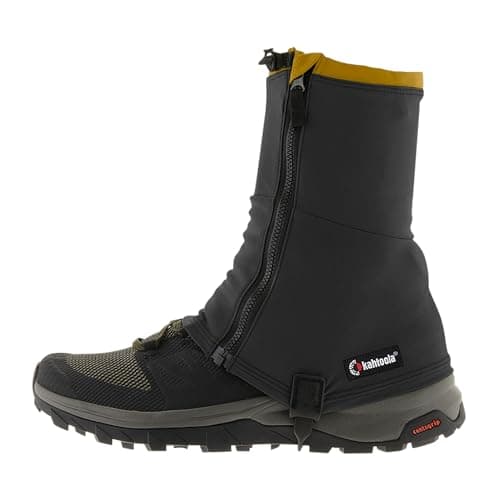
- Height
- Mid (9 in / 22.9 cm)
- Weight
- 3.7 oz / 104g (S/M); 4.1 oz / 117g (L/XL)
- Waterproofing
- PFAS-free DWR coating (water resistant, not waterproof)
- Material
- 90% stretch-woven recycled nylon, 10% polyurethane
- Instep strap
- DuraLink TPU strap with 1,000-mile warranty
- Closure
- Asymmetrical YKK VISLON zipper with Aegis rock guards
About this pick
The RENAgaiter Mid occupies the versatile middle ground in Kahtoola's line: tough enough for off-trail scrambling and light snow, light enough that you'll actually throw it in your pack. The four-way stretch nylon conforms to any boot or trail runner, and the Aegis reinforced strap connection points address the abrasion failure mode that plagued earlier gaiters.
Strengths
- Stretch nylon fits over trail runners and leather boots without adjustment, and the asymmetric zipper removes pressure from the top of the foot
- DuraLink instep strap rated to 1,000 miles and fully replaceable for a few dollars, eliminating the single most common gaiter failure point
- Breathes noticeably better than full waterproof gaiters, making it the sensible choice for three-season use where full GORE-TEX is overkill
Weaknesses
- DWR alone cannot handle prolonged rain or wet grass: owner testing found sock tops wet after sustained downpours
- Stretch nylon is susceptible to puncture holes on sharp talus after 300 to 400 trail miles
Kit Score breakdown
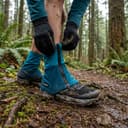
Best for: Trail runners, thru-hikers, and ultralight backpackers who prioritize keeping weight under 3 oz and need dust, sand, and debris exclusion on dry-to-moderate trails.
- Sub-3 oz weight is low enough that most trail runners carry these as standard kit on dusty or sandy trails
- Lighter nylon construction shows wear faster than the RENAgaiter on rough rocky terrain; early strap-attachment failures reported by some owners
- Height
- Mid (7.5 in / 19 cm)
- Weight
- 2.4 oz / 68g (S/M); 2.7 oz / 76g (L/XL)
- Waterproofing
- DWR coating (water resistant, not waterproof)
- Material
- 86% stretch-woven recycled nylon, 14% polyurethane
- Instep strap
- DuraLink TPU strap with 1,000-mile warranty
- Closure
- Asymmetrical YKK VISLON side zipper
About this pick
The INSTAgaiter Mid is among the lightest zippered mid gaiters on the market at under 3 oz per pair, making it the default choice for trail runners and ultralight backpackers who want debris protection without adding noticeable weight. It shares Kahtoola's DuraLink instep strap system with the pricier RENAgaiter, so the high-wear component is still field-replaceable.
Strengths
- Sub-3 oz weight is low enough that most trail runners carry these as standard kit on dusty or sandy trails
- Shares the same DuraLink replaceable instep strap as the higher-end RENAgaiter, meaning the failure point is serviceable for a few dollars
- Side zipper and stretch fabric go on and off over trail runners or light hiking shoes in seconds without removing footwear
Weaknesses
- Lighter nylon construction shows wear faster than the RENAgaiter on rough rocky terrain; early strap-attachment failures reported by some owners
- Snow can work its way up from the boot opening under the gaiter hem in deep soft conditions, limiting utility for winter snowshoeing
Kit Score breakdown
See all picks in Best hiking gaiters: our top picks for 2026
Keep going
Related guides
 Complete hike loadoutDay hike kitBuild the complete kit
Researched, not hands-on tested
Updated Jun 4, 2026Our recommendations draw on manufacturer documentation, retailer listings, owner feedback, and comparisons with alternatives.
As an Amazon Associate I earn from qualifying purchases. We may earn a commission from links here, at no extra cost to you. How we research →