Pull-up bars are one of the highest-return pieces of home gym equipment you can own: a single bar unlocks pull-ups, chin-ups, hanging core work, and band-assisted progressions, all in a few square feet. The hard part is matching the right style and capacity to your space, your door, and your goals.
Our quick picks
How we picked
Every bar here earned a place by clearing our Kit Score: verified weight capacity, confirmed doorframe clearance data, aggregated owner review analysis, and value relative to the category. We do not recommend anything we cannot substantiate with real specs and sourced user feedback.
Best overall: Iron Gym Total Upper Body Workout Bar
BEST OVERALL
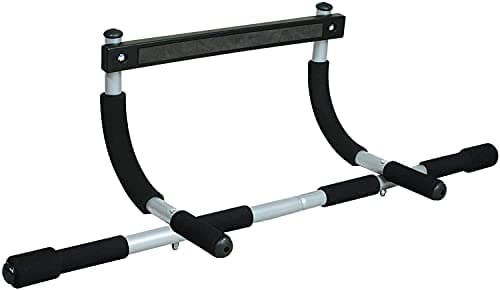
Iron Gym Total Upper Body Workout Bar for Doorway
Best for: Renters and beginners who want zero-install pull-up access and can confirm a standard 24"–32" doorway with solid molding.
- Sub-$50 entry point with no permanent hardware required, ideal for renters
- Fits only 24"–32" doorways with solid trim, leaving many modern or non-standard frames incompatible
Kit Score 7.4/10 · $47.99 Price checked Oct 23, 4:16 PM CDT · how we score gear
Buy on AmazonProduct details
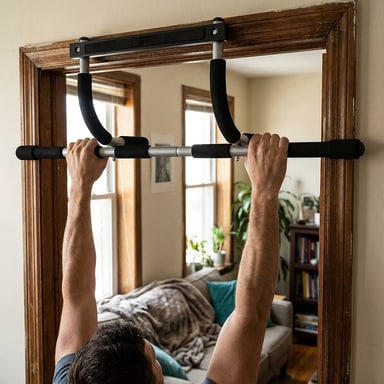
The original leverage-style doorway bar: hook it over the frame, weight locks it in place, remove it in seconds. One of the longest-running pull-up bars on Amazon (listed since 2010), rated to 300 lb, with a very large owner-review base.
- Type
- Doorway leverage-mount
- Weight capacity
- 300 lb
- Door width
- 24"–32"
- Grip positions
- 3 (wide, neutral, narrow)
- Install
- No screws, no tools
- Doorway fit
- 24 to 32 in wide (per listing)
More strengths
- Three grip positions cover wide-overhand, neutral parallel, and narrow underhand variations
- Long sales history with verified owner reports of units lasting many years
Other tradeoffs
- Foam grips compress with daily heavy use, and door trim can show cosmetic marks over time
- Needs sturdy door trim to lever against; hollow or recently painted molding can mark
The Iron Gym is one of the longest-selling lever-style doorway bars on Amazon (its listing dates to 2010) and remains one of the most reviewed pieces of home gym equipment on the market. At under $50 it is a low entry price for a legitimate, no-hardware pull-up setup, and it works exactly as described for the doorway dimensions it was designed for.
The critical spec to verify before buying is your door opening: the Iron Gym listing specifies doorways 24 to 32 inches wide, and the bar needs sturdy trim to lever against. If your door falls in that window and the molding is solid (not hollow MDF), this bar suits strict-form pull-ups and chin-ups within its 300 lb rating.
Where it gives ground to pricier options: the contact points concentrate more pressure on the molding than multi-point hook designs do, and the grip selection is more limited. For renters or first-time home gym builders who want to test whether pull-ups will become a regular habit before spending more, the Iron Gym is the right starting point.
Best for: Renters and beginners who want zero-install pull-up access and can confirm a standard 24–32 inch doorway with solid molding.
Editor's choice: REP Fitness Heavy Duty wall-mounted pull-up bar
EDITOR'S CHOICE
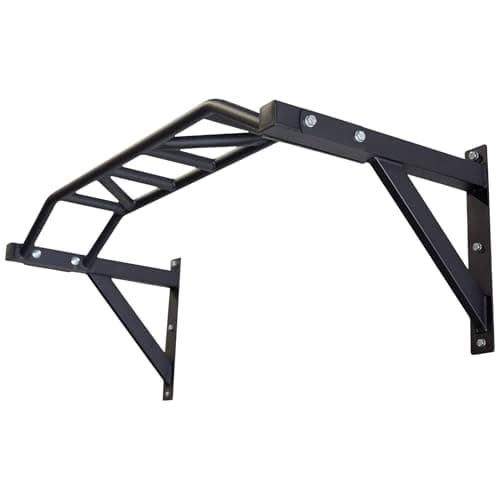
REP Fitness Heavy Duty Pull-Up Bar, Wall Mounted Multi-Grip
Best for: Serious home gym builders who want a permanent, rack-quality pull-up station with the highest capacity in the category and editorial recognition from major fitness publications.
- 700 lb capacity is the highest in this roundup, with REP Fitness known for rack-quality construction
- Smaller owner-review pool than mass-market bars (89 reviews on REP's store)
Kit Score 8.5/10 · Check current price · how we score gear
Buy at REP FitnessProduct details
REP Fitness built this bar to mirror the quality of their power racks: 700 lb rated, with multiple grip positions including neutral and angled handles. Priced at $139.99 direct from REP (list $164.99) and compatible with rings, straps, and bands. Named Best Pull-Up Bar Overall by BarBend.
- Type
- Wall mount
- Weight capacity
- 700 lb (REP spec, installed properly)
- Bar diameter
- 1.25" with nonslip finish
- Grip options
- 5+ positions (traditional, neutral, close, wide, angled)
- Material
- Steel, nonslip powder coat
- Wall-out depth
- 21.5 in
More strengths
- Five-plus distinct grip positions including angled handles, all with nonslip finish
- Compatible with bands, gymnastic rings, and suspension trainers, expanding training variety without extra hardware
Other tradeoffs
- Grip surfaces are not knurled, which some experienced lifters prefer for maximal grip security during heavy sets
- Needs two studs, drilling, and lag bolts; not an option for most renters
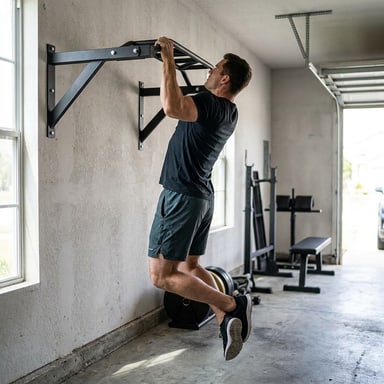
The REP Fitness wall bar is the one to buy if you are done compromising. It mounts permanently to studs, carries a 700 lb rated capacity (REP spec, installed properly), and ships with hardware designed for real structural loads rather than nominal spec-sheet padding. The multi-grip layout covers neutral, wide overhand, narrow underhand, and angled positions, so one bar handles every vertical pulling variation in a program.
The bar stands 21.5 inches off the wall per REP, which gives room to hang without your knees in the drywall, and REP says it can also be mounted inverted for lower ceilings or shorter athletes. Both Garage Gym Reviews and BarBend name it their best overall pull-up bar, which tracks with its positioning: this is rack-level equipment at a sub-rack price.
Installation requires finding two studs, drilling, and using the supplied hardware correctly. That is not optional: a 700 lb rated bar needs to be bolted into structural lumber, not just drywall anchors. If you are comfortable with a drill and a stud finder, the install is straightforward. If you rent, this is not the category for you.
Best for: Serious home gym builders who want a permanent, rack-quality pull-up station with the highest capacity in this guide.
How to choose the right pull-up bar
Doorway vs wall-mounted: the real decision
The core question is not price or grip count. It is whether you are willing to drill into a wall.
If the answer is no (renting, shared space, testing a new habit), doorway bars are the category. If the answer is yes (owning your home, building a dedicated gym space, training seriously), a wall-mounted bar is the better long-term choice in every measurable way: higher capacity, no door clearance constraints, kipping-safe, and zero impact on your door trim.
Free-standing rigs exist but they take up significantly more floor space and cost more for equivalent capacity. For most home gym setups, they make sense only if wall drilling is impossible and a doorway bar does not fit the training style.
Doorframe fit and damage: what to measure
Doorway bars work by wedging against the door stop (the raised strip inside the frame that the door closes against). Before buying any doorway bar, measure:
- Door opening width (edge to edge of frame, not door stop to door stop)
- Door trim depth and condition (check the bar's stated trim requirements)
- Clearance above the door frame to ceiling (affects head clearance, not mounting)
Bars with broader contact pads or multi-point hook designs distribute load more evenly and show less trim wear. Painted or hollow MDF molding is at higher risk than solid wood trim. Over many months of use, any doorway bar will leave some marks on paint; the question is how much.
Weight capacity: what the numbers actually mean
Makers rarely say how a capacity figure was tested, so treat it as a limit for steady loads. Controlled pull-ups load the bar with roughly your bodyweight; kipping and other swinging reps add momentum on top. A 250 lb lifter doing kipping pull-ups on a 300 lb rated bar is cutting the margin uncomfortably close. Buy with a meaningful buffer above your bodyweight, especially for doorway bars where the load path also stresses the door frame.
Grip options: more is not always better
A bar with wide, medium, narrow, and neutral grips covers everything most programming requires. The most underused grip is the neutral (parallel) position: it is easier on the shoulder capsule and often allows lifters to train pull-up volume with less joint discomfort during high-rep phases. If shoulder health is a priority, confirm neutral grips are on the bar before buying.
| Product | Kit Score | Price | Best for |
|---|---|---|---|
| Iron Gym Total Upper Body Workout Bar for Doorway | 7.4 | $47.99 Price checked Oct 23, 4:16 PM CDT | Best for: Renters and beginners who want zero-install pull-up access and can confirm a standard 24"–32" doorway with solid molding. Why it stands out: Sub-$50 entry point with no permanent hardware required, ideal for renters Tradeoff: Fits only 24"–32" doorways with solid trim, leaving many modern or non-standard frames incompatible |
| REP Fitness Heavy Duty Pull-Up Bar, Wall Mounted Multi-Grip | 8.5 | Check current price | Best for: Serious home gym builders who want a permanent, rack-quality pull-up station with the highest capacity in the category and editorial recognition from major fitness publications. Why it stands out: 700 lb capacity is the highest in this roundup, with REP Fitness known for rack-quality construction Tradeoff: Smaller owner-review pool than mass-market bars (89 reviews on REP's store) |
Iron Gym Total Upper Body Workout Bar for Doorway
- Best for
- Renters and beginners who want zero-install pull-up access and can confirm a standard 24"–32" doorway with solid molding.
- Why it stands out
- Sub-$50 entry point with no permanent hardware required, ideal for renters
- Tradeoff
- Fits only 24"–32" doorways with solid trim, leaving many modern or non-standard frames incompatible
REP Fitness Heavy Duty Pull-Up Bar, Wall Mounted Multi-Grip
- Best for
- Serious home gym builders who want a permanent, rack-quality pull-up station with the highest capacity in the category and editorial recognition from major fitness publications.
- Why it stands out
- 700 lb capacity is the highest in this roundup, with REP Fitness known for rack-quality construction
- Tradeoff
- Smaller owner-review pool than mass-market bars (89 reviews on REP's store)
How to install a wall-mounted pull-up bar safely
Find your studs
Use an electronic stud finder and confirm with a finish nail or small probe drill bit. Mark two studs at your target height and check the bracket spacing against them; 16 inches on center is common in US wall framing.
Mark and pre-drill
Hold the mounting plate against the wall, align with stud marks, and use a center punch or tape to mark every hole. Pre-drill pilot holes slightly smaller than the supplied lag bolts to prevent wood splitting.
Install with lag bolts
Drive lag bolts into studs with a socket wrench, not a drill driver on high torque. Snug, not stripped. Use the supplied hardware, not substitutions, as the kit is matched to the rated capacity.
Test before loading
Hang from the bar with full bodyweight before adding any kipping, loaded movements, or additional users. Inspect the mounting points for any movement or creaking. A properly installed bar will feel completely rigid.
The most common pull-up bar mistake is buying for the lowest price before measuring the doorway, and discovering the hard way that the bar does not fit the frame.
Frequently asked questions
Can a doorway pull-up bar damage my door frame?
Yes, it can, and the risk is real enough to factor into your buying decision. Doorway bars work by pressing outward against the door stop molding under your bodyweight. Over time, this concentrates pressure on the molding edge and can cause paint scuffing, dents in softer wood, or cracking in hollow MDF trim. Designs with broader contact pads spread that load over more trim, which can reduce (but does not eliminate) the risk. If your trim is hollow or painted recently, expect marks with any doorway bar after months of regular use.
What weight capacity do I actually need?
There is no published standard, so leave a generous margin: pick a bar rated well above your bodyweight, and more so if you plan on kipping or eventually adding a weight belt. Dynamic movements load the bar above static bodyweight. For a 200 lb lifter doing kipping pull-ups, a 300 lb rated bar has very little buffer; a 400 lb or 600 lb rated bar gives you real margin.
Is a wall-mounted bar worth it over a doorway bar?
If you own your space and can drill into studs, yes. Wall-mounted bars offer higher weight capacity, no doorframe wear, full kipping clearance, and a more stable feel under load. The only genuine advantages of a doorway bar are portability, zero wall damage, and lower upfront cost. For anyone building a dedicated home gym space with plans to train seriously over years, a wall-mounted bar is the better long-term investment.
Where these numbers come from
| Claim | Source | Checked |
|---|---|---|
| REP bar: 700 lb when installed properly, 1.25 in bars, 21.5 in from the wall, traditional/neutral/close/wide/angled grips, steel with nonslip powder coat, can mount inverted | REP Fitness, wall-mounted multi-grip pull-up bar | Sep 2026 |
| REP bar named best pull-up bar overall | BarBend, best pull-up bars | Sep 2026 |
| REP bar named best overall pull-up bar | Garage Gym Reviews, best pull-up bar | Sep 2026 |
| Iron Gym: supports up to 300 lb, doorways 24 to 32 in wide, three grip positions | Iron Gym listing on Amazon, ASIN B001EJMS6K | Sep 2026 |
Capacities are the makers' ratings; nothing here is a Kit Authority measurement.
A good pull-up bar is one you will actually use consistently because it fits your space, handles your training style, and does not create headaches every time you set up. Match the type to your living situation first, verify the specs against your doorway or wall before buying, and go from there.
Browse more home gym essentials on the fitness hub, or see how we evaluate every recommendation on our how we research and rate page.
Keep going
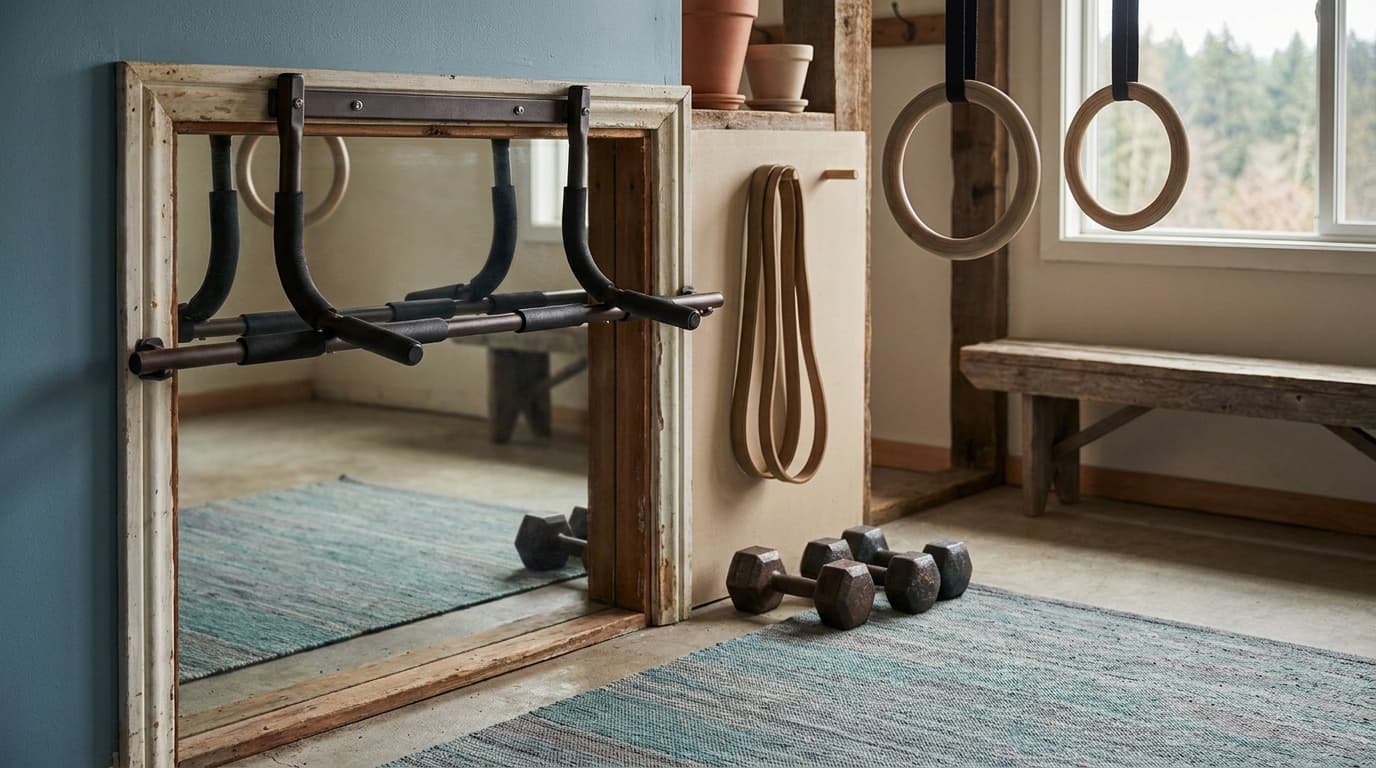
Complete loadoutHome calisthenics kitA compact strength and conditioning setup built around five tools that cover pushing, pulling, assistance, cardio, and floor work.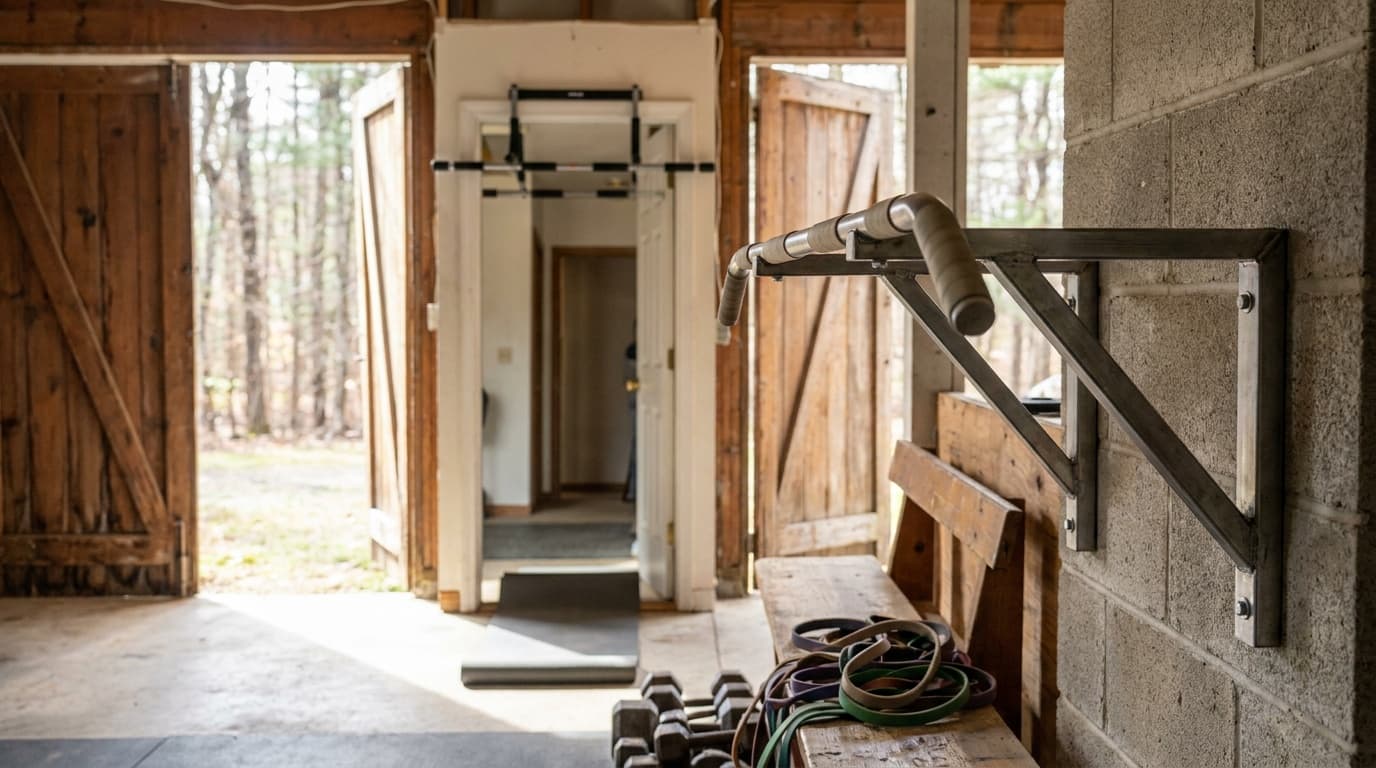

Our recommendations draw on manufacturer documentation, retailer listings, owner feedback, and comparisons with alternatives.
As an Amazon Associate I earn from qualifying purchases. We may earn a commission from links here, at no extra cost to you. How we research →