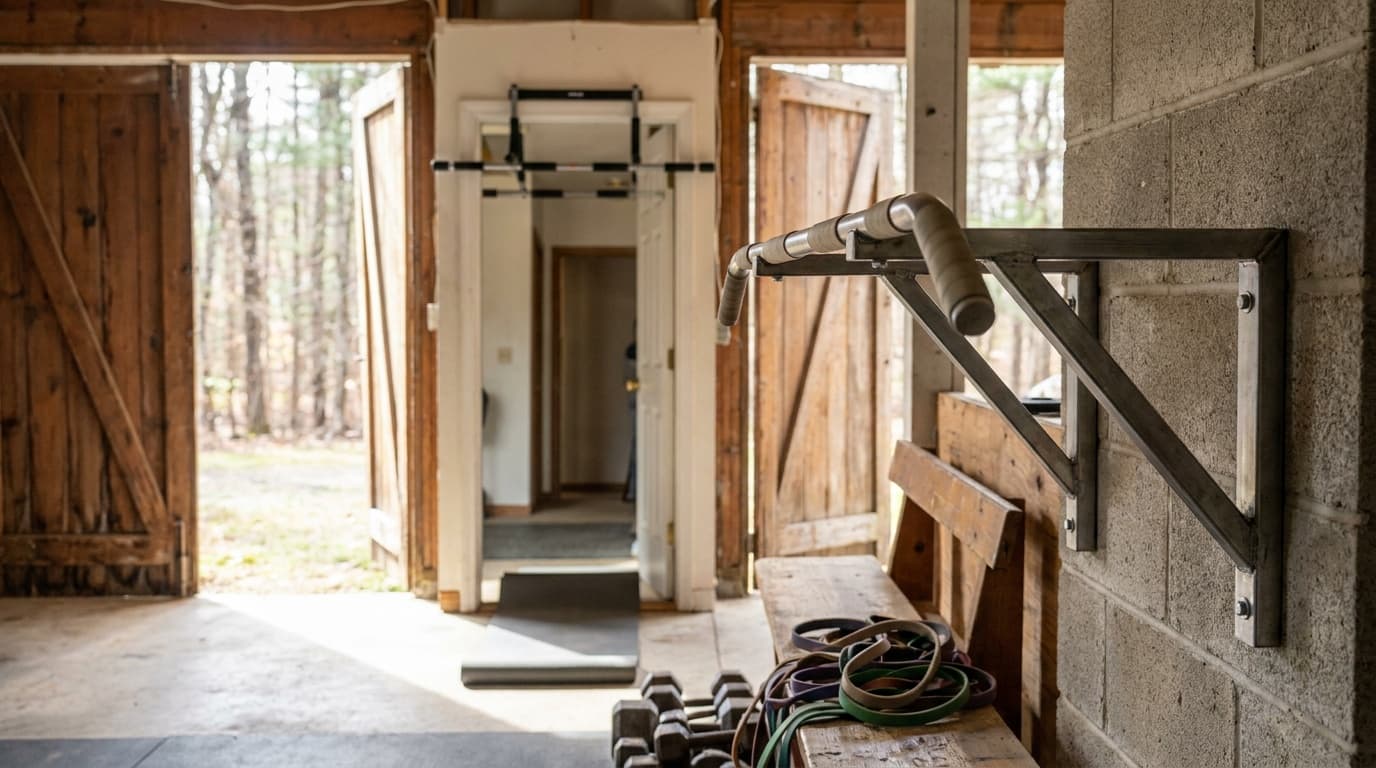
Both bars get you doing pull-ups at home, but they solve very different problems. The fast answer: choose a doorway bar if you rent or want zero commitment, and bolt a wall-mounted bar into studs if you want a rock-solid platform that swings, kips, and shrugs off heavy loads.
How each one installs and comes down
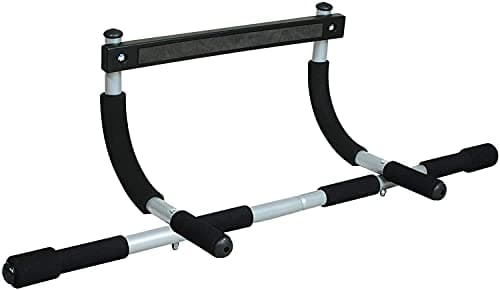
Doorway bars split into two styles. Leverage-mount bars like the IRON AGE Smart Hook Pull Up Bar hook over the top of the trim and use your bodyweight to press a pad against the wall above the frame: no screws, lift off in seconds, and the most popular home option. Telescoping bars wedge inside the frame with a turn-to-expand mechanism, which is even more renter-friendly but relies entirely on friction and a tight, level frame.
Wall-mounted bars are a different commitment. You locate studs (or drill into brick or concrete with appropriate anchors), then fasten a steel bracket with lag bolts. Plan on 30–60 minutes, a drill, a stud finder, and a level. Removal leaves bolt holes you will need to patch.
How to choose in five questions
Do you rent?
If you cannot drill into walls, a leverage-mount or telescoping doorway bar is the practical choice.
Will you kip or swing?
Dynamic movement (kipping, muscle-ups, knee raises) demands a bolted wall bar. Doorway bars can shift under swing.
How much do you weigh?
Above roughly 250 lb, verify the rating closely. Wall bars give the most headroom.
Do you want grip options?
Multi-grip and angled holds are a wall-bar feature. Doorway bars are usually one straight tube.
Is your doorframe sturdy and standard width?
Doorway bars need solid trim and a frame around 24–36 inches wide. Wide or weak frames rule them out.
Weight capacity, max user weight, and stability
This is where the two categories separate the most. Manufacturer ratings are a useful guide, though real-world safety depends just as much on your install surface.
A leverage doorway bar is only as stable as the trim it presses against and the friction pad doing the work. It can creak, slide, or pop free if the frame is painted slick, undersized, or already loose. A telescoping bar is even more dependent on a snug fit. Wall bars, once lag-bolted into framing, do not move at all. That solidity is the entire reason serious lifters and CrossFit-style athletes mount to the wall.
A doorway bar borrows stability from your house. A wall bar builds its own.
Doorframe damage and renter risk
Leverage-mount doorway bars are marketed as no-damage, and used correctly they usually are. In practice, the constant downward pressure of the over-door pad can dent trim, scuff paint, or chip molding over months of use, especially on softwood or freshly painted frames. Telescoping bars apply outward pressure that can crack or bow weaker frames if overtightened.
Wall bars trade cosmetic frame wear for permanent holes. For homeowners that is a non-issue. For renters it can mean a patch-and-paint job at move-out, so most renters stay with a removable doorway bar to keep deposits intact.
Grip variety and movement suitability
Most doorway bars are a single straight tube, sometimes with foam end grips angled slightly inward. That covers standard overhand and underhand pull-ups and chin-ups, which is plenty for general strength. What they do not do well is swing. Kipping pull-ups, toes-to-bar, and muscle-ups load the mount dynamically, and a leverage or telescoping bar can shift or release under that force.
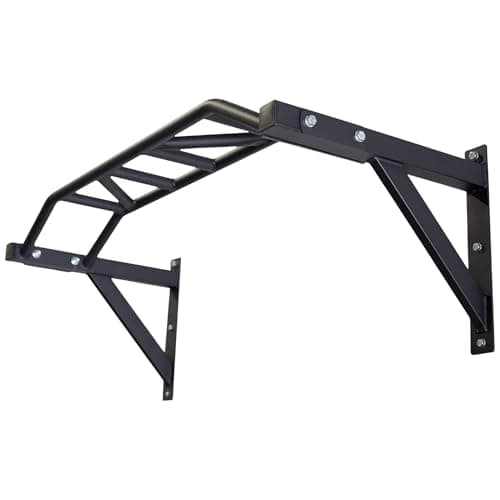
Multi-grip wall bars like the REP Fitness Wall-Mounted Multi-Grip Pull-Up Bar are built for variety: wide grips, close grips, neutral parallel handles, and angled positions that hit your back and arms from different lines. Because they are bolted to the structure, they also handle ballistic and high-rep work without budging. If your training includes anything beyond strict pull-ups, the wall mount is the safer and more versatile platform.
Price and the verdict by situation
Doorway bars are the budget entry point, commonly $20–$40, with no install cost beyond your time. Wall-mounted bars run roughly $40–$120 for the bar plus a few dollars in lag bolts and anchors, and they ask for tools and drilling.
Here is the clean verdict. Choose a doorway bar if you rent, want to start today with no tools, train mostly strict pull-ups and chin-ups, weigh within the rating, and value the option to remove or pack it. Choose a wall-mounted bar if you own your space (or can drill), want multi-grip options, plan to kip, swing, or hang weight, or simply want a platform that never wobbles. When in doubt and you can drill, the wall bar is the longer-term answer.
Frequently asked questions
Will a doorway pull-up bar damage my doorframe?
Used correctly, a leverage-mount doorway bar is designed to be damage-free, but repeated downward pressure can scuff paint or dent soft trim over time. Telescoping bars push outward and can crack weaker frames if overtightened. A felt or towel pad between the bar and the frame, plus checking the fit before each set, keeps cosmetic wear to a minimum.
Can you do kipping pull-ups on a doorway bar?
It is not recommended. Kipping, toes-to-bar, and muscle-ups load the mount dynamically, and leverage or telescoping doorway bars rely on friction or downward pressure that can shift or release under swing. For any dynamic or ballistic movement, a wall-mounted bar bolted into studs or masonry is the safe choice.
Which holds more weight, a doorway or wall-mounted pull-up bar?
Wall-mounted bars generally hold more. Doorway bars are typically rated around 220 to 300 lb, while wall bars commonly handle 300 to 500 lb or more once lag-bolted into framing. If you are near the upper end of a doorway bar's rating or plan to hang added weight, the wall mount gives you the most headroom.
For specific model picks, see our guide to the best pull-up bars. Browse all fitness guides or read how we research and rate gear.
Recommended gear
Our current top picks from the Best Pull-Up Bars for Home Gyms (2026): Doorway to Wall-Mounted guide, if you are ready to buy.
IRON GYM
Iron Gym Total Upper Body Workout Bar for Doorway
Best Budget
Kit Score 7.4/10
$47.99 Price checked Oct 23, 6:22 AM CDT
Best for: Renters and beginners who want zero-install pull-up access and can confirm a standard 24"–32" doorway with solid molding.
- Sub-$50 entry point with no permanent hardware required, ideal for renters
- Fits only 24"–32" doorways with solid trim, leaving many modern or non-standard frames incompatible
- Type
- Doorway leverage-mount
- Weight capacity
- 300 lb
- Door width
- 24"–32"
- Grip positions
- 3 (wide, neutral, narrow)
- Install
- No screws, no tools
- Doorway fit
- 24 to 32 in wide (per listing)
About this pick
The original leverage-style doorway bar: hook it over the frame, weight locks it in place, remove it in seconds. One of the longest-running pull-up bars on Amazon (listed since 2010), rated to 300 lb, with a very large owner-review base.
Strengths
- Sub-$50 entry point with no permanent hardware required, ideal for renters
- Three grip positions cover wide-overhand, neutral parallel, and narrow underhand variations
- Long sales history with verified owner reports of units lasting many years
Weaknesses
- Fits only 24"–32" doorways with solid trim, leaving many modern or non-standard frames incompatible
- Foam grips compress with daily heavy use, and door trim can show cosmetic marks over time
- Needs sturdy door trim to lever against; hollow or recently painted molding can mark
Kit Score breakdown
REP FITNESS
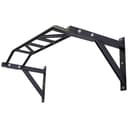
REP Fitness Heavy Duty Pull-Up Bar, Wall Mounted Multi-Grip
Editor's Choice
Kit Score 8.5/10
Best for: Serious home gym builders who want a permanent, rack-quality pull-up station with the highest capacity in the category and editorial recognition from major fitness publications.
- 700 lb capacity is the highest in this roundup, with REP Fitness known for rack-quality construction
- Smaller owner-review pool than mass-market bars (89 reviews on REP's store)
- Type
- Wall mount
- Weight capacity
- 700 lb (REP spec, installed properly)
- Bar diameter
- 1.25" with nonslip finish
- Grip options
- 5+ positions (traditional, neutral, close, wide, angled)
- Material
- Steel, nonslip powder coat
- Wall-out depth
- 21.5 in
About this pick
REP Fitness built this bar to mirror the quality of their power racks: 700 lb rated, with multiple grip positions including neutral and angled handles. Priced at $139.99 direct from REP (list $164.99) and compatible with rings, straps, and bands. Named Best Pull-Up Bar Overall by BarBend.
Strengths
- 700 lb capacity is the highest in this roundup, with REP Fitness known for rack-quality construction
- Five-plus distinct grip positions including angled handles, all with nonslip finish
- Compatible with bands, gymnastic rings, and suspension trainers, expanding training variety without extra hardware
Weaknesses
- Smaller owner-review pool than mass-market bars (89 reviews on REP's store)
- Grip surfaces are not knurled, which some experienced lifters prefer for maximal grip security during heavy sets
- Needs two studs, drilling, and lag bolts; not an option for most renters
Kit Score breakdown
See all picks in Best Pull-Up Bars for Home Gyms (2026): Doorway to Wall-Mounted
Keep going
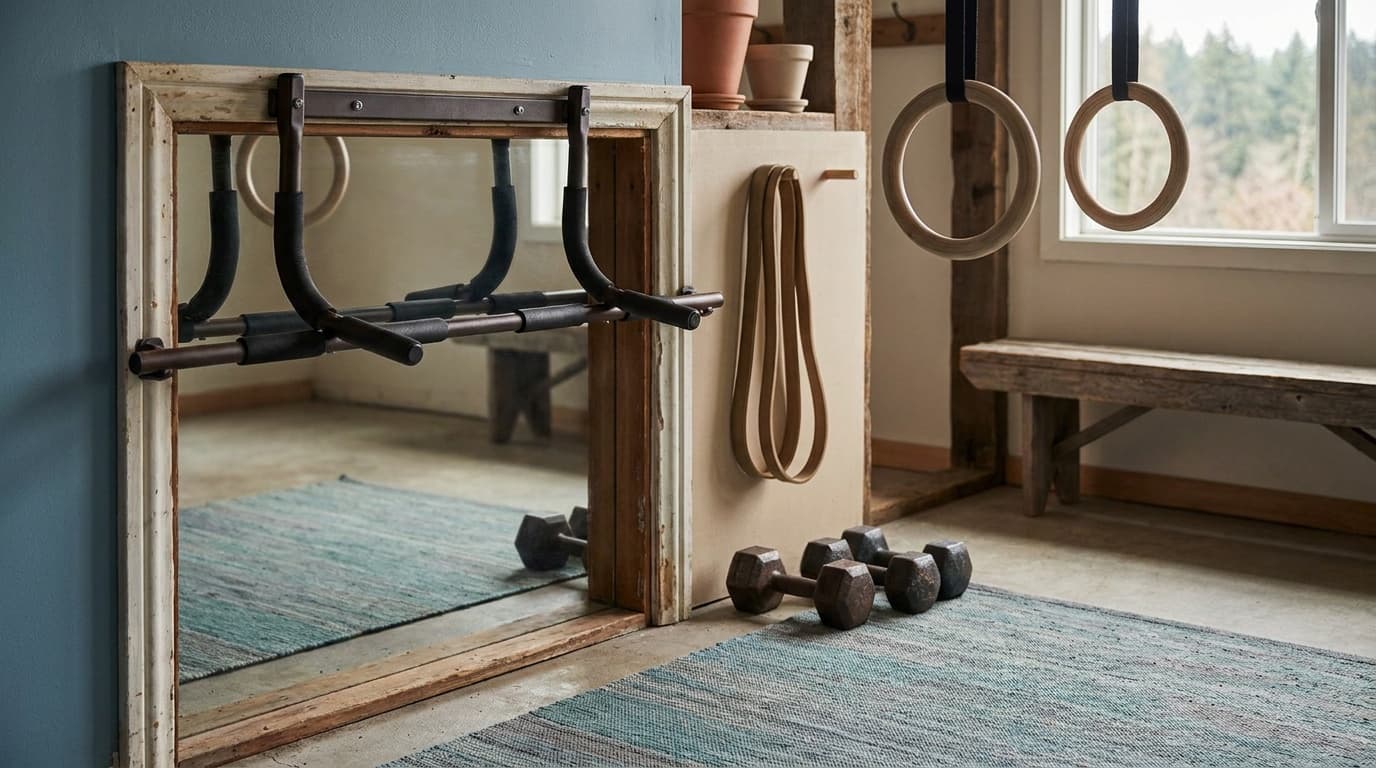
Complete loadoutHome calisthenics kitA compact strength and conditioning setup built around five tools that cover pushing, pulling, assistance, cardio, and floor work.

Researched, not hands-on tested
Updated Sep 13, 2026Our recommendations draw on manufacturer documentation, retailer listings, owner feedback, and comparisons with alternatives.
As an Amazon Associate I earn from qualifying purchases. We may earn a commission from links here, at no extra cost to you. How we research →