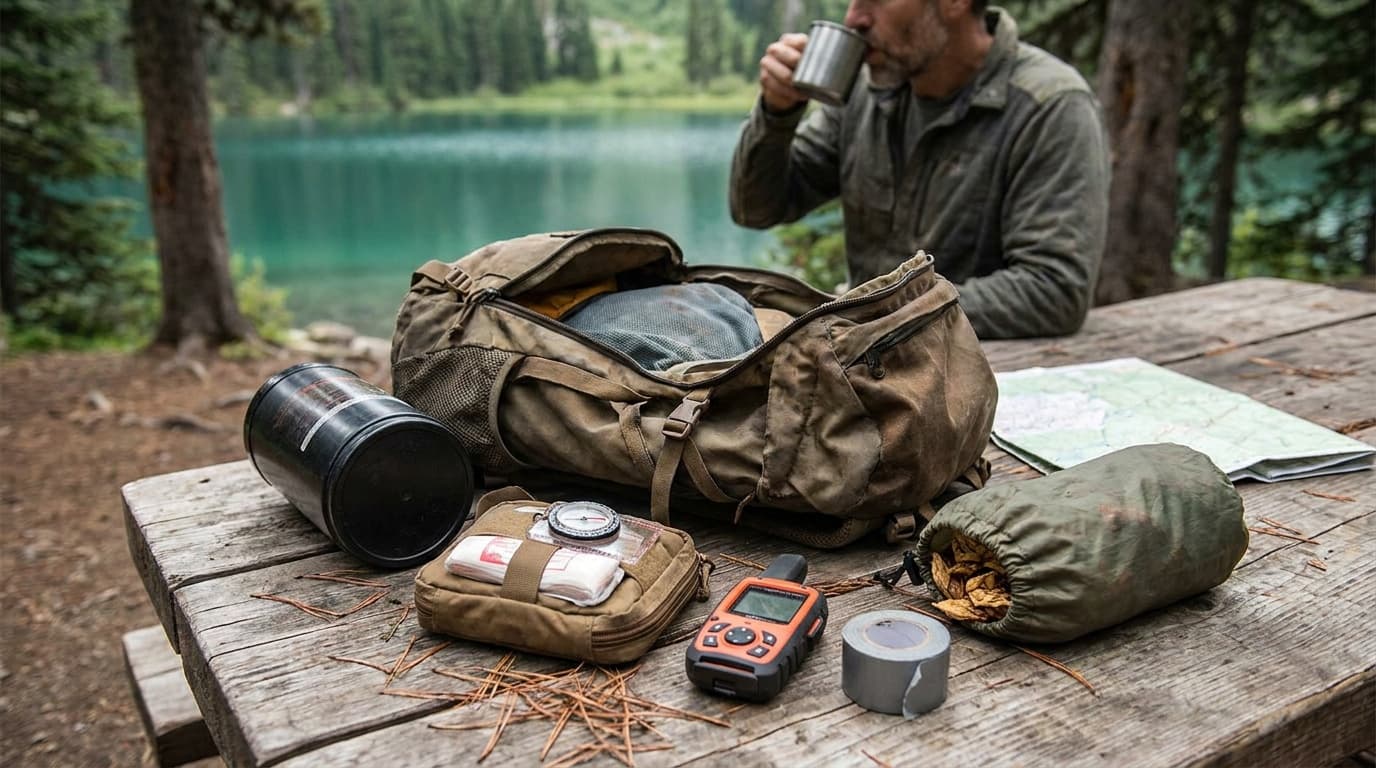
Most of the weight in a hiking first aid kit goes toward the injury you will almost certainly face on trail. Blisters. Everything else is insurance.
Why blisters eat half your kit
Adventure Medical Kits notes that the majority of items in a typical hiking first aid kit are devoted to foot care because it is the most frequent trail ailment by a wide margin. A hot spot caught early is a five-second fix. The same spot ignored for another mile turns into a drained, padded, wrapped production that takes up half your break.
The layered approach:
- Moleskin: cut to size and apply at the first hint of rubbing. This is prevention, not treatment.
- Hydrocolloid dressings (GlacierGel style): for an intact blister. The gel pad cushions without sticking to the wound roof, which you want to leave in place.
- Doughnut pad: cut a donut shape from moleskin so the hole sits over the blister, taking pressure off the dome. Cover with a non-adherent dressing and secure with medical tape.
Wound cleaning: pressure matters more than antiseptic
A cut on the trail has one job before you close it: get the debris out. Antiseptic alone does not do that. Mechanical irrigation does.
A 10–20 ml syringe with a 18- or 19-gauge tip delivers the 8–15 psi that clears bacteria and trail grit from a laceration. A 35cc syringe with a 19-gauge needle produces approximately 8 psi; a 12cc syringe with a 22-gauge needle produces approximately 13 psi. The AHCPR recommends 10–15 psi for wound irrigation. Pressure above 15 psi can damage tissue, so more force is not better. Clean potable water works in the field; dilute povidone-iodine (1%) is an upgrade if you carry it.
After irrigation:
- Pat dry with gauze.
- Apply a thin layer of antibiotic ointment.
- Use closure strips (Steri-Strips or equivalent) to pull wide cuts together.
- Cover with a non-adherent dressing and secure with tape or a self-adhesive bandage.
Medications: the core four
Commercial first aid kits are often light on medications because regulations prevent most from including OTC drugs. Buy a pre-made kit for its wound and blister hardware, then build your own med pouch separately.
Carry at least two doses of each for every person in the group:
Ibuprofen covers pain and inflammation. Diphenhydramine handles allergic reactions and doubles as a sleep aid at altitude. Loperamide stops a stomach emergency from becoming a full evacuation. Hydrocortisone 1% cream quiets contact reactions from plants and insect bites. None of these are optional if someone in your group has a known allergy risk, a prescription inhaler, or an EpiPen.
Trauma basics: scale with remoteness
The question is not "do I need trauma supplies?" but "how long until EMS arrives if something goes wrong?"
Build trauma depth by trip type
Day hike near a trailhead
Wound care, blister tools, meds, nitrile gloves. Total weight: 4–8 oz. Help is an hour or two away.
Overnight moderate trip
Add a SAM splint, elastic bandage, triangular bandage, and a space blanket. Weight climbs to 10–14 oz. You may be treating a sprain or keeping someone stable until morning.
Remote multi-day trip
Add a CAT tourniquet, hemostatic gauze, and a pressure dressing. Total: 14–20+ oz. Severe bleeding control becomes critical when evacuation takes hours. A satellite communicator belongs with this kit even though it is not a medical item.
NOLS's wilderness kit checklist covers 27 items and specifically includes a 12cc irrigation syringe, a SAM splint, wound closure strips, tincture of benzoin swabs, moleskin, triangular bandages, nitrile gloves, and a rescue mask. That list reflects the threshold where backcountry seriousness warrants genuine trauma readiness.
A satellite communicator is not a first aid item, but it belongs in the same pocket. The fastest trauma care on a remote trail is the helicopter you called before dark.
Sizing by group and trip length
Tools are shared across the group. Consumables are not.
Scale the kit to your group and gap to care
Solo day hike
1 person, close to a road. Compact personal kit, 4–8 oz. One set of everything.
Pair or small group, overnight
2–4 people, moderate distance. Double medications and consumables. NOLS's Med Kit 4.0 and the [Adventure Medical Kits Mountain Series Backpacker](/api/go?product=adventure-medical-kits-mountain-series-backpacker&retailer=amazon&article=what-to-pack-in-a-hiking-first-aid-kit) are sized for this tier.
Group of 5+, multi-day remote
5+ people, hours from a hospital. NOLS's Med Kit 5.0 covers extended backcountry trips with a larger group. Add extra wound supplies, a full trauma layer, and prescription medications for every known condition in the party.
The guiding formula: how long until EMS or a hospital? Multiply that time by the number of people. Then ask whether your kit can handle the three most likely problems for your terrain and weather.
Starting with a pre-made kit
A commercial kit is a valid starting point, not a finished product. Most are well-stocked for wound care but light on medications. The workflow:
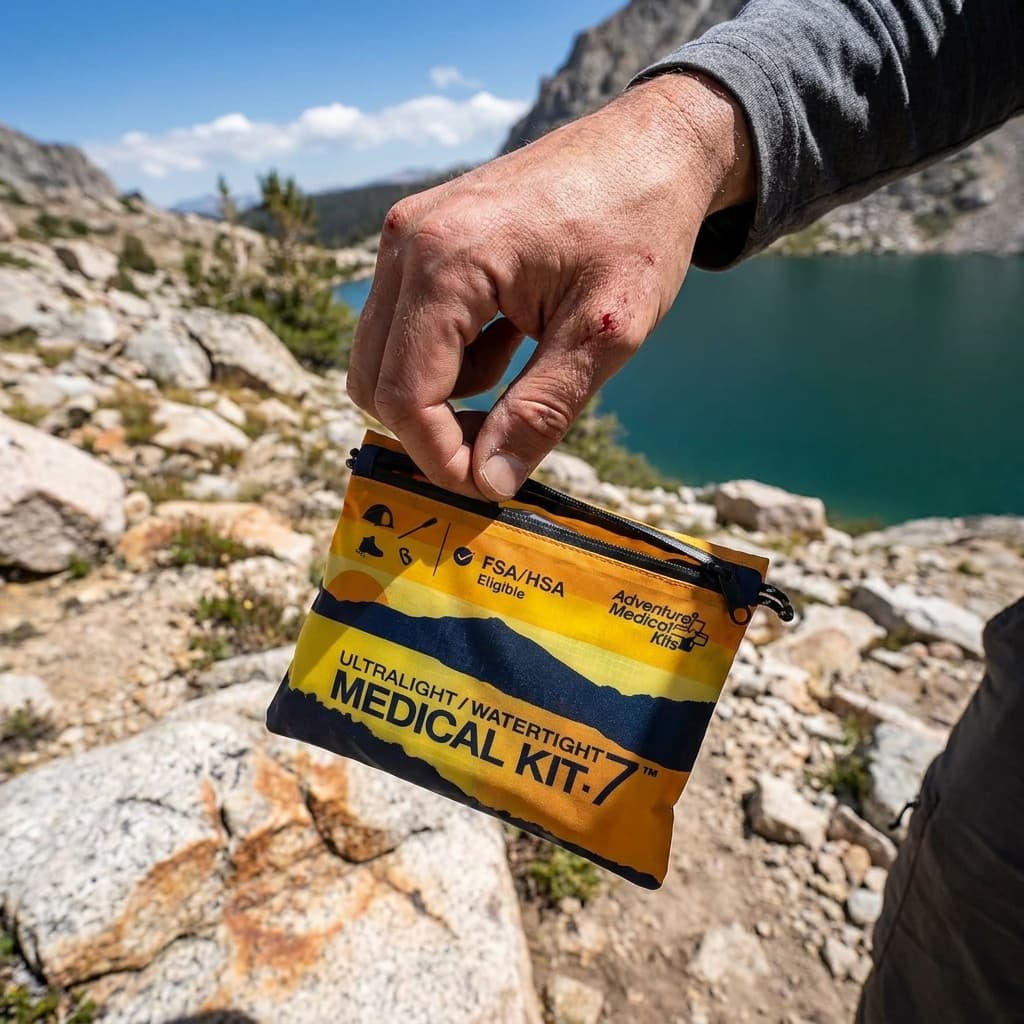
- Choose a kit sized for your typical trip (day, overnight, or extended backcountry); a day-size option like the Adventure Medical Kits Ultralight/Watertight .7 covers the first tier.
- Inventory it against the categories above: blisters, wound care, medications, trauma layer.
- Add your own med pouch with the four core OTC drugs and any personal prescriptions.
- Check expiration dates before every season.
- Restock consumables (gauze, closure strips, gloves, bandages) after every trip they are used on.
Never pack anything you have not learned to use. A tourniquet applied incorrectly causes harm. If your kit includes one, practice with it before the trip.
For specific kit options at each tier, see our guide to the best hiking first aid kits.
FAQ
Should I drain a trail blister or leave it alone?
Leave small, intact blisters alone if you can tolerate the discomfort and still walk comfortably. The fluid-filled roof is a natural barrier against infection. If the blister is large, painful, or likely to rupture on its own, drain it with a sterilized needle at the edge, press the fluid out gently, leave the skin in place as a dressing, apply antibiotic ointment, and cover with a non-adherent pad secured with moleskin or tape. Change the dressing daily and watch for increasing redness, warmth, or pus, which signal infection.
What is the difference between a day-hike kit and a backpacking kit?
A day-hike kit covers the most likely problems when help is one to two hours away: wound care (bandages, gauze, tape, irrigation syringe, closure strips), blister supplies, basic medications, nitrile gloves, and tweezers. Total weight: 4–8 oz. A backpacking kit adds a SAM splint, elastic bandage, triangular bandage, space blanket, and enough medication for the full trip duration, pushing weight to 12–16 oz. For remote multi-day trips, add a tourniquet and hemostatic gauze, because severe bleeding control becomes critical when evacuation takes hours, not minutes.
Do I need wilderness first aid training, or is a kit enough?
A kit without training is significantly less useful. A Wilderness First Aid (WFA) course takes 16 hours and covers the scenarios most day hikers and weekend backpackers will face. If you guide groups, lead youth programs, or regularly travel in remote terrain, consider the 70–80 hour Wilderness First Responder (WFR) course, the standard for professional guides on extended remote trips. NOLS and NOLS Wilderness Medicine Institute are the primary credentialing bodies. At minimum, take a standard Red Cross first aid and CPR course before relying on any kit in an emergency.
For more on what to bring into the backcountry, browse all hike gear or read how we research and rate.
Recommended gear
Our current top picks from the Best hiking first aid kits 2026: top picks for the trail guide, if you are ready to buy.
ADVENTURE MEDICAL KITS
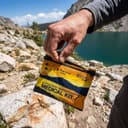
Adventure Medical Kits Ultralight/Watertight Medical Kit .7
Best Overall
Kit Score 7.8/10
Best for: Solo hikers and pairs on day hikes through 4-day trips who want waterproof protection without adding noticeable weight.
- Genuinely waterproof inner bag keeps contents dry in rain and wet crossings
- No irrigation syringe or CPR mask, so owners who want full trauma response should supplement or size up
- Weight
- 5.8 oz (AMK)
- Capacity
- 1 to 2 people, up to 4 days
- Case
- DryFlex waterproof inner bag, water-resistant outer shell
- Medications included
- Yes (aspirin, ibuprofen, acetaminophen, antihistamine)
- Blister care
- Pre-cut moleskin
- Extras
- Duct tape, elastic bandage, tick and splinter forceps
About this pick
The Ultralight/Watertight .7 is AMK's kit for one or two people on trips of up to four days. At 5.8 oz it disappears into a pack side pocket, and the waterproof DryFlex inner bag keeps bandages and medications dry through stream crossings and downpours.
Strengths
- Genuinely waterproof inner bag keeps contents dry in rain and wet crossings
- Includes aspirin, ibuprofen, acetaminophen, and diphenhydramine for pain, fever, and allergy
- Compact enough for a pack side pocket while still covering blisters, wounds, and basic trauma
Weaknesses
- No irrigation syringe or CPR mask, so owners who want full trauma response should supplement or size up
- Quantities are sized for solo to two-person use and run low on longer group trips
Kit Score breakdown
ADVENTURE MEDICAL KITS
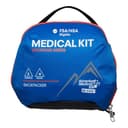
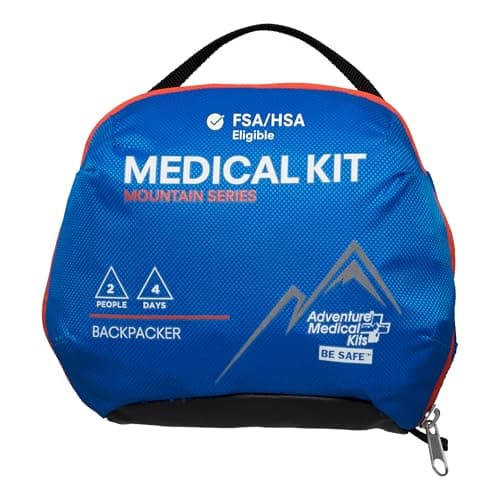
Adventure Medical Kits Mountain Series Backpacker Medical Kit
Editor's Choice
Kit Score 8.3/10
$57.49 Price checked Oct 23, 4:16 PM CDT
Best for: Two-person or small-group backpackers on trips of 2 to 4 days who want a well-organized kit with a wilderness first aid reference and medications included.
- 160-page wilderness first aid guide gives non-medics a real reference in the field
- Case is only moderately water-resistant; wrap in a dry bag on wet routes
- Weight
- 15.2 oz (10.9 oz without guide book)
- Capacity
- 2 people, up to 4 days
- Item count
- 96 pieces
- Case
- Fold-open organizer with labeled compartments; moderate weather resistance
- Medications included
- Yes (acetaminophen, ibuprofen, aspirin, antihistamine, loperamide)
- Wilderness guide
- 160-page Wilderness First Aid guide by Eric Weiss, MD
About this pick
The Mountain Series Backpacker is a full-coverage kit for multi-day trips where the nearest trailhead is hours away. Ninety-six pieces cover everything from blisters and wound irrigation to sprains and medications, and the included 160-page wilderness first aid guide by Eric Weiss MD adds genuine reference value.
Strengths
- 160-page wilderness first aid guide gives non-medics a real reference in the field
- Labeled, color-coded compartments let you find items quickly under stress
- 96 pieces cover blister care, wound irrigation, medications, and some trauma supplies in one kit
Weaknesses
- Case is only moderately water-resistant; wrap in a dry bag on wet routes
- Weighs over a pound with the guide book, which some solo ultralight packers will find too heavy
Kit Score breakdown
SURVIVEWARE
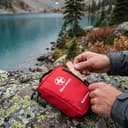
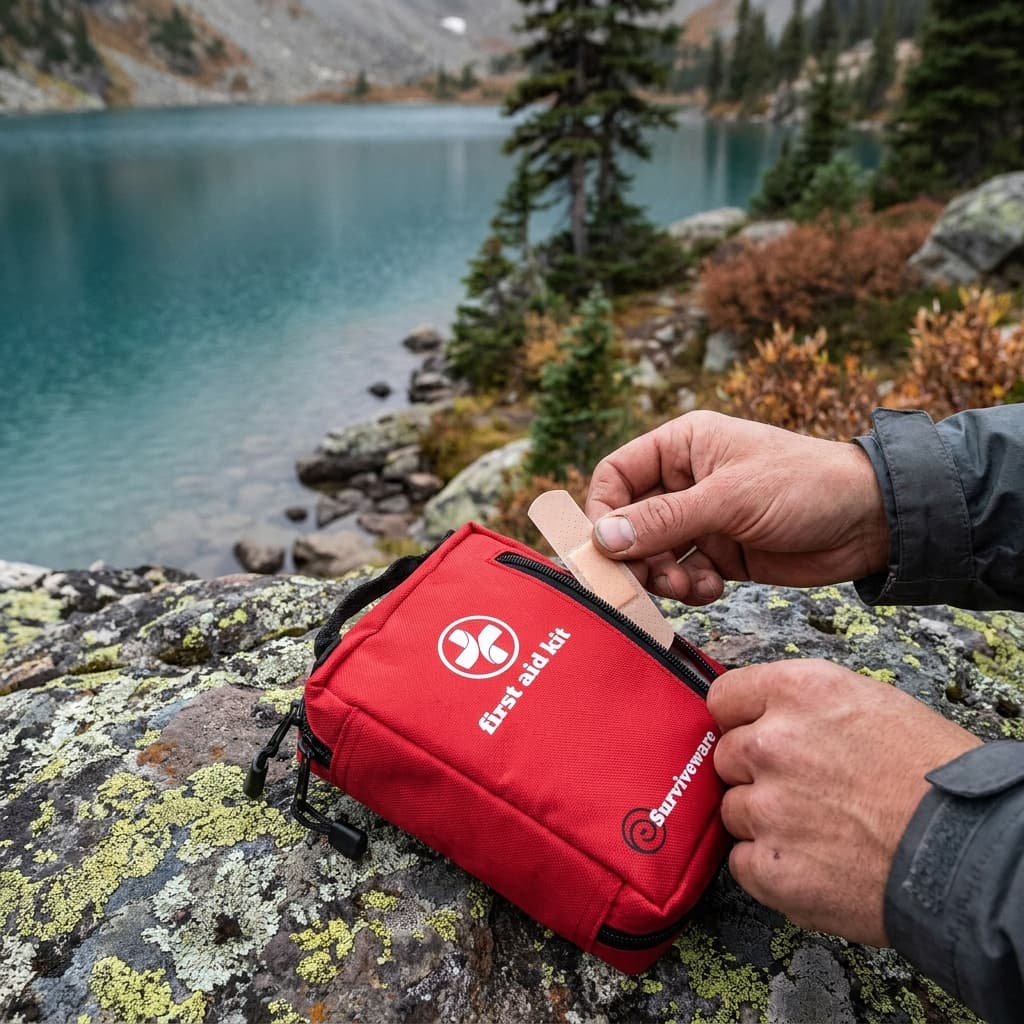
Surviveware 98 Pcs Comprehensive Premium Survival First Aid Kit
Best Value
Kit Score 8.7/10
Best for: Hikers who want a well-stocked, well-organized base kit they can attach to any pack and customize with their own medications, covering day hikes through weekend backpacking.
- Labeled compartments sorted by injury category make it fast to locate items when it matters
- No medications included from the factory; owners need to add their own aspirin, ibuprofen, and antihistamine
- Weight
- 16 oz
- Dimensions
- 6 x 4 x 8 in
- Piece count
- 98 pieces
- Case
- 600D polyester with water-resistant coating; MOLLE-compatible
- Organization
- Labeled compartments, sorted by injury type
- Medications included
- No (leaves space to add your own)
About this pick
Surviveware's 98-piece kit delivers serious coverage for the price: a rugged 600D polyester case, labeled compartments sorted by injury type, and a full spread of wound care and trauma supplies. No medications are included from the factory, which is a clear trade-off, but the MOLLE attachment and HSA/FSA eligibility make it a strong base kit to build on for day hikes through weekend trips.
Strengths
- Labeled compartments sorted by injury category make it fast to locate items when it matters
- 98 pieces at this price point deliver strong coverage for wound care and basic trauma response
- MOLLE-compatible; attaches to pack exterior or belt for quick access
Weaknesses
- No medications included from the factory; owners need to add their own aspirin, ibuprofen, and antihistamine
- Quantities per item are limited, so restocking after a multi-day trip is expected
Kit Score breakdown
See all picks in Best hiking first aid kits 2026: top picks for the trail
Keep going
Complete loadoutDay hike kitSeven slots for a full trail day, from the pack and water system to light and weather protection.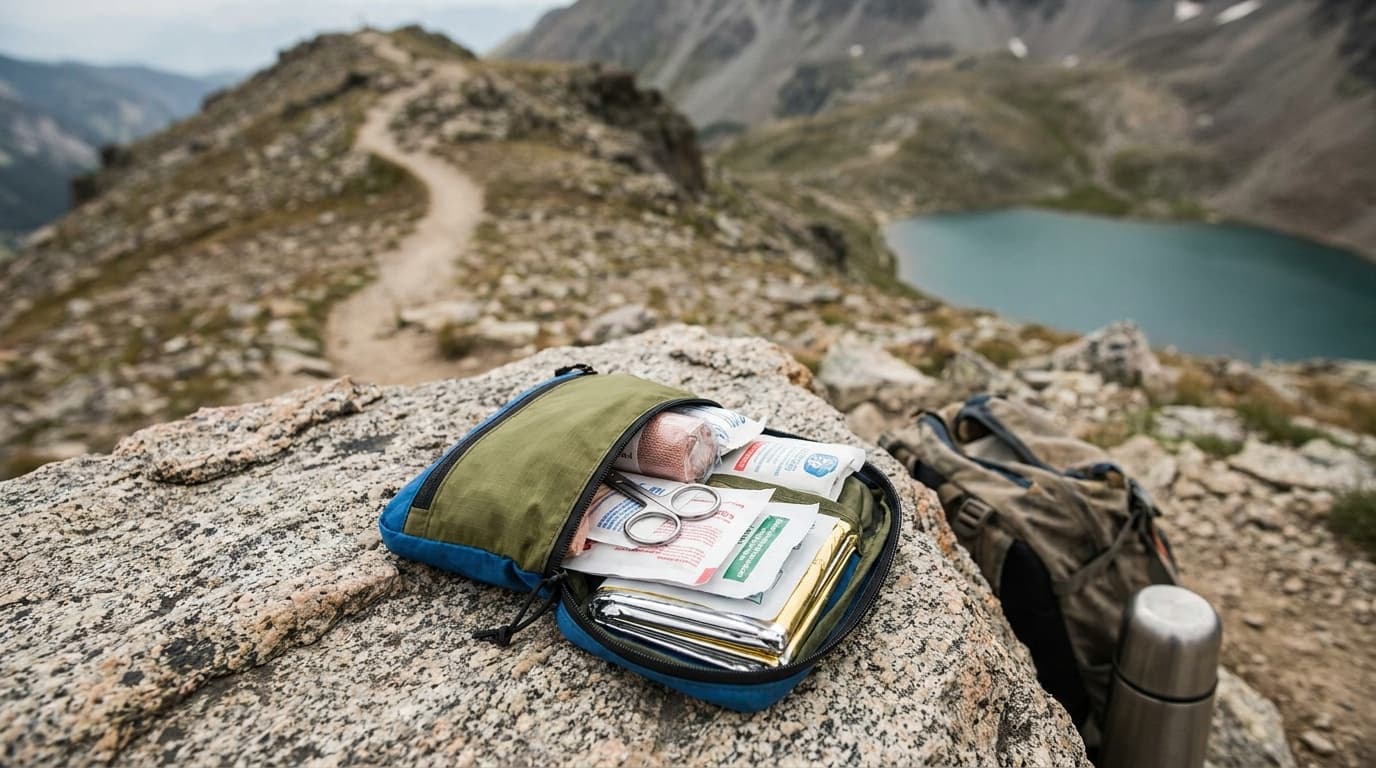
Researched, not hands-on tested
Updated Jun 4, 2026Our recommendations draw on manufacturer documentation, retailer listings, owner feedback, and comparisons with alternatives.
As an Amazon Associate I earn from qualifying purchases. We may earn a commission from links here, at no extra cost to you. How we research →