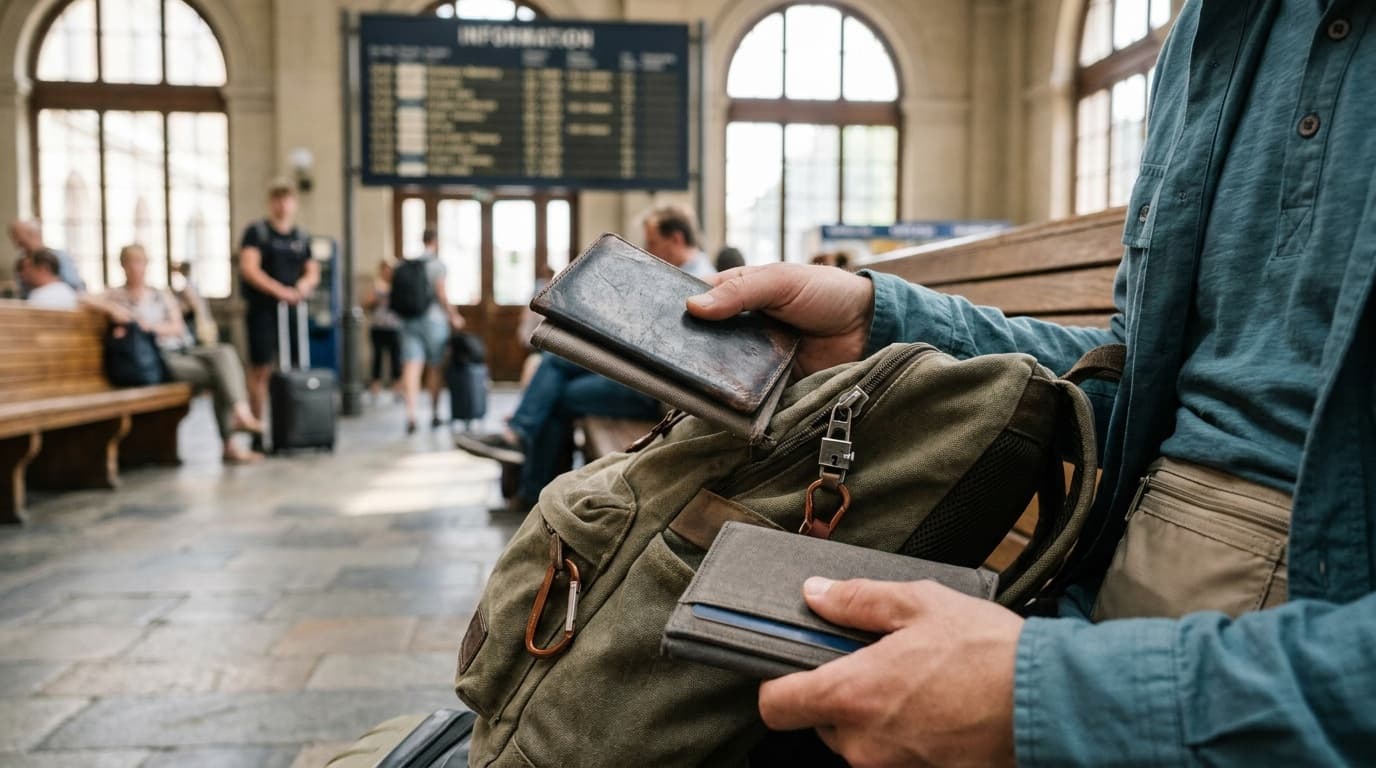
Most pickpockets rely on distraction and opportunity, not sophistication, which means the right answer to anti-theft bags is "it depends" rather than a flat yes or no.
Where theft risk is actually high
Pickpocketing concentrates in specific conditions: dense crowds where physical contact is normal, transit hubs where strangers brush past you, and tourist landmarks where distracted people carry obvious valuables. Cities consistently ranked high-risk in traveler surveys and police data include Barcelona, Rome, Paris, Prague, and Bogotá, but the risk is situational within any city. The Las Ramblas in Barcelona or the Paris Metro at rush hour are different environments from a quiet neighborhood restaurant in the same city.
Festivals and stadium events create similar conditions: poor lighting, crowds pressed together, and a general atmosphere where bumping into someone reads as normal. Overnight trains and buses add a sleep-vulnerability layer that daytime transit does not.
If your trip consists of renting a car, staying in quieter areas, and mostly eating at sit-down restaurants, anti-theft features will rarely be tested.
What the features actually do
Slash-resistant panels and straps use a metal mesh or cut-resistant fabric (often Dyneema or stainless wire reinforcement, as on the Pacsafe Metrosafe X) sewn into the bag body and shoulder straps. A thief with a blade can cut a normal bag strap or slice open a zipper pocket in a second. Cut-resistant material slows or stops that. It is a real, testable benefit, and it matters most when a bag is worn on your back in a crowd where you cannot see the exterior.
Locking zippers connect two zipper pulls with a small TSA-approved lock or a recessed clip. They do not stop a determined person with time, but they add friction in opportunistic theft. A thief looking for the easiest target will move on. These locks are TSA-approved on most anti-theft bags, so checked-luggage concerns do not apply.
RFID-blocking pockets use a metallic lining that blocks radio-frequency signals, theoretically preventing contactless card data from being skimmed by a reader held close to your bag. This sounds alarming, but documented real-world attacks of this kind are extremely rare. Modern contactless cards require very close proximity and often a PIN for transactions above a threshold. The feature costs the manufacturer almost nothing to add and is a strong marketing hook, but it is the lowest-priority feature on this list in terms of actual risk reduction.
Hidden or lockable anchor points let you cable-lock a bag to a seat rail or table leg. Genuinely useful in cafes, on overnight trains, and at airport gates when you need to sleep.
A slash-resistant body worn on your back in a crowded metro is the one anti-theft feature that habits alone cannot replicate.
When habits are enough
For most trips to lower-risk destinations, or for travelers who naturally stay alert in crowds, a standard bag paired with a few habits closes the gap:
Five habits that beat most theft risk
Wear it in front
In any crowd, flip your daypack to your chest or use a hip pack worn at your front hip. Visibility is the deterrent.
Use inner pockets
Keep passport, cards, and cash in a zippered interior pocket, not an exterior one. Exterior pockets are opportunistic-theft real estate.
Split your cash
Keep a day's spending in one pocket and your backup cash and a second card in a separate location, ideally a money belt under clothing.
Don't advertise
Avoid pulling out a visible wallet or phone in dense tourist areas. Make transactions quickly and put valuables away before moving.
Lock it when stationary
In cafes, run a cheap cable lock through a strap and anchor to a fixed object, or keep the bag touching your leg.
If you already do these things instinctively, the marginal benefit of a dedicated anti-theft bag is smaller. The bag earns its premium when conditions make habits hard to maintain: sleeping on transit, extended time in known high-risk areas, or traveling with valuables you cannot afford to lose.
The honest cost-benefit
A well-built anti-theft daypack (the Pacsafe Vibe 325, Travelon, Osprey Daylite with security add-ons) runs $120–$250. A comparable non-security daypack of similar volume and build quality runs $60–$120. The gap is real.
The slash-resistant panels and anchor points add meaningful weight (often 200–400 grams over a comparable standard bag) and the metal mesh can make the bag feel stiffer. These are genuine trade-offs if you care about ultralight travel.
For a two-week trip to Barcelona and Rome with significant metro use, the features are worth evaluating seriously. For a road trip through rural Portugal or a resort stay in the Caribbean, you are paying for features you will not need.
Frequently asked questions
Does RFID blocking actually prevent theft?
In documented real-world travel scenarios, contactless card skimming attacks are extremely rare. Modern payment cards require close proximity and often PIN verification for higher amounts. RFID blocking is a legitimate feature, but it addresses a threat that most travelers will never encounter. If it matters to you, a $10 sleeve does the same job as a built-in blocking pocket.
Are anti-theft bags worth it for carry-on travel?
For carry-on-only trips to cities with active pickpocket scenes (Barcelona, Rome, Prague), yes, the features are actively useful during city transit. For domestic travel or destinations where you spend most time in cars or quiet areas, the premium is harder to justify. The bag's other qualities (volume, organization, carry comfort) should still meet your needs independently of the security features.
Will a slash-proof bag stop a determined thief?
No bag is theft-proof. Slash-resistant panels and locking zippers raise the effort required for opportunistic theft, which is the most common type. A determined thief with time and tools can defeat any bag. The real goal is making yourself a harder target than the next person, which pushes risk-adjusted criminals toward easier opportunities.
For specific picks across price points and travel styles, see our guide to the best anti-theft travel bags. Bag security stops at the accommodation door, so evaluate that separately with our hotel door locks and alarms guide. Browse all travel guides or read how we research and rate gear.
Recommended gear
Our current top picks from the Best anti-theft travel bags 2026: 3 picks by capacity guide, if you are ready to buy.
TRAVELON
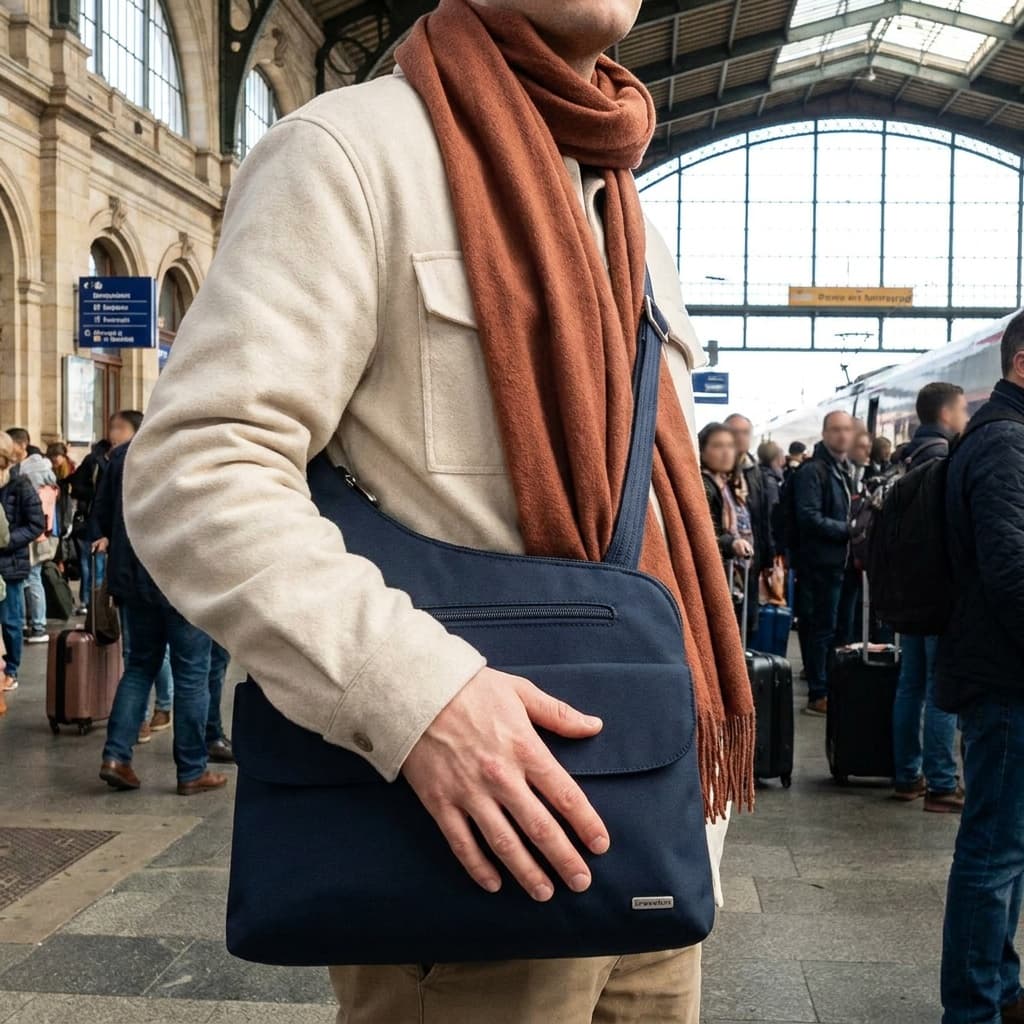
Travelon Anti-Theft Classic Crossbody Bag
Best Overall
Kit Score 8.5/10
$71.99 Price checked Oct 23, 6:22 AM CDT
Best for: Day-trippers and urban travelers who want proven, full-stack anti-theft protection at a value price without carrying a bag that screams tourist.
- Complete 5-point security: slash-resistant panels, dual cut-resistant strap cables, locking zippers, RFID-blocking slots, and a lockdown anchor strap
- Capacity tops out at 4.5 L, so a water bottle or small camera will not fit alongside daily essentials
- Capacity
- 4.5 L
- Dimensions
- 11.5" W x 13.5" H x 2.25" D
- Weight
- 0.90 lb
- Anti-theft system
- 5-point: locking zippers, slash-resistant mesh panels, dual cut-resistant strap cables, RFID-blocking slots, lockdown strap
- Strap drop
- 16" – 28" adjustable
- Material
- Polyester with protective mesh underlay
About this pick
The Travelon Classic Crossbody is the most battle-tested anti-theft bag in the category, combining a 5-point security system with genuine organizational depth at a price that undercuts the competition. Locking zippers, cut-resistant strap cables, slash-resistant body panels, and RFID-blocking card slots all work together in a package that does not look or feel like tactical gear.
Strengths
- Complete 5-point security: slash-resistant panels, dual cut-resistant strap cables, locking zippers, RFID-blocking slots, and a lockdown anchor strap
- Well-organized 4.5 L main compartment with key clip, RFID card slots, drop pockets, and a rear zip pocket that sits against your body
- Widely available, frequently discounted, and backed by a large owner base with years of real-world urban travel feedback
Weaknesses
- Capacity tops out at 4.5 L, so a water bottle or small camera will not fit alongside daily essentials
- Magnetic flap-over front pockets are less secure than the locking main compartment
Kit Score breakdown
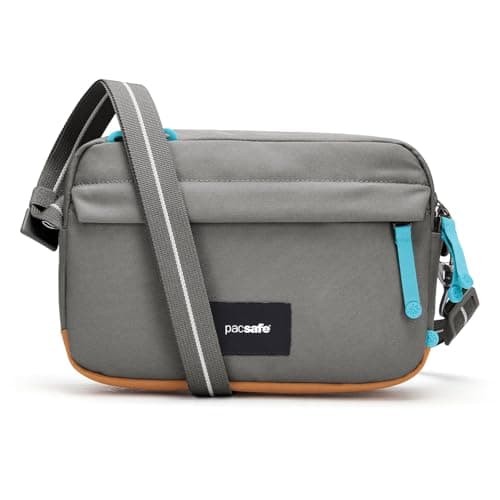
PACSAFE
Pacsafe GO Anti-Theft Crossbody Bag
Best Value
Kit Score 8.5/10
$69.95 Price checked Oct 23, 6:22 AM CDT
Best for: Solo urban travelers and day-trippers who want Pacsafe's proven slash-proof technology in the smallest, lightest form factor available.
- eXomesh slashguard (stainless-steel mesh embedded in the exterior) plus a Carrysafe Dyneema strap cable provides the strongest slash and cut resistance in this price tier
- 2.5 L is genuinely compact: a full-size water bottle, jacket, or larger camera does not fit
- Capacity
- 2.5 L
- Dimensions
- 6.3" H x 9.5" W x 2.8" D
- Strap range
- 18.9" to 63.4" crossbody circumference
- Weight
- 0.62 lb
- Anti-theft system
- eXomesh slashguard, Carrysafe Dyneema strap, TurnNLock hook, Dock Lock, Zip Clip, RFIDsafe blocking pocket
- Material
- 600D recycled polyester (1000mm water resistance, PFC-free), made from 7 recycled plastic bottles
About this pick
The Pacsafe GO is the lightest full-security crossbody in the lineup at 0.62 lb, pairing eXomesh stainless-steel slash-resistant fabric with a Dyneema wire-reinforced strap and a TurnNLock anchor hook. At 2.5 L it is genuinely compact, built for phone, wallet, passport, and the essentials of a transit day.
More specifications
- Warranty
- 5 years
Strengths
- eXomesh slashguard (stainless-steel mesh embedded in the exterior) plus a Carrysafe Dyneema strap cable provides the strongest slash and cut resistance in this price tier
- TurnNLock hook lets you anchor the bag to a railing or chair leg in high-risk environments like crowded markets or transit platforms
- 4.6 out of 5 stars with 90% of verified owners recommending it. Owners specifically call out the strap and security hardware as worth the price premium over no-name options.
Weaknesses
- 2.5 L is genuinely compact: a full-size water bottle, jacket, or larger camera does not fit
- The Zip Clip locking mechanism requires a slight learning curve, and some owners find it slow to open one-handed under pressure
Kit Score breakdown
PACSAFE
Pacsafe GO Anti-Theft Lunar Crossbody
Best Hybrid
Kit Score 8.5/10
$59.00 Price checked Oct 23, 6:22 AM CDT
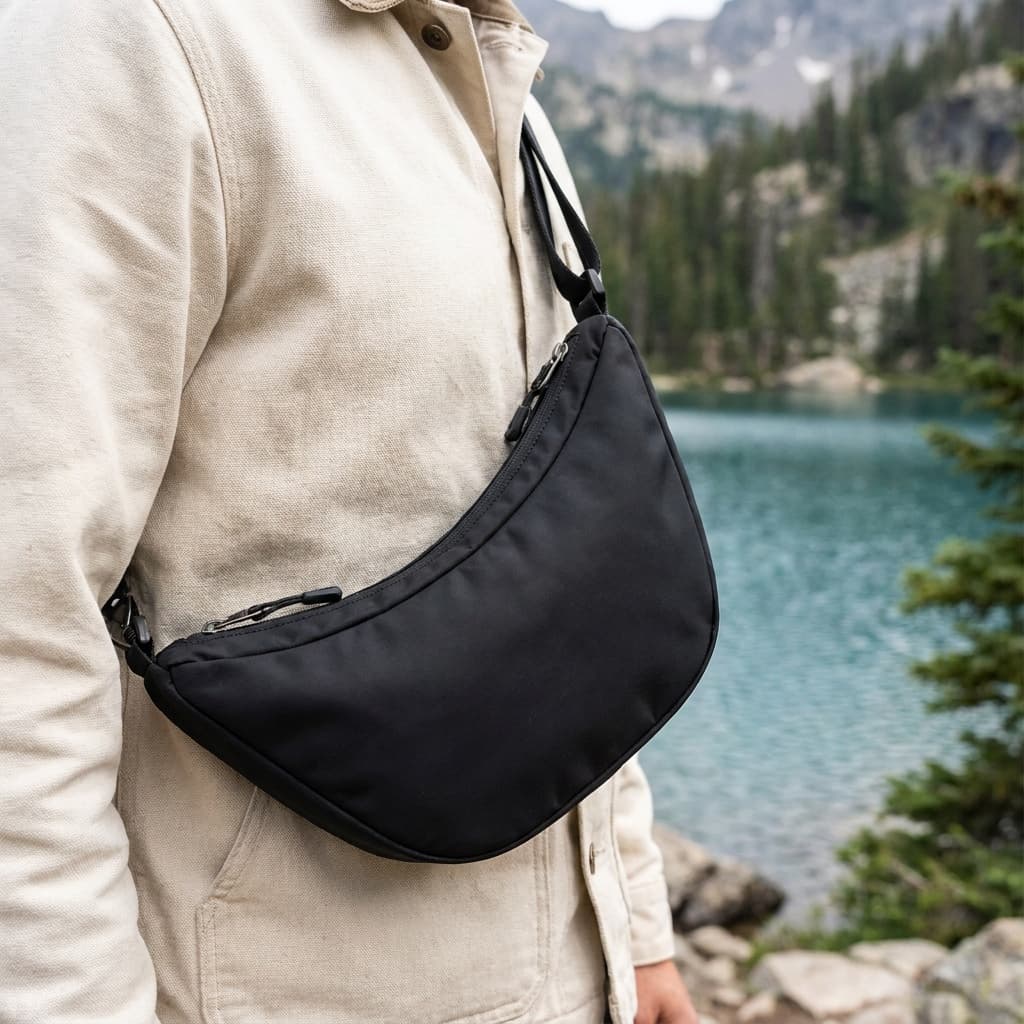
Best for: Travelers who want Pacsafe security in a light, modern crossbody that can rotate into a close-fitting sling in crowded places.
- Two carry positions make the small capacity more versatile than a conventional purse-shaped crossbody
- The 2.5 L interior is sized for a phone, passport, wallet, and a few essentials rather than a water bottle or layer
- Capacity
- 2.5 L
- Dimensions
- 6.3 x 11 x 3.5 in
- Weight
- 0.37 lb
- Carry
- Crossbody or compact sling
- Anti-theft system
- eXomesh, Carrysafe Dyneema strap, TurnNLock hook, Dock Lock, RFIDsafe pocket
- Material
- Recycled polyester with PFC-free water-repellent finish
About this pick
The GO Lunar reshapes Pacsafe's 2.5 L security system into a lighter crescent bag that can ride as a crossbody or compact sling. It keeps the eXomesh reinforcement, cut-resistant strap, locking hardware, and RFID pocket while dropping to 0.37 lb.
Strengths
- Two carry positions make the small capacity more versatile than a conventional purse-shaped crossbody
- Pacsafe's eXomesh, Dyneema strap, TurnNLock hook, Dock Lock, and RFIDsafe pocket cover the common opportunistic-theft methods
- At 0.37 lb, it is the lightest fully featured anti-theft bag in this group
Weaknesses
- The 2.5 L interior is sized for a phone, passport, wallet, and a few essentials rather than a water bottle or layer
- The curved main compartment is less efficient for a small tablet than the rectangular standard GO
Kit Score breakdown
See all picks in Best anti-theft travel bags 2026: 3 picks by capacity
Keep going
Researched, not hands-on tested
Updated Jun 4, 2026Our recommendations draw on manufacturer documentation, retailer listings, owner feedback, and comparisons with alternatives.
As an Amazon Associate I earn from qualifying purchases. We may earn a commission from links here, at no extra cost to you. How we research →