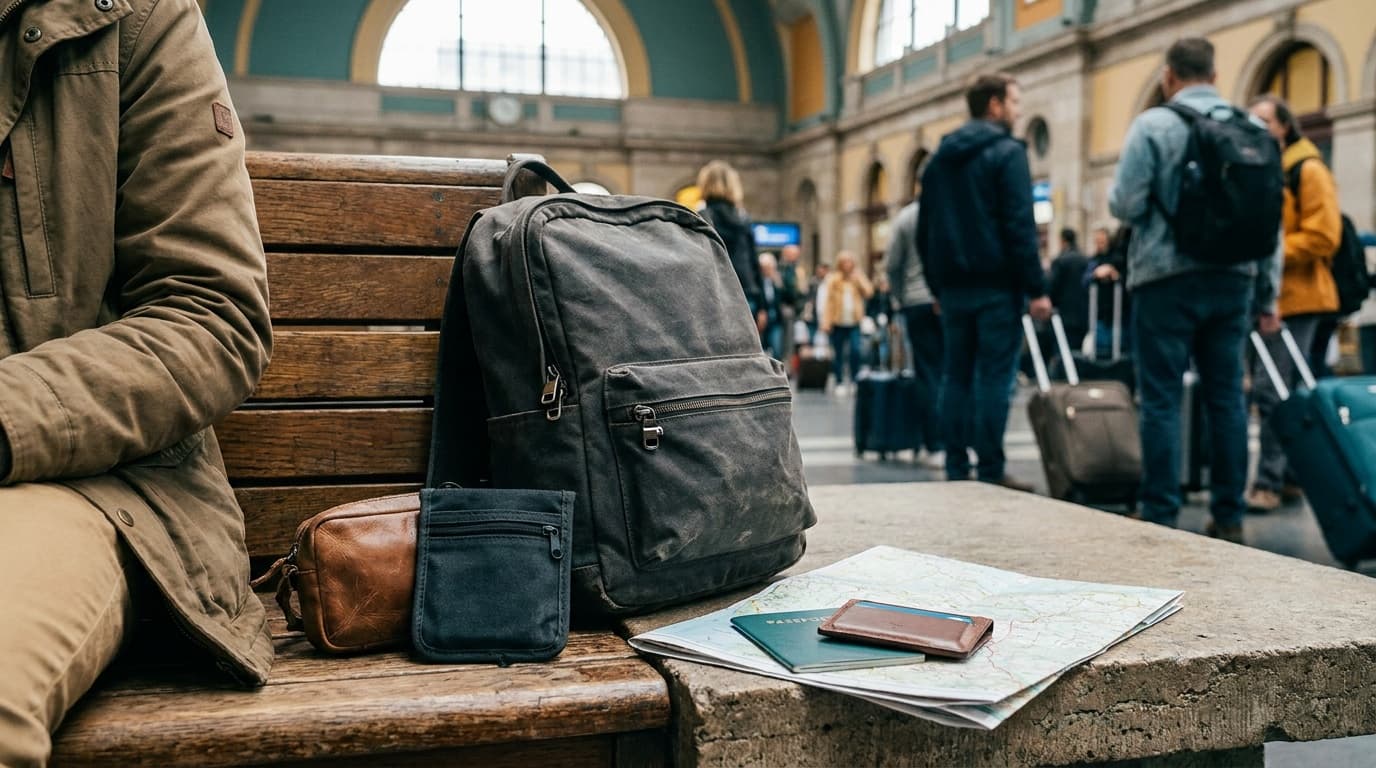
Pickpockets thrive on distraction and habit, not on some supernatural skill. Understand their playbook and a few carry adjustments make you a genuinely hard target.
Situational awareness in crowds and transit
Most pickpocketing happens in predictable environments: metro platforms, bus queues, escalators, tourist attraction entry lines, and anywhere a crowd compresses into a bottleneck. The moment your attention narrows to a screen, a map, or a loud disturbance, your peripheral awareness drops.
The practical fix is a simple habit: when you enter a crowded space, take one second to shift your bag to your front, note where your phone is, and confirm your card pocket is closed. You do not need to look paranoid. You just need to be reset.
Escalators deserve specific attention. The pinch point where people queue and then load is a classic contact moment. Keep your bag in front, close to your body, and avoid looking at your phone while stepping on or off.
Front-pocket and crossbody carry
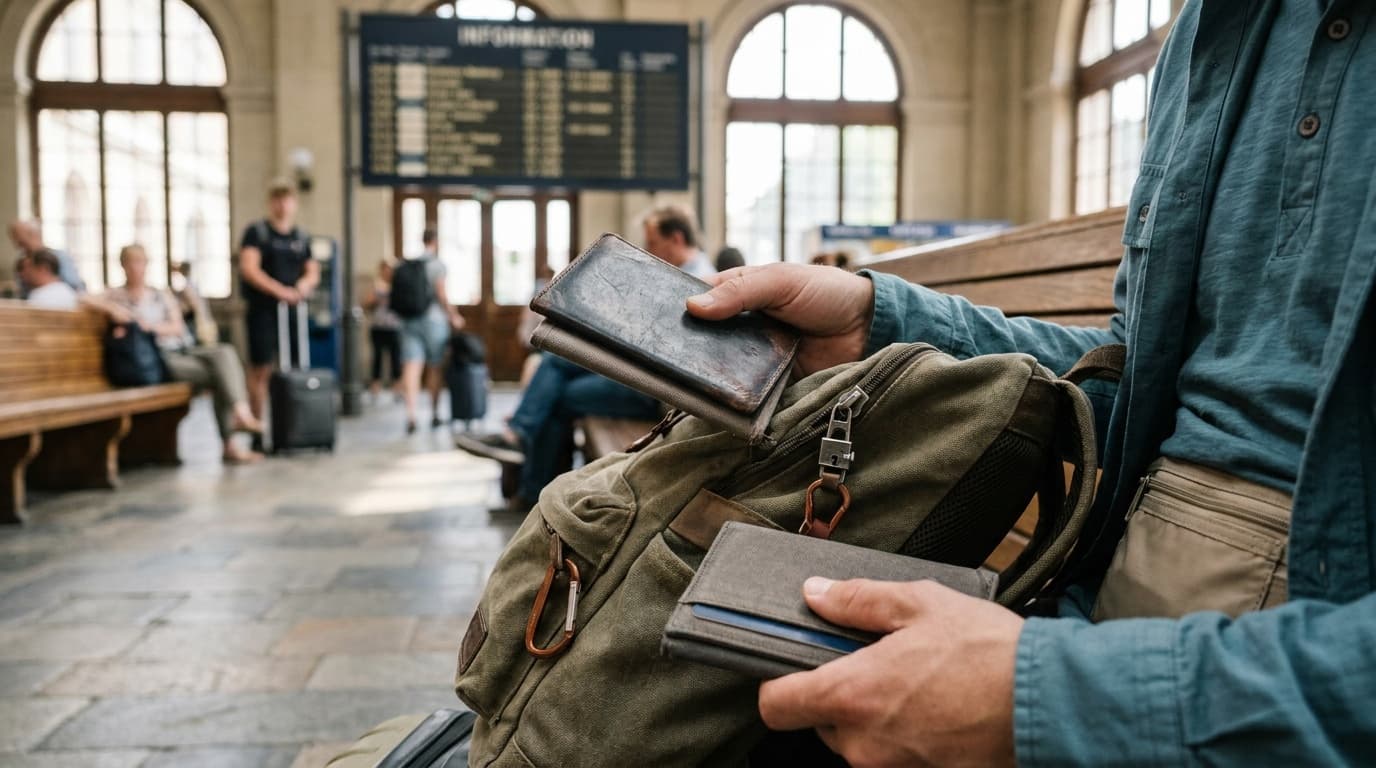
Back pockets are the single easiest target a pickpocket has. The contents are invisible to you and accessible with no physical contact from behind in a crowd. Moving your wallet to a front pocket, buttoned if your trousers have one, is the highest-ROI habit change you can make.
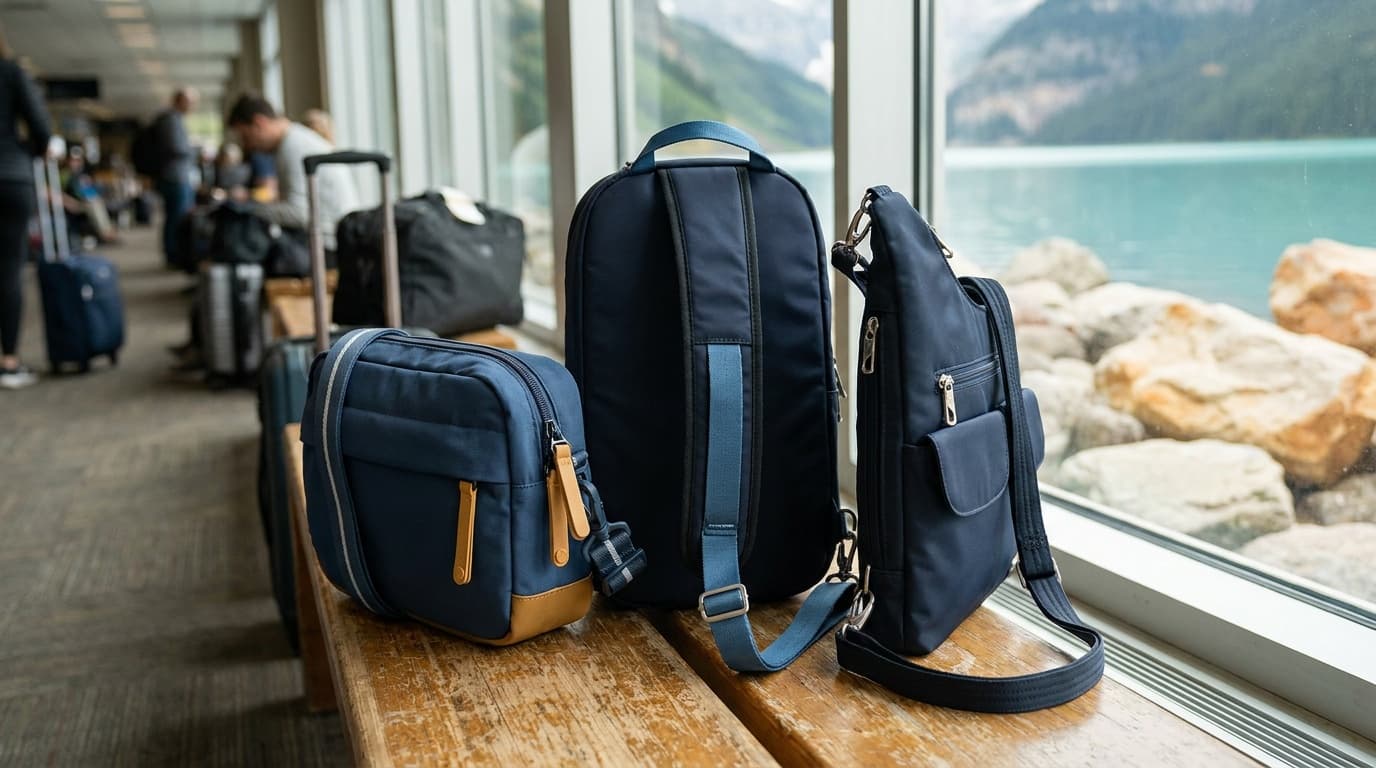
For day bags, a crossbody like the Travelon Anti-Theft Classic Crossbody worn in front puts the main compartment against your torso. You can feel contact, and a thief cannot open a zipper without your noticing. Neck wallets worn under a shirt are effective for passports in very high-risk situations, though they are slower to access and can be uncomfortable in heat.
Travel money belts worn at the hip under clothing (not the obvious fanny-pack style on top) work well for backup cards and emergency cash you do not need to access frequently.
Anti-theft bag features worth paying for
Not every anti-theft feature is equally useful. Some are marketing; a few are genuinely protective.
Anti-theft features ranked by practical value
Slash-resistant panels
Cut-resistant fabric or a wire mesh layer in the bottom and sides of a bag; prevents bag-slashing, which is rare but does happen in dense crowds
Locking zippers
A carabiner or combination cable through zipper pulls prevents opportunistic opening; not uncuttable, but it raises the effort threshold significantly
Hidden exterior pockets
A pocket on the back panel (against your body) is inaccessible without removing the bag; useful for transit cards and small cash
RFID-blocking pocket
Blocks electronic skimming of contactless cards; the actual threat level is low in practice, but the feature adds negligible cost
Conspicuous branding
Loud logos signal tourist; a plain matte bag in a neutral color draws less targeted attention in unfamiliar cities
A bag does not need to have all of these. Slash-resistant panels plus locking zippers plus a back-panel pocket, the combination found on the Pacsafe GO Crossbody, covers the realistic threat model for almost every traveler.
Recognizing distraction scams
The most common pickpocket method is not a grab-and-run. It is a scripted social interaction designed to occupy your hands and attention while a second person accesses your bag or pocket.
Common scripts include: someone spilling something on you and offering to help clean it up; a person handing you a petition, flower, or bracelet (now your hands are full); a staged argument or accident nearby that draws your gaze; a group of children pressing close to show you something.
The pattern is always the same: unexpected physical contact or attention, a reason to stop and engage, and a second person in your blind spot.
The distraction is not the crime. The moment you stop to process the distraction is.
Recognizing the script lets you break it early. A firm "no thank you" while keeping walking, keeping your hand on your bag, and not stopping is not rude. It is correct behavior. You do not owe engagement to a stranger who approached you uninvited in a tourist area.
Splitting cash and cards
The goal of splitting is simple: no single loss should be catastrophic. Here is a workable system.
Carry a day wallet with that day's spending cash and one debit card. Keep a backup card and emergency cash (enough for a taxi, a meal, and a cheap hotel night) in a separate location: the back-panel pocket of your bag, a money belt, an under-shirt pouch like the Zero Grid Neck Wallet, or your hotel safe. Leave your passport at the hotel in the safe when a certified copy will satisfy entry requirements (museums, for example), and carry the real document only when legally required.
Tell your bank you are traveling before you leave. A blocked card in a foreign city, even without a theft, is a serious inconvenience that a two-minute call beforehand prevents.
Hotel safe use
Most in-room safes are adequate for passports, backup cards, and excess cash. They are not Fort Knox, but they remove the opportunistic threat entirely. Set your own PIN on arrival; do not use the factory default (often 0000 or 1234), which is published in service manuals online.
For items too large for the safe, the front desk vault is a better option than leaving valuables in an unlocked bag in the room. Most hotels offer this at no charge.
Keep a photo of your passport, travel insurance card, and bank card numbers (front and back) stored in a secure cloud location you can access offline. If a theft does happen, you have everything you need to report it and function while replacements arrive.
Frequently asked questions
Which cities have the highest pickpocket risk for tourists?
Barcelona, Rome, Paris, Prague, and Lisbon consistently appear in traveler reports and travel-safety data as high-incidence cities, particularly around major transit hubs and tourist attractions. That said, the behaviors that protect you are the same everywhere: front-pocket carry, bag awareness in crowds, and recognizing distraction scripts. High-risk designation means stay alert, not stay home.
Is RFID blocking actually necessary?
The real-world threat from RFID skimming is low. Contactless card fraud more commonly happens through compromised terminals than drive-by scanning. An RFID-blocking wallet or sleeve does no harm, and many quality travel wallets include it, but it should not be a primary purchase driver. Physical security of your wallet matters far more.
What should I do immediately if my wallet is stolen?
First, move to a safe location away from the crowd. Then: call your bank to freeze the affected card (most banks have a 24-hour line and an in-app freeze option), file a police report in person or online (required for travel insurance claims), notify your travel insurer, and access your backup card and emergency cash. If your passport was taken, contact your country's nearest embassy or consulate. Having digital copies of all documents stored in cloud access makes each of these steps faster.
For specific picks, see our guide to the best anti-theft travel bags. Once the day ends, use the room's installed hardware first and compare any extra layer in our hotel door locks and alarms guide. Browse all travel guides or read how we research and rate gear.
Recommended gear
Our current top picks from the Best anti-theft travel bags 2026: 3 picks by capacity guide, if you are ready to buy.
TRAVELON
Travelon Anti-Theft Classic Crossbody Bag
Best Overall
Kit Score 8.5/10
$71.99 Price checked Oct 23, 4:16 PM CDT
Best for: Day-trippers and urban travelers who want proven, full-stack anti-theft protection at a value price without carrying a bag that screams tourist.
- Complete 5-point security: slash-resistant panels, dual cut-resistant strap cables, locking zippers, RFID-blocking slots, and a lockdown anchor strap
- Capacity tops out at 4.5 L, so a water bottle or small camera will not fit alongside daily essentials
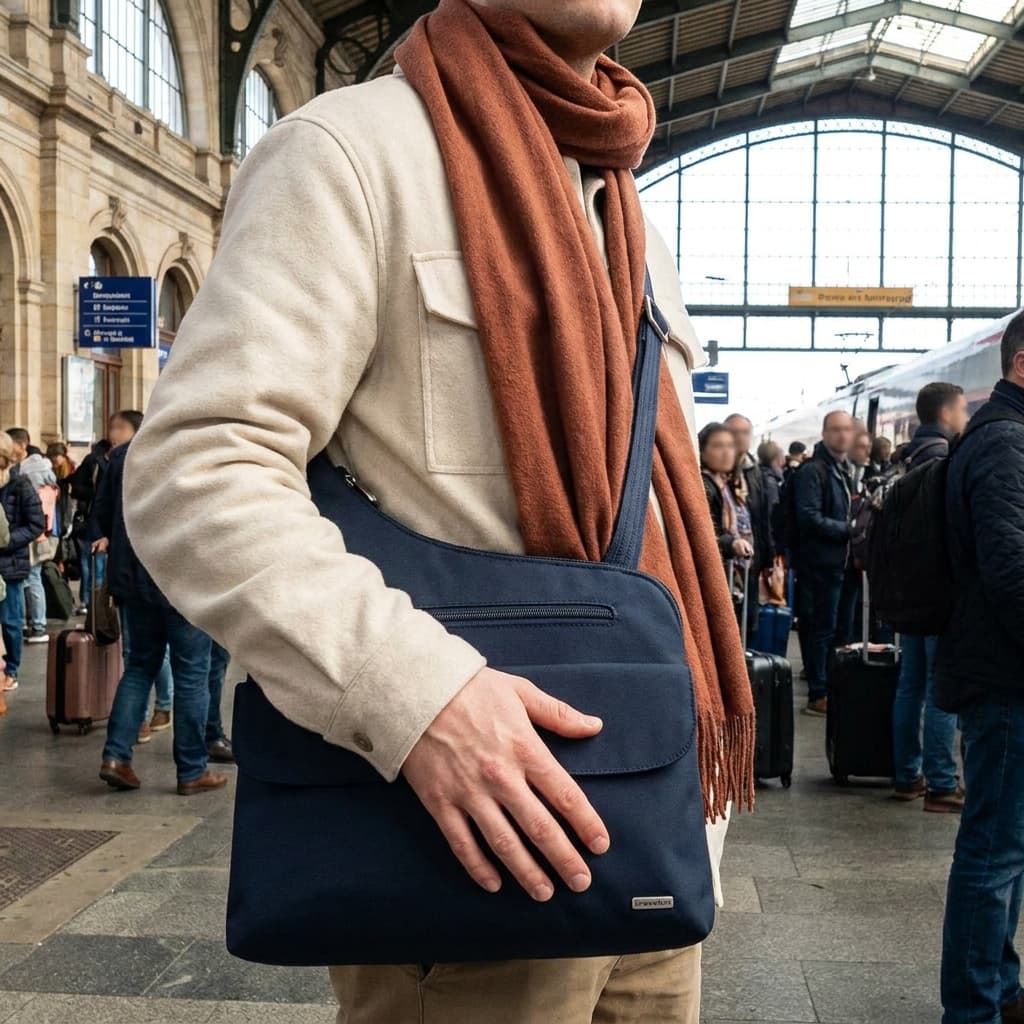
- Capacity
- 4.5 L
- Dimensions
- 11.5" W x 13.5" H x 2.25" D
- Weight
- 0.90 lb
- Anti-theft system
- 5-point: locking zippers, slash-resistant mesh panels, dual cut-resistant strap cables, RFID-blocking slots, lockdown strap
- Strap drop
- 16" – 28" adjustable
- Material
- Polyester with protective mesh underlay
About this pick
The Travelon Classic Crossbody is the most battle-tested anti-theft bag in the category, combining a 5-point security system with genuine organizational depth at a price that undercuts the competition. Locking zippers, cut-resistant strap cables, slash-resistant body panels, and RFID-blocking card slots all work together in a package that does not look or feel like tactical gear.
Strengths
- Complete 5-point security: slash-resistant panels, dual cut-resistant strap cables, locking zippers, RFID-blocking slots, and a lockdown anchor strap
- Well-organized 4.5 L main compartment with key clip, RFID card slots, drop pockets, and a rear zip pocket that sits against your body
- Widely available, frequently discounted, and backed by a large owner base with years of real-world urban travel feedback
Weaknesses
- Capacity tops out at 4.5 L, so a water bottle or small camera will not fit alongside daily essentials
- Magnetic flap-over front pockets are less secure than the locking main compartment
Kit Score breakdown
PACSAFE
Pacsafe GO Anti-Theft Crossbody Bag
Best Value
Kit Score 8.5/10
$69.95 Price checked Oct 23, 4:16 PM CDT
Best for: Solo urban travelers and day-trippers who want Pacsafe's proven slash-proof technology in the smallest, lightest form factor available.
- eXomesh slashguard (stainless-steel mesh embedded in the exterior) plus a Carrysafe Dyneema strap cable provides the strongest slash and cut resistance in this price tier
- 2.5 L is genuinely compact: a full-size water bottle, jacket, or larger camera does not fit
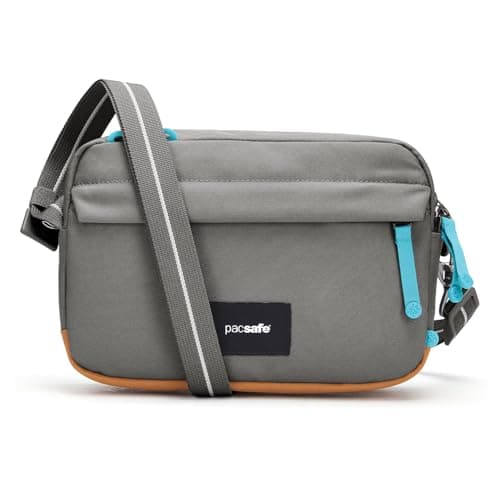
- Capacity
- 2.5 L
- Dimensions
- 6.3" H x 9.5" W x 2.8" D
- Strap range
- 18.9" to 63.4" crossbody circumference
- Weight
- 0.62 lb
- Anti-theft system
- eXomesh slashguard, Carrysafe Dyneema strap, TurnNLock hook, Dock Lock, Zip Clip, RFIDsafe blocking pocket
- Material
- 600D recycled polyester (1000mm water resistance, PFC-free), made from 7 recycled plastic bottles
About this pick
The Pacsafe GO is the lightest full-security crossbody in the lineup at 0.62 lb, pairing eXomesh stainless-steel slash-resistant fabric with a Dyneema wire-reinforced strap and a TurnNLock anchor hook. At 2.5 L it is genuinely compact, built for phone, wallet, passport, and the essentials of a transit day.
More specifications
- Warranty
- 5 years
Strengths
- eXomesh slashguard (stainless-steel mesh embedded in the exterior) plus a Carrysafe Dyneema strap cable provides the strongest slash and cut resistance in this price tier
- TurnNLock hook lets you anchor the bag to a railing or chair leg in high-risk environments like crowded markets or transit platforms
- 4.6 out of 5 stars with 90% of verified owners recommending it. Owners specifically call out the strap and security hardware as worth the price premium over no-name options.
Weaknesses
- 2.5 L is genuinely compact: a full-size water bottle, jacket, or larger camera does not fit
- The Zip Clip locking mechanism requires a slight learning curve, and some owners find it slow to open one-handed under pressure
Kit Score breakdown
PACSAFE
Pacsafe GO Anti-Theft Lunar Crossbody
Best Hybrid
Kit Score 8.5/10
$58.50 Price checked Oct 23, 4:16 PM CDT
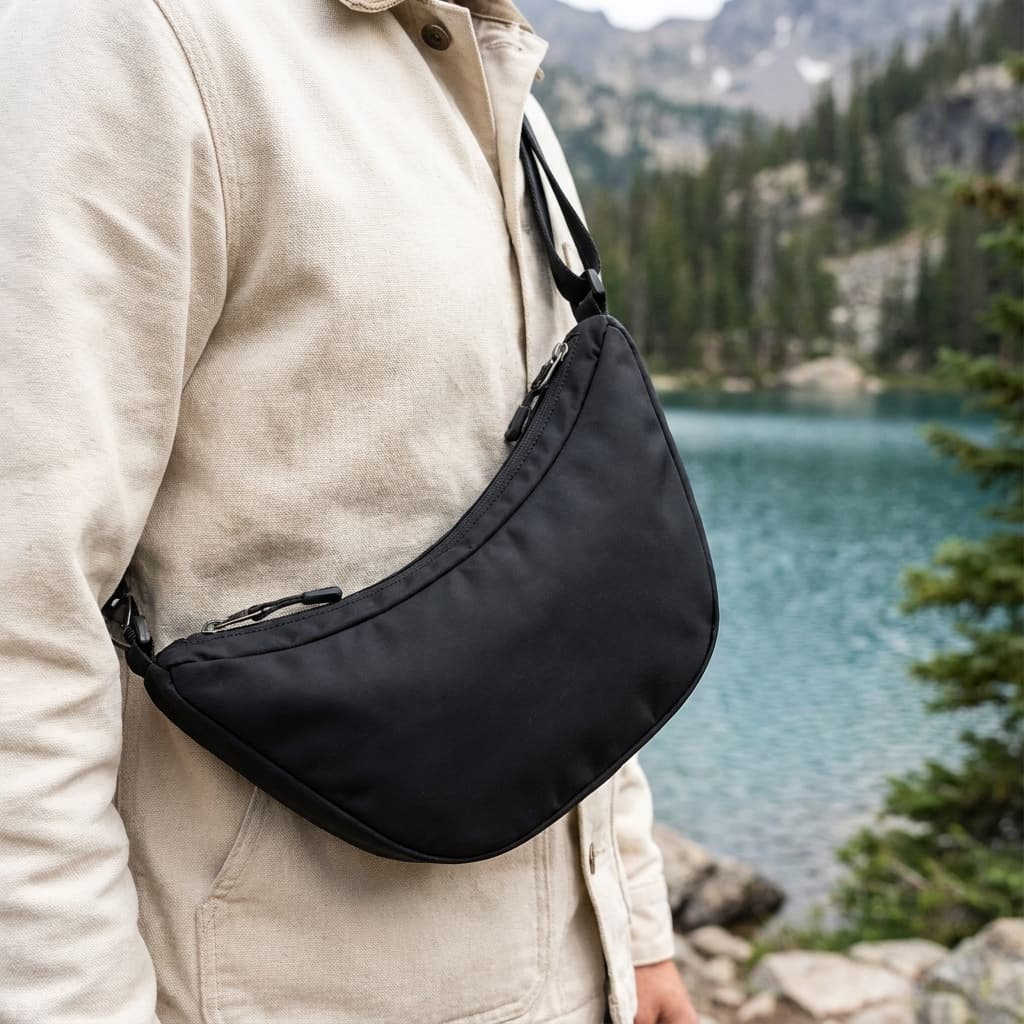
Best for: Travelers who want Pacsafe security in a light, modern crossbody that can rotate into a close-fitting sling in crowded places.
- Two carry positions make the small capacity more versatile than a conventional purse-shaped crossbody
- The 2.5 L interior is sized for a phone, passport, wallet, and a few essentials rather than a water bottle or layer
- Capacity
- 2.5 L
- Dimensions
- 6.3 x 11 x 3.5 in
- Weight
- 0.37 lb
- Carry
- Crossbody or compact sling
- Anti-theft system
- eXomesh, Carrysafe Dyneema strap, TurnNLock hook, Dock Lock, RFIDsafe pocket
- Material
- Recycled polyester with PFC-free water-repellent finish
About this pick
The GO Lunar reshapes Pacsafe's 2.5 L security system into a lighter crescent bag that can ride as a crossbody or compact sling. It keeps the eXomesh reinforcement, cut-resistant strap, locking hardware, and RFID pocket while dropping to 0.37 lb.
Strengths
- Two carry positions make the small capacity more versatile than a conventional purse-shaped crossbody
- Pacsafe's eXomesh, Dyneema strap, TurnNLock hook, Dock Lock, and RFIDsafe pocket cover the common opportunistic-theft methods
- At 0.37 lb, it is the lightest fully featured anti-theft bag in this group
Weaknesses
- The 2.5 L interior is sized for a phone, passport, wallet, and a few essentials rather than a water bottle or layer
- The curved main compartment is less efficient for a small tablet than the rectangular standard GO
Kit Score breakdown
See all picks in Best anti-theft travel bags 2026: 3 picks by capacity
Keep going
Researched, not hands-on tested
Updated Jun 4, 2026Our recommendations draw on manufacturer documentation, retailer listings, owner feedback, and comparisons with alternatives.
As an Amazon Associate I earn from qualifying purchases. We may earn a commission from links here, at no extra cost to you. How we research →