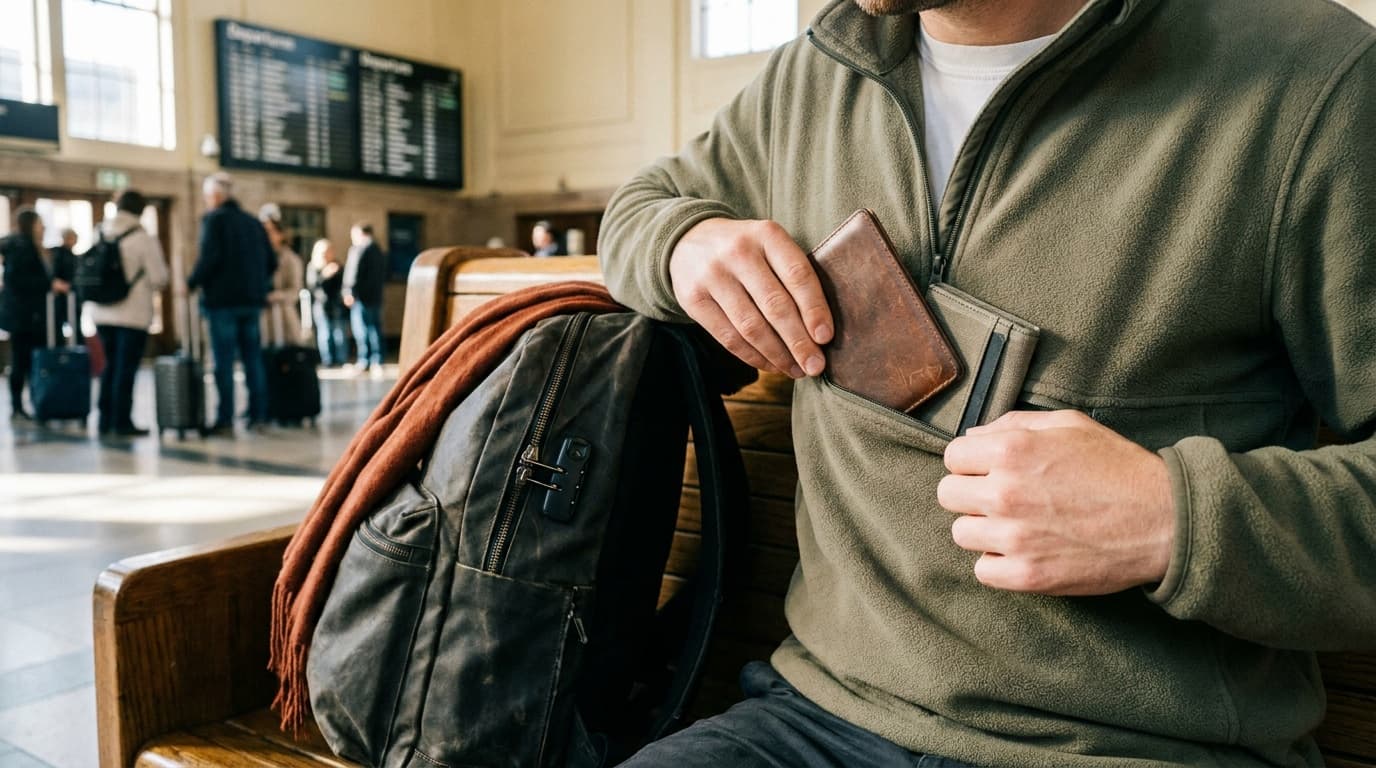
Every travel gear brand wants to sell you an RFID-blocking wallet, but the actual threat that product protects against is close to nonexistent for most travelers.
How contactless cards actually work
Your tap-to-pay credit or debit card uses NFC (Near Field Communication), a short-range variant of RFID. When you tap at a terminal, the card and terminal negotiate a transaction-specific cryptogram. That cryptogram is valid for exactly one transaction and is useless to anyone who intercepts it.
This is fundamentally different from the old magnetic-stripe era. A skimmer that cloned a mag-stripe in 2010 captured a static card number that worked anywhere. A skimmer that intercepts an NFC handshake today captures a one-time code tied to a specific merchant and amount. The data expires the moment the transaction resolves.
The short read range matters too. An attacker needs a reader within roughly 4 centimeters of your card. In practice that means pressing a device against your pocket on a crowded subway. Security researchers have demonstrated this is possible in lab conditions, but demonstrations in controlled settings are not the same as a scalable real-world attack.
Why you almost certainly will not be a victim
For contactless skimming to result in fraud, an attacker would need to: get a reader within centimeters of your card without your noticing, capture a transmission, and then somehow convert that one-time cryptogram into a fraudulent charge, which current card network security makes effectively impossible.
The fraud methods that actually harm cardholders are data breaches at merchants and payment processors (your card number sits in their database), phishing, and physical card theft. None of those are stopped by an RFID-blocking wallet.
The skimming scenario that RFID wallets protect against is theoretically possible but practically irrelevant compared to the data breaches and phishing attacks that cause real card fraud.
Major card networks including Visa and Mastercard have stated publicly that they are not aware of any widespread contactless skimming fraud. Security researcher Adam Laurie, who demonstrated early RFID vulnerabilities, has noted that the transition to tokenized transactions changed the threat model significantly.
When RFID protection is actually worth something
Passports are the more legitimate case. Passports issued by the US and most other countries after 2007 contain an RFID chip holding the data page: name, date of birth, nationality, photo. The chip is protected by Basic Access Control, meaning a reader technically needs the machine-readable zone data to decrypt it. But within a few centimeters, someone with the right equipment could attempt a read.
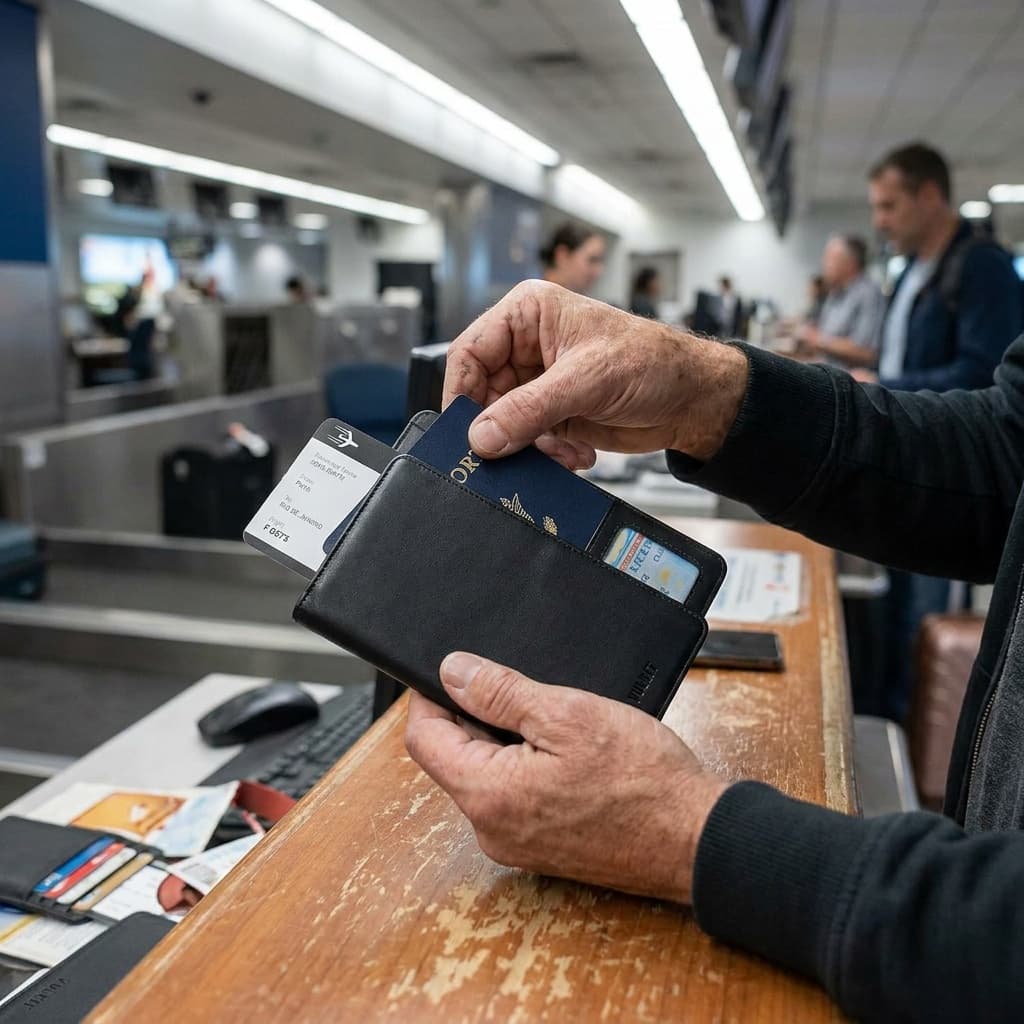
The practical risk is still low. Reading a passport chip at range requires specialized equipment and skill, and the data on the chip duplicates what is already visible on the printed page. Still, a passport sleeve or a wallet with a dedicated passport compartment that happens to block RFID, like the VULKIT Passport Wallet, is a reasonable precaution at no extra cost.
When RFID blocking is worth considering
Passport travel
Use a passport sleeve or wallet with an RFID-shielded pocket for the document with chip data.
High-volume public transit
If you are uncomfortable tapping accidentally in a very crowded metro, a blocking sleeve isolates your card.
Older loyalty or hotel key cards
Some older cards use 125 kHz RFID without encryption; these are more vulnerable, though the stakes are lower.
Peace of mind
If knowing your cards are shielded lets you travel more comfortably, the cost of a basic sleeve is negligible.
What you should actually worry about instead
The threats that regularly cause travel-related card fraud are more mundane. Card skimmers on ATMs in tourist areas, where a physical overlay captures your magnetic stripe and a hidden camera captures your PIN, are far more common than contactless interception. Using bank ATMs inside a bank branch, covering the keypad, and checking your statements daily while traveling are more effective than any wallet upgrade.
Phishing and SIM-swapping attacks are also orders of magnitude more common than any RFID scenario. A strong, unique password on your bank account and two-factor authentication that does not rely on SMS will do more for your travel security than any Faraday cage in your pocket.
The verdict: do not overpay, but do not stress
RFID blocking in a wallet is not a scam, but it is heavily over-marketed relative to the actual risk it addresses. If a wallet you genuinely like includes RFID blocking, as the Bellroy Note Sleeve does, that is a fine bonus. If a retailer is charging a significant premium for it, or if a brand is leading with fear-based marketing about skimmers everywhere, treat that as a signal that they are selling anxiety rather than utility.
Buy the wallet that fits your carry style, holds what you need, and meets your durability standard. If it blocks RFID, great. If it does not, you are not at meaningful risk.
Frequently asked questions
Can someone steal my credit card information by walking past me?
In theory, an attacker with a reader within roughly 4 centimeters could capture a contactless transmission. In practice, the data captured is a one-time cryptogram that is useless for making a fraudulent charge. No widespread real-world fraud via this method has been documented by card networks or security researchers.
Do I need RFID protection for my passport?
It is a reasonable low-cost precaution. US passports issued after 2007 have an embedded chip that holds your biographical data. The chip requires your passport's machine-readable zone to decrypt, but a shielded sleeve adds a layer of protection with essentially no downside. Many passport wallets and travel organizers include it by default.
Does aluminum foil actually block RFID?
Yes, a layer of aluminum foil creates a basic Faraday cage that blocks NFC signals. It is not a practical long-term solution, but it does confirm the principle: any conductive material wrapped around the card interrupts the radio frequency field. Commercial RFID-blocking wallets use a thin metallic lining that achieves the same effect without the bulk.
For specific picks, see our guide to the best RFID blocking wallets. Browse all travel guides or read how we research and rate gear.
Recommended gear
Our current top picks from the Best RFID Blocking Wallets for Travel (2026) guide, if you are ready to buy.
BUFFWAY
Buffway Slim Minimalist Front-Pocket Leather Wallet
Best Value
Kit Score 8.7/10
$15.99 Price checked Oct 23, 4:16 PM CDT
Best for: Light card and ID carry in a small wallet, without a passport or coin compartment.
- Card-wallet format for travelers who do not need a passport compartment
- Faux leather on the Cross listing; do not assume every finish uses the same material
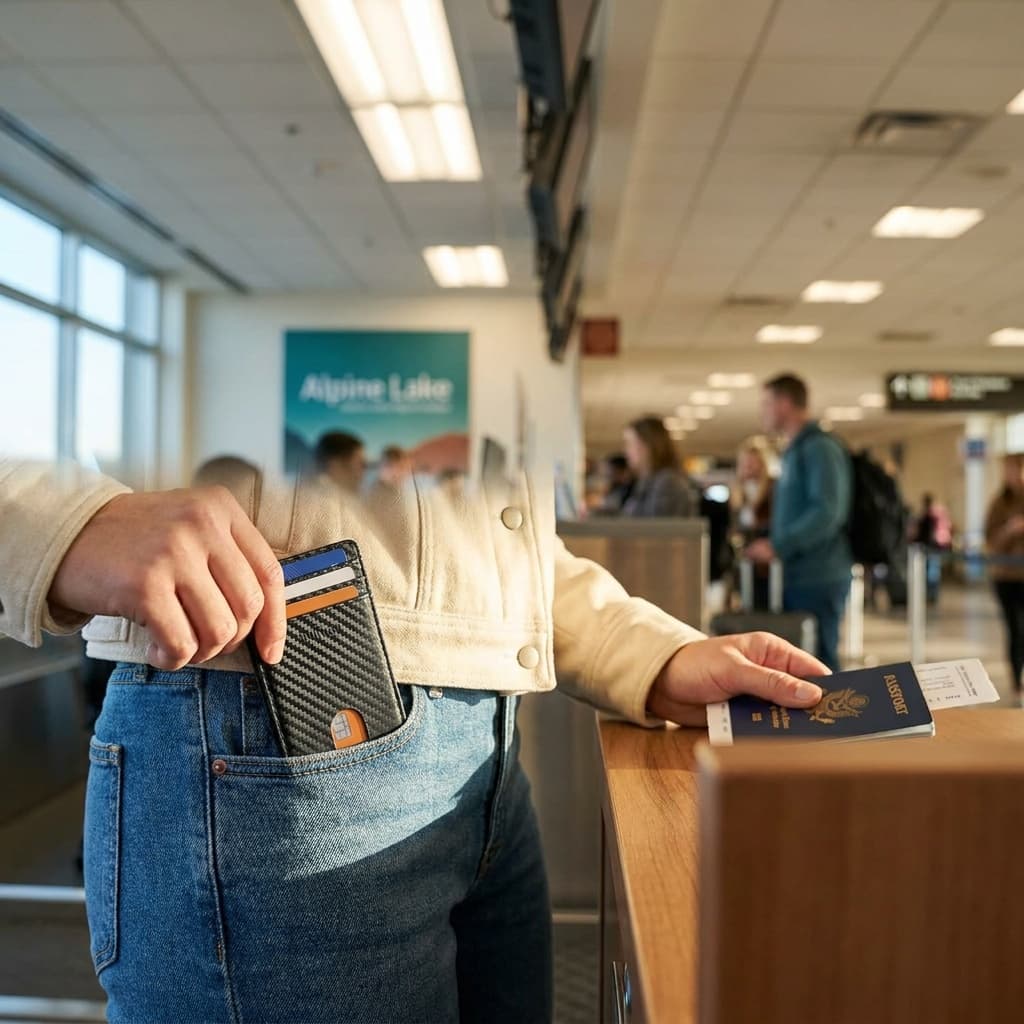
- Card capacity
- 8 slots (4 card, 1 ID window, 2 side-slip, 1 cash pocket)
- Dimensions
- 3 1/8 in x 4 7/16 in
- Weight
- 1.12 oz
- Material
- Faux leather, polyester lining
- RFID blocking
- 13.56 MHz protective layer
- Color options
- 40+
About this pick
A slim card wallet with eight advertised storage slots and an ID window. Buffway markets RFID blocking, but Kit Authority has not tested its shielding. Check the selected finish's material: the manufacturer's Cross listing specifies faux leather.
Strengths
- Card-wallet format for travelers who do not need a passport compartment
- 8 well-organized slots including a clear ID window and dedicated cash pocket keep the front pocket tidy
- Manufacturer lists an approximately 3.1 by 4.4-inch footprint for the Cross version
Weaknesses
- Faux leather on the Cross listing; do not assume every finish uses the same material
- Storage-slot count includes non-card pockets; check the layout against your actual load
Kit Score breakdown
TRAVELAMBO
Travelambo Slim Front-Pocket Leather Wallet
Best Budget
Kit Score 7.9/10
$9.99 Price checked Oct 23, 4:16 PM CDT
Best for: Budget-conscious travelers carrying a small set of cards and folded cash.
- Budget-positioned alternative to a larger travel organizer
- Limited storage for travelers carrying many payment, loyalty, and transit cards
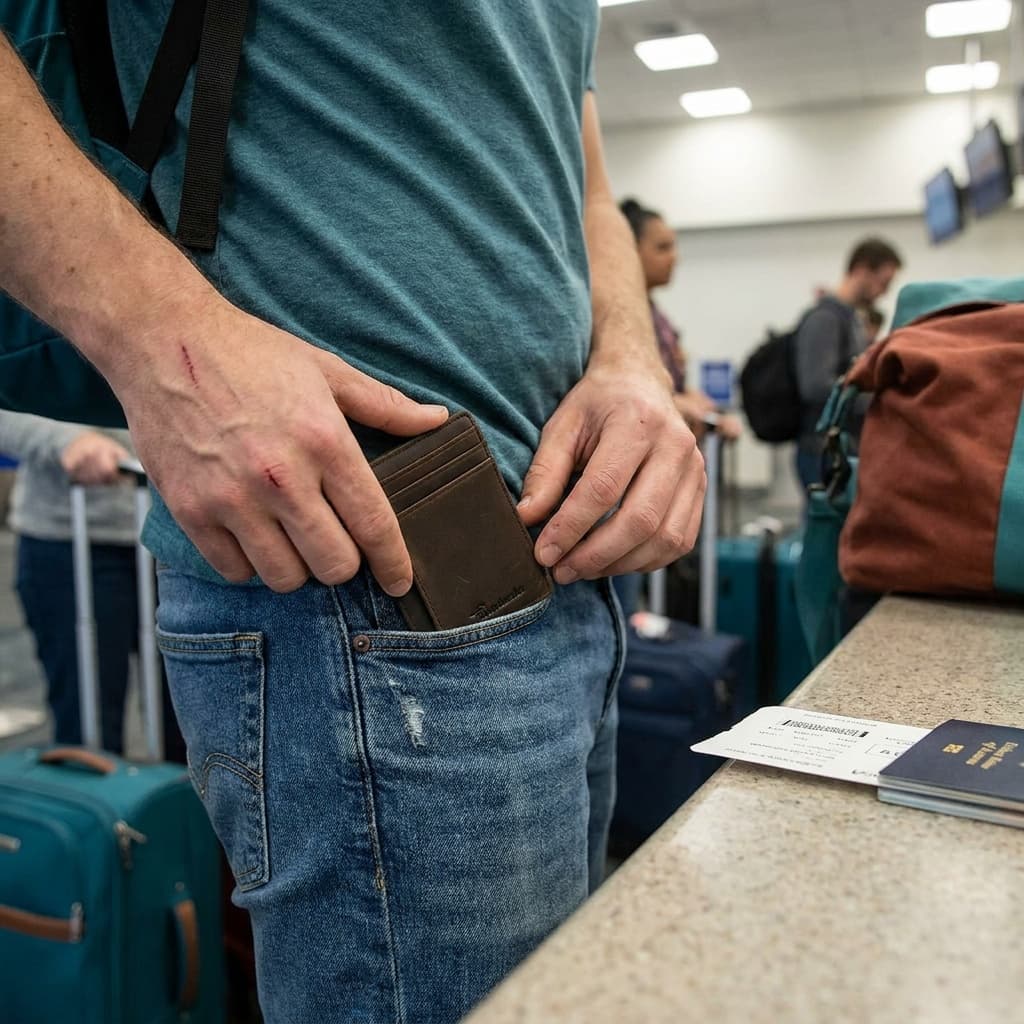
- Card capacity
- 6 slots
- Dimensions
- 3.1 x 4.4 x 0.12 in
- Material
- Cowhide leather, handmade
- RFID blocking
- Maker lab-tested at 13.56 MHz; does not block some lower-frequency access and hotel cards
- Color options
- 26 styles
- Construction
- Handmade
About this pick
A budget slim card wallet marketed with RFID blocking. Kit Authority has not independently tested the lining or verified a model-specific laboratory report. Compare the current variant's material, pocket layout, and price before ordering.
Strengths
- Budget-positioned alternative to a larger travel organizer
- Slim card-wallet format for a minimal everyday load
- Multiple finishes to compare; confirm material on the selected listing
Weaknesses
- Limited storage for travelers carrying many payment, loyalty, and transit cards
- No passport compartment; check the cash-pocket layout if you carry bills regularly
Kit Score breakdown
VULKIT
VULKIT Passport Holder Wallet
Editor's Choice
Kit Score 8.3/10
$19.99 Price checked Oct 23, 4:16 PM CDT
Best for: Travelers who prioritize keeping a passport, cards, and paperwork together over minimum pocket size.
- Passport-sized format consolidates travel documents and payment cards
- Larger than a card wallet; confirm folded dimensions against your intended pocket
- Holds
- Up to 3 cards, 1–2 passports, boarding pass, some cash
- Dimensions
- 5.9 x 4.2 x 0.8 in; 3.17 oz
- Material
- Nappa leather with RFID/NFC-blocking material
- RFID blocking
- Manufacturer-advertised protection; not independently tested by Kit Authority
- Closure
- Magnetic
- Tracker slot
- AirTag pocket (AirTag not included)
About this pick
A passport-sized organizer for documents, cards, and cash. VULKIT sells several similar models, so check the selected listing's dimensions and compartments. The RFID-blocking claim is not a Kit Authority test result.
Strengths
- Passport-sized format consolidates travel documents and payment cards
- Separate storage areas are useful when keeping paperwork together
- Alternative to carrying an everyday wallet plus a separate passport sleeve
Weaknesses
- Larger than a card wallet; confirm folded dimensions against your intended pocket
- One organizer concentrates important documents and cards; carry a backup payment method separately
Kit Score breakdown
See all picks in Best RFID Blocking Wallets for Travel (2026)
Keep going

Researched, not hands-on tested
Updated Jun 4, 2026Our recommendations draw on manufacturer documentation, retailer listings, owner feedback, and comparisons with alternatives.
As an Amazon Associate I earn from qualifying purchases. We may earn a commission from links here, at no extra cost to you. How we research →