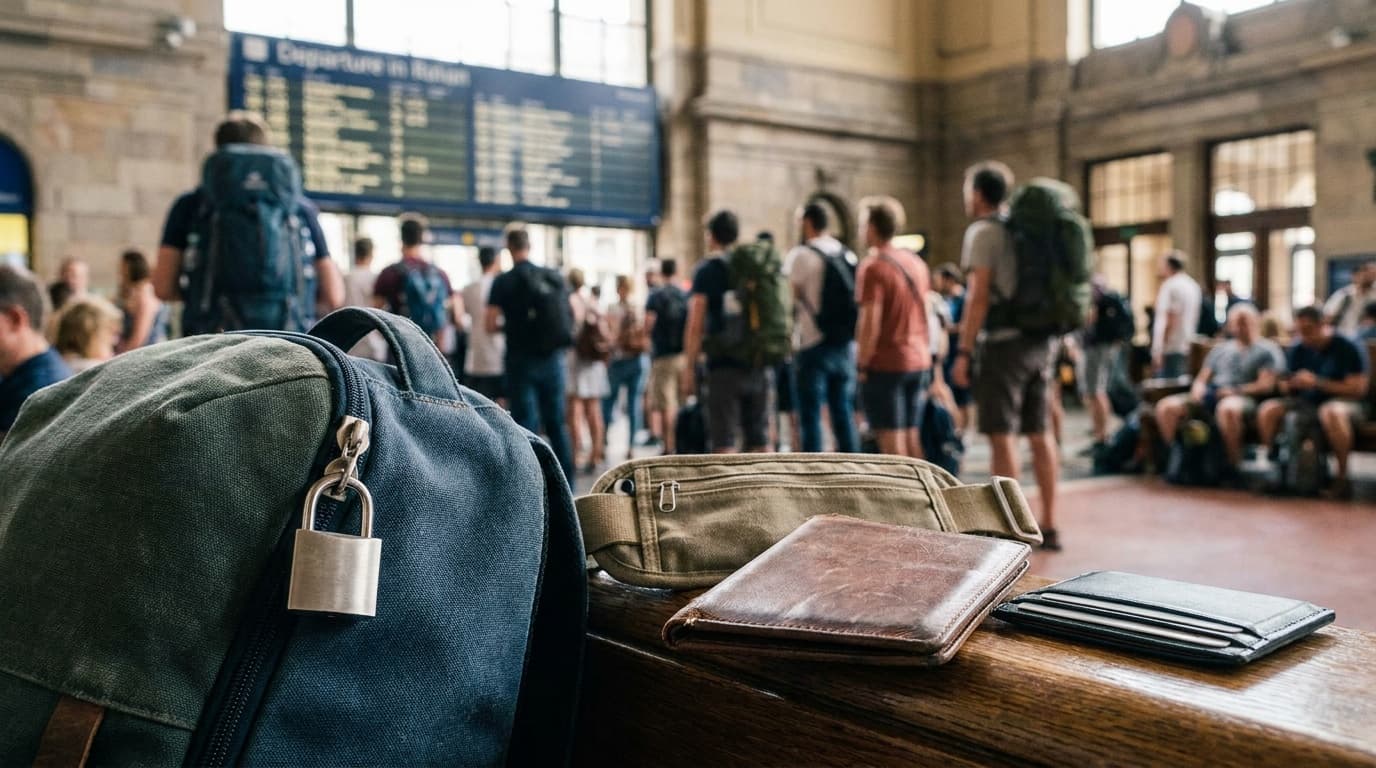
Your wallet is the one piece of gear you touch dozens of times a day on the road, and the wrong choice costs you time, bulk, or your credit cards.
Slim minimalist vs passport-holder styles
The core decision is whether you need to carry your passport on your body. For domestic travel or single-country trips where your passport stays in the hotel safe, a slim bifold or card sleeve like the Travelambo Slim Wallet is all you need. These typically measure under 4 mm thick when loaded with 4–6 cards, weigh 20–60 g, and fit flat in a front pocket.
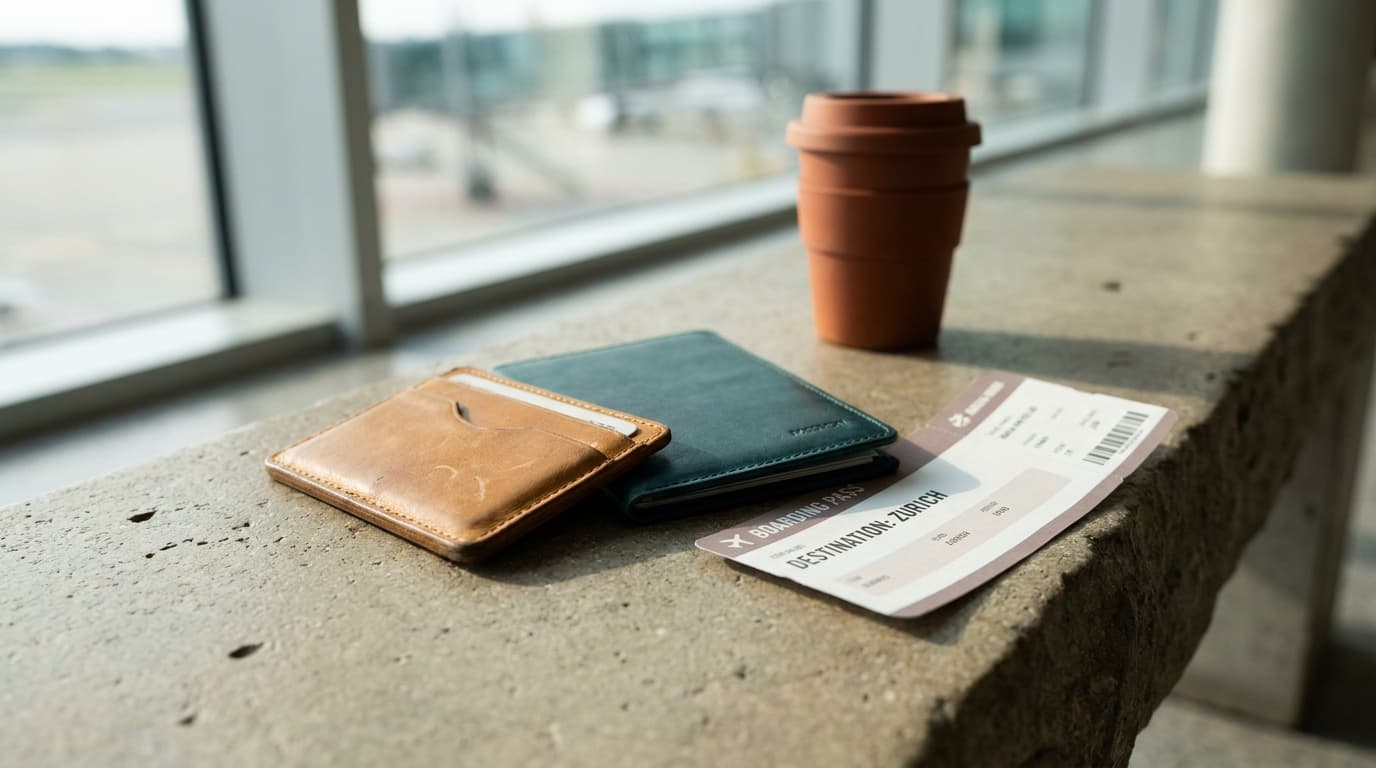
For multi-country overland trips, border crossings by land, or anywhere you genuinely must keep your passport accessible, a passport holder makes sense. It consolidates your document, boarding pass, and 3–4 cards in one place. The downside: it is a single point of failure. Losing it means losing everything at once. Some travelers prefer a hybrid approach: passport holder in a bag, slim wallet in pocket.
Neck pouches like the VENTURE 4TH Neck Wallet solve a different problem (deep concealment under clothing) but are awkward to access at a payment terminal. Reserve them for high-risk environments or long transit days, not everyday use.
Material trade-offs: leather, nylon, and metal
Leather remains the most practical all-around material. Full-grain or top-grain leather, as on the Bellroy Note Sleeve, develops a patina, holds its shape, and does not look out of place at a business dinner or a border crossing. The drawback is moisture: soaked leather swells and can warp cards. Dry it flat and slowly if it gets wet.
Nylon and Tyvek wallets are lighter, washable, and essentially indestructible. They read as casual. If you are backpacking, sweating, or want something you genuinely do not care about losing, a nylon cardholder is hard to beat.
Aluminum card cages (often called "metal wallets") offer rigid RFID blocking and a satisfying snap, but they are heavier than leather and can crack plastic cards if overpacked. They work well for someone who carries exactly 4–6 cards and nothing else.
Security features: what actually helps
RFID blocking is the feature most heavily marketed and least urgently needed. Standard EMV chip transactions require physical contact with a reader. Contactless (tap-to-pay) cards do transmit wirelessly, but real-world relay attacks are rare and require an attacker to be within a few centimeters while you are standing still. Still, an RFID-blocking wallet costs no more than a non-blocking one at most price points, so there is no reason to avoid it.
The most effective pickpocket defense is a front-pocket wallet with nothing worth stealing in it.
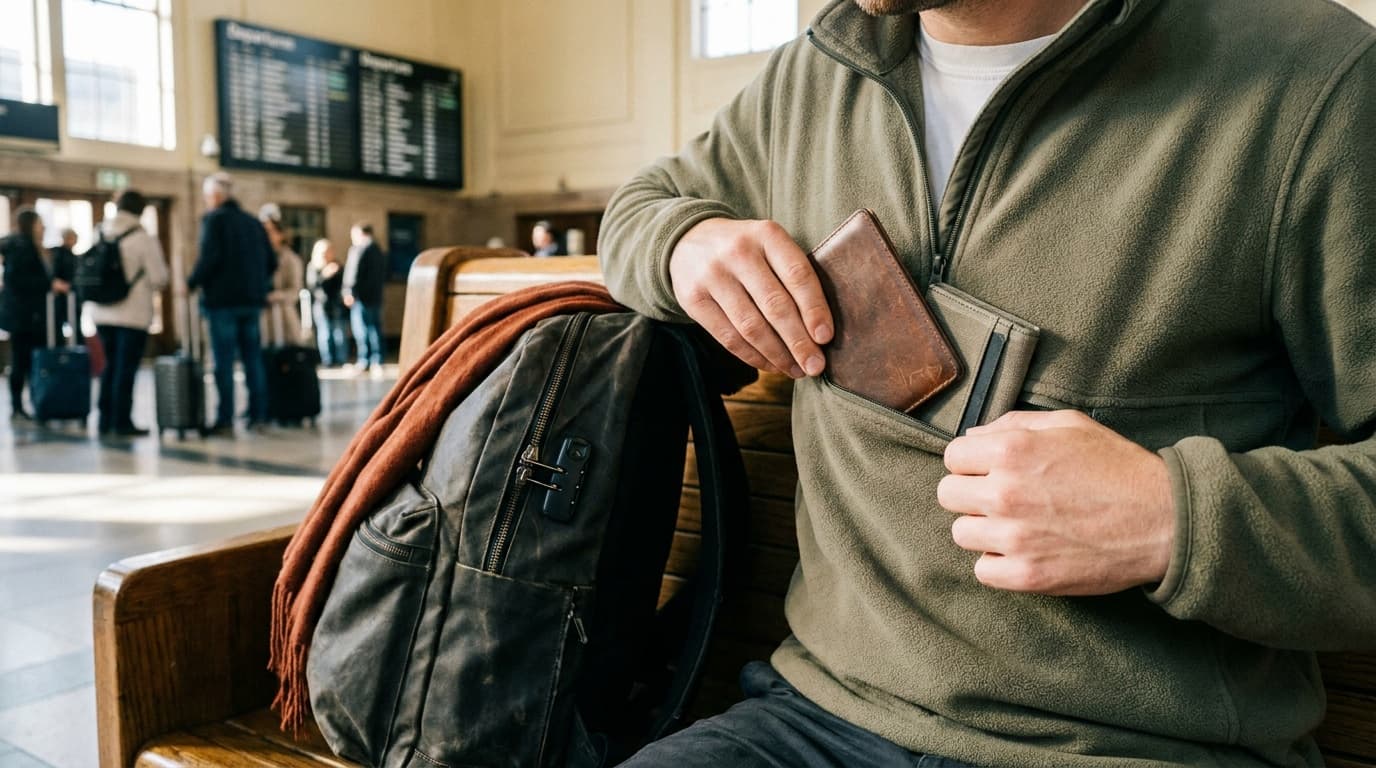
Physical placement beats any material or technology. A wallet in your front trouser pocket, or in the inner zip pocket of a jacket, requires a pickpocket to make contact in a way you will almost certainly notice. A back-pocket wallet in a crowded market is exposed regardless of how it is made.
Zip closures add a small layer of friction. Magnetic money clips do not. If you are worried about a specific environment, front pocket plus zip beats everything else.
What to carry abroad (and what to leave home)
What belongs in your travel wallet
One primary card
a Visa or Mastercard with no foreign transaction fees, accepted globally
One backup card
a different network (Amex or a second Visa) from a different bank, kept separate from your primary
Local cash
one to two days of spending money in local currency; replenish at ATMs, not airport exchange desks
ID copy
a color photocopy or phone photo of your passport data page, not the original (unless crossing a border)
Travel insurance card
the one card most travelers forget and always need in an emergency
Leave home: loyalty cards (use the app), store credit cards, your Social Security card, excess cash, and any card you would be devastated to lose. The goal is a wallet that, if stolen, causes inconvenience rather than catastrophe.
Split your backup card from your primary. Different pocket, different bag, or left in the hotel safe. A pickpocket who gets your wallet cannot clean you out if your backup is somewhere else.
Card capacity: how many slots you actually need
Most travelers do fine with 4–6 card slots. The practical count for a typical international trip: one primary debit/credit card, one backup card, one travel insurance card, one local transit card (if the destination uses them), and a slot for receipts or folded cash. That is five items. A wallet designed for 12 cards tempts you to fill it, adds bulk, and increases replacement cost if lost.
If you use Apple Pay or Google Pay consistently, you can get that number down to 3 physical cards and free up even more space. Most major destinations accept tap-to-pay at grocery stores, transit systems, and restaurants.
Frequently asked questions
Do I need a separate wallet for travel, or can I use my everyday wallet?
It depends on your everyday wallet's bulk and card count. If your daily wallet is a thin cardholder with 4–6 slots, it works fine for travel. If it is a thick bifold stuffed with loyalty cards, gym membership, and receipts, travel is the right reason to pare down. A dedicated travel wallet is only necessary if your everyday setup is genuinely incompatible with the trip.
Is RFID blocking actually necessary for a travel wallet?
It is a reasonable feature to have and costs nothing extra at most price points, but it is not urgent. EMV chip cards (the gold square on your card) cannot be skimmed wirelessly; they require physical contact. Contactless cards can theoretically be read at very short range, but documented real-world theft this way is rare. Buy an RFID-blocking wallet if you want the peace of mind, but do not pay a significant premium for it over a better-made wallet without it.
What is the safest place to carry a wallet while traveling?
Front trouser pocket or the inner zip pocket of a jacket. Both require a pickpocket to make deliberate, detectable contact. Back pockets, open bag side pockets, and rear pants pockets in crowded transit are the highest-risk spots. For very high-risk environments (crowded night markets, busy metro stations in cities known for pickpocketing), a flat money belt worn under clothing holds your backup card and emergency cash while your front-pocket wallet holds only what you are willing to lose.
For specific picks, start with our best travel wallets roundup, which covers passport bifolds, zip organizers, and minimalist card holders; if RFID is the deciding factor, see the best RFID blocking wallets. Browse all travel guides or read how we research and rate gear.
Recommended gear
Our current top picks from the Best Travel Wallets 2026: Passport, Minimalist, and Zip-Around Picks guide, if you are ready to buy.
BELLROY
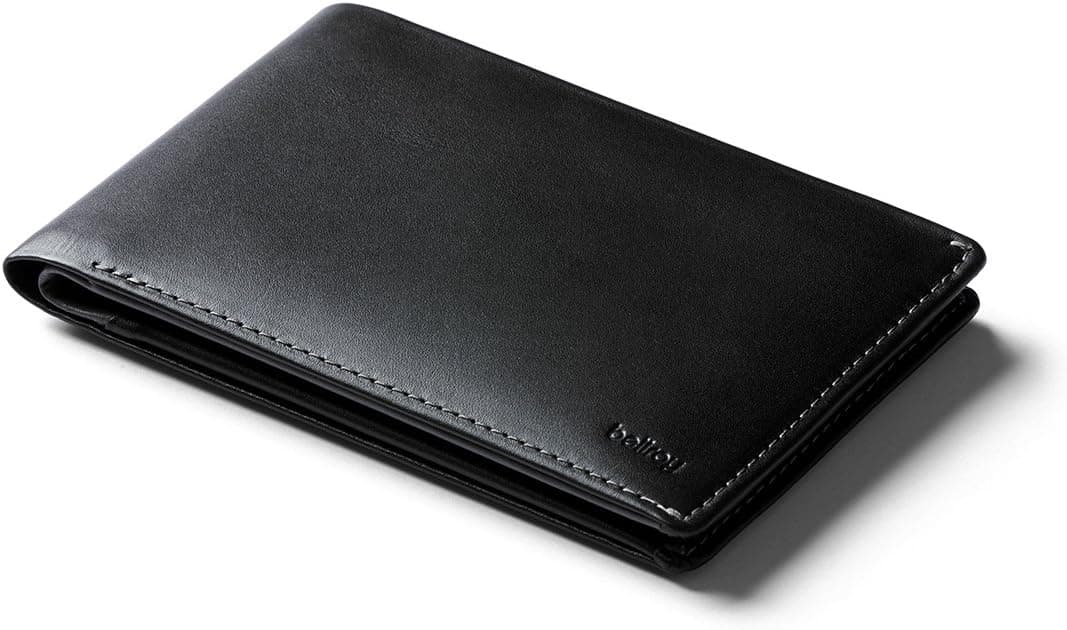
Bellroy Travel Wallet, Leather Passport Holder
Best Overall
Kit Score 8.6/10
$145.00 Price checked Oct 23, 4:16 PM CDT
Best for: Frequent international travelers who want passport, cards, cash, and a pen in one leather bifold they can pay from.
- Works as a normal wallet at the destination, not just a document folio
- $145 is the highest price in this roundup
- Holds
- 1 passport, 4 to 10+ cards, bills, tickets, SIM card, micro pen
- Card slots
- 4 quick access + 3 extra
- Dimensions
- 3.9 x 6 x 0.5 in
- Weight
- 3.2 oz
- Material
- 70% leather, 25% recycled polyester, 5% other; LWG gold-rated tanneries
- RFID blocking
- Yes, manufacturer-stated; not tested by Kit Authority
About this pick
A passport-sized leather bifold with a passport pouch, sections for tickets and bills, seven card slots, a hidden cash compartment, a SIM slot, and a micro pen with refills. RFID-blocking lining covers the passport and cards. Bellroy's spec sheet lists 3.2 oz and 3.9 x 6 x 0.5 in; the RFID claim is the manufacturer's, not a Kit Authority test.
More specifications
- Passport fit
- All passports except Irish and pre-2017 German
- Warranty
- 3 years
Strengths
- Works as a normal wallet at the destination, not just a document folio
- Micro pen with refills and a SIM slot with ejector-pin space are built in
- 3-year warranty and Leather Working Group gold-rated leather sourcing
Weaknesses
- $145 is the highest price in this roundup
- Bellroy excludes Irish and pre-2017 German passports from the fit list
Kit Score breakdown
PACSAFE
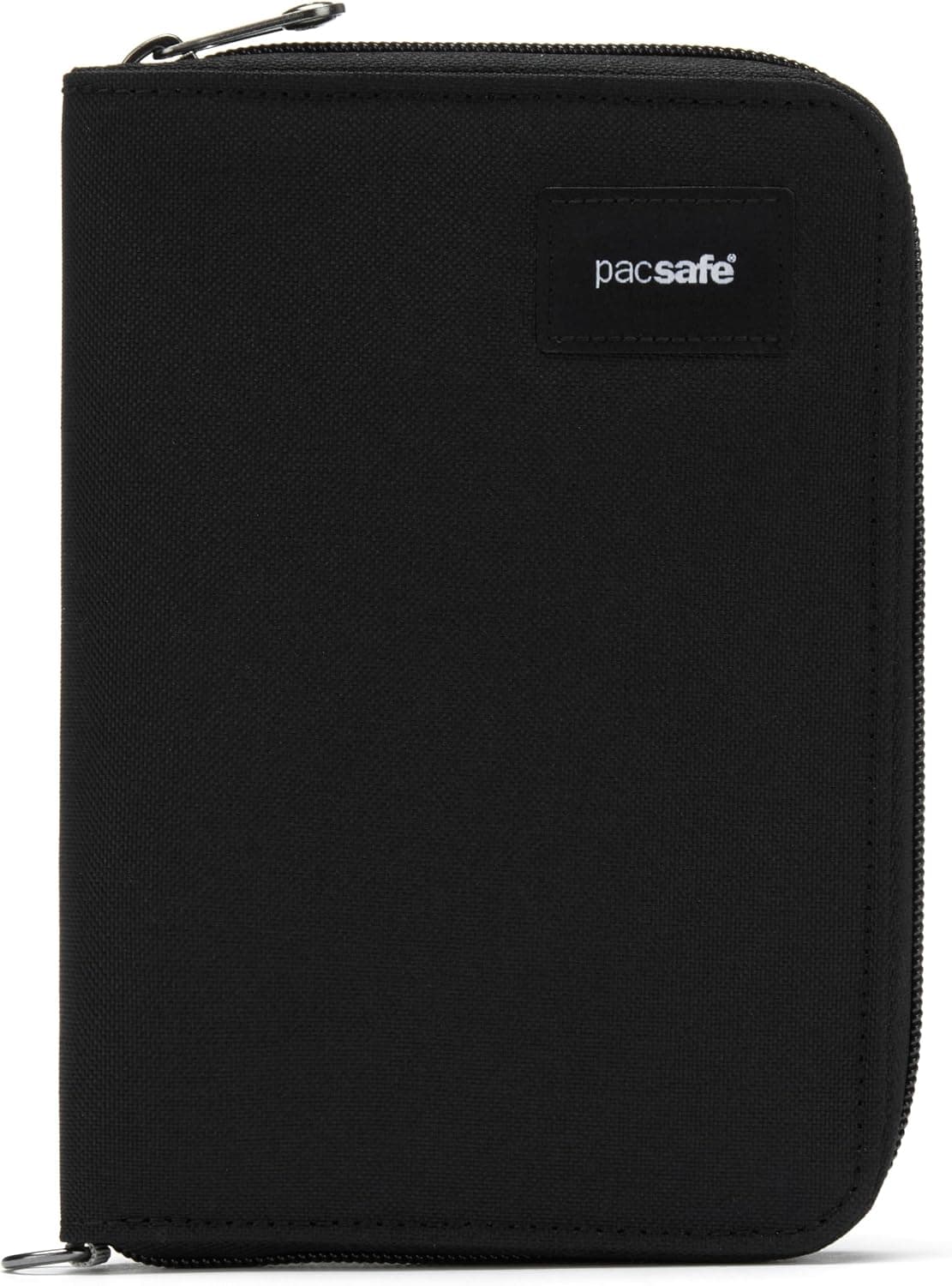
Pacsafe RFIDsafe Compact Travel Organizer
Best for Passports
Kit Score 8.3/10
$59.95 Price checked Oct 23, 4:16 PM CDT
Best for: Multi-currency itineraries, family document carry, and travelers already using a Pacsafe bag.
- Currency divider, coin pocket, and boarding-pass slot handle multi-country trips a bifold cannot
- Folio format: lives in a bag or jacket and must be unzipped to pay
- Holds
- 1 passport (most sizes), 5 cards, coins, 2 currencies, boarding pass, SIM cards, pen
- Dimensions
- 6.4 x 4.5 x 0.8 in
- Weight
- 0.22 lb
- Material
- 600D recycled polyester, 1000 mm water resistant, PFC free; 75D recycled twill lining
- RFID blocking
- RFIDsafe pockets and material, manufacturer-stated; not tested by Kit Authority
- Closure
- Full zip-around
About this pick
A zip-around document organizer with five card slots, a coin pocket, a mesh pocket, a currency divider, a boarding-pass slot, a pen loop, and a passport pocket Pacsafe says fits most sizes. Built from 600D recycled polyester with a 1000 mm water-resistant rating. Attachment points tether it inside a Pacsafe bag. RFID blocking is the manufacturer's claim.
More specifications
- Attachment
- Clips into Pacsafe bags; second point for cut-resistant strap (sold separately)
- Warranty
- 2 years
Strengths
- Currency divider, coin pocket, and boarding-pass slot handle multi-country trips a bifold cannot
- Tethers into Pacsafe bags via an attachment point; accepts a cut-resistant strap
- Water-resistant recycled polyester at 0.22 lb
Weaknesses
- Folio format: lives in a bag or jacket and must be unzipped to pay
- 2-year warranty is shorter than Bellroy's 3 or Herschel's lifetime
Kit Score breakdown
RIDGE
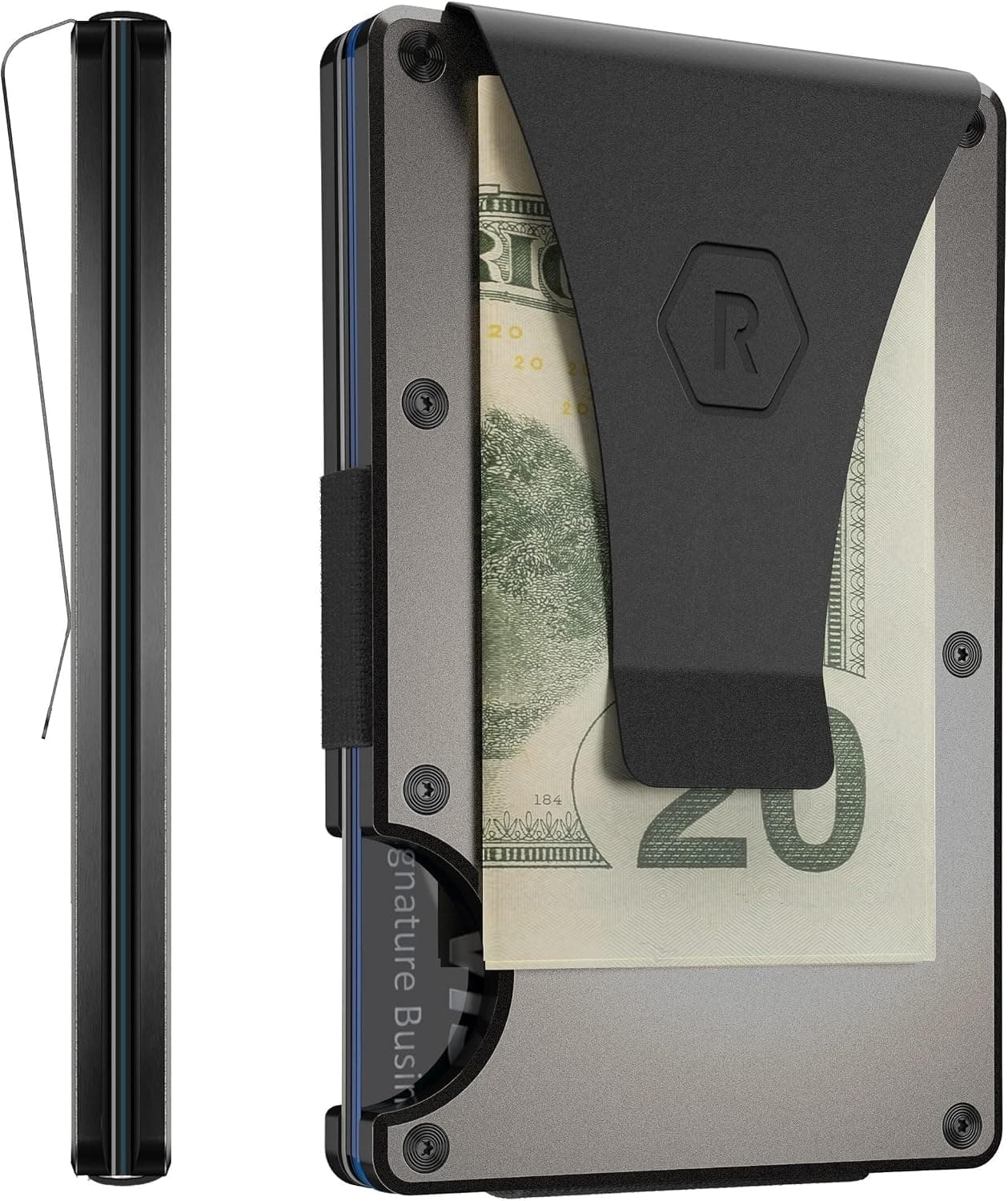
The Ridge Wallet, Aluminum, Minimalist Card Holder
Best Minimalist
Kit Score 8.3/10
$94.99 Price checked Oct 23, 4:16 PM CDT
Best for: Tap-to-pay travelers who keep the passport in a bag and want the hardest-to-lift card carry.
- 6 mm thick and 1.5 oz: the smallest front-pocket carry in the roundup
- Card access takes practice; Ridge's aggregated reviews flag it as the top complaint
- Holds
- 1 to 12 cards plus folded bills under cash strap or money clip
- Dimensions
- 86 x 54 x 6 mm (about 3.4 x 2.1 x 0.24 in)
- Weight
- 1.5 oz (Amazon listing; not on ridge.com)
- Material
- 6061-T6 aluminum, anodized
- RFID blocking
- RFID-blocking plates, manufacturer-stated; not tested by Kit Authority
- Cash
- Swappable cash strap or money clip
About this pick
Two anodized 6061-T6 aluminum plates joined by elastic, holding 1 to 12 cards in a 6 mm profile with a swappable cash strap or money clip. RFID-blocking plates, replaceable elastic and screws, and Ridge's Built for Life warranty. Ridge's own review summary flags card access and occasional screw loosening as the common complaints.
More specifications
- Serviceability
- Replaceable elastic and screws
- Warranty
- Built for Life warranty; 99-day trial
Strengths
- 6 mm thick and 1.5 oz: the smallest front-pocket carry in the roundup
- Rigid plates leave nothing for a pickpocket to slip a card out of
- Replaceable elastic and screws plus Built for Life warranty and a 99-day trial
Weaknesses
- Card access takes practice; Ridge's aggregated reviews flag it as the top complaint
- No passport, coin, or receipt capacity; $95 buys far less storage than the Pacsafe
Kit Score breakdown
See all picks in Best Travel Wallets 2026: Passport, Minimalist, and Zip-Around Picks
Keep going
Researched, not hands-on tested
Updated Sep 19, 2026Our recommendations draw on manufacturer documentation, retailer listings, owner feedback, and comparisons with alternatives.
As an Amazon Associate I earn from qualifying purchases. We may earn a commission from links here, at no extra cost to you. How we research →