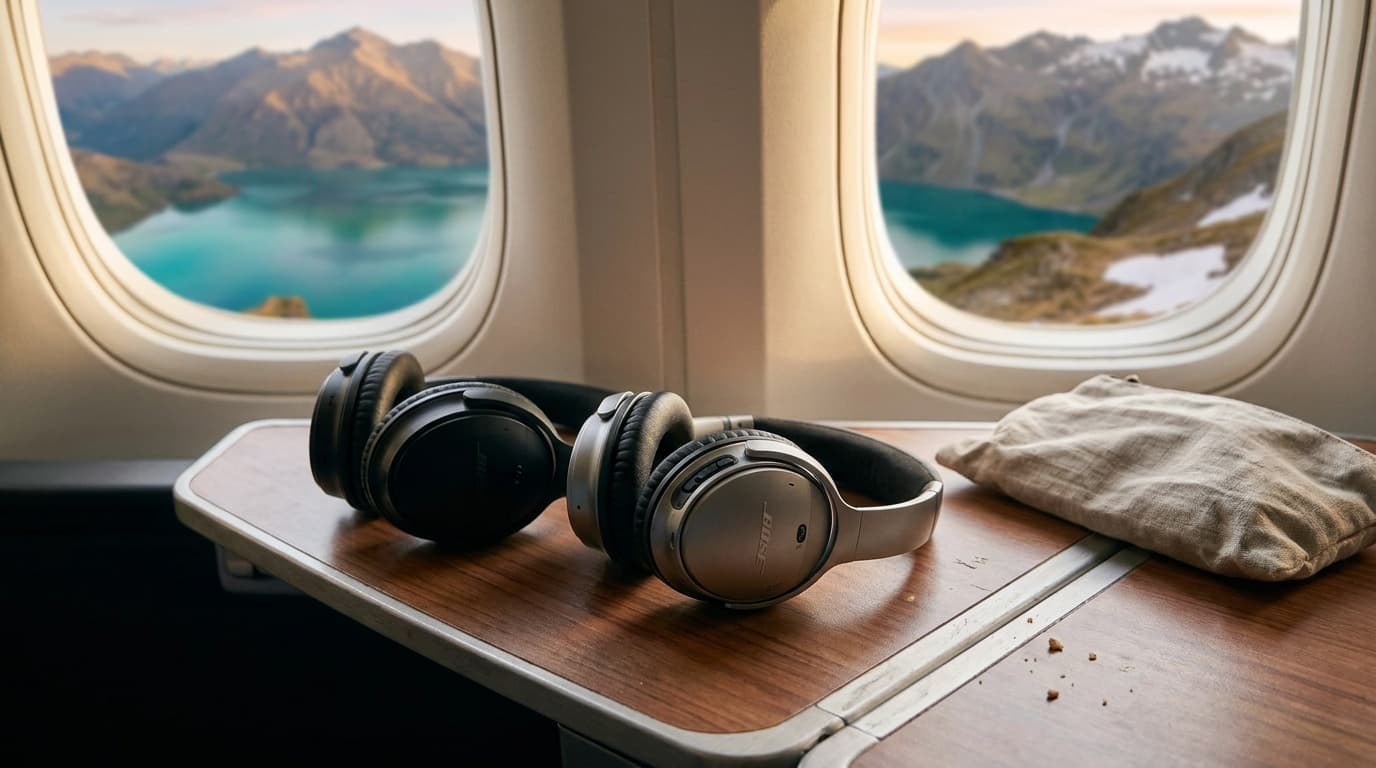
Pick the Bose QuietComfort Ultra (2nd Gen) if you want the most comfortable, strongest low-frequency noise cancelling for long flights and can pay more; pick the Sony WH-1000XM5 if you want the better value, LDAC for Android, and a wired mode that still works with a dead battery. Rated battery is now a tie: both makers list up to 30 hours with noise cancelling on.
How they compare on the specs that matter for flying
Noise cancelling: both are excellent, with different strengths
RTINGS finds the Sony WH-1000XM5's noise cancelling excels at mid and treble sounds like ambient chatter, but it does not block quite as much bass-range noise as the Bose QuietComfort Ultra. On a plane, the cabin drone is mostly low-frequency, which gives Bose a small edge in the air.
In a busy terminal, where the noise is voices and announcements, Sony's strength in the mids counts for more. Neither headphone leaves much on the table: you are choosing between excellent and marginally more excellent for your kind of noise.
Sound and codecs
Sony supports LDAC alongside SBC and AAC, per its help guide, which delivers higher-bitrate wireless audio from compatible Android phones. On an iPhone, both connect over AAC and the codec difference disappears.
Bose adds Immersive Audio, a spatial audio mode with head tracking, and a new Cinema Mode for films. It also supports wired USB-C audio, which Bose describes as lossless. The catch with Immersive Audio is battery: Bose rates the headphones at 23 hours with it on, versus 30 hours without.
Comfort on long flights
Sony lists the XM5 at about 250 g; Bose lists the QC Ultra (2nd Gen) at 0.583 lb, about 264 g. That gap is small enough that fit matters more than the scale.
Bose has a reputation for softer clamping force and plush protein-leather cushions, and many travelers find it easier on the ears over 10-plus-hour hauls. Sony's fit is slightly firmer. On shorter flights the difference disappears.
For a 14-hour flight, both batteries cover the route. The real difference is what happens if you forget to charge: the Sony still plays on its cable, the Bose lets you charge while you listen.
Battery life: a tie on paper
The Sony WH-1000XM5 is rated for up to 30 hours with noise cancelling on over AAC, 26 hours over LDAC, and 40 hours with noise cancelling off. RTINGS measured about 27 hours of continuous playback. The Bose QuietComfort Ultra (2nd Gen) is rated for up to 30 hours, or 23 with Immersive Audio.
Even the longest non-stop commercial routes land inside either window. The practical differences are at the edges: Sony gives about 5 hours of playback from a 10-minute charge, Bose about 3 hours from 15 minutes, and Bose now lets you listen while charging over the included USB-C cable.
Call quality
Sony lists an 8-microphone system with 4 beamforming mics and Precise Voice Pickup. RTINGS rates the XM5's microphone as good: clear, though thin, and loud sustained noise can cut your voice out. Bose markets clear calls with Echo Reduction but does not publish a microphone count.
If you take work calls from airports and lounges, both are workable; the Sony's beamforming array is the more documented of the two.
Packability
Both ship with a hard carry case. Bose lists the headphones in their case at about 8.4 by 6.1 by 2.2 inches. RTINGS calls the Sony's case sturdy. Check both against your personal item if space is tight.
How to pick between them
Five questions to find your headphone
How long is your flight?
Both are rated for 30 hours. If you will run Bose Immersive Audio for films, plan on about 23.
What if the battery dies?
The Sony plays passively on its included 1.2 m cable. The Bose needs to be powered on for wired use, but it can charge while you listen.
Do you take calls on the road?
Sony documents an 8-mic beamforming array, and RTINGS rates its mic as good.
What phone do you use?
Sony's LDAC codec delivers higher-bitrate audio from Android. On an iPhone, the codec difference disappears.
Which matters more: comfort or value?
Bose is the plusher, pricier choice. Sony costs less and does almost everything well.
Price check
Bose lists the QuietComfort Ultra (2nd Gen) at $449 direct. The Sony XM5 is the older model, now succeeded by the XM6, and it usually sells for noticeably less. Both go on sale regularly, so check current pricing before buying.
FAQ
Which has better noise cancelling for a plane?
Bose, by a small margin. RTINGS finds the Sony XM5 blocks less bass-range noise than the Bose QuietComfort Ultra, and cabin drone is mostly low-frequency. Sony's noise cancelling is strongest on mid and treble sounds like chatter, which helps more in the terminal than at cruising altitude.
Which lasts longer on a charge?
On paper, neither. Sony rates the XM5 at up to 30 hours with noise cancelling on over AAC (26 over LDAC), and Bose rates the QC Ultra (2nd Gen) at up to 30 hours (23 with Immersive Audio). Either covers the longest non-stop flights. The older 1st Gen Bose was rated for 24 hours, so check which model you are buying.
Can I use either headphone wired if the battery dies?
Only the Sony. The WH-1000XM5 works passively on its included 1.2 m headphone cable with the power off, without noise cancelling. The Bose QC Ultra (2nd Gen) includes a 3.5 mm to 2.5 mm audio cable and supports USB-C audio, but RTINGS notes the Bose must be turned on to use it wired. The Bose can charge while you listen, though.
Where these numbers come from
| Claim | Source | Checked |
|---|---|---|
| Sony XM5 battery: 30 h noise cancelling on (AAC), 26 h (LDAC), 40 h off; 10-minute charge gives about 5 hours | Sony Help Guide, WH-1000XM5 operating time | Sep 2026 |
| Sony XM5 weighs about 250 g; Bluetooth 5.2; SBC, AAC, LDAC; cable use with the headset off | Sony Help Guide, WH-1000XM5 specifications | Sep 2026 |
| Sony XM5 box includes a 1.2 m headphone cable and carrying case | Sony Help Guide, package contents | Sep 2026 |
| Sony XM5: 8 microphones, 4 beamforming, Precise Voice Pickup | Sony listing on Amazon, ASIN B09XS7JWHH | Sep 2026 |
| Bose QC Ultra (2nd Gen): up to 30 h (23 with Immersive Audio), 15 minutes gives 3 h, listen while charging, 0.583 lb, case dimensions, 3.5 mm to 2.5 mm cable, USB-C audio, $449 | Bose, QuietComfort Ultra Headphones (2nd Gen) | Sep 2026 |
| Sony XM5 excels on mid and treble noise, blocks less bass than Bose QC Ultra; about 27 h measured playback; passive wired, Bose must be on; replaced by the XM6 | RTINGS, Sony WH-1000XM5 review | Sep 2026 |
Battery and weight figures are the makers' ratings unless labeled as an RTINGS measurement; nothing here is a Kit Authority test.
For a broader look at top-tier travel headphones, see our guide to the best noise cancelling headphones for travel. Browse more travel gear or read how we research and rate.
Recommended gear
Our current top picks from the Best noise cancelling headphones for travel in 2026 guide, if you are ready to buy.
SONY
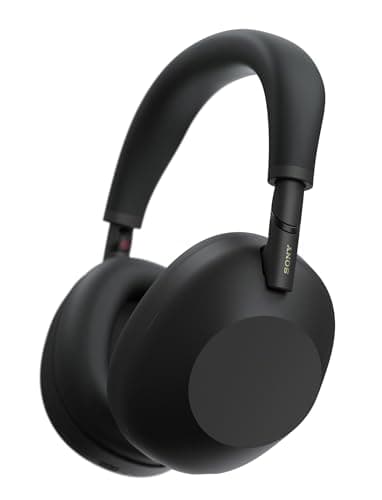
Sony WH-1000XM6 Wireless Noise Canceling Headphones
Best Overall
Kit Score 8.5/10
$458.00 Price checked Oct 23, 4:16 PM CDT
Best for: Travelers who want the strongest all-around noise cancelling and a headphone that folds into a small case.
- Top noise isolation in RTINGS' testing, ahead of the Bose QuietComfort Ultra on overall noise suppression
- Thin, shallow earpads that RTINGS and SoundGuys both say are less comfortable over long wear than the Bose
- Battery life (ANC on)
- 30 hours NC on with AAC (26 hours LDAC); 40 hours NC off (Sony)
- Weight
- Approx. 254 g (9 oz)
- Microphones
- 12 in total; 6 used for calls
- Bluetooth
- 5.3 with SBC, AAC, LDAC, LC3; 2-device multipoint
- Charging
- USB-C, approx. 3.5 hr full charge; 3 min = about 3 hr with a USB PD charger (about 1 hr otherwise)
- Design
- Folds, with a compact case that closes magnetically
About this pick
Sony's current flagship adds a folding design, a magnetic-closure case, and 12 microphones run by the new QN3 processor. RTINGS names it the best travel headphone it has tested, with 31.75 hours of measured playback with ANC on, and Sony rates it at 30 hours on AAC.
Strengths
- Top noise isolation in RTINGS' testing, ahead of the Bose QuietComfort Ultra on overall noise suppression
- Folds into a compact case with a magnetic closure, fixing the XM5's biggest packing complaint
- 30 hours rated with ANC on (AAC), and a 3-minute charge on a USB PD charger gives about 3 hours
Weaknesses
- Thin, shallow earpads that RTINGS and SoundGuys both say are less comfortable over long wear than the Bose
- The priciest Sony model here, and no USB-C audio or water resistance rating
Kit Score breakdown
Best for: Travelers who want near-flagship Sony noise cancelling and call quality for less than the XM6.
- Noise cancelling that RTINGS rates only slightly behind the XM6, strongest on low-frequency engine rumble
- Does not fold flat, which limits packing efficiency compared to rivals like the Sennheiser Momentum 4 (and the newer XM6, which does fold)
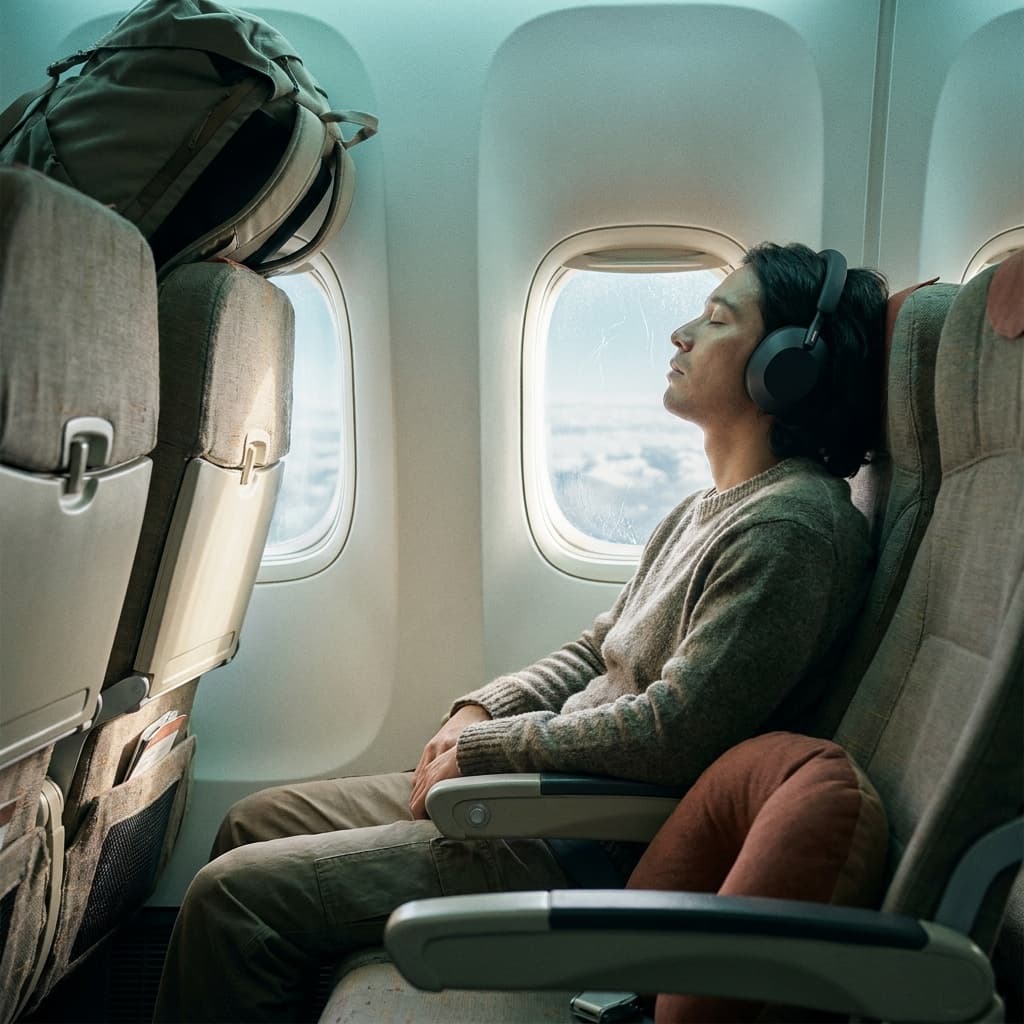
- Battery life (ANC on)
- 30 hours NC on with AAC (26 hours LDAC); 40 hours NC off
- Weight
- 250 g (8.8 oz)
- Microphones
- 8-unit array
- Bluetooth
- 5.2 with LDAC, AAC, SBC
- Charging
- USB-C, approx. 3.5 hr full charge; 3 min = about 1 hr (about 3 hr only with a USB PD charger); 10 min = about 5 hr
- Design
- Over-ear, closed-back; earcups swivel flat but the headband does not fold
About this pick
Sony's 2022 flagship pairs 8 microphones with strong low-frequency noise cancelling for engine hum, weighs about 250 g, and is rated for 30 hours with ANC on. Since the WH-1000XM6 replaced it in May 2025, it sells for well under the newer model, and RTINGS rates its cancelling only slightly behind the XM6.
Strengths
- Noise cancelling that RTINGS rates only slightly behind the XM6, strongest on low-frequency engine rumble
- 8-microphone system with strong owner marks for call clarity
- 30-hour rated battery with ANC on (AAC) covers most long-haul round trips, with a 3-minute quick charge as backup
- Sells for noticeably less than the XM6 now that it is the previous generation
Weaknesses
- Does not fold flat, which limits packing efficiency compared to rivals like the Sennheiser Momentum 4 (and the newer XM6, which does fold)
- Default sound tuning is bass-heavy and benefits from EQ adjustment in the Sony app
Kit Score breakdown
BOSE
Bose QuietComfort Ultra Headphones (2nd Gen)
Best Premium
Kit Score 8.4/10
$449.00 Price checked Oct 23, 4:16 PM CDT
Best for: Frequent flyers who want the most consistent, fatigue-free ANC on the market and are willing to pay a premium for it.
- Noise cancelling that RTINGS places just behind the Sony XM6, with a longer battery in its testing
- List price of $449 is the highest in this roundup, and SoundGuys finds the in-app EQ too basic for precise sound shaping
- Battery life (ANC on)
- 30 hours (Quiet/Aware modes); 23 hours with Immersive Audio
- Weight
- 0.583 lb (about 264 g) headphone only, per Bose product page
- Microphones
- Multi-mic system with Echo Reduction
- Bluetooth
- 5.4; aptX Adaptive on Snapdragon Sound devices; USB-C lossless wired audio
- Charging
- USB-C, 3 hr full charge; 15 min = 3 hrs
- ANC modes
- Quiet, Aware, Immersion
About this pick
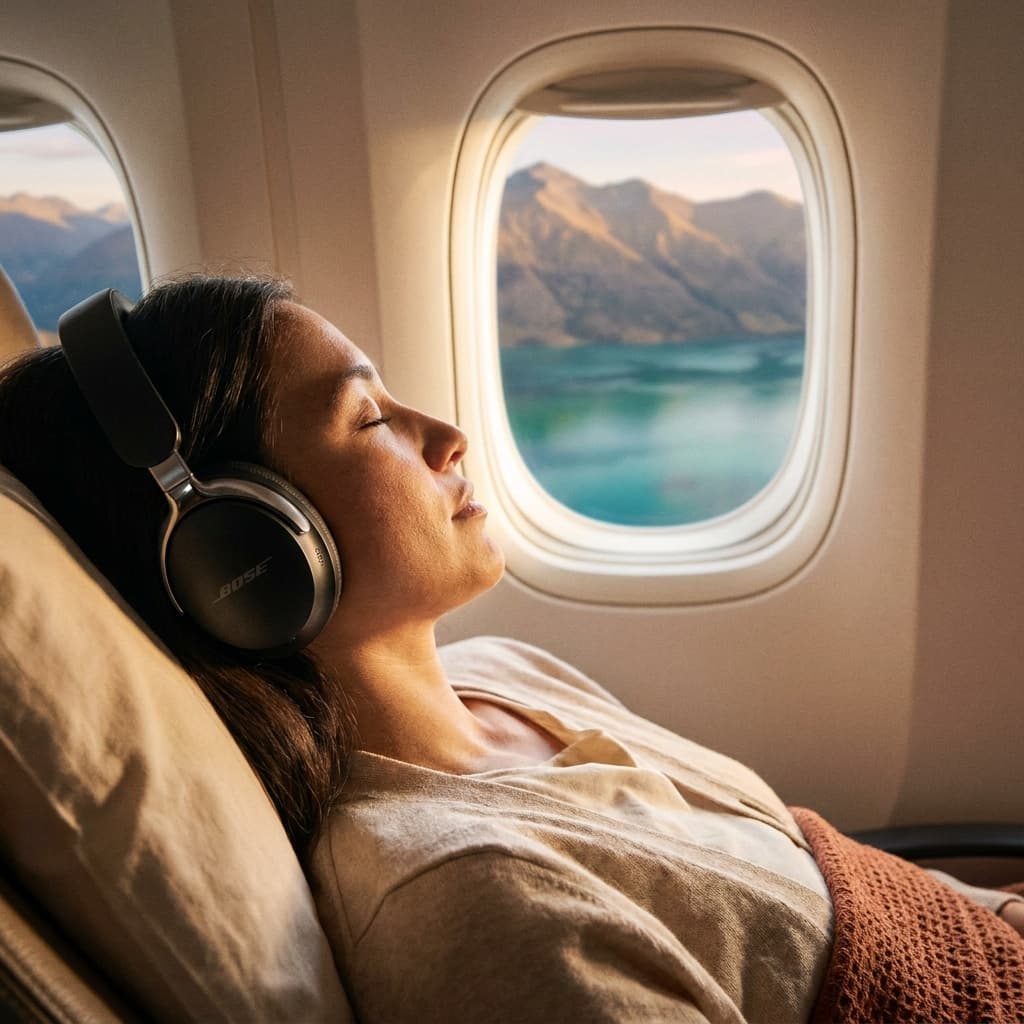
The QC Ultra 2nd Gen builds on Bose's benchmark noise cancellation with up to 30 hours of rated battery (23 with Immersive Audio), Bluetooth 5.4, listen-while-charging, and USB-C lossless playback, all in a 0.583 lb (about 264 g) frame that reviewers consistently call one of the most comfortable in the category.
Strengths
- Noise cancelling that RTINGS places just behind the Sony XM6, with a longer battery in its testing
- The most comfortable pick here: RTINGS credits deeper ear cups that fit a wider range of head and ear shapes
- USB-C lossless wired audio and Bluetooth 5.4, plus Cinema mode and automatic on/off when you put them on or take them off
Weaknesses
- List price of $449 is the highest in this roundup, and SoundGuys finds the in-app EQ too basic for precise sound shaping
- No IP water resistance rating limits versatility outside controlled travel environments
Kit Score breakdown
See all picks in Best noise cancelling headphones for travel in 2026
Keep going
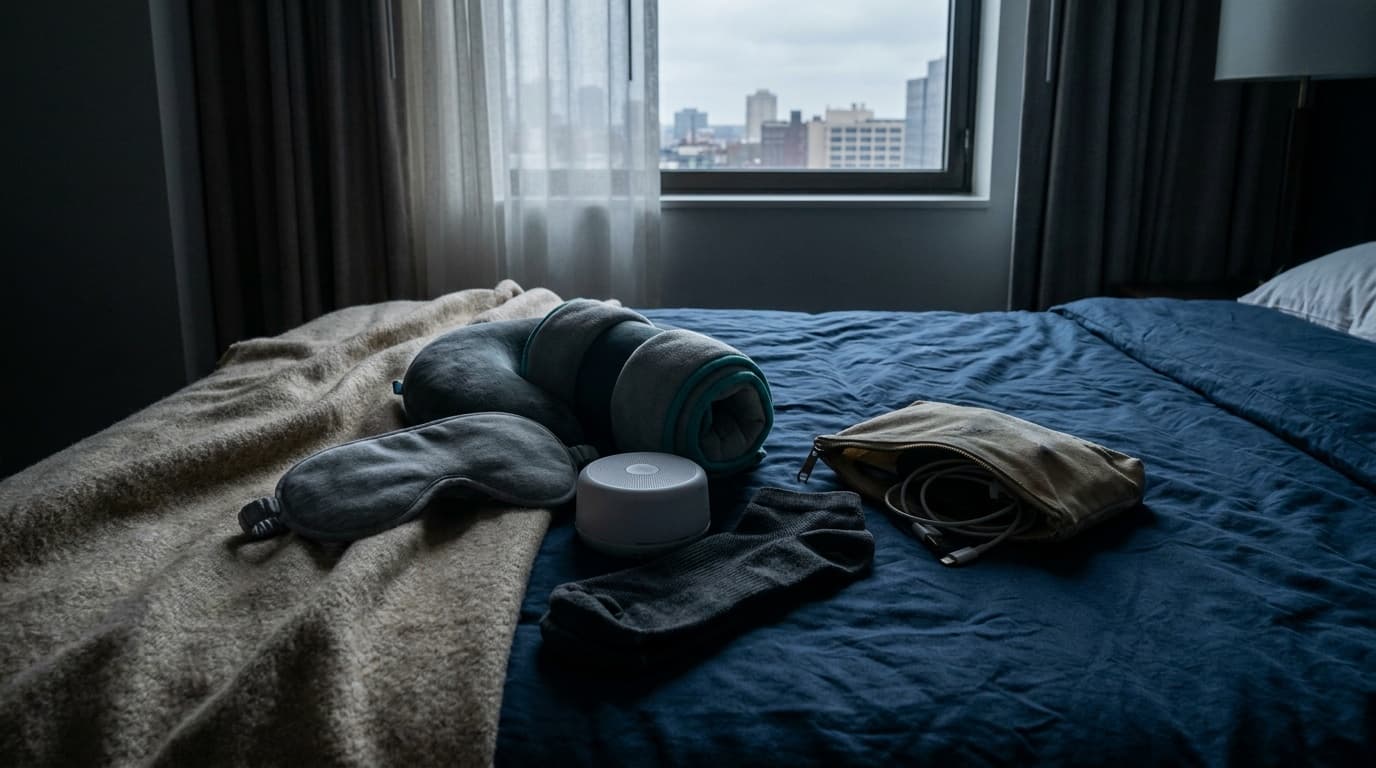
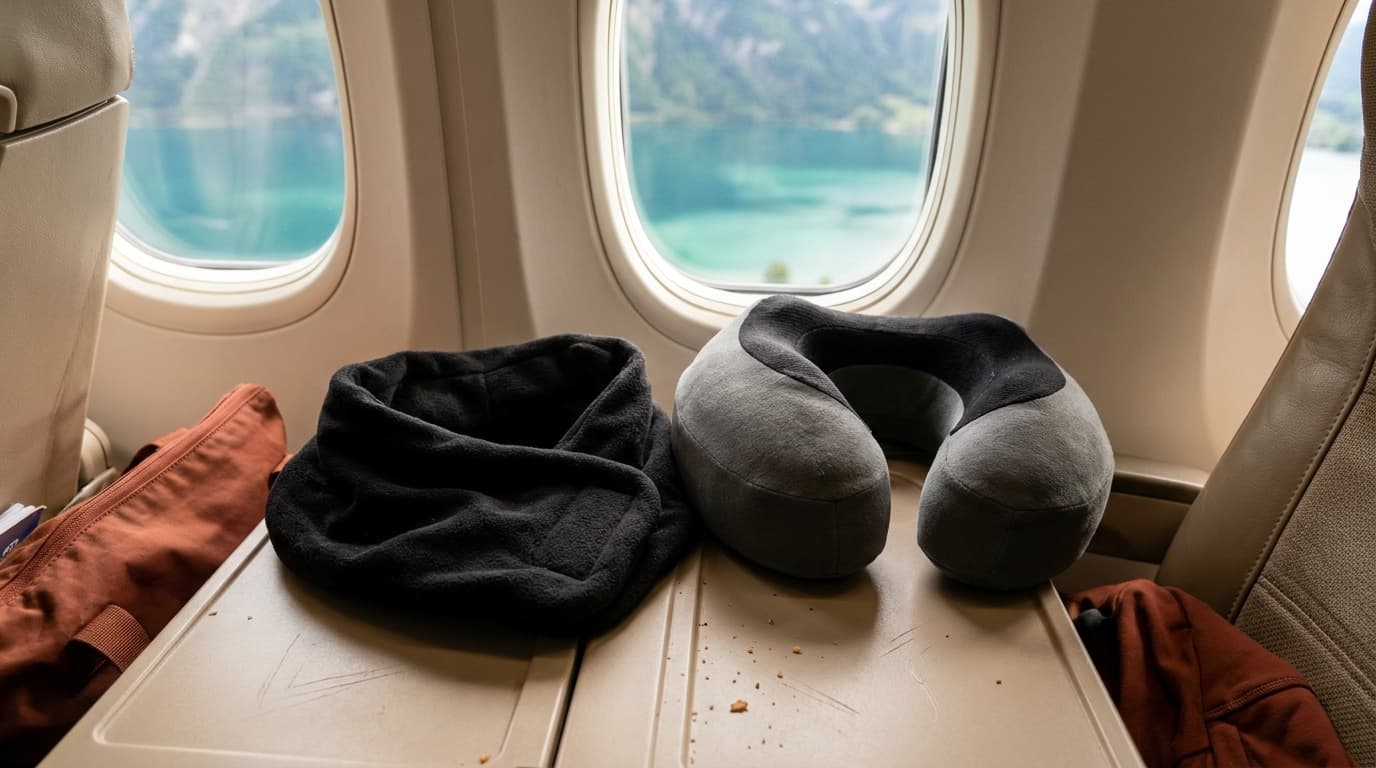
Complete loadoutLong-flight comfort kitFive packable pieces for neck support, darkness, quieter cabins, leg comfort, and more consistent sleep away from home.
Researched, not hands-on tested
Updated Sep 25, 2026Our recommendations draw on manufacturer documentation, retailer listings, owner feedback, and comparisons with alternatives.
As an Amazon Associate I earn from qualifying purchases. We may earn a commission from links here, at no extra cost to you. How we research →