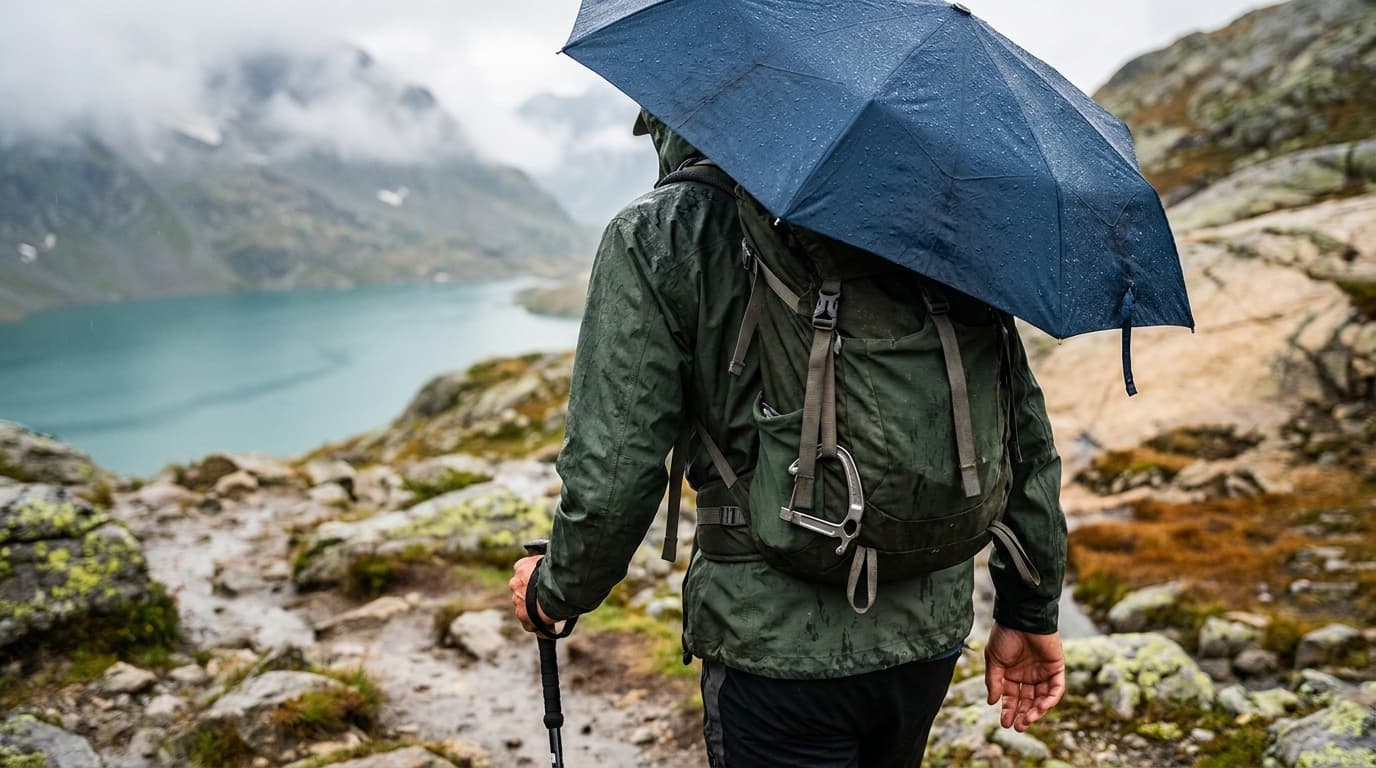
A trekking umbrella sits in a strange category: most hikers laugh at the idea until they meet someone gliding through a sun-hammered desert or a steady downpour with dry shoulders and a cool head.
Where a trekking umbrella actually earns its place
The two conditions that make a trekking umbrella genuinely worth it are relentless sun and sustained moderate rain. Neither is a compromise situation.
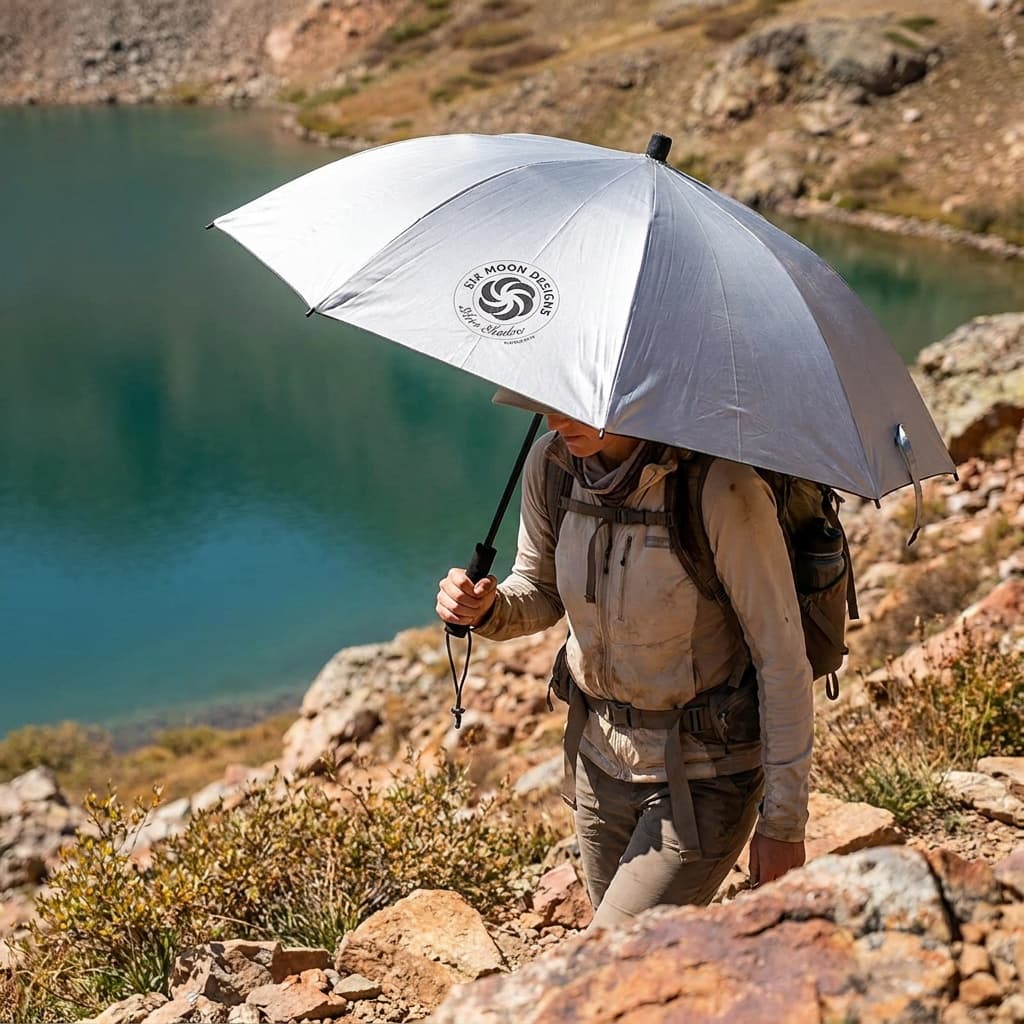
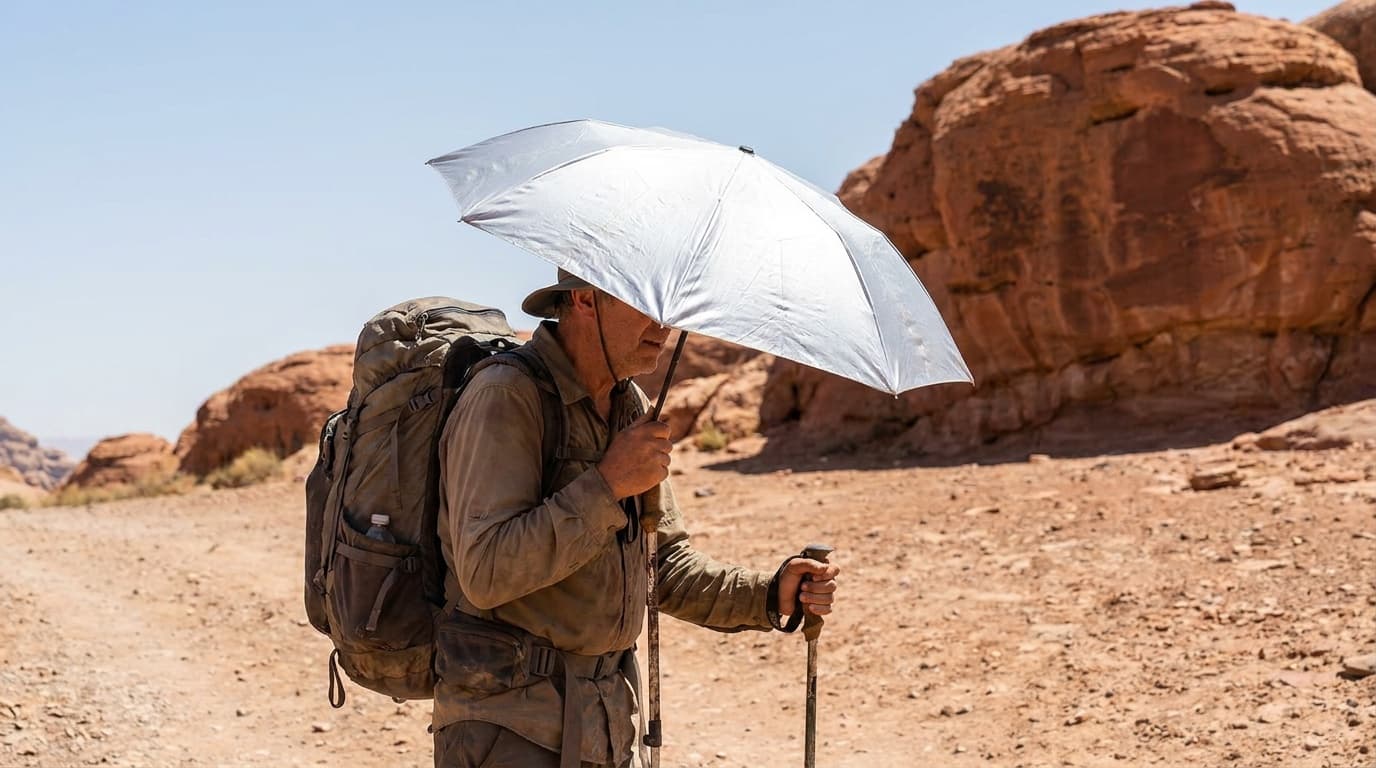
In full desert sun, a 38-inch canopy like the Six Moon Designs Silver Shadow Carbon blocks direct solar radiation from your head, neck, and shoulders for hours at a time. That canopy reduces the felt temperature underneath by a meaningful margin: research on canopy shade shows reductions of 10–15°F in direct radiant heat load, which translates directly to lower core temperature, reduced sweat rate, and less water consumption. On a long desert route like the Arizona Trail or the southern PCT in June, that is not a comfort feature. It is a safety and efficiency feature.
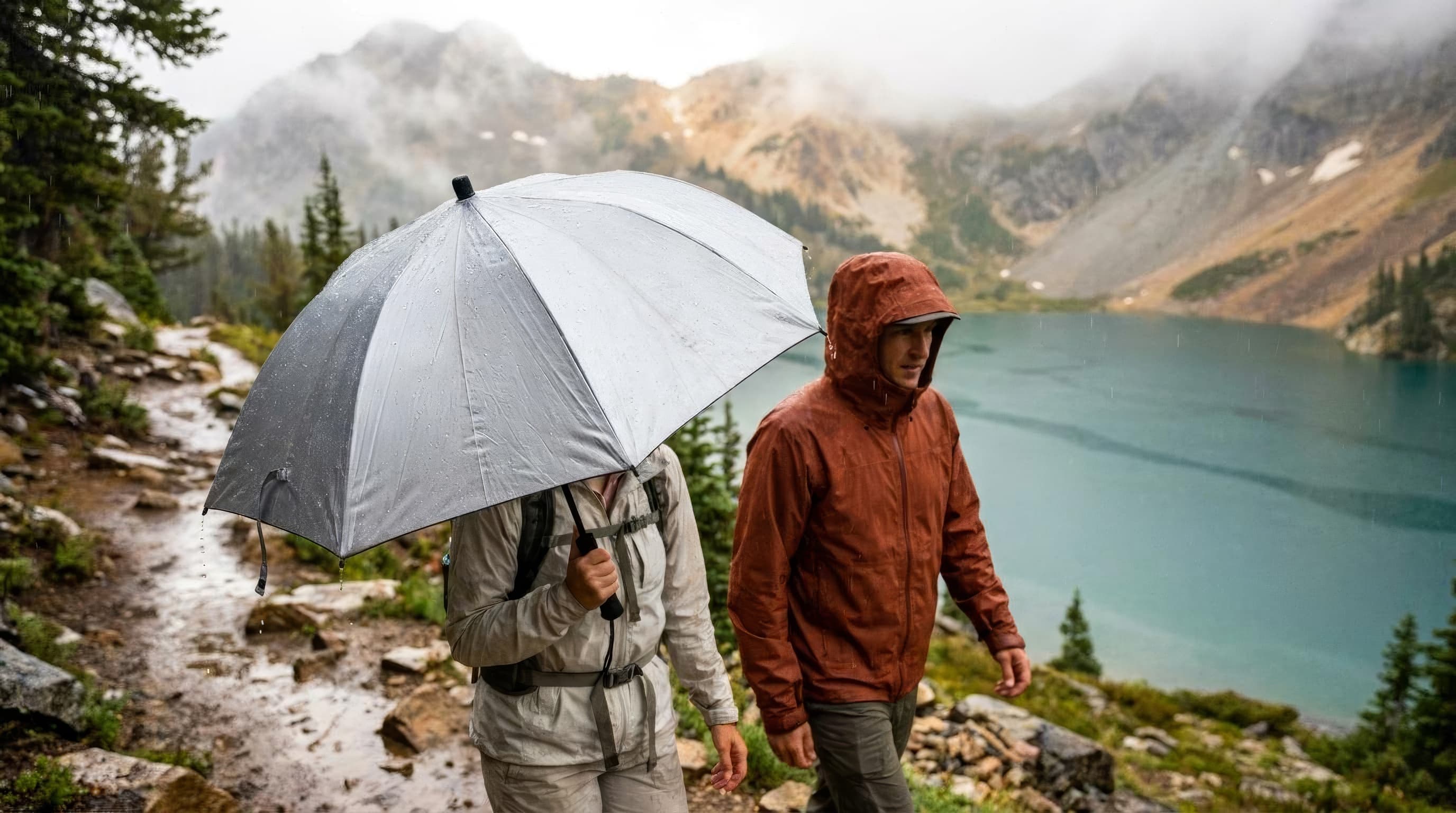
In sustained rain, the comparison shifts to your rain jacket. A shell keeps you dry, but it traps heat and moisture. On a warm, humid day, you are often just as wet inside a full Gore-Tex shell as you would be in light rain without one. An umbrella keeps your head and torso dry while your arms and legs stay ventilated. Core comfort improves significantly, and you are not overheating.
On a warm, windless rain day, an umbrella keeps your core dry without the sauna effect of a sealed shell.
The weight math
The most common knock on umbrellas is the weight. Here is the actual picture:
If you are replacing nothing, an umbrella adds 7–10 oz. On a gram-conscious kit, that matters. On an extended desert route where you were going to carry a sun hoody anyway, the calculation shifts. Some ultralight hikers carry an umbrella like the Zpacks Lotus UL instead of a rain jacket in conditions where sustained heavy rain is unlikely, bringing only a lightweight wind layer as backup. That swap saves weight overall.
The honest move: audit what you already carry. If your rain jacket stays stuffed in a dry bag for 90% of a trip, consider whether an umbrella plus a light wind shell covers your real weather range better and at similar or lower weight.
Wind limits and when to pack it away
This is not negotiable. Trekking umbrellas are built for calm to moderate wind, not exposed ridgelines or storm conditions. Most manufacturer specs and independent observations put the practical limit around 20–25 mph sustained. Above that, you are fighting the umbrella, risking inversion, and burning energy that should go into your feet.
When to stow the umbrella
Open ridgeline
Any exposed saddle or summit approach where wind is unobstructed.
Gusty afternoon desert
Southwest thunderstorm buildup typically brings wind ahead of rain; put it away before the squall.
Technical terrain
Scrambling, loose talus, or steep switchbacks where both hands need to be free or on poles.
Heavy rain with wind
Driving rain comes in at an angle anyway; the umbrella loses coverage and gains resistance.
Treeline and above
Wind exposure increases and canopy coverage from trees disappears.
A trekking umbrella works best on trail, in the trees or desert floor, in calm or light-wind conditions. That describes a large fraction of actual hiking miles, but not all of them.
Hands-free carry: does it actually work?
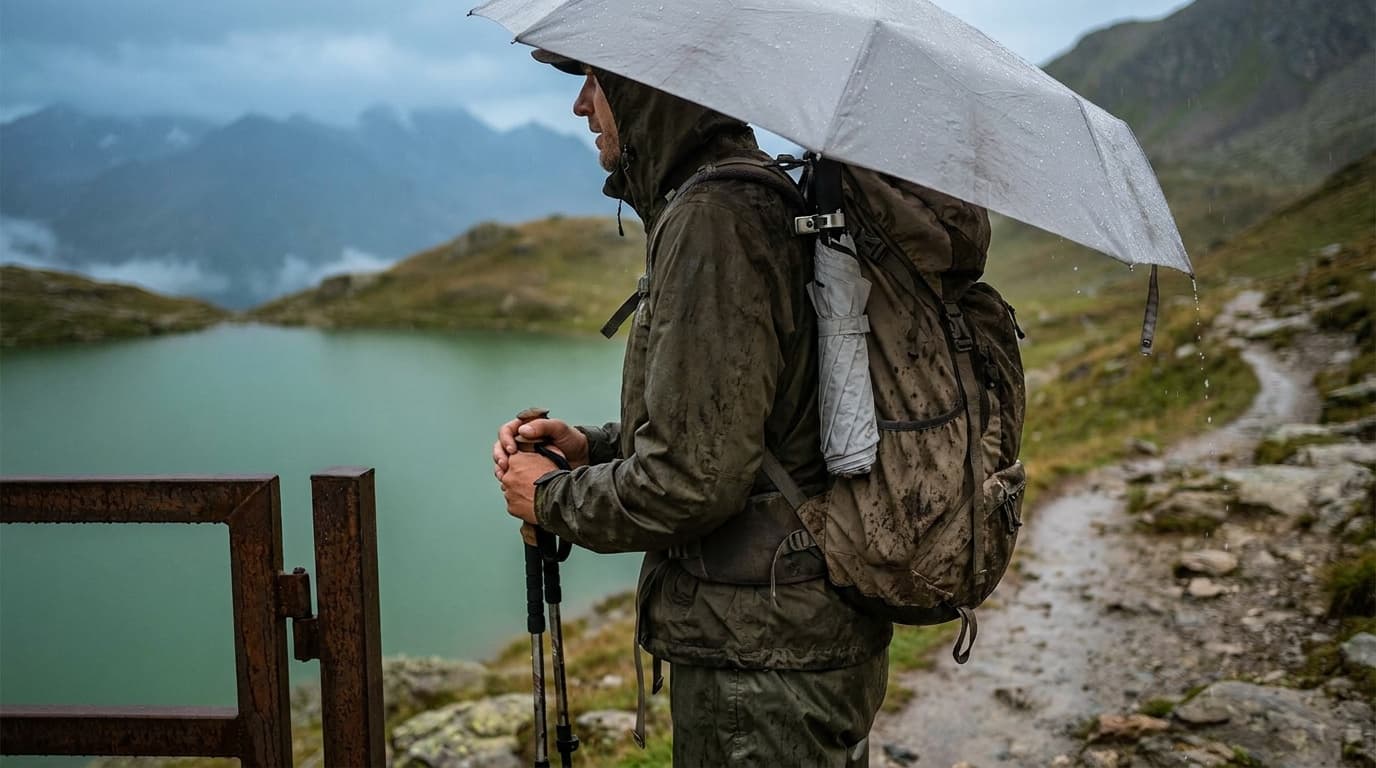
Several trekking umbrellas, like the EuroSCHIRM Swing Handsfree, attach to a shoulder strap or pack shoulder for hands-free use. Gossamer Gear's Chrome Dome has a wrist strap and tucks under a pack shoulder strap with some fiddling. Dedicated umbrella holsters exist and clip to most shoulder harnesses.
Hands-free carry works acceptably on flat to rolling trail where you are not using trekking poles aggressively. It is less practical when you need both poles for steep terrain. The coverage angle is also less precise than holding the umbrella, so you sacrifice some sun blocking on your face.
For most hikers, hands-free is a nice-to-have that works 60–70% of the time on a typical day hike or maintained trail. On a technical backpacking route, it works less reliably.
Who should carry one, and who should skip it
An honest recommendation depends on your route and conditions, not a blanket answer.
Carry one if: you are doing multi-day desert hiking in direct sun, you hike in climates with frequent warm-weather rain, you run hot in a shell and want ventilation, or you are building an ultralight kit and considering an umbrella-instead-of-jacket swap for appropriate seasons.
Skip it if: your routes are mostly wooded with brief sun exposure, you hike above treeline regularly, your conditions tend toward wind-driven rain, or you simply dislike managing a held item on trail.
The trekking umbrella is not a gimmick. It is also not universal. It is a specific tool that fits specific conditions very well and others poorly.
Frequently asked questions
Can I use a regular umbrella for hiking?
A standard compact umbrella will work in a pinch, but it is not built for the task. Trekking-specific models use aluminum or carbon fiber shafts, reinforced canopy frames rated for inversion recovery, and larger canopy diameters (38–42 inches) that cover your shoulders as well as your head. A regular umbrella is lighter on weight and heavier on frustration after a few hours on trail.
What size umbrella canopy do I need for hiking?
For effective shoulder and head coverage while walking, look for a 38–42 inch canopy diameter. Smaller compact umbrellas in the 32–34 inch range protect your head but leave your shoulders exposed to sun or rain. The larger canopy is one of the key differences between a trekking umbrella and a standard model.
Do trekking umbrellas work with trekking poles?
Yes, with a trade-off. You hold the umbrella in one hand and one pole in the other, which means you lose symmetrical pole support. On flat or gently rolling trail this is a minor inconvenience. On steep or technical terrain where you rely on both poles for balance, most hikers stow the umbrella and put on a hat or rain jacket instead. Hands-free holster attachments reduce this conflict but do not eliminate it entirely.
For specific picks, see our guide to the best trekking umbrellas. Browse all hike guides or read how we research and rate gear.
Recommended gear
Our current top picks from the Best trekking umbrellas for hiking: 4 useful oddities guide, if you are ready to buy.
SIX MOON DESIGNS
Six Moon Designs Silver Shadow Carbon
Best Overall
Kit Score 8.8/10
$55.00 Price checked Oct 23, 6:22 AM CDT
Best for: Thru-hikers and desert day-hikers who want a proven, heat-blocking sun shield that doubles as rain cover without adding meaningful pack weight.
- Rigid carbon shaft and ribs keep total weight to 6.8 oz with no telescoping joints
- Fixed 25-inch length does not pack as compactly as collapsible designs
- Weight
- 6.8 oz (193 g)
- Canopy open width
- 37 in (94 cm)
- Packed length
- 25 in
- UPF rating
- UPF 50+
- Frame material
- Carbon fiber shaft, spreader, and ribs
- Canopy
- 210T polyester, silver reflective outer, black underside
About this pick
The Silver Shadow Carbon pairs a full-carbon frame with a silver-reflective UPF 50+ canopy. At 6.8 oz it matches the compact Mini's weight while using a simpler rigid 25-inch shaft, trading packability for fewer moving joints.
Strengths
- Rigid carbon shaft and ribs keep total weight to 6.8 oz with no telescoping joints
- Silver-over-black canopy design actively deflects heat while suppressing glare underneath
- Hands-free ready: compatible with the Six Moon Designs shoulder-strap holster (sold separately)
Weaknesses
- Fixed 25-inch length does not pack as compactly as collapsible designs
- It still needs a $10 attachment kit for hands-free use, and that kit is sometimes out of stock
Kit Score breakdown
SIX MOON DESIGNS
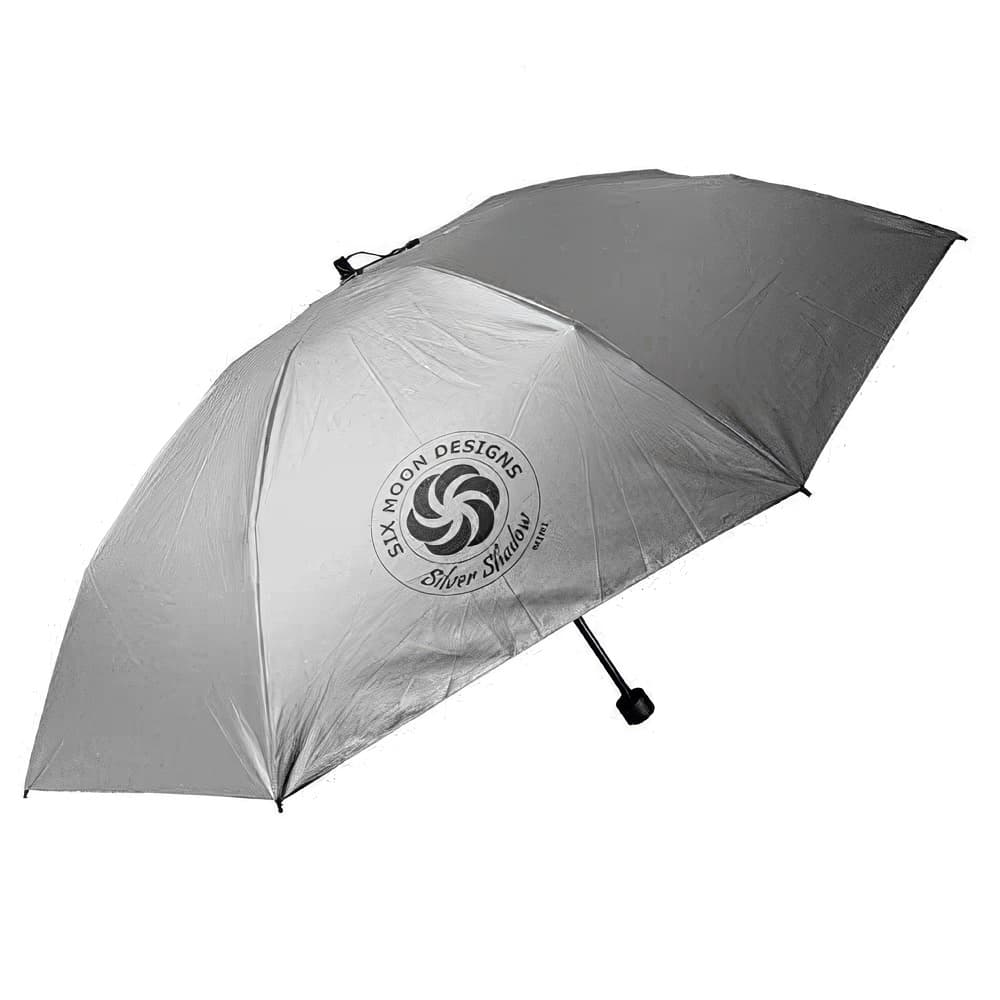
Six Moon Designs Silver Shadow Mini
Best Compact
Kit Score 8.2/10
$50.00 Price checked Oct 23, 6:22 AM CDT
Best for: Travelers, bikepackers, and hikers whose bag cannot accommodate a 25-inch rigid umbrella.
- Ten-inch packed length fits carry-ons, bikepacking bags, and small daypacks
- Collapsible mechanism takes more deliberate opening and closing than a normal automatic umbrella
- Weight
- 6.8 oz (193 g)
- Open width
- 38 in (96.5 cm)
- Packed length
- 10 in (25.4 cm)
- UPF rating
- UPF 50+
- Frame
- Carbon/aluminum ribs; aluminum shaft
- Canopy
- 210T silver-reflective polyester; 5,000 mm water column
About this pick
The Silver Shadow Mini compresses to 10 inches, 40% of the rigid models' packed length, while keeping a 38-inch reflective canopy and the same 6.8 oz weight as the Carbon. Its additional joints make opening and wind handling less simple, but it fits bags the full-length models cannot.
Strengths
- Ten-inch packed length fits carry-ons, bikepacking bags, and small daypacks
- 38-inch UPF 50+ canopy is one inch wider than the rigid Silver Shadow models
- Included replacement EVA handle improves grip and hands-free-kit compatibility
Weaknesses
- Collapsible mechanism takes more deliberate opening and closing than a normal automatic umbrella
- More frame joints create more potential failure points than a rigid shaft
Kit Score breakdown
SIX MOON DESIGNS
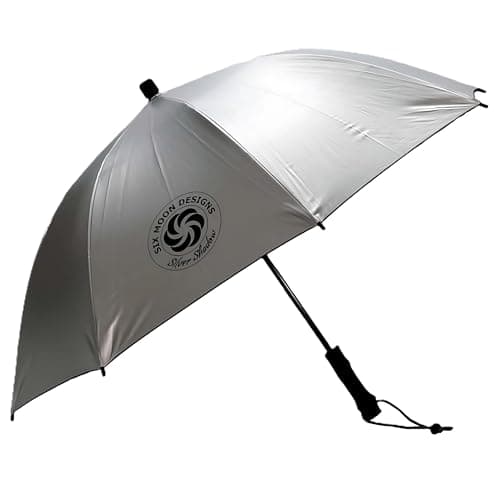
Six Moon Designs Silver Shadow Ultralight
Best Value
Kit Score 8.5/10
$50.00 Price checked Oct 23, 6:22 AM CDT
Best for: Hikers who want the Silver Shadow canopy and rigid simplicity without paying extra to save 2.1 oz.
- Rigid fiberglass frame has fewer moving parts than the collapsible Mini
- At 8.9 oz it is 31% heavier than the Carbon
- Weight
- 8.9 oz (252 g)
- Open width
- 37 in (94 cm)
- Packed length
- 25 in (63.5 cm)
- UPF rating
- UPF 50+
- Frame
- Fiberglass shaft and ribs
- Canopy
- 210T silver-reflective polyester; 5,000 mm water column
About this pick
The standard Silver Shadow uses a rigid fiberglass frame beneath the same 37-inch UPF 50+ reflective canopy as the Carbon. It adds 2.1 oz but costs less and gives buyers who are not counting every ounce the simplest value equation in the family.
Strengths
- Rigid fiberglass frame has fewer moving parts than the collapsible Mini
- Same 37-inch reflective canopy and 5,000 mm water-column rating as the Carbon
- Costs less than both the Carbon and Mini
Weaknesses
- At 8.9 oz it is 31% heavier than the Carbon
- The fixed 25-inch length still requires an external pack pocket or compression strap
Kit Score breakdown
See all picks in Best trekking umbrellas for hiking: 4 useful oddities
Keep going
Related guides
 Complete hike loadoutDay hike kitBuild the complete kit
Researched, not hands-on tested
Updated Jun 4, 2026Our recommendations draw on manufacturer documentation, retailer listings, owner feedback, and comparisons with alternatives.
As an Amazon Associate I earn from qualifying purchases. We may earn a commission from links here, at no extra cost to you. How we research →