Skip to content
KITAUTHORITY
Living evidence review

What weighted vest research actually says

Eleven studies on calories, bone health, gait, balance, and running. Every record separates the published result from our practical interpretation and its limits.

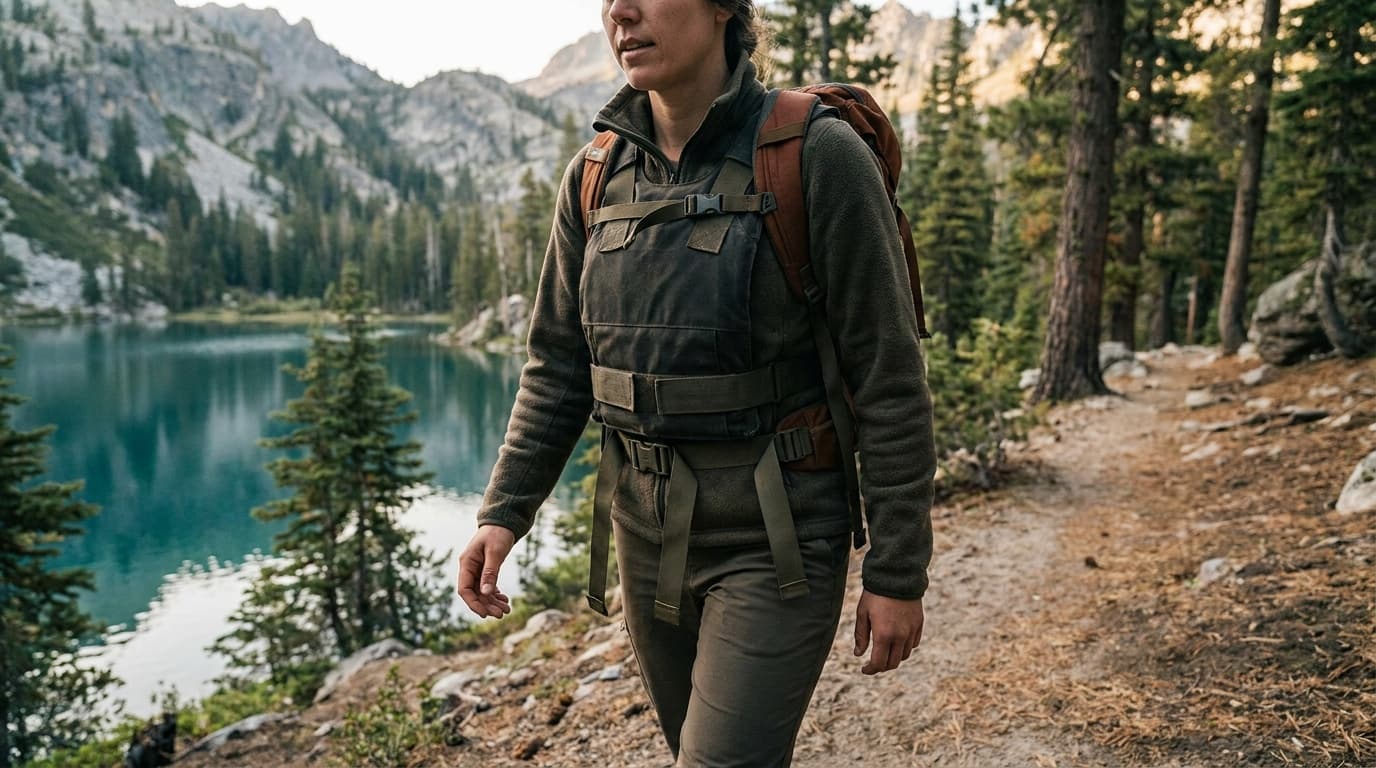
A walker wearing a weighted vest on a wooded trail

This image is illustrative. Kit Authority researches published evidence and product sources; it does not claim hands-on testing it did not perform.

records indexed
11
peer reviewed
9
preliminary abstracts
2
publication range
1998-2026

Evidence at a glance

The useful answer is mixed, not vague.

Calories and effort

A vest usually raises acute energy cost. The increase depends on load, pace, and grade, and a light vest may add only a modest number of calories.

Bone health

Small exercise-plus-vest trials found benefits, but newer randomized evidence did not show protection from hip bone loss during weight reduction.

Running and safety

Acute running mechanics change under load. Research does not establish one universal safe percentage or a reliable long-term speed advantage.

Source-by-source ledger

Explore the weighted vest studies

Filter by outcome or source quality. Conference abstracts stay in the index because they answer live search questions, but they are labeled preliminary and never carry the same weight as a full peer-reviewed paper.

Topic
Source quality

11 of 11 records

1998

Controlled trial

Peer reviewed

Weighted vest exercise improves indices of fall risk in older women

Shaw JM, Snow CM / Journal of Gerontology: Medical Sciences

Who and how
44 community-dwelling postmenopausal women, ages 50 to 75. Lower-body, weight-bearing exercise three times per week with progressively loaded vests; controls maintained customary activity.
Load and duration
Progressive vest load; individual final loads were not reported in the abstract. 9 months.

What the study found

The exercise group improved lower-body strength by 16% to 33%, power by 13%, leg lean mass by 3.5%, and lateral stability. Femoral-neck bone mass did not change significantly.

Kit Authority interpretation

A vest can be part of a progressive strength and balance program, but this study does not show that ordinary vest walking alone changes bone density.

Limits: Small, homogeneous sample; the intervention combined a vest with structured exercise; no vest-only comparison.

PubMed

2000

Controlled trial

Peer reviewed

Long-term exercise using weighted vests prevents hip bone loss in postmenopausal women

Snow CM, Shaw JM, Winters KM, Witzke KA / Journal of Gerontology: Medical Sciences

Who and how
18 postmenopausal women who completed a prior exercise study. Vest-loaded resistance exercise plus jumping three times per week for 32 weeks each year; compared with active controls.
Load and duration
Progressive vest load paired with resistance exercise and jumping. 5 years.

What the study found

The nine women who continued the intervention maintained hip bone mineral density while the nine controls lost bone at measured hip sites.

Kit Authority interpretation

Long-term, supervised exercise that includes vest loading may support hip bone maintenance in postmenopausal women. The finding should not be reduced to 'wearing a vest prevents bone loss.'

Limits: Only 18 self-selected long-term participants; combined vest, resistance, and jumping protocol; older women only.

PubMed

2006

Laboratory study

Peer reviewed

The effect of weighted vest walking on metabolic responses and ground reaction forces

Puthoff ML, Darter BJ, Nielsen DH, Yack HJ / Medicine & Science in Sports & Exercise

Who and how
10 healthy young adults, mean age 23.4 years. Participants walked on a treadmill at five speeds while researchers measured oxygen use and ground reaction forces.
Load and duration
0%, 10%, 15%, and 20% of body mass. Single laboratory session.

What the study found

Oxygen consumption and relative exercise intensity rose as vest load and speed increased. Vertical ground reaction force and loading rate also increased with load.

Kit Authority interpretation

More vest weight generally means more metabolic work and more mechanical loading. The study measures acute response, not a safe long-term dose.

Limits: Very small young sample; treadmill setting; loads reached 20% of body mass; no injury or long-term outcome data.

PubMed

2011

Randomized trial

Peer reviewed

A comparison between walking with and without weighted vests on bone resorption and health-related physical fitness

Tantiwiboonchai K, et al. / Journal of the Medical Association of Thailand

Who and how
48 women, ages 30 to 60. Thirty-minute treadmill sessions at 65% to 75% of maximum heart rate, three times per week; walking-only and vest groups were compared.
Load and duration
Progressed by 2% of body weight per week to 8% by week 6. 12 weeks.

What the study found

Both walking groups improved fitness and a bone-resorption marker, but the vest group did not improve significantly more than walking alone.

Kit Authority interpretation

Over 12 weeks, adding up to 8% body weight did not clearly outperform matched walking for the measured outcomes.

Limits: Short duration; measured bone turnover markers rather than fractures or bone mineral density; women only.

PubMed

2022

Laboratory study

Peer reviewed

Weighted vests in CrossFit increase physiological stress during walking and running without changes in spatiotemporal gait parameters

Gaffney BM, et al. / Ergonomics

Who and how
20 physically active adults, 10 women and 10 men. Randomized treadmill walking at 0%, 5%, and 10% grade plus running, with and without a fixed CrossFit-style vest.
Load and duration
14 lb for women and 20 lb for men. Acute randomized laboratory visits.

What the study found

The vest increased physiological demand during running and during walking at a 10% grade. The measured stride length and stride frequency did not change significantly.

Kit Authority interpretation

Incline, pace, and load interact. A vest can raise effort without a detectable change in the gait measures used here, but that is not the same as proving injury safety.

Limits: Small active sample; fixed sex-based loads; acute lab response; limited set of gait variables.

Liverpool John Moores University repository

2022

Systematic review

Peer reviewed

The acute and longitudinal effects of weighted vests on sprint-running performance: a systematic review

Macadam P, Cronin J, Uthoff A, Feser E / Sports Biomechanics

Who and how
11 weighted-vest studies: 6 acute and 5 longitudinal. Systematic review of acute sprinting and longitudinal vest-training studies using loads from 5% to 40% of body mass.
Load and duration
5% to 40% of body mass across included studies. Acute tests and multiweek training studies.

What the study found

Acute vest loading generally slowed sprint time and velocity and increased contact time. Some longitudinal studies reported performance gains, but protocols were inconsistent.

Kit Authority interpretation

Running in a vest immediately changes sprint mechanics. Whether vest training improves unvested performance depends on the program and remains uncertain.

Limits: Only 11 heterogeneous studies; broad load range; mixed athletes and protocols; limited basis for an optimal dose.

PubMed

2024

Laboratory study

Peer reviewed

Metabolic costs of walking with weighted vests

Looney DP, et al. / Medicine & Science in Sports & Exercise

Who and how
20 healthy, active military-age adults; model checked against 12 datasets containing 264 participants. Participants completed treadmill trials across multiple speeds and loads; researchers validated a load-carriage energy-cost model against external datasets.
Load and duration
0% to 66% of body mass. Laboratory trials plus external model validation.

What the study found

The updated model predicted metabolic cost across a wide range of walking speeds, grades, and carried loads with strong agreement across reference datasets.

Kit Authority interpretation

Load, speed, slope, and carrying method all matter when estimating energy use. This is useful for calorie models, not for selecting a safe beginner load.

Limits: Heavy tactical loads and a military-age sample; predictive model rather than a training or injury trial.

PubMed

2024

Systematic review

Peer reviewed

The use of wearable resistance and weighted vest for sprint performance and kinematics: a systematic review and meta-analysis

Bertochi GFA, et al. / Scientific Reports

Who and how
25 wearable-resistance studies, including weighted-vest protocols. Systematic review and meta-analysis of acute loading and chronic training effects on sprint performance and mechanics.
Load and duration
Varied by study and wearable-resistance placement. Acute tests and longitudinal training studies.

What the study found

Acute loading increased sprint time and contact time. Chronic evidence was sparse, and pooled weighted-vest outcomes did not establish a clear sprint-performance advantage.

Kit Authority interpretation

A vest makes sprinting harder in the moment; evidence that repeated vest running makes an athlete faster without the vest is still weak.

Limits: Wearable resistance is broader than vests; few chronic vest studies; heterogeneous protocols and outcomes.

PubMed

2025

Randomized trial

Peer reviewed

Weighted vest use or resistance exercise to offset weight loss-associated bone loss in older adults: a randomized clinical trial

Beavers KM, et al. / JAMA Network Open

Who and how
150 older adults with obesity; mean age 66.4 years; 74.7% women. Dietary weight loss alone, weight loss plus daily vest use, or weight loss plus supervised resistance training.
Load and duration
Targeted replacement of up to 10% of lost body weight; average wear was 7.1 hours per day. 12 months.

What the study found

All groups lost hip trabecular bone mineral density. Neither weighted-vest use nor resistance training significantly reduced that hip bone loss compared with weight loss alone.

Kit Authority interpretation

The strongest recent vest trial does not support a blanket claim that wearing a vest prevents hip bone loss during weight reduction in older adults.

Limits: Specific to older adults with obesity in a weight-loss program and prolonged daily wear; not a recreational walking study.

PubMed

2026

Conference abstract

Conference abstract

Effects of a weighted vest on energy expenditure during treadmill walking

Brown K, Joubert DP / International Journal of Exercise Science: Conference Proceedings

Who and how
9 adults, 7 women and 2 men. Brisk treadmill walking at an average 3.3 mph with and without a 10 lb vest.
Load and duration
Fixed 10 lb vest. Single laboratory comparison.

What the study found

Average energy expenditure increased by 0.25 kcal per minute, about 15 kcal per hour or 4.9%, while oxygen consumption increased by 4.4%.

Kit Authority interpretation

A light vest may increase calorie use, but the practical bump can be modest. Treat this result as preliminary until a full paper and larger replication exist.

Limits: Conference abstract only; nine participants; no full peer-reviewed paper; treadmill result may not generalize outdoors.

Conference abstract

2026

Conference abstract

Conference abstract

Effects of weighted vest load on metabolic demand and gait during treadmill walking

Becerra A, Smith J / International Journal of Exercise Science: Conference Proceedings

Who and how
30 adults, mean age 24.6 years. Treadmill walking at 3.5 mph with no vest, 5% body-mass load, and 10% body-mass load.
Load and duration
0%, 5%, and 10% of body mass. Single laboratory comparison.

What the study found

Oxygen use, heart rate, and perceived exertion rose with load. The measured gait characteristics did not change significantly.

Kit Authority interpretation

Even moderate loads can make a fixed-speed walk feel and cost more. Lack of a measured gait change does not establish long-term safety.

Limits: Conference abstract only; young sample; acute treadmill trial; no injury or training outcome.

Conference abstract

Method and corrections

How this index is built

Last source verification: July 15, 2026. This is a structured evidence review, not a registered systematic review or meta-analysis.

Selection. We included human studies and reviews that directly evaluated weighted vests during walking, running, exercise, weight loss, or balance training. We also included two 2026 conference abstracts because they address high-interest questions, while labeling them preliminary.

Extraction. Population, load, duration, result, and limitations were checked against PubMed, full-text repositories, DOI records, or the conference host. We do not combine participant counts from reviews because that would double-count underlying studies.

Interpretation. The published result and Kit Authority's practical meaning occupy separate fields. A study using a vest plus jumping does not become evidence that casual vest walking has the same effect.

Corrections. Evidence changes. Send a DOI, full paper, or correction to hello@kitauthority.com. Material corrections are dated here and in the downloadable dataset.

Turn evidence into a decision

Use the load you can progress, then buy for fit.

The research does not identify one perfect vest. It does show why load, task, and progression matter. These three paths keep the buying decision tied to the evidence.

1. Size the load

Weighted-vest calculator

Get a conservative starting range and see exactly which assumptions are editorial rather than clinical thresholds.

Calculate your starting load

2. Choose the fit

Best weighted vests

Compare fixed and adjustable designs by stability, breathability, range, and price using the same research-not-tested standard.

Compare all vest types

3. Plan the use

Beginner walking guide

Build duration before load, use one progression variable at a time, and know when the evidence calls for caution.

Build a walking plan

Weighted vest research questions

Does a weighted vest burn more calories while walking?

Yes, acute studies generally find that energy cost rises as vest load, speed, or grade rises. The size of the increase varies. In one preliminary 2026 conference abstract, a fixed 10 lb vest added about 15 calories per hour during brisk treadmill walking, so a light vest is not a calorie shortcut.

Does walking with a weighted vest improve bone density?

The evidence is mixed and depends on the population and program. Small long-term studies that combined vest loading with resistance exercise or jumping found benefits in postmenopausal women. A 2025 randomized trial of 150 older adults losing weight found that daily vest use did not prevent hip bone loss.

Is 10% of body weight a proven safe weighted-vest limit?

No. Ten percent is a conservative editorial guideline used by many fitness and health sources, not a validated universal safety threshold. Research has tested loads from 5% to well above 20% for different tasks and populations, but those studies do not establish one safe cap for everyone.

Will running with a weighted vest make me faster?

A vest clearly changes sprint performance while it is worn, usually slowing the sprint and increasing ground-contact time. Reviews find too little consistent long-term evidence to promise that vest training improves unvested speed.