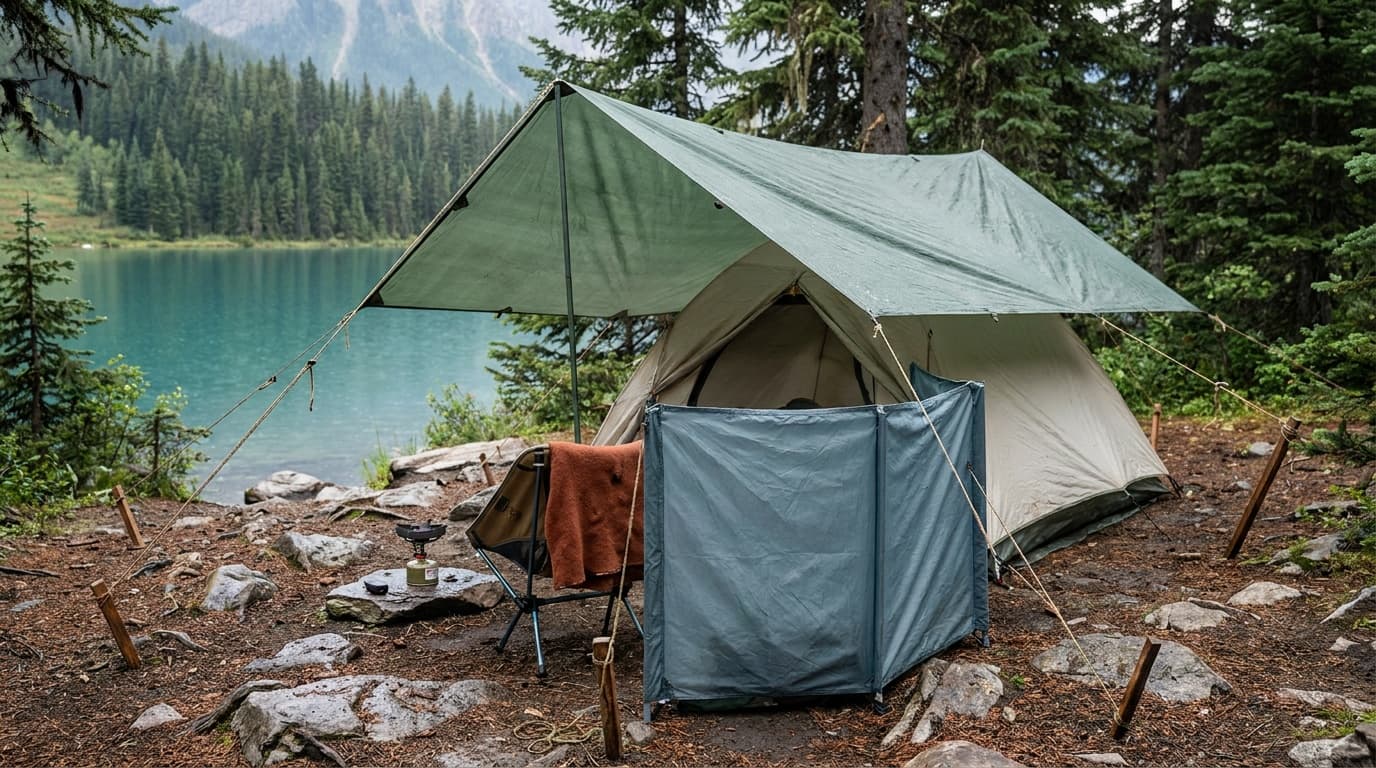
A screen house is one of those pieces of gear that feels completely unnecessary until you are pinned inside your tent at 6 p.m. because the mosquitoes are unbearable. Knowing when it actually earns its space versus when it just burns trunk room is the whole question.
When a screen house genuinely earns its space
The case for a screen house comes down to four situations where no cheaper alternative fully covers you.
First, peak mosquito and black fly season in the north woods, Great Lakes shoreline, Boundary Waters, or any slow-water marsh environment. Dusk-to-dark in those zones in June or July can move from tolerable to truly miserable in 20 minutes. A screen house lets you cook, eat, and sit without head nets.
Second, sites with no natural wind. Breezy ridge camps rarely have bad bug pressure. Sheltered coves and forest hollows with standing water nearby do. If your go-to sites are the latter, the screen house pays off over a season.
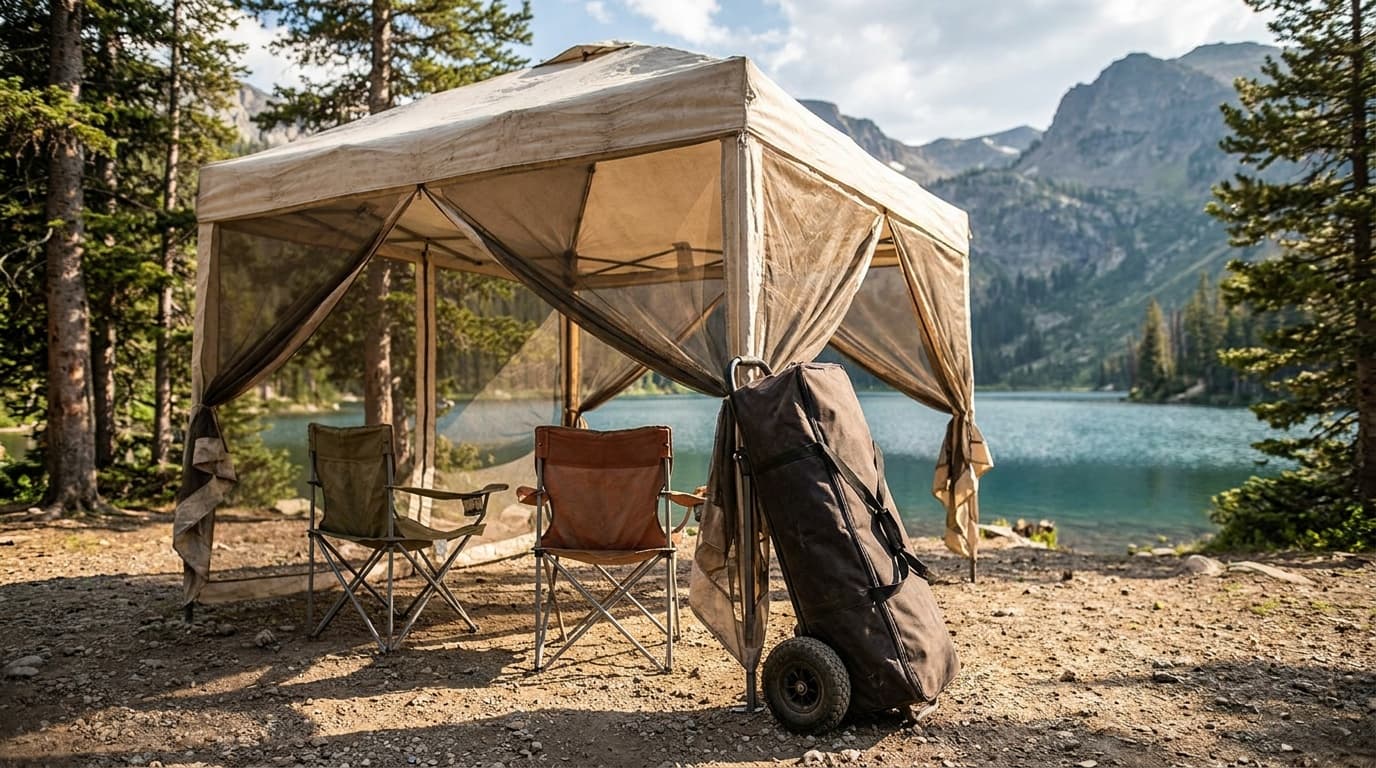
Third, group camps where cooking and eating happen outside the tents. A screen house like the Gazelle Tents G6 Deluxe gives you a communal insect-free zone for food prep and meals, which matters when you have kids, a large group, or multi-night stays.
Fourth, shoulder-season rain. A screen house with a solid rain fly keeps a dining area dry without the full commitment of a larger cabin tent. Some families use them as a screened living room the whole trip.
When it is overkill
A screen house is not the right call for every trip, and being honest about that saves you the hassle of hauling it.
If you are backpacking or weight-conscious car camping, the weight-to-utility ratio rarely works out. A head net weighs 1 oz and covers you anywhere.
If the site is genuinely breezy (exposed lakeshores, ridge camps, coastal sites), bug pressure is usually low enough that you will not bother setting it up. It will sit in the car.
If you are only sleeping at camp and doing everything else on the trail, there is no meal-time window for the screen house to fill.
If your camping style is one-night quick stops, the 15-minute setup cost is a bad trade. A good tarp pitches in under 5 minutes and handles rain.
The screen house earns its keep when your evenings are long and the bugs are serious. Skip it when the trip is mostly moving.
Floored vs floorless: which to buy
This is a genuine trade-off, not a clear winner.
Floored models (sewn-in floor with a zipper door) keep insects out more completely. Ground-level insects, spiders, and ants do not get in. The drawback: the floor can pool condensation, tears on rough ground, and makes it awkward to drag in large chairs or a cooler without bending the zipper.
Floorless models (no sewn floor, screen walls stop at ground level or have a short stake-out skirt) handle wet or uneven ground better, are quicker to enter with gear, and dry faster. On soft ground you lose some bug exclusion at the edges, but tucking the skirt under a groundsheet mostly solves it.
For groups cooking on camp stoves or charcoal grills: only use a floorless model, or a floored model with the panels rolled up on the stove side. Screen fabric and heat do not mix.
Choosing between floored and floorless
Flat, dry site
floored model for maximum bug exclusion
Uneven or wet ground
floorless with a stake-out skirt
Group cooking inside
floorless only, or keep the stove fully outside
Kids or pets
floored keeps critters out more reliably
Fast-moving camp style
floorless packs slightly lighter and sets up faster
Weight, setup, and what alternatives exist
Most screen houses in the $60–$150 range, like the Coleman Skylodge 10 x 10 Instant Screenhouse, weigh 10–16 lbs and pack to roughly the size of a large duffel. Premium models with fiberglass or aluminum poles (rather than steel) trim this to 7–10 lbs but cost more.
Setup time matters more than most buyers expect. Freestanding hub-pole models (the pop-out umbrella style, like the CLAM Quick-Set Pavilion) pitch in 5–8 minutes solo and are worth the slight weight premium for solo campers or families without strong tent experience. Traditional pole-sleeve models take 15–20 minutes the first time.
Alternatives worth considering before you buy:
- Head nets and permethrin-treated clothing: lightest solution, costs almost nothing, works anywhere. No communal space, but covers you fully on moving trips.
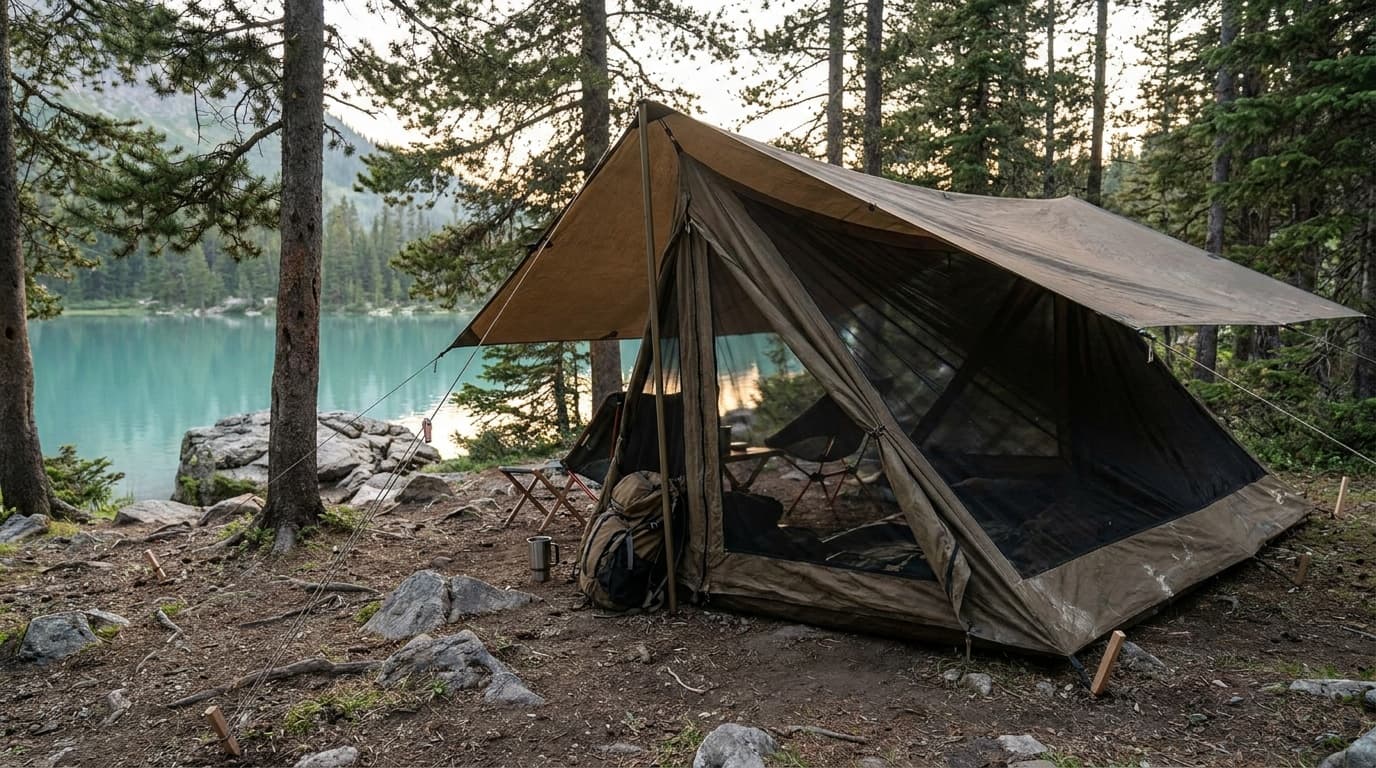
- Tarp with side panels: a tarp rigged low with bug netting hung from the edges handles both rain and insects with more flexibility than a fixed screen house.
- Bug canopy over the picnic table: some campgrounds have a fixed table; a lightweight net canopy that drapes over it costs $20–$30 and covers the eating zone with almost zero setup.
Frequently asked questions
Can you use a screen house in the wind?
Most screen houses are rated for light wind only. In sustained winds above 20 mph the walls act like a sail and the stakes pull or the poles buckle. If wind is forecast, stake every corner and guy out the roof, or take it down. A freestanding hub-pole model with shallow-drive stakes is the most vulnerable in wind; get it staked fully before trusting it.
Is a screen house worth it for a single-night trip?
Rarely. The setup and takedown time (30–40 minutes total) is a large fraction of a one-night stay. For single nights, a head net and bug-repellent clothing give you most of the protection with none of the hassle. Reserve the screen house for two-night or longer trips where you will use it for multiple evenings.
Can you sleep in a screen house?
Technically yes, but a screen house is not a sleeping shelter. It provides no rain protection without a separate rain fly, no insulation, and minimal privacy. If you want to sleep under the stars with bug protection, a bivy with bug netting or a solo bug tent is purpose-built for that and weighs far less.
For specific picks, see our guide to the best screen houses. Browse all camp guides or read how we research and rate gear.
Recommended gear
Our current top picks from the Best screen houses for camping: bug-free shelter that sets up fast guide, if you are ready to buy.
COLEMAN
Coleman Skylodge 10 x 10 Instant Screenhouse
Best Overall
Kit Score 7.8/10
$104.99 Price checked Oct 23, 6:22 AM CDT
Best for: Car campers and family groups who want fast, effortless bug protection at a buggy campsite without a long setup or a heavy carry.
- Solo-deployable instant frame goes up in under 60 seconds
- Roof is not waterproof: seek cover in rain
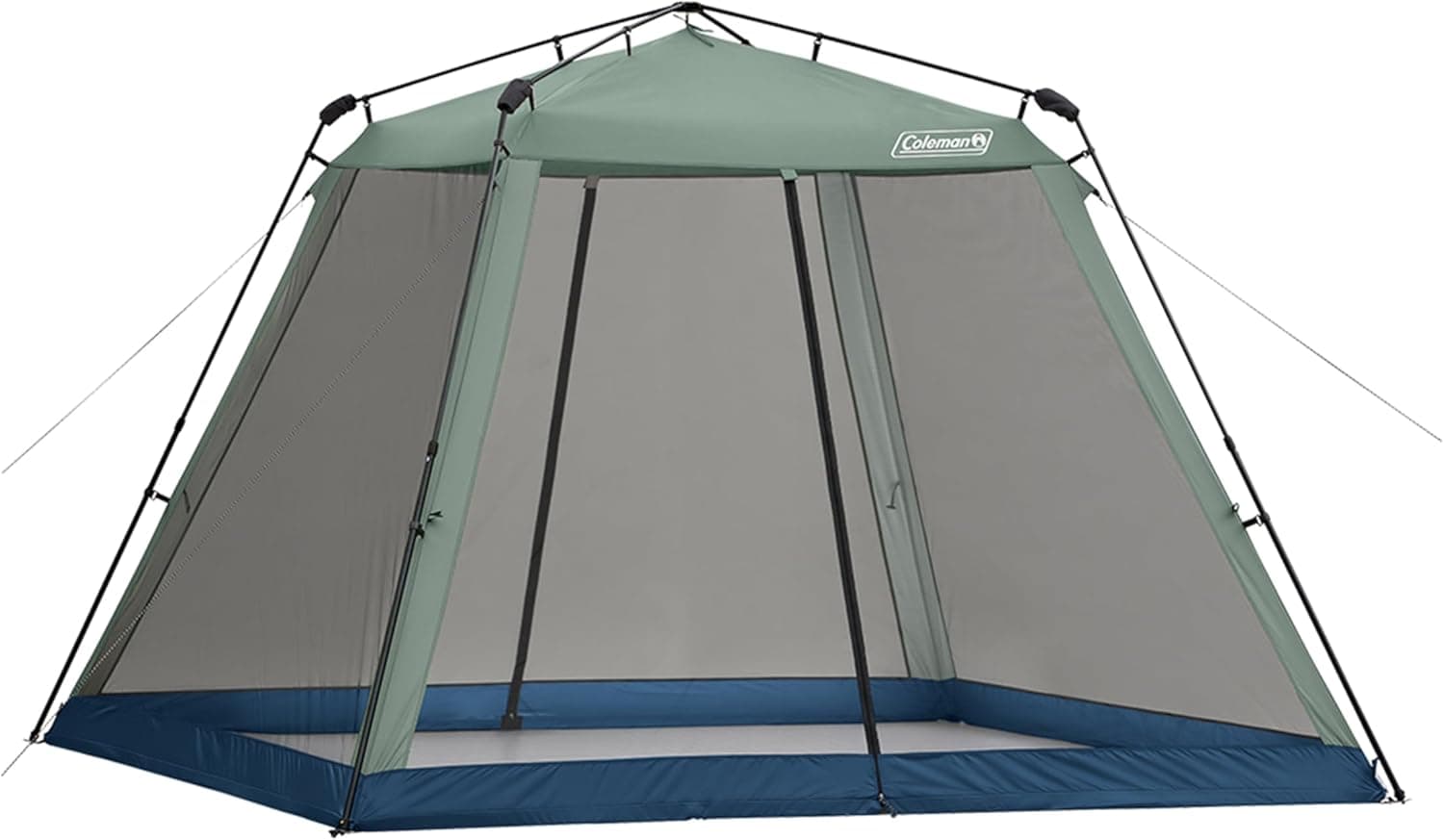
- Footprint
- 10 x 10 ft (100 sq ft)
- Center height
- 7 ft
- Packed weight
- 14.9 lbs
- Setup
- Instant, under 1 minute
- Floor
- Floorless
- Frame
- Steel, one-piece folding
About this pick
Coleman's push-button instant frame deploys in under a minute, giving you a 100-square-foot bug-free zone that one person can manage solo. UPF 50+ mesh walls and two zippered doors cover the basics without the weight or complexity of a pole shelter.
Strengths
- Solo-deployable instant frame goes up in under 60 seconds
- 14.9 lbs makes it the lightest full-size option in its class
- Two large zippered doors allow table-and-chairs access from either side
Weaknesses
- Roof is not waterproof: seek cover in rain
- Pyramid shape reduces usable floor space near the walls
Kit Score breakdown
COLEMAN
Coleman Back Home Screened Canopy Tent with Instant Setup
Best Value
Kit Score 7.3/10
$239.99 Price checked Oct 23, 6:22 AM CDT
Best for: Families who drive to their campsite, want a ready-made dining shelter, and do not need a fully waterproof roof.
- 9 ft center height: one of the tallest in the value segment
- At 48.7 lbs with a bulky packed size, it is not small-car friendly
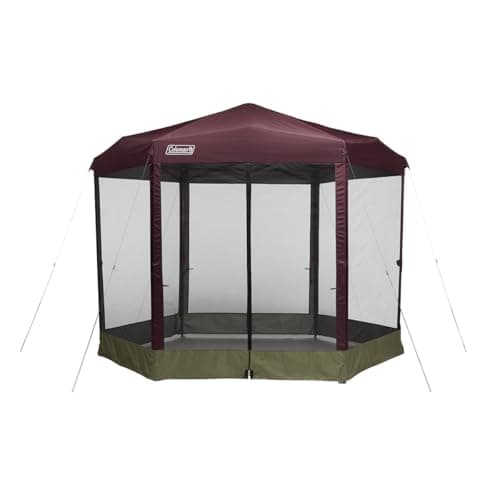
- Footprint
- 10 ft 8 in x 9 ft 2 in (approx. 98 sq ft)
- Center height
- 9 ft
- Packed weight
- 48.7 lbs
- Setup
- Approx. 3 minutes, one-push center hub
- Floor
- Floorless
- Roof
- UPF 50+, water-resistant polyester
About this pick
The Back Home's OnePeak one-push center hub deploys in about three minutes and stands a full 9 feet at the peak, giving genuine stand-up headroom at the doors. The footprint fits over a standard camp picnic table with room to spare, and the included wheeled carry bag makes transport manageable despite the weight.
Strengths
- 9 ft center height: one of the tallest in the value segment
- Fits over a picnic table, making it a practical dining shelter at busy campgrounds
- Wheeled carry bag included; robust steel frame rated to 35 mph winds when staked
Weaknesses
- At 48.7 lbs with a bulky packed size, it is not small-car friendly
- Fabric can degrade noticeably after one to two seasons of heavy sun exposure per owner reports
Kit Score breakdown
CLAM OUTDOORS
CLAM Quick-Set Pavilion 12.5
Best Premium
Kit Score 8.6/10
$455.99 Price checked Oct 23, 6:22 AM CDT
Best for: Campers in heavily buggy or marshy environments who want the speed of a pop-up shelter with durable no-see-um protection and wind-panel coverage for exposed sites.
- No-see-um mesh blocks tiny biting insects that pass through standard mesh
- At $480+ and 39 lbs, it is a significant investment in both money and cargo space
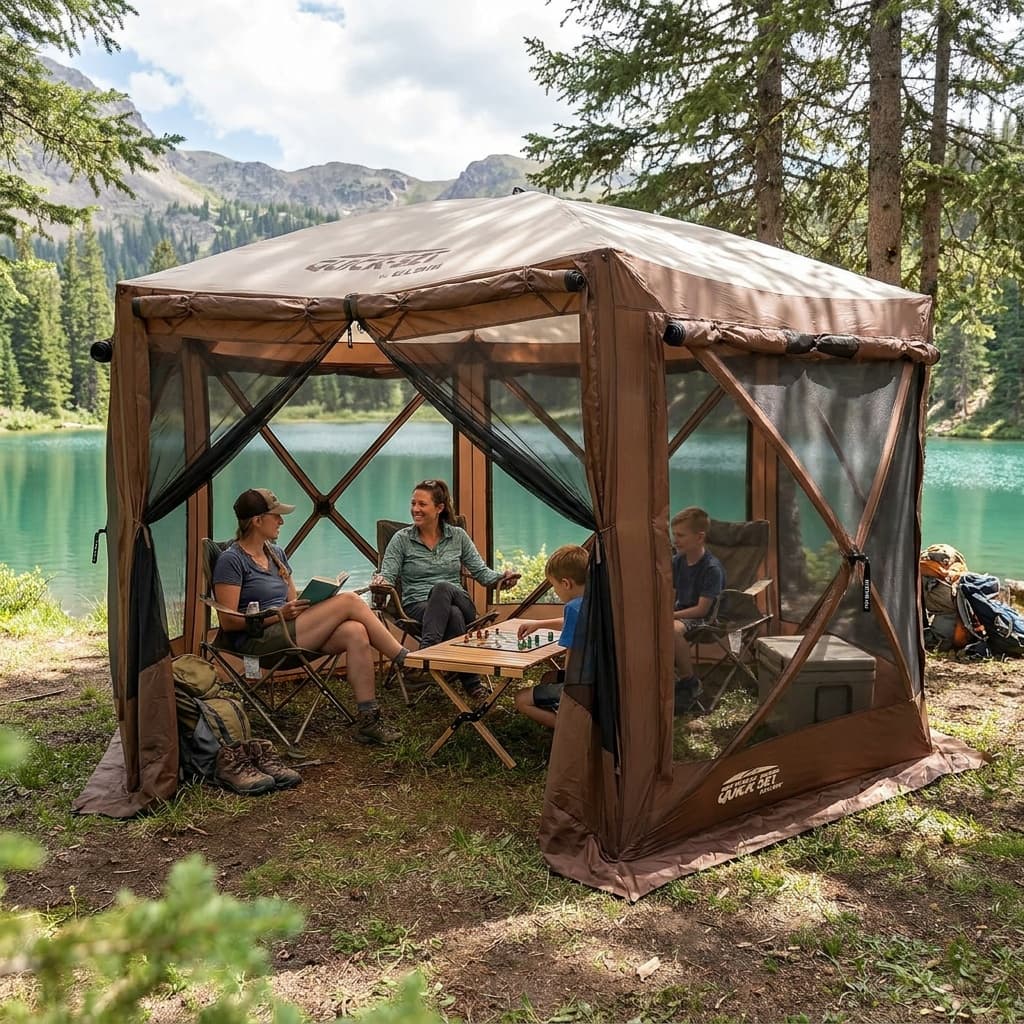
- Footprint
- 12.5 x 12.5 ft (approx. 110 sq ft, 6-sided)
- Center height
- 7 ft 10 in
- Packed weight
- 39 lbs
- Setup
- Pop-up hub, under 60 seconds
- Mesh
- No-see-um mesh throughout
- Frame material
- Fiberglass poles, flex-tested
About this pick
CLAM's hub-and-spoke pop-up design unfolds in under a minute and stands up to bugs at the no-see-um mesh level, blocking the smallest gnats that standard mesh misses. Five integrated wind panels, a water-resistant roof, and fiberglass construction make it one of the most weatherable instant screen shelters available.
Strengths
- No-see-um mesh blocks tiny biting insects that pass through standard mesh
- Instant hub deployment in under 60 seconds with no loose pole assembly
- Five wind panels provide genuine weather resistance beyond most screen houses
Weaknesses
- At $480+ and 39 lbs, it is a significant investment in both money and cargo space
- Packed size is bulky: best suited to truck beds or large SUVs
Kit Score breakdown
See all picks in Best screen houses for camping: bug-free shelter that sets up fast
Keep going
Related guides
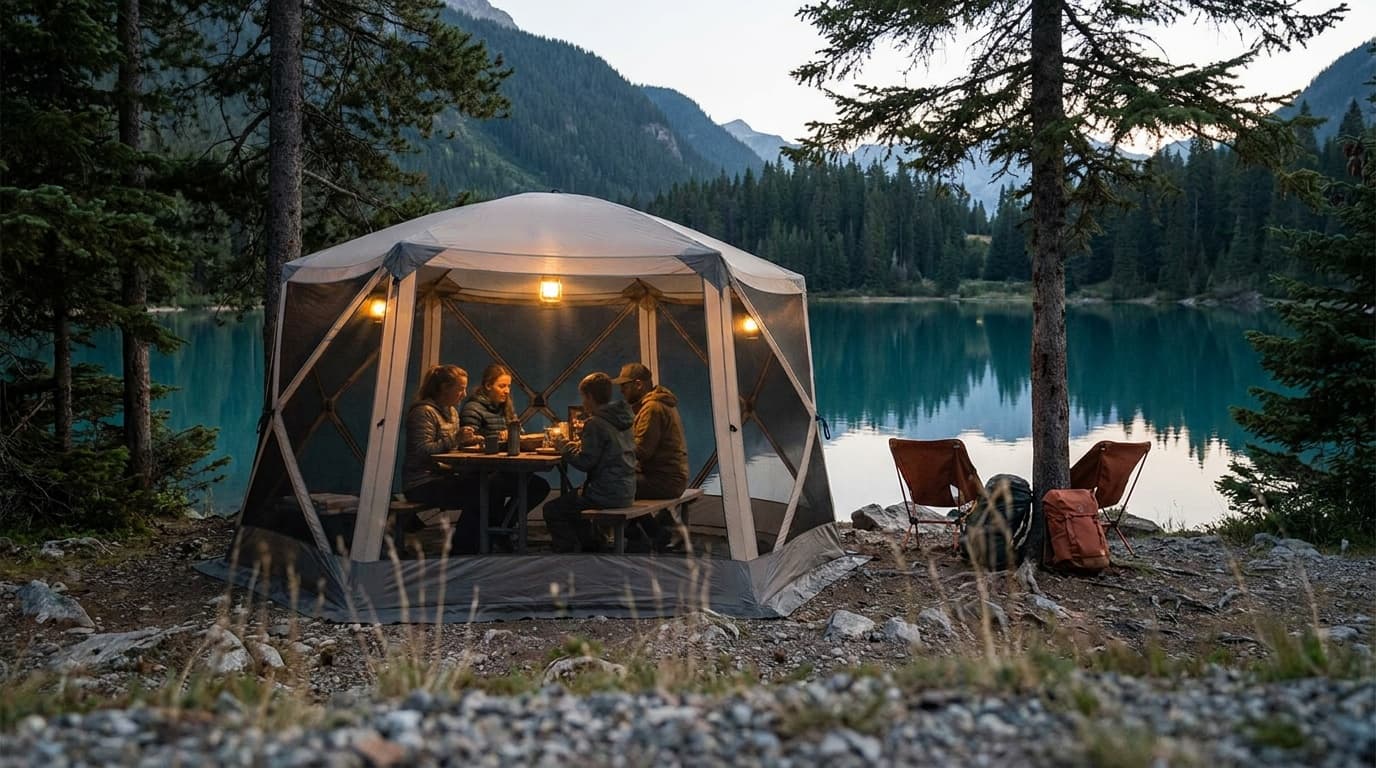
 Complete camp loadoutCar-camping starter kitBuild the complete kit
Researched, not hands-on tested
Updated Jun 4, 2026Our recommendations draw on manufacturer documentation, retailer listings, owner feedback, and comparisons with alternatives.
As an Amazon Associate I earn from qualifying purchases. We may earn a commission from links here, at no extra cost to you. How we research →