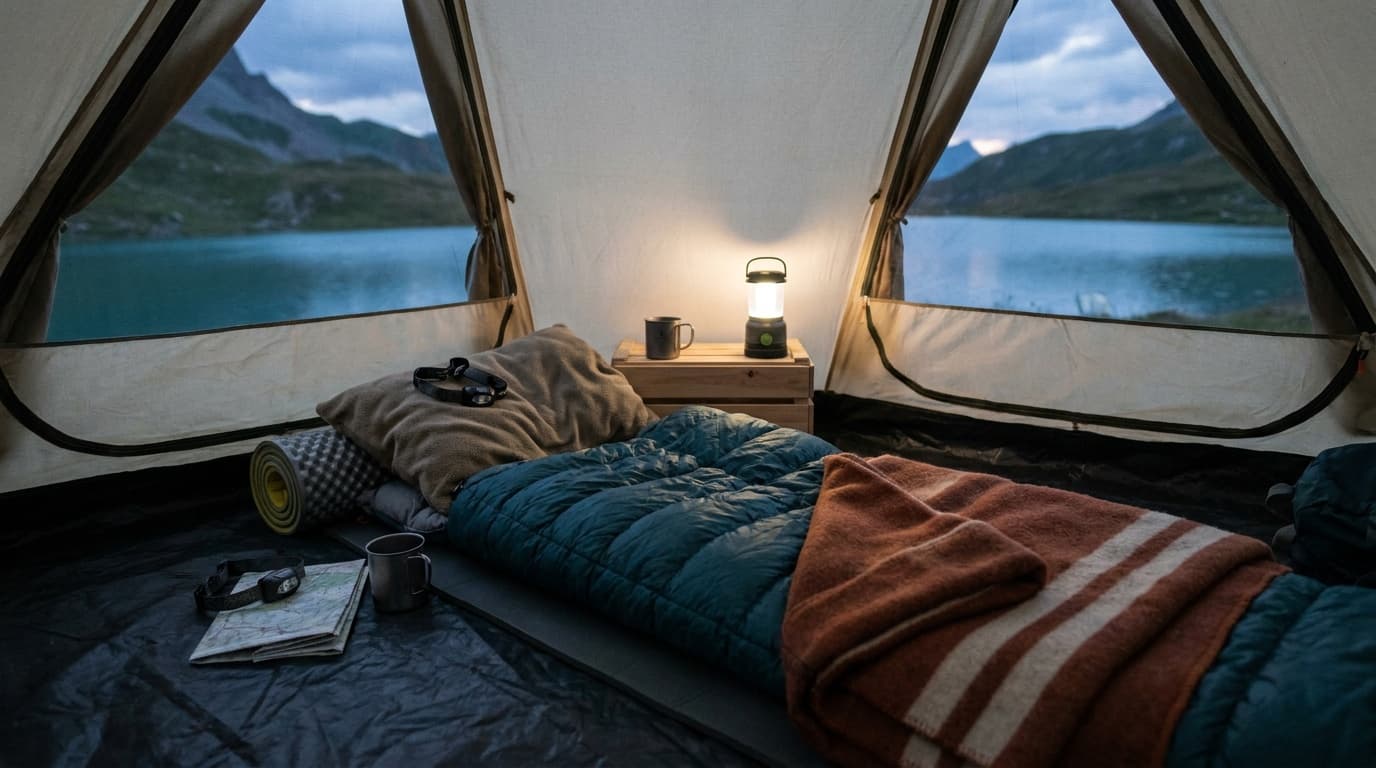
Before buying a "20 F" sleeping bag, find the comfort and lower-limit figures on its label or product page. They describe different reference sleepers, and the pad underneath you also affects how warm you feel. Compare the complete sleep system with the overnight conditions you expect.
What a sleeping bag rating means
ISO 23537-1:2022 sets testing and labeling requirements for adult sleeping bags intended for sports and leisure use within the standard's stated temperature scope. Its test assesses a bag's protection against cold in steady-state conditions. ISO's current standard summary Standardized ratings help compare bags, but comfort also depends on your sleep system and the conditions. REI's rating guide
On labels that show the ISO comfort and lower-limit figures, comfort is the more conservative reference, associated with a sleeper who tends to feel cold. Lower limit is the colder reference for a sleeper who tends to feel warm. These describe different reference conditions in the test, not rules that all women or all men sleep the same way. Use the label's actual terms rather than guessing from a bag's name or intended audience. REI's explanation of the two figures
Some labels or older explanations also show an extreme figure. Treat it as a survival-related test reference, not a temperature for planned use. Sea to Summit says it stopped publishing this figure because it could be confusing, and advises against relying on it for normal use. Sea to Summit's explanation
Not every bag carries an ISO or EN result. If the label or product page gives one temperature without identifying a standardized comfort or lower-limit rating, check the manufacturer's description of how it was determined. A brand estimate may still help compare that brand's own bags, but do not assume it is directly comparable with a standardized result from another maker. REI's rating guide
The three ratings side by side
Makers and standards summaries describe the three ISO figures in similar terms. This table puts them in one place, with the reference sleeper as older EN 13537 descriptions give it.
| Rating | What it estimates | Reference sleeper and posture | How to use it |
|---|---|---|---|
| Comfort | The lowest temperature at which a cold sleeper stays comfortable | A standard woman in a relaxed posture | The planning number if you sleep cold or want margin |
| Lower limit | The lowest temperature at which a warm sleeper sleeps without waking from the cold | A standard man in a curled posture, for about eight hours | A floor for warm sleepers, not a target |
| Extreme | A survival-only figure: six hours without risk of death from hypothermia, though frostbite is still possible | A standard woman | Ignore it when planning; Sea to Summit no longer publishes it |
Treat the "standard woman" and "standard man" wording as history, not as a rule about who should use which number. Those descriptions come from summaries of EN 13537. The 2022 edition of ISO 23537-1 lists an update to its terms and definitions among its main changes, and we could read only a standards-body preview of it, not the paywalled full text. Maker explanations such as Sea to Summit's now say "cold sleeper" and "warm sleeper" instead. When a label gives figures, read its own wording.
Two other facts from that 2022 preview are worth knowing. The standard covers adult-size bags for sports and leisure use that are designed for limit temperatures of -20 °C (-4F) and higher. It leaves out military bags, extreme-climate expedition bags, and bags for children. A label claiming -10F (about -23 °C) is colder than that boundary, so it sits outside the range the standard covers. The 2022 edition also revised the test method and tightened test parameters to reduce differences between labs, so figures on older bags may have been produced under the earlier edition.
Which rating should you use?
Start with your own sleep habits, not the gendered shorthand sometimes used in product listings. If you often feel cold at night, compare expected overnight lows with the bag's comfort rating. If you usually sleep warm, the lower limit may be a useful comparison point. If you have not used a bag in similar conditions, treat either number as an estimate and allow room for uncertainty rather than counting on the coldest figure.
There is no universal number of degrees to subtract from a forecast. Weather, shelter, ground conditions, clothing, pad insulation, and personal comfort all affect the result. REI's advice is to consider a bag rated below the lows you anticipate, while also treating the rating as one part of the sleep system. REI's backpacking bag guide
Read the actual comfort and lower-limit figures where available. The number in a model name can be rounded or may refer to a different rating, so it is not a substitute for the product's temperature-rating details. REI's rating guide
What the ratings look like on real bags
Here is how four bags in our catalog publish their numbers. The "name says" column is the figure in the product name or headline label. "None found" means the sources we read gave no figure.
| Bag | Name says | Comfort | Lower limit | Notes |
|---|---|---|---|---|
| Kelty Cosmic Down 20 | 20F | 31F | 21F | The ISO figures come from an independent review; Kelty's own page lists only 20F (-7 °C) |
| Marmot Trestles Elite Eco 20 | 20 | -4 °C (about 25F) | -11 °C (about 12F) | Figures from a retailer listing that names no standard; it also lists a -31 °C extreme figure |
| ALPS OutdoorZ Redwood -10 | -10F | None found | None found | OutdoorGearLab labels -10F a "claimed" rating |
| Coleman Brazos 20 | 20F | None found | None found | A review lists 20F and mentions no ISO or EN result |
Three things stand out.
- The number in the name is not the comfort figure. The Kelty's 20 matches its lower limit (21F). Its comfort rating is 31F, 11 degrees warmer. A cold sleeper who shops by the name is planning for nights 11 degrees colder than the comfort figure covers.
- The gap between the two figures is information too. It is 10F for the Kelty and about 13F for the Marmot. That spread is the difference a cold sleeper and a warm sleeper can expect from the same bag.
- Two of the four bags publish a single temperature with no comfort or limit behind it. That number can rank one maker's bags against each other, but it is not directly comparable with an ISO comfort figure from another brand. One reviewer who used the ALPS bag in the field put its comfort limit around 5F, 15 degrees warmer than the -10F label. That is one reviewer's impression, not a lab result, but it is why we leave margin on manufacturer ratings.
The best sleeping bags for camping roundup covers the Kelty, ALPS, and Coleman picks in full.
Match the bag to the sleeping pad
A bag and pad work as a system. The bag's insulation is compressed underneath your body, so the pad helps limit heat loss to the ground. R-value describes thermal resistance: a higher value means greater resistance to heat flow through the pad. ASTM F3340-22 is ASTM's active test method for measuring camping-mattress thermal resistance. The test gives a repeatable comparative measurement, though ASTM notes it may not match every real-world setup.
That makes R-value useful for comparing pads, not a direct conversion from pad warmth to a bag temperature. Consider the ground and season, then compare pad R-values and the sleeping-bag rating together. The pad is part of the sleep system, not a temperature number to add to the bag rating. REI's pad and sleep-system guide Our best sleeping pads for camping guide compares R-values pad by pad.
Choose insulation for the conditions
Down is valued for its warmth-to-weight and packed-size advantages. Sea to Summit presents synthetic bags as suited to wet climates because they are less affected by moisture, and down bags for ultralight trips where weight matters. Check the details of the specific bag. Sea to Summit's sleep-system guide For a fuller comparison, see down vs synthetic sleeping bags.
Whatever the fill, protect the bag from rain, condensation, and wet clothing. Follow the manufacturer's care and storage instructions.
A practical way to choose
- Write down the coldest overnight conditions you realistically expect, including the season and likely shelter.
- Check whether each candidate gives ISO/EN comfort and lower-limit ratings or a manufacturer estimate. Compare like with like.
- Use the comfort figure if you tend to sleep cold and the lower-limit figure if you tend to sleep warm. Do not plan around an extreme rating.
- Check the pad's R-value and make sure the pad is suited to the ground and season. R-value is not a temperature conversion.
- Consider whether dampness, weight, and packed size make down or synthetic insulation a better fit. Follow the maker's advice for the specific bag.
Frequently asked questions
What is the difference between a comfort rating and a lower-limit rating?
The comfort figure is the more conservative reference for a sleeper who tends to feel cold. The lower-limit figure is a colder reference for a sleeper who tends to feel warm. They are test references, not a guarantee for a particular person, and they are not rules about how all men or women sleep. Look for the terms on the label or product page.
Should I plan to sleep at the extreme rating?
No. The extreme figure is a survival-related reference, not a planned-use comfort temperature. Choose a bag based on its comfort or lower-limit rating and the conditions you expect, then consider your pad and other parts of the sleep system.
Can I convert a sleeping pad R-value into a bag temperature?
No. R-value measures resistance to heat flow through a pad; it is not a direct temperature rating. Use it to compare pads, and consider the pad alongside the bag, ground, shelter, clothing, and your own sleep habits.
Where these numbers come from
ISO's own standard page, REI, and the ALPS, Marmot, and Coleman maker sites blocked our automated checks on 2026-10-16. Rows below that rest on a standards-body preview, an independent review, or a retailer listing say so. Fahrenheit conversions and the gap figures are our arithmetic.
| Claim | Source | Checked |
|---|---|---|
| ISO 23537-1:2022 scope: adult-size sports and leisure bags designed for limit temperatures of -20 °C and higher; excludes military, extreme-climate expedition, and children's bags. The second edition replaces the 2016 edition, with changes to terms and definitions, scope, lower-limit requirements, test methods, labelling, and manikin calibration values, and tighter test parameters to reduce lab-to-lab variation | Slovak Office of Standardization preview of EN ISO 23537-1:2022 (PDF), covering the foreword, introduction, and scope; the terms and definitions are in the paywalled remainder | 2026-10-16 |
| Comfort, lower limit, and extreme as described under EN 13537: standard woman in a relaxed posture; standard man in a curled posture for about eight hours; extreme as survival only, six hours without risk of death from hypothermia, frostbite still possible | Wikipedia, EN 13537 (carries a needs-citations notice) and Australian Hiker, ISO 23537-1:2022 summary | 2026-10-16 |
| Comfort as the temperature for a cold sleeper, lower limit for a warm sleeper, extreme as six hours without risk of death, and Sea to Summit no longer publishing the extreme figure | Sea to Summit, how to camp in extreme cold | 2026-10-16 |
| Kelty Cosmic Down 20: the maker's page lists 20F / -7 °C and no separate ISO or EN figures | Kelty, Cosmic Down 20 | 2026-10-16 |
| Kelty Cosmic Down 20: ISO comfort 31F, ISO limit 21F (independent review, not the maker) | Treeline Review, Kelty Cosmic 20 | 2026-10-16 |
| Marmot Trestles Elite Eco 20: comfort -4 °C, lower limit -11 °C, extreme -31 °C, no standard named (retailer listing, not the maker) | AlpineTrek, Marmot Trestles Elite Eco 20 | 2026-10-16 |
| ALPS OutdoorZ Redwood: -10F listed as a "Claimed Temperature Rating" | OutdoorGearLab, ALPS OutdoorZ Redwood review | 2026-10-16 |
| ALPS OutdoorZ Redwood: reviewer's field comfort limit around 5F | CleverHiker, ALPS OutdoorZ Redwood review | 2026-10-16 |
| Coleman Brazos 20: 20F listed, with no ISO or EN result mentioned | Switchback Travel, Coleman Brazos 20 review | 2026-10-16 |
We have not slept in these bags. Where a source gives only a manufacturer or retailer figure, we say so rather than treating it as a comfort promise.
Ready to compare specific options? See our guide to the best sleeping bags for camping. Browse the full camp gear hub for more gear guidance, or read how we research and rate to understand the methodology behind our recommendations.
Sources
- ISO 23537-1:2022: adult sleeping-bag testing scope
- REI: understanding sleeping-bag temperature ratings
- REI: choosing a backpacking sleeping bag
- ASTM F3340-22: camping-mattress thermal-resistance test
- REI: sleeping pads and sleep systems
- Sea to Summit: extreme-rating explanation
- Sea to Summit: sleep-system guide
Recommended gear
Our current top picks from the Best sleeping bags for camping in 2026 guide, if you are ready to buy.
ALPS OUTDOORZ
ALPS OutdoorZ Redwood -10 Sleeping Bag
Best Overall
Kit Score 8.8/10
$179.99 Price checked Oct 23, 4:16 PM CDT
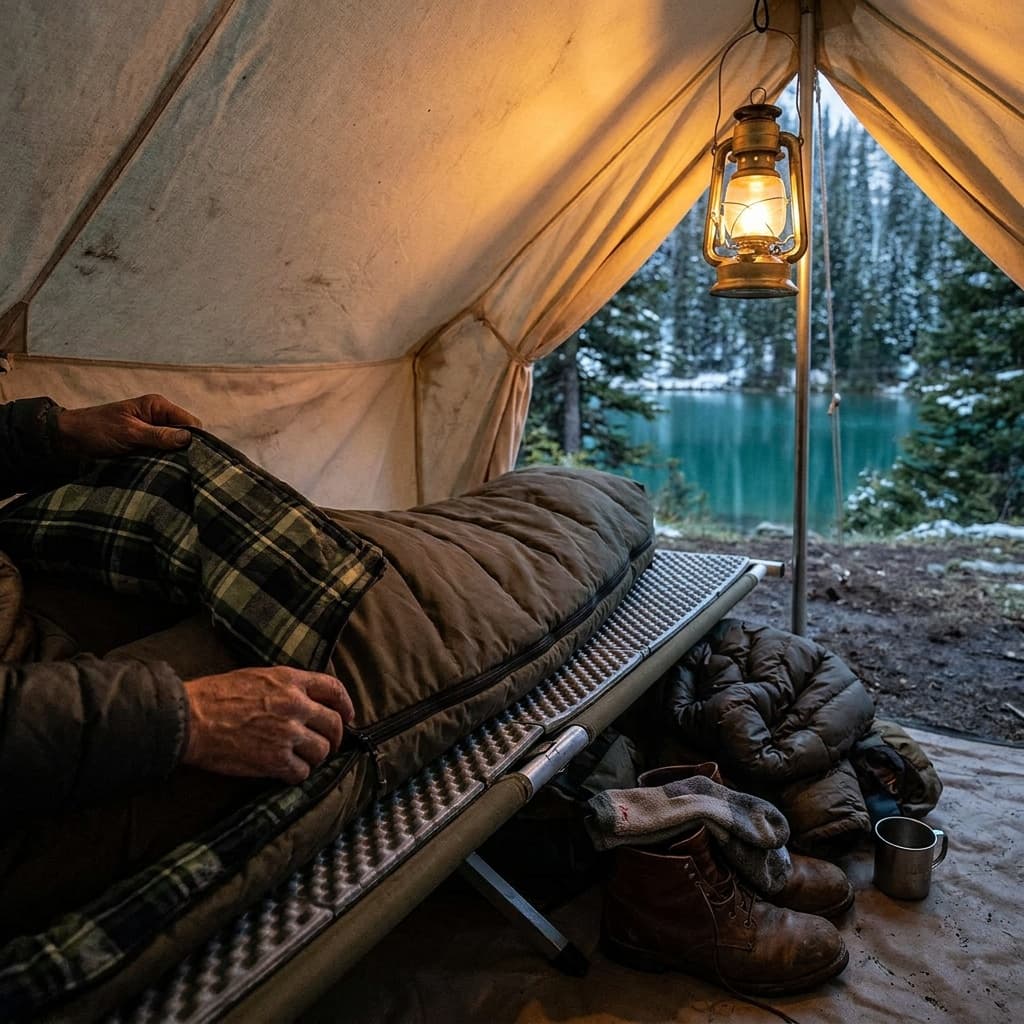
Best for: Car campers, hunters, and cabin trippers who want the warmest, most hotel-bed-like night of sleep possible and have the trunk space to carry it.
- Heavy insulation and draft-control features suit cold-weather car camping
- Large packed size (rolls full-width, not a stuff sack), not suitable for backpacking
- Temperature Rating
- -10°F (-23°C)
- Insulation
- TechLoft synthetic (two-layer offset)
- Shell
- 100% cotton canvas
- Liner
- 100% cotton flannel (plaid)
- Weight
- 11 lb 8 oz
- Dimensions (open)
- 80 x 38 in
About this pick
The ALPS OutdoorZ Redwood is a roomy, heavily insulated car-camping bag with a cotton canvas shell and flannel liner. Its -10F label comes from the manufacturer rather than an ISO comfort test, so buyers should leave temperature margin.
Strengths
- Heavy insulation and draft-control features suit cold-weather car camping
- Soft, weighted cotton flannel interior with virtually no cold spots
- Oversized 38-inch width, ideal for restless or side sleepers
Weaknesses
- Large packed size (rolls full-width, not a stuff sack), not suitable for backpacking
- Cotton absorbs moisture quickly and dries slowly; keep it dry
Kit Score breakdown
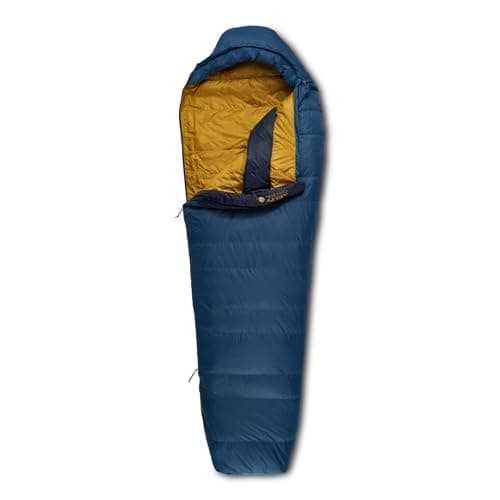
Best for: Campers and entry-level backpackers who want real down insulation and long-term durability without paying premium-bag prices.
- Genuine down insulation at a fraction of premium-bag pricing
- ISO Comfort sits at 31°F, so cold sleepers should size up in temperature rating
- Temperature Rating
- 20°F / ISO Comfort 31°F / ISO Limit 21°F
- Insulation
- 550-fill DriDown (water-treated)
- Shell
- Recycled 50D polyester taffeta
- Liner
- Recycled 20D nylon taffeta
- Weight (Regular)
- 2 lb 7 oz
- Packed Size (Regular)
- 8 x 13 in (10.7L)
About this pick
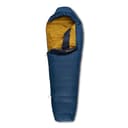
The Kelty Cosmic 20 combines 550-fill DriDown, trapezoidal baffles, and a draft collar in a packable three-season design. Its published ISO comfort rating is 31F for the regular bag, a more useful buying number than the 20F model name.
Strengths
- Genuine down insulation at a fraction of premium-bag pricing
- Durable 50D shell handles rougher treatment better than most budget bags
- Compact enough to double as a backpacking bag for lighter trips
Weaknesses
- ISO Comfort sits at 31°F, so cold sleepers should size up in temperature rating
- Recycled taffeta lining is not the softest against skin
Kit Score breakdown
COLEMAN
Coleman Brazos 20 Sleeping Bag
Best Budget
Kit Score 7.5/10
$58.99 Price checked Oct 23, 4:16 PM CDT
Best for: New campers, families buying multiple bags on a single budget, or anyone who camps a few nights a year and wants reliable warmth without a large upfront spend.
- Outstanding price per warm night for car camping or occasional use
- Heavy at 5.3 lb and difficult to repack into its stuff sack
- Temperature Rating
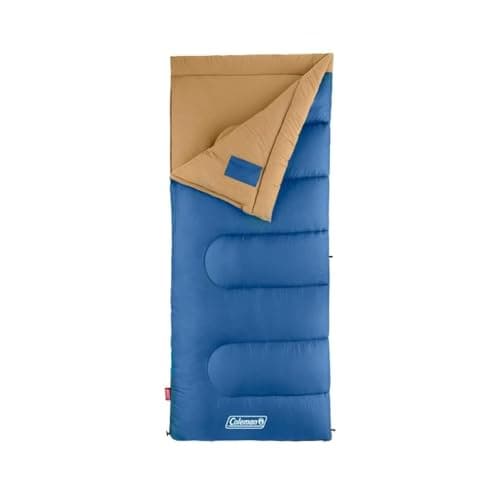
- 20°F manufacturer rating (not ISO comfort)
- Insulation
- ColeTherm synthetic (4 lb fill)
- Shell
- Stain-resistant polyester
- Liner
- Soft tricot
- Weight
- 5.3 lb (manufacturer listed)
- Dimensions
- 75 x 33 in, fits to 5'11"
About this pick
The Coleman Brazos is the go-to first sleeping bag for families and occasional campers. It delivers solid warmth, a comfortable tricot lining, and a no-snag zipper at a price that makes outfitting several people practical. Weight and packed size are the honest tradeoffs.
Strengths
- Outstanding price per warm night for car camping or occasional use
- Soft tricot liner feels noticeably better than typical budget nylon
- Machine washable, full-length zipper zips two bags together
Weaknesses
- Heavy at 5.3 lb and difficult to repack into its stuff sack
- No hood or draft collar, so drafts around the shoulders are noticeable in colder temps
Kit Score breakdown
Keep going
Complete loadoutCamp sleep systemFive coordinated pieces that solve shelter, insulation, cushioning, head support, and light for nights outside.Free tool: Sleeping-Bag Warmth
Researched, not hands-on tested
Updated Oct 16, 2026Our recommendations draw on manufacturer documentation, retailer listings, owner feedback, and comparisons with alternatives.
As an Amazon Associate I earn from qualifying purchases. We may earn a commission from links here, at no extra cost to you. How we research →