We may earn a commission from links on this page, at no extra cost to you.
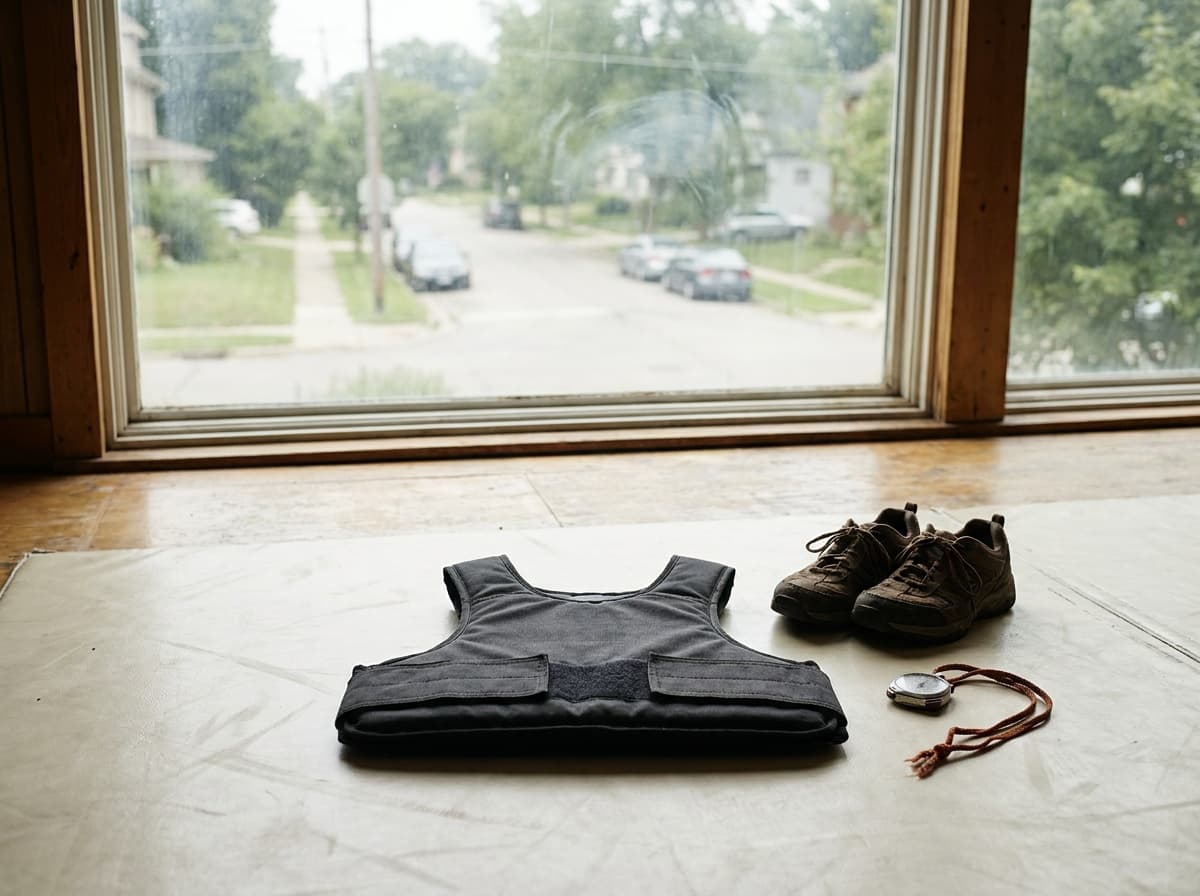
Hero image: AI-generated category illustration, not a tested product or an installation diagram.
Weighted vests have a marketing problem: they get sold as a shortcut to stronger bones, faster fat loss, and a more athletic body, all at once. The actual research is more interesting and more honest than the ads. Some benefits are well supported, a few are modest, and at least one popular claim just took a serious hit in a large 2024 clinical trial. Here is what the studies show, with each claim tied to a real source.
The numbers that actually matter
These figures come from peer-reviewed studies and primary research, not from product pages.
More calories and harder work for the same walk
The most consistent, least disputed benefit is metabolic. Adding load makes your body move more mass over the same distance, so you burn more energy. In a study commissioned by the American Council on Exercise and run at the University of New Mexico, walking in a vest equal to 15% of bodyweight raised calorie expenditure by roughly 12% compared with walking unloaded (ACE/University of New Mexico). The same research found that incline matters: on a 5–10% grade, even a 10% bodyweight vest produced a meaningful jump in metabolic cost, while on flat ground at an easy pace the effect was small.
The relationship is not perfectly linear, either. A 2024 analysis from the U.S. Army Research Institute of Environmental Medicine modeling the metabolic cost of vest walking found that energy expenditure rises in a non-linear way as load increases, so heavier loads can return more than a simple percentage would predict (Looney et al., 2024). The practical takeaway: if your goal is to make a walk count for more, a vest is a legitimate tool, and grade plus load matters more than load alone.
If you are new to this, build the habit before you build the load. Our guide to weighted vest walking for beginners covers how to start, and how much a weighted vest should weigh walks through the percentage targets.
A real cardiovascular load, especially as effort rises
The extra calories come from extra cardiovascular work, and that shows up in heart rate and oxygen uptake. In a controlled treadmill study of walking and running with and without a vest, researchers found that the vest meaningfully increased physiological stress: during running, heart rate rose by about 11 beats per minute and oxygen consumption climbed in both men and women, without changing the underlying gait pattern (Ferris et al., 2021, Ergonomics). The same study noted that at an easy walking pace on flat ground the demand barely moved, but it grew as gradient and speed increased.
That pattern is the useful headline for everyday training. A vest does not turn a stroll into a sprint, but it does let you reach a higher cardiovascular zone without going faster or running, which is exactly what many people with cranky knees are looking for. This is also where loaded-carry training overlaps with rucking. If you would rather carry the weight on your back than on your chest, the rucking specialists at Ruck Authority cover that side of the loaded-carry world in depth.
Balance, strength, and functional fitness in older adults
Beyond raw calorie burn, the older-adult research is where weighted vests look most promising for function. A 2026 mini-review in Frontiers in Public Health summarizing the evidence concluded that weighted vest training is an emerging technique shown to improve balance, muscle strength, physical fitness, and fall risk in older adults, with the load providing both a skeletal-strain stimulus and a proprioceptive one (Frontiers in Public Health, 2026). Several of the studies it reviews used vests around 5–10% of bodyweight in structured, supervised sessions rather than passive all-day wear.
This is an important distinction. The review notes that a wear-only home protocol (5% bodyweight, two hours a day, four days a week) did not produce gains in strength, function, or bone turnover, while programs that paired the vest with actual exercise (sit-to-stands, step-ups, walking) did show improvements in functional measures. In other words, the benefit tracks the activity, not the hours the vest spends on your shoulders.
| Use pattern | What the research supports |
|---|---|
| Vest plus structured exercise | Improved balance, strength, functional capacity |
| Vest plus jumping/impact loading | Hip bone preservation over multi-year programs |
| Vest worn passively all day | Little to no functional or bone-turnover benefit |
| Vest during dietary weight loss (no impact) | Did not protect bone density (2024 trial) |
Bone density: a genuinely mixed picture
Bone is the benefit most often promised and the one the evidence handles least cleanly. The optimistic case has real support. In a five-year study at Oregon State University, postmenopausal women who did a vest-plus-jumping program three times a week preserved hip bone mineral density while a non-exercising control group lost bone (Snow et al., 2000, Journal of Gerontology: Medical Sciences). That study is a pillar of the "vests build bone" argument, and it is legitimate. The catch is the program: it combined the vest with jumping and resistance moves, the high-impact loading bones actually respond to.
Then came the cold water. The Wake Forest INVEST in Bone Health trial, a 12-month randomized controlled trial that ran through April 2024, tested whether wearing a weighted vest during dietary weight loss could protect the bone that older adults typically lose when they slim down. Participants wore the vest an average of 7.1 hours a day, replacing roughly 78% of the weight they lost. The result: all groups, including weight-loss-only and resistance-training groups, lost hip bone density at a similar rate. The vest did not preserve bone (Atrium Health Wake Forest Baptist, 2025).
Put the two findings together and a coherent rule emerges. Bone responds to dynamic, impact-style loading, not to static added mass. A vest you jump and step and lunge in can help. A vest you simply wear while walking around the house, even for seven hours a day, does not appear to move bone density. If bone health is your specific goal, the load needs to come with impact.
Why weighted vests took off with women in midlife
If weighted vests feel suddenly everywhere, a large part of the surge is women in their 40s, 50s, and 60s, and the reason is bone. Estrogen decline through perimenopause and menopause accelerates bone loss, with women losing bone density fastest in the years around their final menstrual period. That makes any accessible, load-bearing habit attractive, and a vest layers skeletal loading onto walks women are already taking.
The trend has visible drivers. Menopause-focused clinicians and media figures, most prominently Dr. Mary Claire Haver, whose The Pause Life brand sells a popular weighted vest to its large midlife audience, have made vest walking a standard recommendation in menopause fitness conversations. The advice is not baseless: the strongest long-term bone study in this space, the five-year Oregon State program, was run specifically in postmenopausal women and found that vest-plus-jumping training preserved hip bone density while non-exercising controls lost it (Snow et al., 2000).
The evidence-based caveat belongs in the same breath, though. As the INVEST trial showed, wearing a vest passively did not protect bone, so the popular framing of the vest as a bone-density device on its own overstates what the research supports. What studies suggest is more specific: for midlife women, a vest is a legitimate way to raise the intensity of walking, support strength and balance work, and add skeletal loading, and it appears to help bone when it is paired with impact or resistance movement. Women with diagnosed osteoporosis or significant bone loss should involve a clinician before adding load, since starting weight and progression need individual tailoring.
For vest recommendations built around light starting loads and fine adjustment steps, the priorities that matter most for this group, see our guide to the best weighted vests for seniors and the sizing math in how much a weighted vest should weigh.
The honest limits: what a weighted vest will not do
A vest is a multiplier, not a magic object. Holding that frame keeps expectations realistic.
It will not protect bone by itself. As the INVEST trial showed, passive wear during weight loss did not preserve bone density (Atrium Health Wake Forest Baptist, 2025). The bone benefit in the literature comes from programs that add jumping or resistance, not from the vest alone.
It will not make an easy flat walk dramatically harder. Multiple studies, including the ACE/UNM research and the Ergonomics treadmill study, found small metabolic differences on flat ground at easy paces. The vest earns its keep when you add grade, speed, or duration (Ferris et al., 2021, Ergonomics).
It will not substitute for progressive load management. More weight adds joint and spine stress, and the metabolic return is not unlimited; some research found that piling on load past a point reduced the calorie-per-effort ratio as walkers adjusted their mechanics to cope (ACE/University of New Mexico). Starting light and progressing slowly is the whole game, which is why we keep loads conservative in how much a weighted vest should weigh.
If you have decided a vest fits your goals, our roundup of the best weighted vests covers fit, adjustability, and the load ranges that match the research above.
Frequently asked questions
Are weighted vests actually good for you?
For most healthy adults, yes, with a clear caveat. The strongest evidence supports a weighted vest as a way to raise the intensity of walking and low-impact movement, burning more calories and reaching a higher cardiovascular load for the same time on your feet. In older adults, vests used alongside structured exercise can improve balance, strength, and functional fitness. The benefit comes from the activity you pair the vest with, not from the vest sitting on your shoulders.
Does a weighted vest improve bone density?
Sometimes, but not on its own. A five-year Oregon State study found that a vest combined with jumping and resistance exercise preserved hip bone density in postmenopausal women. However, the 2024 Wake Forest INVEST trial found that simply wearing a vest during weight loss did not protect bone. Bone responds to dynamic, impact-style loading, so a vest only helps bone when it is paired with jumping or resistance work, not passive all-day wear.
How many extra calories does a weighted vest burn?
In ACE-commissioned research at the University of New Mexico, walking with a vest equal to 15% of bodyweight raised calorie expenditure by about 12% compared with walking unloaded. The effect is larger on an incline and smaller on flat ground at an easy pace, so the extra burn depends heavily on grade, speed, and how much load you carry.
Is it better to wear a weighted vest all day or only during exercise?
The research favors exercise. A wear-only home protocol of 5% bodyweight for two hours a day produced no measurable gains in strength, function, or bone turnover, while programs that combined the vest with actual movement did. All-day wear also keeps a static load on your spine and joints without the dynamic stimulus that drives adaptation. Use the vest during deliberate walking, hiking, or strength sessions rather than wearing it passively.
What is the purpose of a weighted vest?
A weighted vest exists to make bodyweight movement heavier without changing the movement. By adding load close to your center of mass, it raises the energy cost, cardiovascular demand, and skeletal loading of walking, hiking, calisthenics, and strength work while leaving your hands free and your gait intact. That makes it a progressive overload tool: the same walk gets harder as you add weight, rather than requiring you to go faster or farther.
Why are weighted vests good for women?
The benefits are the same for everyone, but two of them matter disproportionately for women in midlife. Bone loss accelerates around menopause as estrogen declines, and the best long-term vest research, a five-year Oregon State study in postmenopausal women, found that vest-plus-jumping training preserved hip bone density. Vests also raise the intensity of walking, the exercise many women already do consistently. The key qualifier: the bone benefit shows up when the vest is paired with impact or resistance movement, not passive wear, and anyone with diagnosed osteoporosis should get clinical guidance on starting load first.
Does walking with weights have benefits?
Yes, and how you carry the weight matters. A vest that distributes load across your torso raises calorie burn and cardiovascular demand while preserving your natural gait. Hand weights and ankle weights are the weaker option for walking: they change your arm swing and stride mechanics and concentrate stress at the shoulders, elbows, and knees. If your goal is a harder walk, a vest at 5–10% of bodyweight is the better-supported tool, and how much a weighted vest should weigh covers the exact numbers.
Browse more on fitness gear, or see how we research and rate the products and advice on this site.
Recommended gear
Our current top picks from the Best weighted vests 2026: 4 scored picks from $32 to $240 guide, if you are ready to buy.
MIR
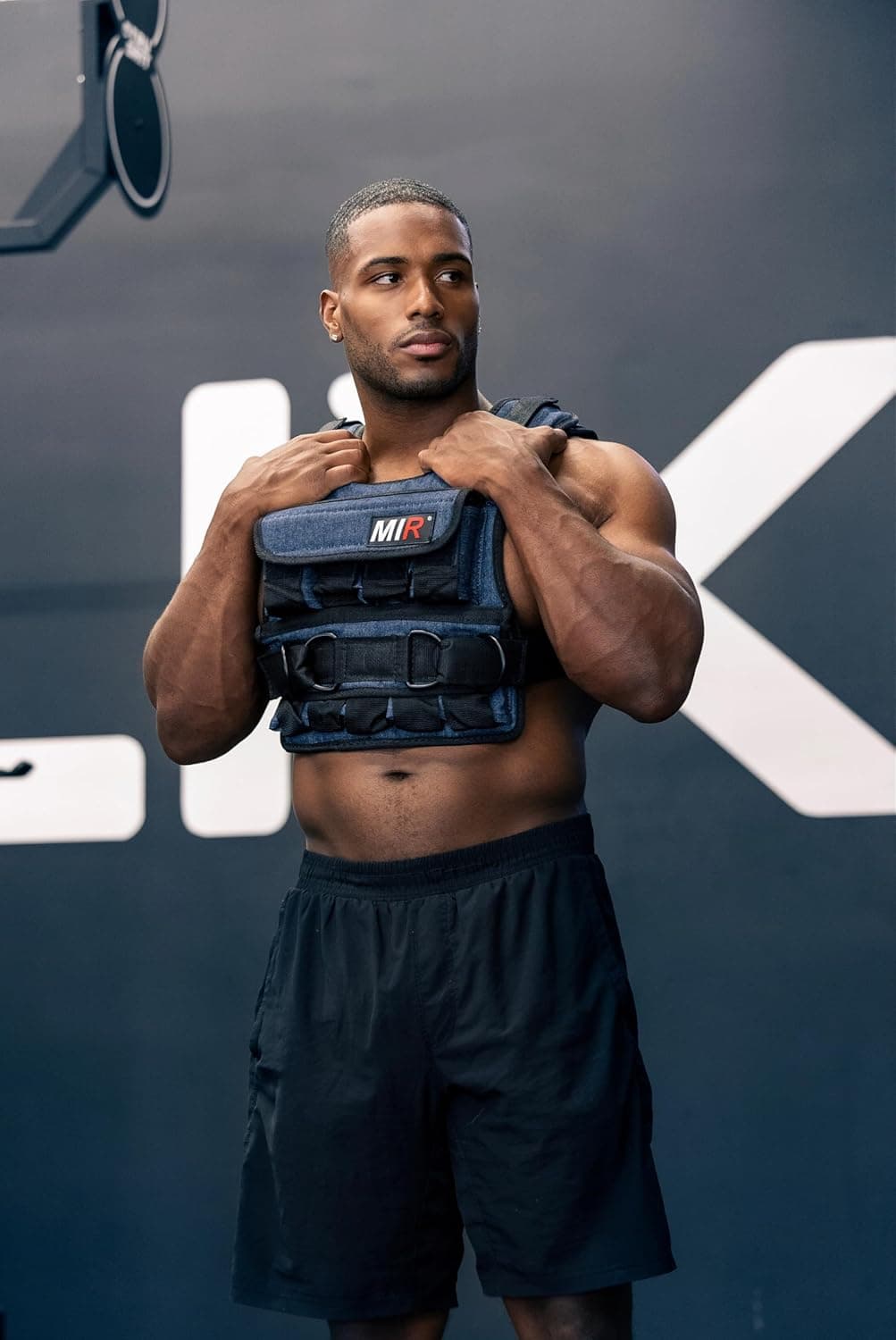
miR Air Flow Weighted Vest with Zipper Option
- Weight range
- 20 lb, 30 lb, 40 lb, 50 lb, 60 lb configurations
- Fill type
- Removable 3 lb iron bars
- Vest length
- Short style, approx. 11 in. from collarbone
- Adjustability
- Adjustable shoulder and bottom straps; zipper option available
- Washability
- Machine washable (remove weights first)
- Warranty
- Lifetime
The miR Air Flow uses a short, torso-hugging cut and removable solid iron plug weights to keep load close to center of gravity, which is the core reason it earns the top slot. The hybrid mesh-composite shell pulls moisture off skin and allows circulation, so heat buildup during long walks or outdoor conditioning sets stays manageable.
- Short vest profile rides high and tight, preventing the downward shift and shoulder dig common in longer designs during calisthenics and loaded walks
- Removable 3 lb bars allow repeatable load changes without replacing the vest
- Bulkier silhouette than compression-style or ultra-thin vests, which can limit range of motion in overhead pressing movements
Best for
Walkers and conditioning athletes who want easy in-session weight changes, lasting build quality, and a vest that stays put without shoulder padding on long efforts.
ZELUS
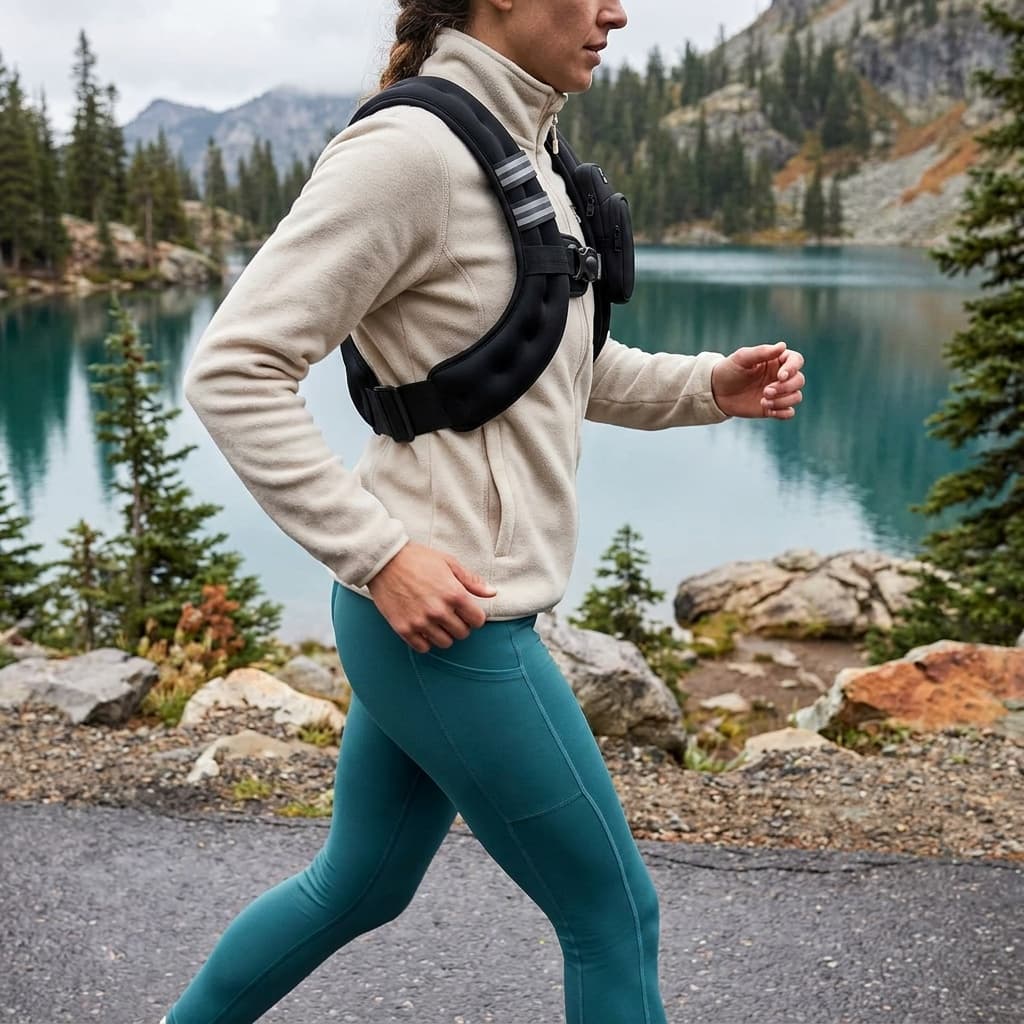
ZELUS Weighted Vest with Reflective Stripe
- Available weights
- 6 lb, 8 lb, 12 lb, 16 lb, 20 lb, 25 lb, 30 lb (fixed per unit)
- Fill type
- Iron-sand sewn into vest panels
- Shell material
- Neoprene rubber with double-stitching
- Chest fit range
- 31.5 in. to 47 in.
- Visibility
- 360-degree reflective stripes (front, back, sides)
- Storage
- Back mesh pocket
The ZELUS iron-sand vest earns a strong owner rating from thousands of verified Amazon buyers by doing the core job well: evenly distributed weight, a soft neoprene yoke, and a snug buckle-and-elastic closure that holds the vest flat against the torso. The fixed-weight format keeps the price low and keeps the weight from shifting.
- Iron-sand panels keep weight flush against the body rather than in pockets, so the load stays predictably still during walking, jogging, and bodyweight circuits
- 360-degree reflective striping adds meaningful safety for dawn or dusk walking without adding bulk
- Fixed weight per unit means adding load requires buying a heavier vest rather than inserting weights, which raises long-term cost for progressive training
Best for
Walkers, hikers, and home-gym users who want a no-fuss, comfortable vest at a low entry price and do not need to change weight during a session.
HYPERWEAR
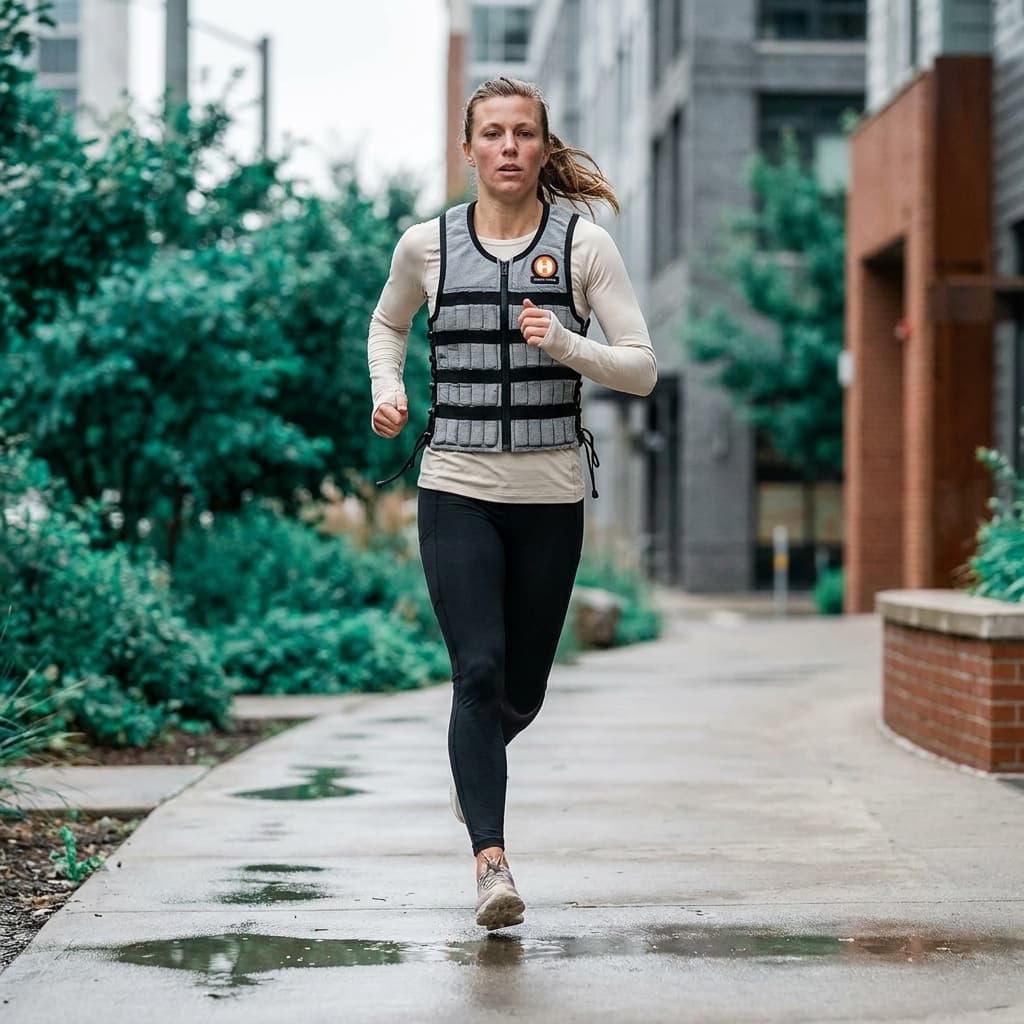
Hyperwear Hyper Vest PRO Adjustable Weighted Vest
- Weight range
- Up to 20 lb (S), 25 lb (M), 30 lb (L)
- Fill type
- No-bounce steel micro-weights (removable)
- Shell material
- Xyflex stretch compression fabric
- Closure
- Zipper front, side lace-up for compression tuning
- Sizing
- Small, Medium, Large, X-Large, XX-Large (unisex)
- Washability
- Machine washable
The Hyper Vest PRO distributes load through dozens of ultra-thin steel weight bars embedded across the torso, which spreads force so evenly that most wearers describe the sensation as simply feeling heavier rather than wearing a vest. The patented Xyflex stretch fabric compresses to the body's contours, which is why bounce is effectively zero and range of motion is uncompromised.
- Ultra-thin micro-weight distribution across the full torso eliminates shoulder hot spots and prevents the lopsided loading common in pocket-based designs
- Side lace-up system provides a body-specific compression fit that eliminates bounce even during running, pull-ups, and plyometrics
- Adding or removing individual micro-weights to reach a precise target weight requires counting and time; the adjustment system rewards patience
Best for
Serious walkers, runners, and calisthenics athletes who prioritize a low-profile, no-bounce fit over everything else and want a vest that doubles as osteoporosis-prevention exercise equipment.
See all picks in Best weighted vests 2026: 4 scored picks from $32 to $240
Make the next decision
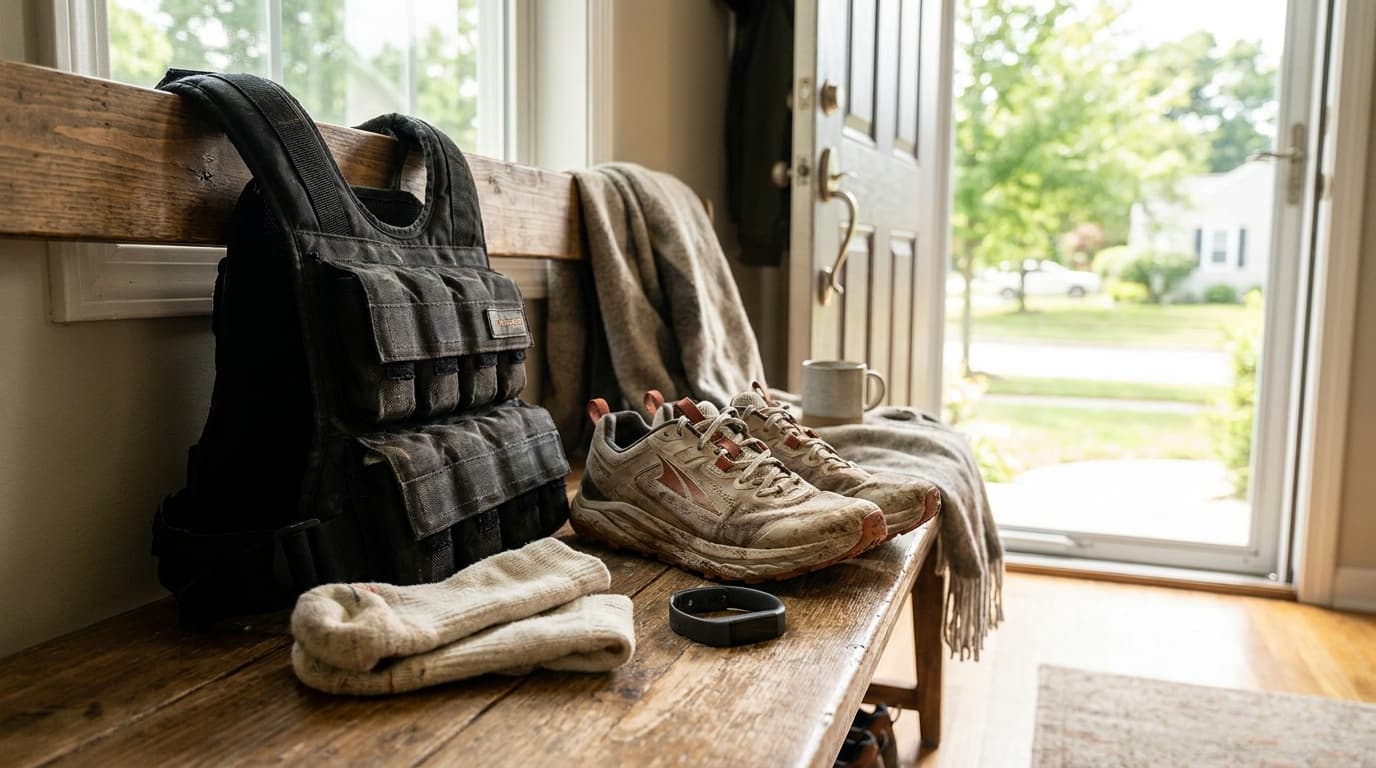
Complete fitness loadout
Weighted-vest starter kit
A beginner setup that pairs an adjustable vest with shoes, socks, and tracking for a repeatable walking routine.
Build the complete kitRelated guides
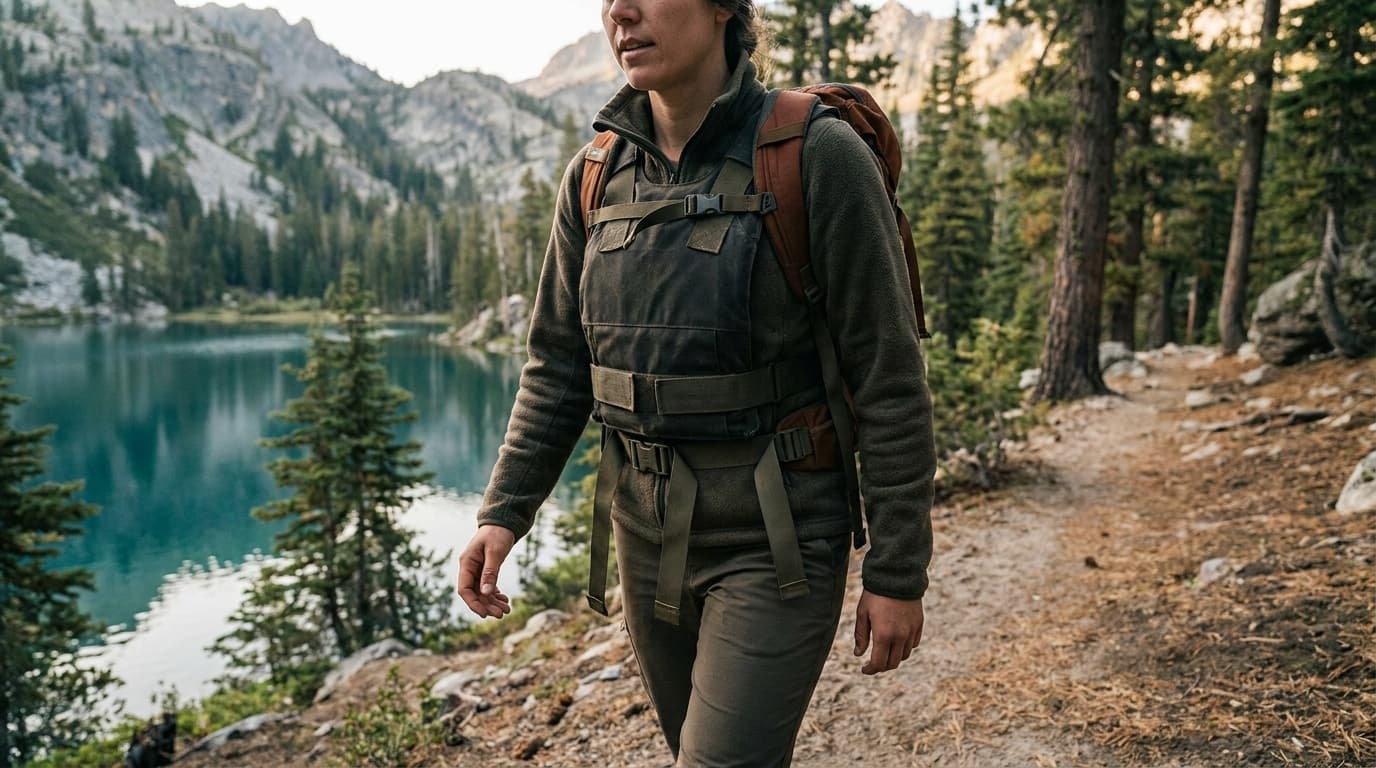
Buying guide
Best weighted vests 2026: 4 scored picks from $32 to $240
The miR Air Flow (8.8/10) tops 4 researched picks, from a $32 CAP starter to the $240 Hyper Vest PRO. The right vest for walking, calisthenics, or conditioning.
Read guide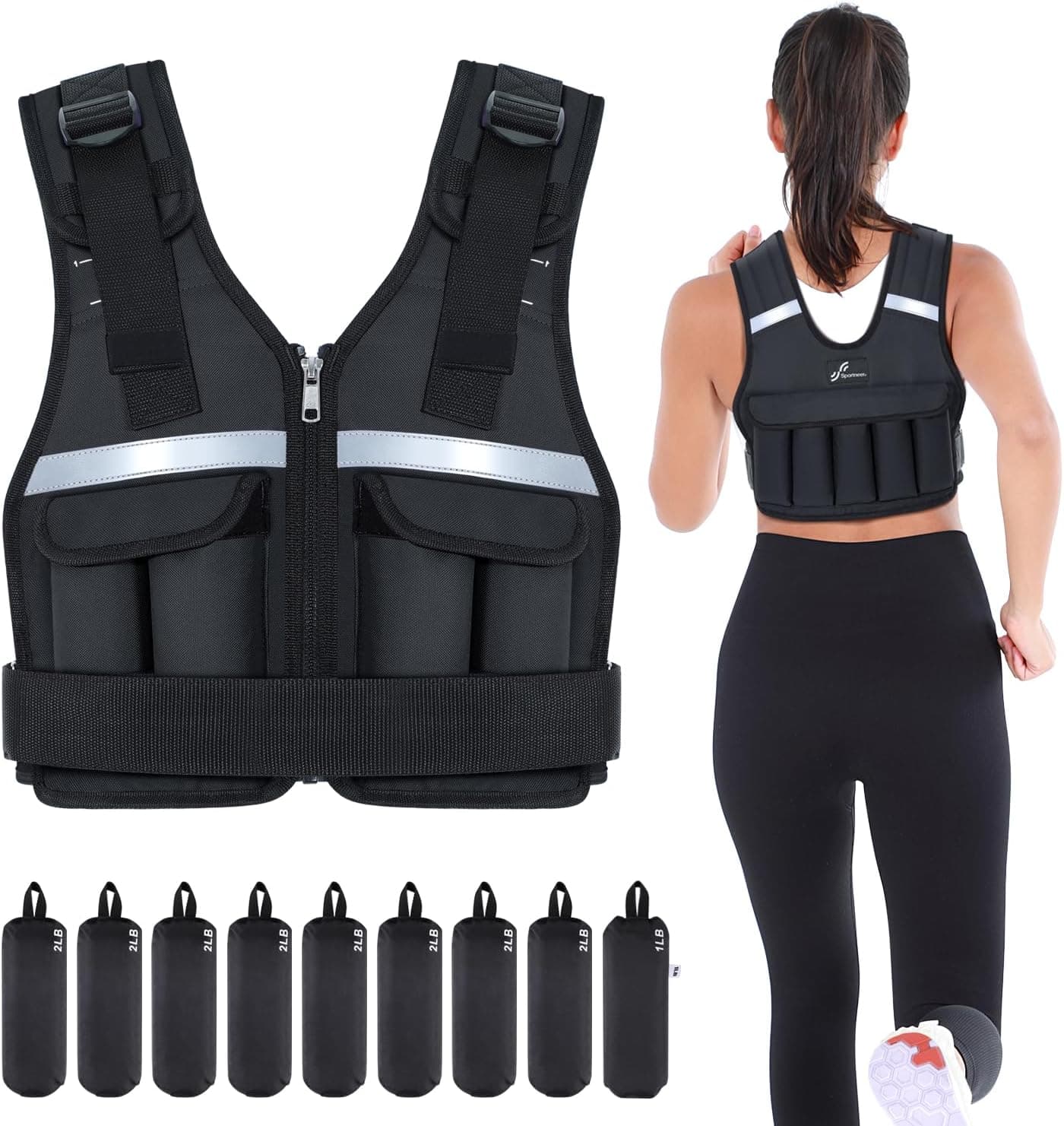
Buying guide
Best weighted vests for seniors in 2026
The best weighted vests for seniors and older adults, chosen for light starting weights, fine adjustability, easy on and off, and a low-profile, stable fit that supports balance and bone density.
Read guide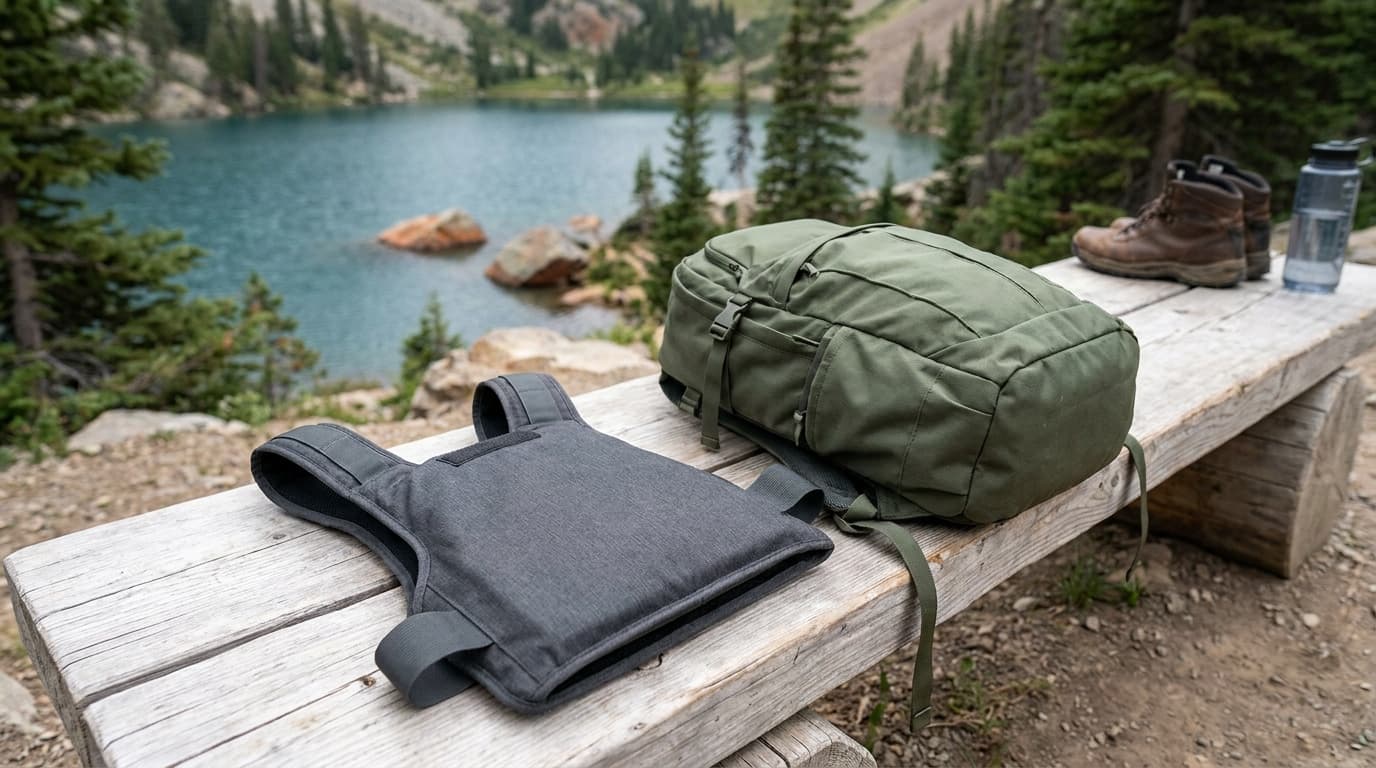
Comparison
Weighted vest vs rucking: which is better for you?
Vest or ruck? The honest split: vests load your torso evenly for joint-friendly even-load training, rucking builds posterior-chain and carry strength. Here is how to choose.
Read guide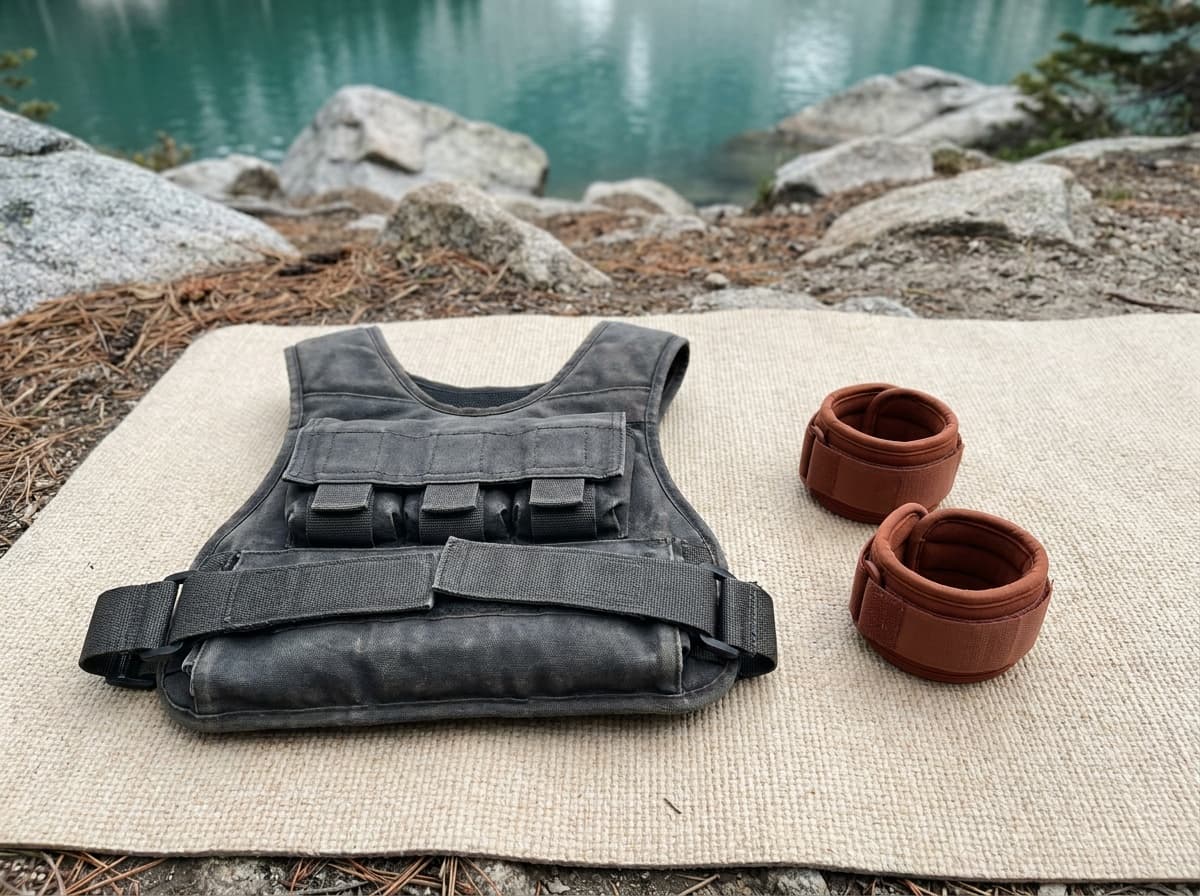
Comparison
Weighted vest vs ankle weights: the vest wins for walking
For walking, a weighted vest is safer and more effective. Ankle weights alter gait and load joints, so PTs save them for controlled strength work. Here is why.
Read guideResearch-based guide
Updated Jul 7, 2026Our recommendations draw on manufacturer documentation, retailer listings, owner feedback, and comparisons with alternatives.
As an Amazon Associate I earn from qualifying purchases. We may earn a commission from links here, at no extra cost to you. How we research →