We may earn a commission from links on this page, at no extra cost to you.
For older adults, the right weighted vest is not the heaviest or the most feature-packed. It is the one that starts light, adjusts in small steps, goes on without a fight, and sits flush against the body so it never throws off your balance. Those four things matter far more at 70 than at 30, and they are exactly what most "best weighted vest" lists ignore. This guide picks three vests around senior-specific priorities: a low starting weight (2 to 5 lb), fine adjustability, easy on and off for limited shoulder mobility, and a stable, low-profile fit that supports walking, balance, and bone density.
Our quick picks
How we picked
Every pick here is built from aggregated owner reviews and manufacturer specifications, scored through our Kit Score. For older adults we weighted four things above all else: a light starting weight, fine adjustment steps, easy on and off for limited shoulder mobility, and a low-profile fit that stays stable enough to protect balance.
Our picks
Best overall for seniors
BEST FOR SENIORS
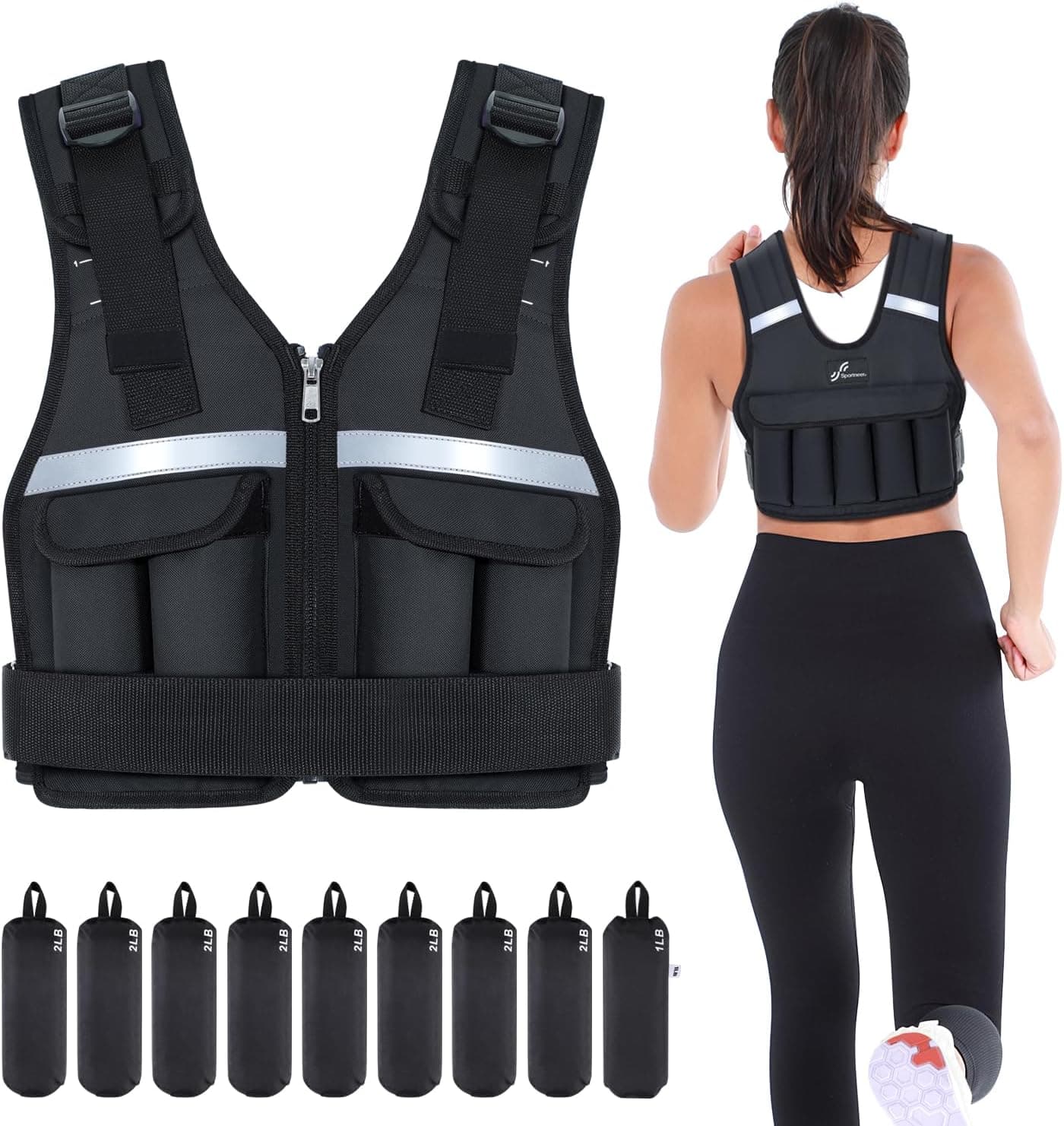
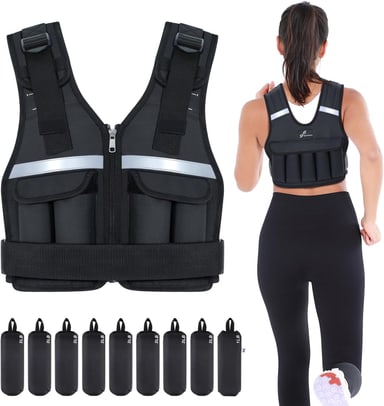
Sportneer Adjustable Weighted Vest 2 – 18 lb
Best for: Walkers and beginners who want true progressive overload from 2 lb to 18 lb, a machine-washable neoprene build, and front-zip convenience without committing to a premium price.
Kit Score 7.4/10 · Check current price
- Nine distinct load settings starting from 2 lb give true beginner-friendly progressive overload at a budget price
- Balanced front and back pocket layout (4 front, 5 back) keeps weight distribution even and reduces lower back fatigue on walks
- 18 lb ceiling means most users will outgrow it within 6 to 12 months of consistent progressive training
The Sportneer is our top pick for older adults because it solves the single biggest problem with weighted vests for this group: most start far too heavy. This one starts at 2 lb and steps up through nine settings (2, 4, 6, 8, 10, 12, 14, 16, 18 lb), with a 1 lb fine-tune pack on top, so you can begin barely loaded and add weight in small, manageable jumps. That kind of granularity lets you stay at 2 to 5% of body weight for as long as you need before nudging it higher.
The front zip closure is a real advantage if shoulder mobility is limited: there is no pulling a heavy vest over your head, and the double shoulder and waist lock straps let you tune the fit so it sits flush rather than swinging. Iron-sand pouches sit in four front and five back pockets, which keeps the load balanced front to back and reduces lower-back fatigue on a walk. Reflective strips are a practical bonus for early-morning or evening routes, and the neoprene shell is machine washable. The main caveats are honest ones: neoprene holds heat, so a thin base layer helps in warm weather, and the 18 lb ceiling is generous for senior use but would limit a younger strength trainee.
At $50 to $80, it is a fair price for nine genuine load steps, easy entry, and a balanced fit.
Best for: Older adults who want to start very light, adjust in small steps, and get the vest on and off easily without overhead movement.
Best budget
BEST BUDGET
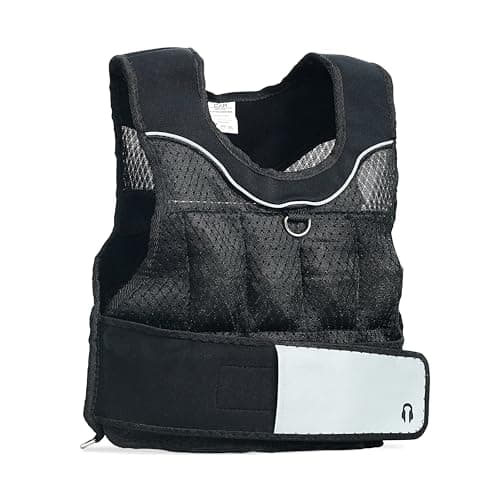
CAP 20 LB Adjustable Weighted Vest
Best for: Beginners and walkers who want an affordable, incrementally adjustable vest for daily walking and cardio without committing to a mid-range or premium price.
Kit Score 7.2/10 · Check current price
- Twenty 1 lb removable bags allow precise, gradual load progression, which is ideal for new users following a percent-of-bodyweight build protocol
- Breathable mesh shell keeps the vest cooler than solid neoprene options, which owners flag as a meaningful comfort advantage during aerobic work
- 1 lb sand-shot bags can be fiddly to load and reposition, and the pockets are described by some owners as thinner than those on more expensive options
If cost is the deciding factor, the CAP vest delivers the most important senior-friendly feature, fine adjustability, for around $32. It holds twenty 1 lb removable sand bags, so you can start with just one or two pounds in the vest and add a single pound whenever you are ready. For a cautious build, that 1 lb step is hard to beat, and it costs a fraction of the alternatives.
The breathable mesh shell runs cooler than solid neoprene, which is a genuine comfort win on a longer walk, and neoprene shoulder padding softens the contact points. Adjustable clips and a waist belt let you cinch it close so it does not shift, and reflective stripes plus a small phone pocket add everyday utility. Be aware of the trade-offs: the 1 lb bags can be fiddly to load and reposition, the pockets are thinner than pricier vests, and at heavier loads owners note some bounce, so keep this one in the lighter, walking-focused range where seniors will actually use it.
Best for: Budget-minded older adults who want to start at 1 lb and progress one pound at a time without spending much.
Best premium
BEST PREMIUM
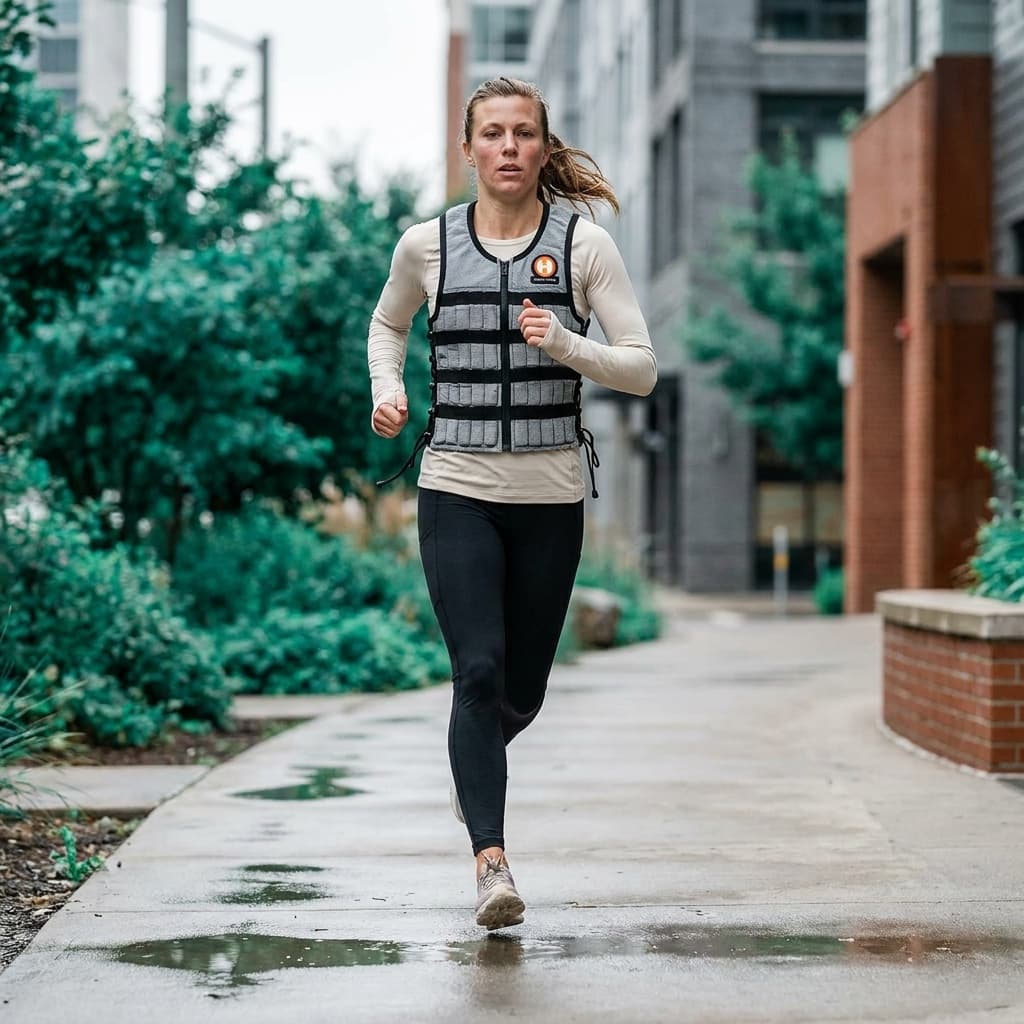
Hyperwear Hyper Vest PRO Adjustable Weighted Vest
Best for: Serious walkers, runners, and calisthenics athletes who prioritize a low-profile, no-bounce fit over everything else and want a vest that doubles as osteoporosis-prevention exercise equipment.
Kit Score 8.9/10 · Check current price
- Ultra-thin micro-weight distribution across the full torso eliminates shoulder hot spots and prevents the lopsided loading common in pocket-based designs
- Side lace-up system provides a body-specific compression fit that eliminates bounce even during running, pull-ups, and plyometrics
- Adding or removing individual micro-weights to reach a precise target weight requires counting and time; the adjustment system rewards patience
When a bad back, stiff shoulders, or balance concerns make ordinary vests a non-starter, the Hyper Vest PRO is worth the money. Instead of bulky pockets, it spreads dozens of ultra-thin steel micro-weights across a Xyflex stretch compression fabric that hugs the torso. The result is the thinnest, lowest-profile fit in the category and effectively zero bounce, which is exactly what you want when stability and not jostling your spine are the priorities.
That low profile also makes it the easiest to wear comfortably for a long stretch: it feels less like strapping on a vest and more like simply feeling heavier, with no shoulder hot spots or lopsided loading. A side lace-up system lets you dial in a body-specific compression fit, and the front zipper keeps on and off straightforward. It is widely cited as a credible tool for osteoporosis-prevention walking programs, which is often the whole reason a senior is shopping in the first place. The downsides are price ($240 to $330) and the patience required to count micro-weights to a precise target. If profile and comfort matter more than fast adjustment, it is the best vest here.
Best for: Older adults with back or shoulder issues, or a bone-density goal, who want the thinnest, most stable, easiest-to-wear fit and will pay for it.
How heavy should a senior go?
Start lighter than you think. A sensible opening load for most older adults is 2 to 5% of body weight, which for a 150 lb person is roughly 3 to 7.5 lb. That is well below the 5 to 10% range commonly suggested for younger, healthy adults, and the lower end exists for good reason: the extra load increases the force going through your hips, knees, and spine, and balance demands rise too.
Build slowly. Add weight in two-week blocks at the earliest, not week over week, and only after the current load feels genuinely easy on a full walk. Many seniors get real bone-density and strength benefit staying in the single digits and never need to reach a vest's maximum. For more on dialing in the number, see our guide on how much a weighted vest should weigh, and if you are just getting going, weighted vest walking for beginners walks through a gentle starting routine. Anyone with osteoporosis, joint replacements, or balance disorders should clear a vest with their physician first; our overview of whether weighted vests are safe covers who should be cautious.
The menopause vest boom: why women 45+ are driving this category
A large share of the people shopping this category are not "seniors" in the traditional sense. They are women in their 40s, 50s, and 60s who came to weighted vests through the menopause fitness conversation, where vest walking has become a standard recommendation for supporting bone during the years when estrogen decline accelerates bone loss.
The most visible driver is Dr. Mary Claire Haver, the menopause-focused physician behind The Pause Life brand, which sells its own popular weighted vest to a large midlife audience. The underlying idea has genuine research behind it: the best-known long-term study in this space followed postmenopausal women through a multi-year program of weighted vest walking plus jumping exercise and found it helped preserve hip bone density. The commonly cited caveat is just as important: a 2024 clinical trial found that passively wearing a vest, without exercise, did not protect bone. Studies suggest the benefit comes from pairing the load with movement, which is exactly what vest walking does. The full evidence picture is in our guide to weighted vest benefits.
For buyers who arrived here from that conversation, the shopping criteria are identical to the senior priorities this guide is built on: a light starting load (2 to 5% of body weight), fine adjustment steps, and a snug, no-bounce fit. All three picks above meet them, and an adjustable vest offers something a fixed-weight branded vest cannot: room to progress as you get stronger, one small step at a time.
Frequently asked questions
Are weighted vests safe for seniors?
For most healthy older adults, light weighted walking is generally considered safe and is often recommended as a stimulus for bone density and lower-body strength. The keys are starting light (2 to 5% of body weight), building slowly, and choosing a vest that sits flush so it does not affect balance. Anyone with osteoporosis, recent joint replacement, a history of falls, or a balance disorder should get a physician's go-ahead first, since the added load changes how force travels through the body. See our full take on whether weighted vests are safe.
How much weight should an older adult start with?
Begin at roughly 2 to 5% of body weight, which is lighter than the 5 to 10% often suggested for younger adults. For a 150 lb person that is about 3 to 7.5 lb. This is why a vest that starts at 2 lb and adjusts in small steps, like the Sportneer or the 1 lb increments on the CAP, matters so much for this group. Build up only in two-week blocks once the current load feels easy.
What is the easiest weighted vest to put on with limited shoulder mobility?
Look for a front zip or front closure so you are not pulling a loaded vest over your head. The Sportneer uses a front zip with adjustable shoulder and waist straps, and the Hyperwear Hyper Vest PRO combines a front zipper with a side lace-up, so both go on without overhead movement. A vest you can put on without strain is a vest you will actually keep using.
Do weighted vests help with bone density in older adults?
Weight-bearing exercise under load is one of the recognized ways to support bone density, and a weighted vest is a simple way to add that load to walking without changing how you move. The benefit comes from consistency at a safe weight, not from going heavy. A low-profile, no-bounce vest like the Hyper Vest PRO is frequently used in osteoporosis-prevention walking programs for exactly this reason. Talk to your doctor before starting if you have diagnosed osteoporosis.
What is The Pause Life weighted vest, and do I need that specific one?
The Pause Life is the menopause-focused health brand founded by Dr. Mary Claire Haver, and its weighted vest became popular with women in midlife as vest walking spread through the menopause fitness conversation. There is nothing unique about any single brand's vest from a physiology standpoint: the benefit comes from the load, the fit, and the walking, not the label. What matters when comparing options is a light starting weight, small adjustment steps, and a snug no-bounce fit, which is exactly what the adjustable picks in this guide are chosen for, often at a lower price than branded fixed-weight vests. Whichever vest you choose, start around 2 to 5% of body weight and progress slowly.
A weighted vest can be one of the simplest, safest ways for an older adult to build strength and protect bone density, as long as it starts light, adjusts in small steps, and fits without throwing off balance. For the full field across every use case and budget, see our pillar guide to the best weighted vests, or browse the fitness hub for more on walking and conditioning gear.
Make the next decision
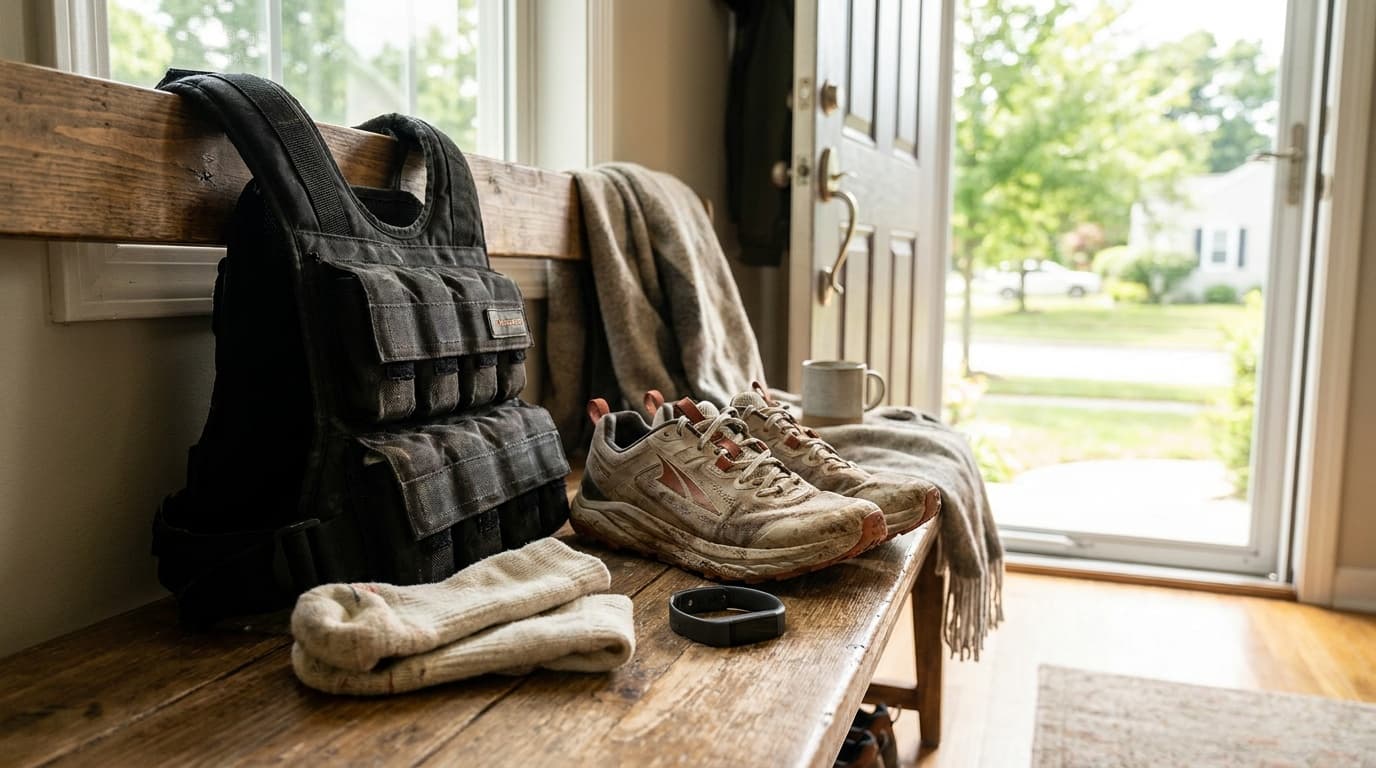
Complete fitness loadout
Weighted-vest starter kit
A beginner setup that pairs an adjustable vest with shoes, socks, and tracking for a repeatable walking routine.
Build the complete kitRelated guides
Field guide
Weighted vest benefits: what the research actually shows
A research-backed look at weighted vest benefits: extra calorie burn, balance and bone-loading effects, cardiovascular load, and the honest limits the studies reveal.
Read guide
Field guide
Are weighted vests safe? Mistakes to avoid
Weighted vests are safe for most healthy adults used correctly. The real risk is in the mistakes: starting too heavy, poor fit, and ignoring posture. Here is what to avoid.
Read guide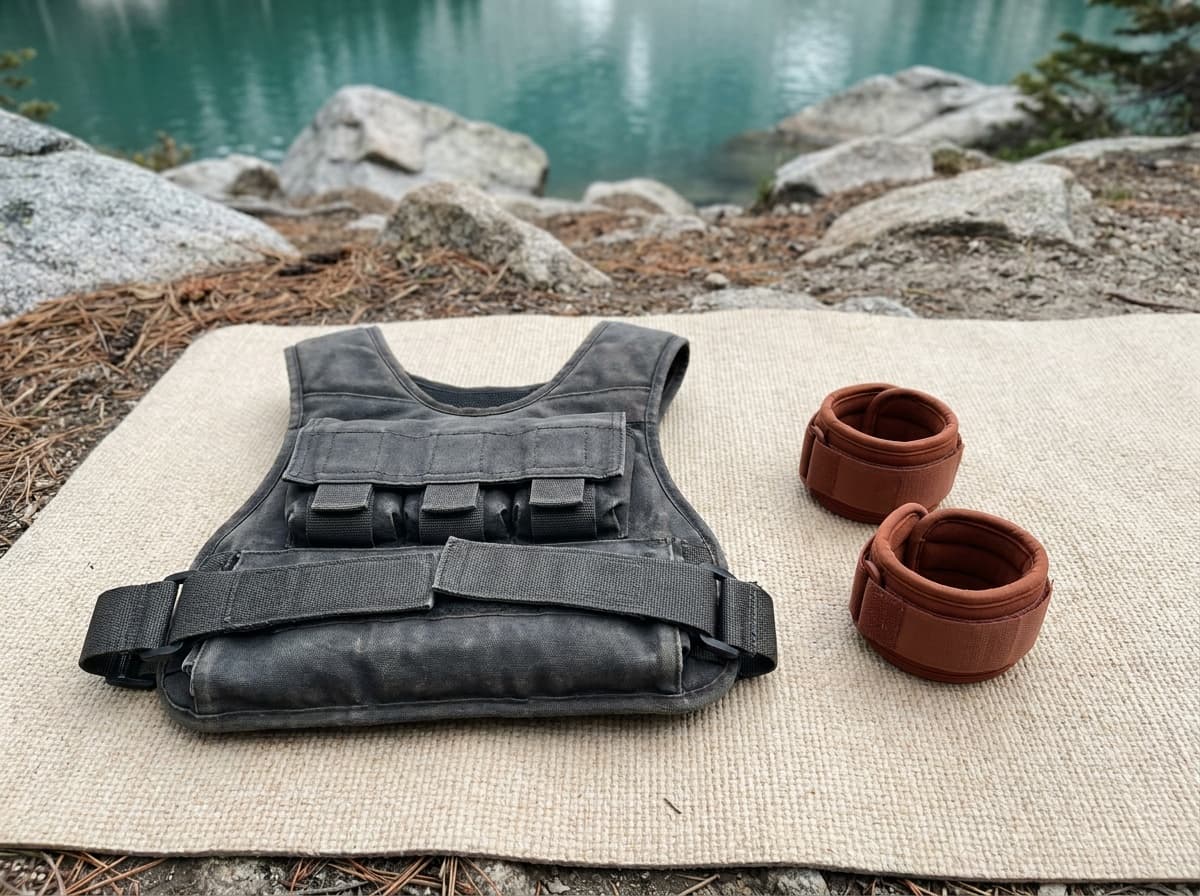
Comparison
Weighted vest vs ankle weights: the vest wins for walking
For walking, a weighted vest is safer and more effective. Ankle weights alter gait and load joints, so PTs save them for controlled strength work. Here is why.
Read guide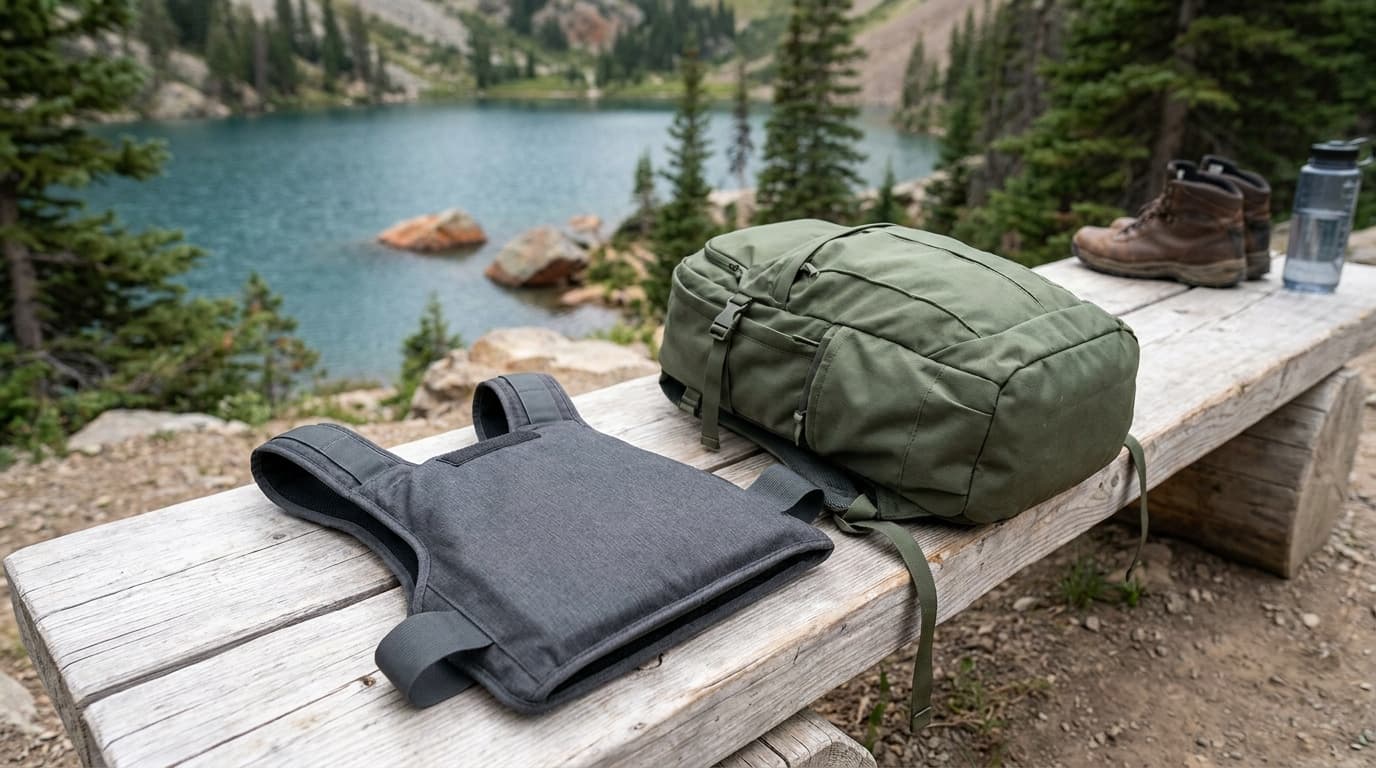
Comparison
Weighted vest vs rucking: which is better for you?
Vest or ruck? The honest split: vests load your torso evenly for joint-friendly even-load training, rucking builds posterior-chain and carry strength. Here is how to choose.
Read guideResearch-based roundup
3 products comparedUpdated Jul 7, 2026Our recommendations draw on manufacturer documentation, retailer listings, owner feedback, and comparisons with alternatives.
As an Amazon Associate I earn from qualifying purchases. We may earn a commission from links here, at no extra cost to you. How we research →