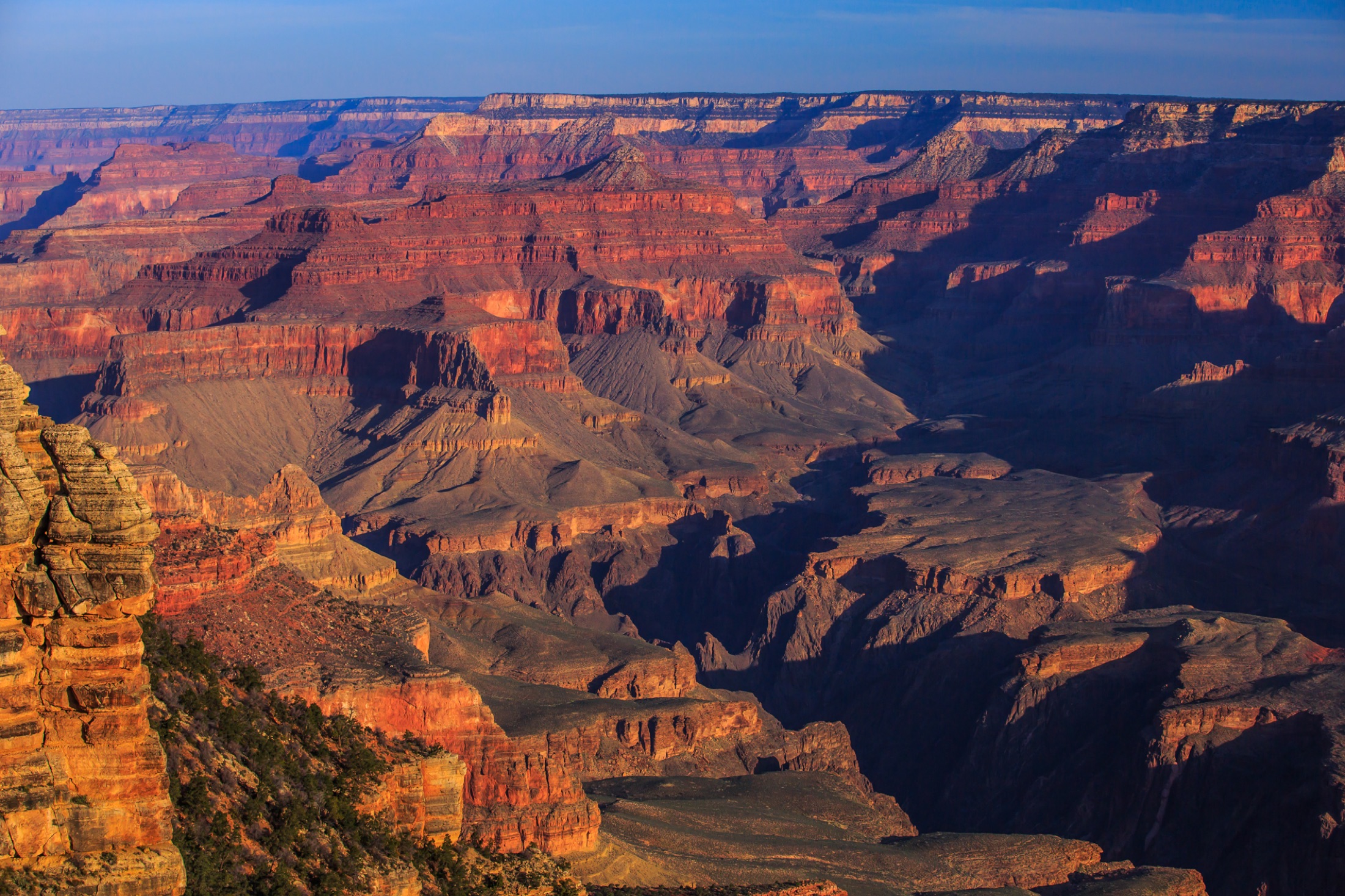
When to go
Conditions, crowds, and what each season asks you to pack.
Spring
50-70F
South Rim highs 50-70F, cool nights near freezing early on; inner canyon much warmer
Pack Layers for a big rim-to-river temperature swing and a warm midlayer for cold mornings
Summer
80-85F
South Rim highs 80-85F; inner canyon and Phantom Ranch routinely top 100-110F
Pack Sun protection, electrolytes, and far more water than you think for any descent below the rim
Fall
60-75F
South Rim highs 60-75F cooling through the season, crisp clear nights
Pack A warm layer for evening viewpoints and a light shell for passing storms
Winter
40-45F
South Rim highs 40-45F, snow and ice on rim trails; North Rim closed
Pack Traction devices for icy rim paths plus insulation for sub-freezing mornings
Crowds by month, from NPS visit counts
Busiest: July. An average July brings about 518,000 recreation visits to Grand Canyon, roughly 16,700 a day. Peak crowds run April to October.
Quietest: January. About 167,000 visits, 32% of the busiest month.
- Low
- Moderate
- High
- Peak
Bar height is each month's average visits compared with the busiest month. Low is under 25% of that peak, Moderate 25 to 49%, High 50 to 74%, Peak 75% and up.
See the monthly numbers
| Month | Avg visits | Share of year | Crowds |
|---|---|---|---|
| January | 167,357 | 4% | Moderate |
| February | 183,350 | 4% | Moderate |
| March | 359,762 | 8% | High |
| April | 465,560 | 10% | Peak |
| May | 517,116 | 11% | Peak |
| June | 485,942 | 10% | Peak |
| July | 518,381 | 11% | Peak |
| August | 484,838 | 10% | Peak |
| September | 436,068 | 9% | Peak |
| October | 464,701 | 10% | Peak |
| November | 333,544 | 7% | High |
| December | 311,970 | 7% | High |
Source: NPS Visitor Use Statistics, monthly recreation visits, averaged over 2023–2025. October and November 2025 are left out of the averages because of the federal government shutdown. Visits count entries, not unique people. NPS monthly report for Grand Canyon · Crowd calendar for all 63 parks
Grand Canyon weather by month
Average daily highs and lows, plus monthly precipitation, from NOAA's 1991-2020 climate normals for two parts of the park that behave very differently. Shaded months are the park's best season. Tap a month to build a pack list for it.
The South Rim, Grand Canyon Village6,785 ft
| Month | Jan | Feb | Mar | Apr | May | Jun | Jul | Aug | Sep | Oct | Nov | Dec |
|---|---|---|---|---|---|---|---|---|---|---|---|---|
| High (F) | 44 | 46 | 54 | 61 | 70 | 82 | 85 | 82 | 76 | 65 | 53 | 43 |
| Low (F) | 19 | 21 | 25 | 29 | 36 | 43 | 50 | 50 | 44 | 33 | 25 | 18 |
| Precip (in) | 1.8 | 1.2 | 1.9 | 0.6 | 0.4 | 0.2 | 2.3 | 2.2 | 1.5 | 1.2 | 0.8 | 1.3 |
| Snow (in) | 12.9 | 7.8 | 8.1 | 2.8 | 0.1 | 0.0 | 0.0 | 0.0 | 0.0 | 1.1 | 2.2 | 8.0 |
Station GRAND CANYON NP 2 (USC00023596), 6,785 ft, about 2 miles from Grand Canyon Visitor Center.
Phantom Ranch, at the Colorado River2,530 ft
| Month | Jan | Feb | Mar | Apr | May | Jun | Jul | Aug | Sep | Oct | Nov | Dec |
|---|---|---|---|---|---|---|---|---|---|---|---|---|
| High (F) | 57 | 63 | 73 | 81 | 91 | 102 | 104 | 101 | 95 | 82 | 68 | 56 |
| Low (F) | 35 | 40 | 46 | 52 | 61 | 70 | 75 | 72 | 66 | 55 | 44 | 36 |
| Precip (in) | 1.0 | 1.0 | 0.9 | 0.4 | 0.4 | 0.2 | 0.9 | 1.5 | 0.9 | 1.0 | 0.6 | 0.8 |
Station PHANTOM RCH (USC00026471), 2,530 ft, under a mile from Phantom Ranch.
Source: NOAA NCEI U.S. Climate Normals, 1991-2020 monthly averages. Averages describe a typical year, not a forecast; check current conditions and alerts before you go. Precipitation includes the water in melted snow.
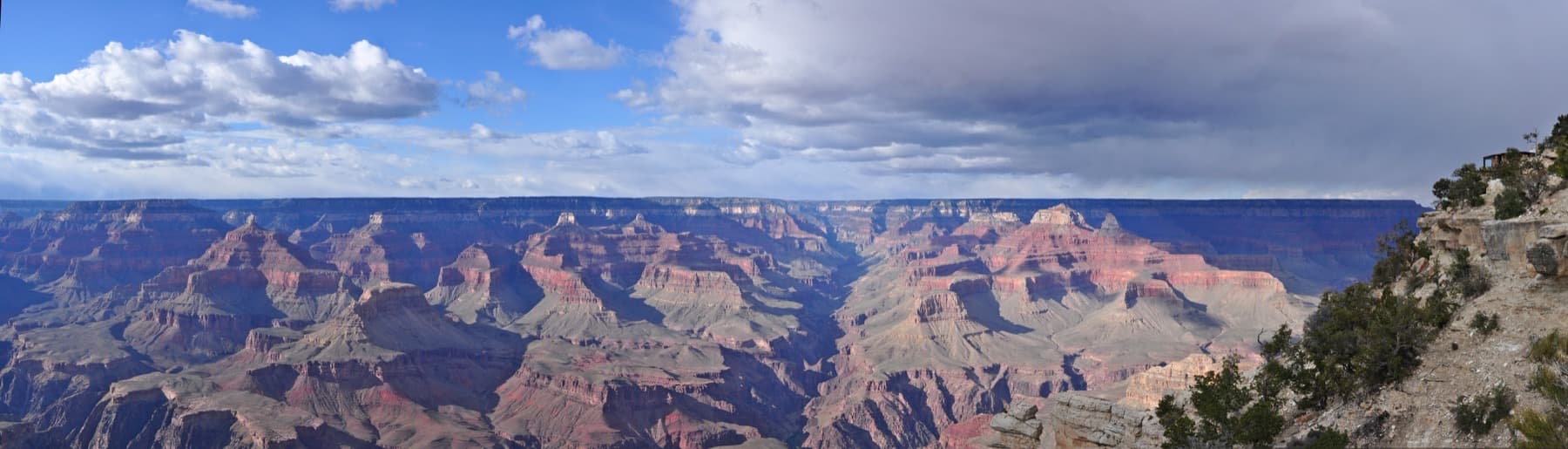
Top things to do
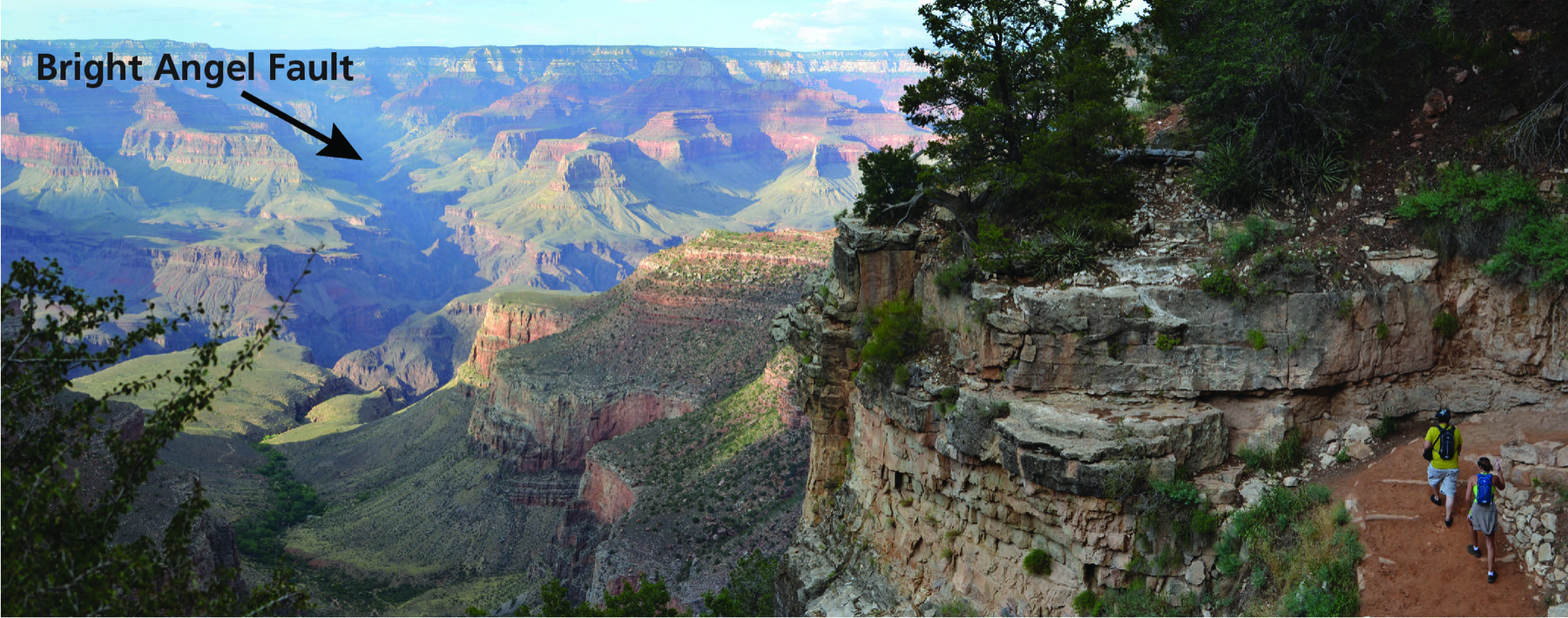
Bright Angel Trail
The classic South Rim descent; turn around at the 1.5 or 3 Mile resthouses unless you are prepared for a full inner-canyon day
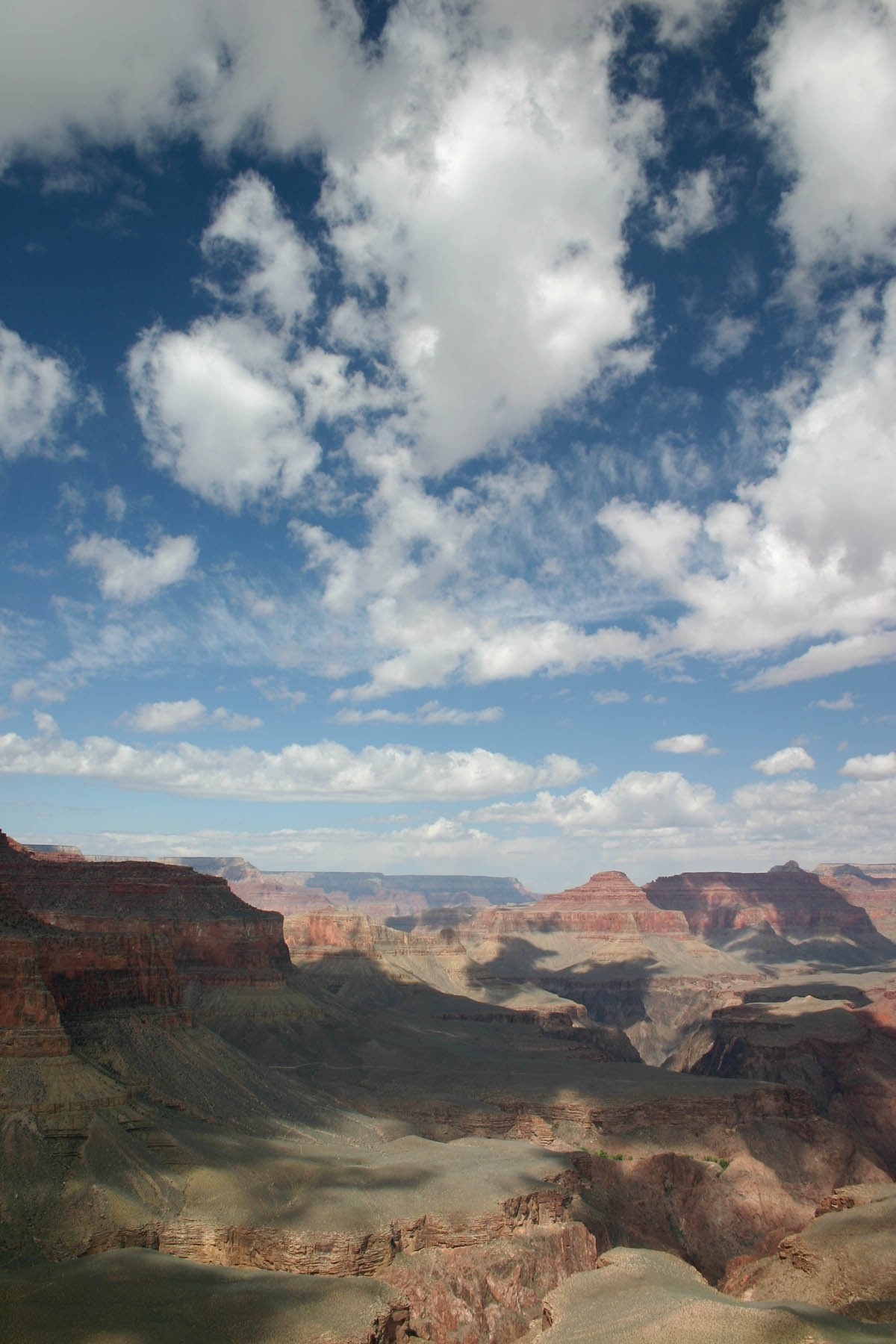
South Kaibab Trail
Steeper, exposed, ridgeline trail with the best views; Ooh Aah Point (1.8 miles round trip) is a stellar short out-and-back
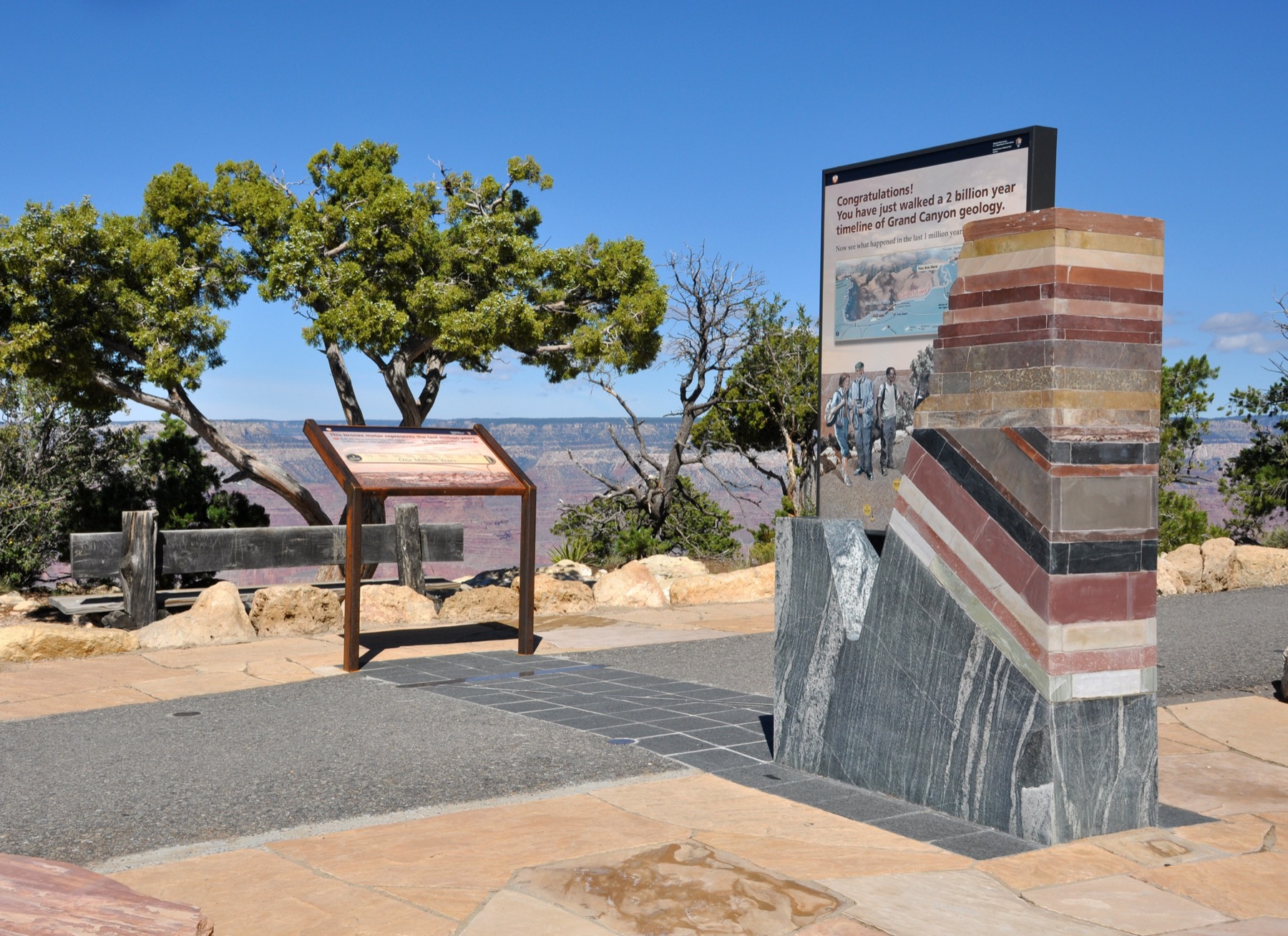
Rim Trail
Mostly flat, partly paved path along the South Rim with shuttle stops, easy for any fitness level
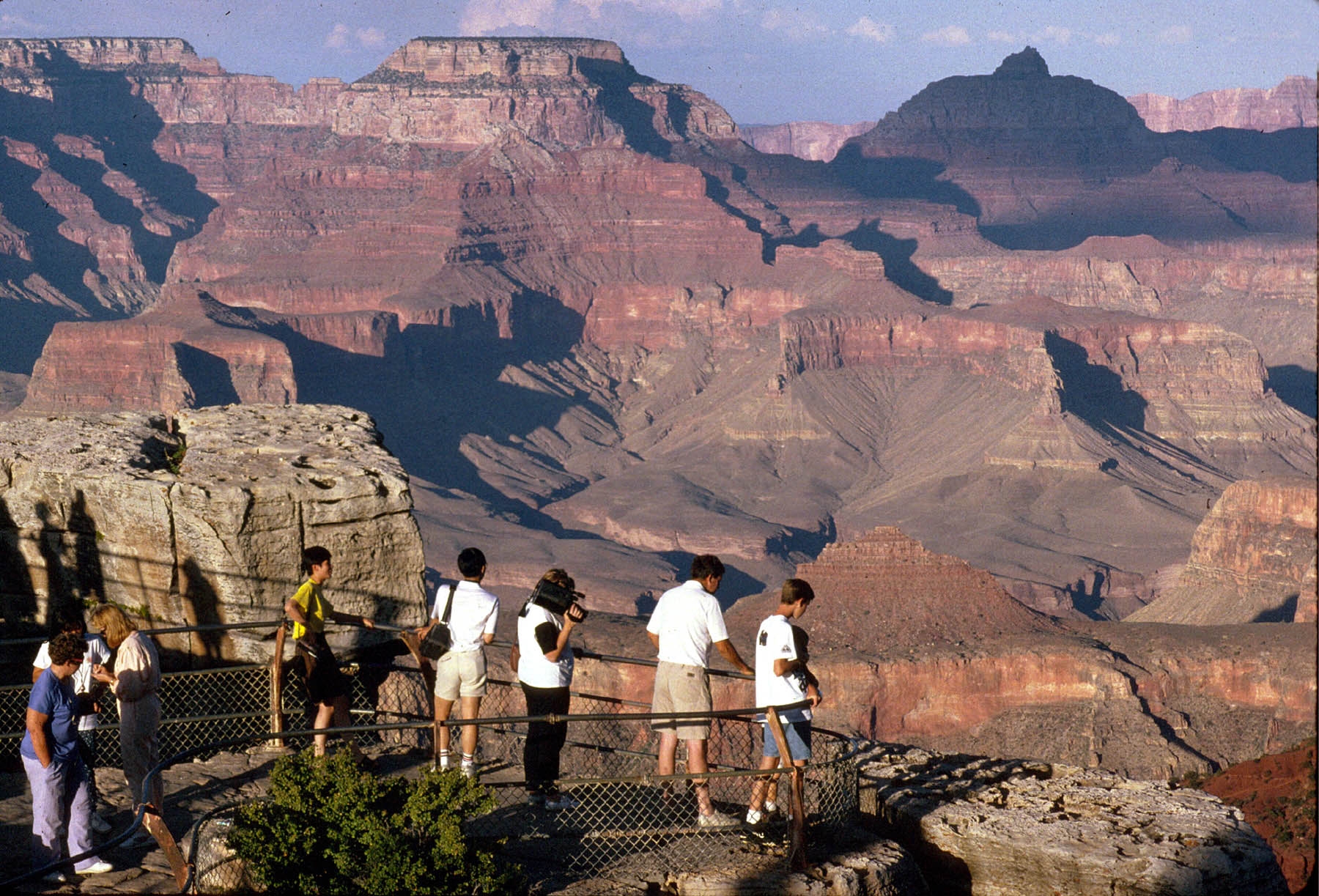
Mather Point and Yavapai Point
First big overlooks near the visitor center; the go-to spots for sunrise and sunset
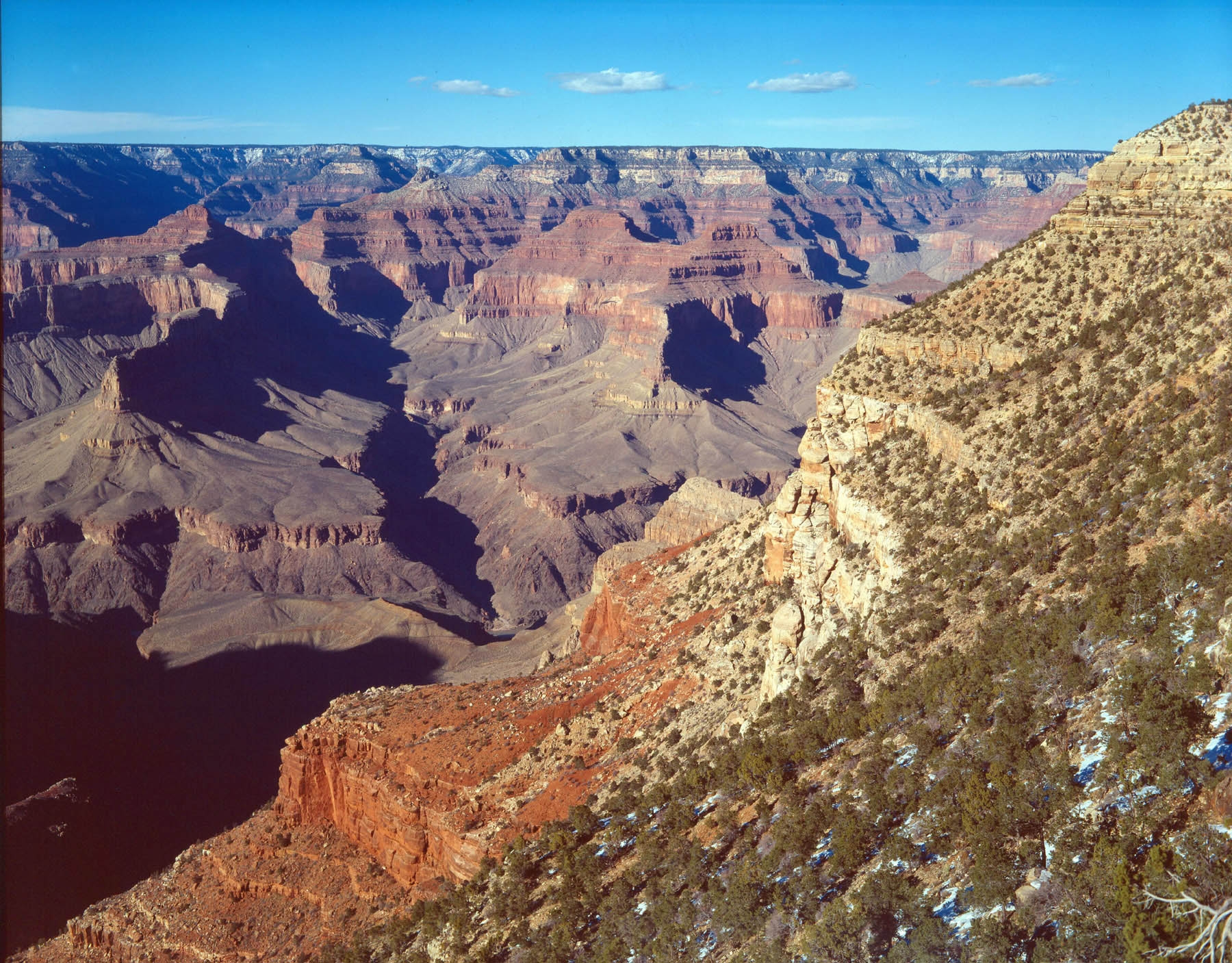
Hermit Road (Hermits Rest)
Seven-mile scenic drive of overlooks, shuttle-only most of the year, walkable or bikeable
Anchor the day around Bright Angel Trail
Put the access rule first: shuttle, parking, timed-entry, or reservation windows should decide the order of the day. For one day in Grand Canyon, make Bright Angel Trail the non-negotiable, add South Kaibab Trail only if the first stop runs clean, and keep Rim Trail as the flexible finish.
- 1Start with Bright Angel Trail: The classic South Rim descent; turn around at the 1.5 or 3 Mile resthouses unless you are prepared for a full inner-canyon day.
- 2Add South Kaibab Trail: Steeper, exposed, ridgeline trail with the best views; Ooh Aah Point (1.8 miles round trip) is a stellar short out-and-back.
- 3Use Rim Trail as the optional finish, not as a reason to rush the whole day.
Where to stay
Stay strategy
Sleep where the first morning stays simple.
Stay strategy
Base on the South Rim unless you are building a separate rim trip.
For a first Grand Canyon visit, lodging is really a rim and shuttle decision. Grand Canyon Village keeps you closest to sunrise, sunset, Rim Trail walks, and the below-rim trailheads. Tusayan lowers friction when village rooms are gone, while Williams and Flagstaff trade distance for more space and value.
- Default rim
- South Rim, open year-round
- Inside base
- Grand Canyon Village lodges and Mather Campground
- Gateway base
- Tusayan sits just outside the South Entrance
- Below rim
- Phantom Ranch and corridor camps need hard-to-get reservations or permits
Compare base options
Compare each base by the first morning: where you park, what you ride, and how many decisions happen before the trail or viewpoint.
Paid links: we may earn a commission if you book, at no extra cost to you.
- Best for
- Sunrise, sunset, Rim Trail walks, Bright Angel Trail, and shuttle-free evenings
- Tradeoff
- Rooms and campground sites sell early, especially spring through fall.
Planning detail
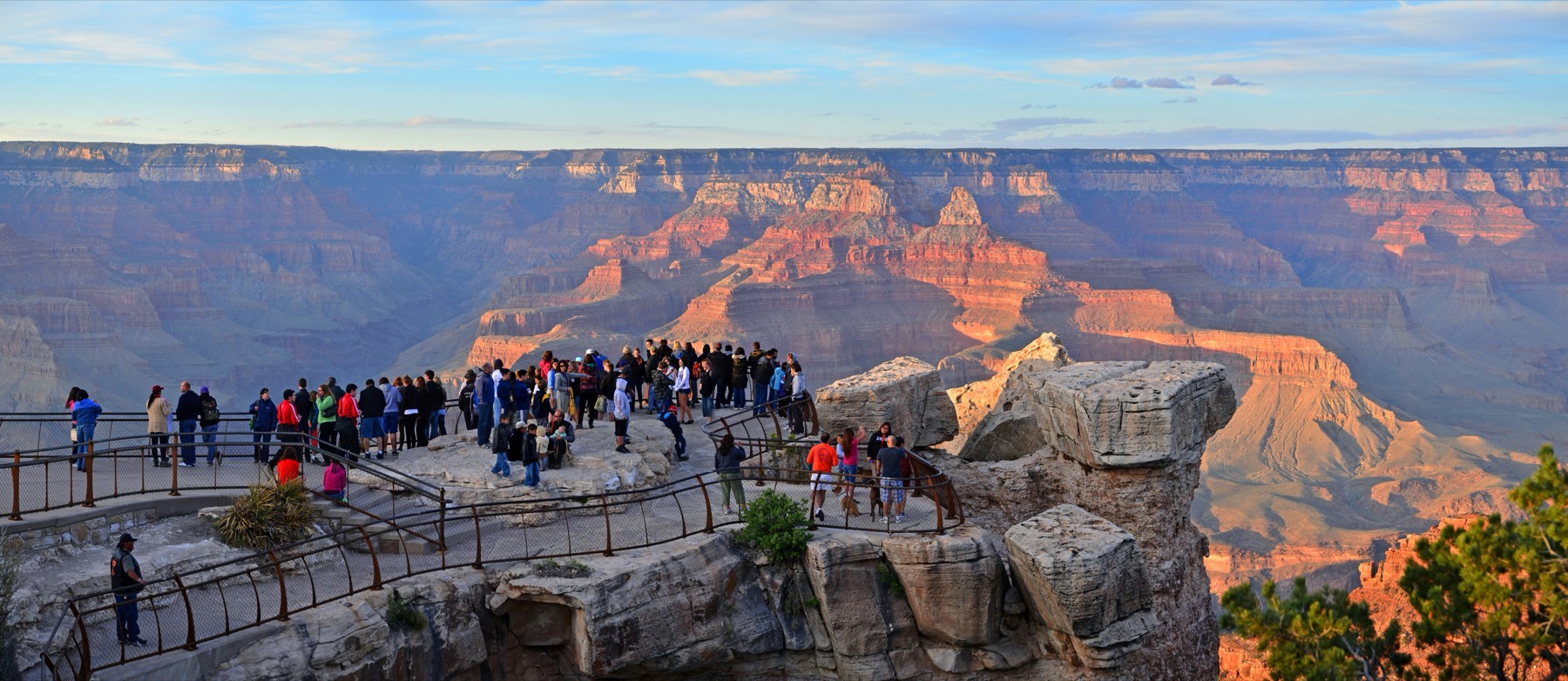
Choose the village when the trip centers on South Rim overlooks and corridor trails. El Tovar, Bright Angel Lodge, Maswik, Yavapai Lodge, Mather Campground, and Trailer Village put the main logistics within the park.
- Best for
- Hotel backup when the village is full and quick access to the South Entrance
- Tradeoff
- You still solve park entry, parking, and shuttle timing each morning.
Planning detail
Tusayan works well for a South Rim trip when in-park lodging is gone or too expensive. Start early, park once, and use the park shuttles for Hermit Road and village stops.
- Best for
- Lower rates, more restaurants, and a longer Arizona road trip
- Tradeoff
- The morning drive is long enough that sunrise takes real discipline.
Planning detail
Use these towns when you need broader hotel choice or are linking Sedona, Route 66, or other northern Arizona stops. Build in enough time for entrance lines and return drives after sunset.
- Best for
- Prepared hikers making the canyon itself the trip
- Tradeoff
- Lottery, permit, heat, and fitness planning are the main constraints.
Planning detail
Do not treat the river as a casual day-hike target. Stay below the rim only with a confirmed ranch spot or backcountry permit, and build the itinerary around temperature, water, and the climb out.
Book order
Lock South Rim lodging or camping before refining trail days.
North Rim
Treat it as a separate seasonal trip and check current status before planning around it.
Camping reservations
Camping reservations
Lock in Mather Campground six months out and treat the North Rim as a bonus, not a plan.
Mather Campground in Grand Canyon Village is the South Rim default and books well in advance through Recreation.gov. The North Rim is running a limited recovery season in 2026 after the Dragon Bravo Fire, so confirm current status before building a trip around it.
Reviewed June 11, 2026
Booking window
Park campground reservations open on Recreation.gov up to 6 months ahead, and all in-park campgrounds are booked well in advance for peak season.
- National Park Service campgrounds in the park have no RV hookups; Trailer Village, the concessioner RV park next to Mather, is the only full-hookup option.
- Desert View is reservation-required and seasonal (April 11 through October 18, 2026), 23 miles east of the village.
- North Rim Campground reopened June 1, 2026, but the 2026 North Rim season is limited with no potable water, so carry everything you need and check the park's North Rim status page first.
- Camping below the rim (Havasupai Gardens, Bright Angel, Cottonwood) is backcountry-permit territory, not a campground booking.
Where to book or verify
Start here for campground status on both rims and official reservation links.
Mather, Desert View, and North Rim campgrounds all book through Recreation.gov.
The concessioner-run, full-hookup RV park in Grand Canyon Village, open all year.
Check for federal campground, backcountry, tour, and permit inventory tied to this park.
Required for all below-the-rim camping, including Havasupai Gardens and Bright Angel campgrounds.
Use this for wilderness permits, timed systems, tours, and other park-specific reservations.
Campgrounds to know
Mather Campground
Details- Booking
- Reserve up to 6 months ahead on Recreation.gov.
- Season
- Open year-round.
- Sites
- Large tent and RV campground, no hookups, with laundry and showers nearby.
- Centrally located in Grand Canyon Village on the free shuttle routes, so it is the practical South Rim base.
Desert View Campground
Details- Booking
- Reserve up to 6 months ahead on Recreation.gov.
- Season
- April 11 through October 18, 2026.
- Sites
- Smaller seasonal campground, no hookups.
- Quieter and 23 miles east of the village near the Desert View Watchtower and the east entrance.
Trailer Village RV Park
Details- Booking
- Books through the park concessioner; check the Trailer Village site for the current window.
- Season
- Open year-round.
- Sites
- Full-hookup RV sites.
- The only hookups inside the park, next door to Mather and on the shuttle network.
North Rim Campground
Details- Booking
- Reserve on Recreation.gov; check the NPS North Rim status page before booking.
- Season
- Reopened June 1, 2026 for a limited season.
- Sites
- Tent and RV sites, no hookups and no potable water for 2026.
- A remote, recovery-season experience in 2026: limited services, bring all water and food.
Getting there and practical info
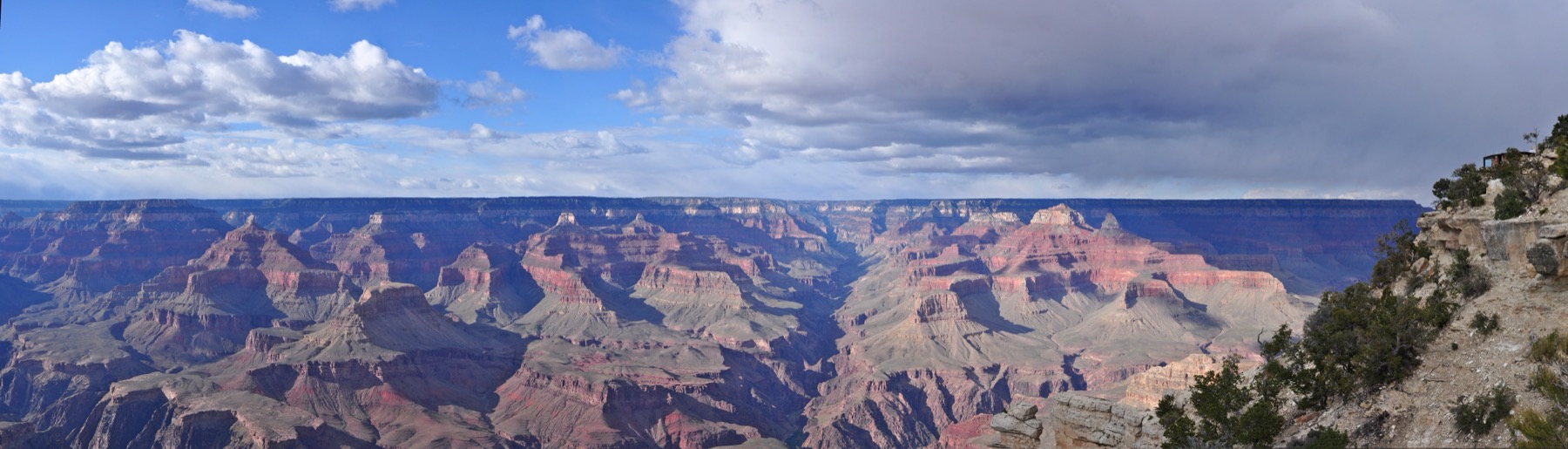
Plan the handoff from arrival to shuttle.
Parking, pedestrian entrances, and shuttle timing decide how calmly the first morning starts.
Getting there
Get to Grand Canyon, then remove the first-morning friction.
- Nearest airport
- PHX (Phoenix Sky Harbor), about 3.5 hours by car to the South Rim; Flagstaff (FLG) is closer at about 1.5 hours
- Access rhythm
- Park once, ride in
- Region
- Arizona
Fly in
Most visitors fly into Phoenix Sky Harbor (PHX) and drive about 3.5 hours to the South Rim, or use Flagstaff Pulliam (FLG) about 1.5 hours away.
Car strategy
From Flagstaff, take US 180 to AZ 64, or US 89 to AZ 64 through the east (Desert View) entrance.
Local movement
The South Rim is open 24/7 year-round.
Book ahead
- Rental cars at Flagstaff (FLG)Paid link, Economybookings
- Guided tours in Grand CanyonPaid link, Viator
Paid links: we may earn a commission if you book, at no extra cost to you.
Pair this with lodging: sleep where the park transfer is simple, especially if your route needs an early start.
Plan your trip
Build one complete pack brief from Grand Canyon's season, activity, and trip length. Fine-tune an individual calculation only if you need it.
Fine-tune water, pack size, warmth, or stove fuel
Build around conditions
Let season, elevation, and weather set the plan.
Plan your trip
4 quick tools, already seeded for Grand Canyon. Tune the numbers around temperature swings, footing, layers, and how much margin the route needs.
What to pack
Start with the gear decisions Grand Canyon changes: water, footing, weather, and overnight needs. The checklist is there once your route and dates are set.
Kit Authority
Grand Canyon packing list
0 of 22 packed. Check items as you pack, then take this list to the store, trailhead, or campsite.
Pack planning
Decide what Grand Canyon asks of your kit before you start checking boxes.
Use this as a constraint check while you are still shaping the trip. The active checklist becomes useful once your route, dates, and sleep plan are set.
- First constraintHydration and exposureWater, Electrolyte mix, hat, sunscreen, sunglasses, 4 more
- Route realityFooting and tractionHiking boots, Hiking socks, Trekking poles
- Load choicePack and carry systemBackpacking pack
- If overnightSleep and shelterBackpacking tent, Sleeping bag, Sleeping pad, 1 more
Checklist mode
22 items, grouped for the trip you are actually taking.
- Dates and season are set.
- Primary route, campground, or lodge is chosen.
- Water, footwear, and overnight needs are sized.
One researched pick
The first gear decision for Grand Canyon
A stable daypack is the one purchase that organizes water, layers, food, first aid, and the small safety margin.
We may earn a commission from links on this page, at no extra cost to you. Product prices and availability are accurate as of the date/time indicated and are subject to change. Any price and availability information displayed on Amazon at the time of purchase will apply to the purchase of this product.
THE DAY-HIKE PICK
Osprey Talon 22
Best Overall
Kit Score 8.6/10
$169.95 Price checked Oct 23, 6:22 AM CDT
Best for: Hikers who want a proven all-around daypack with solid load support, plenty of adjustment, and a warranty they can actually use.
- Adjustable torso fit covers a wide range of body sizes
- At 2 lb 1 oz it runs heavier than ultralight rivals for the same volume
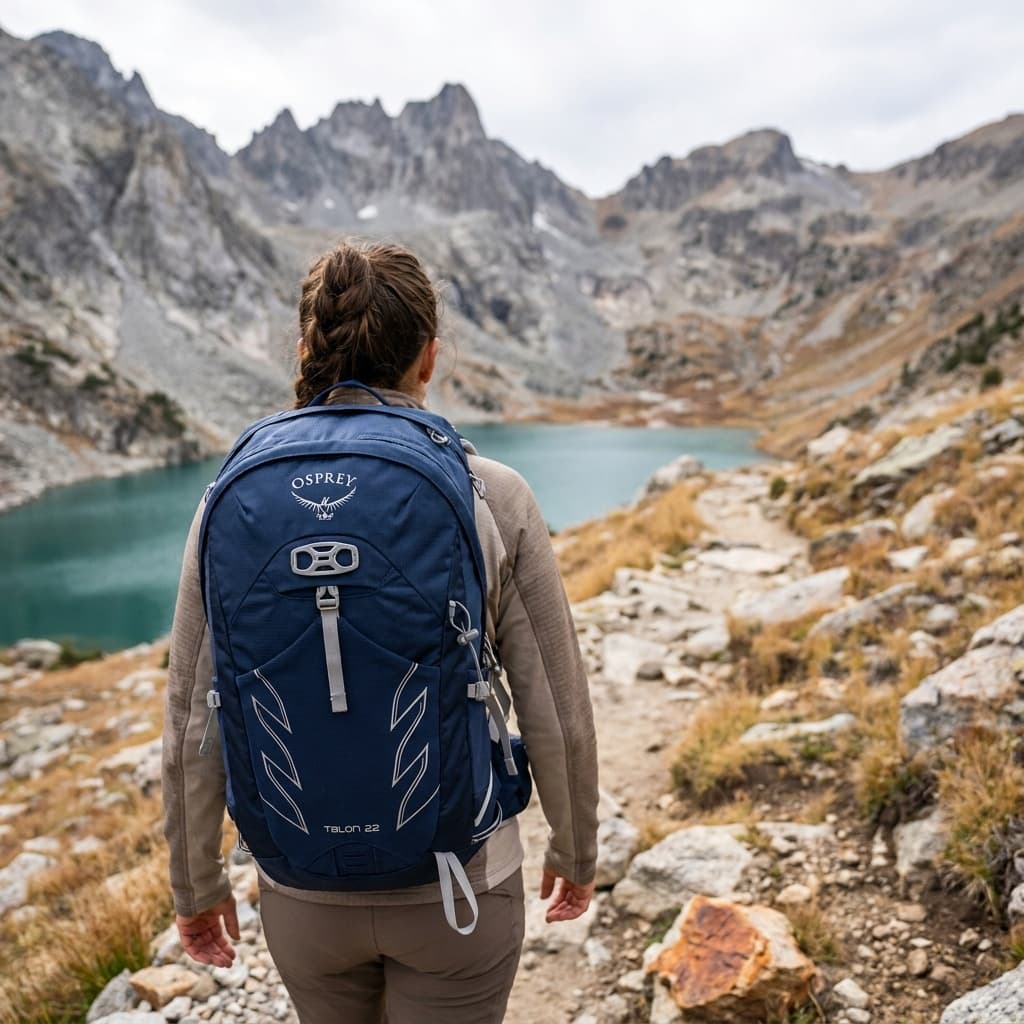
- Volume
- 22 L
- Weight
- 2 lb 1 oz (945 g)
- Back Panel
- AirScape foam with ventilation channels
- Hipbelt Pockets
- 2 zippered
- Hydration
- Compatible up to 3 L reservoir (sold separately)
- Warranty
- All Mighty Guarantee (lifetime repair or replace)
About this pick
The Talon 22 is the daypack you see on the trail more than any other for good reason: it packs in a padded hipbelt, adjustable torso harness, and dual hipbelt pockets into a 22-liter package that handles loads up to 20 lb without complaint. Owners across hundreds of Amazon ratings consistently cite its adjustability and durability as standouts.
Strengths
- Adjustable torso fit covers a wide range of body sizes
- Padded hipbelt and dual hipbelt pockets at this size are rare
- Osprey lifetime warranty backs years of hard use
Weaknesses
- At 2 lb 1 oz it runs heavier than ultralight rivals for the same volume
- AirScape back panel ventilation is functional but not class-leading compared to suspended-mesh designs
Kit Score breakdown
Gear for Grand Canyon
The buying guides that match what Grand Canyon asks of your kit. Each one has our current top picks across budget and use case.
Can you photograph here? Permit and drone rules
Grand Canyon's filming and photography rules after the EXPLORE Act, plus the river and tribal-land boundaries that change who issues the permit.
- Permit
- Usually fine for personal shoots; commercial or large productions can need a permit
- Drones
- Effectively banned: launching, landing, or operating a drone within park boundaries is prohibited
- Land
- Yes for personal and editorial photography throughout the park
From our photography sister site, Aperture Authority. Verified 2026-06-28.
Frequently asked questions
Do you need a reservation to enter Grand Canyon National Park?
No, Grand Canyon does not use a timed-entry reservation system. You just pay the entrance fee at the gate (cards only, no cash). Reservations are only needed for in-park lodging, campgrounds, and backcountry permits, all of which book up far in advance.
Can you hike to the bottom of the Grand Canyon and back in one day?
The National Park Service strongly warns against it, and rangers consider a rim-to-river-to-rim day hike dangerous. The descent is deceptively easy but the climb out gains thousands of feet in heat that can top 100F in the inner canyon. Plan an overnight at Phantom Ranch or a campground with a permit instead.
Is the North Rim of the Grand Canyon open?
The North Rim is closed for the 2025-2026 season after the Dragon Bravo Fire, with sections tentatively targeted to reopen around May 2026. Even in a normal year it is only open roughly mid-May through mid-October because of snow. The South Rim stays open year-round.
What is the best time of year to visit the Grand Canyon?
Spring and fall offer the most comfortable South Rim weather, with highs in the 60s and 70s and thinner crowds than summer. Summer is the busiest and the inner canyon becomes dangerously hot. Winter is quiet and beautiful with snow on the rim, though icy trails call for traction devices.
How long do you need to visit the Grand Canyon?
A single full day on the South Rim lets you walk the Rim Trail, see the major overlooks, and dip a short way down Bright Angel or South Kaibab. Two to three days give you time for a longer day hike, sunrise and sunset at different viewpoints, and the Hermit Road drive. A below-the-rim backpacking trip needs a permit and several days.
Keep planning
Compare with another park
Nearby parks
 ZionTowering sandstone canyons, the Narrows, and Angels Landing, reached by a car-free shuttle.
 Bryce CanyonA high-elevation rim trail above thousands of glowing orange hoodoos, easy to reach and unreal to walk into.
 Petrified ForestA high-desert drive past 200-million-year-old fossil logs and the banded badlands of the Painted Desert.