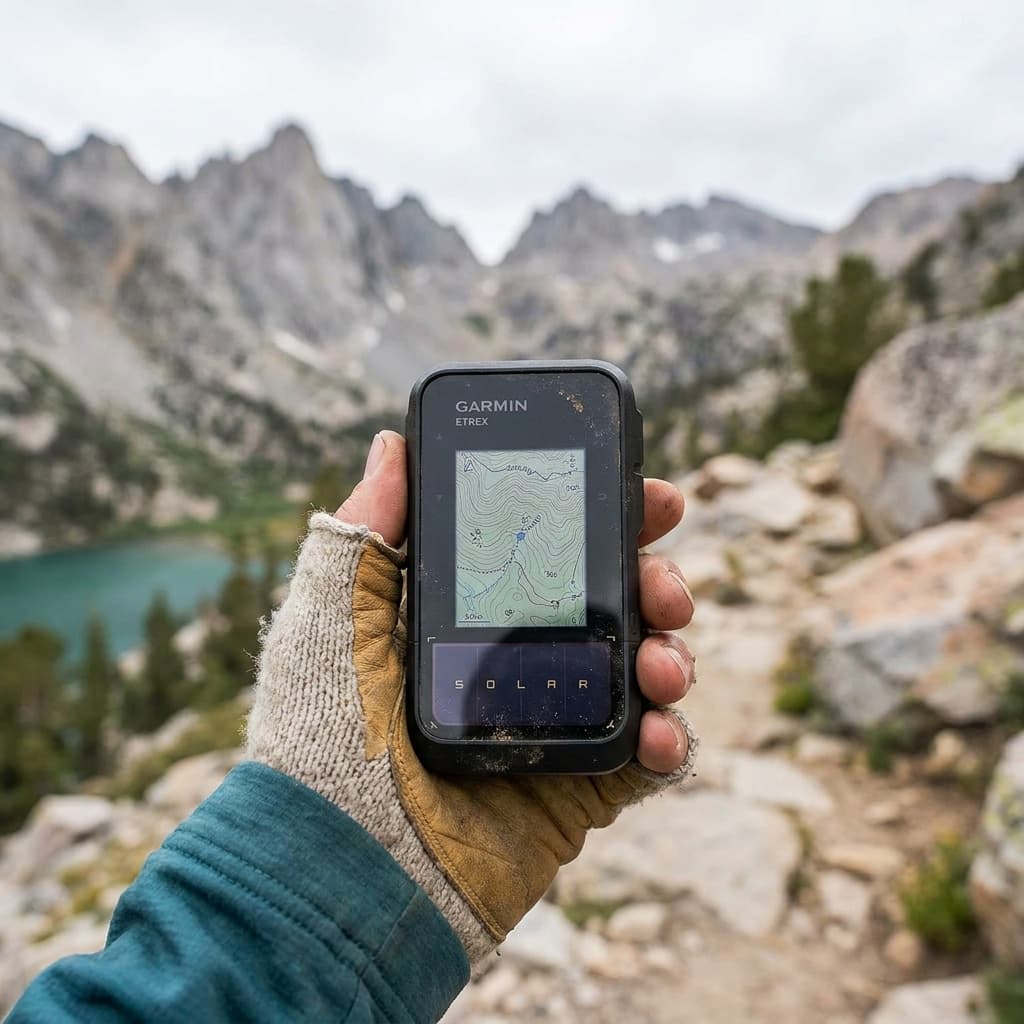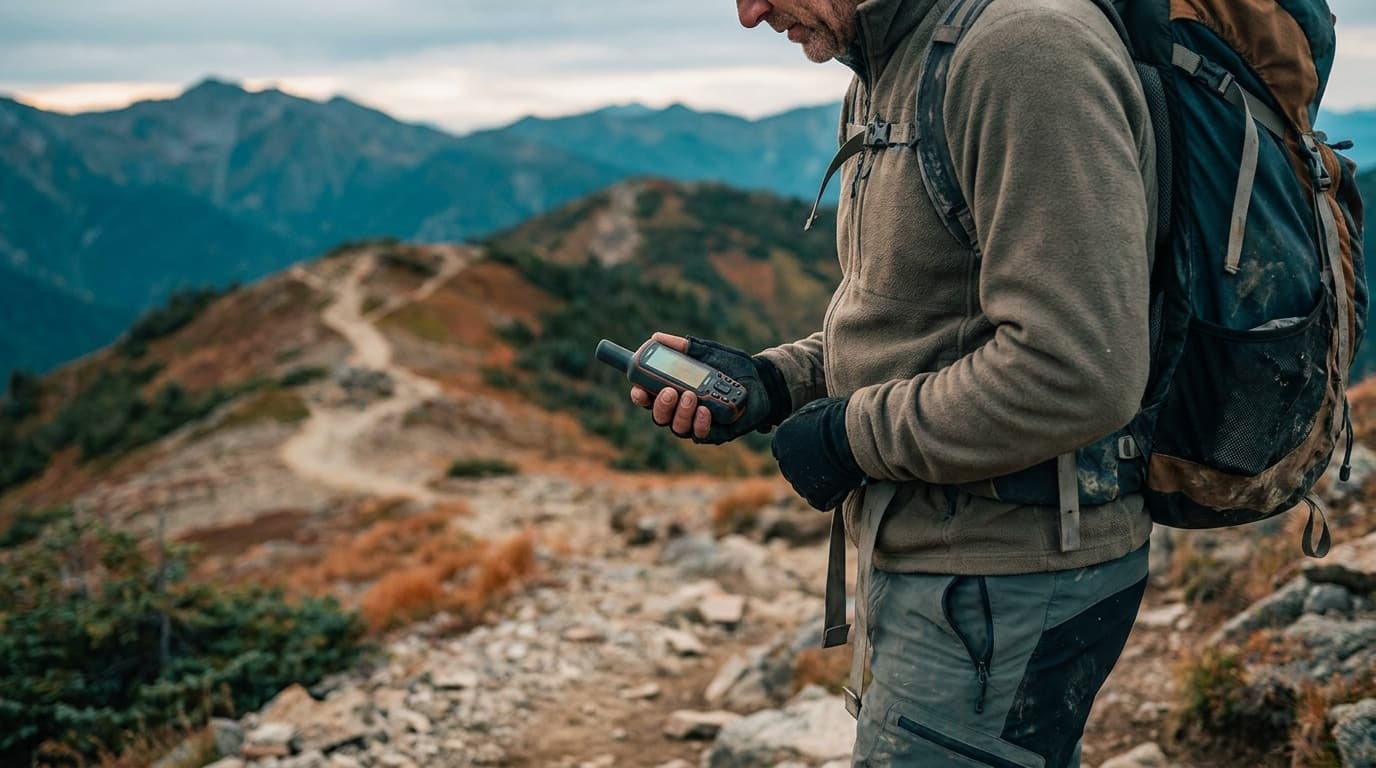
The Garmin GPSMAP H1i Plus is the best handheld GPS for backcountry hiking: Switchback Travel names it its best overall, and Garmin builds preloaded topo maps, multi-band GPS, and inReach satellite texting and SOS into one unit rated for up to 145 hours. It replaced the GPSMAP 67i, which Garmin now lists as a previous model. If you want maps without a subscription, the eTrex Touch is the lighter, cheaper pick; if your phone is your map, add the inReach Mini 3 Plus.
Our quick picks
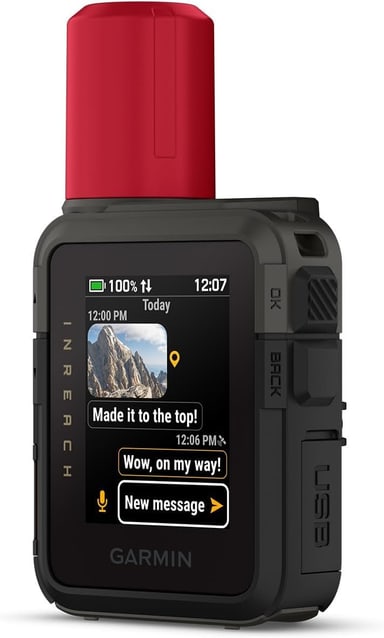
How we picked
Every pick is scored with our Kit Score: maps on the device, satellite accuracy, battery life, satellite messaging and SOS, screen and controls, weight, and total cost including any subscription. We started from the 2026 picks of Switchback Travel, GearJunkie, Treeline Review, and Backpacker, checked every spec on Garmin's own product pages and owner's manuals, and confirmed each unit is sold new by Amazon.com. Garmin dominates this category, so every pick is a Garmin; we did not test these units ourselves.
The picks
Best overall: Garmin GPSMAP H1i Plus
BEST OVERALL
Garmin GPSMAP H1i Plus
Best for: Backcountry hikers, hunters, and off-trail travelers who want maps and satellite SOS in one device instead of two.
- Maps, multi-band GNSS, and two-way satellite messaging in one device
- The most expensive pick, before the monthly inReach plan
Kit Score 8.4/10 · $999.99 Price checked Oct 23, 6:22 AM CDT · how we score gear
Buy on AmazonProduct details
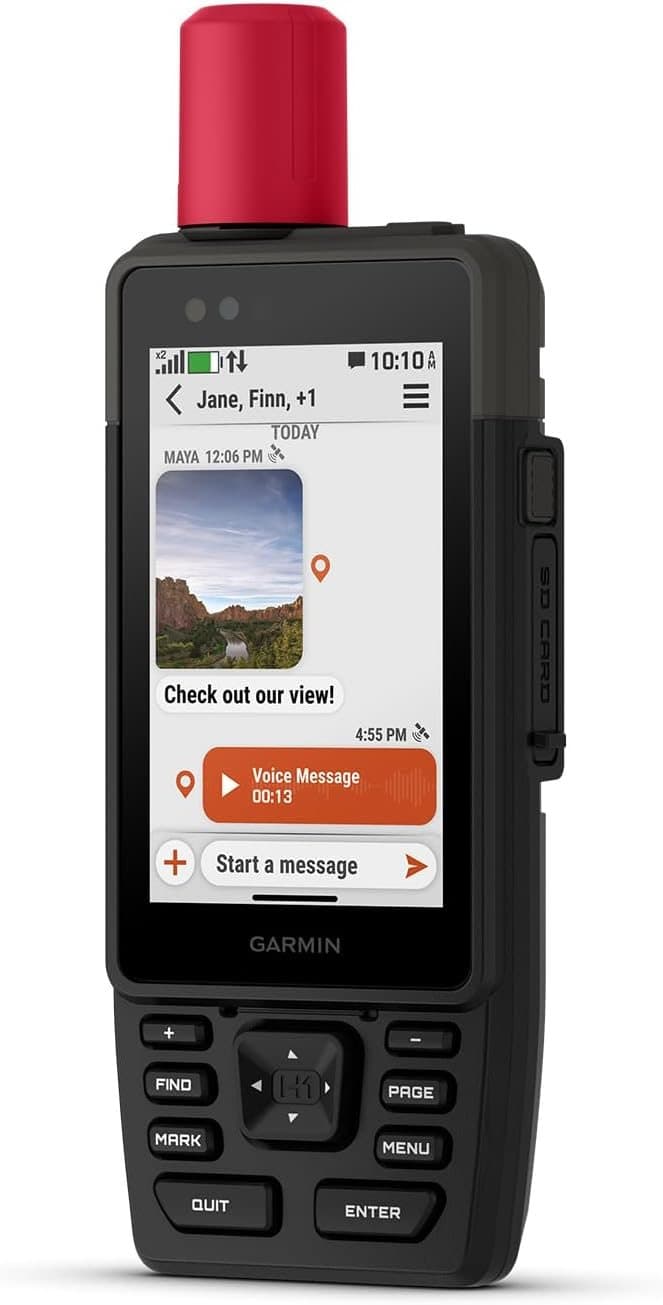
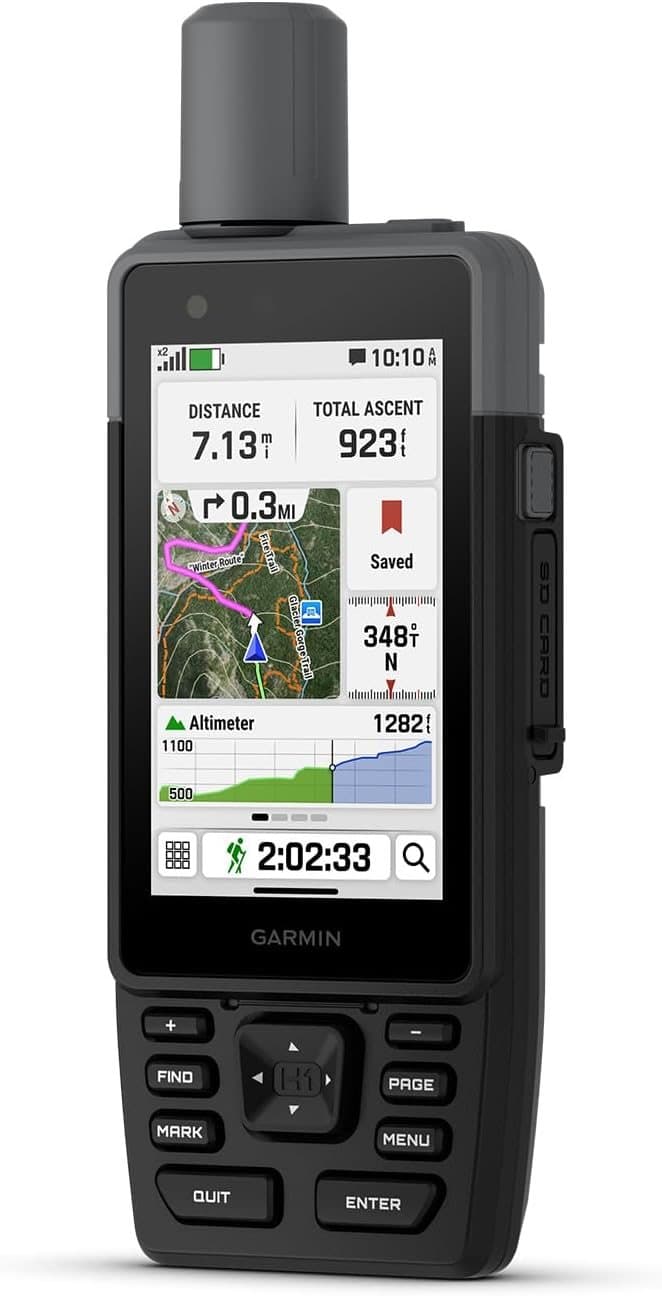
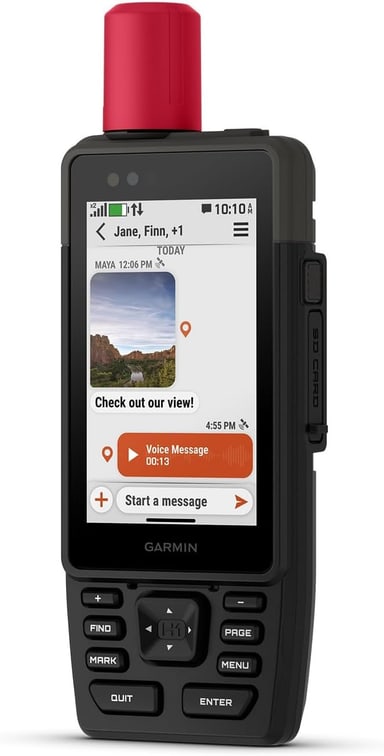
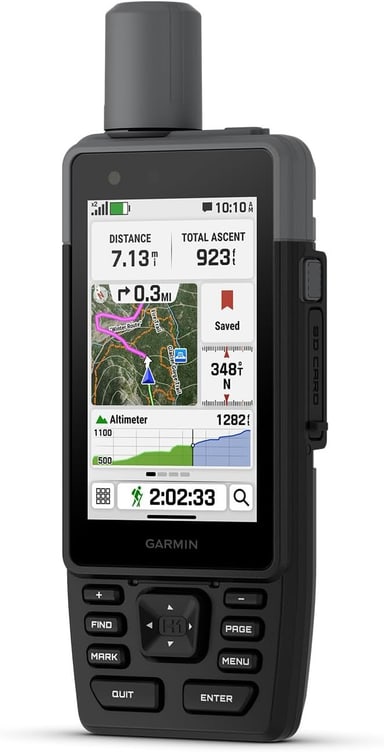
The GPSMAP H1i Plus replaces the GPSMAP 67i as Garmin's do-everything handheld. It adds a 3.5-inch touchscreen alongside the buttons, preloaded TopoActive maps, multi-band GNSS, and inReach Plus, which sends photos and voice messages as well as texts and SOS over satellite. Garmin rates it at up to 145 hours in multi-band mode.
- Display
- 3.5 in transflective color touchscreen plus buttons, 282 x 470
- Battery
- Up to 145 hr multi-band, 840 hr expedition; 48 hr messaging with 10-min tracking
- Satellites
- Multi-band GPS, Galileo, QZSS, BeiDou, IRNSS
- Maps
- TopoActive preloaded, routable
- Satellite comms
- inReach Plus: texts, photos, voice messages, interactive SOS (plan required)
- Build
- 10.2 oz, IP67, barometric altimeter, compass, 5 MP front and 8 MP rear cameras
More strengths
- Touchscreen plus buttons, so it works with gloves or wet fingers
- Up to 840 hours in expedition mode
Other tradeoffs
- At 10.2 oz it is about twice the weight of an eTrex
The H1i Plus is the one device that covers navigation and rescue. Switchback Travel makes it its best overall handheld GPS. Garmin pairs a 3.5-inch color touchscreen with physical buttons, so it works with gloves or wet fingers, and preloads routable TopoActive maps. It receives multi-band signals from GPS, Galileo, QZSS, BeiDou, and IRNSS, which helps hold an accurate position under tree cover and in canyons.
Built-in inReach Plus sends and receives texts, photos, and voice messages over satellite and triggers an interactive SOS with no cell signal. Garmin rates the battery at up to 145 hours in multi-band mode, 840 hours in expedition mode, and 48 hours in performance messaging mode with 10-minute tracking. It is IP67, rated from -4 to 140 F, and weighs 10.2 oz. It is the most expensive handheld here, and the messaging needs a monthly inReach plan.
Display: 3.5 in touchscreen plus buttons | Battery: 145 hr multi-band | Maps: TopoActive | Satellite messaging: Yes | Weight: 10.2 oz
Best without a subscription: Garmin GPSMAP H1
BEST WITHOUT A SUBSCRIPTION
Garmin GPSMAP H1
Best for: Hikers who want a full-size mapping GPS and either carry a separate satellite messenger or do not need one.
- Big touchscreen plus buttons and preloaded topo maps
- No satellite messaging or SOS; pair it with an inReach if you need one
Kit Score 8.1/10 · $649.00 Price checked Oct 23, 6:22 AM CDT · how we score gear
Buy on AmazonProduct details
The GPSMAP H1 is the H1i Plus without inReach: the same 3.5-inch touchscreen and buttons, preloaded TopoActive maps, multi-band GNSS, altimeter, and compass, rated at up to 145 hours in multi-band mode. It replaces the GPSMAP 67 and needs no subscription.
- Display
- 3.5 in transflective color touchscreen plus buttons, 282 x 470
- Battery
- Up to 145 hr multi-band, 840 hr expedition
- Satellites
- Multi-band GPS, Galileo, QZSS, BeiDou, IRNSS
- Maps
- TopoActive preloaded, routable
- Satellite comms
- None
- Build
- 9.7 oz, IP67, barometric altimeter, compass
More strengths
- Multi-band GNSS and up to 145 hours of battery
- No subscription
Other tradeoffs
- Costs more than the eTrex Touch, which also has maps and multi-band GNSS
The GPSMAP H1 is the H1i Plus without the satellite radio and cameras. You get the same 3.5-inch touchscreen and buttons, preloaded TopoActive maps, multi-band GNSS, barometric altimeter, and compass, and the same 145-hour multi-band and 840-hour expedition ratings, at 9.7 oz. It replaces the GPSMAP 67.
Choose it if you already carry a satellite messenger, hike where a phone signal is usually close, or simply do not want a monthly plan. If you might ever need to call for help from a dead zone, the H1i Plus or an H1 plus an inReach Mini 3 Plus is the safer setup.
Display: 3.5 in touchscreen plus buttons | Battery: 145 hr multi-band | Maps: TopoActive | Satellite messaging: No | Weight: 9.7 oz
Best lightweight mapping GPS: Garmin eTrex Touch
BEST LIGHTWEIGHT MAPPING GPS
Garmin eTrex Touch
Best for: Hikers who want real on-device topo maps in the lightest package, without paying for inReach.
- Topo maps and multi-band GNSS at 5.3 oz
- Touchscreen only, which is harder to use with thick gloves than buttons
Kit Score 8.0/10 · Check current price · how we score gear
Buy on AmazonProduct details
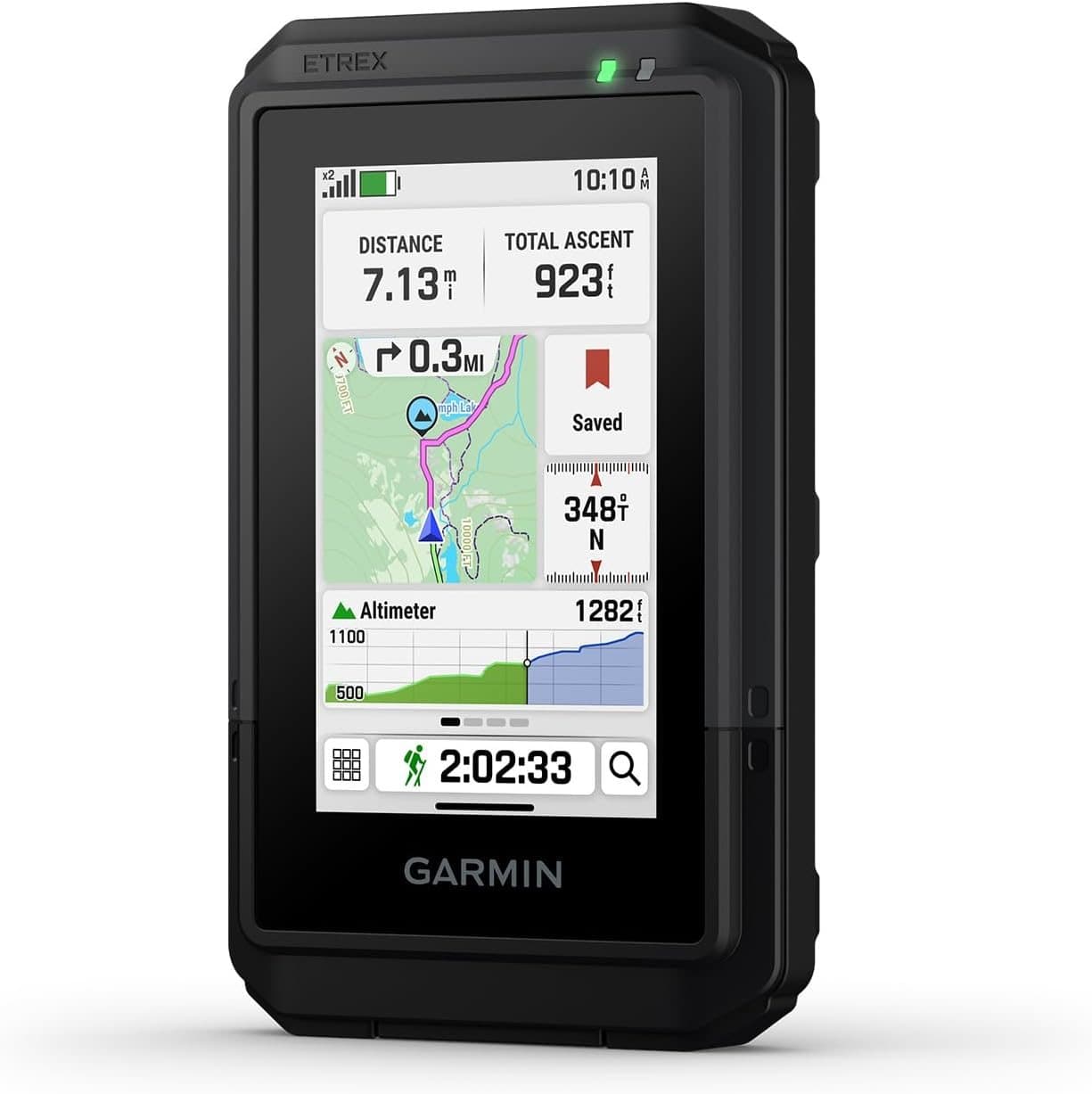
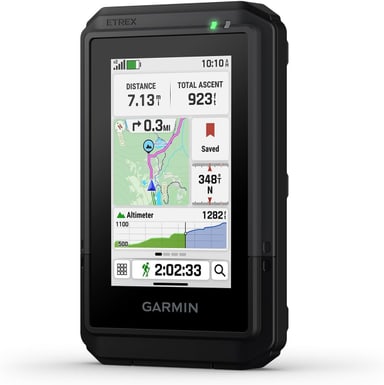
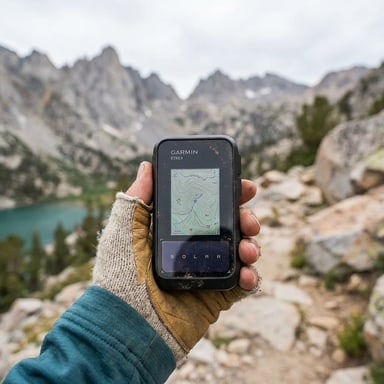
The eTrex Touch, new in fall 2025, puts preloaded TopoActive maps and multi-band GNSS into the eTrex's small, light body with a 3-inch color touchscreen. It weighs 5.3 oz and Garmin rates it at up to 130 hours in multi-band mode, with a barometric altimeter and compass.
- Display
- 3 in transflective color touchscreen, 240 x 400
- Battery
- Up to 130 hr multi-band, 650 hr expedition (internal lithium-ion)
- Satellites
- Multi-band GPS, GLONASS, Galileo, QZSS, BeiDou, IRNSS
- Maps
- TopoActive preloaded, routable
- Satellite comms
- None
- Build
- 5.3 oz, IP67, barometric altimeter, compass
More strengths
- Up to 130 hours in multi-band mode
- IP67 and small enough for a hip-belt pocket
Other tradeoffs
- No satellite messaging
GearJunkie names the eTrex Touch its best overall handheld GPS. It brings preloaded TopoActive maps and multi-band GNSS to the eTrex line for the first time, in a 5.3 oz body with a 3-inch color touchscreen. Garmin rates it at up to 130 hours in multi-band mode and 650 in expedition mode, and it has a barometric altimeter and compass.
It costs about two-thirds as much as the GPSMAP H1 for the same core navigation. The trade-offs are a smaller screen, touch-only controls that are harder with thick gloves, and no satellite messaging.
Display: 3 in color touchscreen | Battery: 130 hr multi-band | Maps: TopoActive | Satellite messaging: No | Weight: 5.3 oz
Best big screen: Garmin Montana 710i
BEST BIG SCREEN
Garmin Montana 710i
Best for: Overlanders, hunters, and ATV riders who navigate from a vehicle or base camp and want a big map plus satellite SOS.
- 5-inch screen, the largest here, and road plus topo maps
- Only 24 hours in GPS mode; the H1i Plus is rated for far longer
Kit Score 8.1/10 · $693.97 Price checked Oct 23, 6:22 AM CDT · how we score gear
Buy on AmazonProduct details
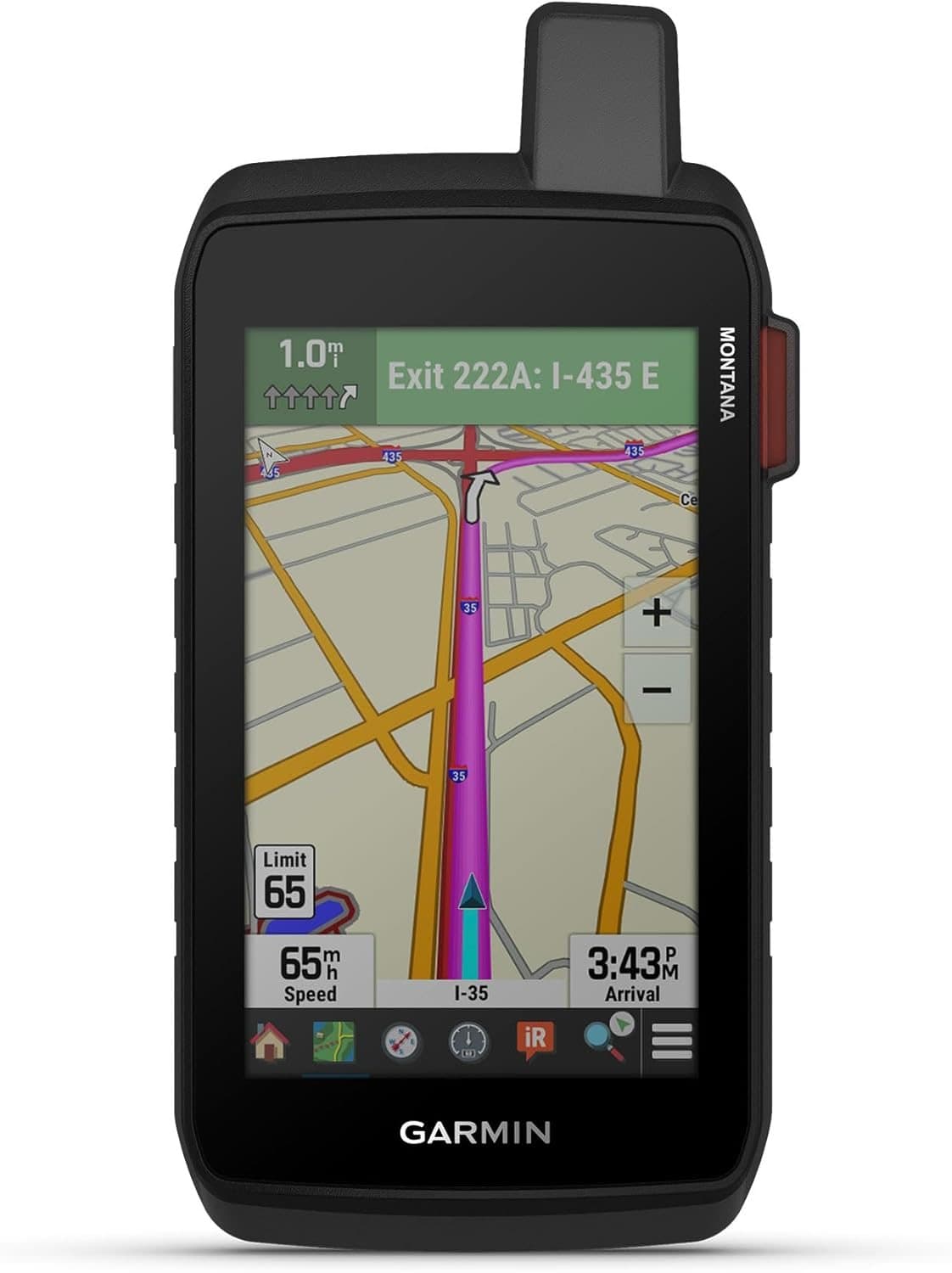
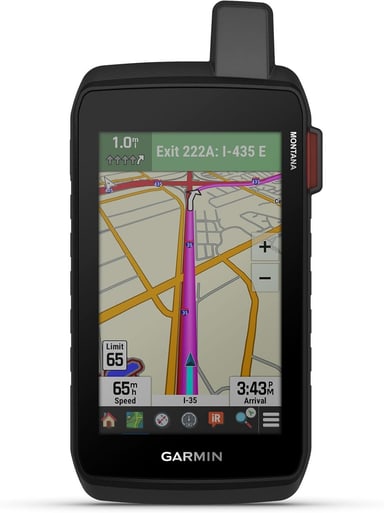
The Montana 710i is the big-screen option: a 5-inch glove-friendly touchscreen that turns between portrait and landscape, preloaded TopoActive and City Navigator road maps, and inReach two-way messaging with interactive SOS. Garmin rates it at 24 hours in GPS mode, so it suits vehicles, ATVs, and base camps more than long hikes.
- Display
- 5 in WVGA transflective touchscreen, 480 x 800, dual orientation
- Battery
- Up to 24 hr GPS mode, 440 hr expedition mode (removable lithium-ion pack)
- Satellites
- GPS, Galileo
- Maps
- TopoActive by region and City Navigator North America preloaded
- Satellite comms
- inReach: two-way texts and interactive SOS (plan required)
- Build
- 14.5 oz with battery, IPX7, barometric altimeter, compass
More strengths
- inReach messaging and interactive SOS
- Removable battery pack
Other tradeoffs
- 14.5 oz, the heaviest pick
Switchback Travel's touchscreen pick, the Montana 710i, has a 5-inch, 480 by 800 touchscreen that turns between portrait and landscape, plus preloaded TopoActive and City Navigator North America road maps and inReach two-way messaging with interactive SOS. It is IPX7, rated -4 to 140 F, and runs on a removable lithium-ion pack.
The big screen costs battery and weight. Garmin rates it at 24 hours in GPS mode and 440 in expedition mode, and it weighs 14.5 oz. That makes it a better fit for a truck dash, an ATV, or a hunting camp than for a multi-day hike, where the H1i Plus lasts far longer.
Display: 5 in touchscreen | Battery: 24 hr GPS mode | Maps: TopoActive and road maps | Satellite messaging: Yes | Weight: 14.5 oz
Best battery life: Garmin eTrex Solar
BEST BATTERY LIFE
Garmin eTrex Solar
Best for: Thru-hikers and expedition trekkers doing long stretches without power access who follow pre-planned GPX routes and want multi-day battery confidence without carrying extra batteries or a power bank.
- Solar charging adds field insurance on long trips; Garmin rates it unlimited in 75,000 lux (direct sun)
- No onboard topo maps: detailed route navigation requires a paired phone running the Garmin Explore app, which reduces the independence advantage of a dedicated GPS
Kit Score 7.9/10 · $197.99 Price checked Oct 23, 6:22 AM CDT · how we score gear
Buy on AmazonProduct details
The eTrex Solar pairs multi-band GNSS accuracy with an onboard solar panel that can sustain the device indefinitely in direct sunlight, making it a uniquely capable choice for extended trips where recharging is impractical. No subscription is required, and GPX routes from Gaia GPS or CalTopo load via the Garmin Explore app.
- Weight
- 5.0 oz (141g)
- Battery life
- 200 hours GPS-only; 100 hours multi-band; 1,800 hours expedition mode; unlimited in 75,000 lux (Garmin manual)
- Display
- 2.2-inch monochrome, 240x320 pixels; sunlight-readable
- Satellite systems
- Multi-band GNSS: GPS (L1+L5), GLONASS, Galileo, QZSS, BeiDou, IRNSS
- Durability
- IPX7 waterproof; USB-C charging; internal rechargeable lithium-ion
- Mapping
- Basic basemap only; GPX route import via Garmin Explore app; no onboard topo
More strengths
- Multi-band GNSS across six satellite systems, a feature that used to require a much pricier handheld
- No subscription, no maps to buy: a one-time purchase that works out of the box for waypoint navigation and breadcrumb tracking
Other tradeoffs
- Monochrome screen and limited memory mean it is a capable tracker, not a full mapping device
The eTrex Solar is built to outlast every other battery in your pack. Garmin rates it at 200 hours with GPS-only tracking, 100 hours with multi-band on, 1,800 hours in expedition mode, and unlimited runtime in 75,000 lux, which is roughly direct midday sun. In mixed light the panel slows the drain rather than replacing it, but multi-day use without a power bank is realistic.
There are no topo maps. It has a city basemap and follows GPX routes and waypoints you load through the Garmin Explore app, on a 2.2-inch monochrome screen. It is IPX7 and weighs 5.0 oz.
Display: 2.2 in monochrome | Battery: 200 hr GPS-only, unlimited in full sun | Maps: Basemap only | Satellite messaging: No | Weight: 5.0 oz
Best budget: Garmin eTrex SE
BEST BUDGET
Garmin eTrex SE
Best for: Day hikers and weekend backpackers who want a no-subscription dedicated GPS backup with exceptional battery life, and who plan routes in advance using the Garmin Explore app.
- 168-hour battery life from standard AA batteries removes charger anxiety entirely, including in cold weather where lithium cells maintain performance
- No onboard topo maps: navigation depends on pre-loaded waypoints or a paired phone, which limits utility if you go off-route
Kit Score 7.1/10 · $149.99 Price checked Oct 23, 6:22 AM CDT · how we score gear
Buy on AmazonProduct details
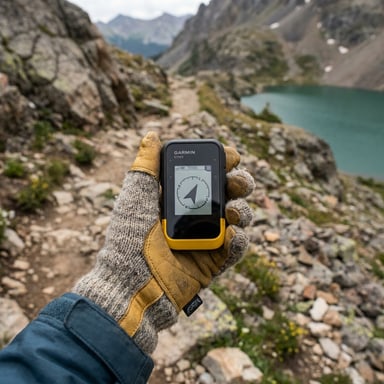
The eTrex SE delivers modern multi-GNSS support and up to 168 hours of battery life from two AA batteries at a price that makes it an accessible first dedicated GPS for hikers who want a reliable backup to their phone. Wireless Bluetooth sync with the Garmin Explore app transfers waypoints and routes without a computer.
- Weight
- 5.5 oz (156g) with batteries
- Battery life
- Up to 168 hours standard tracking; 1,800 hours expedition mode; 2 x AA alkaline or lithium
- Display
- 2.2-inch monochrome, 240x320 pixels; high-contrast, sunlight-readable
- Satellite systems
- GPS, GLONASS, Galileo, BeiDou, QZSS (5-constellation support)
- Durability
- IPX7 waterproof; operates -4 to 140 degrees F (Garmin manual)
- Memory/mapping
- No onboard maps (basemap of cities only); waypoints, TracBack, and routes via the Explore app
More strengths
- Five satellite systems (GPS, GLONASS, Galileo, BeiDou, QZSS) at the lowest price here
- No subscription, works everywhere out of the box as a reliable location recorder and waypoint navigator
Other tradeoffs
- Some owners report intermittent power-cycling bugs and occasional freeze issues that require a battery pull to resolve
Switchback Travel and GearJunkie both name the eTrex SE their budget pick. It runs on two AA batteries (alkaline, NiMH, or lithium) and Garmin rates it at 168 hours in standard mode and 1,800 hours in expedition mode, so you can swap in fresh cells anywhere. It tracks GPS, GLONASS, Galileo, BeiDou, and QZSS, is IPX7, operates from -4 to 140 F, and weighs 5.5 oz with batteries.
Like the eTrex Solar, it has a monochrome screen, a city basemap, and no topo maps, so you plan routes at home and follow the line on the trail. If you want topo maps on AA batteries, Garmin's older eTrex 32x has them on a color screen, but Garmin rates it at only 25 hours and it tracks just GPS and GLONASS.
Display: 2.2 in monochrome | Battery: 168 hr on 2 AA | Maps: Basemap only | Satellite messaging: No | Weight: 5.5 oz
Best satellite messenger: Garmin inReach Mini 3 Plus
BEST SATELLITE MESSENGER
Garmin inReach Mini 3 Plus
Best for: Hikers who navigate with a phone or watch and want the lightest way to add two-way satellite messaging and SOS.
- Satellite texts, photos, voice, and SOS at 4.42 oz
- Not a standalone mapping GPS; it relies on your phone for maps
Kit Score 8.8/10 · $445.75 Price checked Oct 23, 6:22 AM CDT · how we score gear
Buy on AmazonProduct details
The inReach Mini 3 Plus replaces the Mini 2 as Garmin's smallest two-way satellite communicator. It adds a 1.9-inch color touchscreen and inReach Plus, so you can send photos and 30-second voice messages as well as texts and SOS, and Garmin rates it at up to 350 hours with 10-minute tracking. It pairs with your phone for maps.
- Display
- 1.9 in color MIP touchscreen, 306 x 230
- Battery
- Up to 350 hr with 10-min tracking; 95 hr in performance messaging mode
- Satellites
- Multi-band GPS, Galileo, QZSS, BeiDou
- Maps
- Basemap only; topo maps through the paired phone app
- Satellite comms
- inReach Plus: texts, photos, voice messages, interactive SOS (plan required)
- Build
- 4.42 oz, IP67, compass
More strengths
- Up to 350 hours with 10-minute tracking
- Picked by Treeline Review, Backpacker, Switchback Travel, and GearJunkie
Other tradeoffs
- Needs a monthly inReach plan, and photo and voice messages count against plan limits
If your phone or watch is already your map, the inReach Mini 3 Plus adds what they cannot do: two-way messaging and SOS from anywhere with a view of the sky. Treeline Review names it the best satellite messenger overall, Backpacker its best standalone communicator, and Switchback Travel and GearJunkie also pick it. It replaces the inReach Mini 2.
The Mini 3 Plus adds a 1.9-inch color touchscreen and inReach Plus, so you can send photos and voice messages as well as texts. Garmin rates it at up to 350 hours with 10-minute tracking, and it weighs 4.42 oz with an IP67 rating. It pairs with your phone for maps, and it needs the same inReach plan as the H1i Plus. Our satellite messenger guide compares it with Zoleo and the PLB alternatives.
Display: 1.9 in color touchscreen | Battery: 350 hr with 10-min tracking | Maps: Basemap only | Satellite messaging: Yes | Weight: 4.42 oz
The best GPS for a remote trip is the one that can still call for help when everything else in your pack is dead.
Compare the picks
| Spec | GPSMAP H1i Plus | GPSMAP H1 | eTrex Touch | Montana 710i | eTrex Solar | eTrex SE | inReach Mini 3 Plus |
|---|---|---|---|---|---|---|---|
| Kit Score | 8.4/10 | 8.1/10 | 8.0/10 | 8.1/10 | 7.9/10 | 7.1/10 | 8.8/10 |
| Price | $999.99 Price checked Oct 23, 6:22 AM CDT | $649.00 Price checked Oct 23, 6:22 AM CDT | Check current price | $693.97 Price checked Oct 23, 6:22 AM CDT | $197.99 Price checked Oct 23, 6:22 AM CDT | $149.99 Price checked Oct 23, 6:22 AM CDT | $445.75 Price checked Oct 23, 6:22 AM CDT |
| Best for | Backcountry hikers, hunters, and off-trail travelers who want maps and satellite SOS in one device instead of two. | Hikers who want a full-size mapping GPS and either carry a separate satellite messenger or do not need one. | Hikers who want real on-device topo maps in the lightest package, without paying for inReach. | Overlanders, hunters, and ATV riders who navigate from a vehicle or base camp and want a big map plus satellite SOS. | Thru-hikers and expedition trekkers doing long stretches without power access who follow pre-planned GPX routes and want multi-day battery confidence without carrying extra batteries or a power bank. | Day hikers and weekend backpackers who want a no-subscription dedicated GPS backup with exceptional battery life, and who plan routes in advance using the Garmin Explore app. | Hikers who navigate with a phone or watch and want the lightest way to add two-way satellite messaging and SOS. |
| Why it stands out | Maps, multi-band GNSS, and two-way satellite messaging in one device | Big touchscreen plus buttons and preloaded topo maps | Topo maps and multi-band GNSS at 5.3 oz | 5-inch screen, the largest here, and road plus topo maps | Solar charging adds field insurance on long trips; Garmin rates it unlimited in 75,000 lux (direct sun) | 168-hour battery life from standard AA batteries removes charger anxiety entirely, including in cold weather where lithium cells maintain performance | Satellite texts, photos, voice, and SOS at 4.42 oz |
| Tradeoff | The most expensive pick, before the monthly inReach plan | No satellite messaging or SOS; pair it with an inReach if you need one | Touchscreen only, which is harder to use with thick gloves than buttons | Only 24 hours in GPS mode; the H1i Plus is rated for far longer | No onboard topo maps: detailed route navigation requires a paired phone running the Garmin Explore app, which reduces the independence advantage of a dedicated GPS | No onboard topo maps: navigation depends on pre-loaded waypoints or a paired phone, which limits utility if you go off-route | Not a standalone mapping GPS; it relies on your phone for maps |
| Screen | 3.5 in color touch plus buttons | 3.5 in color touch plus buttons | 3 in color touch | 5 in color touch | 2.2 in monochrome | 2.2 in monochrome | 1.9 in color touch |
| Topo maps preloaded | Yes | Yes | Yes | Yes, plus road maps | No | No | No |
| Multi-band GNSS | Yes | Yes | Yes | Not listed | Yes | No | Yes |
| Satellite messaging and SOS | Yes, with photos and voice | No | No | Yes | No | No | Yes, with photos and voice |
| Rated battery | 145 hr multi-band | 145 hr multi-band | 130 hr multi-band | 24 hr GPS mode | 200 hr GPS-only; unlimited in sun | 168 hr on 2 AA | 350 hr, 10-min tracking |
| Power | Internal lithium-ion | Internal lithium-ion | Internal lithium-ion | Removable lithium-ion pack | Internal lithium-ion plus solar | 2 AA | Internal lithium-ion |
| Weight | 10.2 oz | 9.7 oz | 5.3 oz | 14.5 oz | 5.0 oz | 5.5 oz | 4.42 oz |
| Water rating | IP67 | IP67 | IP67 | IPX7 | IPX7 | IPX7 | IP67 |
| Subscription | inReach plan for messaging | None | None | inReach plan for messaging | None | None | inReach plan for messaging |
How to choose a handheld GPS
The numbers that matter
Satellite SOS first
If a broken ankle in your terrain means a helicopter, carry a device with inReach SOS: the GPSMAP H1i Plus, the Montana 710i, or an inReach Mini 3 Plus alongside any GPS. Our guide to [whether you need a satellite messenger](/hike/do-you-need-a-satellite-messenger) and the [satellite messenger vs PLB](/hike/satellite-messenger-vs-plb) comparison cover the options.
Maps on the device
The H1, H1i Plus, eTrex Touch, and Montana have preloaded TopoActive maps, so you can reroute on the trail. The eTrex Solar and SE have only a basemap; load a GPX route before you leave.
Battery and power source
Rechargeable units run 130 to 145 hours in multi-band mode (H1 series, eTrex Touch). For weeks without power, the eTrex Solar charges in sun and the eTrex SE takes AA cells you can buy anywhere. The Montana's 24-hour GPS rating is the shortest here.
Multi-band GNSS
Listening on two frequencies helps a receiver reject signals bounced off cliffs and trees. Every pick except the eTrex SE has it; Garmin does not list it for the Montana 710i.
Budget for the plan
Garmin's inReach plans run $7.99 (Enabled, pay per message) to $49.99 (Premium, unlimited) a month after a $39.99 activation, every plan includes SOS, and you can suspend for up to 12 months at no charge. A GPS without inReach has no ongoing cost.
GPS device vs phone app
Apps like Gaia GPS and Garmin Explore are capable navigators when your phone is charged and you downloaded maps before losing signal. A dedicated GPS earns its place when the phone is the weak link: it runs for days rather than hours, its transflective screen is made to be read in direct sun, and every pick here is rated IPX7 or IP67 for water. Most experienced backcountry hikers carry both, and the phone becomes the backup. If you would rather navigate from your wrist, see our best GPS watches for hiking.
Frequently asked questions
What is the best handheld GPS for hiking in 2026?
The Garmin GPSMAP H1i Plus is the best for backcountry hiking. Switchback Travel names it its best overall, and it combines preloaded topo maps, multi-band GPS, and inReach satellite messaging and SOS, rated for up to 145 hours in multi-band mode. For maps without a subscription, the eTrex Touch is lighter and costs less.
Is the Garmin GPSMAP 67i discontinued?
Garmin now lists the GPSMAP 67 and 67i as previous models on its US site. Their successors are the GPSMAP H1 and H1i Plus, which add a 3.5-inch touchscreen alongside the buttons. Some retailers still sell remaining 67i stock; if you buy one, check that it is new and sold by an authorized seller.
Do I need a subscription for a handheld GPS?
Not for navigation. Every GPS here tracks your position and follows routes with no plan. A subscription is needed only for satellite messaging and SOS on inReach devices (the GPSMAP H1i Plus, Montana 710i, and inReach Mini 3 Plus). Garmin's plans run $7.99 to $49.99 a month plus a $39.99 activation fee, and you can suspend for up to 12 months at no charge.
Is the inReach Mini 3 Plus a GPS?
It finds your position with multi-band GPS and can track and share it, but it has only a basemap, so it is not a mapping GPS on its own. It pairs with your phone, where you see topo maps, and adds two-way satellite messaging and SOS. Pair it with a phone app or a GPS watch, or choose the GPSMAP H1i Plus to get both in one device.
Should I get a handheld GPS that uses AA batteries?
AA batteries make sense for long trips without power and for cold weather, because you can carry spares and swap them in seconds. The eTrex SE runs 168 hours on two AA cells. Rechargeable units like the GPSMAP H1 and eTrex Touch last 130 to 145 hours in multi-band mode and recharge from a power bank.
Where these numbers come from
| Claim | Source | Checked |
|---|---|---|
| GPSMAP H1i Plus and H1: 3.5 in transflective color touchscreen, 282 x 470; 10.2 oz and 9.7 oz; IP67; up to 145 hr multi-band and 840 hr expedition; H1i Plus 48 hr performance messaging, 425 hr expedition and 135 hr low-power with 10-min tracking; GPS, Galileo, QZSS, BeiDou, IRNSS, multi-band; TopoActive preloaded; altimeter and compass; H1i Plus 5 MP and 8 MP cameras, photo and voice messages, interactive SOS | Garmin GPSMAP H1 series | 2026-10-03 |
| GPSMAP H1 series operating temperature -20 to 60 C (-4 to 140 F) | Garmin GPSMAP H1 owner's manual, Specifications | 2026-10-03 |
| GPSMAP 67 and 67i filed under Previous Models and no longer sold on Garmin US | Garmin GPSMAP 67 series | 2026-10-03 |
| eTrex 32x: 2.2 in color screen, TopoActive preloaded, 2 AA, 25 hr, GPS and GLONASS, 5 oz with batteries | Garmin eTrex 22x/32x | 2026-10-03 |
| eTrex Touch: 3 in color touchscreen, 240 x 400; 5.3 oz; IP67; up to 130 hr multi-band, 650 hr expedition; GPS, GLONASS, Galileo, QZSS, BeiDou, IRNSS, multi-band; TopoActive preloaded; altimeter and compass | Garmin eTrex Touch | 2026-10-03 |
| Montana 710i: 5 in touchscreen, 480 x 800; 14.5 oz with battery pack; IPX7; 24 hr GPS mode, 440 hr expedition; TopoActive and City Navigator North America; GPS and Galileo; interactive SOS | Garmin Montana 700 series | 2026-10-03 |
| Montana 710i operating temperature -20 to 60 C; manual lists 432 hr expedition | Garmin Montana 710i/760i owner's manual | 2026-10-03 |
| eTrex Solar: 200 hr GPS-only, 100 hr multi-band, 1,800 hr expedition, unlimited at 75,000 lux; IPX7 | Garmin eTrex SE/Solar owner's manual, eTrex Solar Specifications | 2026-10-03 |
| eTrex SE: two AA (alkaline, NiMH, or lithium), 168 hr standard, 1,800 hr expedition; IPX7; -4 to 140 F | Garmin eTrex SE/Solar owner's manual, eTrex SE Specifications | 2026-10-03 |
| eTrex Solar 5.0 oz and eTrex SE 5.5 oz with batteries; city basemaps; eTrex SE satellite systems | Garmin eTrex Touch, eTrex Solar, and eTrex SE comparison | 2026-10-03 |
| inReach Mini 3 Plus: 1.9 in color MIP touchscreen, 306 x 230; 4.42 oz; IP67; up to 350 hr with 10-min tracking, 95 hr performance messaging; GPS, Galileo, QZSS, BeiDou, multi-band; photos, voice messages, interactive SOS | Garmin inReach Mini 3 series | 2026-10-03 |
| inReach Mini 3 operating temperature -20 to 60 C | Garmin inReach Mini 3 owner's manual, Specifications | 2026-10-03 |
| inReach plans: Enabled $7.99, Essential $14.99, Standard $29.99, Premium $49.99 a month; $39.99 activation; SOS on every plan; suspend up to 12 months at $0 | Garmin inReach subscription plans | 2026-10-03 |
| Awards: Switchback Travel (GPSMAP H1i Plus best overall, eTrex SE budget, inReach Mini 3 Plus minimalist, Montana 710i touchscreen); GearJunkie (eTrex Touch best overall, eTrex SE budget, inReach Mini 3 Plus for satellite messaging); Treeline Review (inReach Mini 3 Plus best overall messenger); Backpacker (inReach Mini 3 Plus best standalone communicator) | Switchback Travel, GearJunkie, Treeline Review, Backpacker | 2026-10-03 |
| Seller and stock: every pick in stock and sold by Amazon.com | Amazon listings B0FN9WVJW7, B0FN9MFPP8, B0FT54VL2S, B0DQQVG24P, B0CL7N15WM, B0BT35C89P, B0G4RST8LV | 2026-10-03 |
We did not test these units ourselves. Battery figures are Garmin's rated numbers under the conditions Garmin states; tree cover, cold, and frequent tracking or messaging cut them.
A good GPS is low-drama insurance for the backcountry. Pick the one that fits your trip, load your route before you leave, and see more hiking gear, or read how we research and rate every pick on this site.
Keep going
Related guides
 Complete hike loadoutDay hike kitBuild the complete kit
Our recommendations draw on manufacturer documentation, retailer listings, owner feedback, and comparisons with alternatives.
As an Amazon Associate I earn from qualifying purchases. We may earn a commission from links here, at no extra cost to you. How we research →