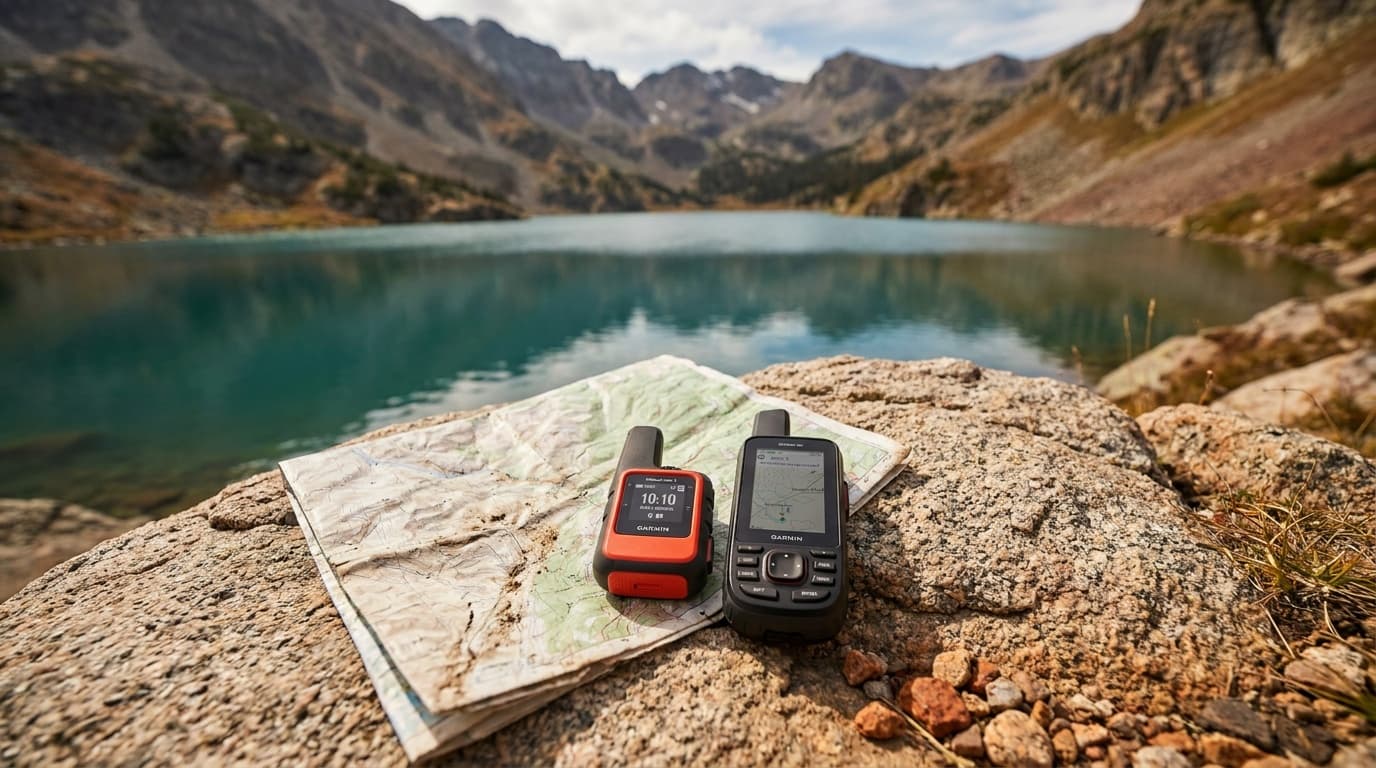
The inReach Mini 2 and the GPSMAP 67i both carry Garmin's inReach satellite messaging and send SOS alerts to the same 24/7 coordination center. Everything else about them is different. One is a 3.5 oz communicator that leans on your phone for maps; the other is an 8.1 oz standalone GPS that does not need one.
The core split
These two devices are not really rivals. The Mini 2 is a satellite communicator with a small monochrome screen that pairs with your phone for real navigation. The GPSMAP 67i is a full GPS unit with satellite communication built in. Buying the wrong one means either carrying weight you did not need or reaching for your phone in conditions where it may fail you.
The question to ask first: do you navigate by phone today, and do you trust it?
Weight and form factor
At 3.5 oz the Mini 2 disappears into a hip-belt pocket. The 67i at 8.1 oz is a device you carry instead of a separate GPS, not alongside one. If you already carry a GPS, the 67i replaces it and adds satellite messaging. If you do not, it asks you to carry 8.1 oz where you were carrying nothing.
Both are rated IPX7, which Garmin defines as withstanding incidental exposure to water up to 1 meter for 30 minutes, and the 67i is also built to MIL-STD-810 for thermal, shock, and water.
Mapping and navigation
The 67i's 3-inch color screen with preloaded TopoActive maps is the single biggest upgrade over the Mini 2 for hikers who want to navigate without a phone.
The Garmin GPSMAP 67i ships with preloaded TopoActive maps for the US, Mexico, and Canada on a 3-inch color display, and stores up to 10,000 waypoints. Its multi-band GNSS improves accuracy where satellite signals are reflected or weak, such as canyons and heavy tree cover. You can plan routes, check your position against the terrain, and navigate to a waypoint with no phone in range. Bass Pro Shops still sells it new, in limited stock.
The Mini 2's 0.9-inch monochrome screen handles point-to-point navigation and TracBack, and it stores 1,000 waypoints. That is enough to confirm you are heading the right way or retrace your steps, but not to read terrain. Maps, route planning, and satellite imagery come through the Garmin Explore app on your phone.
If your system is a phone with offline maps and a battery bank, the Mini 2 fits that workflow and adds little you do not need. If you go where a dead or frozen phone is a real risk, the 67i is a backup that does not depend on a second device.
Battery life
At 10-minute tracking, Garmin rates the Mini 2 at about twice the 67i: 14 days versus about 7. For a two-week trip at that interval, the Mini 2 covers the window without a recharge, and the 67i needs power about once a week if you use it actively.
The 67i stretches to 425 hours in expedition mode with inReach on, Garmin's low-power setting for long trips.
SOS: identical where it counts
Both devices use the Iridium satellite network, which Garmin describes as 100% global, and both send an interactive SOS to Garmin Response, Garmin's 24/7-staffed international coordination center. You can trade messages with responders on either one, so the rescue path is the same.
The practical difference is position accuracy in hard terrain. The 67i has multi-band GNSS; the Mini 2 does not. Garmin's newer Mini 3 and Mini 3 Plus close that gap with multi-band support of their own.
Price and subscription
The Mini 2 costs less than the 67i, and Garmin still sells it new on its US store; the 67i is now remaining stock at retailers such as Bass Pro Shops. Prices on both have moved since launch, so check current prices before you decide.
The plan is the same for both. Garmin bills inReach plans monthly: Enabled is $7.99, Essential $14.99, Standard $29.99, and Premium $49.99, plus a $39.99 activation fee, and every plan includes SOS. You can suspend service for up to 12 months at no cost, so you are not paying through the off-season.
How to decide
Match the device to your situation
You navigate by phone today
The Mini 2 is the logical fit. It adds satellite messaging and SOS to the system you already use without adding meaningful weight.
You want one device, not two
The 67i handles navigation, messaging, and SOS with no phone. If you are buying new, its successor, the GPSMAP H1i Plus, does the same with a touchscreen and photo and voice messages.
You are doing a two-week or longer trip
At 10-minute tracking, the Mini 2 lasts the full window without a recharge. If navigation is secondary and weight is primary, the Mini 2 wins.
You hike in dense canopy or winter
The 67i's multi-band GNSS helps under heavy tree cover and in canyons, and a phone that dies in the cold does not affect a standalone GPS.
You already carry a dedicated GPS
Adding a Mini 2 gives you satellite messaging for 3.5 oz without replacing the GPS you trust.
You want the newest small inReach
The inReach Mini 3 Plus adds a color touchscreen, multi-band GPS, and photo and voice messages for about an ounce more than the Mini 2.
Who each device suits
The Mini 2 suits ultralight backpackers, trail runners, weekend hikers who navigate by phone, and anyone who already carries a dedicated GPS and only needs to add satellite messaging. Its 3.5 oz weight and 14-day rating at 10-minute tracking make it easy to live with on any trip.
The 67i suits hikers who want to drop a separate GPS, guides, search and rescue volunteers, winter campers whose phone batteries fail in the cold, and hunters or backcountry travelers who work far from phone signal. The 3-inch color screen and preloaded maps make it a genuine all-in-one tool.
For current standalone units, see our guide to the best handheld GPS devices for hiking.
FAQ
Do I still need my phone if I buy the GPSMAP 67i?
No. The 67i is a standalone GPS with preloaded TopoActive maps for the US, Mexico, and Canada, a 3-inch color screen, and 10,000 waypoints. You can plan routes, navigate, track your position, send messages, and trigger SOS without a phone. The Mini 2 is the opposite: its 0.9-inch monochrome screen handles basic point-to-point navigation and TracBack, and maps, route planning, and satellite imagery come through the Garmin Explore app on your phone.
Is the SOS on the Mini 2 less capable than on the 67i?
No. Both use the Iridium network and both send an interactive SOS to Garmin Response, Garmin's 24/7-staffed coordination center. The one difference is position accuracy in hard terrain: the 67i has multi-band GNSS and the Mini 2 does not, which matters most under heavy tree cover and in canyons.
Which device has better battery life for a 2-week trip?
The Mini 2, as a communicator. At 10-minute tracking Garmin rates it at 336 hours (14 days), versus 165 hours for the 67i with inReach on. The 67i can stretch to 425 hours in expedition mode. If you carry a phone for navigation and want to skip recharging, the Mini 2 is the more practical choice; if you need active GPS navigation every day, plan to recharge the 67i about once a week.
Are the inReach Mini 2 and GPSMAP 67i discontinued?
The GPSMAP 67i is no longer sold on Garmin's US store, and its successor is the GPSMAP H1i Plus. The inReach Mini 2 is still on sale from Garmin, but the inReach Mini 3 and Mini 3 Plus are newer, with a color touchscreen, multi-band GPS, and an IP67 rating. Whichever you buy, buy it new from Garmin or an authorized US retailer.
Where these numbers come from
| Claim | Source | Checked |
|---|---|---|
| inReach Mini 2: 3.5 oz (100 g), 0.9 x 0.9 in monochrome display, IPX7, up to 14 days at 10-min tracking and 30 days at 30-min tracking, 1,000 waypoints, point-to-point navigation and TracBack, maps and imagery via Garmin Explore app; on sale on Garmin US | Garmin inReach Mini 2 | 2026-10-03 |
| GPSMAP 67i: 8.1 oz (230 g) with battery, 3 in color display, IPX7, MIL-STD-810, 165 hr with inReach and 10-min tracking, 425 hr expedition with inReach, 10,000 waypoints, TopoActive maps for US, Mexico, and Canada, multi-band accuracy where signals are reflected or weak, 100% global Iridium; no longer sold on Garmin US | Garmin GPSMAP 67i, Garmin GPSMAP 67 | 2026-10-03 |
| IPX7 definition: incidental exposure to water up to 1 m for 30 minutes | Garmin water ratings | 2026-10-03 |
| Mini 3 and Mini 3 Plus: 1.9 in color touchscreen, multi-band, IP67, 350 hr with 10-min tracking, 4.31 oz and 4.42 oz; Mini 2 has no multi-band support | Garmin: Comparing the inReach Mini 2, Mini 3, and Mini 3 Plus | 2026-10-03 |
| GPSMAP H1i Plus: touchscreen, TopoActive maps, inReach Plus photo, voice, and text messages | Garmin GPSMAP H1i Plus | 2026-10-03 |
| Garmin plans: Enabled $7.99, Essential $14.99, Standard $29.99, Premium $49.99 a month; $39.99 activation; SOS on every plan; suspend up to 12 months at $0; Garmin Response 24/7-staffed; Mini 2 and GPSMAP 67i both compatible | Garmin inReach consumer plans | 2026-10-03 |
| GPSMAP 67i sold new by Bass Pro Shops, limited stock | Bass Pro Shops GPSMAP 67i listing | 2026-10-03 |
Explore more gear picks and comparisons in hike gear, or read how we research and rate to see how Kit Authority puts its scores together.
Recommended gear
Our current top picks from the Best handheld GPS devices for hiking and backcountry guide, if you are ready to buy.
Best for: Backcountry hikers, hunters, and off-trail travelers who want maps and satellite SOS in one device instead of two.
- Maps, multi-band GNSS, and two-way satellite messaging in one device
- The most expensive pick, before the monthly inReach plan
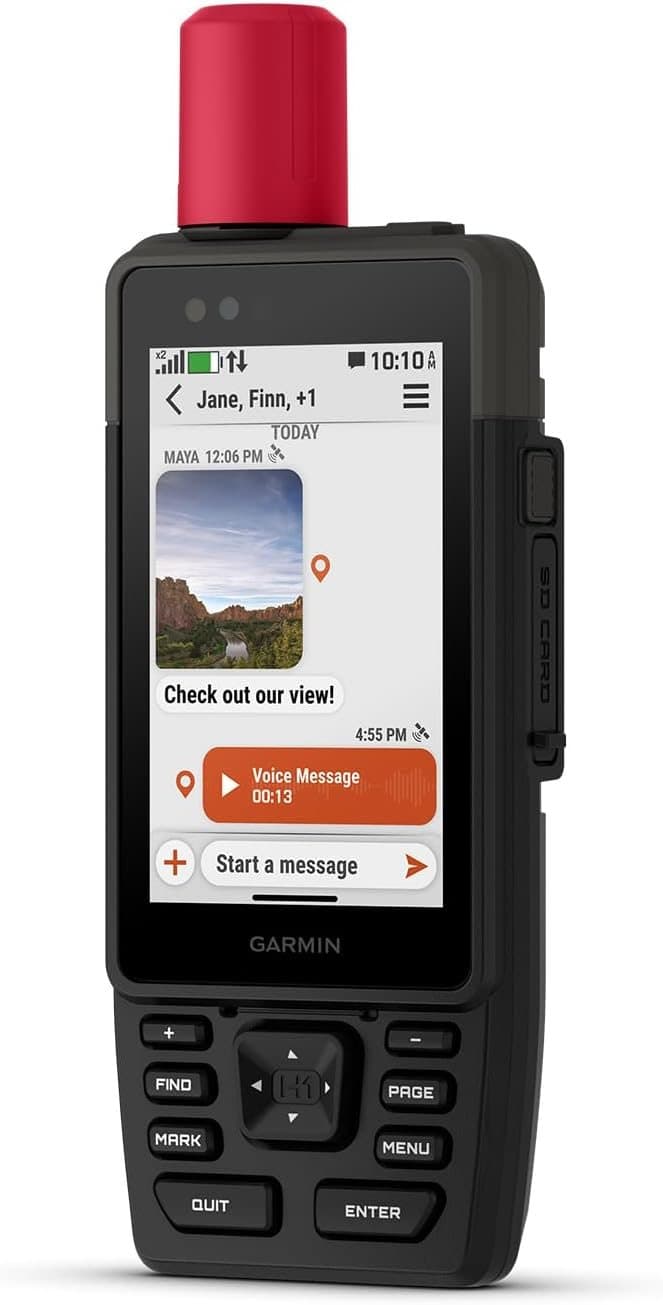
- Display
- 3.5 in transflective color touchscreen plus buttons, 282 x 470
- Battery
- Up to 145 hr multi-band, 840 hr expedition; 48 hr messaging with 10-min tracking
- Satellites
- Multi-band GPS, Galileo, QZSS, BeiDou, IRNSS
- Maps
- TopoActive preloaded, routable
- Satellite comms
- inReach Plus: texts, photos, voice messages, interactive SOS (plan required)
- Build
- 10.2 oz, IP67, barometric altimeter, compass, 5 MP front and 8 MP rear cameras
About this pick
The GPSMAP H1i Plus replaces the GPSMAP 67i as Garmin's do-everything handheld. It adds a 3.5-inch touchscreen alongside the buttons, preloaded TopoActive maps, multi-band GNSS, and inReach Plus, which sends photos and voice messages as well as texts and SOS over satellite. Garmin rates it at up to 145 hours in multi-band mode.
Strengths
- Maps, multi-band GNSS, and two-way satellite messaging in one device
- Touchscreen plus buttons, so it works with gloves or wet fingers
- Up to 840 hours in expedition mode
Weaknesses
- The most expensive pick, before the monthly inReach plan
- At 10.2 oz it is about twice the weight of an eTrex
Kit Score breakdown
GARMIN
Garmin GPSMAP H1
BEST WITHOUT A SUBSCRIPTION
Kit Score 8.1/10
$649.00 Price checked Oct 23, 4:16 PM CDT
Best for: Hikers who want a full-size mapping GPS and either carry a separate satellite messenger or do not need one.
- Big touchscreen plus buttons and preloaded topo maps
- No satellite messaging or SOS; pair it with an inReach if you need one
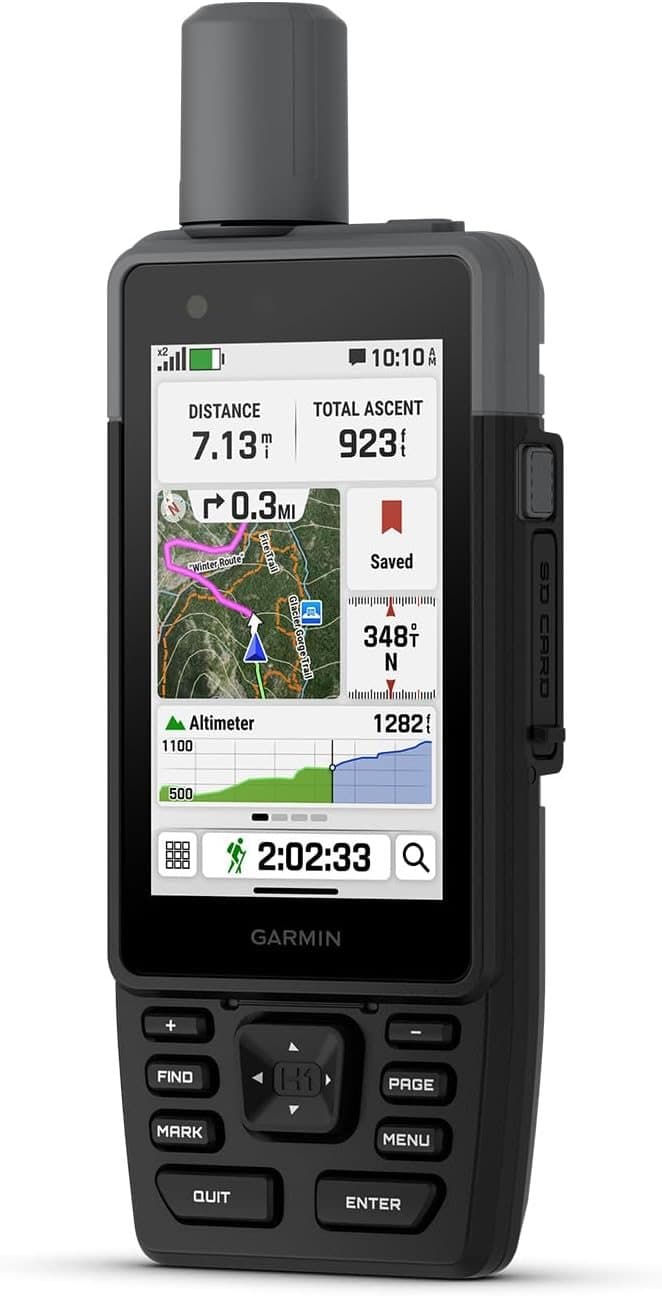
- Display
- 3.5 in transflective color touchscreen plus buttons, 282 x 470
- Battery
- Up to 145 hr multi-band, 840 hr expedition
- Satellites
- Multi-band GPS, Galileo, QZSS, BeiDou, IRNSS
- Maps
- TopoActive preloaded, routable
- Satellite comms
- None
- Build
- 9.7 oz, IP67, barometric altimeter, compass
About this pick
The GPSMAP H1 is the H1i Plus without inReach: the same 3.5-inch touchscreen and buttons, preloaded TopoActive maps, multi-band GNSS, altimeter, and compass, rated at up to 145 hours in multi-band mode. It replaces the GPSMAP 67 and needs no subscription.
Strengths
- Big touchscreen plus buttons and preloaded topo maps
- Multi-band GNSS and up to 145 hours of battery
- No subscription
Weaknesses
- No satellite messaging or SOS; pair it with an inReach if you need one
- Costs more than the eTrex Touch, which also has maps and multi-band GNSS
Kit Score breakdown
Best for: Hikers who want real on-device topo maps in the lightest package, without paying for inReach.
- Topo maps and multi-band GNSS at 5.3 oz
- Touchscreen only, which is harder to use with thick gloves than buttons
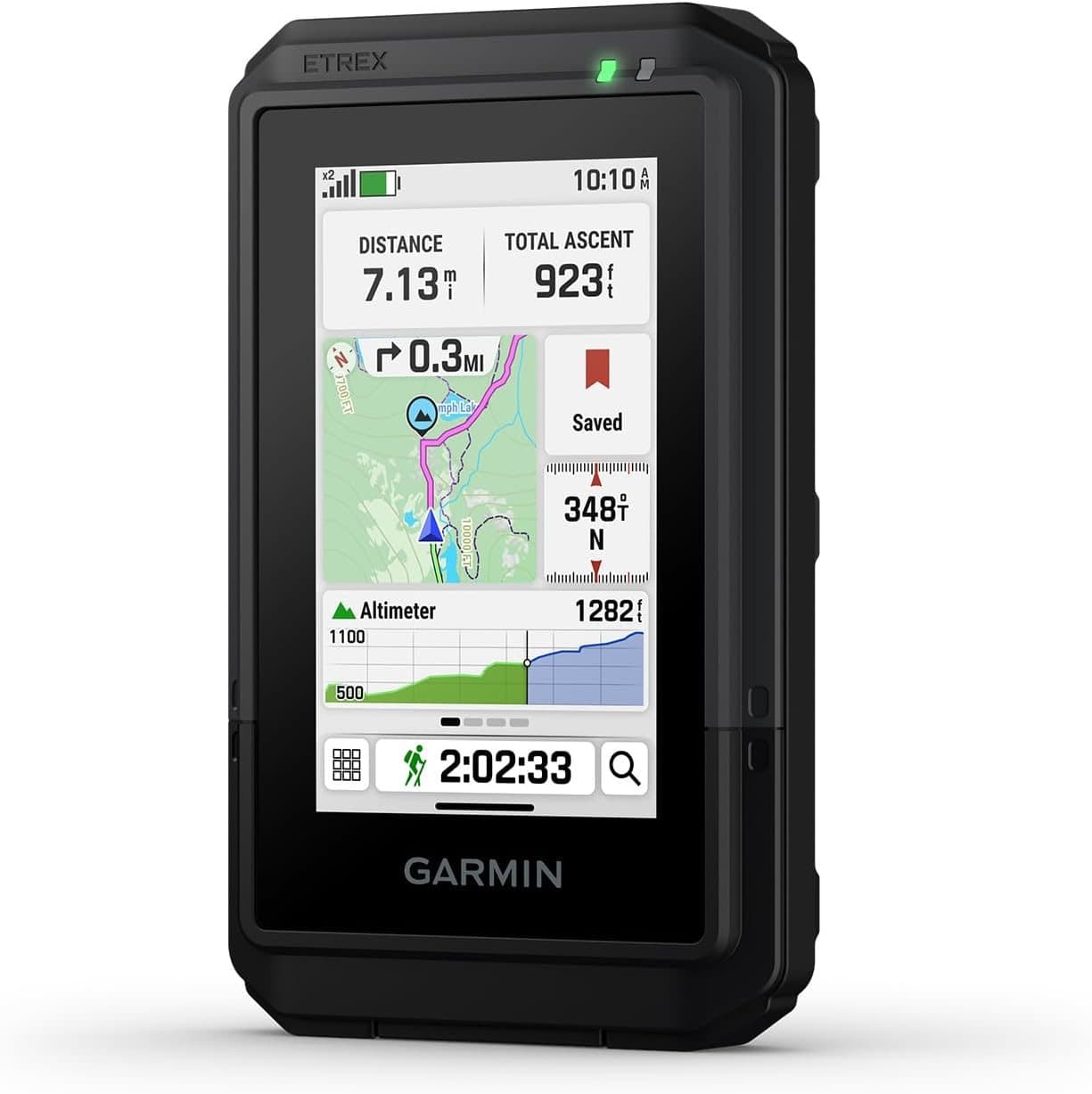
- Display
- 3 in transflective color touchscreen, 240 x 400
- Battery
- Up to 130 hr multi-band, 650 hr expedition (internal lithium-ion)
- Satellites
- Multi-band GPS, GLONASS, Galileo, QZSS, BeiDou, IRNSS
- Maps
- TopoActive preloaded, routable
- Satellite comms
- None
- Build
- 5.3 oz, IP67, barometric altimeter, compass
About this pick
The eTrex Touch, new in fall 2025, puts preloaded TopoActive maps and multi-band GNSS into the eTrex's small, light body with a 3-inch color touchscreen. It weighs 5.3 oz and Garmin rates it at up to 130 hours in multi-band mode, with a barometric altimeter and compass.
Strengths
- Topo maps and multi-band GNSS at 5.3 oz
- Up to 130 hours in multi-band mode
- IP67 and small enough for a hip-belt pocket
Weaknesses
- Touchscreen only, which is harder to use with thick gloves than buttons
- No satellite messaging
Kit Score breakdown
See all picks in Best handheld GPS devices for hiking and backcountry
Keep going
Related guides
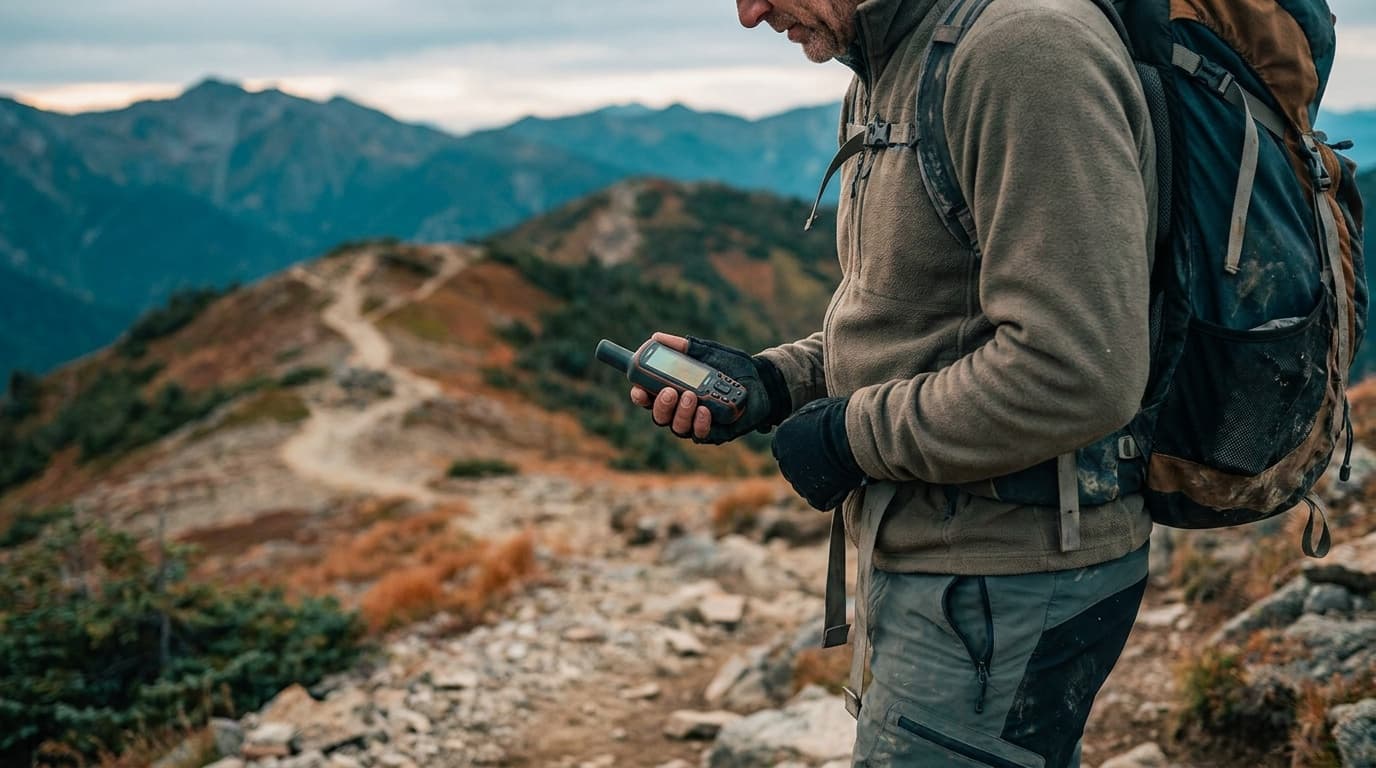
 Complete hike loadoutDay hike kitBuild the complete kit
Researched, not hands-on tested
Updated Oct 3, 2026Our recommendations draw on manufacturer documentation, retailer listings, owner feedback, and comparisons with alternatives.
As an Amazon Associate I earn from qualifying purchases. We may earn a commission from links here, at no extra cost to you. How we research →