We may earn a commission from links on this page, at no extra cost to you.
The Fitbit Inspire 3 is the best-value fitness tracker for walkers who want a slim band and up to 10 days of rated battery life. It still tracks steps without a phone, but route maps require your phone because GPS is connected rather than built in. In May 2026, the Fitbit app became the Google Health app and Fitbit Premium became Google Health Premium. This review explains those current tradeoffs and the alternatives in our best fitness trackers for walking guide.
Buy it only if these tradeoffs fit your walks
- You carry your phone and want a light, low-maintenance band: buy the Fitbit Inspire 3. Connected GPS is not a meaningful loss if the phone already comes with you.
- You leave your phone behind and want route maps: skip it and compare trackers with onboard GPS in the walking tracker guide.
- You only need steps, heart rate, sleep basics, and daily summaries: the included Google Health base features cover those jobs. Do not treat the Premium subscription as mandatory.
- You specifically want adaptive coaching and deeper personalized insights: include Google Health Premium in the ownership cost instead of comparing hardware prices alone.
BEST VALUE
Fitbit Inspire 3
Best for: Daily walkers who want a slim, accurate, set-and-forget band and already carry a phone on most walks.
Kit Score 8.0/10 · Check current price
- Excellent step accuracy relative to price
- Among the lightest trackers in its class at 20 g
- No onboard GPS: route maps require carrying a phone
Who it is for
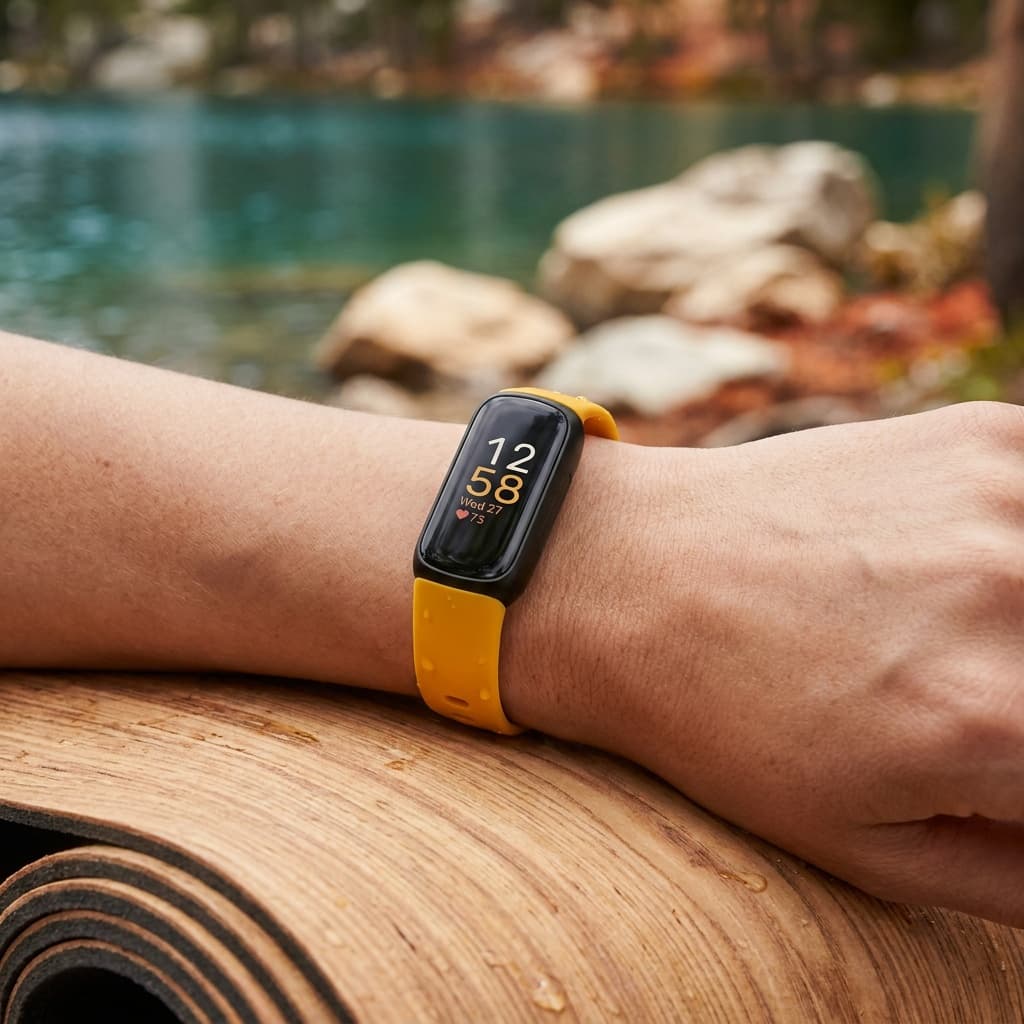
This band fits one buyer especially well: a daily walker who wants a slim, accurate, set-and-forget tracker and already carries a phone on most walks. The Inspire 3 weighs about 20 g with the band, so it disappears on the wrist, and the 10-day battery means you charge it roughly once a week rather than nightly. For someone who mostly wants honest step counts, heart-rate trends, and reliable sleep tracking, it covers the basics without asking you to learn a complicated watch.
It is a weaker fit if you train away from your phone or care about precise route maps. Because GPS is connected rather than onboard, the Inspire 3 borrows your phone's location to map a walk or run. Leave the phone at home and you still get steps and heart rate, but no route trace and less accurate distance. It is also a weaker fit if you want every advanced metric for free, since Fitbit reserves some of the richer analysis for Premium. If you are still deciding whether a band like this counts your steps honestly in the first place, our explainer on whether fitness tracker step counts are accurate is worth reading before you buy.
Full specifications
| Spec | Detail |
|---|---|
| Kit Score | 8.0 / 10 (researched, not lab-tested) |
| Display | 0.81 in. color AMOLED touchscreen |
| Battery life | Up to 10 days |
| GPS | Connected GPS (phone required) |
| Water resistance | 5 ATM (50 m) |
| Weight | Approx. 20 g with band |
| Exercise modes | 20+ with SmartTrack auto-detection |
| Health tracking | Steps, heart rate, sleep stages, SpO2 |
| Subscription | Google Health base features included; Premium coaching from $9.99/month |
| Price | $70–$100 (commonly discounts to $70) |
The spec people most often misread is GPS. "Connected GPS" does not mean a chip in the band. It means the Inspire 3 pairs with your phone's GPS for distance and maps, so the phone has to come along on the walk if you want that data. Plan around that and the band is excellent value; expect onboard GPS and you will be disappointed.
Pros and cons
What it does well:
- Excellent step accuracy relative to price: in our comparison research it missed only 32 steps over a 7,000-step walk, outperforming the pricier Fitbit Charge 6.
- Among the lightest trackers in its class at roughly 20 g, so it is comfortable for all-day and overnight wear.
- Up to 10 days of battery, which keeps it off the charger for a full week of walks.
- Google Health app with included daily summaries and sleep tracking.
- 5 ATM water resistance, so it survives rain, handwashing, and showers without worry.
Where it falls short:
- No onboard GPS: route maps and accurate distance require carrying a phone on the walk.
- Adaptive coaching and some deeper personalized insights require Google Health Premium, while the included base tier covers activity, sleep, and supported health tracking.
- The display is small. It is clear in daylight, but it is a glanceable band screen, not a full smartwatch face.
How it compares
Against the Garmin Vivoactive 5, the trade is price and simplicity versus capability. The Vivoactive 5 costs roughly twice as much ($180–$230 versus $70–$100), but it adds built-in GPS so you can map a walk without your phone, and it carries a longer battery and a fuller smartwatch feature set. It earns a slightly higher Kit Score (8.4) on the strength of that capability and build. The Inspire 3 gives up onboard GPS and the bigger screen, but it wins decisively on value and on being the easier band to live with day to day. If you walk with your phone anyway, the Garmin's headline feature matters less than the price gap.
Against the budget end, the Amazfit Band 7 is the cheaper option at $40–$60 and is the floor of this category. It scores lower (7.1) mostly on step accuracy and build, which is exactly where the Inspire 3 pulls ahead. The Amazfit is the call if your only goal is to spend as little as possible; the Inspire 3 is the call if you want noticeably better accuracy and the polished Google Health app for a small step up in price. Framed simply: the Fitbit is the easy budget entry that most walkers should reach for first, with the Garmin above it for GPS and the Amazfit below it for pure cost.
Frequently asked questions
Does the Fitbit Inspire 3 have GPS?
Not onboard. It uses connected GPS, which means it pairs with your phone's GPS for distance and route maps. If you carry your phone on walks you will get accurate distance and a route trace. If you leave the phone behind, the Inspire 3 still tracks steps and heart rate, but distance is estimated and there is no map. If mapping walks phone-free matters to you, look at the Garmin Vivoactive 5 instead.
How long does the Fitbit Inspire 3 battery last?
Up to 10 days on a charge in our researched specs, which is among the best in this class. Real-world life is shorter if you use the always-on display or track a lot of workouts, but most walkers can expect close to a week between charges, so you are not tethered to a nightly charging routine the way you are with full smartwatches.
Do you need Google Health Premium to use the Inspire 3?
No. The band works without a subscription for supported base features including steps, heart rate, sleep tracking, and activity summaries in the Google Health app. Google Health Premium, renamed from Fitbit Premium in May 2026, adds adaptive coaching and deeper personalized insights. It is optional, but include it in the ownership cost if those are the features you actually want.
Is the Fitbit Inspire 3 good for walking?
Yes, it is one of our top picks for walkers. It posted the tightest step accuracy in our comparison research, off by only 32 steps over a 7,000-step walk, and it is light enough at about 20 g to wear all day. The main limitation for walkers is the lack of onboard GPS, so if you want a route map you need to bring your phone along.
Is the Fitbit Inspire 3 worth it?
For most everyday walkers, yes. It earns a Kit Score of 8.0 because it combines accurate step counting, a 10-day battery, a clean app, and a sub-$100 price that often drops to $70. The reasons to spend more are onboard GPS and a fuller smartwatch (the Garmin Vivoactive 5); the reason to spend less is pure budget (the Amazfit Band 7). For a slim, accurate, set-and-forget band, the Inspire 3 is the easy value pick.
For the full field, including the GPS step-up and the budget floor scored the same way, see our best fitness trackers for walking guide.
Related buying guide
Best fitness trackers for walking: 3 picks by phone and GPSMake the next decision
Related guides

Field guide
Are fitness tracker step counts accurate?
Wrist trackers are accurate at normal speeds but miss 35–95% of steps when you push a cart or walk slowly. Here is what the research shows and how to get better numbers.
Read guide
Field guide
Gifts for walkers 2026: from $26 socks to a walking pad
Seven gifts for people who walk every day, $26 to $220: Darn Tough socks, ankle weights, a weighted vest, a Fitbit, Brooks Ghost 18, and a walking pad.
Read guide
Complete kit
Weighted vest starter kit: everything you need to begin
The complete beginner weighted vest setup: one adjustable vest, walking shoes, merino socks, and a simple tracker. What to buy, what to skip, and how to progress conservatively.
Read guide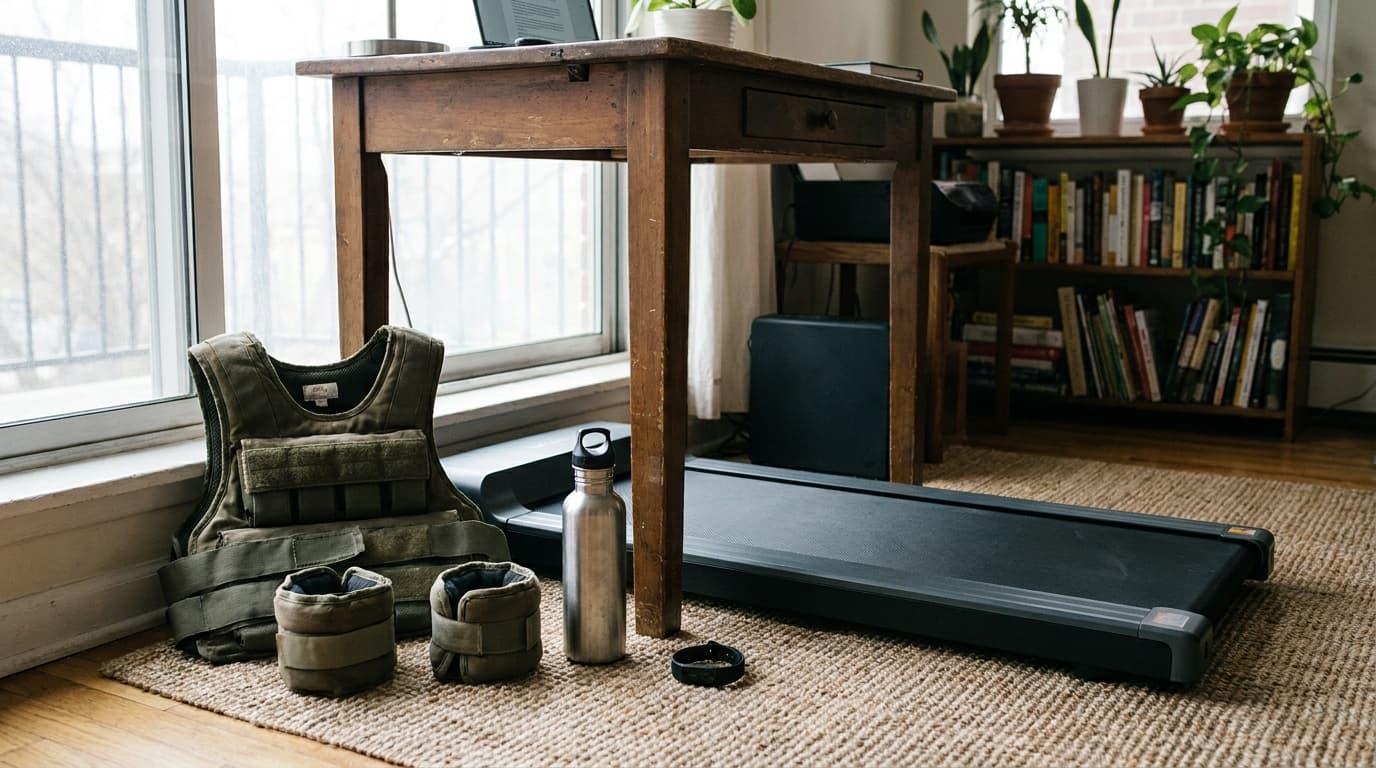
Field guide
How many steps a day to lose weight
The science behind 7,000 to 10,000 steps, how many calories walking actually burns, and how to pair daily steps with diet for real, lasting weight loss.
Read guideResearch-based review
Updated Aug 23, 2026Our recommendations draw on manufacturer documentation, retailer listings, owner feedback, and comparisons with alternatives.
As an Amazon Associate I earn from qualifying purchases. We may earn a commission from links here, at no extra cost to you. How we research →
Top picks
Related buying guide
Best fitness trackers for walking: 3 picks by phone and GPS