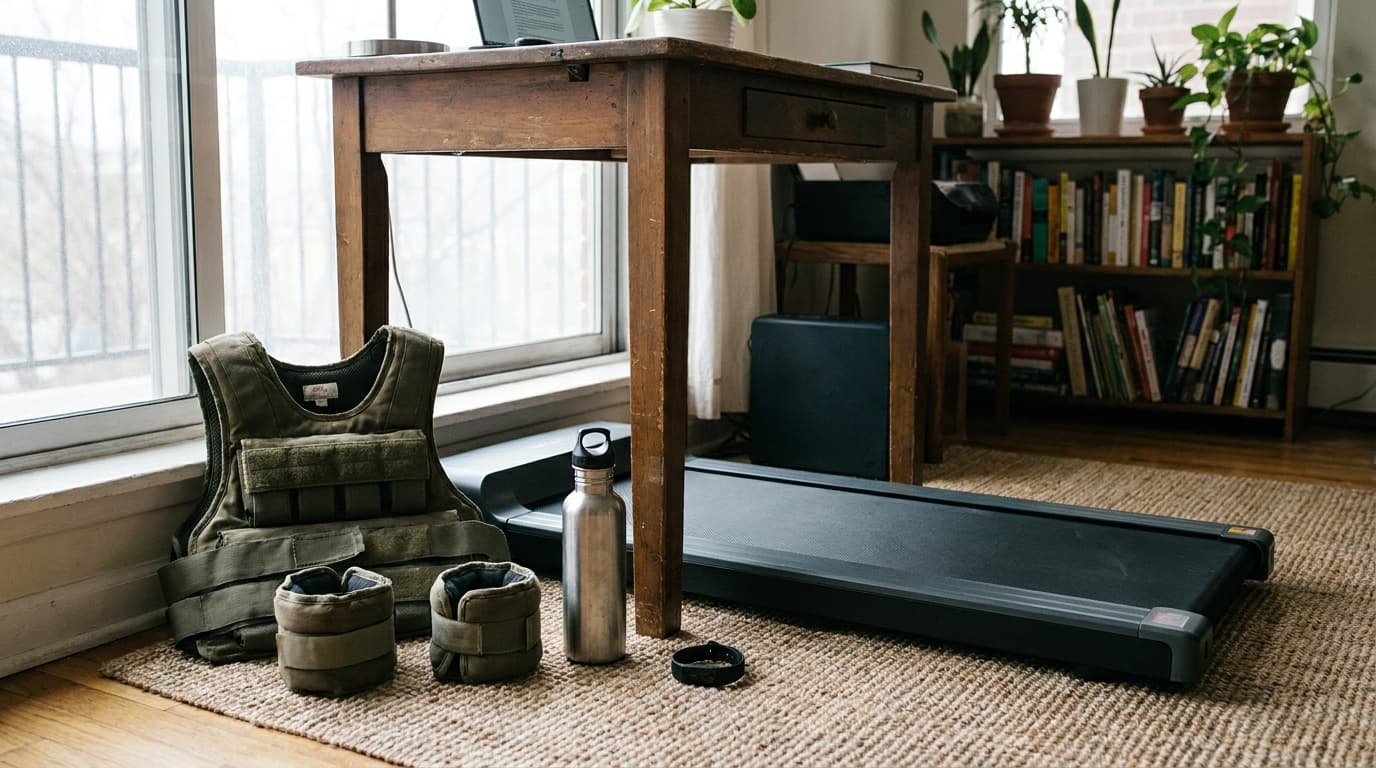
The 10,000-steps target is everywhere, but it came from a 1960s Japanese pedometer marketing campaign, not a clinical trial. The actual evidence paints a more useful picture: meaningful weight-loss benefits start lower, and what you pair with your steps matters more than hitting a round number.
Where the 7,000 to 10,000 range actually comes from
The 10,000-step figure has no clinical origin. It was coined as a marketing name for a Japanese pedometer sold ahead of the 1964 Tokyo Olympics. The number stuck because it is round and memorable, not because researchers established it as a threshold.
What researchers have established is different. A 2021 JAMA Network Open study following 2,110 adults (CARDIA study) found that walking at least 7,000 steps per day was associated with a 50 to 70 percent lower risk of all-cause mortality compared to walking fewer than 7,000 steps. Critically, no additional mortality benefit appeared beyond 10,000 steps. Seven thousand is the meaningful threshold for health; 10,000 is not a harder target, just a more ambitious one.
For weight loss specifically, a 2026 systematic review and meta-analysis of 18 randomized controlled trials involving 3,758 adults found that participants who reached roughly 8,500 steps per day during a structured lifestyle program lost 4.4 percent of body weight and maintained 3.3 percent of that loss after dietary restrictions eased. Every additional 1,000 steps per day was linked to 1.1 to 1.3 percent greater weight maintenance.
Steps and calories: what the math actually looks like
Walking 10,000 steps burns roughly 300 to 500 calories depending on body weight and pace. That range is wide because a 200-pound person walking briskly burns significantly more than a 130-pound person strolling.
Pace matters more than most people expect. One analysis found that walking 10,000 steps at 4 mph burned 153 more calories than the same distance at 2 mph. Brisk walking, roughly the pace where you can hold a conversation but not sing, is the practical target.
For weight loss, a sustained deficit of 300 to 500 calories per day from a combination of walking and dietary adjustment produces roughly 0.5 to 1 pound of fat loss per week. That is a realistic, evidence-consistent expectation. Walking without any dietary change often produces slow or no weight loss because appetite tends to compensate for the added energy expenditure.
Diet does most of the weight-loss heavy lifting. Walking is best understood as the activity layer that closes the gap diet alone cannot easily fill, and the daily habit most likely to prevent regain.
Why steps matter most during weight maintenance
The 2026 meta-analysis finding that deserves more attention is this: the protective effect of daily steps was strongest during the maintenance phase, not the active dieting phase. Around 80 percent of people who lose weight regain some or all of it within three to five years. The data suggest that keeping daily steps elevated after losing weight is one of the most durable tools for avoiding that pattern.
The mechanism is straightforward. As body weight falls, resting metabolic rate decreases. Walking offsets some of that drop by maintaining total daily energy expenditure without requiring ongoing dietary restriction to become more severe. It is not glamorous, but it is one of the few behaviors that shows up consistently across long-term weight-maintenance studies.
How to build toward 7,000 to 8,500 steps without burning out
The realistic starting point for most sedentary adults is 2,000 to 4,000 steps per day. Jumping straight to 10,000 from there invites overuse injuries and erodes motivation within a few weeks. The evidence-consistent approach is a gradual ramp.
Ramping your daily steps safely
Find your baseline
Wear a tracker or use your phone's health app for one week without changing behavior. Your average is your real starting point, not a guess.
Add 500 to 1,000 steps per week
This is slow enough to feel easy and fast enough to reach 7,000 within two to three months from a sedentary baseline. If your joints complain, hold the current level for another week before adding more.
Reach 7,000 before chasing 10,000
The JAMA data shows the biggest risk reduction happens in the transition from very low to moderate activity. Getting to 7,000 is more valuable than the jump from 7,000 to 10,000.
Add intensity before volume
Once you are consistently hitting 7,000, shift some steps to brisk pace rather than just adding more slow steps, or add load with a pack, an approach covered in depth in Ruck Authority's [rucking for weight loss guide](https://ruckauthority.com/pillars/rucking-for-weight-loss?utm_source=kitauthority&utm_medium=referral&utm_campaign=sister-site&utm_content=how-many-steps-a-day-to-lose-weight). A 30-minute brisk walk covers roughly 3,000 to 4,000 steps and can be split into two 15-minute segments with no loss of benefit.
Pair steps with a modest calorie adjustment
Walking 8,500 steps per day and cutting 200 to 300 calories from diet creates a sustainable daily deficit without requiring extreme restriction from either side.
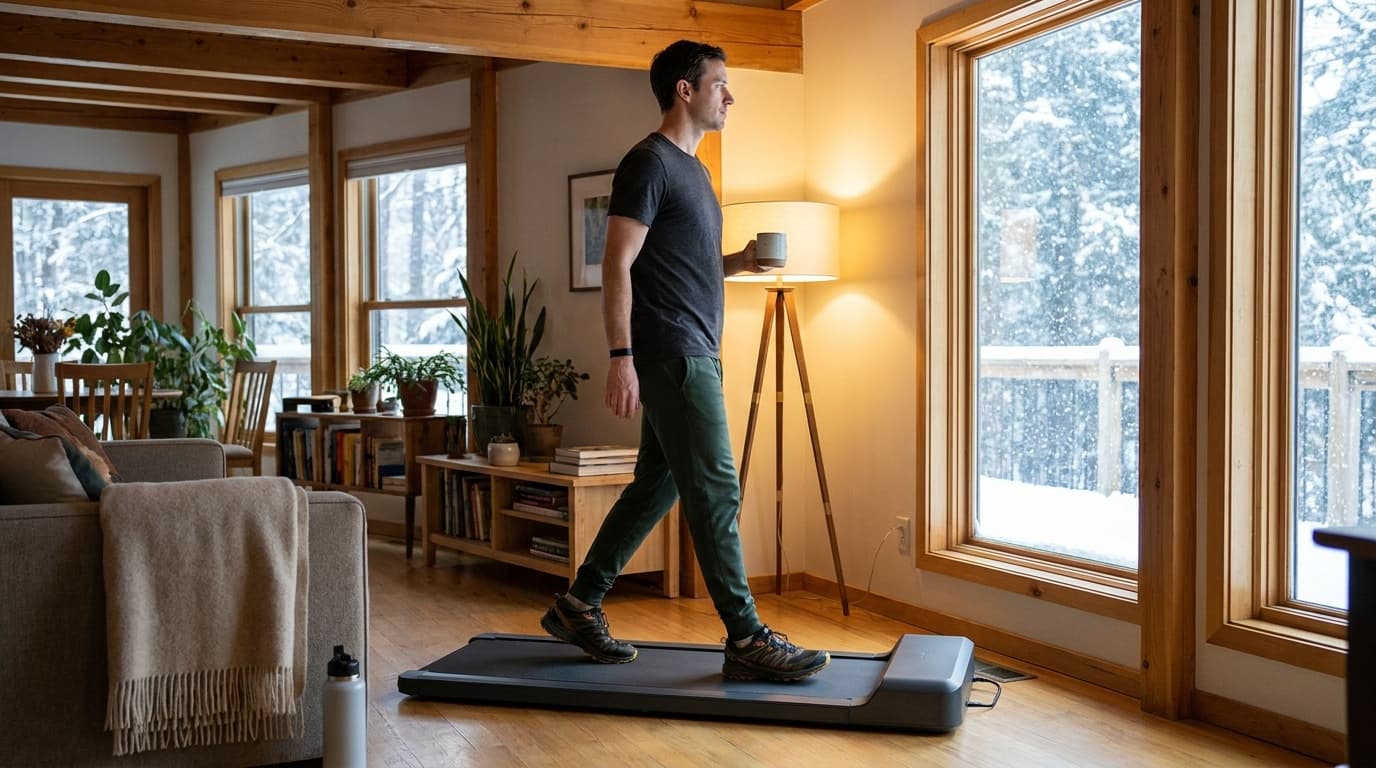
Winter makes the ramp harder, because dark evenings and icy sidewalks cut the easiest steps of the day. Our guide to getting 10,000 steps at home shows how short indoor walks, calls on your feet, and laps after meals add up when you cannot get outside.
Pairing steps with diet: how to think about the split
A useful frame: diet controls the size of the calorie deficit; walking controls whether that deficit can be sustained long-term without metabolic adaptation stalling progress.
A 6-month study of 35 adults who gradually increased to 10,000 steps per day with dietary counseling saw a 3.7 percent reduction in BMI. A separate study found that combining a calorie-restricted diet with roughly 10,000 steps per day (including approximately 3,500 steps at moderate-to-vigorous intensity) produced better 18-month outcomes than diet alone.
The practical takeaway: you do not need to track every calorie obsessively, but walking more while eating the same amount as a larger, less active body will not produce the deficit the scale responds to. A rough dietary adjustment of 200 to 300 calories per day alongside a step increase of 2,000 to 3,000 steps per day is a sustainable starting combination for most people.
If you have never checked where your intake actually sits, a few days in a food log makes the 200 to 300 calorie adjustment concrete instead of a guess. Cronometer has a free version that tracks calories, macros, and micronutrients; you do not need to log forever, just long enough to learn your baseline. This is a paid affiliate link; Kit Authority may earn a commission at no extra cost to you.
Tracking your steps: what actually helps
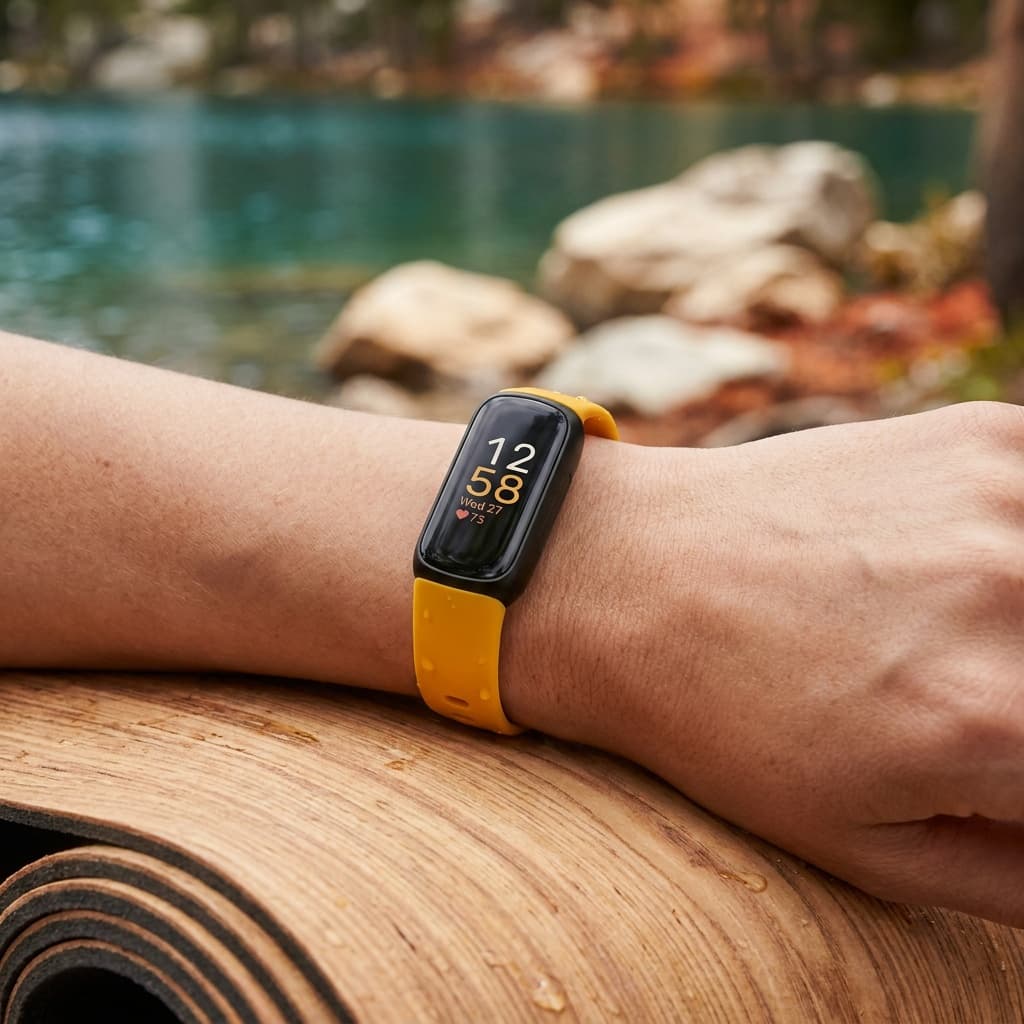
You do not need an expensive device. A phone in a pocket counts steps reasonably well for day-to-day feedback. That said, wrist-based fitness trackers like the Fitbit Inspire 3 add heart rate data, which helps distinguish a brisk walk from a slow one and gives a more accurate calorie estimate. If you want to get the most from a step-focused program, see our guide to the best fitness trackers for walking for evidence-based picks across price points.
Do I really need 10,000 steps a day to lose weight?
No. The 7,000 to 8,500 range is where current evidence places the meaningful benefit. A 2026 meta-analysis of nearly 3,800 adults found that roughly 8,500 steps per day during a lifestyle program produced 4.4 percent body weight loss and helped sustain most of that loss afterward. Ten thousand is a round, memorable target and it is not harmful to aim for it, but it is not a clinical requirement.
How long will it take to see weight loss from walking more?
Most people see meaningful scale changes in 6 to 12 weeks when daily steps are paired with a modest calorie deficit of 300 to 500 calories per day. Walking 7,000 to 10,000 steps burns roughly 200 to 400 extra calories compared to a sedentary day. At that rate, combined with dietary changes, a realistic expectation is 0.5 to 1 pound per week. Walking without any dietary adjustment often produces slow or no weight loss because appetite can compensate.
What if I can only manage 3,000 to 4,000 steps right now?
Start there. Adding 500 steps per week is a safe, evidence-consistent progression. Moving from 3,000 to 7,000 steps over two to three months is achievable for most people and represents a genuine health improvement. The 2021 JAMA study showed the biggest risk reduction happens in the transition from very low activity to moderate activity, so the early gains are real even if the absolute number is modest.
For more on gear, habits, and training approaches that support an active lifestyle, browse our fitness gear coverage. For detail on how we evaluate sources and rate products and programs, see how we research and rate.
Recommended gear
Our current top picks from the Best fitness trackers for walking: 3 picks by phone and GPS guide, if you are ready to buy.
Best for: Walkers who want a true GPS route map, long battery, and a proven data platform without paying flagship watch prices.
- Step counts within about 2% in a published hand-counted walk, plus built-in GPS
- No barometric altimeter, so stair-climb counts are not tracked
- Display
- 1.2" AMOLED, 390x390, Gorilla Glass 3
- Battery life
- Up to 11 days (smartwatch mode)
- GPS
- Built-in GPS, GLONASS, Galileo
- Water resistance
- 5 ATM
- Sports modes
- 30+ built-in apps
- Weight
- 1.31 oz (about 37 g) with band
About this pick
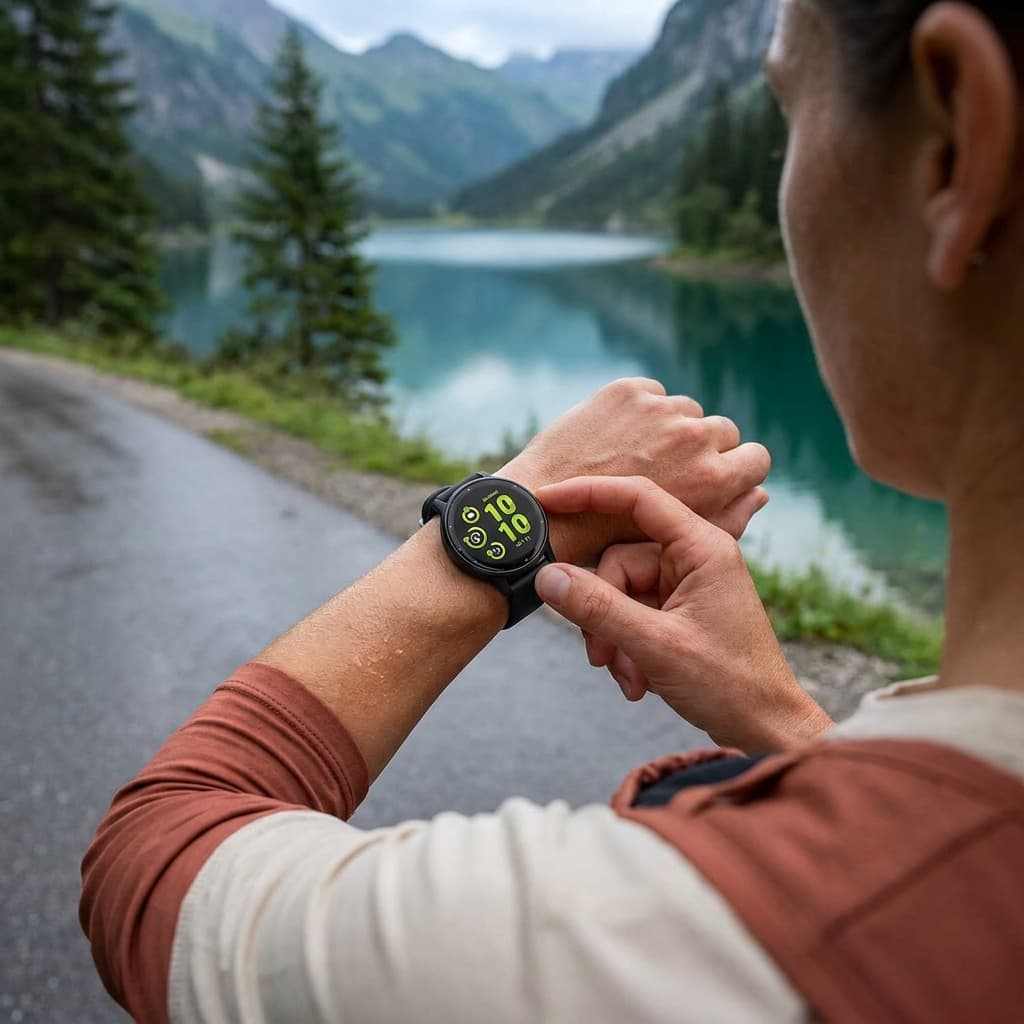
A full GPS smartwatch with a bright AMOLED display and up to 11 days of battery, the Vivoactive 5 posted close step counts in published independent walks (5,100 on a hand-counted 5,000) and is comfortable for all-day wear. It tracks walks, routes, and health metrics without demanding frequent charging.
Strengths
- Step counts within about 2% in a published hand-counted walk, plus built-in GPS
- 11-day battery handles a full week-plus without thinking about charging
- Light, compact design that disappears on the wrist
Weaknesses
- No barometric altimeter, so stair-climb counts are not tracked
- GPS distance is good rather than exact (2.99 miles on a 3.1-mile 5K in one published test)
Kit Score breakdown
Best for: Daily walkers who want a slim, accurate, set-and-forget band and already carry a phone on most walks.
- Excellent step accuracy relative to price
- No onboard GPS: route maps require carrying a phone
- Display
- Color AMOLED touchscreen, Gorilla Glass 3
- Battery life
- Up to 10 days
- GPS
- Connected GPS (phone required)
- Water resistance
- 5 ATM (50 m)
- Weight
- 17.69 g (tracker, per Google)
- Exercise modes
- 40+ with SmartTrack auto-detection
About this pick
The Inspire 3 is the lightest, most wrist-friendly tracker in this group and came within 41 steps of a hand-tallied 7,000 in a published Tom's Guide walk. Its 10-day battery and Fitbit app ecosystem make it the practical pick for everyday walkers who do not need onboard GPS.
Strengths
- Excellent step accuracy relative to price
- Among the lightest trackers in its class at 17.69 g
- Clean Fitbit app with easy-to-read daily summaries
Weaknesses
- No onboard GPS: route maps require carrying a phone
- Advanced coaching and insights locked behind Google Health Premium ($9.99/month or $99.99/year)
Kit Score breakdown
Best for: Walkers who want built-in GPS and a big, bright screen at a slim-band price, on iPhone or Android.
- Built-in GPS with downloadable maps, so walks record without a phone
- GPS tracks can drift and sleep tracking was inconsistent in Android Authority's review
- Display
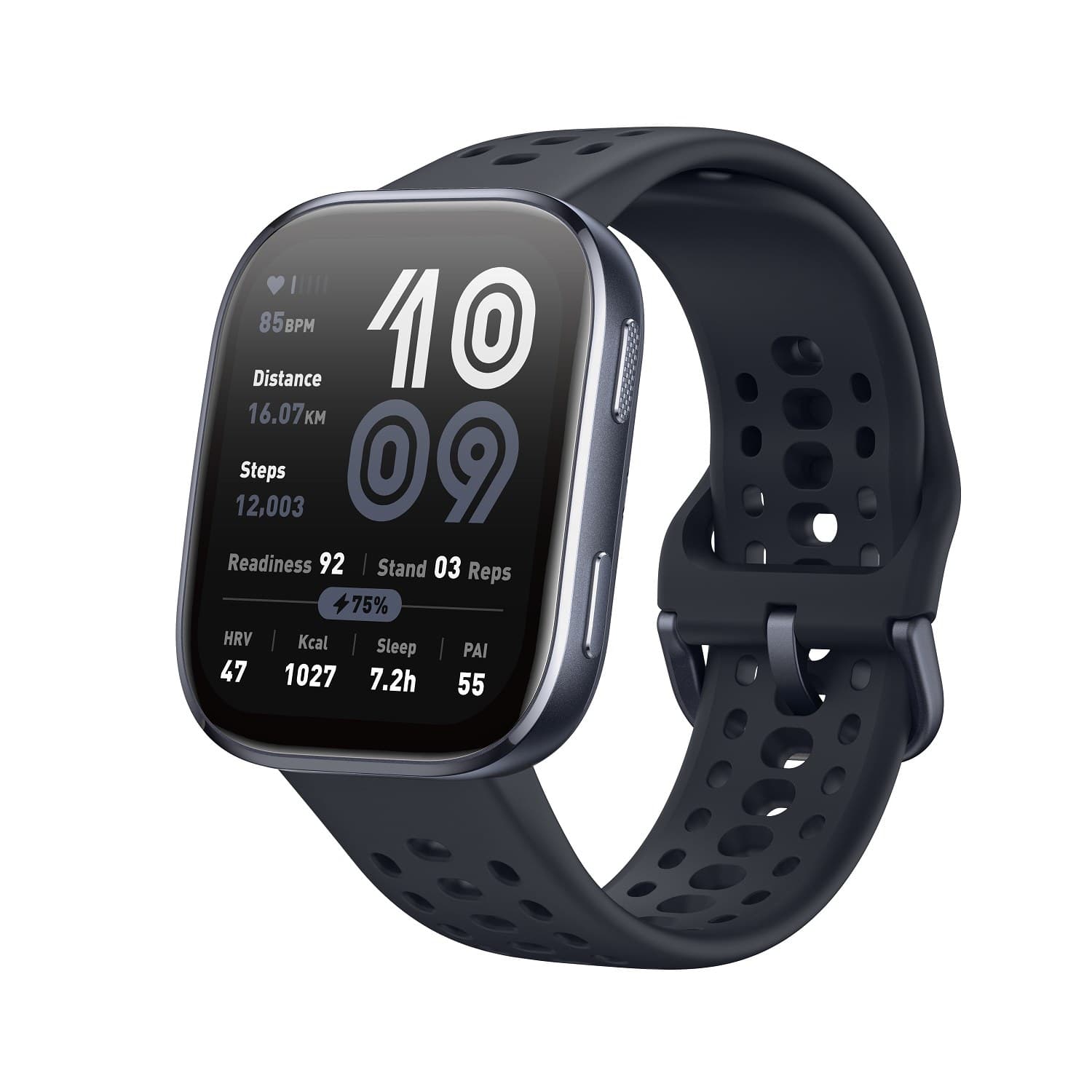
- 1.97" AMOLED, 390x450, up to 2,000 nits
- Battery life
- Up to 14 days typical, 6 days heavy use, 32 hr GPS
- GPS
- Built-in, 5 satellite systems, downloadable maps
- Water resistance
- 5 ATM
- Weight
- 27.9 g (without strap)
- Compatibility
- iPhone (iOS 14+) and Android (7.0+) via Zepp
About this pick
The Bip 6 is Amazfit's budget smartwatch: a 1.97-inch AMOLED screen, built-in GPS with free downloadable maps and turn-by-turn directions, and a battery rated at up to 14 days in typical use. It works with both iPhone and Android through the Zepp app, which makes it the low-cost way to track a walk without carrying a phone.
Strengths
- Built-in GPS with downloadable maps, so walks record without a phone
- Largest screen in this lineup, bright enough to read in sun
- Up to 14 days of typical battery life
Weaknesses
- GPS tracks can drift and sleep tracking was inconsistent in Android Authority's review
- Thin third-party app store, and iPhone owners cannot reply to texts from the watch
Kit Score breakdown
See all picks in Best fitness trackers for walking: 3 picks by phone and GPS
Keep going
Free toolBeginner Walking PlanA free 8-week beginner walking plan built around your week.

Researched, not hands-on tested
Updated Jun 3, 2026Our recommendations draw on manufacturer documentation, retailer listings, owner feedback, and comparisons with alternatives.
As an Amazon Associate I earn from qualifying purchases. We may earn a commission from links here, at no extra cost to you. How we research →