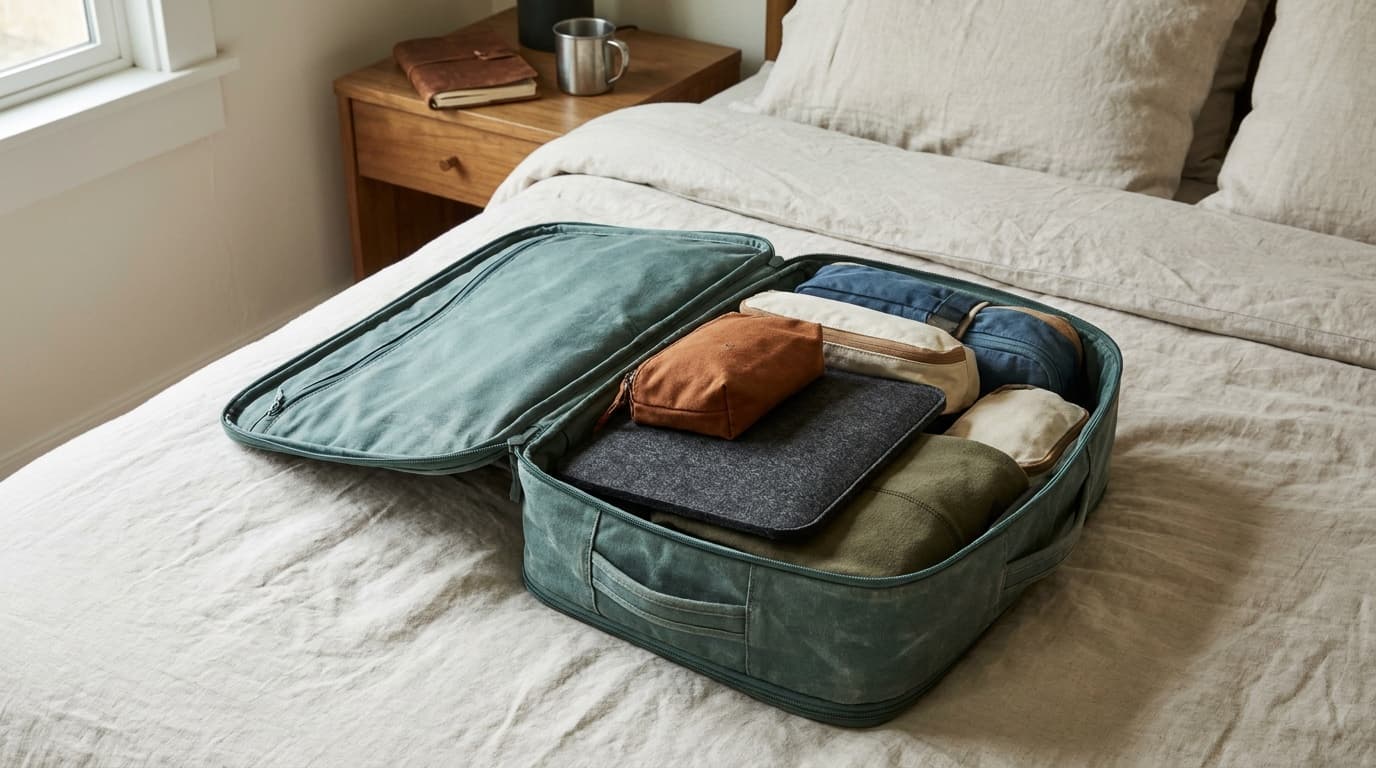
Choose a travel backpack for multi-city trips with trains, stairs, hostels, and uneven streets. Choose a roller suitcase for point-to-point travel through airports, cars, and hotels with smooth floors and elevators. Both can fit the same carry-on envelope, but the backpack prioritizes mobility while the suitcase prioritizes rectangular packing efficiency.
Carry-on size: both fit, but not the same way
The standard U.S. carry-on limit is 22 x 14 x 9 inches (56 x 36 x 23 cm), including wheels, handles, and external pockets. American, Delta, United, and JetBlue all use this number.
A compliant roller suitcase at exactly those dimensions, like the Travelpro Maxlite 5, holds roughly 45 liters. A 40–45L travel backpack rated carry-on size holds a similar number on paper, but the oval interior and internal frame structure leave less truly usable space than a rectangular bucket. For 7–10 days of light packing, the backpack handles it. For longer trips or bulky items like dress shoes or a blazer, the roller's shape packs more efficiently.
The soft shell of a backpack gives it a practical edge at the gate: a borderline bag that compresses into the overhead bin rarely gets flagged. A hard-shell roller at 22 x 14 x 9 has no give. That said, both bags must meet the same size rule.
Mobility on stairs and cobblestones
This is where the decision is clearest. Rolling a suitcase over cobblestones transmits constant vibration through the frame, creates significant noise, and stresses the wheel mounting screws over time. Cheap spinner wheels have broken off entirely after extended use on uneven stone streets. On any staircase, you lift the bag completely.
A backpack stays on your back. You walk up stairs, cross a platform gap, navigate a crowded metro car, and step onto a cobbled piazza without changing your grip or your posture. The terrain does not become your problem.
On multi-city rail trips or historic city centers, the roller stops being luggage and starts being cargo you carry.
If your itinerary is one flight, one hotel, one airport, and back, the roller's wheel advantage on smooth surfaces fully applies. If any leg involves public transit, stairs, or old-city streets, the backpack earns its keep.
Comfort: hip belt vs no load at all
A properly fitted travel backpack with a hip belt positioned correctly on your iliac crests transfers up to 80% of the pack's weight to your hips and legs. Your shoulders carry only about 20% of the load. For most adults keeping the pack under roughly 20 lbs (9 kg), a full transit day is manageable without meaningful fatigue.
The roller's comfort argument is different: when you're on smooth ground, the bag carries itself. No weight on your body at all. For travelers with injuries, heavier loads, or longer walking days with a laptop and gear approaching 20-plus lbs, that zero-weight experience is not trivial.
Organization: the gap is closing
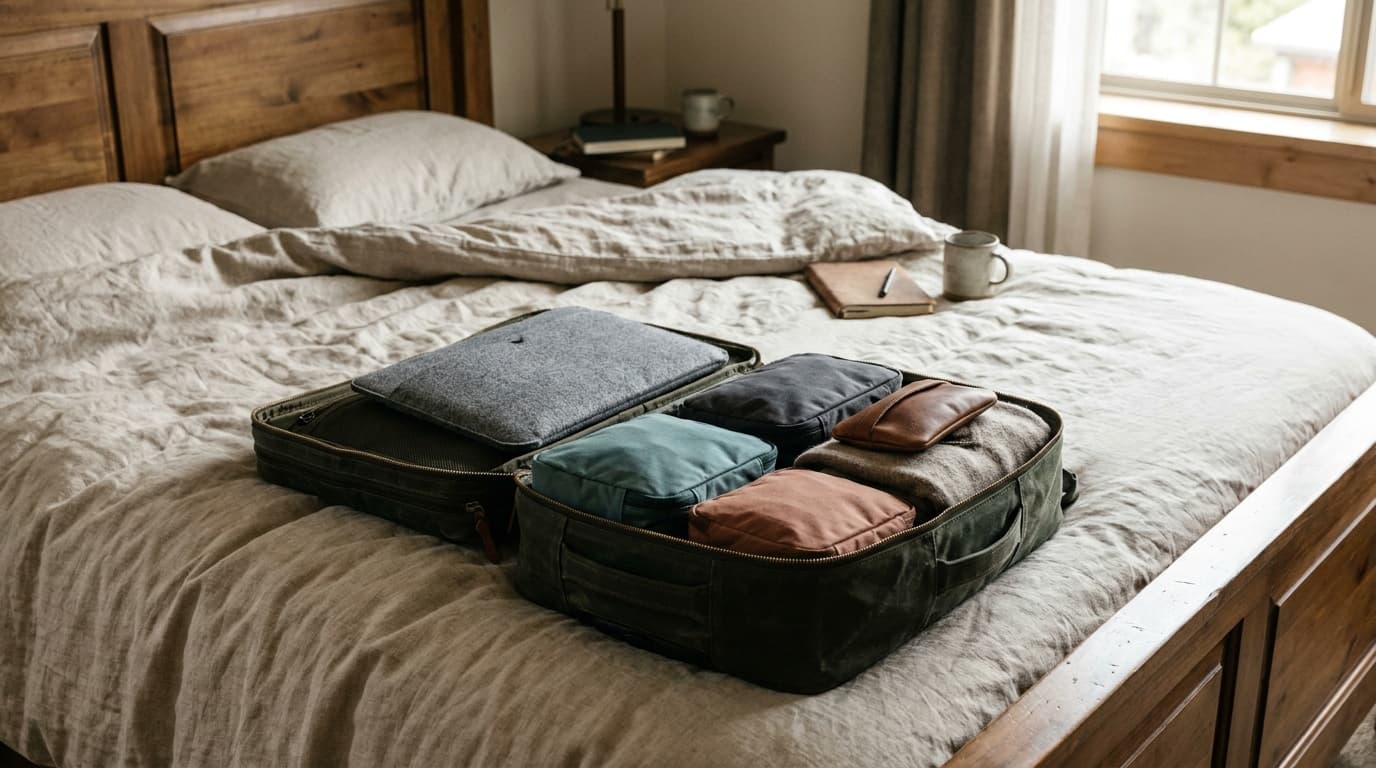
Roller suitcases use a rectangular shape that maximizes usable volume and lays flat for neat packing. The case-open-on-the-bed routine is genuinely convenient, and packing cubes fit cleanly into rectangular space.
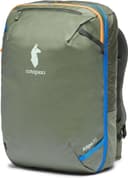
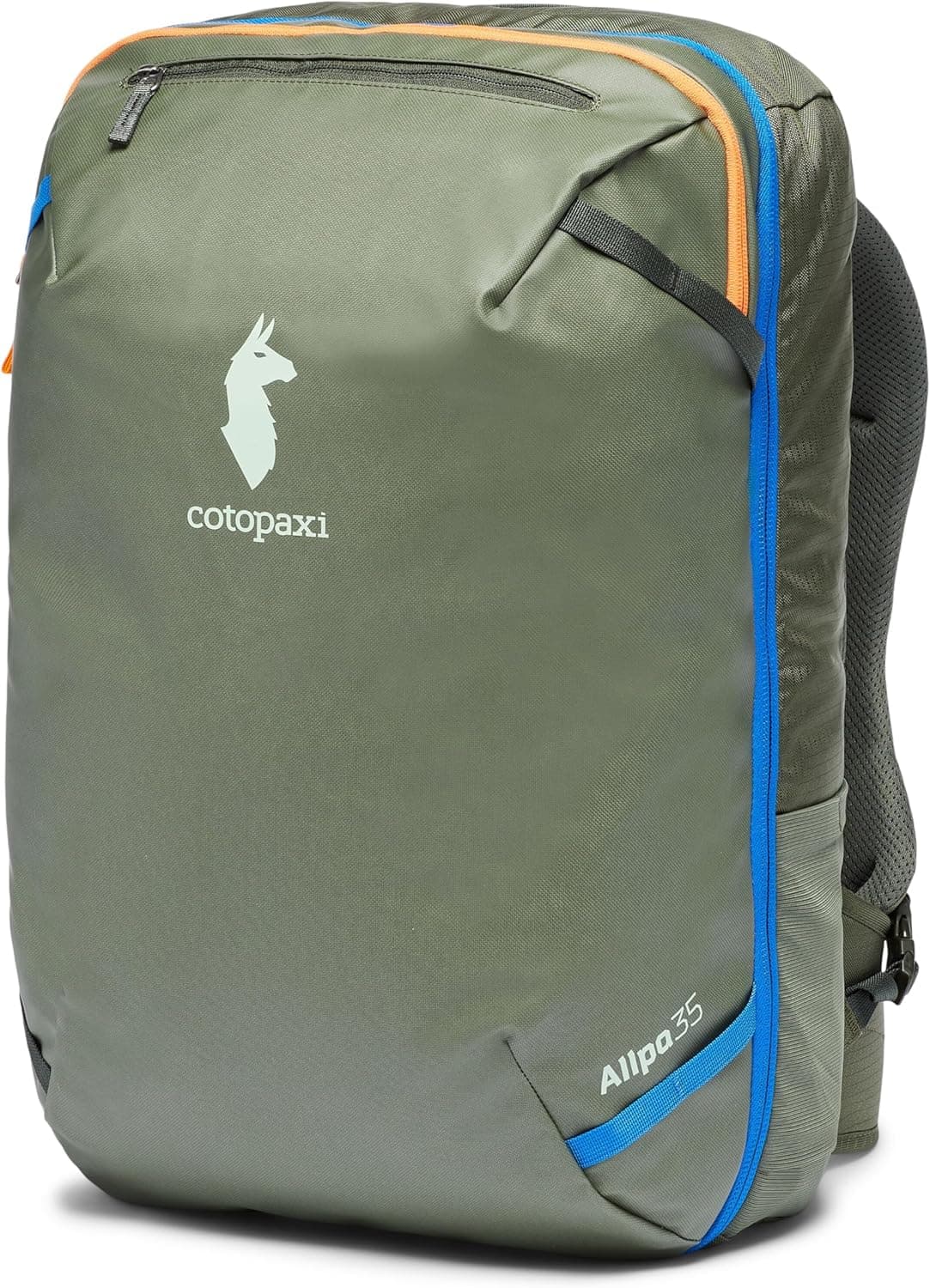
Many modern travel backpacks, like the Cotopaxi Allpa 35L, now open clamshell-style, like a suitcase lying flat. This has substantially closed the organization gap. The remaining disadvantage: irregular side pockets and frame channels create dead space that a rectangular shell does not. For a well-organized packer using packing cubes, a clamshell backpack works well. For a throw-everything-in packer, the roller is still more forgiving.
International weight limits: where the roller loses ground
Most major U.S. carriers do not publish a carry-on weight limit for domestic routes. Internationally, the rules are different. Lufthansa caps carry-ons at 17.6 lbs (8 kg). Qatar Airways limits carry-ons to 15 lbs (7 kg) for most routes.
A quality carry-on roller shell weighs 3–5 lbs on its own before you pack anything. A laptop, charger, cables, and a day's worth of clothing can bring a roller to the Lufthansa limit before you add clothes. A lightweight travel backpack typically weighs 2–3 lbs empty, leaving meaningfully more of your weight allowance for what you actually want to bring.
Quality carry-on travel backpacks run $150–$350. Premium carry-on roller bags run $600–$1,000. The price gap is real, but so is the durability: a quality roller on smooth terrain may outlast a backpack in that same environment.
When each bag wins
Choosing between a backpack and a roller
Multi-city trip with transit
Take the backpack. Stairs, platforms, cobblestones, and frequent moves all favor hands-free mobility over rolling convenience.
Point-to-point business travel
Take the roller. Airport to Uber to hotel elevator to meeting room is exactly the terrain rollers are designed for.
International flights with strict weight limits
The backpack's lighter shell gives you more usable weight allowance. On Lufthansa at 8 kg, a 2.5 lb backpack vs a 4 lb roller shell is a meaningful difference.
Trips longer than 10 days
The roller's rectangular efficiency packs more per cubic inch. Beyond a week, volume and organization start to matter more than mobility.
Trips involving historic city centers, hostels, or overnight trains
The backpack. You will be lifting the bag over thresholds, up stairs, and into awkward storage spaces more than you expect.
Traveling with back or shoulder issues
The roller on flat terrain eliminates on-body load entirely. On rough terrain, weigh that against the repeated lifting a roller requires on stairs.
The hybrid bag: usually not the answer
Wheeled backpacks and hybrid bags exist. The trade-off is consistent: the wheel housing eats interior volume, the resulting shape is heavier than a pure backpack, and the bag does neither job as well as a dedicated bag. Unless a specific hybrid has been engineered around the constraint, the better answer is usually to pick a lane.
Frequently asked questions
Can a travel backpack actually fit everything a carry-on roller suitcase can?
Close, but not quite equal. A compliant roller suitcase holds roughly 45 liters in a usable rectangular shape. A 40–45L travel backpack rated to the same carry-on dimensions holds a similar number on paper, but the oval interior and frame structure typically leave less truly usable space. For trips up to about 7–10 days of light clothing, a backpack handles it comfortably. For longer trips or items that need flat packing (dress shoes, blazers, formal attire), the roller's rectangular bucket packs more efficiently.
Do airlines treat travel backpacks differently from roller suitcases for carry-on rules?
No. The 22 x 14 x 9 inch limit applies to both, including all external pockets and frame. A backpack has a practical edge at the gate because its soft shell compresses, so gate agents rarely reject a borderline bag. A hard-shell roller has no give. On international routes with enforced weight limits, the roller's heavier shell counts against your allowance. Lufthansa enforces 8 kg (17.6 lbs); Qatar Airways enforces 7 kg on most routes. A lightweight backpack shell at 2–3 lbs leaves you more usable weight than a roller shell at 3–5 lbs.
Is a travel backpack actually comfortable for a full day of transit, or does it wreck your back?
A well-fitted backpack with a proper hip belt is comfortable for most travelers through a full transit day. A hip belt correctly positioned on your iliac crests transfers up to 80% of the pack's weight to your hips and legs rather than your shoulders. Keep the load under roughly 20 lbs (9 kg) and the experience is manageable for most adults. Heavier loads, a poor fit, or pre-existing back and shoulder problems shift the answer toward a roller on smooth surfaces, where the bag carries itself entirely.
If you've decided a backpack is the right call, see our guide to the best travel backpacks for a comparison of carry-on-sized options across different trip lengths and budgets.
Browse all travel gear or learn more about how we research and rate.
Recommended gear
Our current top picks from the The best travel backpacks for carry-on trips (30 to 45L) guide, if you are ready to buy.
COTOPAXI
Cotopaxi Allpa 35L Travel Pack
Best Overall
Kit Score 8.4/10
$229.95 Price checked Oct 23, 4:16 PM CDT
Best for: Organized travelers who want everything in a defined spot and can work within a 35L limit, particularly for trips of three to seven days.
- Best overall travel pack at Outdoor Gear Lab and CleverHiker
- 15-inch laptop sleeve; check a 16-inch machine before buying
- Capacity
- 35 L
- Weight
- 2 lb 15 oz (1.33 kg)
- Dimensions
- 22 x 12 x 10 in (56 x 30 x 25 cm)
- Material
- 840D recycled nylon, TPU coating; 840D ballistic ripstop
- Laptop sleeve
- 15 in, padded and fleece-lined
- Harness
- Tuckable shoulder straps and hip belt
About this pick
The Allpa 35L is the best overall travel pack at Outdoor Gear Lab and CleverHiker and a Wirecutter top pick. It opens like a suitcase, with mesh compartments on both sides so most people can skip packing cubes, and its TPU-coated 840D shell sheds rain better than plain fabric.
More specifications
- Warranty
- Guaranteed for Good (repair, replace, or resale credit)
Strengths
- Best overall travel pack at Outdoor Gear Lab and CleverHiker
- Suitcase-style opening with built-in mesh compartments
- Tuckable shoulder straps and hip belt at 2 lb 15 oz
Weaknesses
- 15-inch laptop sleeve; check a 16-inch machine before buying
- 10 in deep, an inch over the 9 in carry-on line when fully packed
Kit Score breakdown
OSPREY
Osprey Farpoint 40 Travel Pack
Most Comfortable
Kit Score 8.5/10
$196.30 Price checked Oct 23, 4:16 PM CDT
Best for: Budget-conscious travelers who prioritize carry comfort on full days of transit and are willing to rely on packing cubes for organization.
- The most comfortable carry in Outdoor Gear Lab's travel pack test
- 9.1 in deep, right at the 9 in line, so do not overstuff the front panel
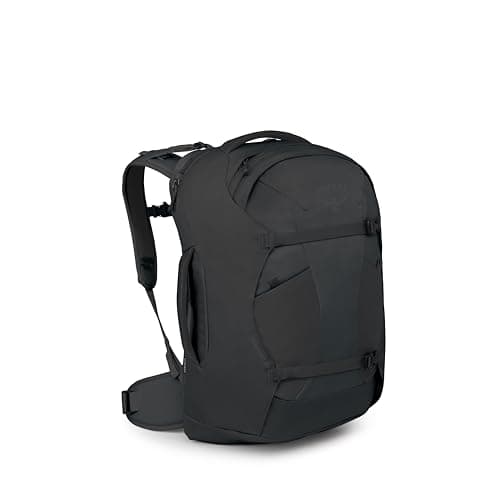
- Capacity
- 40 L
- Weight
- 3.27 lb
- Dimensions
- 21.7 x 13.8 x 9.1 in (55 x 35 x 23 cm)
- Torso fit
- Adjustable; Farpoint Travel Pack fits 18 to 22 in torsos
- Laptop sleeve
- Fits up to 16 in
- Warranty
- Osprey All Mighty Guarantee
About this pick
The Farpoint 40 carries the comfort of Osprey's hiking packs into a carry-on travel pack: a load-lifting frame, an adjustable torso, and a padded hip belt that all zip away behind a panel. Outdoor Gear Lab gave it the only perfect comfort score among the travel packs it tested, and Osprey lists it at 21.7 x 13.8 x 9.1 inches and 3.27 lb.
Strengths
- The most comfortable carry in Outdoor Gear Lab's travel pack test
- Harness and hip belt stow away for overhead bins and checked bags
- Fits up to a 16-inch laptop and is covered by Osprey's All Mighty Guarantee
Weaknesses
- 9.1 in deep, right at the 9 in line, so do not overstuff the front panel
- Minimal internal organization; suited to packing-cube users
Kit Score breakdown
OSPREY
Osprey Fairview 40 Women's Travel Pack
BEST WOMEN'S FIT
Kit Score 8.5/10
$200.00 Price checked Oct 23, 4:16 PM CDT
Best for: Women and shorter-torso travelers who want a carry-on pack that carries like a hiking pack on long walks between stations.
- Harness and hip belt sized for shorter torsos, so the load sits on the hips
- 9.1 in deep, right at the 9 in line, so do not overstuff the front panel
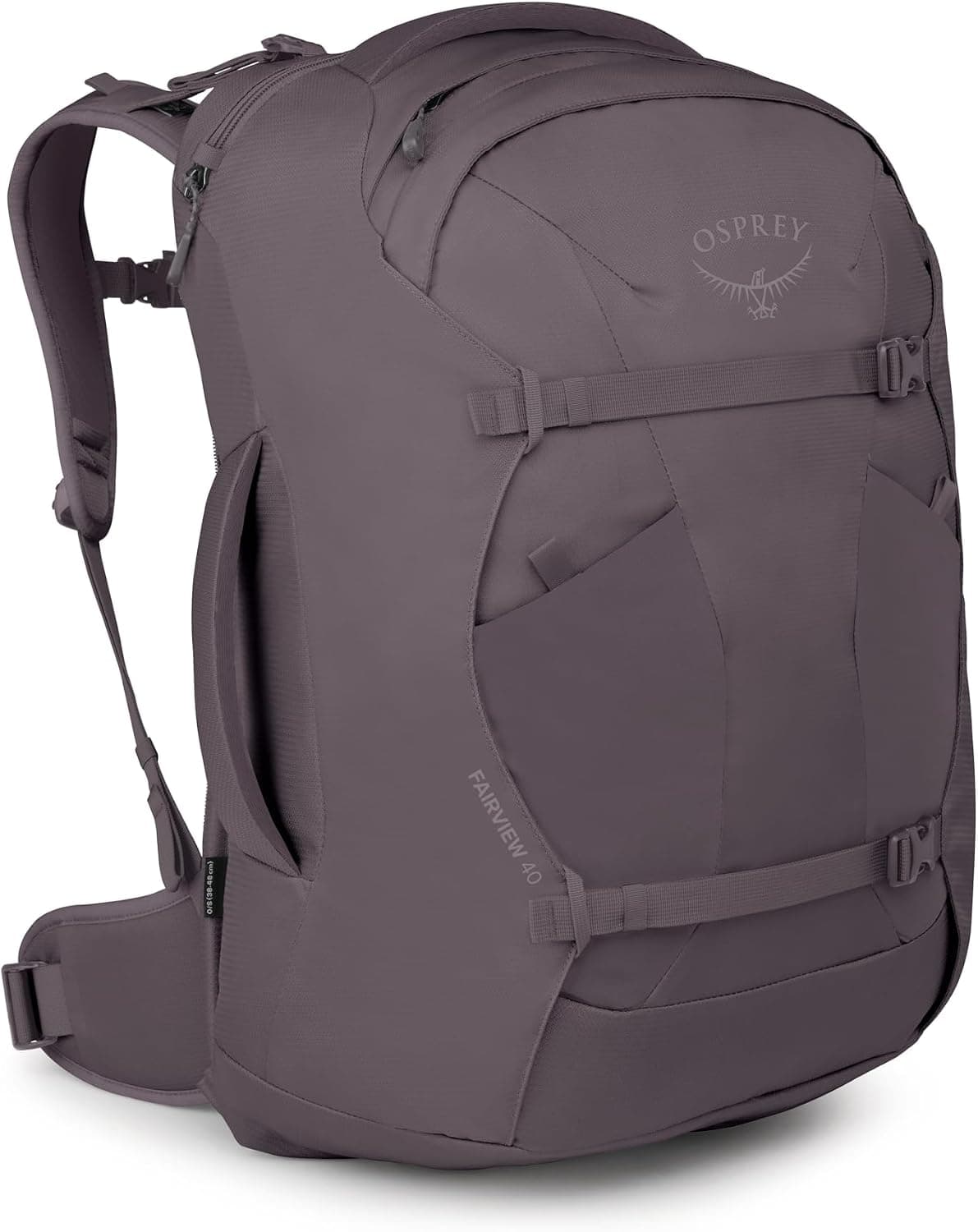
- Capacity
- 40 L
- Weight
- 3.23 lb
- Dimensions
- 21.7 x 13.8 x 9.1 in (Osprey)
- Torso fit
- 15 to 19 in, women's-specific harness
- Laptop sleeve
- Fits up to 16 in
- Warranty
- Osprey All Mighty Guarantee
About this pick
The Fairview 40 is the women's-fit version of the Farpoint 40, with the same 21.7 x 13.8 x 9.1 inch shape and 40 liters on a harness sized for 15 to 19 inch torsos. The harness and hip belt zip away behind a panel for checking or overhead bins, and a direct-zip sleeve takes up to a 16-inch laptop.
Strengths
- Harness and hip belt sized for shorter torsos, so the load sits on the hips
- Stowaway harness for overhead bins and checked bags
- Sleeve fits up to a 16-inch laptop
Weaknesses
- 9.1 in deep, right at the 9 in line, so do not overstuff the front panel
- Minimal built-in organization; plan on packing cubes
Kit Score breakdown
See all picks in The best travel backpacks for carry-on trips (30 to 45L)
Keep going
Free toolCarry-On CheckerWill your bag fit? Check it against airline size limits.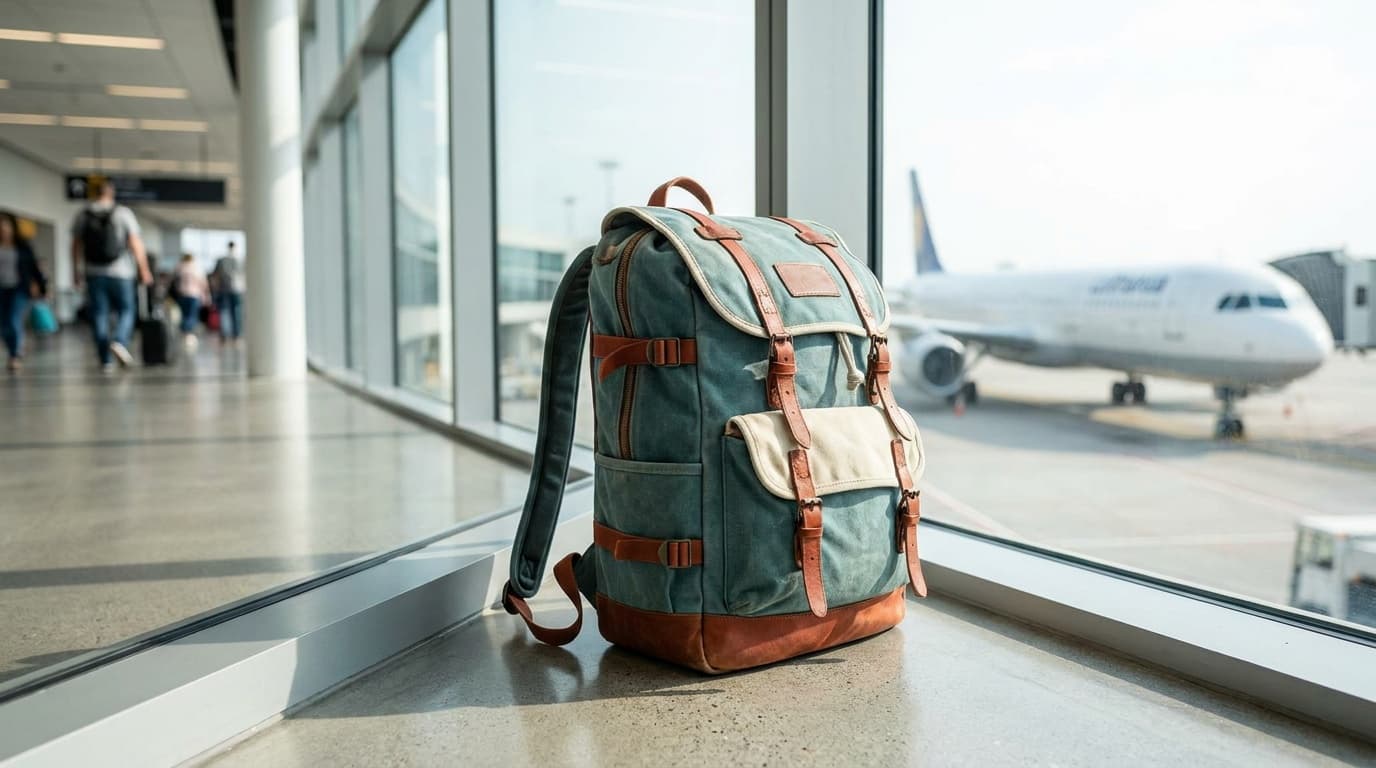
Researched, not hands-on tested
Updated Aug 14, 2026Our recommendations draw on manufacturer documentation, retailer listings, owner feedback, and comparisons with alternatives.
As an Amazon Associate I earn from qualifying purchases. We may earn a commission from links here, at no extra cost to you. How we research →