We may earn a commission from links on this page, at no extra cost to you.
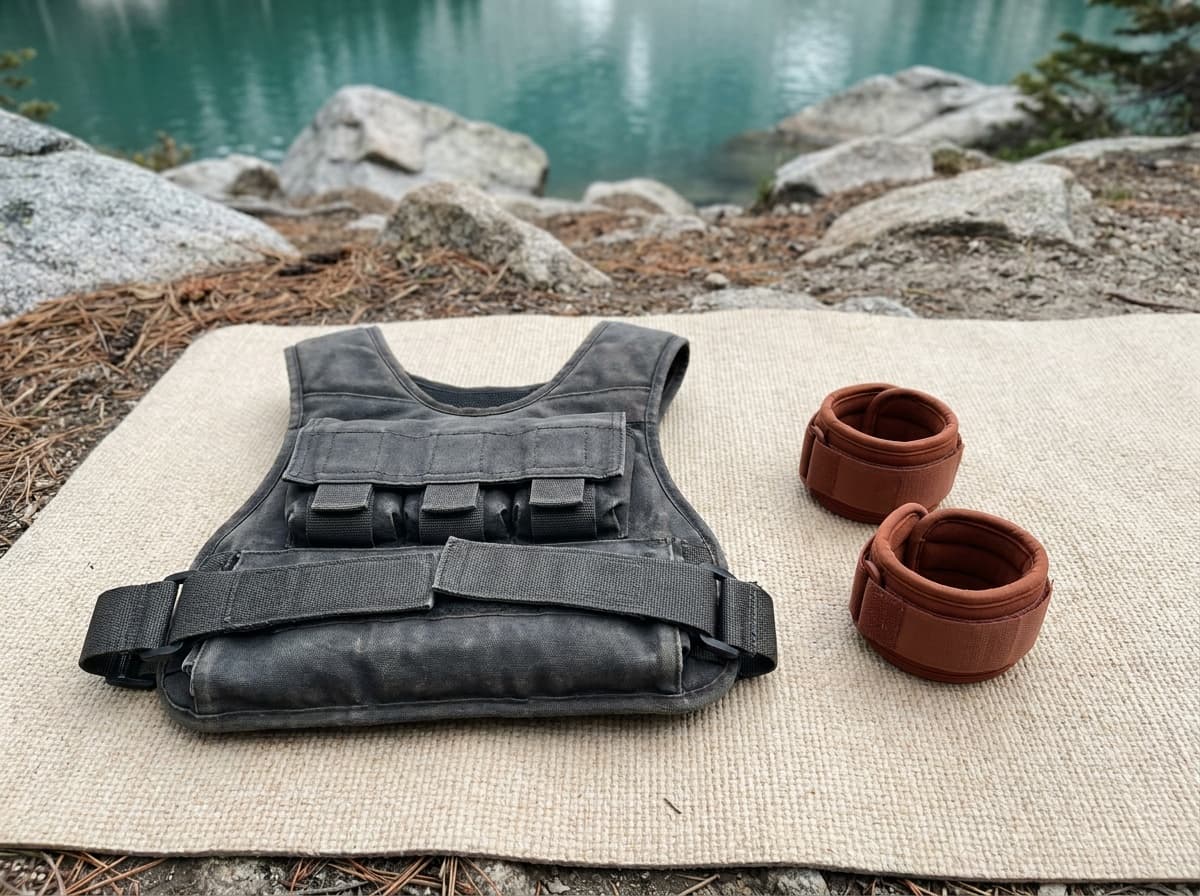
Hero image: AI-generated category illustration, not a tested product or an installation diagram.
Both tools add load, but they put it in very different places, and that difference is the whole story. A weighted vest carries weight on your trunk, near your center of gravity. Ankle weights hang load at the far end of your leg, the spot biomechanists call the distal limb. Where the weight sits decides how your joints absorb it, whether your stride stays natural, and ultimately which tool is safe for the activity you have in mind.
The two tools at a glance
| Weighted vest | Ankle weights | |
|---|---|---|
| Where the load sits | Trunk, near center of gravity | Distal limb, at the ankle joint |
| Effect on joints | Distributes load down through the whole body | Concentrates leverage on knee, ankle, hip |
| Effect on gait | Stride stays largely natural | Measurably alters stride and muscle firing |
| Best for | Walking, hiking, calisthenics, cardio | Controlled, low-rep leg and glute strengthening |
| Worst for | Very high-impact jumping at heavy loads | Walking and running cardio |
| Typical safe load | 5–10% of bodyweight | 1–2% of bodyweight, combined |
Where the load sits, and why it matters
This is the single most important difference. A weighted vest places the added mass across your torso, close to your body's center of gravity. Your spine, hips, knees, and ankles share that load roughly the way they already share your bodyweight, so the movement pattern your body knows stays intact.
Ankle weights do the opposite. They add mass at the end of a long lever, your leg, far from the joints that have to control it. Physical therapists and major medical institutions have warned for years that this is the problem, not a detail. Harvard Health's review of wearable weights is direct: ankle weights "pull on the ankle joint, posing the risk of tendon or ligament injuries to the knees, hips, and back" (Harvard Health, "Wearable weights: How they can help or hurt").
The same logic explains why a vest is often praised even relative to handheld weights. Load held out to the side or at the end of a limb compromises balance and forces compensation. Load centered on the trunk does not.
Joint stress: distal load versus trunk load
When a weight sits at your ankle, every step swings that mass through a wide arc, and your knee and hip have to start and stop it. That repeated braking and accelerating is what raises joint stress. Gait-lab measurements consistently show ankle weights elevate peak joint moments at the knee and hip compared to unloaded walking, and clinicians note the load tends to drive quad-dominant firing at the expense of the hamstrings, an imbalance that itself contributes to knee strain over time.
A vest avoids this because it never adds a lever. The extra mass rides with your trunk through the whole gait cycle, so your joints absorb it the way they were built to absorb bodyweight: distributed, balanced, and predictable.
Ankle weights add mass at the end of a long lever, far from the joints that have to control it. That leverage, repeated thousands of steps per walk, is the risk.
What each is actually good for
The honest answer is that neither tool is bad. They are built for different jobs, and most of the confusion comes from using one for the other's job.
Ankle weights shine in controlled, low-rep strengthening. Lie on your side and do clamshells, stand and do leg lifts, or run through hip and glute isolation work, and the ankle weight is doing exactly what it is designed for: adding resistance to a slow, deliberate movement you fully control. Harvard Health makes the same distinction, noting wearable ankle weights "are helpful for exercises that target the leg and hip muscles, like leg lifts." The reps are few, the speed is slow, and there is no repeated impact, so the leverage problem mostly disappears. If you want the full picture on the ankle-weight side, see our guide to whether ankle weights are good for walking and our roundup of the best ankle weights for targeted strength work.
A weighted vest shines as whole-body load for movement. Walking, hiking, step-ups, push-ups, pull-ups, squats, and general cardio all benefit from trunk load because it scales the effort without changing the mechanics. You walk the way you always walk, just against more resistance. The vest also delivers a bone-density benefit walking that ankle weights cannot match, because the axial loading runs down through your spine and hips. Our pillar guide to the best weighted vests covers the options, and the load math is its own topic worth getting right, which is why we wrote a separate guide on how much a weighted vest should weigh.
Gait alteration: the risk that sneaks up on you
The reason "are ankle weights bad for walking" is such a common question is that the downside is invisible until it accumulates. You will not notice your stride changing in the moment. But the load is changing it.
Even small amounts of ankle weight measurably alter walking velocity, step length, and stride mechanics. Over a single walk that is harmless. Over weeks of daily walks, a subtly altered stride plus a quad-over-hamstring firing pattern is exactly the recipe for the muscle imbalance, soreness, and overuse complaints that PTs see. Harvard Health flags this directly, warning that overusing ankle weights can "change your natural stride" and produce muscle imbalance and even fall risk if balance is compromised.
A vest sidesteps the entire problem. Because the load is centered and symmetric, your stride stays your stride. That is the practical reason clinicians and gait specialists point to a vest when the goal is adding intensity to walking.
The recommendation
For adding intensity to walking, the answer is clear: choose a weighted vest. It loads your trunk, keeps your stride natural, builds bone where it counts, and lets you progress load safely. Ankle weights are not useless, they are simply the wrong tool for walking. Save them for the slow, controlled leg and glute work they were built for, keep the combined load light (roughly 1–2% of bodyweight), and you will get their benefit without the joint cost.
In short: ankle weights for targeted strengthening on the floor, a vest for everything you do on your feet.
Frequently asked questions
Are ankle weights bad for walking?
For walking specifically, most physical therapists advise against them. The load sits at the end of your leg, which increases leverage and stress on the knee, ankle, and hip and subtly alters your stride over thousands of steps. Ankle weights are not bad in general, they are just the wrong tool for walking. They work well for controlled, low-rep strengthening like leg lifts and clamshells. For adding intensity to a walk, a weighted vest is the safer choice.
Is a weighted vest better than ankle weights for walking?
Yes, for walking a weighted vest is both safer and more effective. It carries the load on your trunk near your center of gravity, so your joints share it the way they already share your bodyweight and your stride stays natural. It also delivers a bone-loading benefit through the spine and hips that ankle weights cannot. Ankle weights concentrate load at the joint and change your gait, which is why they are reserved for controlled strengthening rather than cardio.
When should I use ankle weights instead of a vest?
Use ankle weights for slow, deliberate, low-rep movements you fully control, like side-lying clamshells, standing leg lifts, and hip and glute isolation work. In those exercises there is no repeated impact and no long-distance stride to alter, so the leverage problem mostly disappears. A vest is the better pick the moment you are upright and moving: walking, hiking, step-ups, and bodyweight strength work.
How heavy should ankle weights be if I do use them?
Keep them light. For the controlled strengthening they are suited to, a combined load of roughly 1–2% of your bodyweight is a sensible ceiling. Heavier ankle weights amplify the leverage on your knees and hips without a matching payoff and raise the risk of strain. By contrast, a weighted vest can safely carry far more, typically 5–10% of bodyweight, because that load rides on your trunk rather than hanging from a joint.
Browse more on fitness gear, or see how we research and rate the products and advice on this site.
Recommended gear
Our current top picks from the Best weighted vests 2026: 4 scored picks from $32 to $240 guide, if you are ready to buy.
MIR
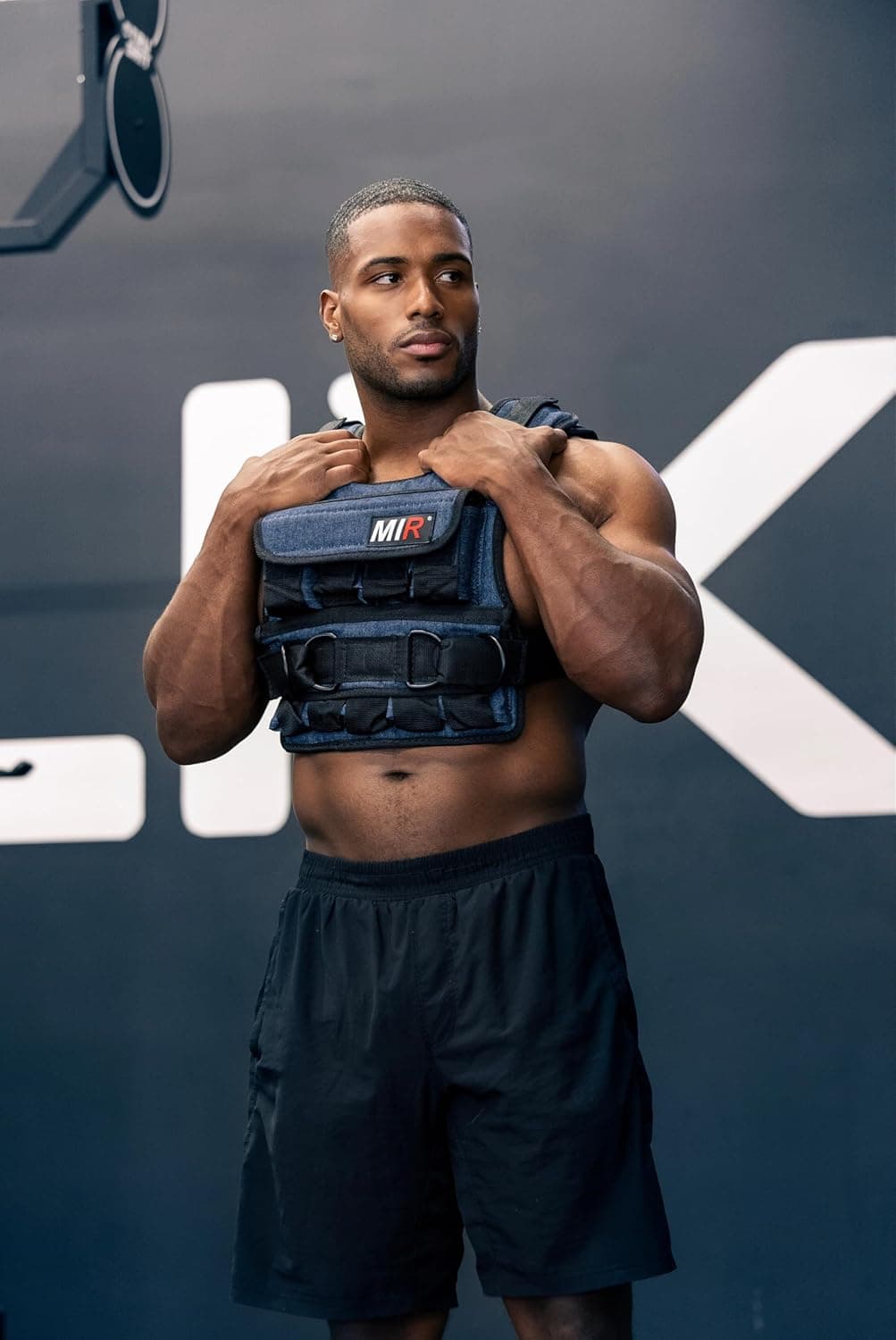
miR Air Flow Weighted Vest with Zipper Option
- Weight range
- 20 lb, 30 lb, 40 lb, 50 lb, 60 lb configurations
- Fill type
- Removable 3 lb iron bars
- Vest length
- Short style, approx. 11 in. from collarbone
- Adjustability
- Adjustable shoulder and bottom straps; zipper option available
- Washability
- Machine washable (remove weights first)
- Warranty
- Lifetime
The miR Air Flow uses a short, torso-hugging cut and removable solid iron plug weights to keep load close to center of gravity, which is the core reason it earns the top slot. The hybrid mesh-composite shell pulls moisture off skin and allows circulation, so heat buildup during long walks or outdoor conditioning sets stays manageable.
- Short vest profile rides high and tight, preventing the downward shift and shoulder dig common in longer designs during calisthenics and loaded walks
- Removable 3 lb bars allow repeatable load changes without replacing the vest
- Bulkier silhouette than compression-style or ultra-thin vests, which can limit range of motion in overhead pressing movements
Best for
Walkers and conditioning athletes who want easy in-session weight changes, lasting build quality, and a vest that stays put without shoulder padding on long efforts.
ZELUS
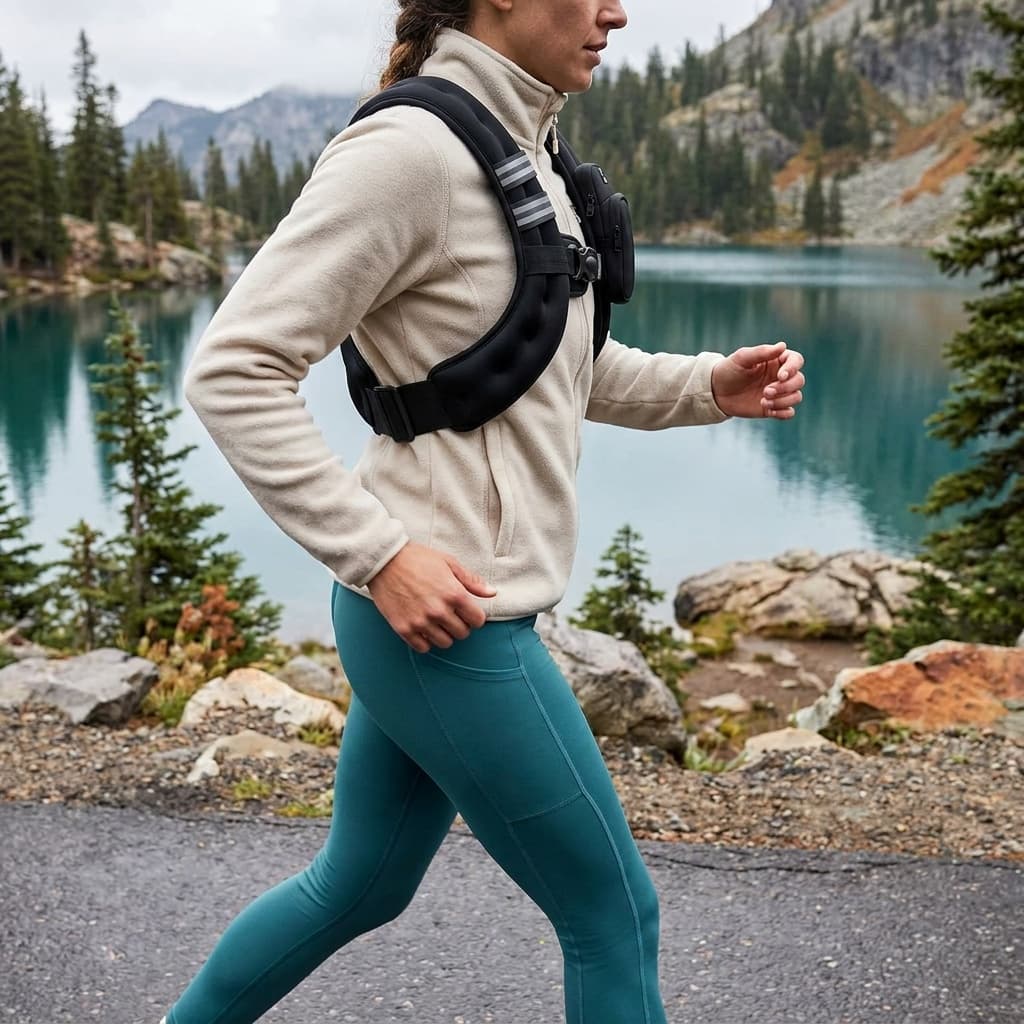
ZELUS Weighted Vest with Reflective Stripe
- Available weights
- 6 lb, 8 lb, 12 lb, 16 lb, 20 lb, 25 lb, 30 lb (fixed per unit)
- Fill type
- Iron-sand sewn into vest panels
- Shell material
- Neoprene rubber with double-stitching
- Chest fit range
- 31.5 in. to 47 in.
- Visibility
- 360-degree reflective stripes (front, back, sides)
- Storage
- Back mesh pocket
The ZELUS iron-sand vest earns a strong owner rating from thousands of verified Amazon buyers by doing the core job well: evenly distributed weight, a soft neoprene yoke, and a snug buckle-and-elastic closure that holds the vest flat against the torso. The fixed-weight format keeps the price low and keeps the weight from shifting.
- Iron-sand panels keep weight flush against the body rather than in pockets, so the load stays predictably still during walking, jogging, and bodyweight circuits
- 360-degree reflective striping adds meaningful safety for dawn or dusk walking without adding bulk
- Fixed weight per unit means adding load requires buying a heavier vest rather than inserting weights, which raises long-term cost for progressive training
Best for
Walkers, hikers, and home-gym users who want a no-fuss, comfortable vest at a low entry price and do not need to change weight during a session.
HYPERWEAR
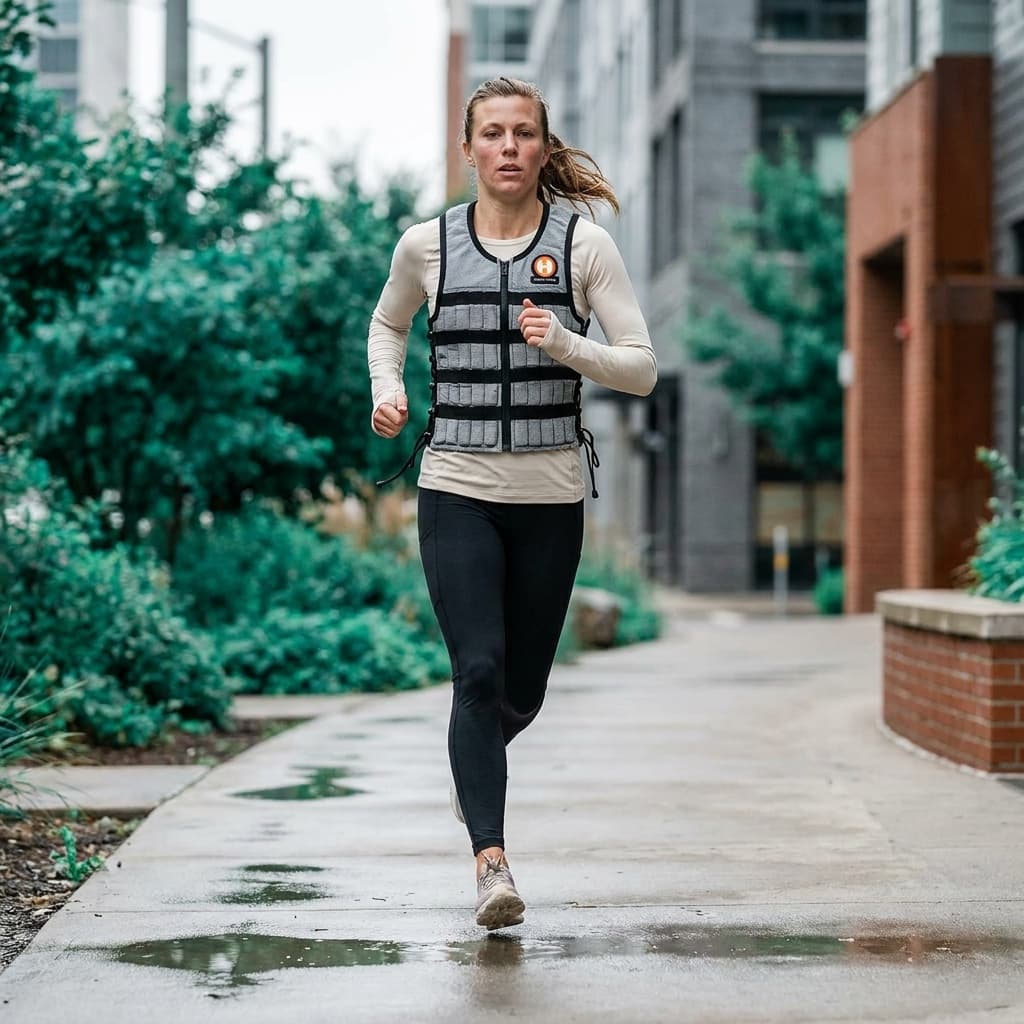
Hyperwear Hyper Vest PRO Adjustable Weighted Vest
- Weight range
- Up to 20 lb (S), 25 lb (M), 30 lb (L)
- Fill type
- No-bounce steel micro-weights (removable)
- Shell material
- Xyflex stretch compression fabric
- Closure
- Zipper front, side lace-up for compression tuning
- Sizing
- Small, Medium, Large, X-Large, XX-Large (unisex)
- Washability
- Machine washable
The Hyper Vest PRO distributes load through dozens of ultra-thin steel weight bars embedded across the torso, which spreads force so evenly that most wearers describe the sensation as simply feeling heavier rather than wearing a vest. The patented Xyflex stretch fabric compresses to the body's contours, which is why bounce is effectively zero and range of motion is uncompromised.
- Ultra-thin micro-weight distribution across the full torso eliminates shoulder hot spots and prevents the lopsided loading common in pocket-based designs
- Side lace-up system provides a body-specific compression fit that eliminates bounce even during running, pull-ups, and plyometrics
- Adding or removing individual micro-weights to reach a precise target weight requires counting and time; the adjustment system rewards patience
Best for
Serious walkers, runners, and calisthenics athletes who prioritize a low-profile, no-bounce fit over everything else and want a vest that doubles as osteoporosis-prevention exercise equipment.
See all picks in Best weighted vests 2026: 4 scored picks from $32 to $240
Make the next decision
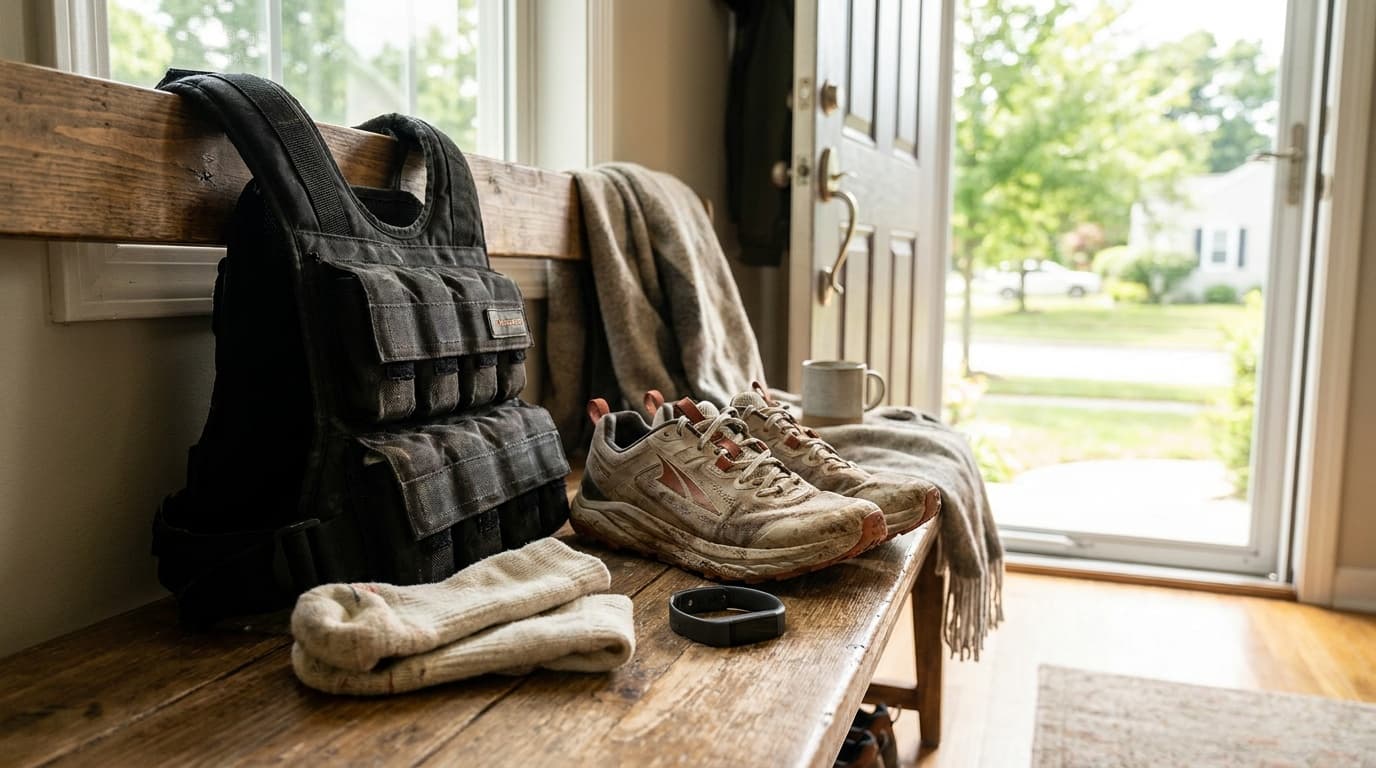
Complete fitness loadout
Weighted-vest starter kit
A beginner setup that pairs an adjustable vest with shoes, socks, and tracking for a repeatable walking routine.
Build the complete kitRelated guides
Buying guide
Best weighted vests 2026: 4 scored picks from $32 to $240
The miR Air Flow (8.8/10) tops 4 researched picks, from a $32 CAP starter to the $240 Hyper Vest PRO. The right vest for walking, calisthenics, or conditioning.
Read guide
Comparison
Weighted vest vs rucking: which is better for you?
Vest or ruck? The honest split: vests load your torso evenly for joint-friendly even-load training, rucking builds posterior-chain and carry strength. Here is how to choose.
Read guide
Field guide
Weighted vest benefits: what the research actually shows
A research-backed look at weighted vest benefits: extra calorie burn, balance and bone-loading effects, cardiovascular load, and the honest limits the studies reveal.
Read guide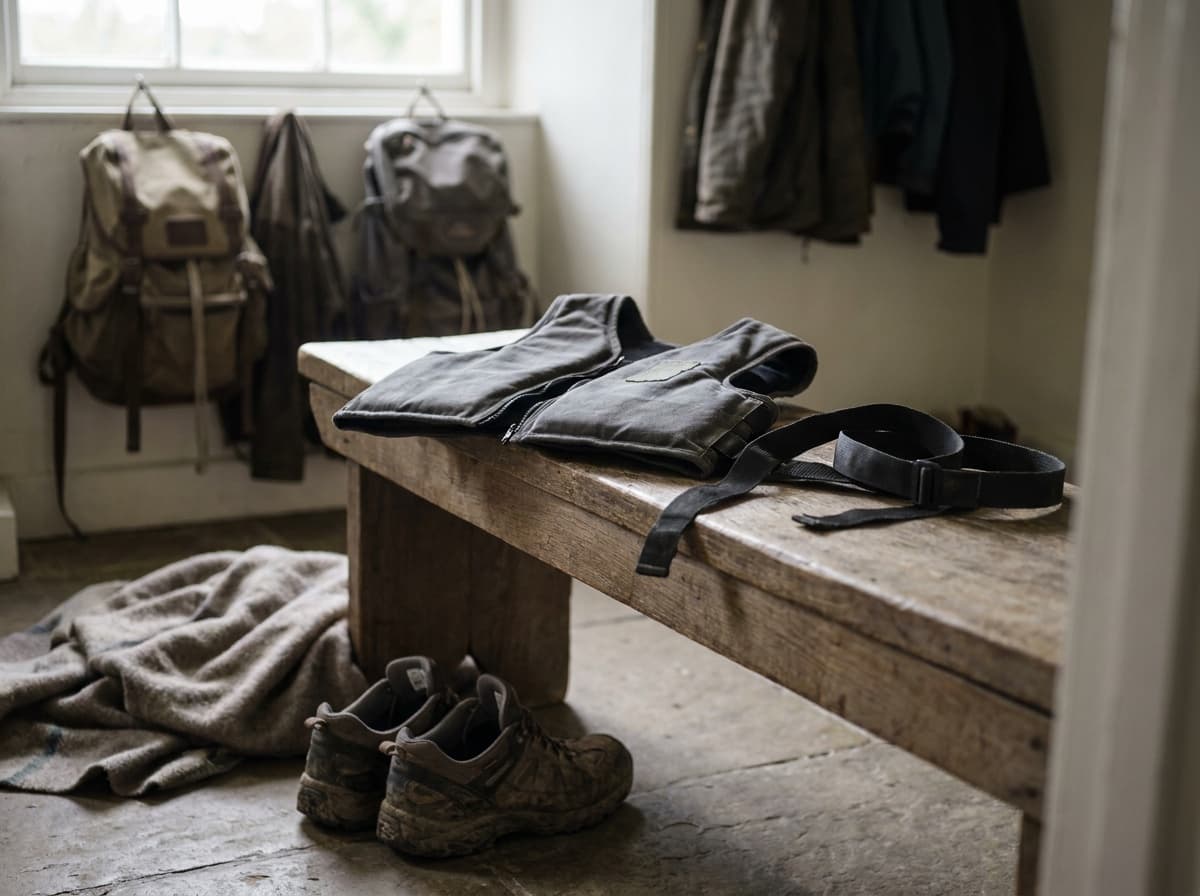
Field guide
Are weighted vests safe? Mistakes to avoid
Weighted vests are safe for most healthy adults used correctly. The real risk is in the mistakes: starting too heavy, poor fit, and ignoring posture. Here is what to avoid.
Read guideResearch-based guide
Updated Jul 8, 2026Our recommendations draw on manufacturer documentation, retailer listings, owner feedback, and comparisons with alternatives.
As an Amazon Associate I earn from qualifying purchases. We may earn a commission from links here, at no extra cost to you. How we research →