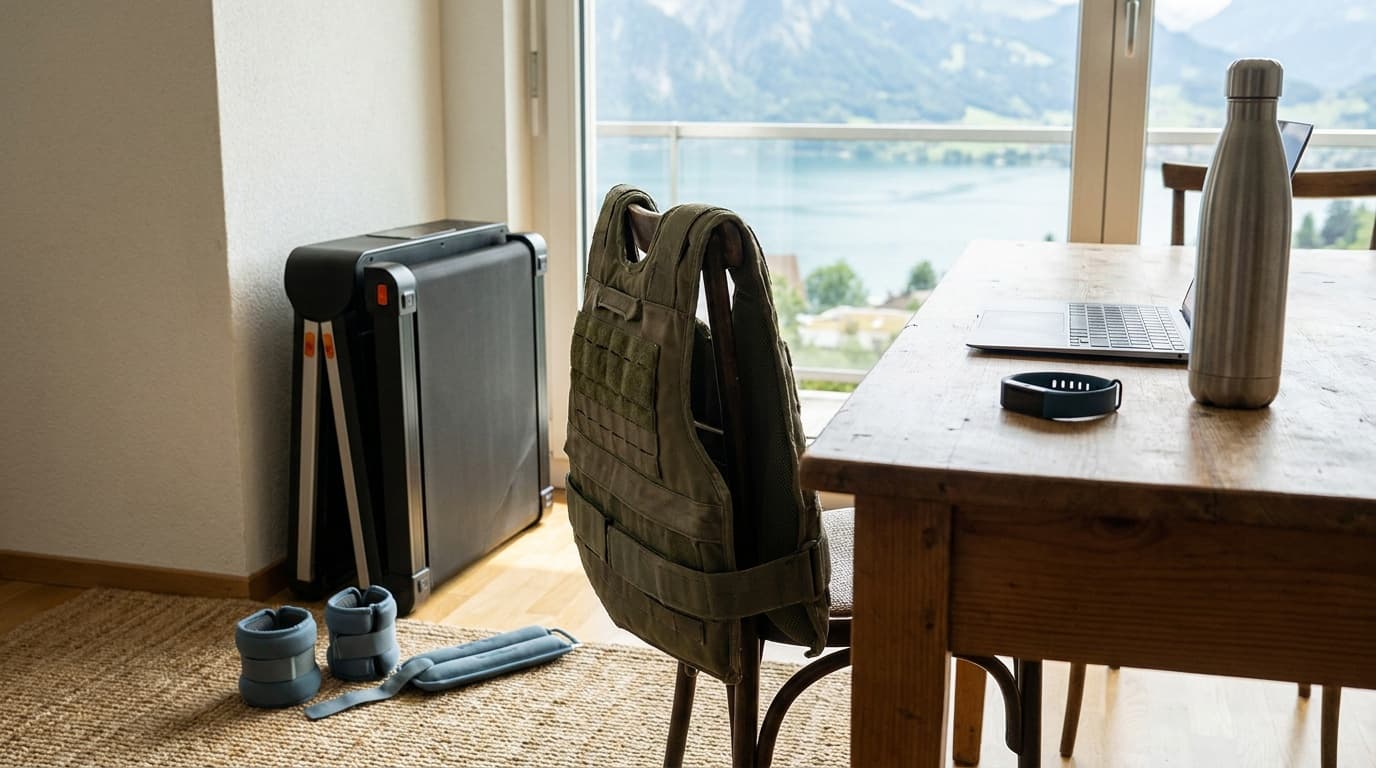
Ankle weights sound like a simple win: strap on a pound or two, walk your usual route, burn more calories. The reality is more complicated, and getting it wrong can mean weeks off your feet nursing a sore knee.
What ankle weights actually do to your walk
When you strap weight to your ankle, you are not just adding load to your body. You are adding it to the far end of a pendulum. Every step requires your hip flexors, quadriceps, and hamstrings to swing a heavier limb through the air. The muscles work harder, your heart rate climbs slightly, and you burn a few more calories. That much is true.
The problem is what else changes. Studies tracking gait patterns in people walking with ankle weights consistently find increased stride variability, longer swing time, and measurable changes to foot strike. Your body adapts, but not always in ways that serve you. The hip flexors and knee joints absorb disproportionately more stress than they would from equivalent total-body load carried closer to your center of gravity.
The location of extra weight matters as much as the amount.
For a healthy 30-year-old on a flat path, a 1 lb ankle weight for a short walk may cause no lasting harm. But scale up to 3–5 lb, walk longer distances, add hills, or carry a pre-existing knee or hip issue, and the risk-to-reward ratio tips the wrong way fast.
The calorie math: real but modest
If your goal is to burn more calories on a walk, ankle weights will get you there, but the margin is slim. Walking a slightly longer route or picking up your pace accomplishes the same thing without altered mechanics. This is not a reason to dismiss ankle weights entirely; it is a reason to be clear-eyed about what you are trading for a small metabolic boost.
Why a weighted vest is the smarter walking upgrade
A weighted vest distributes load across your torso, close to your center of mass. Your limbs swing normally. Your foot strike pattern stays intact. Research on weighted vest walking shows calorie and cardiovascular benefits comparable to or better than ankle weights, with substantially less alteration to gait mechanics.
For walking specifically, an adjustable vest like the Aduro Sport Adjustable Weighted Vest also allows progressive overload in a way that ankle weights do not. You can start with 5–10% of your body weight and build gradually. A 150 lb person starting with 10–15 lb has room to progress meaningfully over months. Ankle weights top out at 5–10 lb before the gait disruption becomes significant.
How to start walking with a weighted vest safely
Choose your starting weight
5–10% of body weight is the standard starting point; err toward the lower end on your first few walks.
Test on a flat, short route
Do your first weighted walk on a flat surface for 20–30 minutes before adding hills or distance.
Monitor your stride
Pay attention to whether your cadence or foot strike feels forced or choppy; if it does, the load is too heavy.
Progress slowly
Add weight no faster than 5–10% every two to three weeks, the same [load progression rules ruckers follow](https://ruckauthority.com/training/ruck-progression-rules-how-to-safely-increase-weight-and-dis?utm_source=kitauthority&utm_medium=referral&utm_campaign=sister-site&utm_content=are-ankle-weights-good-for-walking) when increasing pack weight.
Listen to your joints
Knee, hip, or lower back discomfort is a signal to reduce load, not push through.
When ankle weights do make sense
Ankle weights are not useless. They are the right tool for specific jobs.
For standing or floor-based leg exercises, ankle weights such as the Sportneer Adjustable Ankle Weights are excellent. Donkey kicks, lying leg lifts, clamshells with leg extension, seated knee extensions: these are slow, controlled movements where the pendulum problem does not apply the same way. Physiotherapists routinely use them in rehab for glute activation, quad strengthening after knee surgery, and hip abductor work.
Some low-impact exercise contexts, such as water walking or aqua aerobics, also suit ankle weights well. Water resistance already slows the swing phase and cushions joint impact, reducing the mechanical downside.
If you are recovering from an injury and a physiotherapist has prescribed ankle weights for specific movements, follow that guidance. That is the context they were designed for.
Who should skip ankle weights for walking entirely
If any of the following apply to you, leave ankle weights out of your walking routine:
- A current or recent knee, hip, ankle, or lower back injury
- Osteoarthritis in any lower limb joint
- Balance concerns or a history of falls
- Plantar fasciitis or Achilles tendon issues
- You are new to exercise walking (build base fitness first)
For these groups, the gait disruption risk is not hypothetical. It is the likely outcome, and the downside is significant time off activity.
Frequently asked questions
Can walking with ankle weights tone my legs?
Ankle weights will increase muscular demand on your hip flexors and lower limbs, which contributes to muscle conditioning over time. However, the load is relatively low and the movement pattern (walking) is not well-suited to building significant muscle mass. For visible leg muscle development, dedicated resistance training such as squats, lunges, and deadlifts is far more effective. Ankle weights are a supplement, not a replacement, for strength work.
How heavy should ankle weights be for walking?
If you choose to walk with ankle weights despite the trade-offs, keep the load at 1–2 lb per ankle maximum. Research suggests that weights above 3–4 lb significantly alter gait mechanics for most people. Lighter is genuinely better here: the goal is a small stimulus, not maximum load. If you find 1–2 lb feels easy, that is a cue to switch to a weighted vest rather than add more ankle weight.
Is it safe to walk with ankle weights every day?
Daily use raises cumulative stress on your knee and hip joints. Even at 1–2 lb, the repeated gait alteration over hundreds of thousands of steps adds up. Most exercise physiologists recommend treating ankle weight walks as occasional tools rather than daily practice. If you want to add load to your daily walks consistently, a weighted vest is a more sustainable choice for long-term joint health.
For specific picks, see our guide to the best ankle weights. Browse all fitness guides or read how we research and rate gear.
Recommended gear
Our current top picks from the Best ankle weights for walking and workouts (2026) guide, if you are ready to buy.
SPORTNEER
Sportneer Adjustable Ankle Weights Set
Best Overall
Kit Score 8.8/10
$33.99 Price checked Oct 23, 4:16 PM CDT
Best for: Walkers and home-gym users who want one pair that grows with their fitness level, from 1 lb warm-up walks to 5 lb leg raise sets.
- Wide 1–5 lb per cuff range supports progressive overload from first walk to more demanding leg work
- Sandbags take a few sessions to load and unload smoothly, especially at first
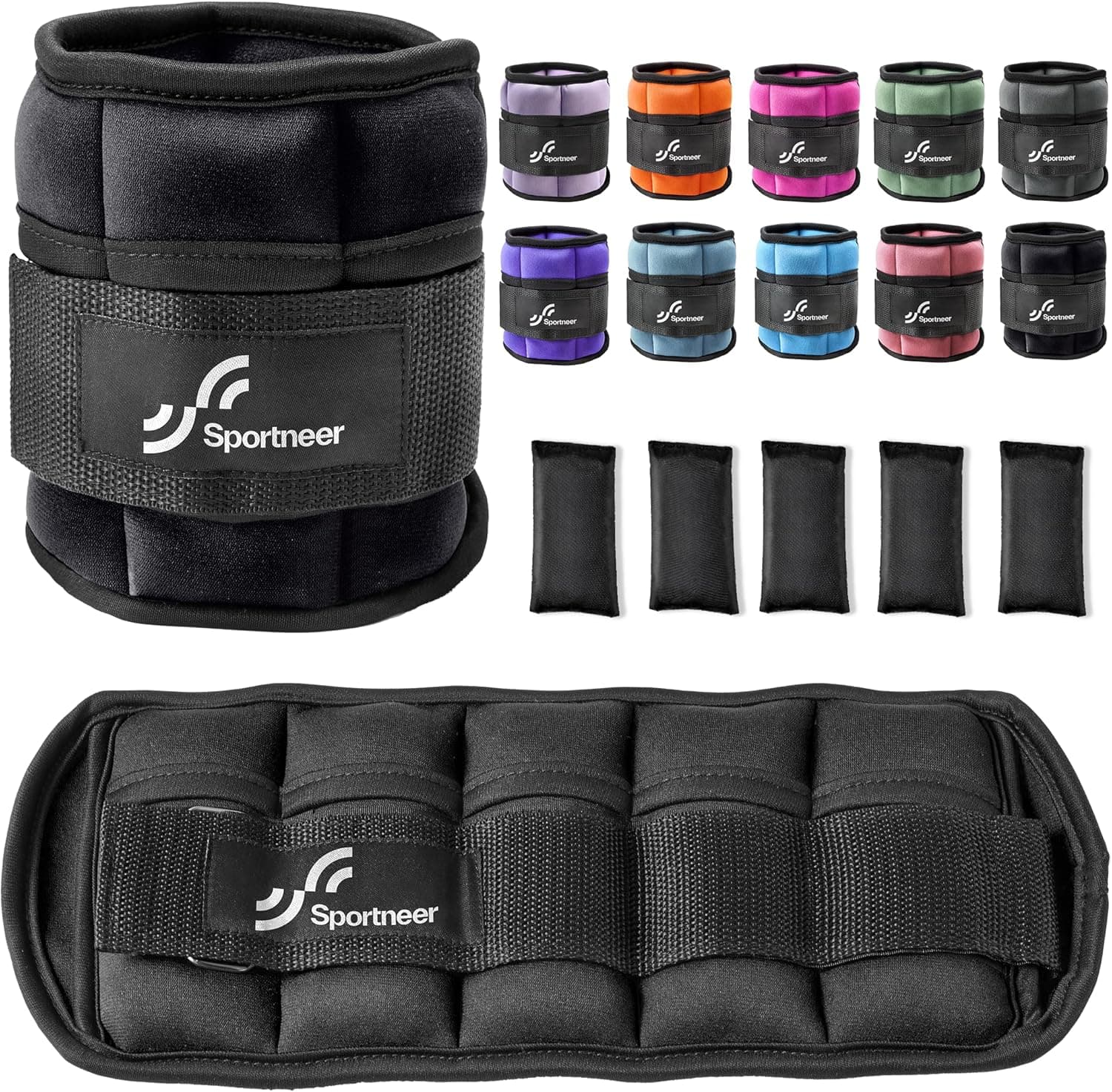
- Weight range
- 1–5 lb per cuff (2–10 lb per pair)
- Adjustability
- 5 removable iron-sand sandbags (1 lb each) per cuff
- Fill material
- Double-bagged iron sand
- Exterior
- Neoprene with reinforced stitching
- Strap
- Adjustable Velcro with stainless steel D-ring
- Fit range
- 7.5–12.5 in. ankle circumference
About this pick
A documented top seller with over 24,000 Amazon ratings, the Sportneer pair covers the full beginner-to-intermediate weight band in a single purchase. Five removable 1-lb sandbags per cuff let you step up load in manageable increments, and a stainless steel D-ring keeps the strap locked during movement.
Strengths
- Wide 1–5 lb per cuff range supports progressive overload from first walk to more demanding leg work
- Moisture-absorbing neoprene interior stays comfortable during longer sessions and resists odor
- D-ring closure system holds position reliably through side shuffles and stair climbs
Weaknesses
- Sandbags take a few sessions to load and unload smoothly, especially at first
- Velcro shows wear before the neoprene does under daily heavy use
Kit Score breakdown
APEXUP
APEXUP Adjustable Ankle Weights
Editor's Choice
Kit Score 8.3/10
$26.96 Price checked Oct 23, 4:16 PM CDT
Best for: Structured progressive training programs where precise load tracking matters, and for users who run warm and want a non-neoprene sleeve.
- Discrete 1-lb modules produce clean, precise load steps with no shifting or sloshing during movement
- Fabric exterior shows dirt more visibly than darker neoprene alternatives
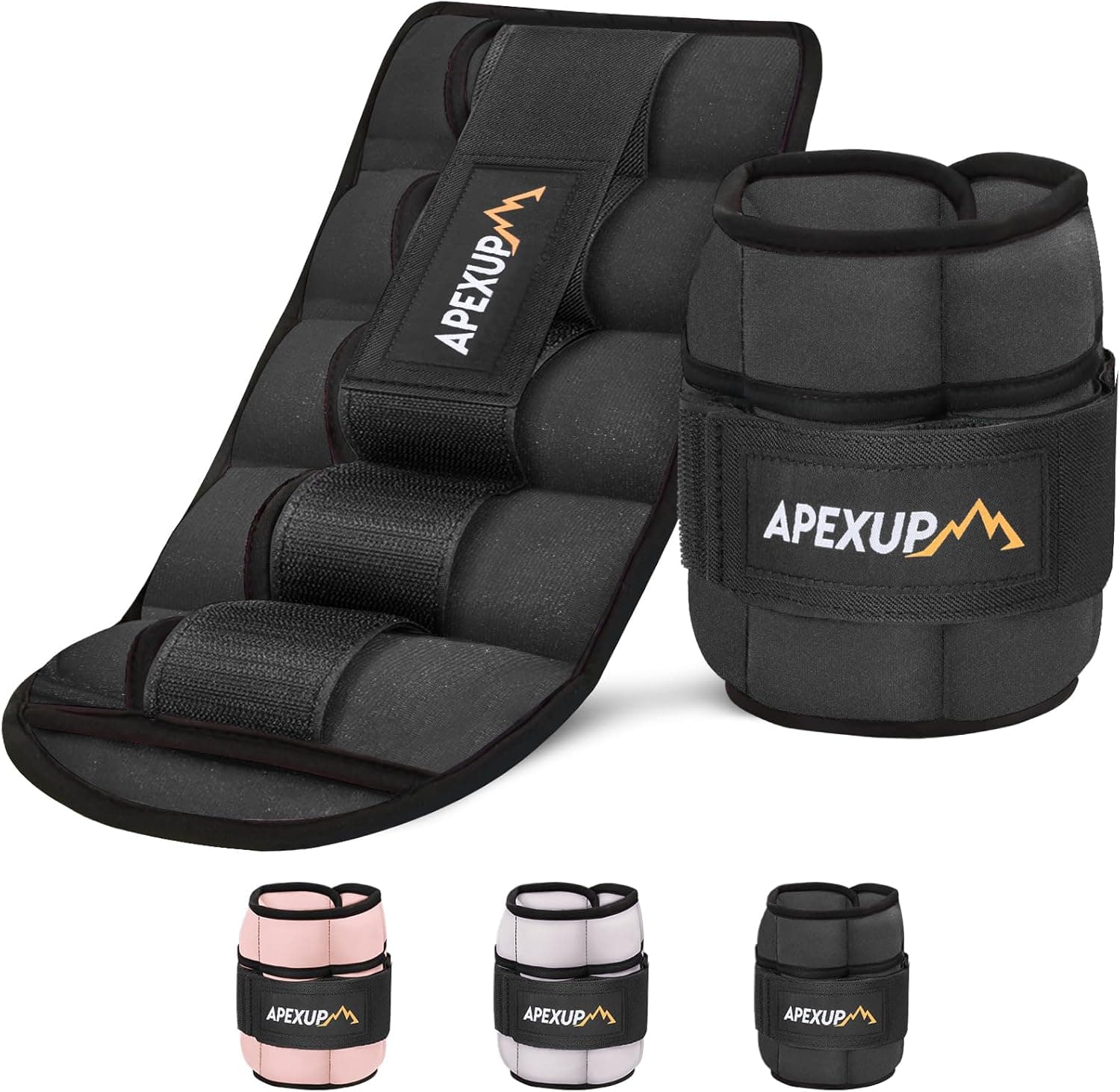
- Weight range
- Up to 2.5 lb per cuff (5 lb pair version); 1–5 lb per cuff in 1 lb modules (10 lb pair version)
- Adjustability
- 5 removable modular iron-sand pockets per cuff (10 lb version)
- Fill material
- Iron sand in individual sealed modules
- Exterior
- Soft breathable fabric sleeve
- Strap
- Adjustable Velcro, one-size-fits-all
- Colors available
- Black, purple, pink, gray, orange, green, blue, yellow
About this pick
APEXUP's modular design keeps each weight increment in its own sealed iron-sand pocket, so you're adding discrete units rather than loose sandbags. The listing family covers a 5 lb pair and a 10 lb pair variant; each gives 1-lb steps per cuff with a breathable fabric sleeve that wears comfortably through longer sessions. Over 7,800 Amazon ratings at 4.5 stars (September 2026).
Strengths
- Discrete 1-lb modules produce clean, precise load steps with no shifting or sloshing during movement
- Breathable fabric sleeve is cooler against skin than traditional neoprene during extended walking sessions
- Available in multiple color options and backed by a 30-day return and lifetime warranty
Weaknesses
- Fabric exterior shows dirt more visibly than darker neoprene alternatives
- Velcro closure is not reinforced with a D-ring, so strap security under heavy lateral movement is slightly lower than D-ring designs
Kit Score breakdown
Best for: Daily walkers who want a comfortable, breathable cuff for 30–60 minute sessions at a fixed light-to-moderate load without paying a premium.
- Mercerized cotton exterior breathes better than neoprene and resists odor buildup over extended daily wear
- Elongated design leaves excess strap on ankles under roughly 8 inches in circumference, which can catch on clothing
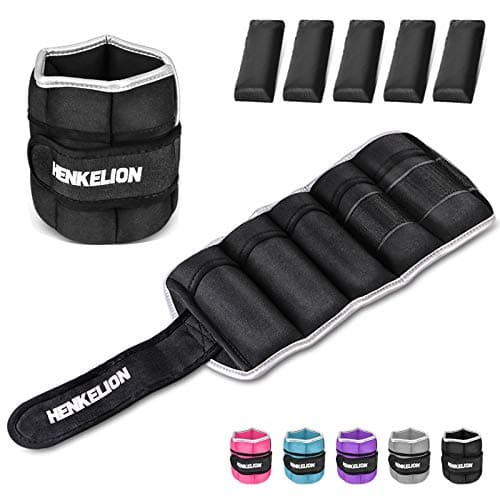
- Weight range
- 2 lb per pair (1 lb each); also available in 3 lb, 5 lb, 8 lb, and 10 lb pairs
- Adjustability
- Removable weight bags; Velcro strap
- Fill material
- Iron sand in individual bags
- Exterior
- Mercerized cotton blend, moisture-wicking
- Strap
- Velcro with metal D-ring loop
- Fit range
- Elongated design; fits most adult ankle sizes
About this pick
Henkelion's mercerized cotton construction is the standout difference here: the softer, more breathable fabric is especially comfortable for low-to-moderate walking loads worn over longer periods. With 14,800+ Amazon ratings at 4.6 stars across multiple weight variants, it has one of the largest verified review pools in the category.
Strengths
- Mercerized cotton exterior breathes better than neoprene and resists odor buildup over extended daily wear
- 14,800+ Amazon ratings at 4.6 stars across multiple weight variants represents a high-confidence owner satisfaction signal
- Metal D-ring keeps the strap firmly anchored; works equally well on wrists and ankles for combined routines
Weaknesses
- Elongated design leaves excess strap on ankles under roughly 8 inches in circumference, which can catch on clothing
- Fixed-weight-per-bag increments are coarser than the modular 1-lb steps on the Sportneer or APEXUP designs
Kit Score breakdown
See all picks in Best ankle weights for walking and workouts (2026)
Keep going
Free toolVest Walking PlanA multi-week weighted-walking plan built around your level.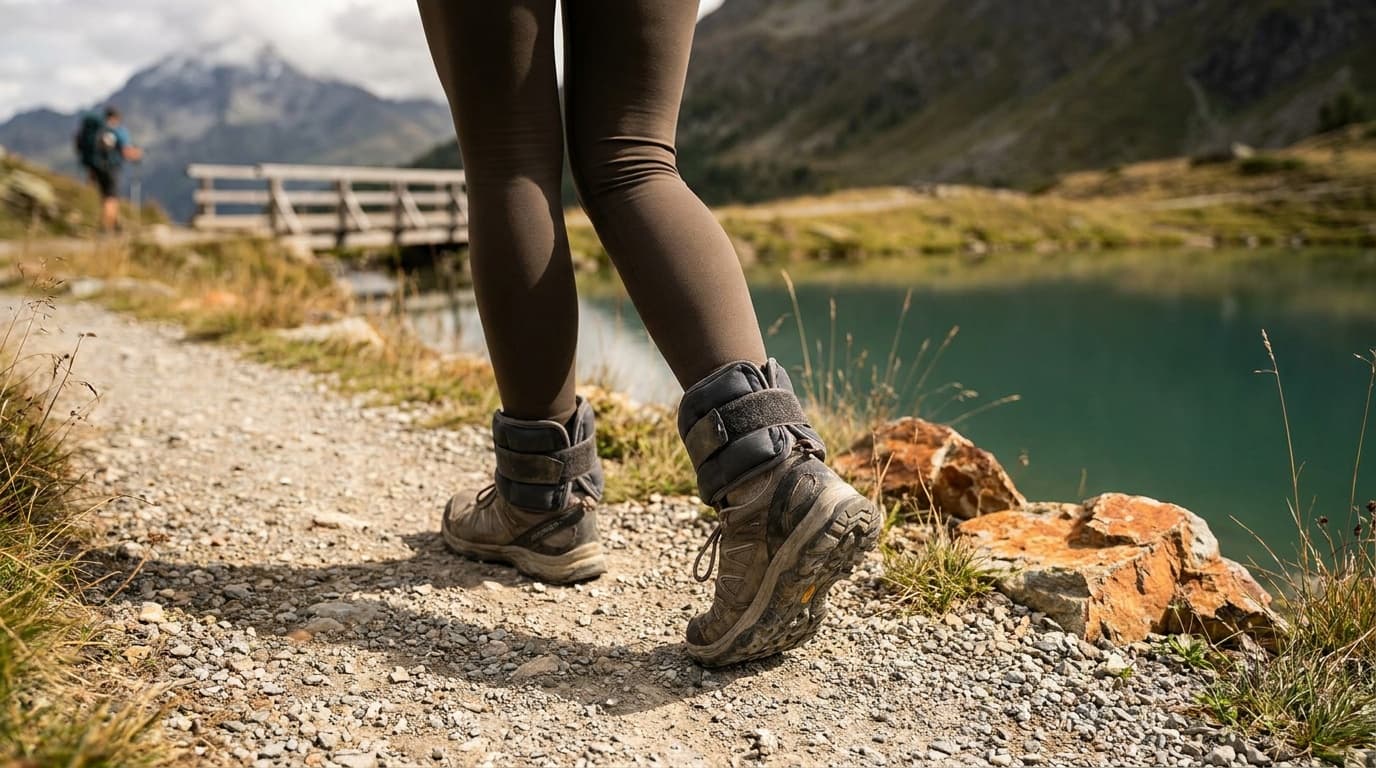
Researched, not hands-on tested
Updated Jun 4, 2026Our recommendations draw on manufacturer documentation, retailer listings, owner feedback, and comparisons with alternatives.
As an Amazon Associate I earn from qualifying purchases. We may earn a commission from links here, at no extra cost to you. How we research →