Ankle weights are one of the simplest tools in a fitness kit: no gym required, no learning curve, and genuine results when used correctly. These four picks cover the range from $10 budget starters to precise modular systems built for structured training programs.
Our quick picks
How we picked
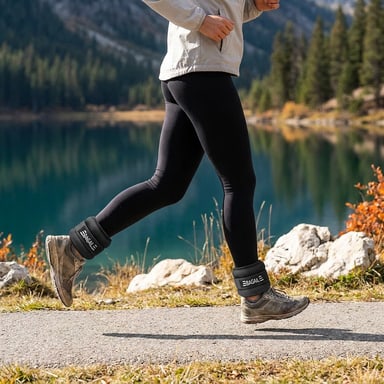
Every pick is scored on our Kit Score: weight range per cuff, adjustability, strap comfort and security, fit range across ankle circumferences, fill durability, stitching quality, and verified owner satisfaction at volume. We aggregate manufacturer specs, physical therapy guidance, and hundreds of verified-owner reviews to separate spec-sheet claims from real-world wearability.
The picks
Best overall
BEST OVERALL
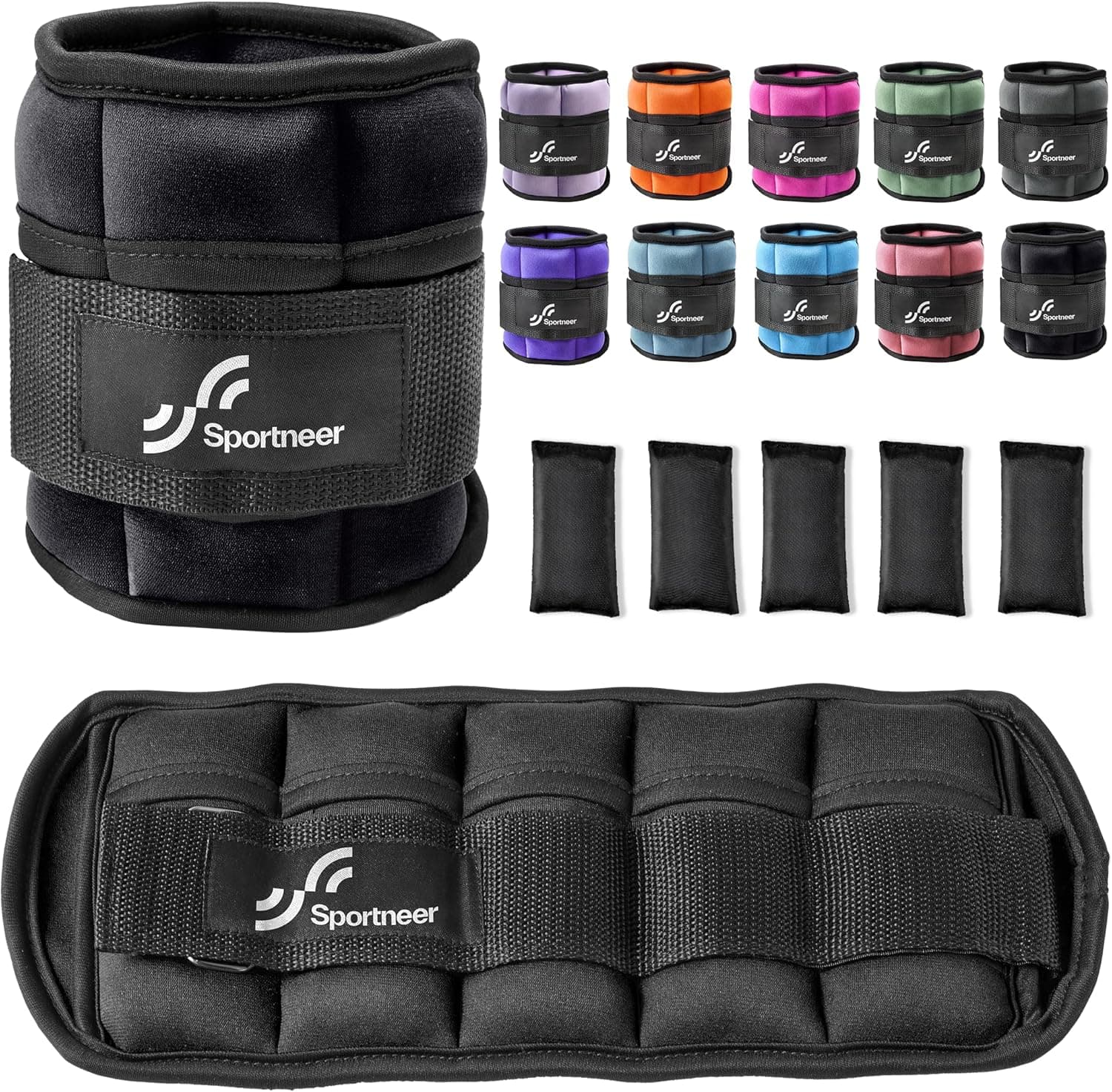
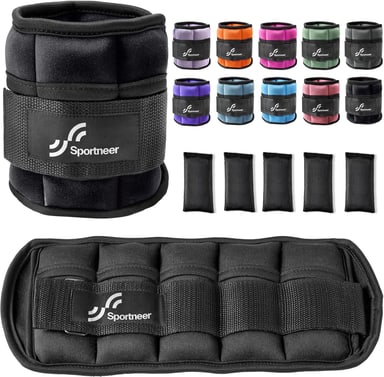
Sportneer Adjustable Ankle Weights Set
Best for: Walkers and home-gym users who want one pair that grows with their fitness level, from 1 lb warm-up walks to 5 lb leg raise sets.
- Wide 1–5 lb per cuff range supports progressive overload from first walk to more demanding leg work
- Sandbags take a few sessions to load and unload smoothly, especially at first
Kit Score 8.8/10 · $33.99 Price checked Oct 23, 4:16 PM CDT · how we score gear
Buy on AmazonProduct details
A documented top seller with over 24,000 Amazon ratings, the Sportneer pair covers the full beginner-to-intermediate weight band in a single purchase. Five removable 1-lb sandbags per cuff let you step up load in manageable increments, and a stainless steel D-ring keeps the strap locked during movement.
- Weight range
- 1–5 lb per cuff (2–10 lb per pair)
- Adjustability
- 5 removable iron-sand sandbags (1 lb each) per cuff
- Fill material
- Double-bagged iron sand
- Exterior
- Neoprene with reinforced stitching
- Strap
- Adjustable Velcro with stainless steel D-ring
- Fit range
- 7.5–12.5 in. ankle circumference
More strengths
- Moisture-absorbing neoprene interior stays comfortable during longer sessions and resists odor
- D-ring closure system holds position reliably through side shuffles and stair climbs
Other tradeoffs
- Velcro shows wear before the neoprene does under daily heavy use
The Sportneer set is the clearest all-purpose recommendation because it scales. Each cuff ships with removable iron sand packets that let you dial the load from 1 lb up to 5 lb per ankle in half-pound increments. That range covers a warm-up walk on a recovery day all the way to a fatiguing set of standing leg raises or donkey kicks.
The neoprene sleeve is thick enough to pad the ankle bone without adding bulk that shifts during movement. Double velcro straps (one at the top of the cuff, one at the bottom) distribute the load and prevent the downward creep that single-strap designs suffer on longer walks. Verified owners consistently report the straps holding position through 45-to-60-minute walk sessions without re-fastening.
The fill is sewn into individual fabric pockets inside the cuff, so even if one seam eventually wears, packets stay isolated rather than migrating. The exterior stitching on the velcro attachment points is reinforced at the corners, which is where cheaper pairs fail first.
At $25–$35 for a set of two, the Sportneer sits at a price point that makes sense for anyone planning to use ankle weights more than once a week.
Editor's choice
EDITOR'S CHOICE
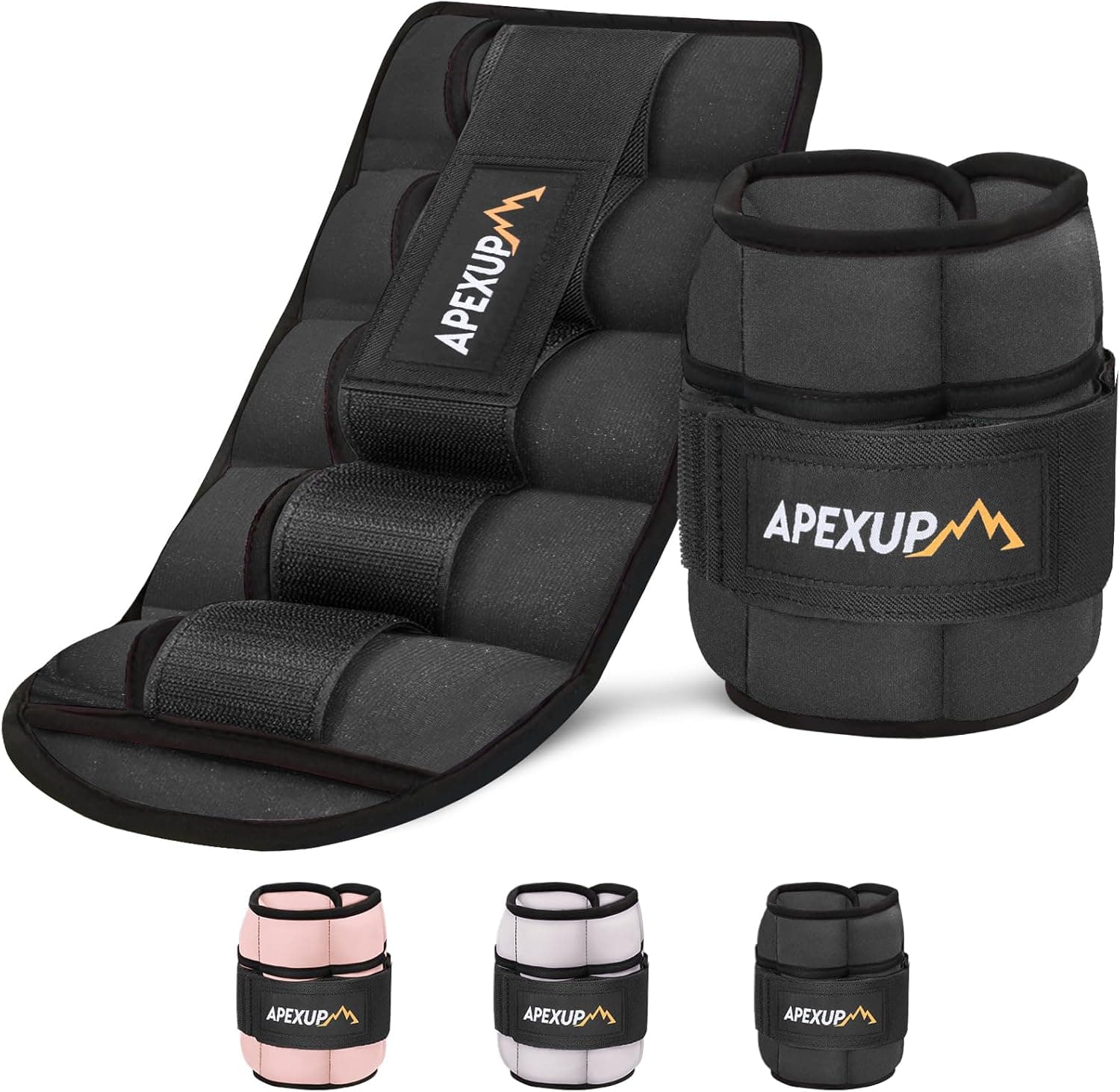
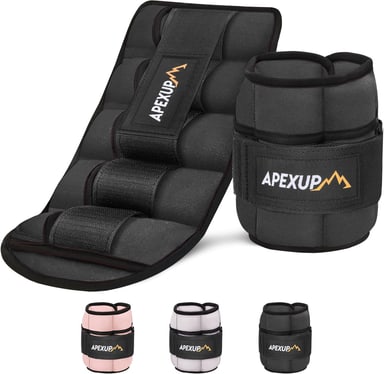
APEXUP Adjustable Ankle Weights
Best for: Structured progressive training programs where precise load tracking matters, and for users who run warm and want a non-neoprene sleeve.
- Discrete 1-lb modules produce clean, precise load steps with no shifting or sloshing during movement
- Fabric exterior shows dirt more visibly than darker neoprene alternatives
Kit Score 8.3/10 · $26.96 Price checked Oct 23, 4:16 PM CDT · how we score gear
Buy on AmazonProduct details
APEXUP's modular design keeps each weight increment in its own sealed iron-sand pocket, so you're adding discrete units rather than loose sandbags. The listing family covers a 5 lb pair and a 10 lb pair variant; each gives 1-lb steps per cuff with a breathable fabric sleeve that wears comfortably through longer sessions. Over 7,800 Amazon ratings at 4.5 stars (September 2026).
- Weight range
- Up to 2.5 lb per cuff (5 lb pair version); 1–5 lb per cuff in 1 lb modules (10 lb pair version)
- Adjustability
- 5 removable modular iron-sand pockets per cuff (10 lb version)
- Fill material
- Iron sand in individual sealed modules
- Exterior
- Soft breathable fabric sleeve
- Strap
- Adjustable Velcro, one-size-fits-all
- Colors available
- Black, purple, pink, gray, orange, green, blue, yellow
More strengths
- Breathable fabric sleeve is cooler against skin than traditional neoprene during extended walking sessions
- Available in multiple color options and backed by a 30-day return and lifetime warranty
Other tradeoffs
- Velcro closure is not reinforced with a D-ring, so strap security under heavy lateral movement is slightly lower than D-ring designs
The APEXUP system earns Editor's Choice for users who care about precision. Where the Sportneer uses iron sand packets in fixed increments, the APEXUP ships individual weight blocks that can be tracked, removed, and reinserted in a consistent sequence. That matters for progressive overload programs where logging exact loads session-to-session is part of the training protocol.
The sleeve material is a breathable fabric blend rather than neoprene. That single difference makes the APEXUP noticeably more comfortable for users who run warm or live in humid climates, where neoprene traps heat against the ankle within 10–15 minutes of walking. Verified owners in southern states and during summer training blocks single out the ventilation as the deciding factor.
Load range matches the Sportneer: up to 5 lb per cuff. The strap is wide velcro with reinforced anchor points. Fit range accommodates most adult ankle circumferences without gap or overtightening.
At $22–$32 it is slightly less expensive than the Sportneer, and the modular weight system is genuinely more useful for structured programs. The trade-off is that the fabric sleeve offers less padding at the ankle bone for users with bony or sensitive ankles.
Best value
BEST VALUE
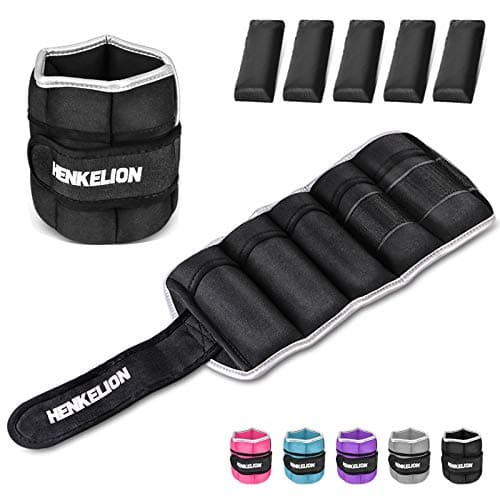
Henkelion Adjustable Ankle Weights
Best for: Daily walkers who want a comfortable, breathable cuff for 30–60 minute sessions at a fixed light-to-moderate load without paying a premium.
- Mercerized cotton exterior breathes better than neoprene and resists odor buildup over extended daily wear
- Elongated design leaves excess strap on ankles under roughly 8 inches in circumference, which can catch on clothing
Kit Score 8.5/10 · Check current price · how we score gear
Buy on AmazonProduct details
Henkelion's mercerized cotton construction is the standout difference here: the softer, more breathable fabric is especially comfortable for low-to-moderate walking loads worn over longer periods. With 14,800+ Amazon ratings at 4.6 stars across multiple weight variants, it has one of the largest verified review pools in the category.
- Weight range
- 2 lb per pair (1 lb each); also available in 3 lb, 5 lb, 8 lb, and 10 lb pairs
- Adjustability
- Removable weight bags; Velcro strap
- Fill material
- Iron sand in individual bags
- Exterior
- Mercerized cotton blend, moisture-wicking
- Strap
- Velcro with metal D-ring loop
- Fit range
- Elongated design; fits most adult ankle sizes
More strengths
- 14,800+ Amazon ratings at 4.6 stars across multiple weight variants represents a high-confidence owner satisfaction signal
- Metal D-ring keeps the strap firmly anchored; works equally well on wrists and ankles for combined routines
Other tradeoffs
- Fixed-weight-per-bag increments are coarser than the modular 1-lb steps on the Sportneer or APEXUP designs
The Henkelion cuff is purpose-built for the daily walker: adjustable load in the light-to-moderate range, a breathable knit sleeve, and a wide comfortable strap designed for sessions measured in hours rather than sets.
The sleeve uses a moisture-wicking knit rather than neoprene or a stiff fabric, which means it flexes naturally with the ankle through a full walking stride and does not bunch or bunch at the Achilles tendon. For people doing 30-to-60-minute neighborhood walks five or six days a week, that texture difference translates directly to fewer hot spots and less post-session skin irritation.
Load adjustability tops out lower than the Sportneer and APEXUP. The Henkelion is not the right choice if you plan to progress to heavy leg raises or resistance training. It is the right choice if your goal is a consistent daily walk at a modest added load, which is exactly the use case that matches most of its buyers.
At $18–$24 for the set, it is the most affordable adjustable cuff here with meaningful quality. It earns Best Value over the BAGAIL because the adjustability and strap system are genuinely better, and the price gap is small enough that most users should step up.
Best budget
BEST BUDGET
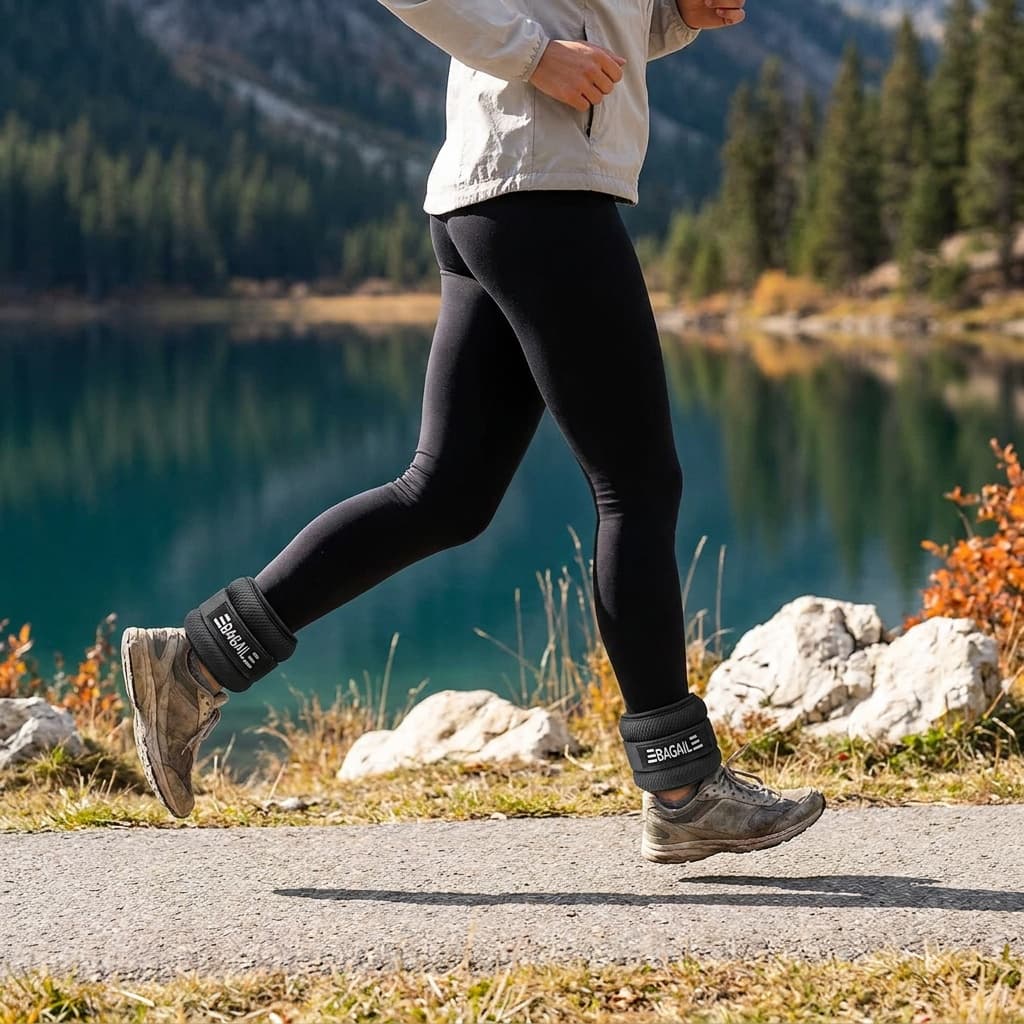
BAGAIL Ankle and Wrist Weights
Best for: Budget-conscious beginners who want a single fixed-weight pair for daily walks or beginner physical therapy exercises without a modular system.
- Three-layer Lycra-SBR fabric manages moisture better than single-layer neoprene and resists odor at this price tier
- Fixed weight per pair means you need to purchase a new set to progress rather than adding modules
Kit Score 7.6/10 · $9.98 Price checked Oct 23, 4:16 PM CDT · how we score gear
Buy on AmazonProduct details
The BAGAIL pair is the entry point for walkers who want a functional cuff without spending more than roughly $10 for the 2 lb pair. The three-layer Lycra-SBR fabric is a step above basic neoprene in sweat management, and the metal D-ring closure punches above the price point. Note: this is a newer listing with a smaller review pool (about 1,200 ratings in September 2026) than the other picks in this guide.
- Weight options
- 1, 2, 4, 6, 8, or 10 lb per pair (sold by pair weight)
- Adjustability
- Fixed weight per pair; removable weight bags inside each cuff
- Fill material
- Iron sand
- Exterior
- Three-layer Lycra-SBR fabric with anti-slip interior lining
- Strap
- High-tension Velcro with metal D-ring
- Design
- Sleek, low-profile; available in multiple weight options
More strengths
- High-tension Velcro plus metal D-ring closure holds position without slipping during walking and light aerobics
- Available in six weight options from 1 to 10 lb per pair, so you can buy the load you need rather than over-buying
Other tradeoffs
- Fabric can feel slightly stiff in the first few uses before it breaks in
- Newer listing with around 500 reviews: owner sentiment signal is encouraging but thinner than the other picks here
The BAGAIL pair is a fixed-weight cuff: one load per pair, no packets to add or remove. That simplicity is both the limitation and the point. If you are a first-time ankle weight user, someone in early-stage physical therapy doing body-weight exercises, or a household that wants a single light pair for occasional use, the BAGAIL does the job without requiring you to think about modular systems.
The cuff is neoprene with a single wide velcro strap. It works correctly on a flat walk or a chair-based leg lift. Verified owners in physical therapy contexts rate it well for exactly these low-intensity applications.
The ceiling is 3 lb per cuff in the heavier configurations. If you hit that ceiling and want more, the Henkelion or Sportneer is the natural next step. The BAGAIL is a starter pair, and that is a fine thing to be.
At $10–$20, the price removes every barrier to trying ankle weights. The risk of buying in is minimal.
Head-to-head comparison
| Product | Kit Score | Price | Best for |
|---|---|---|---|
| Sportneer Adjustable Ankle Weights Set | 8.8 | $33.99 Price checked Oct 23, 4:16 PM CDT | Best for: Walkers and home-gym users who want one pair that grows with their fitness level, from 1 lb warm-up walks to 5 lb leg raise sets. Why it stands out: Wide 1–5 lb per cuff range supports progressive overload from first walk to more demanding leg work Tradeoff: Sandbags take a few sessions to load and unload smoothly, especially at first |
| APEXUP Adjustable Ankle Weights | 8.3 | $26.96 Price checked Oct 23, 4:16 PM CDT | Best for: Structured progressive training programs where precise load tracking matters, and for users who run warm and want a non-neoprene sleeve. Why it stands out: Discrete 1-lb modules produce clean, precise load steps with no shifting or sloshing during movement Tradeoff: Fabric exterior shows dirt more visibly than darker neoprene alternatives |
| Henkelion Adjustable Ankle Weights | 8.5 | Check current price | Best for: Daily walkers who want a comfortable, breathable cuff for 30–60 minute sessions at a fixed light-to-moderate load without paying a premium. Why it stands out: Mercerized cotton exterior breathes better than neoprene and resists odor buildup over extended daily wear Tradeoff: Elongated design leaves excess strap on ankles under roughly 8 inches in circumference, which can catch on clothing |
| BAGAIL Ankle and Wrist Weights | 7.6 | $9.98 Price checked Oct 23, 4:16 PM CDT | Best for: Budget-conscious beginners who want a single fixed-weight pair for daily walks or beginner physical therapy exercises without a modular system. Why it stands out: Three-layer Lycra-SBR fabric manages moisture better than single-layer neoprene and resists odor at this price tier Tradeoff: Fixed weight per pair means you need to purchase a new set to progress rather than adding modules |
Sportneer Adjustable Ankle Weights Set
- Best for
- Walkers and home-gym users who want one pair that grows with their fitness level, from 1 lb warm-up walks to 5 lb leg raise sets.
- Why it stands out
- Wide 1–5 lb per cuff range supports progressive overload from first walk to more demanding leg work
- Tradeoff
- Sandbags take a few sessions to load and unload smoothly, especially at first
APEXUP Adjustable Ankle Weights
- Best for
- Structured progressive training programs where precise load tracking matters, and for users who run warm and want a non-neoprene sleeve.
- Why it stands out
- Discrete 1-lb modules produce clean, precise load steps with no shifting or sloshing during movement
- Tradeoff
- Fabric exterior shows dirt more visibly than darker neoprene alternatives
Henkelion Adjustable Ankle Weights
- Best for
- Daily walkers who want a comfortable, breathable cuff for 30–60 minute sessions at a fixed light-to-moderate load without paying a premium.
- Why it stands out
- Mercerized cotton exterior breathes better than neoprene and resists odor buildup over extended daily wear
- Tradeoff
- Elongated design leaves excess strap on ankles under roughly 8 inches in circumference, which can catch on clothing
BAGAIL Ankle and Wrist Weights
- Best for
- Budget-conscious beginners who want a single fixed-weight pair for daily walks or beginner physical therapy exercises without a modular system.
- Why it stands out
- Three-layer Lycra-SBR fabric manages moisture better than single-layer neoprene and resists odor at this price tier
- Tradeoff
- Fixed weight per pair means you need to purchase a new set to progress rather than adding modules
How to choose the right ankle weights
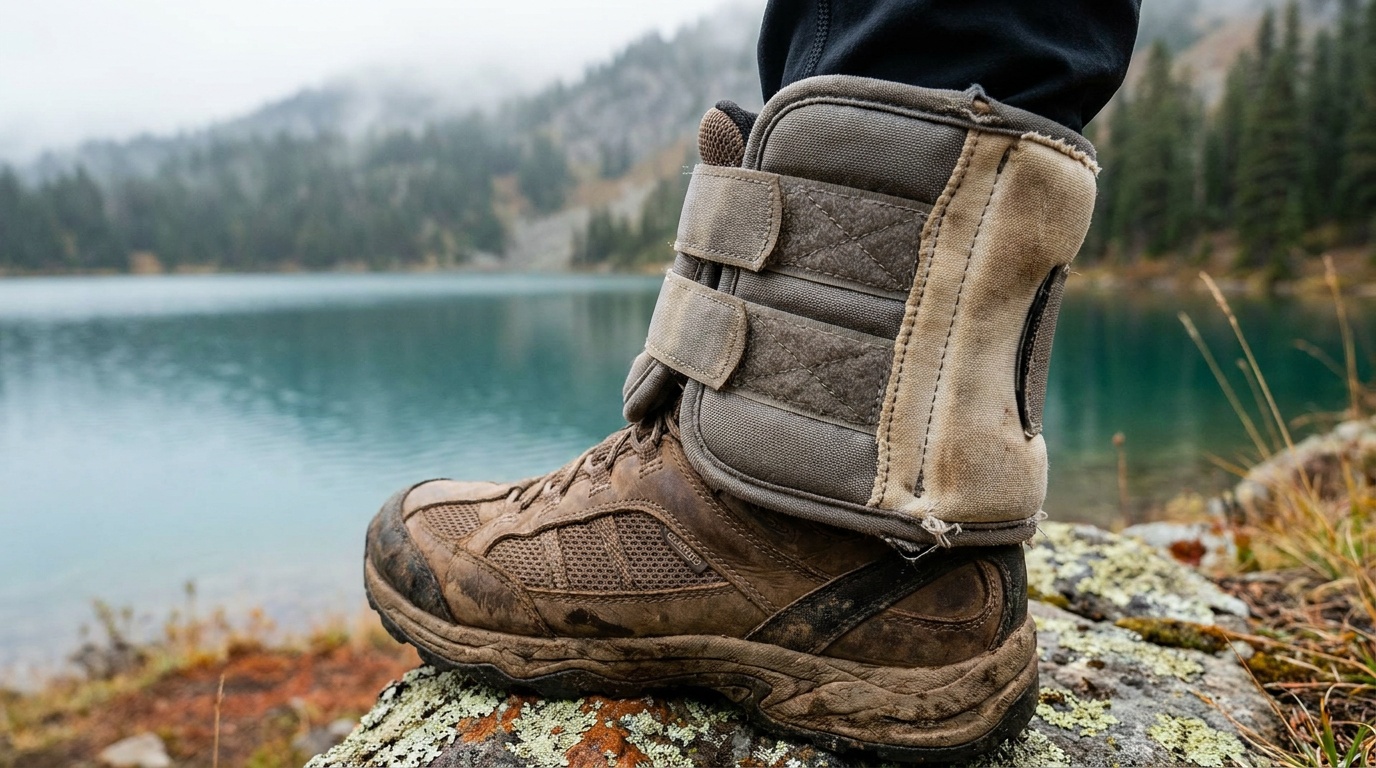
Pick the right pair in four steps
Decide whether you need adjustability
Fixed-weight cuffs (BAGAIL) are simpler and cheaper but lock you into one load. Adjustable cuffs (Sportneer, APEXUP, Henkelion) let you scale as you get stronger or drop weight on recovery days. If you plan to use ankle weights more than a few months, adjustability is worth the modest premium.
Match the load range to your goal
Walking and low-impact rehab exercises rarely need more than 2–3 lb per ankle. Standing leg raises and gym-style exercises benefit from the ability to reach 4–5 lb. Pick a cuff whose ceiling is at least one step above where you are today so you are not immediately shopping for a replacement.
Check the sleeve material against your climate
Neoprene holds shape and cushions the ankle bone well. It also traps heat. Fabric and knit sleeves breathe better for summer walking or for users who run warm. If you are doing 45-minute walks in warm weather, sleeve ventilation matters more than it looks.
Try the fit range before you commit
Most ankle weight straps fit a range roughly 8–16 inches in circumference. If your ankles are toward the upper end of that range, check the manufacturer's stated fit range. A strap stretched near its maximum velcro range loses holding power quickly and will creep down during a walk.
The right ankle weight is the one you forget is there until the session is over.
When ankle weights help, and when they strain
Ankle weights add resistance to movements that already load the lower body correctly: walking at a conversational pace, seated or lying leg raises, leg curls, and body-weight rehab exercises. In these applications, the added load increases muscular demand without changing joint mechanics in a harmful way.
They become a liability in a few specific situations. Running with ankle weights shifts the pendulum weight of the leg, which changes stride mechanics and increases rotational stress on the knee over time. High-impact jumping with ankle weights compounds landing forces. And walking with very heavy loads (above 3 lb per ankle for most people) can stress the ankle and knee joints rather than condition the surrounding muscles.
The physical therapy literature consistently supports light ankle weights (1–3 lb) for lower-extremity strengthening during rehab and for low-impact walking programs. The load range is intentional. More is not better past that point; it is just more joint stress.
Frequently asked questions
How heavy should ankle weights be for walking?
For most healthy adults, 1–2 lb per ankle is the right starting range for walking. That load increases caloric expenditure and lower-leg muscular demand without meaningfully altering stride mechanics. 2–3 lb per ankle is appropriate for walkers who have been using ankle weights consistently for several weeks and want to progress. Above 3 lb per ankle during walking is generally not recommended by physical therapists because the extra pendulum weight at the end of the leg increases knee and hip stress more than it increases fitness benefit. Save higher loads for stationary exercises like leg raises and leg curls.
Can I use ankle weights for physical therapy exercises?
Yes, and this is one of the most evidence-supported uses of ankle weights. Straight leg raises, terminal knee extensions, prone hamstring curls, and seated leg extensions are all standard lower-extremity rehab exercises commonly performed with light ankle weights. The key is that the load should be light enough to complete the prescribed reps with clean form. If form breaks down or pain increases, the weight is too heavy. Always follow your physical therapist's specific load guidance; the general ranges above are for healthy adults, not post-surgical or injury-specific protocols.
Do ankle weights actually make walking harder?
Yes, in measurable ways. A 2014 study published in the Journal of Physical Therapy Science found that walking with ankle weights increased oxygen consumption and heart rate compared to unweighted walking at the same speed. The effect is modest at 1–2 lb but real. The bigger practical benefit for most users is muscular: the glutes, hamstrings, and hip flexors work harder to move a weighted leg through the gait cycle, which over time increases lower-body endurance. The cardiovascular and muscular benefits are why ankle weights are a staple in low-impact fitness programs and walking-based weight-loss plans.
Ankle weights are one of the most accessible resistance tools available: no membership required, no special space, and a genuine payoff for walkers and rehab users who apply them correctly. Any of these four picks will serve you well; the right choice comes down to how much you want to adjust the load and how long each session runs.
Browse more fitness gear picks on the fitness hub, or learn more about how we research and rate every product on this site.
Keep going
Our recommendations draw on manufacturer documentation, retailer listings, owner feedback, and comparisons with alternatives.
As an Amazon Associate I earn from qualifying purchases. We may earn a commission from links here, at no extra cost to you. How we research →