We may earn a commission from links on this page, at no extra cost to you.
Both add load to a walk, both burn more calories than walking empty, and both build strength under fatigue. But a weighted vest and a loaded ruck are not interchangeable tools. They put the weight in different places, and that one difference changes your posture, the muscles you train, the stress on your lower back, and which one is right for your goals.
Vest vs ruck at a glance
| Factor | Weighted vest | Rucking (loaded pack) |
|---|---|---|
| Load placement | Centered, hugged to torso front and back | On the upper back, behind your center of gravity |
| Effect on posture | Stays upright, weight balanced around the spine | Pulls you backward, so you lean forward to compensate |
| Primary muscles | Even, whole-body; legs and core under symmetrical load | Posterior chain (lower back, glutes), shoulders, traps, grip |
| Lower-back load | Lower, weight is closer to the spine's axis | Higher, the forward lean adds lumbar compression |
| Gait impact | Minimal change to natural stride | Altered stride and trunk lean, more noticeable as load rises |
| Calorie burn | Roughly 10 to 15% over the same walk unloaded | Similar, slightly higher for the same weight (around 7% more) |
| Cost | Dedicated purchase ($60 to $300+) | A sturdy pack you may already own, plus plates or filler |
| Best for | Treadmill, calisthenics, even-load, joint-friendly use | Outdoor distance, carry strength, military and event prep |
How the load sits, and why it changes everything
The single biggest difference between the two is geometry. A weighted vest wraps the load around your torso, front, sides, and back, keeping the weight close to your spine's natural axis. Your center of gravity barely moves, so your posture stays upright and your stride stays close to normal.
A ruck does the opposite. The load rides on your upper back, behind your center of gravity. To stop the weight from pulling you over backward, your body leans the torso forward to rebalance. That forward lean is not a flaw in your technique, it is the predictable mechanical response to a back-loaded weight. Research on load carriage finds that backpack carriage significantly increases trunk forward lean, flattens the lumbar curve, and shifts the body's center of mass, which raises compression and shear forces at the L5/S1 disc at the base of the spine (PubMed: backpack load position effects on trunk forward lean).
This is why a vest is the gentler choice for your lower back. With the weight closer to the spine, there is less of a lever arm pulling you off balance, and less compensatory lumbar loading. If you have a history of back issues, that geometry matters. (Anyone with existing back, disc, or joint problems should clear added load with a clinician first, regardless of which tool they choose.)
Different muscles, different adaptations
Because the vest keeps load symmetrical and central, it trains your legs, core, and cardiovascular system under an even, balanced load. Nothing is asked to fight a tipping force. That makes it excellent for adding intensity to movements you already do well: walking, lunges, push-ups, pull-ups, and step-ups.
Rucking recruits a different set of muscles harder. Stabilizing a back-loaded weight demands more from the posterior chain, the lower back, glutes, and the muscles that hold your trunk upright against the forward pull. Your shoulders, traps, and upper back work to carry and steady the pack. In short, rucking trains carrying, the practical skill of moving a load over distance, in a way a vest cannot replicate. That carry-specific strength is exactly what military selection, obstacle races, and backcountry hauling demand.
A vest trains your body under load. A ruck trains your body to carry a load. Those are related but different skills.
Gait, joints, and the impact question
For walking mechanics, the vest is the more forgiving option. Its centered load barely disturbs your natural stride, so your gait stays close to unweighted walking. A ruck progressively alters your gait as the weight climbs: a slightly forward trunk, a shorter and more deliberate stride, and more work for the stabilizers. Keeping the load high in the pack, around shoulder-blade level rather than sagging low, is the most cited way ruckers reduce that strain and protect the lower back.
Both tools share one important advantage over running or jumping with weight: walking is low impact. The ground reaction forces of loaded walking are far gentler on knees and hips than loaded running. For load placement specifically, the vest edges ahead on joint-friendliness because the even distribution avoids the asymmetric, off-axis pull a pack creates. If your priority is adding intensity while protecting joints, the vest is the safer default. For how much to load either way, see our guide to how much a weighted vest should weigh, where the same 5 to 10% bodyweight starting framework applies to a ruck.
Calorie burn: closer than you would think
A persistent myth says rucking torches calories at a wildly higher rate than other walking. The honest numbers are more modest. Adding load of either kind increases calorie burn by roughly 10 to 20% over the same walk done empty, not the 200 to 300% old military estimates implied. The American Council on Exercise found a vest of about 15% bodyweight raised calorie burn around 12% versus the same unweighted walk (RUKSAK summary of weighted-walking energy data).
Vest versus ruck, the gap is small. For the same total weight, a back-loaded pack tends to cost a little more energy than a vest, on the order of 7%, because of the extra stabilizing work the forward lean demands. Practically, that means calorie burn should not be your deciding factor. Both work, and the difference between them is dwarfed by how far, how often, and how heavy you go.
Cost and convenience

A weighted vest is a dedicated purchase, typically $60 to $300 or more depending on adjustability and fit. The payoff is convenience: put it on, walk out the door, no loading or balancing required, and it works indoors on a treadmill where a swinging pack is awkward.
Rucking can be cheaper to start. A sturdy backpack you already own, loaded with plates, sandbags, or even water jugs, gets you moving for close to nothing. The trade-off is that improvised loads are harder to keep centered and secure, and an unbalanced pack amplifies the very gait and back issues described above. Purpose-built rucksacks with internal plate pockets solve that, but they cost as much as a good vest. Ruck Authority's rucking backpacks guide is where to compare them.
Who should pick which
Choosing comes down to where you train and what you are building.
Choose a weighted vest if you train indoors or on a treadmill, you do calisthenics or strength circuits and want even load that does not swing, you want the gentlest option for your lower back and joints, or you simply want a grab-and-go tool that adds intensity to walks without fuss. Start with our pillar guide to the best weighted vests to find one that fits well and adjusts in small increments.
Choose rucking if your goal is outdoor distance over real terrain, you want to build posterior-chain and carry strength that transfers to hauling and load-bearing tasks, or you are training for the military, a selection event, or an obstacle race where carrying weight over ground is the actual test. Rucking is the core specialty of our sister site Ruck Authority. Start with its rucking backpacks guide for the pack decision, its GORUCK guide if you are weighing the packs most ruckers end up comparing, or the budget rucking starter kit if you want the cheapest workable setup.
For most people, the best answer is not either-or. A vest for indoor and strength days, a ruck for outdoor distance days, covers both adaptation styles and keeps training varied. If you can only pick one, let your environment decide: stuck indoors, choose the vest; heading outside for miles, choose the ruck.
Frequently asked questions
Is a weighted vest or rucking better for your back?
A weighted vest is generally easier on the lower back. It keeps the load close to your spine's axis, so your posture stays upright. A loaded ruck sits behind your center of gravity and pulls you backward, so you lean forward to compensate, which research links to higher compression at the lower lumbar spine. Anyone with an existing back or disc issue should choose carefully and clear added load with a clinician first.
Do rucking and a weighted vest burn the same calories?
Close to it. Both add roughly 10 to 20% to the calorie burn of the same walk done unloaded. For the same total weight, a back-loaded pack tends to cost slightly more energy than a vest, on the order of 7%, because of the extra stabilizing work. The difference is small enough that calorie burn should not decide your choice; distance, frequency, and load matter far more.
Can I use a weighted vest instead of a rucksack for rucking training?
Partly. A vest builds general strength and conditioning under load and is a fine substitute for indoor or treadmill sessions. But it cannot fully replicate carrying a pack, which trains the posterior chain, shoulders, and the specific skill of moving a back-loaded weight over distance. If you are preparing for an event that involves a ruck, train with an actual loaded pack for at least part of your program.
Which is more beginner friendly, a weighted vest or rucking?
A weighted vest is the easier entry point. It alters your gait less, keeps your posture upright, and there is no loading or balancing to get wrong. Start light, around 5% of your bodyweight, and build duration before adding weight. Rucking is still beginner accessible, but it asks more of your lower back and core from the start, so keeping the load high and centered in the pack matters more.
Browse more on fitness gear, or see how we research and rate the products and advice on this site.
Recommended gear
Our current top picks from the Best weighted vests 2026: 4 scored picks from $32 to $240 guide, if you are ready to buy.
MIR
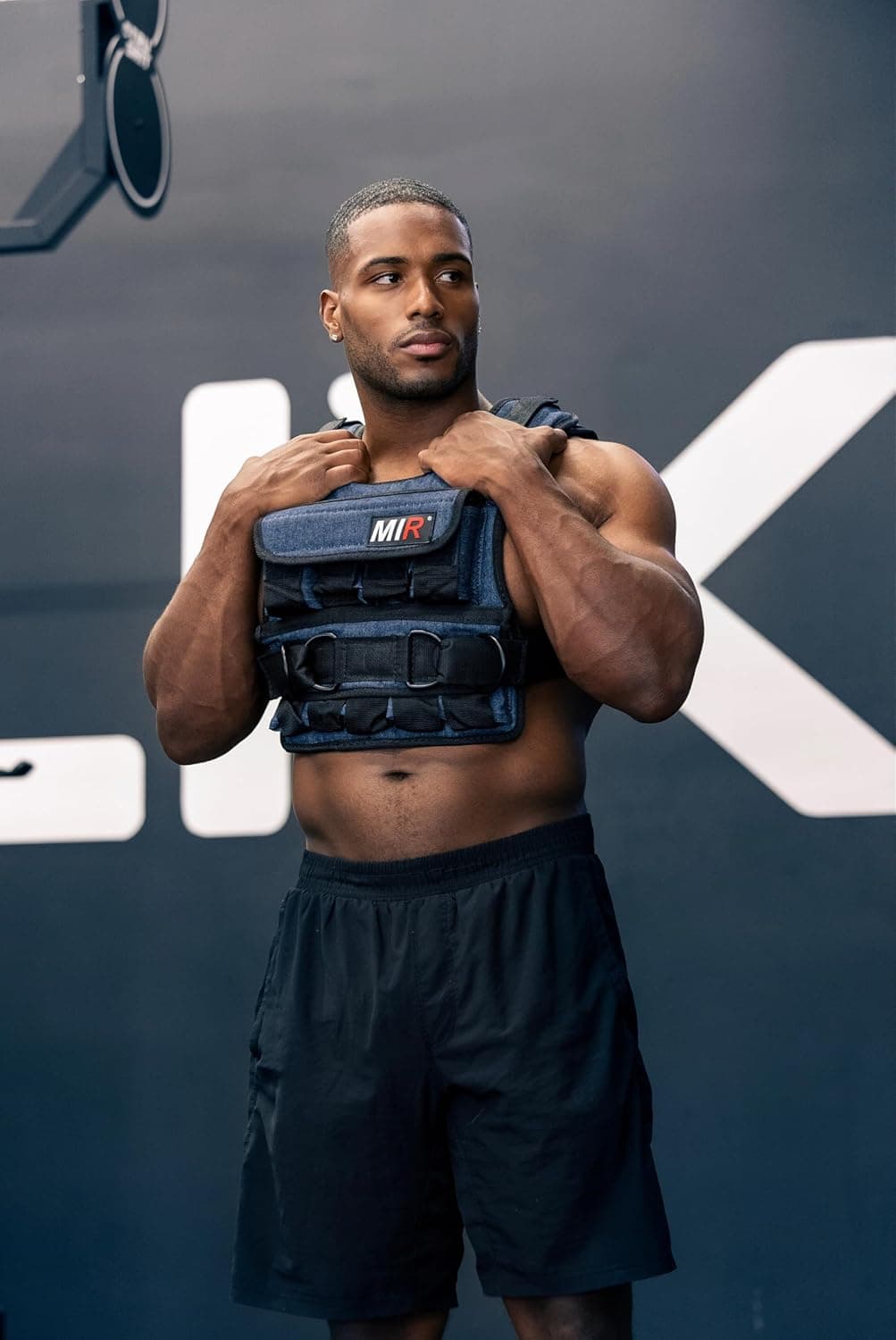
miR Air Flow Weighted Vest with Zipper Option
- Weight range
- 20 lb, 30 lb, 40 lb, 50 lb, 60 lb configurations
- Fill type
- Removable 3 lb iron bars
- Vest length
- Short style, approx. 11 in. from collarbone
- Adjustability
- Adjustable shoulder and bottom straps; zipper option available
- Washability
- Machine washable (remove weights first)
- Warranty
- Lifetime
The miR Air Flow uses a short, torso-hugging cut and removable solid iron plug weights to keep load close to center of gravity, which is the core reason it earns the top slot. The hybrid mesh-composite shell pulls moisture off skin and allows circulation, so heat buildup during long walks or outdoor conditioning sets stays manageable.
- Short vest profile rides high and tight, preventing the downward shift and shoulder dig common in longer designs during calisthenics and loaded walks
- Removable 3 lb bars allow repeatable load changes without replacing the vest
- Bulkier silhouette than compression-style or ultra-thin vests, which can limit range of motion in overhead pressing movements
Best for
Walkers and conditioning athletes who want easy in-session weight changes, lasting build quality, and a vest that stays put without shoulder padding on long efforts.
ZELUS
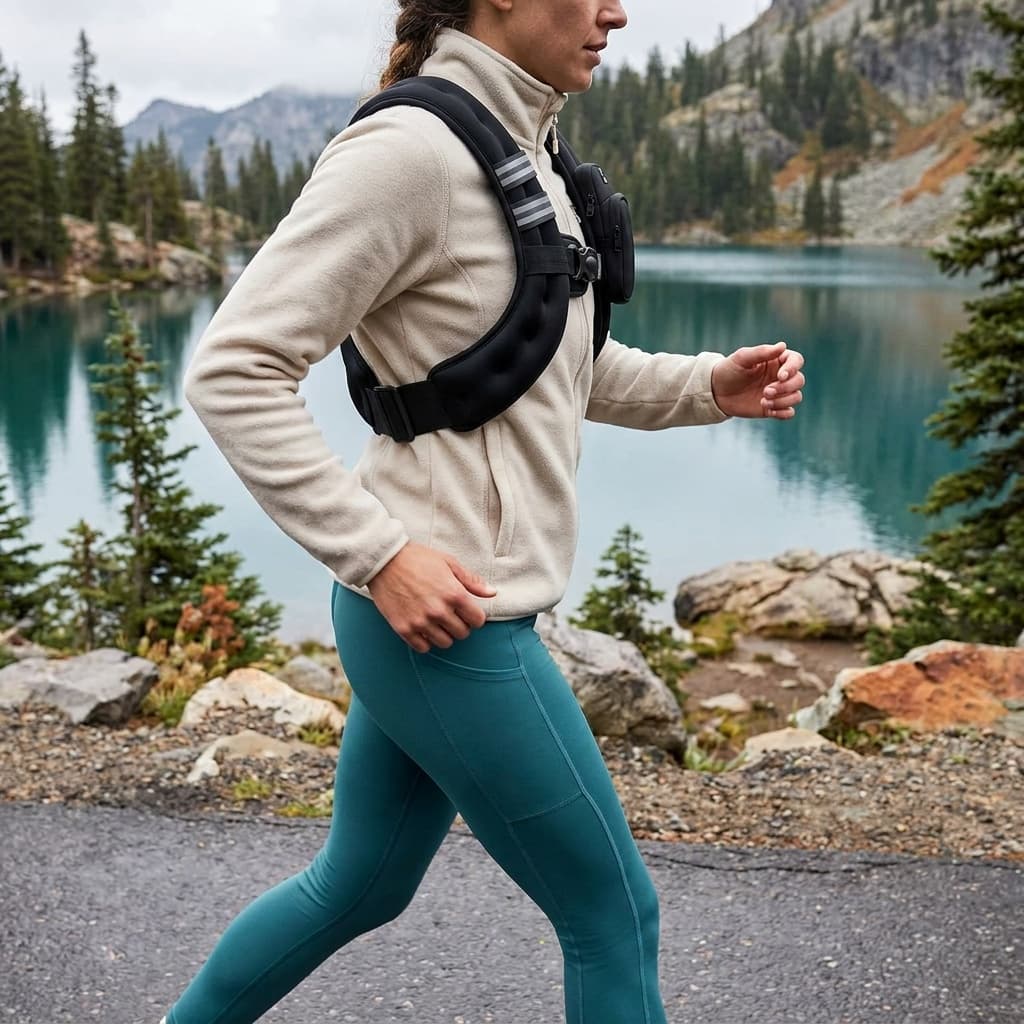
ZELUS Weighted Vest with Reflective Stripe
- Available weights
- 6 lb, 8 lb, 12 lb, 16 lb, 20 lb, 25 lb, 30 lb (fixed per unit)
- Fill type
- Iron-sand sewn into vest panels
- Shell material
- Neoprene rubber with double-stitching
- Chest fit range
- 31.5 in. to 47 in.
- Visibility
- 360-degree reflective stripes (front, back, sides)
- Storage
- Back mesh pocket
The ZELUS iron-sand vest earns a strong owner rating from thousands of verified Amazon buyers by doing the core job well: evenly distributed weight, a soft neoprene yoke, and a snug buckle-and-elastic closure that holds the vest flat against the torso. The fixed-weight format keeps the price low and keeps the weight from shifting.
- Iron-sand panels keep weight flush against the body rather than in pockets, so the load stays predictably still during walking, jogging, and bodyweight circuits
- 360-degree reflective striping adds meaningful safety for dawn or dusk walking without adding bulk
- Fixed weight per unit means adding load requires buying a heavier vest rather than inserting weights, which raises long-term cost for progressive training
Best for
Walkers, hikers, and home-gym users who want a no-fuss, comfortable vest at a low entry price and do not need to change weight during a session.
HYPERWEAR
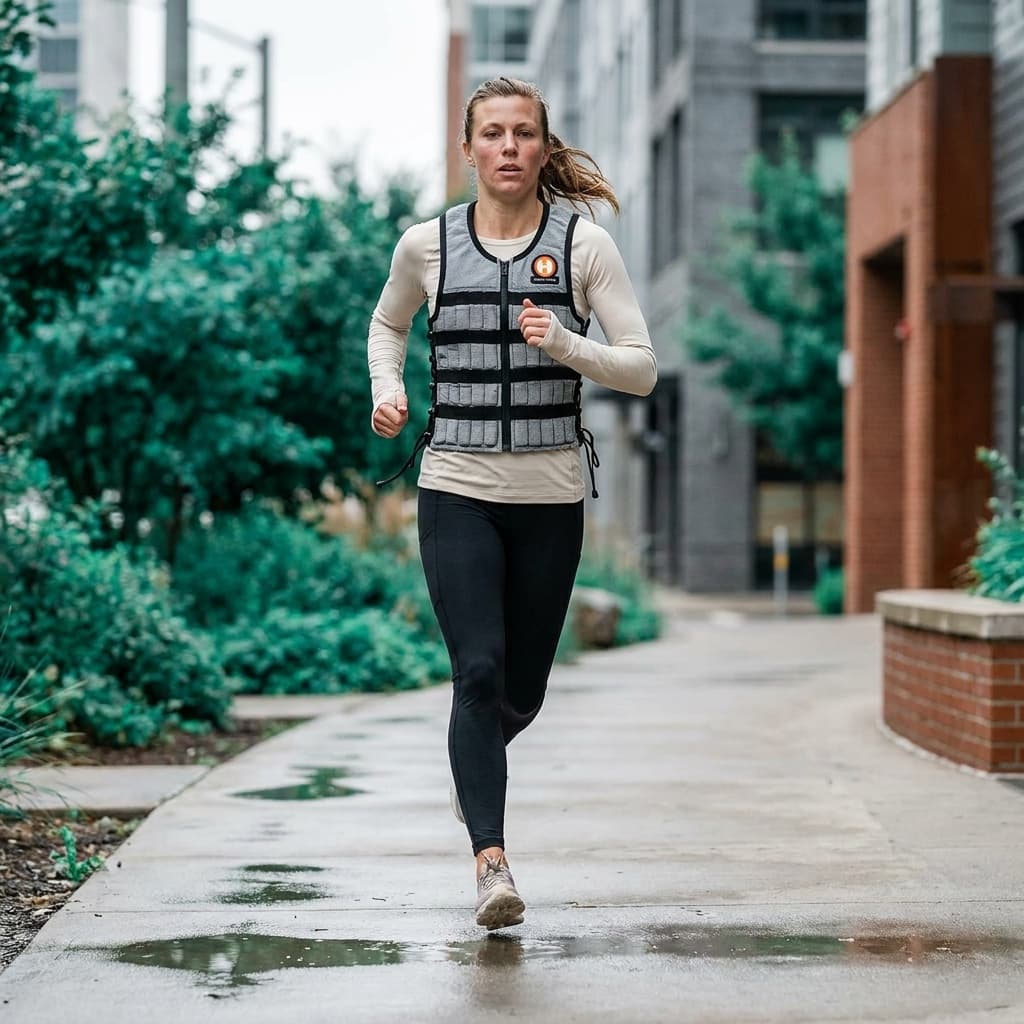
Hyperwear Hyper Vest PRO Adjustable Weighted Vest
- Weight range
- Up to 20 lb (S), 25 lb (M), 30 lb (L)
- Fill type
- No-bounce steel micro-weights (removable)
- Shell material
- Xyflex stretch compression fabric
- Closure
- Zipper front, side lace-up for compression tuning
- Sizing
- Small, Medium, Large, X-Large, XX-Large (unisex)
- Washability
- Machine washable
The Hyper Vest PRO distributes load through dozens of ultra-thin steel weight bars embedded across the torso, which spreads force so evenly that most wearers describe the sensation as simply feeling heavier rather than wearing a vest. The patented Xyflex stretch fabric compresses to the body's contours, which is why bounce is effectively zero and range of motion is uncompromised.
- Ultra-thin micro-weight distribution across the full torso eliminates shoulder hot spots and prevents the lopsided loading common in pocket-based designs
- Side lace-up system provides a body-specific compression fit that eliminates bounce even during running, pull-ups, and plyometrics
- Adding or removing individual micro-weights to reach a precise target weight requires counting and time; the adjustment system rewards patience
Best for
Serious walkers, runners, and calisthenics athletes who prioritize a low-profile, no-bounce fit over everything else and want a vest that doubles as osteoporosis-prevention exercise equipment.
See all picks in Best weighted vests 2026: 4 scored picks from $32 to $240
Make the next decision
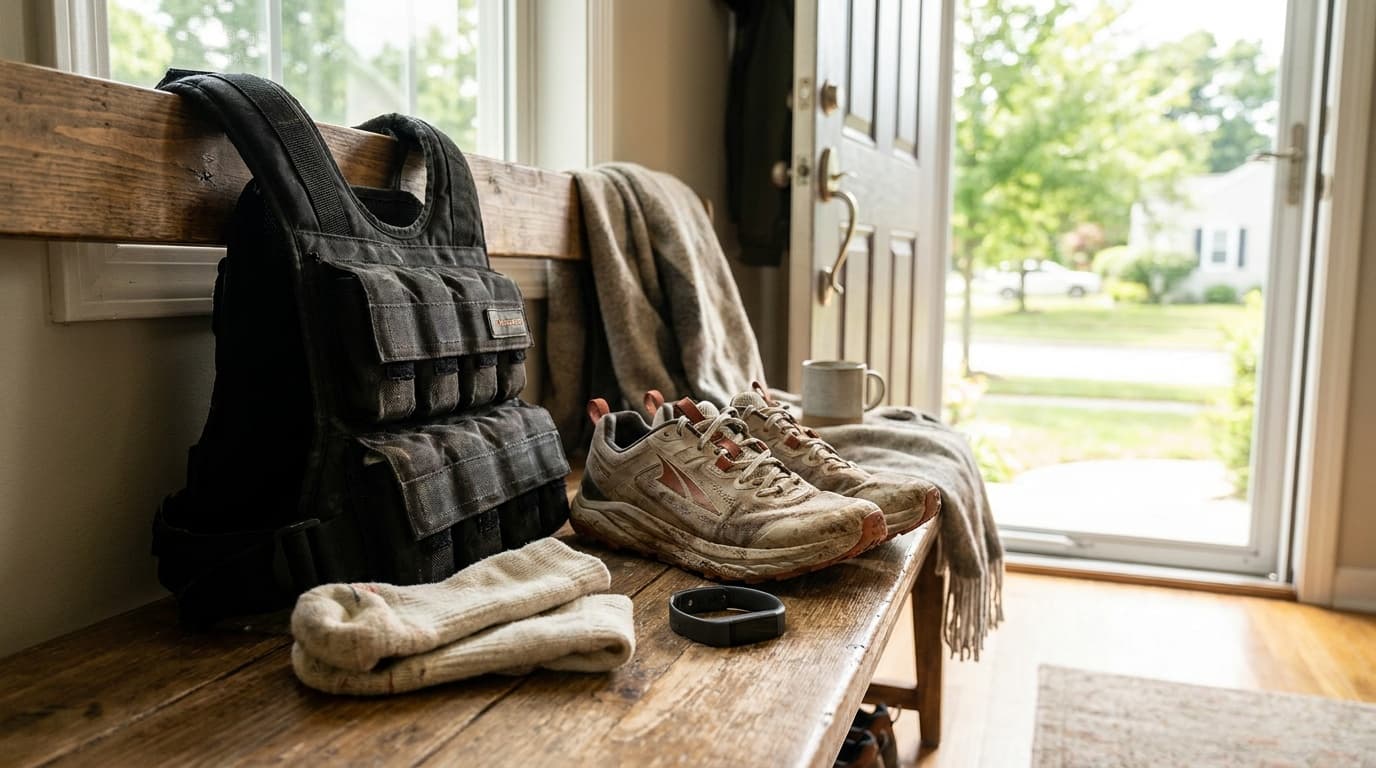
Complete fitness loadout
Weighted-vest starter kit
A beginner setup that pairs an adjustable vest with shoes, socks, and tracking for a repeatable walking routine.
Build the complete kitRelated guides
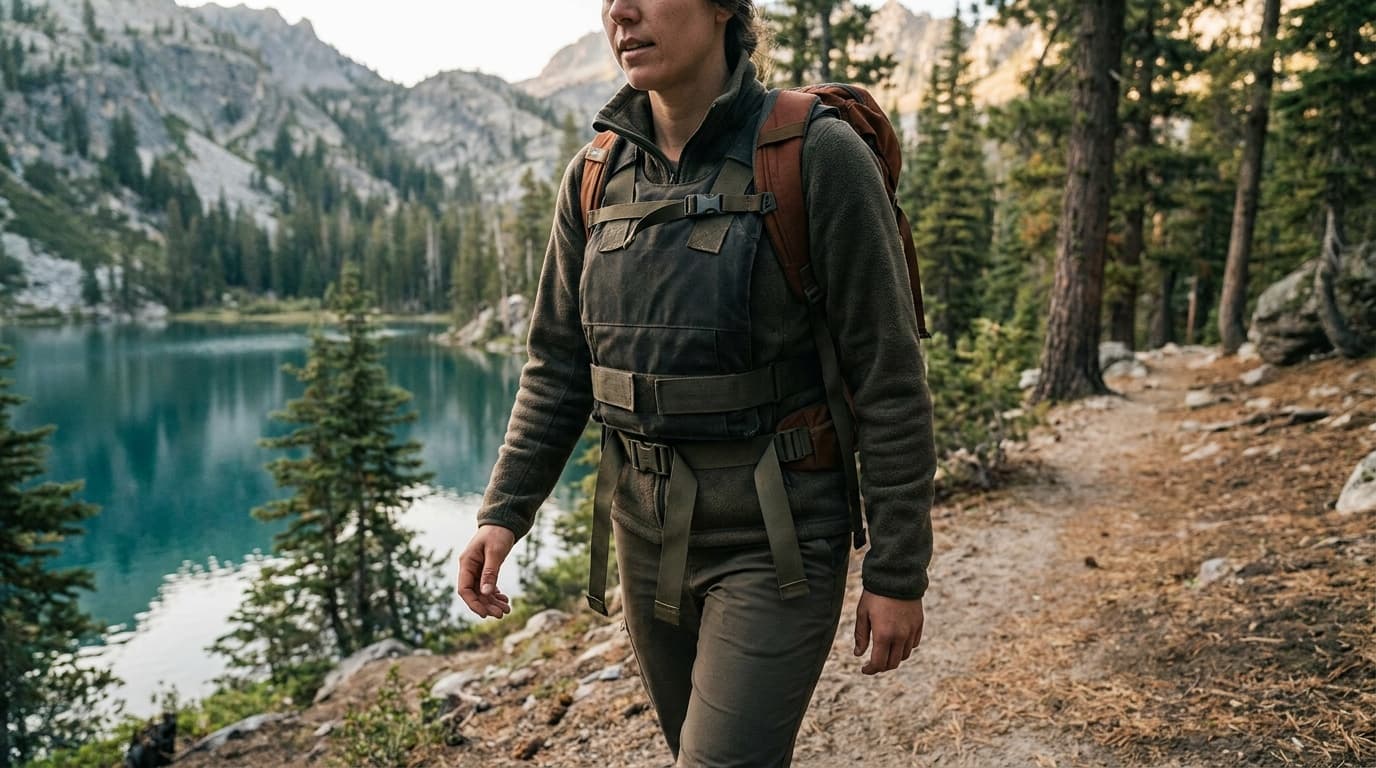
Buying guide
Best weighted vests 2026: 4 scored picks from $32 to $240
The miR Air Flow (8.8/10) tops 4 researched picks, from a $32 CAP starter to the $240 Hyper Vest PRO. The right vest for walking, calisthenics, or conditioning.
Read guide
Field guide
Weighted vest benefits: what the research actually shows
A research-backed look at weighted vest benefits: extra calorie burn, balance and bone-loading effects, cardiovascular load, and the honest limits the studies reveal.
Read guide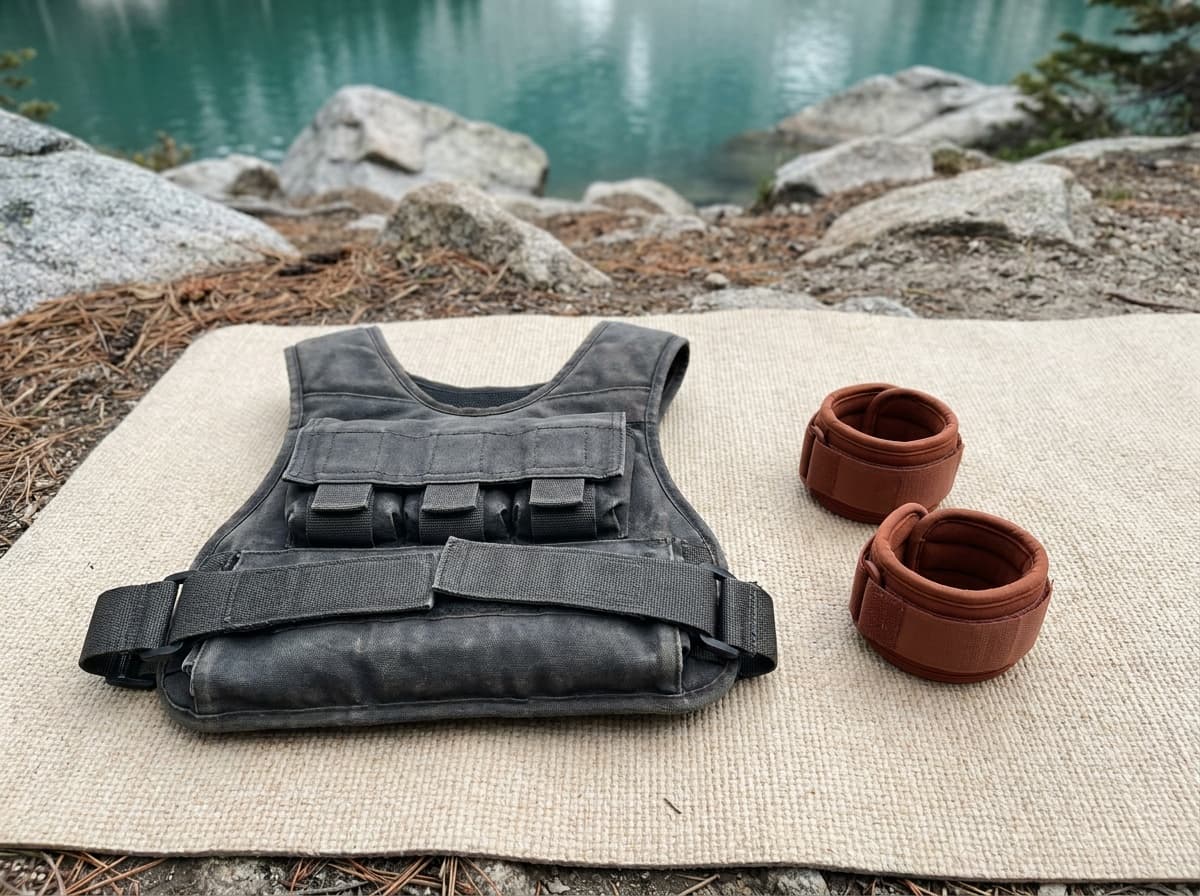
Comparison
Weighted vest vs ankle weights: the vest wins for walking
For walking, a weighted vest is safer and more effective. Ankle weights alter gait and load joints, so PTs save them for controlled strength work. Here is why.
Read guide
Field guide
Are weighted vests safe? Mistakes to avoid
Weighted vests are safe for most healthy adults used correctly. The real risk is in the mistakes: starting too heavy, poor fit, and ignoring posture. Here is what to avoid.
Read guideResearch-based guide
Updated Sep 7, 2026Our recommendations draw on manufacturer documentation, retailer listings, owner feedback, and comparisons with alternatives.
As an Amazon Associate I earn from qualifying purchases. We may earn a commission from links here, at no extra cost to you. How we research →