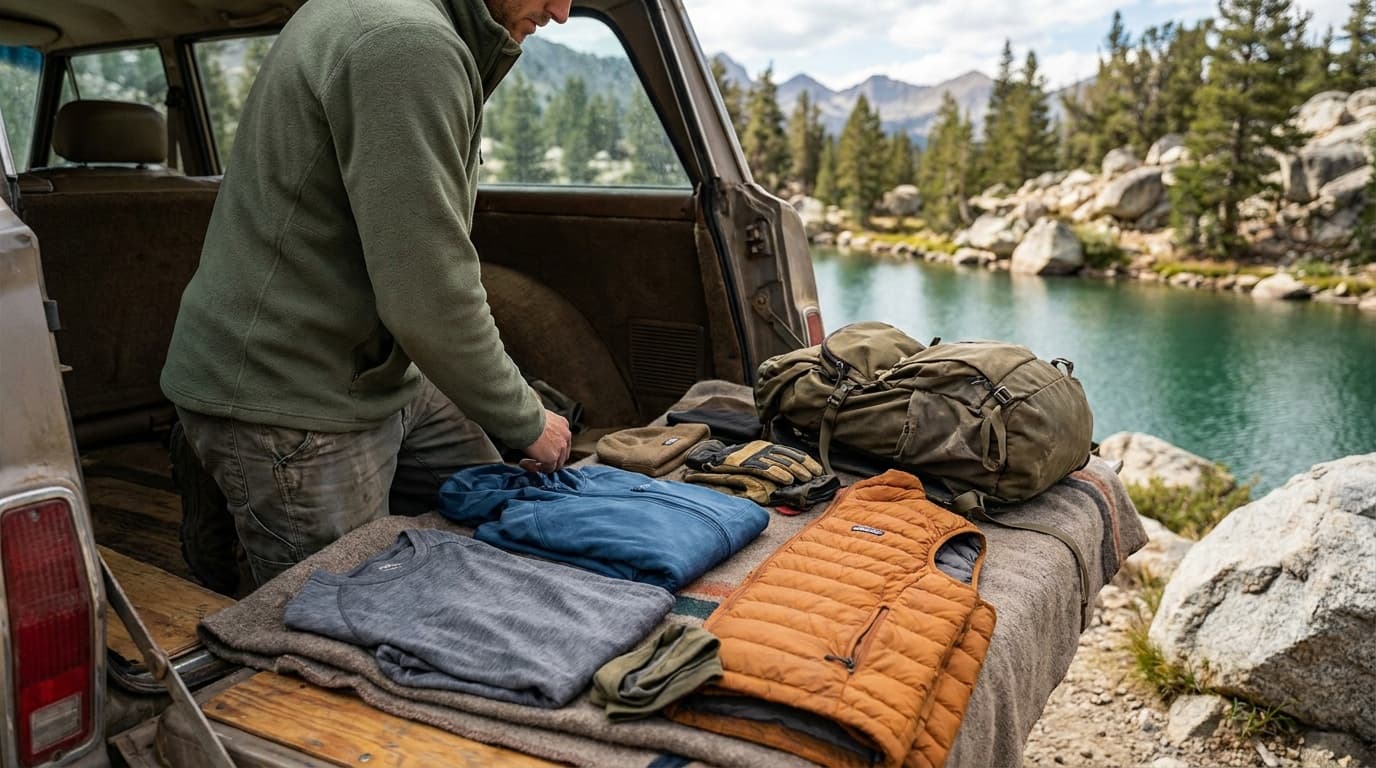
Choose a merino base layer for multi-day trips, stop-start effort, and odor control without regular washing. Choose a synthetic base layer for high-output days, faster drying, harder abrasion, frequent machine washing, and lower prices. Merino-synthetic or merino-nylon blends split the difference for many hikers.
Compare current fabric weights and designs in our guide to the best base layers.
How moisture management actually works
Merino and synthetic base layers both wick sweat away from your skin, but through opposite mechanisms. Merino fibers absorb moisture into the fiber itself: research from Woolmark shows merino can absorb up to 35% of its own weight in moisture while still feeling dry against skin at low saturation levels. Polyester absorbs roughly 30 times less moisture by weight, instead spreading it across the fabric surface to evaporate.
Neither approach is wrong. The result is that merino feels comfortable during moderate, steady effort and only feels clammy once you are truly soaked. Synthetic feels wetter faster but also dries faster once you slow down or strip the layer.
Dry time: the gap is real but narrow
Synthetic is genuinely faster to dry. In a controlled dry-time comparison, a polyester base layer reached target dry weight about 30 minutes sooner than a comparable merino layer over a five-to-six hour drying window, roughly a 10% difference.
That gap matters in specific conditions: high-output days where you stop and start repeatedly, or situations where you cannot change layers and need fast turnaround at camp. It does not mean merino leaves you wet and miserable. For most hikers on most days, the 30-minute delta is irrelevant.
The dry-time gap between merino and synthetic is real but narrow. In real-world tests it is about 10% and 30 minutes, not the dramatic difference often claimed.
Warmth when wet: merino's structural advantage
When you get soaked in rain or sweat through on a cold pass, what the base layer does next matters. Merino has a mechanical edge here: its crimped, springy fiber structure holds air pockets even when saturated, and the fiber undergoes a mild heat-releasing reaction as it absorbs moisture. Testing across multiple sources suggests merino retains around 40% of its insulation value when wet. Synthetic fibers shed water faster, which helps during high output, but lose insulation value more rapidly once truly soaked and once you stop moving.
Odor resistance: merino's clearest win
This is where the fabric difference is least debatable. A New Zealand research study found wool fabrics retained 66% less body odor intensity than polyester and 28% less than cotton. The mechanism is structural: wool's hygroscopic fiber binds odor molecules rather than letting them off-gas freely.
In practice, most hikers find a merino top like the Smartwool Classic All-Season Merino stays acceptable for two to four days of moderate activity before washing. A synthetic layer often needs washing after one hard day. On any multi-day trip without access to laundry, that difference is not subtle.
Durability: synthetic holds up better
Synthetic base layers are meaningfully more abrasion-resistant than pure merino. Merino tends to thin at high-friction contact zones, armpits, collar edges, and anywhere a pack rides, over one to three seasons of regular hard use. If you are scrambling, wearing a loaded pack daily, or washing frequently in a machine, pure merino will show wear faster.
Merino-nylon blends (commonly 85/15 or 80/20 merino-nylon) close the gap substantially. Pure 100% merino wears out faster with frequent hard use; a blended layer gets you most of the odor and wet-warmth benefits of merino with a durability profile much closer to synthetic. Reading the label carefully pays off here: "merino jersey" on a product page names the knit, not the fibre percentage or fabric weight that decide durability. Our sister site Stitch Authority's merino jersey fabric profile breaks down exactly which fabric claims to verify before you buy.
Cost: synthetics are roughly half the price
Quality merino base layers typically run $65 on the value end up to $120 or more for premium brands. Comparable synthetic layers often run $30–$70. That is a meaningful gap when you are outfitting a full kit.
The cost-per-year comparison is more nuanced. A premium merino layer washed in cold water and air-dried can outlast two or three budget synthetic layers that pill and lose structure after regular machine washing. But that requires consistent care. If you are hard on gear or launder frequently in hot water, synthetic is the better economic choice.
How to choose: a framework
Pick the right fabric for your trip
High output, aerobic day hike
Go synthetic, like the [Helly Hansen LIFA Active Stripe Crew](/api/go?product=helly-hansen-lifa-active-stripe-crew&retailer=amazon&article=merino-vs-synthetic-base-layers). It wicks fast, dries fast, and costs less. Odor is not a factor on a single day out.
Multi-day trip without laundry
Go merino or a merino-nylon blend. The 66% reduction in odor retention is the deciding factor here.
Cold, wet, stop-start conditions
Go merino. The retained warmth when wet (around 40% insulation value) and sorption heat are real advantages when you stop moving in rain.
Hot weather or fast-packing
Go synthetic. Moisture-shedding is more useful than moisture-absorbing when you are generating heat continuously and dry time is critical.
Budget is the primary constraint
Go synthetic. Starting around $30, synthetics deliver solid performance at roughly half the cost of entry-level merino.
Technical scrambling or daily pack wear
Go blended merino-nylon or synthetic. Pure merino will thin at seams and pack-contact zones faster than you want.
FAQ
Does merino wool actually keep you warmer than synthetic when it gets wet?
Yes, and the mechanism is real. Merino fibers have a crimped, springy structure that holds air pockets even when saturated, and the fiber undergoes a mild exothermic reaction (called sorption) as it absorbs moisture. Testing suggests merino retains around 40% of its insulation value when wet. Synthetics shed water faster, which helps in high-output situations, but when you stop moving in rain or snow, wet merino keeps you warmer than wet polyester.
How much more durable is synthetic than merino, really?
Synthetic base layers are meaningfully more abrasion-resistant and resist pilling better than pure merino. Merino tends to thin at high-friction points like armpits, collar edges, and pack contact zones over one to three seasons of regular use. Merino-nylon blends close the gap significantly. If you are doing technical scrambling or wearing a pack every day, a blended or synthetic layer will last longer. For casual hiking, pure merino holds up fine with careful cold-water washing and air drying.
Can I wear a merino base layer for multiple days without it smelling?
In practice, yes. The odor resistance is not marketing. Research shows merino holds roughly 66% less body odor than polyester after equivalent wear. Most hikers find a merino top stays acceptable for two to four days of moderate activity before washing, while a synthetic layer often needs washing after one sweaty day. This is the single biggest practical advantage of merino on multi-day trips where laundry is not an option.
For specific layer picks across weight classes and budgets, see our guide to the best base layers for hiking. For more gear guidance organized by activity, browse all hike gear or read how we research and rate.
Recommended gear
Our current top picks from the Best base layers for hiking in 2026 guide, if you are ready to buy.
SMARTWOOL
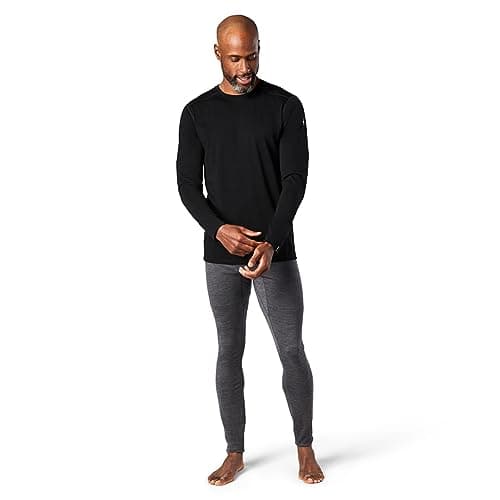
Smartwool Classic All-Season Merino Long Sleeve Base Layer
Best Overall
Kit Score 8.1/10
$85.00 Price checked Oct 23, 4:16 PM CDT
Best for: Hikers who want one base layer that covers three seasons without babying it the way pure merino requires.
- Merino-nylon blend resists abrasion and pilling far better than 100% merino at this price point
- No thumb loops, so sleeves ride up under a shell or gloves
- Material
- 88% merino wool, 12% recycled nylon
- Construction
- Core Spun (nylon core wrapped in merino)
- Fabric weight
- Lightweight (~150 g/m2 equivalent)
- Fit
- Slim, offset shoulder and side seams
- Sizes
- S – XXL (men); XS – 3X (women)
- Women's ASIN
- B0BKWWR9RW
About this pick
The Core Spun construction wraps a recycled nylon core in merino for durability well above a pure-wool layer, while the 88/12 blend still delivers the odor resistance and temperature regulation that merino does best. Flatlock seams and offset shoulder placement reduce chafing under a pack hip belt and shoulder straps.
Strengths
- Merino-nylon blend resists abrasion and pilling far better than 100% merino at this price point
- Excellent four-season versatility: breathes on summer shoulder hikes and layers under a shell in shoulder-season cold
- Naturally odor-resistant across multi-day trips without reeking like synthetics
Weaknesses
- No thumb loops, so sleeves ride up under a shell or gloves
- Dries slower than a synthetic layer in heavy rain or sweat
Kit Score breakdown

ICEBREAKER
Icebreaker Oasis Mid-Weight Merino Long Sleeve Crewe
Best Premium
Kit Score 7.4/10
$120.00 Price checked Oct 23, 4:16 PM CDT
Best for: Backpackers and thru-hikers who prioritize comfort and odor control over multi-week trips and are willing to layer carefully to protect the fabric.
- Pure merino comfort and odor resistance make it the preferred pick for multi-week trips where laundry is scarce
- All-merino construction is prone to thinning and abrasion with sustained heavy use under a loaded pack

- Material
- 100% merino wool
- Fabric weight
- 200 g/m2 (midweight)
- Measured weight
- 7.6 oz (size M)
- Fit
- Slim base layer cut; runs small
- Sizes
- XS – 3XL (men and women)
- Women's ASIN
- B07GH4JCZV
About this pick
A 100% merino midweight that earns its place at the top of every long-distance hiker's kit through consistent temperature regulation and natural odor resistance. At 200 g/m2 it covers shoulder-season cold without overheating during sustained climbs.
Strengths
- Pure merino comfort and odor resistance make it the preferred pick for multi-week trips where laundry is scarce
- Among the fastest-drying 100% merino options tested by OutdoorGearLab, closing the gap with synthetics
- Midweight 200 g/m2 strikes a practical balance between warmth and packability for three-season hiking
Weaknesses
- All-merino construction is prone to thinning and abrasion with sustained heavy use under a loaded pack
- Premium price and the delicacy of pure wool make it a harder sell for rough daily use
Kit Score breakdown

HELLY HANSEN
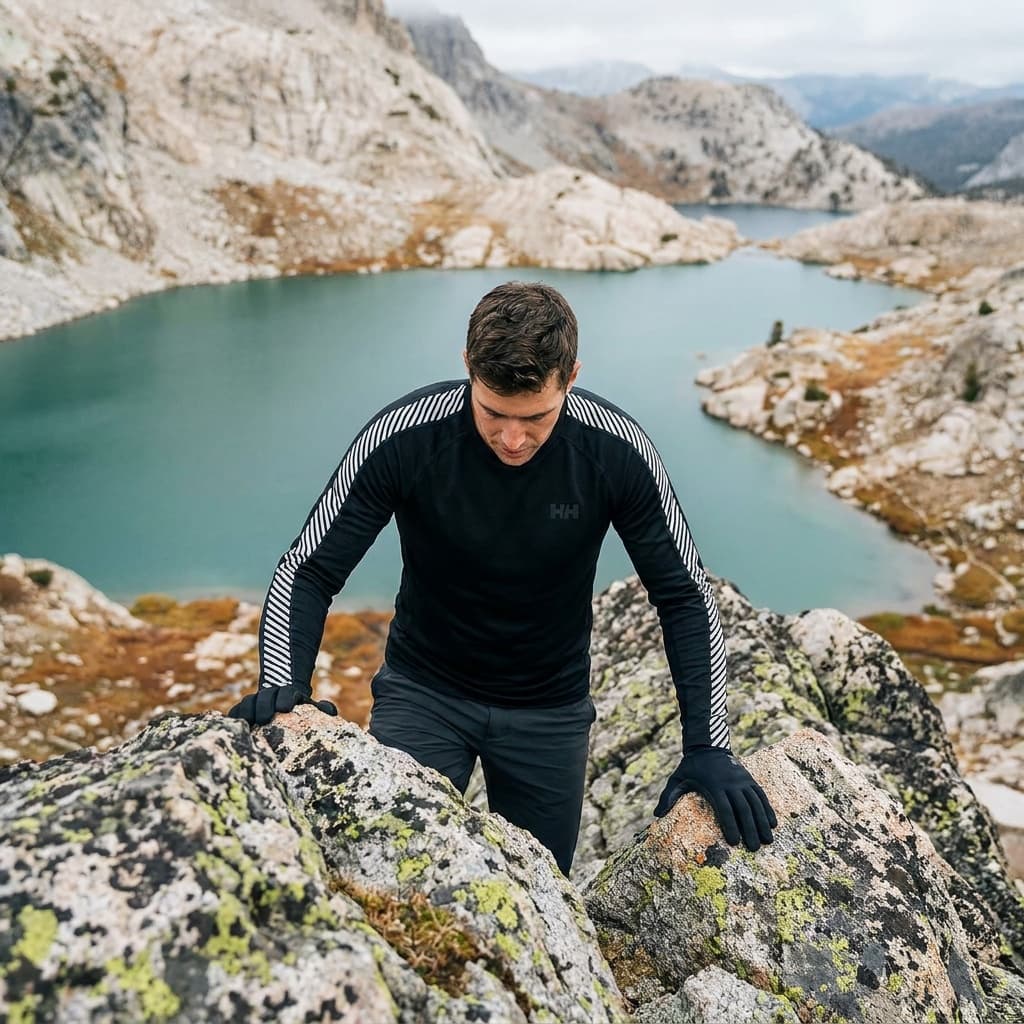
Helly Hansen LIFA Active Stripe Crew Base Layer
Best Budget
Kit Score 7.9/10
$57.60 Price checked Oct 23, 4:16 PM CDT
Best for: Day hikers and high-output athletes who change layers regularly and want maximum sweat management without spending more than $50.
- Best-in-class moisture transfer: polypropylene stays dry against skin even during sustained aerobic effort
- Zero odor resistance: the shirt will need washing after every hard day
- Material
- 2-layer: LIFA polypropylene inner, 66% recycled polyester / 34% polypropylene outer
- Fabric weight
- Lightweight (270 g/m2 garment weight)
- Measured weight
- 8 oz (size M)
- Technology
- LIFA Stay Dry: polypropylene inner physically cannot absorb moisture
- Fit
- Regular fit; runs small
- Sizes
- S – XXL (men)
About this pick
The LIFA polypropylene inner layer physically cannot absorb moisture, so sweat transfers directly to the outer shell and away from skin. The 2-layer construction pairs that wicking core with a recycled polyester/polypropylene outer for a more durable and packable garment than the previous single-layer version, at the same budget price point.
Strengths
- Best-in-class moisture transfer: polypropylene stays dry against skin even during sustained aerobic effort
- Lightest-priced option in this roundup and the lowest price, making it an easy add to any kit
- Dries extremely fast, an important factor when weather turns or you push hard on a long day
Weaknesses
- Zero odor resistance: the shirt will need washing after every hard day
- Runs noticeably small; sizing up is strongly recommended across multiple independent reviews
Kit Score breakdown
Keep going
Related guides

 Complete hike loadoutDay hike kitBuild the complete kit
Researched, not hands-on tested
Updated Aug 14, 2026Our recommendations draw on manufacturer documentation, retailer listings, owner feedback, and comparisons with alternatives.
As an Amazon Associate I earn from qualifying purchases. We may earn a commission from links here, at no extra cost to you. How we research →