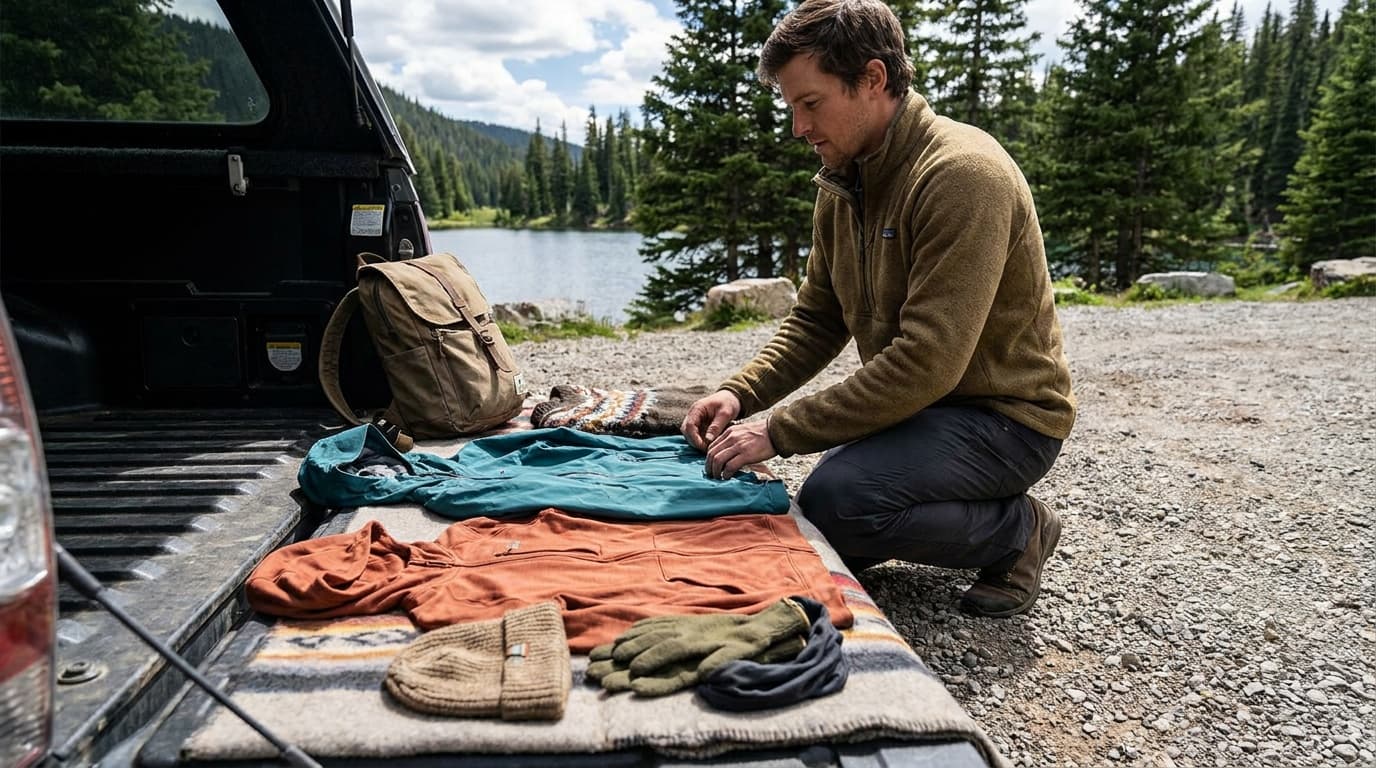
Dress for the climb and the stop. A base layer manages moisture next to your skin, insulation keeps you warm when your effort drops, and a shell protects against wind or precipitation. Carry the layers your day may need, then adjust what you wear as the trail and weather change.
What each layer does
Base layer: manage moisture next to your skin
A base layer sits against your skin and helps move sweat through the clothing system. Patagonia's layering guide describes wool and synthetic fabrics as common choices for cold-weather activity. Avoid cotton when it may get wet: the National Park Service recommends wool or synthetic clothing for winter conditions and warns that wet cotton does not keep you warm. NPS winter-weather guidance
See our guide to the best base layers for hiking for options across these materials.
Choose a lighter or heavier base layer based on how hard you expect to work, what you will wear over it, and how cold you tend to feel. A thicker layer can be uncomfortable during a sustained climb; a light one may not be enough when moving slowly or standing around. Fabric weight labels are useful for comparing garments, but they do not specify how warm a complete outfit will feel.
Insulating layer: keep warmth close
Fleece, active insulation, and insulated jackets can all serve as a mid layer. The right choice depends on how much warmth you want while moving, how compact it needs to pack, and whether it may get damp. Patagonia describes down as a lightweight, compressible option for cold, dry conditions and synthetic insulation as a choice for wetter conditions. These are general tradeoffs; compare the construction and care guidance for the specific garment. Patagonia's cold-weather layering guide
For a climb, a breathable fleece or active layer may be more comfortable than a highly insulated jacket. Keep a warmer layer accessible for breaks, exposed ridges, or camp, when your effort drops and the wind or weather may matter more.
Shell: block the weather
Choose an outer layer for the conditions, not a breathability number alone. A waterproof shell helps when rain or wet snow is likely; a wind shell can be enough when wind is the main problem and precipitation is not expected. Patagonia distinguishes waterproof, wind, and soft shells by the protection they provide and recommends considering the activity and weather. Patagonia's shell guide
Vents, front zippers, and adjustable cuffs give you ways to release heat. Vapor-permeability figures such as MVTR can be useful when the test method and conditions are known, but the number alone is not a universal guarantee of comfort across brands. ASTM's active E96/E96M-24a is a general material water-vapor transmission method; it warns that results from different methods or conditions cannot be assumed to predict one another.
Adjust layers as you hike
Your pace, slope, wind, precipitation, and stops can change how warm you feel. Before a sustained climb, open vents or remove a layer if you are getting too warm. When you stop, put insulation back on before you cool down. NPS winter guidance recommends removing layers to avoid sweating and adding them again during breaks. NPS winter-safety guidance
Use that as a flexible routine, not a timed rule. On an exposed, windy trail you may need the shell while moving; on a sheltered climb you may be comfortable without it. Keep a dry layer available in case clothing gets wet, and check the forecast and local conditions before setting out. NPS winter hiking guidance also recommends carrying layers and extra dry clothing. NPS winter hiking tips
Build an outfit around the day
Rather than choosing from a fixed temperature chart, consider:
- Effort: A steep climb generates more heat than a slow walk or frequent stops. Choose a base and active layer that will not become stifling when you work hard.
- Wind and precipitation: Decide whether you need wind protection, rain protection, or both. A shell should fit over the layers you plan to wear without compressing insulation or restricting movement.
- Time spent stopped: Keep a warmer insulating layer easy to reach for lunch, route checks, and other breaks.
- Moisture: Think about sweat, rain, wet snow, and the chance your pack or spare clothing will get damp. Choose materials and packing methods that fit those conditions.
Try the combination together before a long outing. Check that the shell moves over the insulating layer, vents are easy to reach, and cuffs, hood, and hem adjust as needed. Bring the layers you may need for a change in weather rather than relying on one fixed outfit.
Common layering mistakes
- Starting in every layer and overheating once the trail climbs.
- Waiting until you are already soaked with sweat to vent or remove a layer.
- Carrying no warm layer for stops because the hiking layers felt comfortable while moving.
- Choosing a shell by its breathability number alone, without considering weather protection, fit, and vents.
- Wearing cotton where it may become wet in cold conditions.
Frequently asked questions
Should I wear all three layers while hiking?
Not necessarily. The layers are separate so you can adapt them. Depending on your effort and the weather, you might hike in a base and insulating layer, wear the shell against wind or precipitation, or add warmth when you stop. Adjust as conditions change.
Is down or synthetic insulation better for a cold hike?
It depends on conditions and priorities. Down is light and compressible, which can suit cold, dry trips. Synthetic insulation is often chosen when dampness is more likely. Patagonia summarizes these tradeoffs in its cold-weather layering guide; the exact garment construction matters too.
What MVTR number should I look for in a hiking shell?
There is no universal cutoff that guarantees comfort. Check what test method and conditions the number represents, and compare like with like. Also consider how much rain and wind protection you need, whether the shell fits over your insulation, and whether it has vents you can use while moving.
The same basics apply to brisk winter walks. Our winter walking clothing guide covers that lower-output setting. Browse all hike gear for equipment across every category, or learn how we research and rate our recommendations.
Sources
Recommended gear
Our current top picks from the Best base layers for hiking in 2026 guide, if you are ready to buy.
SMARTWOOL
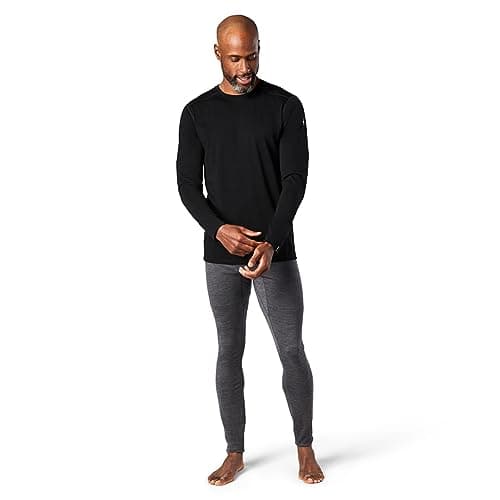
Smartwool Classic All-Season Merino Long Sleeve Base Layer
Best Overall
Kit Score 8.1/10
$85.00 Price checked Oct 23, 4:16 PM CDT
Best for: Hikers who want one base layer that covers three seasons without babying it the way pure merino requires.
- Merino-nylon blend resists abrasion and pilling far better than 100% merino at this price point
- No thumb loops, so sleeves ride up under a shell or gloves
- Material
- 88% merino wool, 12% recycled nylon
- Construction
- Core Spun (nylon core wrapped in merino)
- Fabric weight
- Lightweight (~150 g/m2 equivalent)
- Fit
- Slim, offset shoulder and side seams
- Sizes
- S – XXL (men); XS – 3X (women)
- Women's ASIN
- B0BKWWR9RW
About this pick
The Core Spun construction wraps a recycled nylon core in merino for durability well above a pure-wool layer, while the 88/12 blend still delivers the odor resistance and temperature regulation that merino does best. Flatlock seams and offset shoulder placement reduce chafing under a pack hip belt and shoulder straps.
Strengths
- Merino-nylon blend resists abrasion and pilling far better than 100% merino at this price point
- Excellent four-season versatility: breathes on summer shoulder hikes and layers under a shell in shoulder-season cold
- Naturally odor-resistant across multi-day trips without reeking like synthetics
Weaknesses
- No thumb loops, so sleeves ride up under a shell or gloves
- Dries slower than a synthetic layer in heavy rain or sweat
Kit Score breakdown

ICEBREAKER
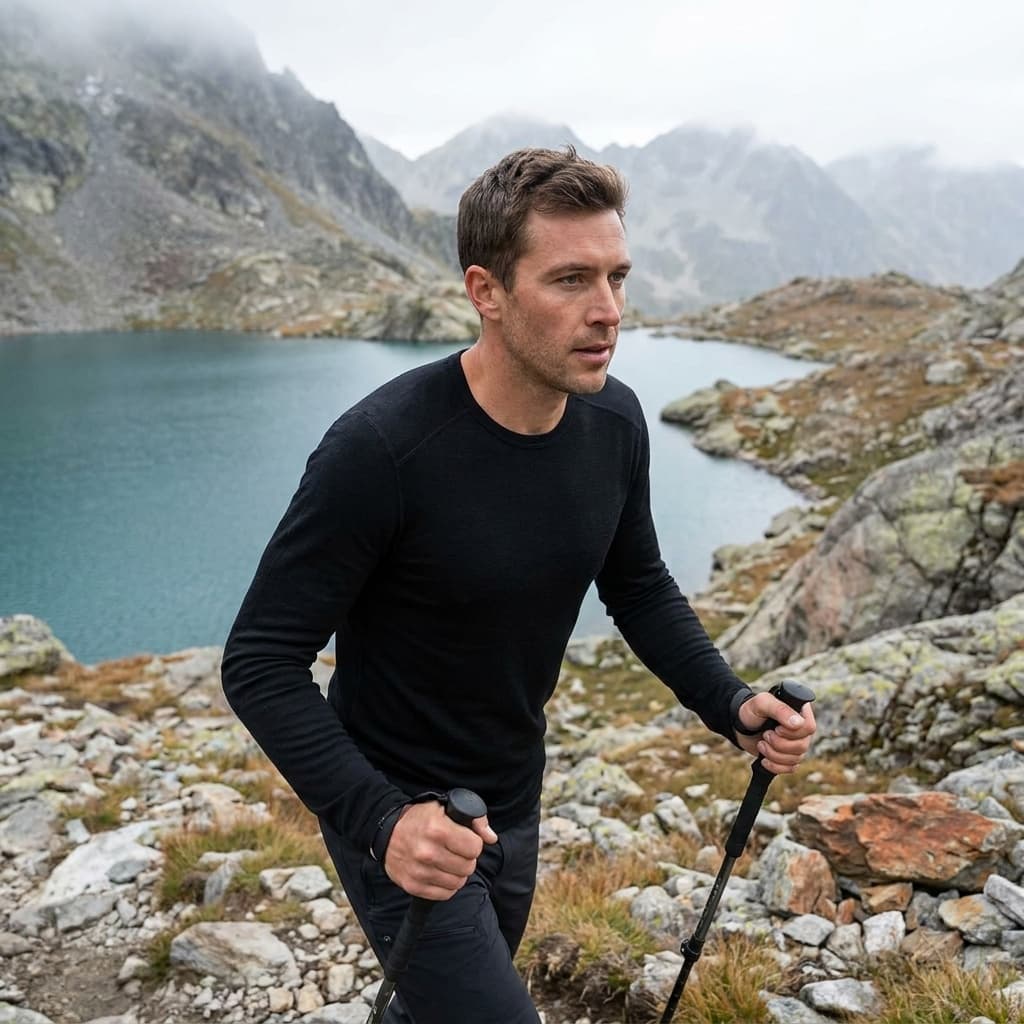
Icebreaker Oasis Mid-Weight Merino Long Sleeve Crewe
Best Premium
Kit Score 7.4/10
$120.00 Price checked Oct 23, 4:16 PM CDT
Best for: Backpackers and thru-hikers who prioritize comfort and odor control over multi-week trips and are willing to layer carefully to protect the fabric.
- Pure merino comfort and odor resistance make it the preferred pick for multi-week trips where laundry is scarce
- All-merino construction is prone to thinning and abrasion with sustained heavy use under a loaded pack
- Material
- 100% merino wool
- Fabric weight
- 200 g/m2 (midweight)
- Measured weight
- 7.6 oz (size M)
- Fit
- Slim base layer cut; runs small
- Sizes
- XS – 3XL (men and women)
- Women's ASIN
- B07GH4JCZV
About this pick
A 100% merino midweight that earns its place at the top of every long-distance hiker's kit through consistent temperature regulation and natural odor resistance. At 200 g/m2 it covers shoulder-season cold without overheating during sustained climbs.
Strengths
- Pure merino comfort and odor resistance make it the preferred pick for multi-week trips where laundry is scarce
- Among the fastest-drying 100% merino options tested by OutdoorGearLab, closing the gap with synthetics
- Midweight 200 g/m2 strikes a practical balance between warmth and packability for three-season hiking
Weaknesses
- All-merino construction is prone to thinning and abrasion with sustained heavy use under a loaded pack
- Premium price and the delicacy of pure wool make it a harder sell for rough daily use
Kit Score breakdown

HELLY HANSEN
Helly Hansen LIFA Active Stripe Crew Base Layer
Best Budget
Kit Score 7.9/10
$57.60 Price checked Oct 23, 4:16 PM CDT
Best for: Day hikers and high-output athletes who change layers regularly and want maximum sweat management without spending more than $50.
- Best-in-class moisture transfer: polypropylene stays dry against skin even during sustained aerobic effort
- Zero odor resistance: the shirt will need washing after every hard day
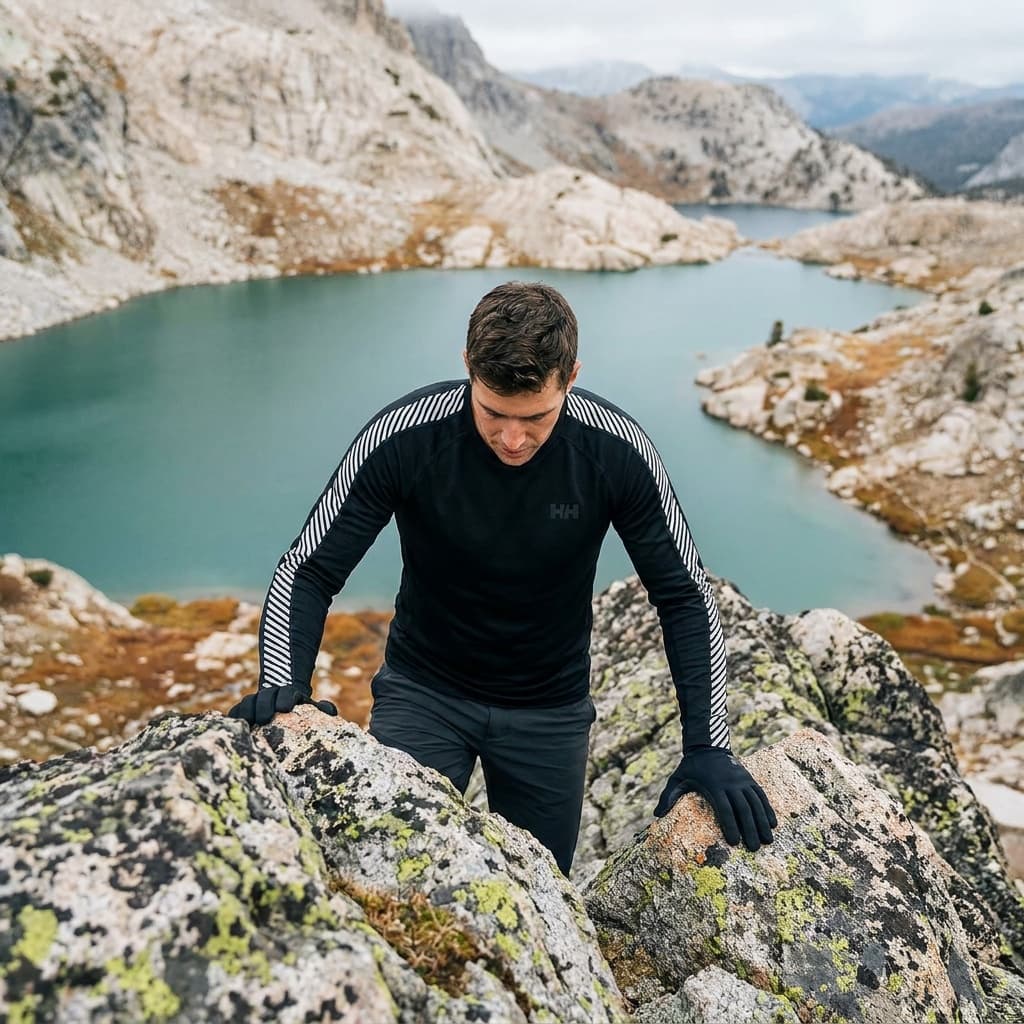
- Material
- 2-layer: LIFA polypropylene inner, 66% recycled polyester / 34% polypropylene outer
- Fabric weight
- Lightweight (270 g/m2 garment weight)
- Measured weight
- 8 oz (size M)
- Technology
- LIFA Stay Dry: polypropylene inner physically cannot absorb moisture
- Fit
- Regular fit; runs small
- Sizes
- S – XXL (men)
About this pick
The LIFA polypropylene inner layer physically cannot absorb moisture, so sweat transfers directly to the outer shell and away from skin. The 2-layer construction pairs that wicking core with a recycled polyester/polypropylene outer for a more durable and packable garment than the previous single-layer version, at the same budget price point.
Strengths
- Best-in-class moisture transfer: polypropylene stays dry against skin even during sustained aerobic effort
- Lightest-priced option in this roundup and the lowest price, making it an easy add to any kit
- Dries extremely fast, an important factor when weather turns or you push hard on a long day
Weaknesses
- Zero odor resistance: the shirt will need washing after every hard day
- Runs noticeably small; sizing up is strongly recommended across multiple independent reviews
Kit Score breakdown
Keep going
Related guides
 Complete hike loadoutDay hike kitBuild the complete kit
Researched, not hands-on tested
Updated Oct 13, 2026Our recommendations draw on manufacturer documentation, retailer listings, owner feedback, and comparisons with alternatives.
As an Amazon Associate I earn from qualifying purchases. We may earn a commission from links here, at no extra cost to you. How we research →