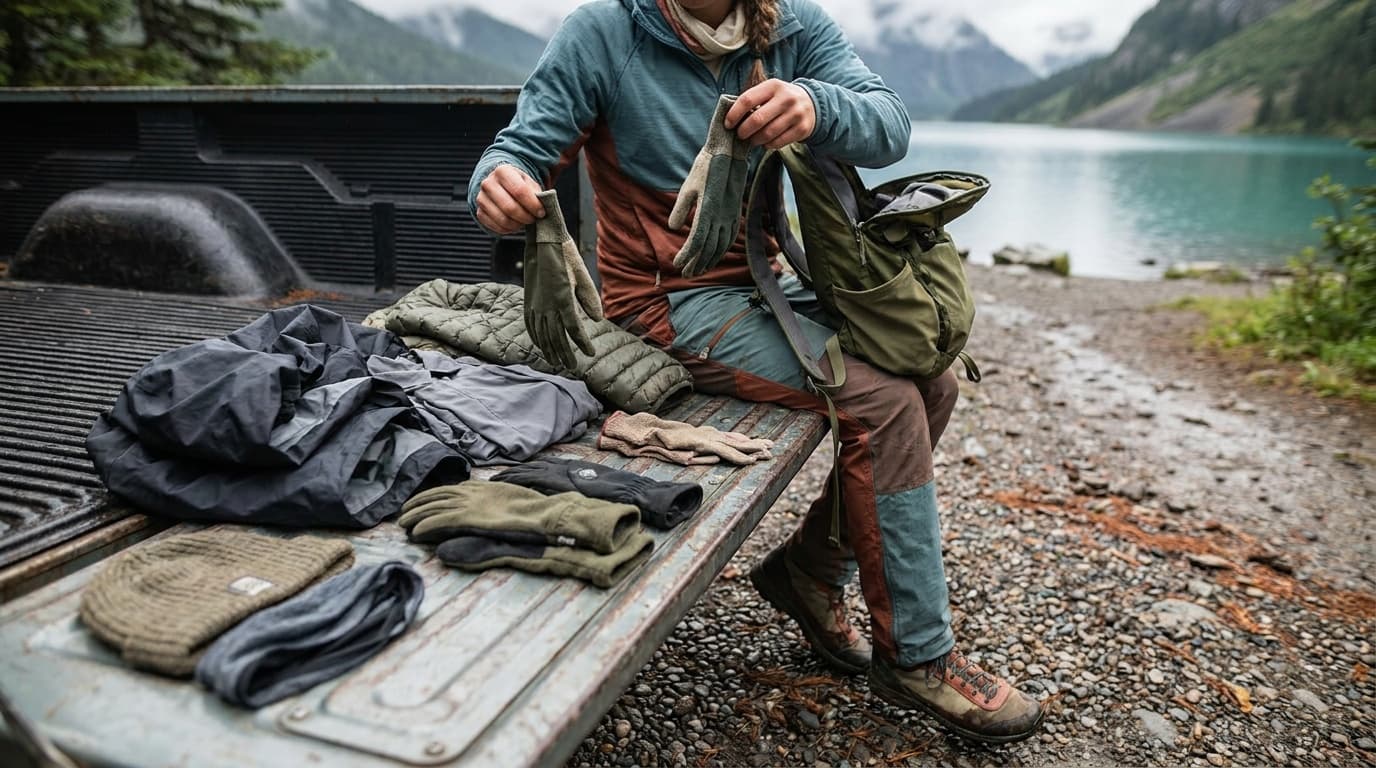
Your hands are the first thing that slow you down in cold weather, and the most common reason is the wrong glove strategy, not the wrong glove.
Why one thick glove fails you
A single midweight glove is a compromise in both directions. On a steep climb, your core temperature rises and your hands sweat. That moisture saturates the insulation, and the glove that felt warm at the trailhead now chills your fingers at the summit. You cannot vent it without taking it off entirely, which means cold air hits wet skin.
The layered system solves this with modularity. Each layer has a job, and you adjust them independently as your output and the weather shift.
Layer one: the merino liner
Merino wool liners like the Smartwool Liner Glove in the 150–200 g/m² range are the workhorse of the system. Merino's fine fibers resist odor, manage moisture better than most synthetics at low sweat rates, and retain meaningful insulation even when damp. A good merino liner adds roughly 5–8°F of effective warmth on its own.
For tasks requiring dexterity (reading a map, adjusting poles, operating a camera), the liner alone is often enough down to about 40°F (4°C) when you are moving at a brisk pace. Below that threshold, or when you stop, the shell goes on.
Synthetic liners (Polartec Power Stretch, for example) are a legitimate alternative if your hands sweat heavily. They move moisture away faster at high output, though they offer slightly less warmth per millimeter.
Layer two: the waterproof-breathable shell
The shell glove's job is wind and water protection, with just enough structure to hold a second layer of dead air. The best shells use a Gore-Tex or eVent insert bonded to a durable outer face fabric. They are not heavily insulated on their own: that is the liner's role.
Fit matters more here than warmth ratings. The shell needs to slide over your liner without squeezing circulation. Look for an extended gauntlet cuff (at least 3 inches) that tucks under your jacket sleeve, blocking the gap where cold air enters on a descent.
Putting the system on correctly
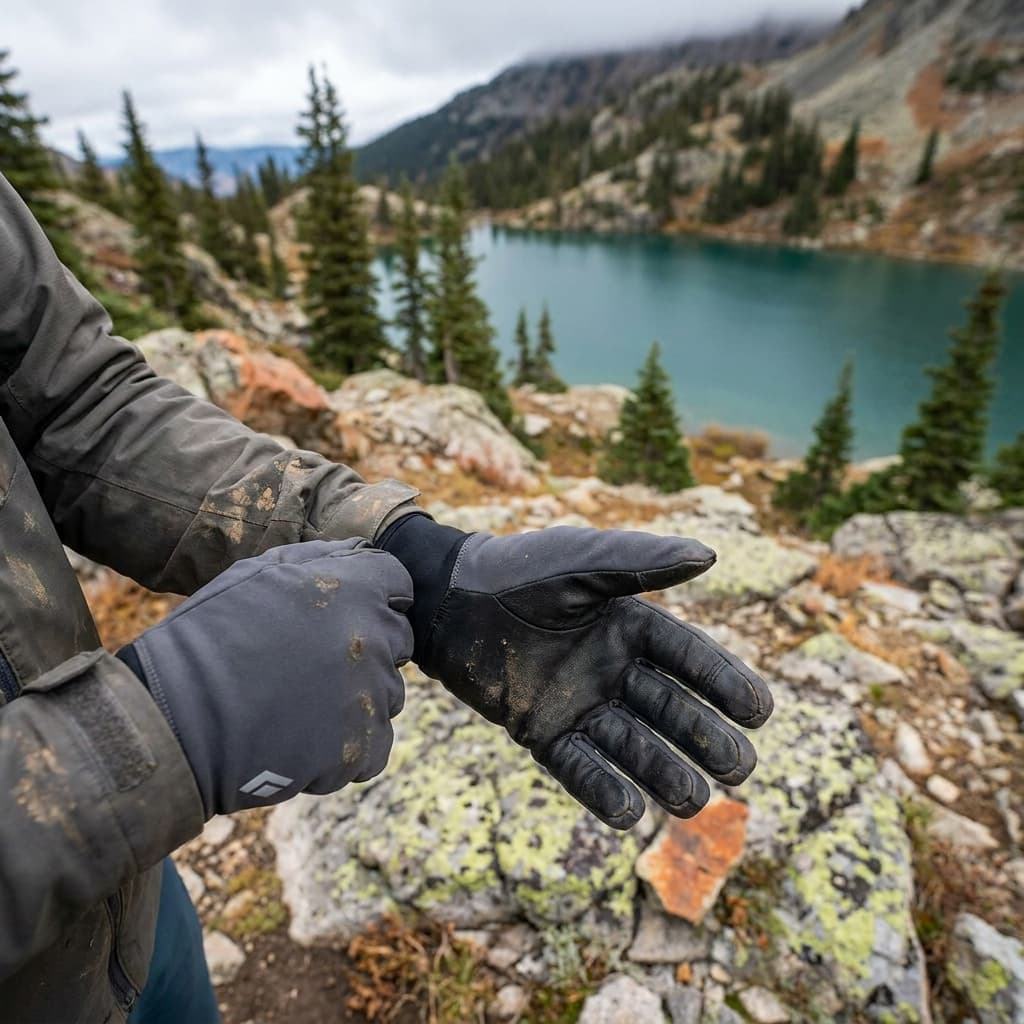
Layer liner first
Pull the liner snug to the base of each finger, no bunching at the knuckles.
Test dexterity
Open and close your fist three times. You should feel no restriction.
Slide on shell
The shell should move over the liner smoothly without dragging it down your palm.
Seal the cuff
Tuck your jacket sleeve over the shell gauntlet so wind cannot funnel up your arm.
Test grip
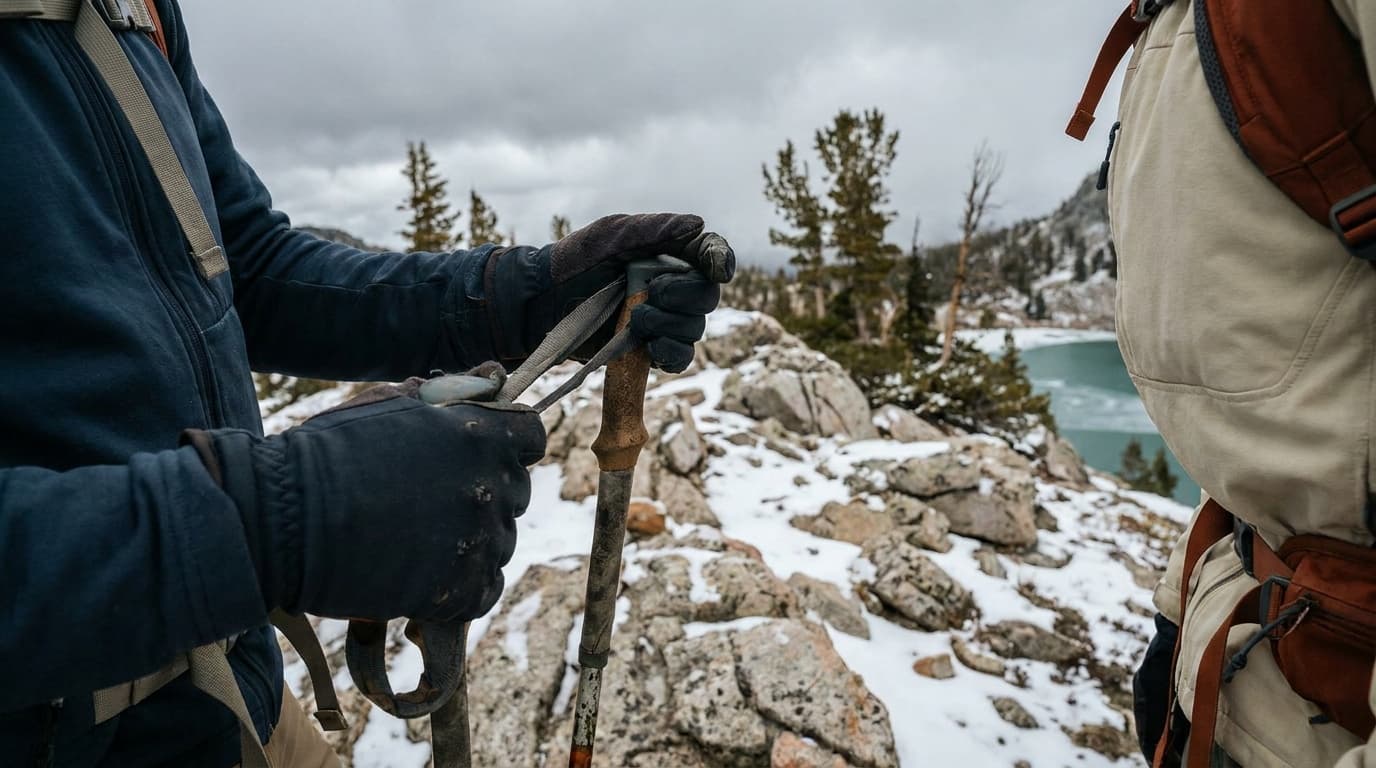
Grab your pole grip or trekking handle. Adjust if you feel the liner shifting.
Managing sweat and the vapor trap
The most common complaint with glove layering is clammy hands: the liner absorbs sweat, the shell holds it in, and fingers chill when you stop. This is a vapor management problem, not a gear failure.
The fix is proactive ventilation. When your output is high and you feel your liners getting damp, remove the shell and clip it to a pack strap for 10–15 minutes. The liner wicks moisture outward and a light breeze evaporates it. Do this before the liner is saturated, not after.
Vent early and often: a slightly damp liner is recoverable in minutes, a soaked liner can take an hour to dry while still on your hand.
If you routinely run hot, consider a softshell glove like the Black Diamond Midweight Softshell instead of a hard-shell waterproof one. Softshell fabrics breathe significantly better in dry cold and are adequate in light precipitation. Reserve the waterproof hard-shell for sustained rain or wet snow.
When to add insulated mitts
The liner-plus-shell system handles most three-season and shoulder-season cold hiking without a third layer. You need insulated mitts when conditions push past what the system covers.
Add mitts when: temperatures drop below 20°F (-7°C) with any wind, when you are on an exposed ridge for 30 or more minutes, when you are stationary at a belay or summit for long periods, or when your fingers lose feeling within 5 minutes despite the shell being on.
The most practical setup is a mitten shell (not a separate insulated mitt) that fits over your liner-plus-insulation stack, giving you a four-season system from a three-layer kit. Pogies, open-faced mitts that attach to poles, are another option for high-output ascents in very cold conditions: your liners are exposed at the back but your palms and fingers stay warm inside the mitt.
Troubleshooting cold hands in the field
If your fingers go numb despite layering correctly, the problem is usually circulation, not insulation. Tight layers compress blood vessels; loosening the cuff of the shell glove for 60 seconds often restores feeling faster than adding a layer.
Swinging your arms in large circles (the "windmill" technique) forces blood to your fingertips through centrifugal pressure. This is standard alpine practice and works in under a minute. Chemical heat packets tucked between liner and shell are a legitimate backup for Raynaud's sufferers or in emergencies, though they are not a substitute for correct layering. If your hands go numb even with a good system, or your cold days involve long stationary stretches rather than steady hiking, rechargeable heat is the next step. Our sister site Sportsman Authority compares battery-heated glove liners and socks by runtime, dexterity, and fit, including thin liners that fit under a shell glove.
Frequently asked questions
Can I use any thin glove as a liner, or does it have to be merino?
You can use any close-fitting thin glove as a liner, including synthetic fleece and silk. Merino is the most recommended starting point because it handles a wide range of sweat rates and temperatures without requiring much active management. Silk liners are warmer for their weight but compress poorly once wet. Synthetic stretch liners (Polartec Power Stretch or similar) are the better choice if you sweat heavily or need maximum dexterity for technical use.
What if my shell gloves are too bulky to fit over my liners?
This is a fit mismatch, not a layering failure. Most shell gloves are sized to accommodate a liner: if the shell is too tight, size up one step in the shell rather than down in the liner. A liner that is too thin to insulate defeats the purpose. Some brands (Black Diamond, Outdoor Research, Hestra) publish "fits over liner" in their sizing notes. When ordering online, check reviews specifically for liner compatibility.
How do I dry wet glove liners overnight in camp?
Merino and synthetic liners dry fastest against your body: sleep with them tucked inside your sleeping bag or base layer. At a hut or in a tent with a stove, hang them no closer than 12 inches from a heat source; direct heat degrades merino fibers and can melt synthetic ones. In cold dry conditions, hanging liners outside overnight actually works: subfreezing air has very low relative humidity and freeze-drying is a real phenomenon, though it is slower than body heat.
For specific picks across all three layers, see our guide to the best hiking gloves. Browse all hike guides or read how we research and rate gear.
Recommended gear
Our current top picks from the Best hiking gloves for cold and wind (2026) guide, if you are ready to buy.
Best for: Three-season hikers who want one waterproof glove that handles cold mornings, wet trail conditions, and frequent phone or map checks.
- Ventia insert keeps hands dry in sustained rain and wind up to 40 mph, verified across independent reviews
- Breathability is rated 1/5 by the brand: hands run warm during high-output climbs
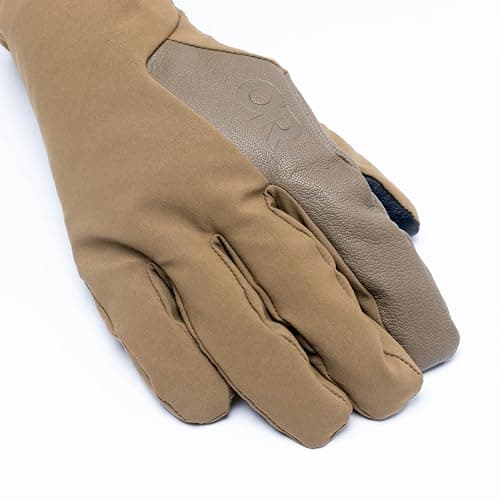
- Waterproofing
- Ventia waterproof insert, 100% windproof
- Insulation
- EnduraLoft polyester, 133g
- Palm
- Waterproof goat leather
- Weight
- 5.0 oz (142g) per pair
- Touchscreen
- Compatible fingertips
- Closure
- Adjustable Velcro under-wrist cuff
About this pick
A mid-weight waterproof softshell built for three-season hiking and snowshoe days, the Sureshot Pro pairs a Ventia waterproof insert with goat leather palms and EnduraLoft insulation for a glove that handles cold rain and light snow without going bulky. Outdoor Gear Lab ranks it among the top waterproof winter gloves tested and gives it high marks for weather resistance.
Strengths
- Ventia insert keeps hands dry in sustained rain and wind up to 40 mph, verified across independent reviews
- Goat leather palm provides secure grip on trekking poles without requiring glove removal
- Lightweight profile (142g) packs easily and transitions well between trail and town
Weaknesses
- Breathability is rated 1/5 by the brand: hands run warm during high-output climbs
- Warmth suitable for roughly 25–40 F conditions; not a winter mountaineering glove
Kit Score breakdown
BLACK DIAMOND
Black Diamond Midweight Softshell Gloves
Best Value
Kit Score 8.0/10
$68.55 Price checked Oct 23, 4:16 PM CDT
Best for: High-output hikers and trail runners who need maximum dexterity and pole grip in cool, mostly dry conditions and want to layer a shell over the top in rain.
- Full-finger and full-palm goat leather is unusually generous at this price point, giving confident pole grip in all conditions
- DWR-only weather resistance: not waterproof, and heavy sustained rain will penetrate the shell
- Shell
- Four-way stretch softshell, DWR treated (63% nylon, 26% polyester, 11% elastane)
- Insulation
- 60g PrimaLoft Gold on back of hand
- Palm
- Full goat leather palms and fingers
- Weight
- 92g per pair
- Cuff
- Fleece-lined neoprene, seals out drafts
- Touchscreen
- Digital thumb and index finger
About this pick
Black Diamond's Midweight Softshell packs full goat leather across the entire palm and fingers alongside 60g PrimaLoft Gold insulation in a lightweight 92g package, making it one of the best-equipped gloves for active hiking and ski touring at this price. The four-way stretch softshell and DWR finish handle cool, dry to lightly damp conditions well.
Strengths
- Full-finger and full-palm goat leather is unusually generous at this price point, giving confident pole grip in all conditions
- 60g PrimaLoft Gold insulation on the back of hand adds meaningful warmth without bulk
- Dexterity is consistently praised by outdoor reviewers for mountaineering and trekking tasks
Weaknesses
- DWR-only weather resistance: not waterproof, and heavy sustained rain will penetrate the shell
- Neoprene cuff is narrow and can be stiff to pull on; noted by multiple reviewers as a fit quirk
Kit Score breakdown
SMARTWOOL
Smartwool Men's Liner Glove
Best Budget
Kit Score 7.7/10
$28.00 Price checked Oct 23, 4:16 PM CDT
Best for: Hikers building a layering system who need a lightweight, packable base layer that works alone on shoulder-season days and pairs with a waterproof shell glove when the weather turns serious.
- Merino blend manages moisture effectively: wicks sweat and dries faster than full-wool alternatives during aerobic hiking
- No grip pads: the smooth knit surface is slippery on poles and ice axe handles, which owners repeatedly flag
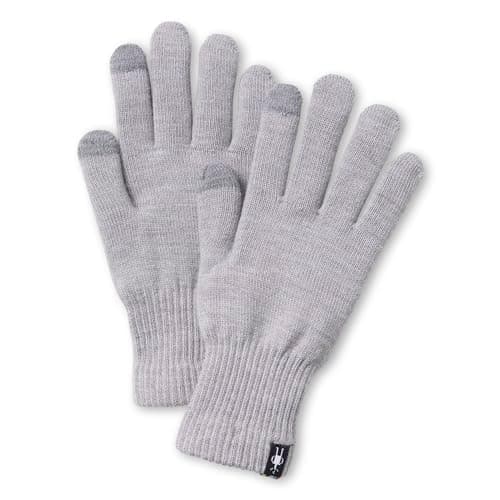
- Material
- 48% merino wool, 48% recycled polyester, 2% other fiber, 1% elastodiene, 1% elastane (Amazon listing B0998Z9X22, checked 2026-09-27)
- Weight
- 1.5 oz per pair
- Touchscreen
- Thumb and index finger compatible
- Cuff
- Ribbed knit for secure fit
- Use range
- Standalone to 30F, liner system below
About this pick
The Smartwool Liner Glove is a 1.5-ounce merino and recycled polyester knit with touchscreen-compatible thumb and index finger, designed as a standalone on mild days and as the inner layer of a two-glove system when temperatures drop. It carries 4.4/5 stars from over 700 Amazon owners.
Strengths
- Merino blend manages moisture effectively: wicks sweat and dries faster than full-wool alternatives during aerobic hiking
- At 1.5 oz, it disappears in a hip-belt pocket and doubles as a camp glove or emergency layer
- 4.4/5 stars across 700+ Amazon reviews reflects consistent satisfaction for a lightweight liner
Weaknesses
- No grip pads: the smooth knit surface is slippery on poles and ice axe handles, which owners repeatedly flag
- Not waterproof or water-resistant beyond light moisture: hands get cold and wet in sustained rain without a shell over the top
Kit Score breakdown
See all picks in Best hiking gloves for cold and wind (2026)
Keep going
Related guides
 Complete hike loadoutDay hike kitBuild the complete kit
Researched, not hands-on tested
Updated Jun 4, 2026Our recommendations draw on manufacturer documentation, retailer listings, owner feedback, and comparisons with alternatives.
As an Amazon Associate I earn from qualifying purchases. We may earn a commission from links here, at no extra cost to you. How we research →